7 Signs Your Pothos Needs a Bigger Pot
Pothos plants are surprisingly tough, but even the most forgiving houseplants have their breaking point. If your pothos starts looking a bit off—droopy leaves, water that vanishes in seconds, or roots poking out the bottom—it’s probably trying to get your attention.
A root-bound pothos sends out some pretty specific distress signals when it’s outgrown its pot and needs more space.
Personally, I’ve learned to keep an eye out for these hints because catching them early makes repotting way less of a hassle.
Let’s go through the warning signs your pothos is feeling cramped and ready for a new home.
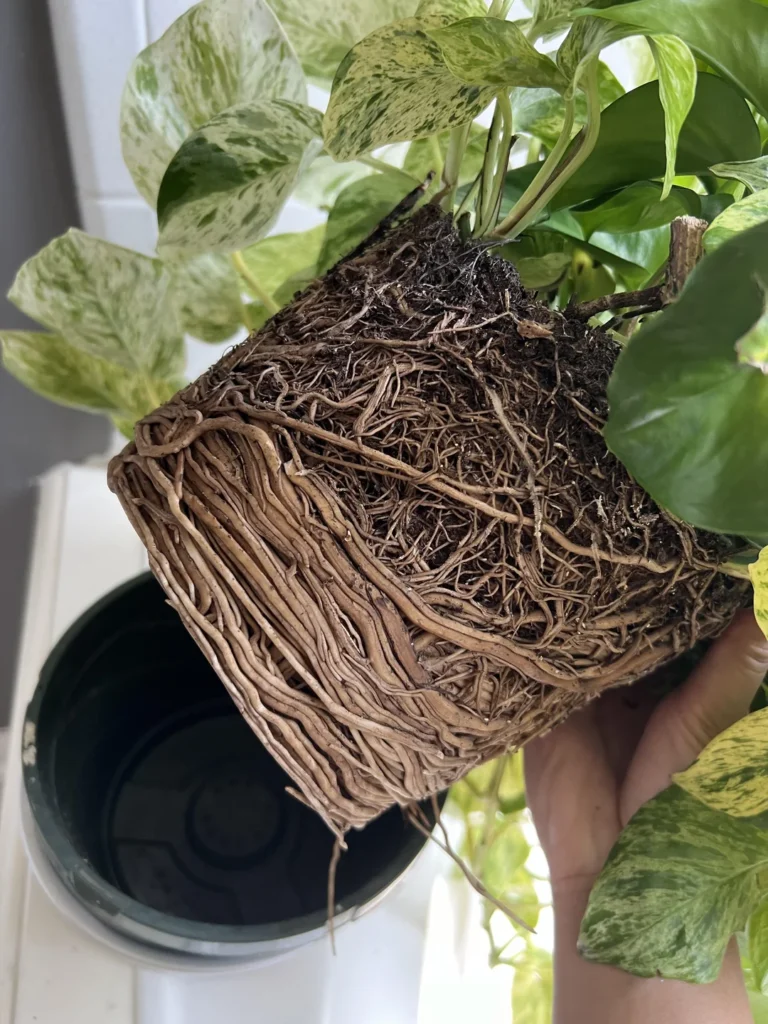
You’ll know what to watch for and when to finally grab that bigger pot.
Please note: Simplify Plants is reader-supported. As an Amazon Associate, I earn from qualifying purchases made by our readers with no extra cost added to you all! Some links in the post are affiliate links and I get a commission from purchases made through links in the post.
1) Visible roots growing out of drainage holes
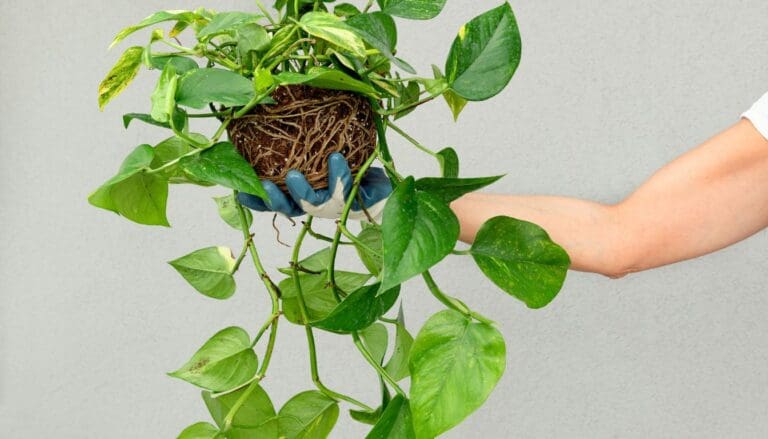
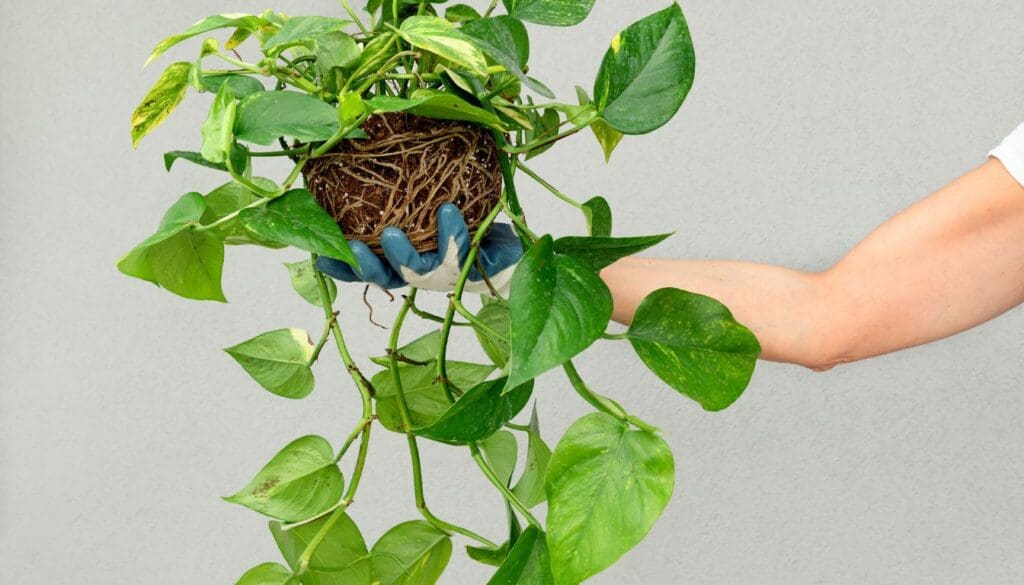
First thing I usually do is peek at the bottom of the pot. If you spot roots poking out through the drainage holes, your plant is basically waving a white flag.
The roots have run out of room and are searching for any escape route they can find.
You might see white or tan roots sneaking out the holes. That’s a classic sign things are getting tight in there.
Quick Tip: Flip your pot upside down every once in a while to check for root escapes.
If you see roots coming out, don’t panic, but don’t ignore it either. The plant can hang on like this for a bit, but it won’t be happy. Exposed roots can dry out or get damaged if you move the pot around.
2) Roots circling the soil surface
Sometimes, I notice roots making little circles right on top of the soil. That’s a red flag the roots have nowhere else to go and are getting desperate.
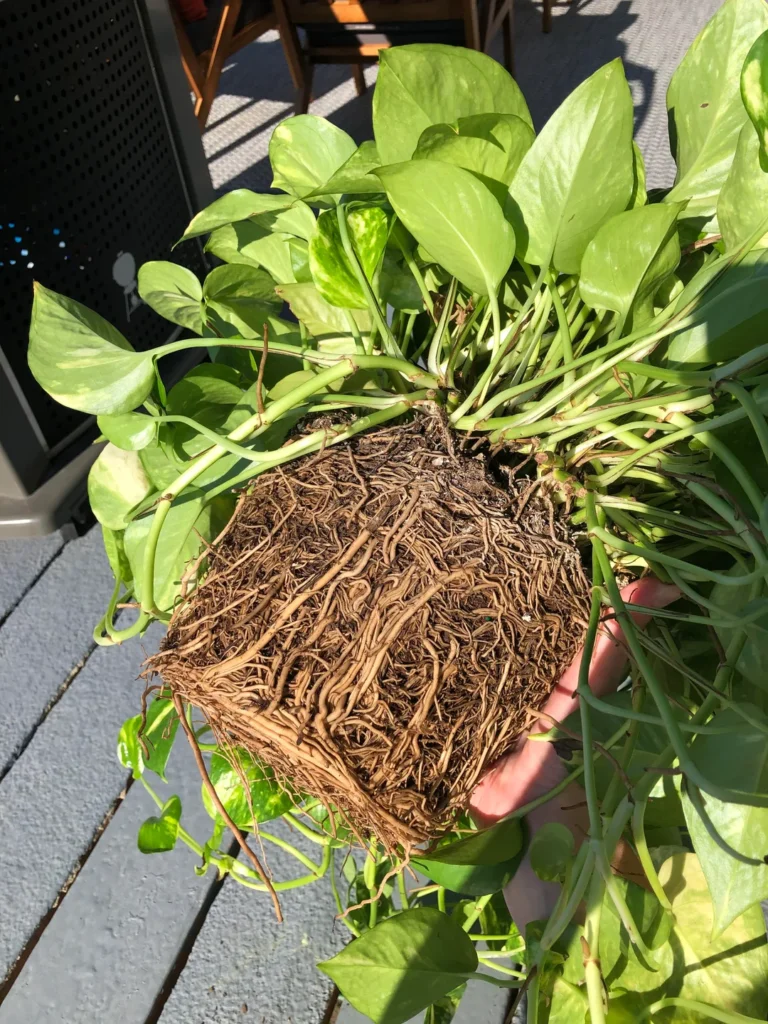
They start looping around the surface instead of digging down, which just looks weird. Usually, these roots are thick and pale, winding right where you pour water.
Quick Tip: Brush a bit of top soil aside with your finger and see if there’s a root traffic jam just underneath.
Ignoring this leads to trouble. Circling roots can choke each other, and your pothos won’t be able to soak up water and nutrients like it should.
A slightly bigger pot—just an inch or two up—lets the roots stretch out again and grow healthy.
3) Water runs straight through without absorbing
Ever water your pothos and watch the water shoot right through the pot in seconds? That’s not normal. The soil should hold onto moisture for a bit so the roots can actually drink.
If roots have taken over the pot, there’s barely any soil left to absorb water. You end up with a dense root ball and water just slides past.
Sometimes, you’ll see the soil pulling away from the pot’s edges, leaving a gap for water to escape down the sides.
Quick Tip: Try pouring water slowly in a circle around the plant to help it absorb a bit better, at least for now.
If this keeps happening, even with careful watering, your pothos is overdue for a new pot. The roots just don’t have enough space left.
4) Potting mix dries out within a day or two
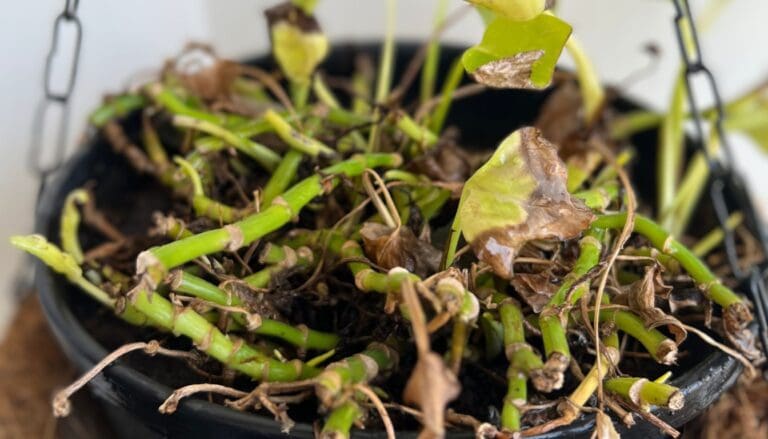
If I find myself watering my pothos almost every day because the soil is bone-dry within 24 hours, that’s a huge hint. The roots have filled up most of the pot, squeezing out the soil that would normally hold moisture.
There’s just not enough dirt left to keep water around. It becomes a chore to keep up with the watering.
If you stick your finger in the soil and it feels dusty less than a day after watering, your plant is probably root-bound.
Quick Tip: Take a peek at the drainage holes—if you see a tangle of roots, it’s definitely time to repot.
Constant dryness stresses the plant. Leaves can start looking droopy or pale even if you’re watering a lot. Giving your pothos a bigger pot lets the roots breathe and the soil hold water again.
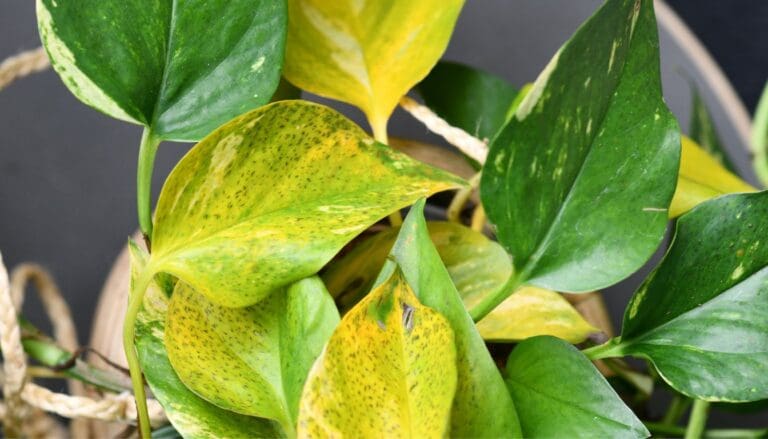
5) Yellowing lower leaves despite regular care
It’s frustrating when you’re watering and caring for your pothos, but the lower leaves turn yellow and drop off anyway. Usually, that’s the plant telling you it’s out of room.

Root-bound pothos struggle to absorb nutrients, no matter how much you try. The oldest leaves go first—they turn yellow and fall off as the plant tries to keep the new growth alive.
If you notice this and the soil is drying out quickly, check those drainage holes for root tangles.
Quick Tip: Lift the pot and look underneath—roots circling or poking through mean it’s time to size up.
Don’t mix this up with overwatering, where yellow leaves feel mushy and pop up all over. With root-bound plants, yellowing starts low and climbs up. The leaves might feel papery and drop easily when you touch them.
6) Stunted new growth for several months
If your pothos hasn’t pushed out any fresh leaves in ages, or the new ones are tiny and sad, it’s probably root-bound. When roots have no space, they just can’t feed the plant well.
New leaves stay smaller than the old ones, sometimes barely unfurling.
Roots that are all tangled up end up fighting each other for every last drop of water and nutrients. The plant spends its energy just staying alive instead of growing.
Quick tip: If new leaves are noticeably smaller and nothing else has changed—light, water, fertilizer—it’s time to go up a pot size.
Don’t forget, pothos naturally slow down in winter. But if it’s been months with no growth during the growing season, check those roots.
7) Plant becomes top-heavy and tips easily
I’ll admit, I’ve knocked over more than one pothos because the vines got too long for the little pot. When the plant is all top and no base, things get wobbly fast.
If your pot tips over from a gentle nudge, or the plant leans hard to one side, it’s a sure sign it’s outgrown its home. Sometimes you’ll catch yourself propping the pot against a wall just to keep it upright.
Quick Tip: If you’re using random objects to keep your pothos standing, it’s definitely time to repot.
Roots in a tiny pot just can’t anchor a big plant anymore. A bigger pot gives your pothos a sturdy base and room for roots to grip the soil.
How Pot Size Impacts Pothos Health
The pot you pick really shapes how your pothos absorbs water and nutrients. That trickles down to everything—leaf size, root strength, even how lush those vines look.
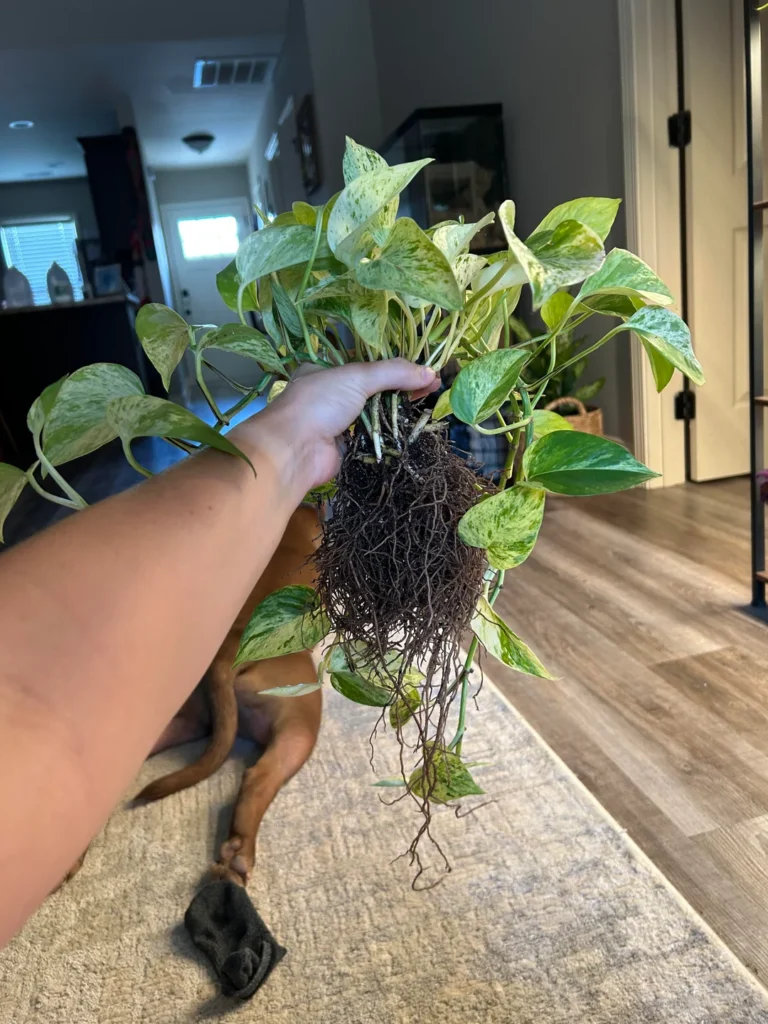
Root Growth and Plant Vitality (What Happens Below the Soil Line)
Pothos roots want space to spread out and make a healthy network. In a pot that’s too small, roots circle the edges and form a tight mass that can’t soak up nutrients well. You’ll see smaller leaves, slow growth, and thin, leggy stems.
But go too big, and you’ve got a different headache. Extra soil holds more water than the roots can reach, which can lead to root rot. I usually stick to a pot that’s about an inch bigger all around when I repot.
Quick Tip: Only go up 1-2 inches in diameter to keep roots happy and avoid soggy soil.
When roots have just enough space, the plant rewards you with bigger leaves and richer color. You’ll notice more trailing vines, too.
Watering Challenges in Small Pots (When Your Container Works Against You)
Small pots dry out ridiculously fast, especially in warm weather. I end up watering all the time, which gets old and stresses the plant out. The little bit of soil left just can’t hold enough moisture.
Sometimes the top feels bone-dry, but the bottom is still damp and packed with roots. It’s a weird cycle—easy to underwater or overwater by accident.
Quick Tip: If you’re watering more than twice a week under normal conditions, your pothos probably needs a bigger pot.
When roots have taken over, water just runs through without being absorbed. I see water pooling on top or draining out the bottom instantly, which means the plant isn’t really getting what it needs.
Tips for Repotting Your Pothos
Repotting doesn’t have to be stressful for you or your plant. The trick is picking the right pot and handling the roots gently.
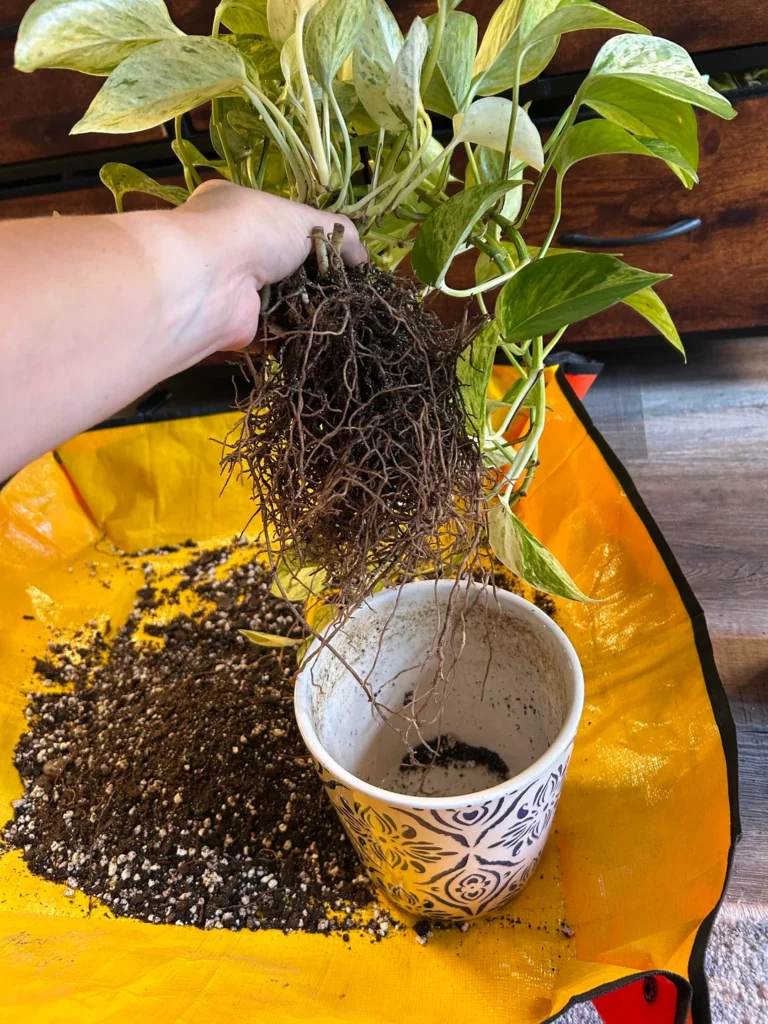
Choosing the Right Container (What Size and Material Actually Work Best)
I always go up just one pot size—about 2 inches bigger in diameter. That’s usually enough.
If you go too big, the extra soil stays wet too long and can cause root rot. Pothos aren’t fans of soggy feet.
Drainage holes are a must. Honestly, I don’t even bother with pots that don’t have them.
Quick Tip: Terracotta pots dry out faster, which is nice if you tend to overwater.
Plastic pots are lighter and hold moisture longer. I use them when I want the soil to stay damp a bit longer. Ceramic pots with drainage work well too, though they can get heavy if you move your plants around a lot.
Repotting Steps for Minimal Stress (How to Move Your Plant Without Damaging the Roots)
I usually water my pothos the day before I repot it. That way, the soil’s a bit softer and the roots are less likely to snap.
When it’s time, I tip the pot gently on its side and try to slide the plant out. If it’s stubborn, I’ll squeeze the sides of a plastic pot or run a knife around the edge if it’s one of those stiff ones.
Once it’s out, I loosen the root ball with my fingers. I’m careful, but I do tease apart any roots that are circling the bottom.
This helps them grow outward once they’re in their new spot.
Quick Tip: If I spot any black, mushy, or dead roots, I just snip them off with clean scissors.
I add some fresh potting mix to the bottom of the new pot. Then I set the pothos inside so the soil line sits about an inch below the rim.
After that, I fill in the sides with more mix, pressing gently to get rid of air pockets.
I always give it a good soak after repotting. I let the extra water drain and then put the plant back where it was.
Frequently Asked Questions
Root-bound pothos plants show warning signs—like roots poking out and soil that dries out too quickly. Catching these early makes a big difference for your plant.
How can I tell when my pothos is becoming root-bound and needs immediate attention?
I always check the drainage holes for roots poking out first. That’s usually the big giveaway.
When I pull the plant out, I look for roots circling tightly around the soil. If it’s just a tangled mat, it’s definitely time for a bigger pot.
Sometimes the soil even sits higher than it used to, because the roots are pushing everything up.
What changes in growth rate might mean my pothos needs more space to thrive?
Honestly, my pothos usually grows pretty fast, so if new leaves just stop showing up for months, I start to worry. Stunted growth tells me the roots need more space.
If new leaves are coming in smaller than the older ones, that’s another sign it’s cramped. The plant just can’t get enough nutrients or water when it’s packed in tight.
Quick Tip: I like to compare new leaves to the older ones now and then—makes it easier to spot when something’s off.
Why are roots coming out of the drainage holes, and what should I do about it?
Roots poking out of drainage holes? They’re just desperate for more space.
That’s my cue to repot. I try not to wait too long—roots can dry out or get damaged when they’re hanging out in the air.
The fix is just moving the plant to a pot that’s 1-2 inches wider. I try to do it within a couple weeks of noticing the roots.
Is frequent wilting a sign my pothos pot is too small, or could it be something else?
If my pothos wilts a day or two after watering, it might be root-bound. When the roots fill the pot, there’s barely any soil left to hold water.
But I always check the soil first. Sometimes wilting is just from watering issues, not pot size.
If the soil dries out almost instantly and water runs straight through, that’s when I know the roots are packed way too tight.
How do I choose the right pot size when upsizing a pothos without going too big?
I never go up more than 1-2 inches in diameter. If the old pot is 6 inches, I’ll grab an 8-inch one—not something huge.
Too much extra room is actually bad news. The soil stays wet too long, and root rot can sneak in.
Quick Tip: I measure the top rim of my current pot, then add an inch or two. That’s it.
And honestly, I never skip drainage holes. Even if the new pot looks amazing, it’s not worth the risk without them.
What’s the best time of year to repot a pothos for the least stress and fastest recovery?
Spring and early summer are usually the best times to repot. That’s when my pothos seems to be in a good mood—growing like crazy and bouncing back quickly from the shock of being moved.
I really try to avoid repotting in fall and winter. Growth slows way down, and honestly, the plant just seems to sulk for weeks. Roots barely settle in when it’s chilly.
Still, sometimes you just have to do it. If my pothos is super root-bound and looks miserable, I’ll repot no matter what the calendar says. A cramped plant isn’t going to fix itself by waiting around.
Note: Some images in the articles are sourced from Reddit and Other Platforms For Reference Purpose.