How to Make Pink Princess Philodendron Grow Fuller?
The Pink Princess Philodendron is known for its stunning pink variegation, but it can sometimes grow tall and sparse instead of full and bushy. If your plant looks a bit leggy or thin, you’re not alone. Many people struggle to get that lush, compact look they see in photos.
The good news is that with the right care adjustments, you can encourage your Pink Princess to branch out and develop a fuller shape. I’m going to walk you through the key steps that make a real difference, from lighting and watering to pruning techniques that promote new growth.
This guide covers everything from maintaining proper humidity levels to choosing the right soil mix and support structures. Each tip is designed to help your plant grow stronger and bushier over time.

Please note: Simplify Plants is reader-supported. As an Amazon Associate, I earn from qualifying purchases made by our readers with no extra cost added to you all! Some links in the post are affiliate links and I get a commission from purchases made through links in the post.
1) Provide bright, indirect light near an east-facing window
I always place my Pink Princess near an east-facing window because it gives her the perfect amount of light without any drama.
Morning sun through east windows is gentle and won’t scorch those pretty pink leaves.
The key is keeping your plant about 2-3 feet from the window. If you put it right up against the glass, the leaves might get crispy. Too far away and she’ll get leggy instead of full.
Quick Tip: If you notice the pink variegation fading to mostly green, that’s your plant asking for more light.
Watch for signs she’s unhappy with her spot. Brown, crispy edges mean too much direct sun.
Long spaces between leaves means not enough light. You want compact, bushy growth with vibrant pink and green leaves.
If you don’t have an east window, a few feet back from a west or south window works too. Just use a sheer curtain to filter the stronger afternoon light.
2) Maintain consistent humidity around 60–70% with a humidifier
Pink princess philodendrons come from tropical rainforests where the air stays moist most of the time.
When I keep mine in dry indoor air, the leaves get brown edges and stop growing as fast.
A humidifier placed near your plant keeps the air between 60–70% humidity. I check mine with a simple hygrometer from any hardware store. If the air drops below 50%, my plant starts looking sad within a few days.

Quick Tip: Run your humidifier for a few hours in the morning and evening rather than all day to save energy while still helping your plant.
I group my pink princess with other tropical plants to create a humid microclimate. This works even better when paired with a humidifier.
Just make sure water droplets don’t sit on the leaves overnight, or you might see fungal spots show up.
In winter, indoor heating dries out the air fast. I bump up humidifier use during cold months to keep my plant happy.
3) Water when top 1–2 inches of soil are dry, avoiding soggy soil
I stick my finger into the soil about two inches deep before I water. If it feels dry at that depth, it’s time to give my Pink Princess a drink. If it still feels damp, I wait another day or two.
Soggy soil is the fastest way to kill this plant. Too much water leads to root rot, which shows up as yellow leaves and a sad, droopy plant.
I water until I see it drain from the bottom holes, then I empty the saucer after 15 minutes. Standing water is just as bad as overwatering.
Quick Tip: In winter, my Pink Princess needs less water because it grows slower and the soil stays moist longer.
The watering schedule changes with the seasons and your home’s humidity. I check the soil more often in summer when it dries out faster. A moisture meter works too if you don’t trust the finger test.
4) Use a well-draining, chunky potting mix with orchid bark and perlite
Pink Princess Philodendrons hate sitting in wet soil. Their roots need air pockets to breathe, or they’ll rot pretty quickly.
I always mix my own potting medium for these plants. I combine regular potting soil with orchid bark chunks and perlite in roughly equal parts.
The bark creates air spaces while the perlite helps water drain through fast.
You can tell if your mix is right by squeezing a handful after watering. It should feel moist but not soggy, and water should run through the drainage holes within seconds.
If water pools on top or the soil stays wet for days, your mix is too dense.

Quick Tip: Add a handful of activated charcoal to prevent root rot and keep the soil fresh.
Store-bought mixes labeled for aroids work too, but check the ingredients first. Look for chunky bits, not fine dust. The chunkier the better for Pink Princess growth.
5) Fertilize with a balanced 10-10-10 houseplant fertilizer monthly during growing season
I feed my Pink Princess once a month from spring through summer when she’s actively growing.
A balanced 10-10-10 fertilizer gives her equal amounts of nitrogen, phosphorus, and potassium to support healthy leaves and that gorgeous pink variegation.
I dilute the fertilizer to half strength because these plants don’t need heavy feeding. Too much can burn the roots and cause brown leaf tips.

Quick Tip: I skip fertilizing in fall and winter when growth naturally slows down.
Watch for signs you’re overdoing it. If you notice white crust on the soil surface or crispy leaf edges, flush the pot with water and cut back on feeding. I’ve learned that less is more with these beauties.
The nutrients help your plant produce fuller growth with more leaves.
Just remember that fertilizer won’t create more pink variegation since that’s genetic, but it will keep your plant strong enough to support all those stunning leaves.
6) Prune leggy stems back to a node to encourage bushier growth
When my Pink Princess gets too leggy, I grab my clean scissors and cut the stem just above a node. That’s the little bump where leaves and roots grow from.
This trick makes the plant put out new growth from lower down instead of just stretching upward.
You’ll get more stems branching out, which creates that full, bushy look everyone wants.
Quick Tip: Make your cut at a 45-degree angle about a quarter-inch above the node.
I always check that my tools are clean before I start cutting. Dirty blades can spread bacteria or fungi to the fresh cut.
The stems I remove don’t have to go to waste either—I can propagate them in water if they have at least one node and one leaf.
Spring and early summer work best for pruning since the plant is actively growing. If I prune during winter when growth slows down, the plant takes much longer to push out new stems.
7) Rotate the plant weekly for even light exposure and balanced growth
I rotate my Pink Princess about a quarter turn each week. This simple habit keeps all sides of the plant facing the light source at different times.
Without rotation, one side stays in shadow while the other stretches toward the window.
Plants naturally lean toward their light source. If I forget to rotate mine for a few weeks, I notice lopsided growth and stems that bend awkwardly.
The side facing away from the window grows slower and produces smaller leaves.

Quick Tip: Mark one side of the pot with tape or a sticker so you remember which way you’ve already turned it.
Even rotation helps my Pink Princess develop a fuller, more balanced shape. Each stem gets its fair share of bright indirect light.
This means more leaves fill in around the whole plant instead of just on one side.
I set a phone reminder every Wednesday to spin my plant. It takes five seconds and makes a real difference in how bushy and symmetrical it looks over time.
8) Use a slightly larger pot only when roots are pot-bound to prevent stress
I only repot my Pink Princess when I see roots poking out of the drainage holes or circling the soil surface.
Moving it to a bigger pot too early gives the soil too much moisture, which can lead to root rot.
When it’s time to repot, I go up just one pot size. That usually means about 1-2 inches wider in diameter.
This gives the roots room to grow without overwhelming them with extra wet soil.
Quick Tip: Check for roots by gently sliding the plant out of its pot—if they’re tightly wrapped around the root ball, it’s time to size up.
I always use a pot with drainage holes. After repotting, I water lightly and keep the plant in a stable spot for a week or two so it can adjust without extra stress.
9) Apply a diluted seaweed extract (e.g., Maxicrop) every 4–6 weeks for root vigor
I like to think of seaweed extract as a gentle boost for my Pink Princess’s roots. It’s not a heavy fertilizer, but it does contain natural hormones and minerals that help roots grow stronger and reach deeper into the soil.
I mix the seaweed extract according to the bottle directions, usually about a teaspoon per gallon of water.
Then I water my plant with it once every month or so. The roots get tougher and better at absorbing nutrients from regular fertilizer.
Quick Tip: Apply seaweed extract to damp soil, not bone-dry dirt, so the roots can soak it up without stress.
I notice my Pink Princess handles stress better after a few treatments. New growth comes in more reliably, and the plant just looks healthier overall.
Just don’t go overboard—more isn’t better here. Stick to the schedule and let the seaweed do its quiet work underground.
10) Stake or use a moss pole to support upward growth and allow lateral branching
Pink Princess Philodendrons are climbers in the wild, so giving them something to climb tricks them into growing bigger leaves and more side shoots.
When I add a moss pole or stake, my plant puts energy into filling out instead of flopping over.
I push the pole about two inches into the soil near the center stem. Then I gently tie the main stem to the pole with soft plant ties or even old strips of fabric.
The key is not tying too tight since the stem needs room to grow.
As the plant climbs, it starts producing aerial roots that grab onto the pole. This tells the plant it’s safe to send out new growth from the sides. That’s when you get that fuller, bushier look instead of one long, leggy vine.
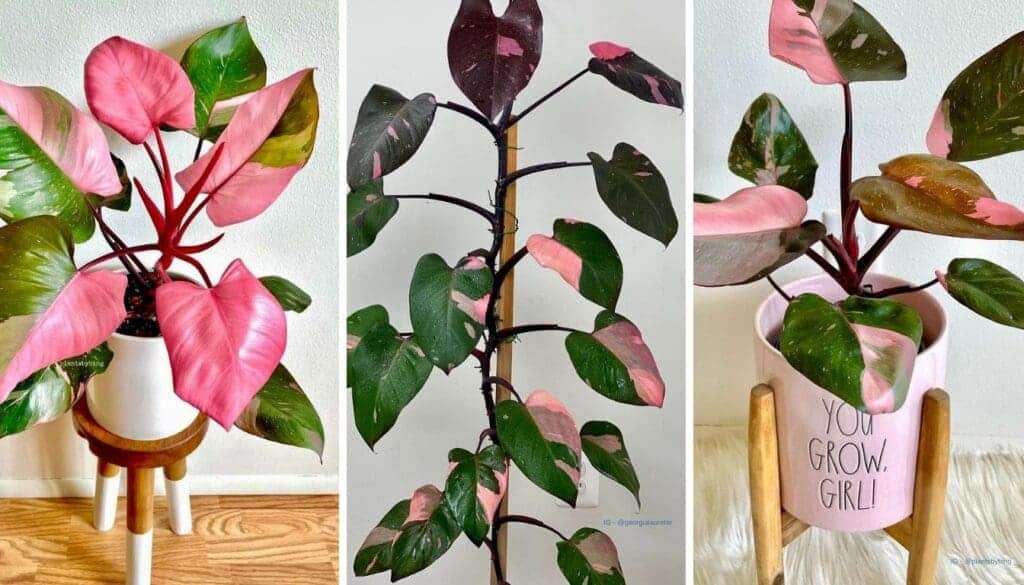
Quick Tip: Mist the moss pole every few days to keep it damp, which encourages those aerial roots to latch on faster.
If you live somewhere dry, the moss pole might dry out quickly. Just check it when you water and give it a quick spray if it feels crispy.
Understanding Pink Princess Philodendron Growth Habits
Pink Princess Philodendrons grow as climbing vines in their natural habitat, which means they need support and the right conditions to develop that full, bushy look we all want.
Light quality and root health are the two biggest factors that determine whether your plant stays leggy or fills out beautifully.
Light Preferences and Effects on Foliage (and Why Your Pink Might Be Fading)
I’ve learned that Pink Princess needs bright, indirect light to produce those stunning pink variegated leaves.
Too little light and the plant gets leggy with mostly green leaves. Too much direct sun and the pink sections burn or fade to white.
The sweet spot is about 6-8 hours of filtered light daily. I place mine near an east-facing window where it gets gentle morning sun.
When light levels drop, the plant focuses on producing chlorophyll (the green stuff) to survive.
This means less pink and longer spaces between leaves, called internodes. You’ll notice the stems getting thin and stretched out as the plant reaches for more light.
Quick Tip: Rotate your plant a quarter turn every week so all sides get equal light exposure.
If you’re in a darker home, consider adding a grow light. The pink variegation needs consistent, quality light to maintain its color and encourage fuller growth patterns.
Root Health and Soil Structure (The Foundation You Can’t Ignore)
Healthy roots mean healthy growth above the soil line. I use a chunky, well-draining mix that lets roots breathe while holding just enough moisture.
My go-to mixture includes:
- 40% potting soil
- 30% orchid bark
- 20% perlite
- 10% worm castings
The bark and perlite create air pockets that prevent root rot. Compact soil suffocates roots and leads to slow, sparse growth.
I check the roots every spring by gently sliding the plant from its pot. White or light tan roots mean you’re doing great. Brown, mushy roots need immediate attention and fresh soil.
Quick Tip: If water sits on top of the soil instead of soaking in, it’s time to repot with fresh, airy mix.
Root-bound plants stop putting out new growth and look stunted. When roots circle the pot’s edge, size up to a container that’s 2 inches wider.
Promoting Vibrant Variegation and Leaf Density
The right fertilizer keeps your pink variegation bright and prevents it from fading to green, while proper humidity levels encourage your plant to push out more leaves with better color distribution.
Managing Fertilizer for Optimal Color (Without Burning Those Pretty Pink Leaves)
I feed my Pink Princess with a balanced liquid fertilizer diluted to half strength every three to four weeks during spring and summer.
Too much nitrogen pushes the plant to produce more green growth and less pink, so I stick with a 20-20-20 or similar ratio.
I skip fertilizing completely in fall and winter when growth naturally slows down. Overfeeding during dormancy causes salt buildup in the soil, which burns roots and leads to brown leaf edges.
Quick Tip: If your new leaves are coming in mostly green, cut back on fertilizer frequency for a month or two.
I always water the soil thoroughly before adding fertilizer to prevent root burn. The nutrients spread more evenly through damp soil instead of concentrating in dry pockets.
Watch for white crusty deposits on the soil surface, which means salt accumulation. When I notice this, I flush the pot with plain water to wash away excess minerals.
Humidity and Its Role in Fuller Leaves (Because Crispy Edges Aren’t the Look)
I keep humidity between 60-80% for my Pink Princess, which encourages larger leaves with better pink sections.
Low humidity causes smaller leaves with brown, crispy edges that never fully unfurl.
I use a humidifier near my plant during winter when indoor heating dries out the air. A pebble tray with water under the pot works too, but it raises humidity less effectively than a humidifier.
Quick Tip: Group your Pink Princess with other plants to create a natural humidity pocket around them.
Higher humidity also prevents spider mites, which love dry conditions and can quickly damage variegated leaves. I check the undersides of leaves weekly for tiny webs or stippling.
I avoid misting because water droplets sitting on leaves can cause fungal spots, especially in rooms with poor air circulation.
Consistent ambient humidity works better than quick mist sessions that evaporate in minutes.
Frequently Asked Questions
Pink Princess Philodendrons can be tricky to keep full and bushy. Here are answers to common problems that affect how compact and healthy your plant grows.
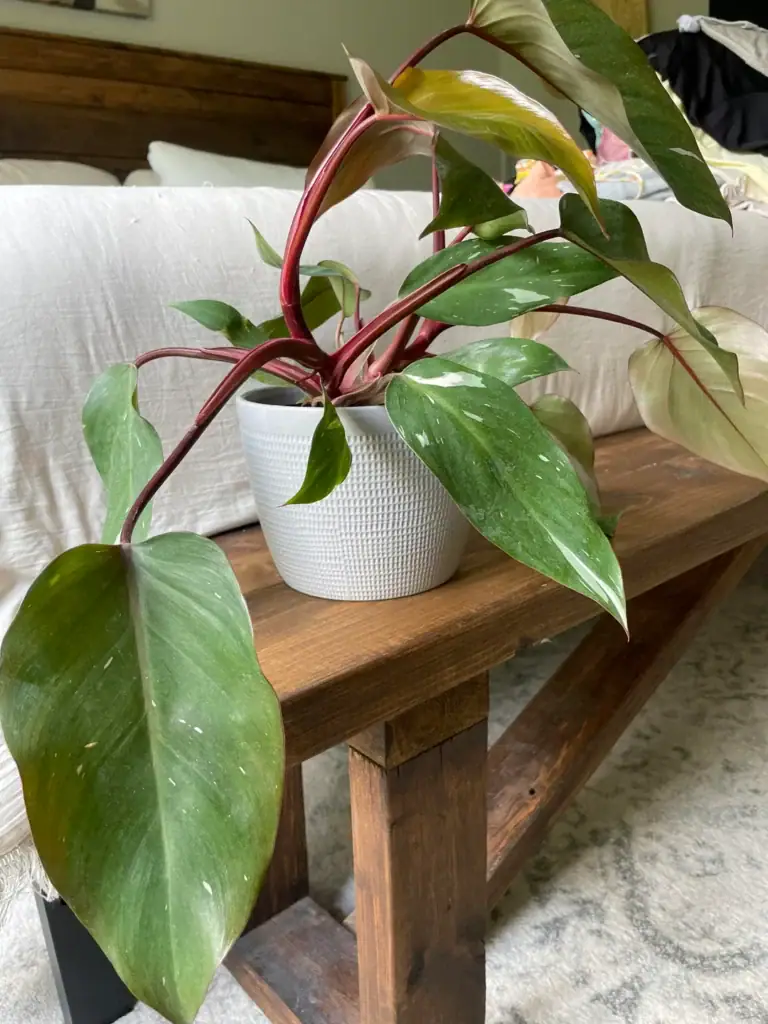
Why is my Pink Princess Philodendron getting leggy, and how can I prevent it?
Your plant is stretching toward light because it’s not getting enough. When a Pink Princess doesn’t receive bright, indirect light, it sends out long stems with spaces between leaves as it searches for more energy.
Move your plant closer to an east-facing window where it gets gentle morning sun. If you only have a north-facing window, the light might be too weak year-round.
I rotate my plant every week or two so all sides get equal light exposure. This stops one side from growing faster than the other.
Quick Tip: If your stems are already leggy, you’ll need to prune them back to encourage fuller growth closer to the base.
What’s the best way to prune a Pink Princess Philodendron to encourage bushier growth?
Cut stems just above a node using clean, sharp scissors or pruning shears. A node is the bump on the stem where leaves grow out.
This forces the plant to send out new growth from lower nodes instead of just growing taller. You’ll usually get two new shoots from the spot where you made the cut.
I prune in spring or early summer when the plant is actively growing. The new growth comes in faster during warm months.
Quick Tip: Don’t throw away those cuttings—you can root them in water and plant them back in the same pot to make it look fuller immediately.
How much light does a Pink Princess Philodendron need to grow more compact and full?
Your plant needs bright, indirect light for about 6–8 hours each day. This gives it enough energy to produce leaves close together rather than stretching out.
Direct afternoon sun will burn the pink variegation and turn it brown. Morning sun from an east window works great because it’s gentler.
I keep mine about 3–5 feet from a bright window with a sheer curtain. In winter, I move it a bit closer since the sun is weaker.
Quick Tip: If you notice long spaces between new leaves, that’s your sign the plant needs more light right away.
What type of soil mix helps a Pink Princess Philodendron produce stronger, fuller growth?
Use a chunky, well-draining mix that lets roots breathe while holding some moisture. I mix regular potting soil with orchid bark and perlite in roughly equal parts.
The bark and perlite create air pockets so roots don’t sit in soggy soil. Healthy roots mean the plant can support more leaves and stems without getting stressed.
Heavy, dense soil stays wet too long and causes root rot. When roots rot, your plant can’t take up nutrients even if you fertilize it.
Quick Tip: If water sits on top of the soil for more than a few seconds before soaking in, your mix is too dense and needs more chunky materials.
Where should I cut a Pink Princess Philodendron to propagate it and make the mother plant fuller?
Cut just below a node where you see a small brown aerial root starting to form. Each cutting needs at least one node and one leaf to grow successfully.
When you remove stems from the mother plant, it responds by pushing out new growth lower down on the remaining stems. This fills in bare spots near the base.
I take cuttings from the longest, leggiest vines first. These are usually the ones making the plant look sparse anyway.
Quick Tip: Root your cuttings in water until roots are 2–3 inches long, then plant them back in the original pot to instantly boost fullness.
How can I revive a stressed Pink Princess Philodendron so it starts putting out healthier growth again?
First, check if you’re overwatering or underwatering by feeling the soil 1–2 inches down. The most common stress comes from watering issues.
If the soil is bone dry or soaking wet, adjust your watering schedule. Let the top 1–2 inches dry out between waterings.
Move the plant to a spot with consistent humidity around 60–70% using a humidifier. Low humidity causes brown leaf edges and slows growth.
Feed it with a balanced 10-10-10 houseplant fertilizer once a month during spring and summer. Skip fertilizer in fall and winter when growth naturally slows down.
Quick Tip: Remove any yellowing or dying leaves so the plant can focus energy on producing fresh, healthy growth instead of trying to save damaged foliage.
Note: Some images in the articles are sourced from Reddit and Other Platforms For Reference Purpose.