11 Tips to Make a Fiddle Leaf Fig Grow Taller and Fuller at Home
If your fiddle leaf fig has stalled, started leaning, or ended up with a long bare trunk, the fix usually starts with basic care. To make a fiddle leaf fig grow taller and fuller, give it several hours of bright, indirect light, water only when the top two inches of soil are dry, and feed it during spring and summer; then prune or notch the stem once it is healthy enough to branch.
Height and fullness are related goals, but they sometimes pull against each other. Good care helps the whole plant grow. Cutting the top makes the plant branch, and that costs you some height for a season.
I always fix light and root care before I reach for shaping tricks. A plant in a dim corner won’t branch well no matter how carefully you cut it. The tips below come with cues you can see and feel, so you can adjust care as you go without following a rigid calendar.
Please note: Simplify Plants is reader-supported. As an Amazon Associate, I earn from qualifying purchases made by our readers with no extra cost added to you all! Some links in the post are affiliate links and I get a commission from purchases made through links in the post.
1) Place It in Bright, Indirect Light
Light is the biggest driver of growth, and most slow fiddle leaf figs simply aren’t getting enough of it.
These plants want bright light for most of the day, ideally within a few feet of a window.
In US homes, an east-facing window is my favorite spot because morning sun is gentle.
South- and west-facing windows work too, as long as a sheer curtain softens the harsh afternoon rays.
Watch for these cues:
- Too little light: new leaves come in small, the gaps between leaves get long, and the plant leans hard toward the window.
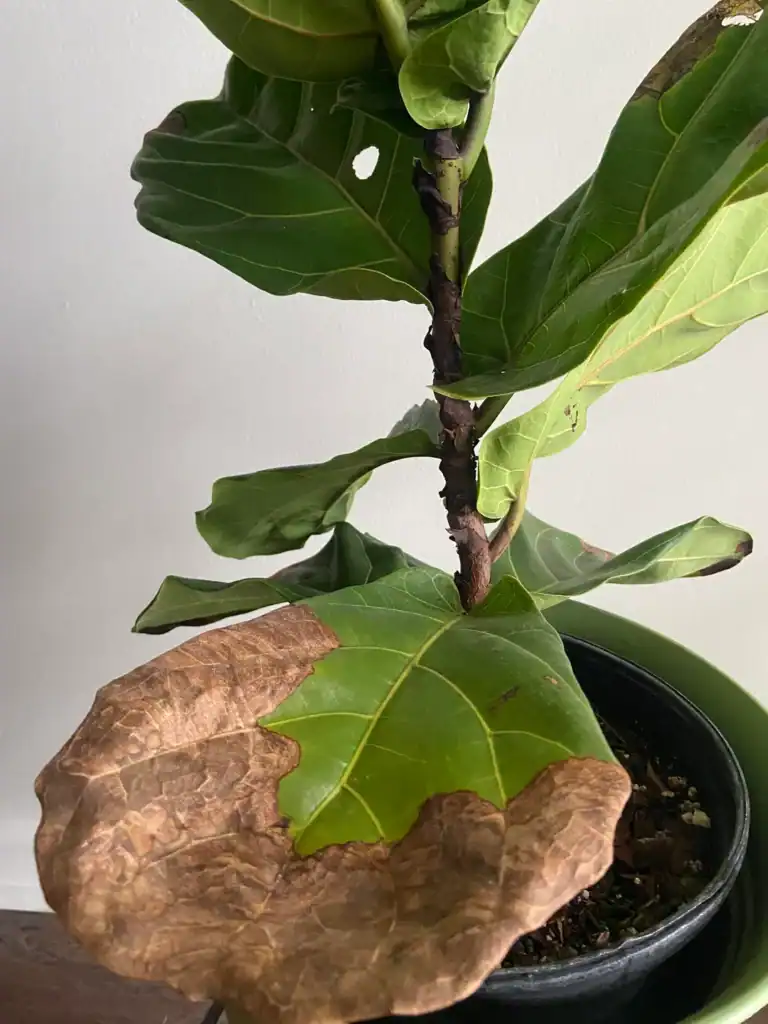
- Too much direct sun: pale, bleached, or crispy brown patches show up on the leaves facing the glass.
- About right: steady new leaves at the top that are full-sized and deep green.
If your home lacks a bright window, a full-spectrum grow light helps. I run mine about 10 to 12 hours a day, placed a foot or two above the top leaves.
One caution: move the plant gradually. A fig that jumps from a dark hallway to a sunny window can drop a few leaves while it adjusts.
2) Water When the Top Two Inches of Soil Are Dry
Check the soil with your finger before every watering, and only water once the top two inches feel dry.
This cue works better than any fixed schedule, because a fig in a warm, bright room drinks far faster than one in a cool winter corner.
When it’s time, water slowly until it runs out of the drainage holes. Then let the pot drain fully and empty the saucer so the roots never sit in standing water.

Here is what I look for between waterings:
| What you notice | What it often means |
|---|---|
| Soil still damp two inches down | Wait a few more days |
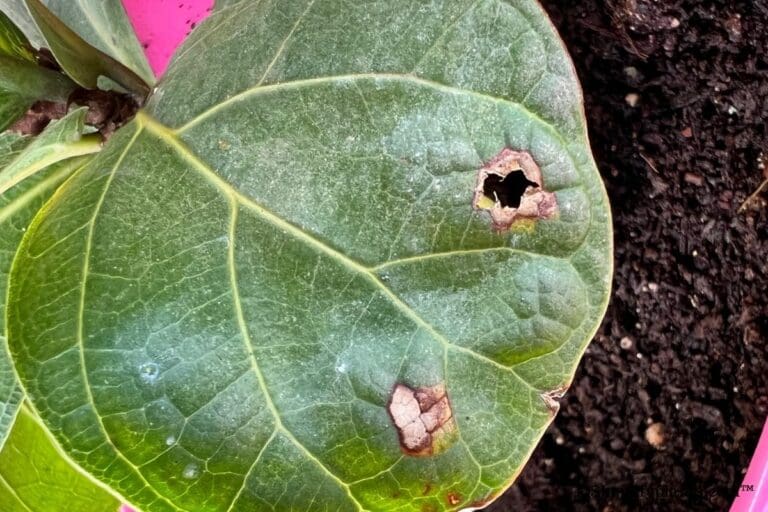
| Brown spots near the center or edges of lower leaves, soil stays wet | Too much water, roots stressed |
| Droopy leaves with crispy edges, soil pulling from pot sides | Too dry for too long |
| Pot feels light when you lift it | Time to check soil and likely water |
Lifting the pot is a handy trick once you learn its “just watered” weight. A dry pot feels noticeably lighter.
3) Prune the Growing Tip to Encourage Branching
Cutting off the top of the main stem is the most dependable way to get a bushier fiddle leaf fig.
The growing tip sends out a hormone that keeps buds lower on the stem asleep. Remove the tip, and one to three of those buds below the cut wake up and become branches.
I wait until the plant is healthy and actively growing, usually late spring or early summer. A stressed fig in winter tends to just sit there after a cut.
How I do it:
- Decide how tall you want the branches to start. New branches form just below the cut.
- Use clean, sharp pruners and cut about half an inch above a leaf node (the small ring where a leaf meets the stem).
- Expect white, milky sap. Dab it with a damp paper towel, and wear gloves if your skin is sensitive.
New buds show up within a few weeks in good light. The plant will be shorter for a while, which is the trade-off for fullness.
4) Feed With a Balanced Fertilizer During Active Growth
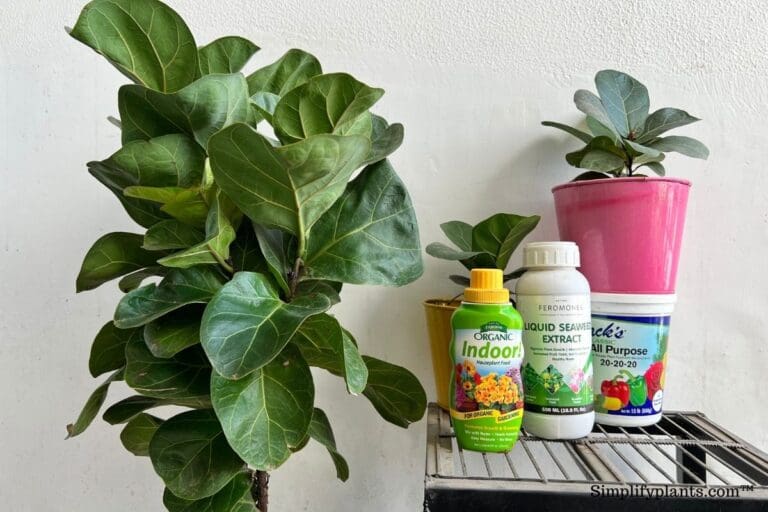
A fig that’s putting out new leaves needs nutrients to build them. I feed mine a liquid houseplant fertilizer about every four weeks from spring through late summer, once new growth is visible.
A balanced formula works fine, and fertilizers made for fiddle leaf figs (often a 3-1-2 ratio) are a good choice too. I mix at half the label strength and pour it onto already damp soil to protect the roots.
Ease off when growth slows in fall and stop through winter. Signs you’ve overdone it include a white crust on the soil surface or browning leaf tips.
If you see that, flush the pot with plain water a few times and skip the next feeding.
5) Use a Well-Draining Potting Mix and a Pot With Drainage Holes
Healthy roots need air as much as water. A dense bag of plain potting soil stays soggy too long for a fiddle leaf fig.

My go-to mix is roughly:
- 2 parts quality indoor potting mix
- 1 part perlite
- 1 part orchid bark
The pot needs at least one drainage hole. Decorative pots without holes are fine as an outer cover, as long as you lift the plastic nursery pot out to drain after watering.
If water pools on top for a long time or the soil smells sour, the mix has broken down and compacted. That’s a good sign it’s time for fresh soil.
6) Repot When the Roots Become Crowded
Repot only when the roots tell you to. A fig that’s too crowded slows down, but one sitting in a pot far too big stays wet and risks root rot.
Cues that the roots are crowded:
- Roots poking out of the drainage holes
- Roots circling the inside of the pot when you slide the plant out
- Soil drying out within two or three days of a full watering
- The plant tipping over easily because it’s top-heavy
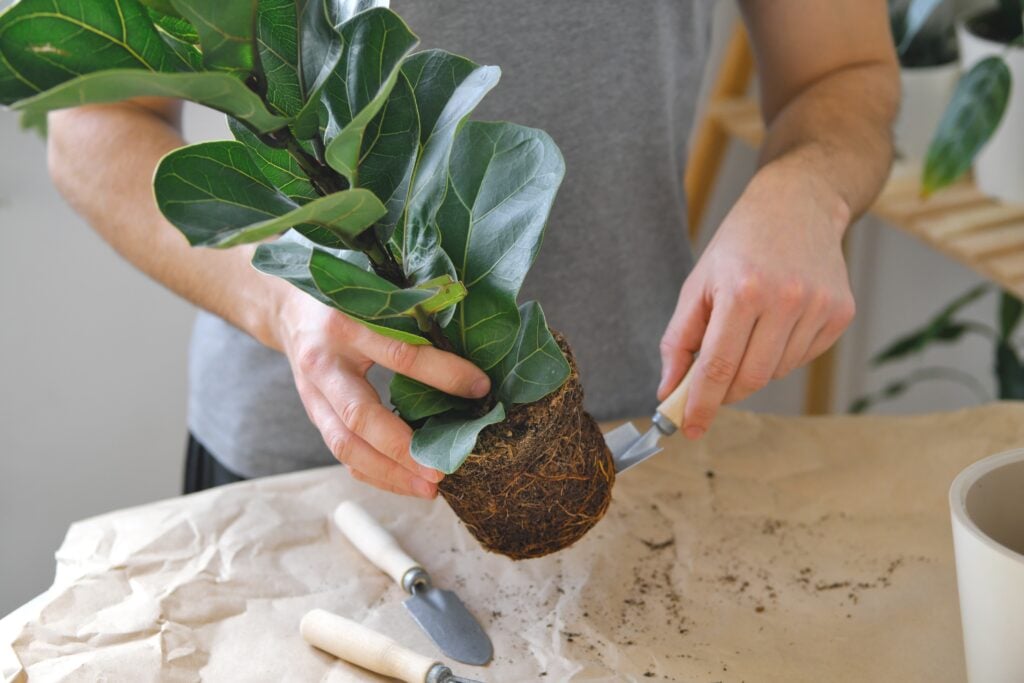
Spring is the best time. Choose a pot just 2 to 3 inches wider than the current one, gently loosen circling roots with your fingers, and settle the plant at the same depth it was growing before.
Give it a few weeks to settle in before you fertilize or prune. Asking a fresh repot to also heal from a cut is a lot at once.
7) Try Notching to Encourage a Side Branch
Notching lets you try for a branch without losing height, but I’ll be candid: it works less often than pruning. Some notches sprout in a few weeks, and plenty do nothing at all.
The idea is to cut a small slit just above a dormant bud on the trunk. This interrupts the signal from the top that keeps the bud asleep.
How to try it:
- Pick a spot on the trunk where you want a branch, just above a node.
- Using a clean, sharp knife, make a small cut about a quarter inch above the node and about one-third of the way into the stem.
- Make it short and shallow. A deep or wide cut weakens the trunk.
I get the best odds in spring and summer on a plant with plenty of light. I’d treat notching as a bonus experiment and keep pruning as the main plan if you want fullness.
8) Keep It Away From Cold Drafts and Dry Heat
Fiddle leaf figs grow best between about 65°F and 75°F, with no sudden swings. Cold blasts from a door or drafty window, or hot dry air from a heating vent, can cause leaves to drop.
Keep the plant at least a few feet from radiators, space heaters, and air conditioning vents. In winter, check that leaves aren’t touching cold glass at night.
Dry indoor air in winter is common across much of the US. A small humidifier nearby or grouping plants together helps keep humidity in the 40% to 60% range. I skip misting, since it raises humidity only for a few minutes.
9) Rotate the Pot for Even Growth

A fig grows toward its light source, so a quarter turn every week or two keeps it from leaning to one side. I do it when I water so I don’t forget.
Rotation helps the trunk grow straighter and gives every side of the plant a fair share of light. If your fig already leans a lot, turning it gradually corrects the lean over a few months.
A stake is fine for holding up a wobbly young trunk. Think of it as support for a plant that needs help standing.
It won’t speed up growth, and gentle movement from a breeze or a fan helps the trunk thicken on its own.
10) Wipe Dust From the Leaves
Big leaves catch a lot of dust, and dust blocks some of the light the plant uses to grow. I wipe each leaf every few weeks with a soft, damp cloth, supporting the leaf from below with my other hand.
Skip leaf-shine sprays and oils. They can clog the leaf surface and attract more dust.
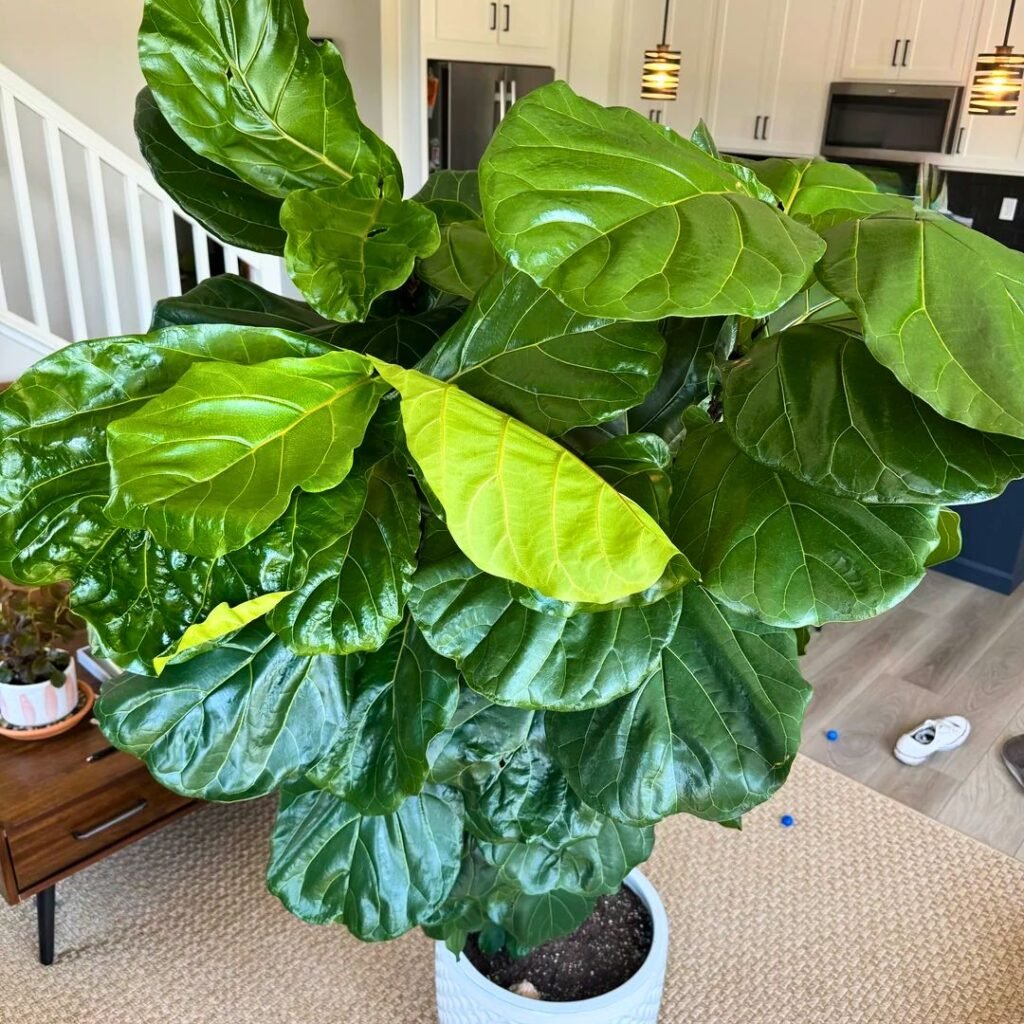
Wiping leaves also puts your eyes close to every leaf, which makes it the easiest time to spot early pest trouble.
11) Check New Growth for Pests
Pests love tender new leaves, so look closely at the top of the plant and the undersides of leaves. The usual suspects on fiddle leaf figs are spider mites, mealybugs, scale, and thrips.
What to look for:
- Fine webbing or tiny moving dots (spider mites)
- White, cottony clumps in leaf joints (mealybugs)
- Small brown bumps stuck to stems and leaf veins (scale)
- Silvery streaks or tiny black specks on leaves (thrips)
- Sticky residue on leaves or the floor below
For light problems, I wipe affected leaves with a damp cloth and then spray with insecticidal soap, repeating every week until new growth comes in clean. Isolate the plant from your other houseplants until it’s clear.
Set Realistic Growth Expectations
A healthy indoor fiddle leaf fig grows steadily but slowly, and growth comes in bursts. Knowing what’s normal helps you avoid fixing a plant that’s doing fine.

How quickly can an indoor fiddle leaf fig grow?
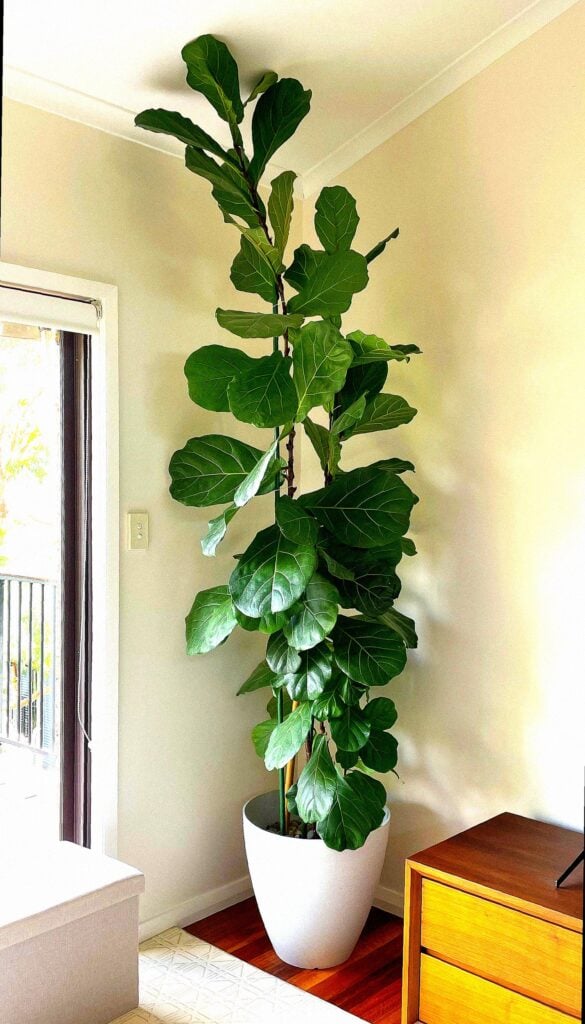
In good indoor light, a fiddle leaf fig often adds about 1 to 2 feet per year, mostly in spring and summer. Over several years, many reach 6 to 10 feet indoors.
New leaves tend to arrive in flushes of a few at a time, with quiet weeks in between. A pause between flushes is normal.
Why might growth slow down in winter?
Shorter days and weaker sunlight mean the plant has less energy to grow. It’s normal for a fig to put out few or no new leaves from late fall through winter.
During those months, it uses less water, so the soil stays damp longer. Keep checking with your finger, water less often, and hold off on fertilizer until new growth returns in spring.
What is the trade-off between growing taller and growing fuller?
Leaving the top alone gives you the most height, but the plant tends to stay as one tall stem. Cutting the tip gives you branches and a fuller shape, but the plant loses height and spends a season filling out.
Many people grow tall first, then prune once the trunk reaches the height where they want branches to start. That’s the approach I like for a tree-shaped fig.
Frequently Asked Questions

How do I make my fiddle leaf fig bushier?
Prune off the growing tip once the plant is healthy and in bright light. New branches usually form just below the cut within a few weeks during spring or summer.
Where should I cut a fiddle leaf fig to encourage branching?
Cut about half an inch above a leaf node at the height where you want branches to begin. Use clean, sharp pruners, and expect the new shoots to appear from the buds just under your cut.
Does notching a fiddle leaf fig reliably produce new branches?
No, notching is hit or miss. It works best on a vigorous plant in spring, but many notches never sprout, so pruning is the more dependable choice for fullness.
Can I make my fiddle leaf fig grow taller without pruning it?
Yes. Bright light, careful watering, seasonal feeding, and a pot sized to the roots all support upward growth, and leaving the top uncut keeps all that growth going into height.
Do coffee grounds help fiddle leaf figs grow?
I don’t use them. Grounds can pack down into a damp layer on the soil, grow mold, and attract fungus gnats, and a diluted liquid fertilizer gives the plant nutrients in a far more predictable way.
Can I cut my fiddle leaf fig all the way down?
A healthy fig with strong roots can sprout again from a short trunk, but it’s a big risk.
Leave several nodes on the remaining stem, do it in late spring, and keep the plant in bright light with lighter watering while it recovers, since a stump with no leaves uses much less water.
Note: Some images in the articles are sourced from Reddit and Other Platforms For Reference Purpose.