11 Tips to Make African Violets Bloom Almost All Year Indoors
African violets can flower for most of the year indoors, and the plants that do it best are the ones living in steady, boring conditions. To keep an African violet blooming almost all year, give it bright indirect light for about 12 hours a day, water it when the soil surface starts to dry, and feed it lightly on a regular schedule. Everything else (pot size, soil, humidity, grooming) supports those three basics.
If your violet has lush green leaves and zero flowers, I’ve been there. A healthy-looking plant that won’t bloom is almost always telling you something about light or water first. Short breaks of a few weeks between flushes of flowers are normal, so a pause by itself is no reason to panic.
The tips below are in the order I’d check them. Each one includes cues you can see on the plant, so you can adjust care without guessing.

Please note: Simplify Plants is reader-supported. As an Amazon Associate, I earn from qualifying purchases made by our readers with no extra cost added to you all! Some links in the post are affiliate links and I get a commission from purchases made through links in the post.
1) Place Your Violet in Bright, Indirect Window Light
Light is the number one reason African violets stop blooming. In my experience, most nonflowering violets are sitting a few feet too far from the window.
An east-facing window is my favorite spot because morning sun is gentle. A north window works well in summer, though it often gets too dim in winter. South and west windows are fine if a sheer curtain softens the afternoon sun.
Watch the leaves to know if the light is right:
- Too little light: Leaves turn dark green, stems get long, and leaves reach upward toward the glass.
- Too much light: Leaves look pale, bleached, or tightly bunched in the center, and you may see brown scorch spots.
- Just right: Leaves lie fairly flat in a neat circle (called a rosette) with medium green color.
Turn the pot a quarter turn every week or so. That keeps the rosette even and stops it from leaning toward the window. Keep leaves from touching cold glass in winter, too.
2) Use an LED Grow Light When Windows Are Too Dim
A simple LED grow light is the easiest fix if your home doesn’t get much daylight. Plenty of serious violet growers raise their plants entirely on shelves under lights, and the plants bloom beautifully.
Here’s the setup I’d start with:
| Setting | Starting point |
|---|---|
| Light type | Full-spectrum LED or fluorescent tube |
| Distance above leaves | About 10 to 12 inches |
| Hours on per day | 12 to 13 hours |
| Dark period | About 8 hours or more each night |
A cheap outlet timer takes the work out of it. Violets need their dark hours as much as their light hours, so leaving a lamp on all night does not help.
Use the same leaf cues from the window tip. If stems stretch upward, lower the light a little.
If the center leaves bunch up tightly and look pale, raise it a few inches. Give any change about two weeks before judging it.
3) Bottom-Water When the Soil Surface Starts to Dry
Watering is the second big bloom factor, and bottom-watering makes it much easier to get right.
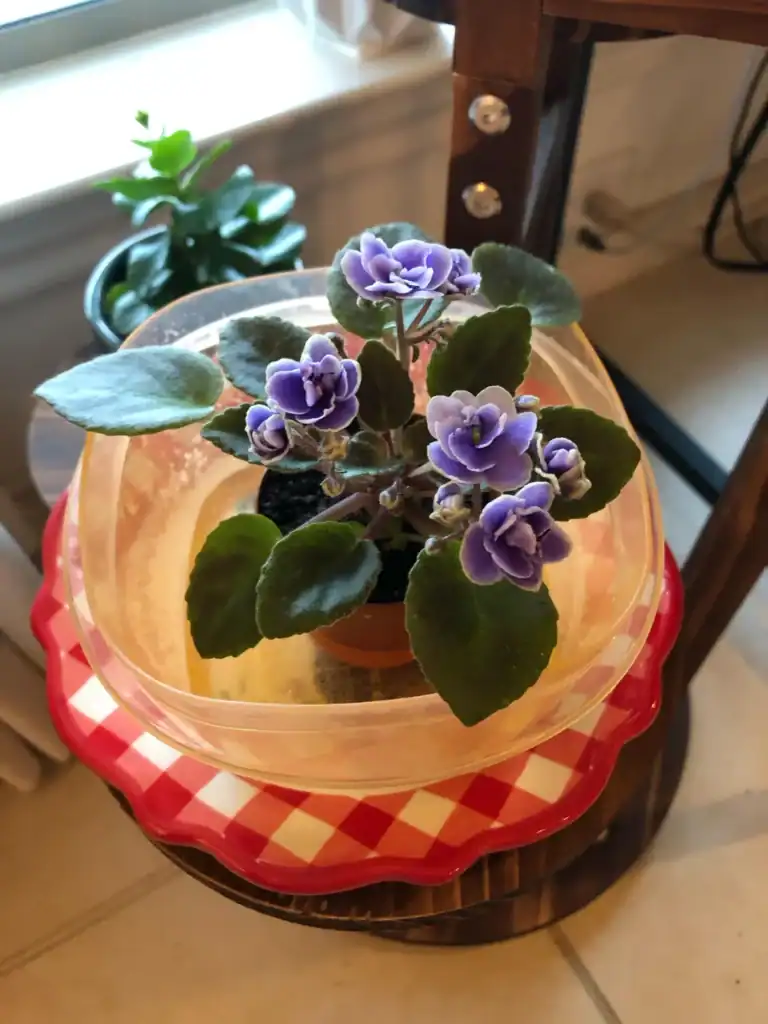
Set the pot in a saucer or bowl of room-temperature water for about 20 to 30 minutes, then pull it out and let it drain.
Check the soil with a fingertip before you water. When the top feels dry to the touch but the pot still has a little weight, it’s time.
A pot that feels light as a feather has gone too dry, and a plant that dries out hard often drops its buds.
A few habits I stick to:
- Use lukewarm water. Cold water can leave pale rings or spots on the fuzzy leaves.
- Never leave the pot sitting in water. Soggy roots lead to root rot, which kills more violets than anything else.
- Water from the top now and then. Every month or so, I pour water through the soil to flush out fertilizer salts that build up with bottom-watering.
Self-watering violet pots are another good option if you tend to forget. They keep moisture steady, which is exactly what flowering plants like.
4) Feed Lightly With African Violet Fertilizer
Violets bloom best with a small, steady supply of food. I use a fertilizer labeled for African violets and mix it weaker than the label’s full strength, then feed every time I water or every couple of weeks.
Many violet fertilizers have a slightly higher middle number (phosphorus), such as 15-30-15 or 14-12-14.
Phosphorus supports flowers and roots. A balanced plant food also works if you use it on a regular schedule.
Feeding too much hurts more than it helps. Watch for these signs:
- White crust on the soil or pot rim
- Brown, crispy leaf edges
- Lots of leaves but still no buds after good light and watering
If you see crust, flush the soil with plain water from the top and skip a feeding or two. Indoor violets keep growing through winter, so I keep feeding lightly all year.
5) Choose a Snug Pot With Drainage Holes
African violets flower better in a small pot. A plant with lots of extra soil around its roots spends its energy filling that space with roots and leaves before it makes buds.
A good rule is that the pot should be about one-third the width of the leaf spread. For most standard violets, that means a 4-inch pot. Mini violets do well in 2- to 2.5-inch pots.
Drainage holes are a must. Water that collects at the bottom of a pot keeps the roots wet and invites rot.
Plastic pots hold moisture longer, while clay pots dry faster, so adjust your watering to match what you use.
6) Plant in an Airy African Violet Potting Mix
Violet roots are fine and delicate, and they need air as much as water. A bagged African violet mix is the easiest choice, and I like to add a handful of extra perlite because many store mixes are still a bit heavy.
If you’d like to make your own, equal parts peat moss (or coco coir), perlite, and vermiculite works well.
Peat or coir holds moisture, perlite adds air pockets, and vermiculite holds water and nutrients.
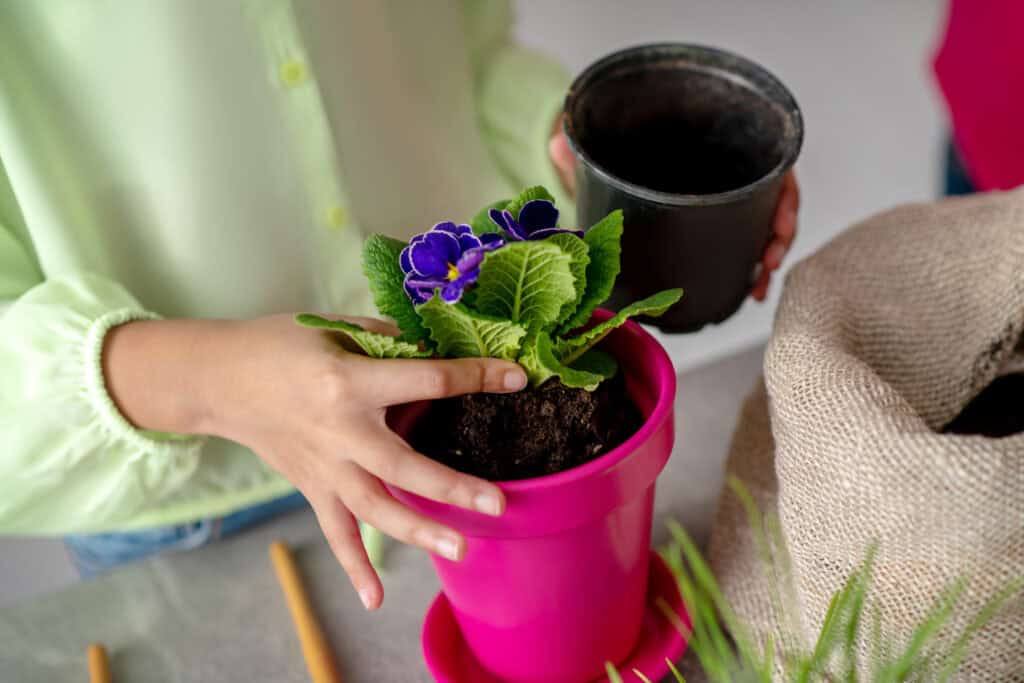
Skip garden soil. It packs down, drains poorly, and can carry bugs or disease into your home. A good violet mix feels light and fluffy in your hand and springs back after you squeeze it.
7) Keep Temperatures Warm and Steady
African violets like the same temperatures most people like: about 65 to 75°F during the day, with nights only slightly cooler. Steady warmth keeps buds forming.
Below 60°F, growth slows and blooming often stops. Sudden swings cause trouble too, so keep plants away from:
- Heating vents and radiators
- Air conditioners and fans
- Drafty doors
- Icy window glass in winter
In winter, I pull my windowsill violets a few inches back from the glass at night. The leaves stay out of the cold, and the plant still gets good light during the day.
8) Raise Humidity Without Wetting the Leaves
Violets are happiest at about 40 to 60 percent humidity. Dry winter air from heating can slow growth and make buds shrivel before they open.
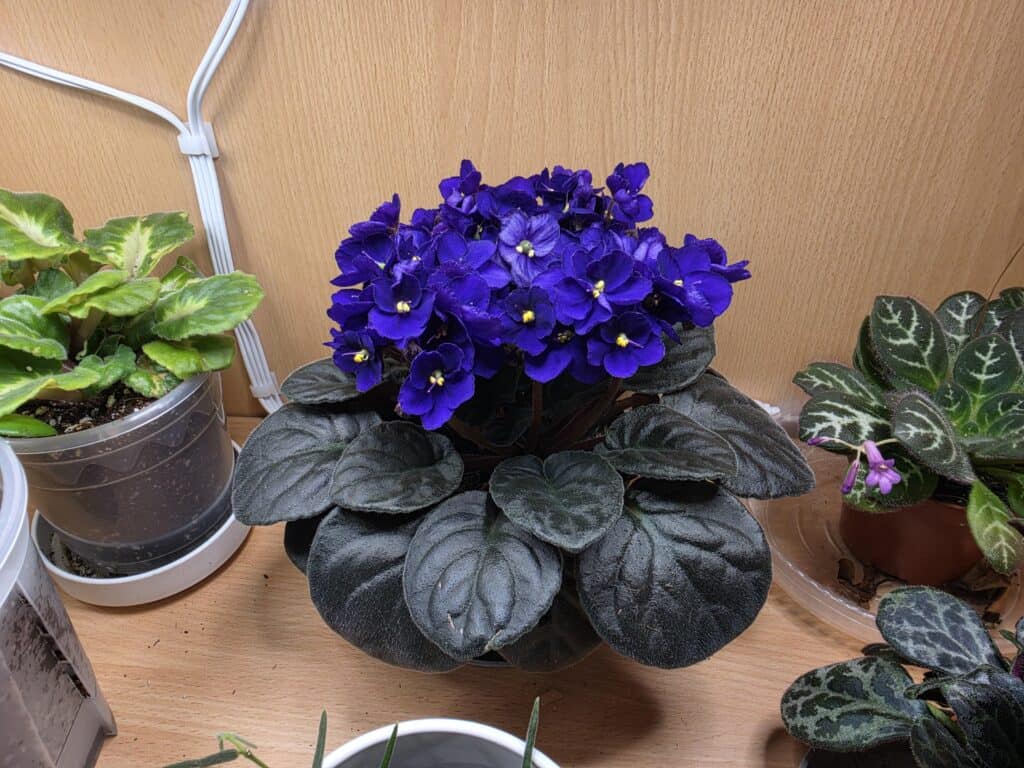
Misting is a bad idea for these plants. Water drops on fuzzy leaves cause spots and can lead to fungal problems. Try these methods:
- Pebble tray: Set the pot on a tray of pebbles with water below the pot’s base.
- Grouping: Plants clustered together create a slightly moister pocket of air.
- Small humidifier: The most reliable choice in very dry homes, especially in winter.
A cheap hygrometer (a little humidity gauge) shows you whether your room needs help at all.
9) Remove Spent Flowers and Their Stems
Pinch or snip off faded flowers as soon as they wilt. When a whole cluster is done, remove its flower stem down at the base where it meets the leaf.
Old blooms left on the plant can rot, and removing them keeps the rosette tidy.
While you’re there, take off any yellow or damaged outer leaves. I gently snap them sideways off the main stem.
A light grooming once a week helps you spot problems early, too.
10) Remove Suckers That Crowd the Main Crown
Suckers are baby plants that pop up from the main stem or between leaves. They steal energy and crowd the center, which cuts down on flowers.
You can tell a sucker apart from a flower bud by its shape. A sucker has small leaves growing in its own tiny rosette, while a flower bud sits on a thin bare stem.
Gently pry suckers out with a pencil tip or tweezers while they’re small.
The goal is one crown with a single neat circle of leaves. Larger suckers can be potted up on their own to grow new plants.
11) Refresh the Potting Mix Every 6 to 12 Months
Old potting mix breaks down, packs tight, and fills with fertilizer salts, and blooming slows down as a result.
I repot my violets with fresh mix about twice a year, often into the same size pot.
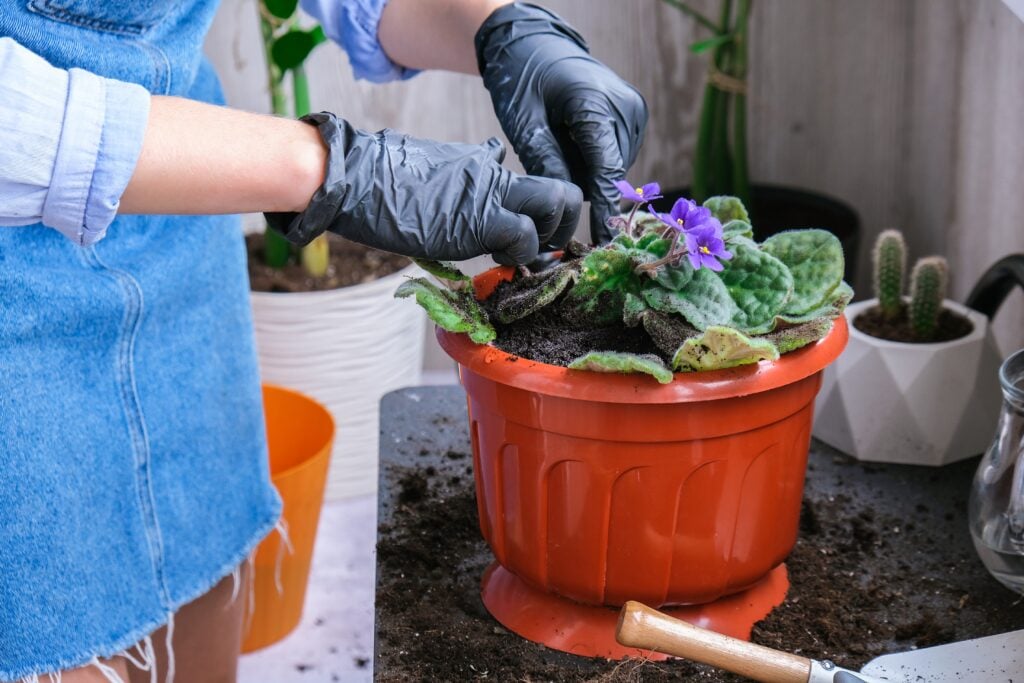
Signs it’s time:
- A long bare “neck” of stem below the lowest leaves
- Crusty white build-up on the soil
- Slower growth and fewer flowers, even with good light
- Roots poking out of the drainage holes
For a necked plant, trim off a few of the oldest bottom leaves, scrape the stem lightly, and set the plant a bit deeper in fresh mix so the neck sits below the soil line. Keep it out of strong light for a week while it settles.
Troubleshooting Bloom Problems
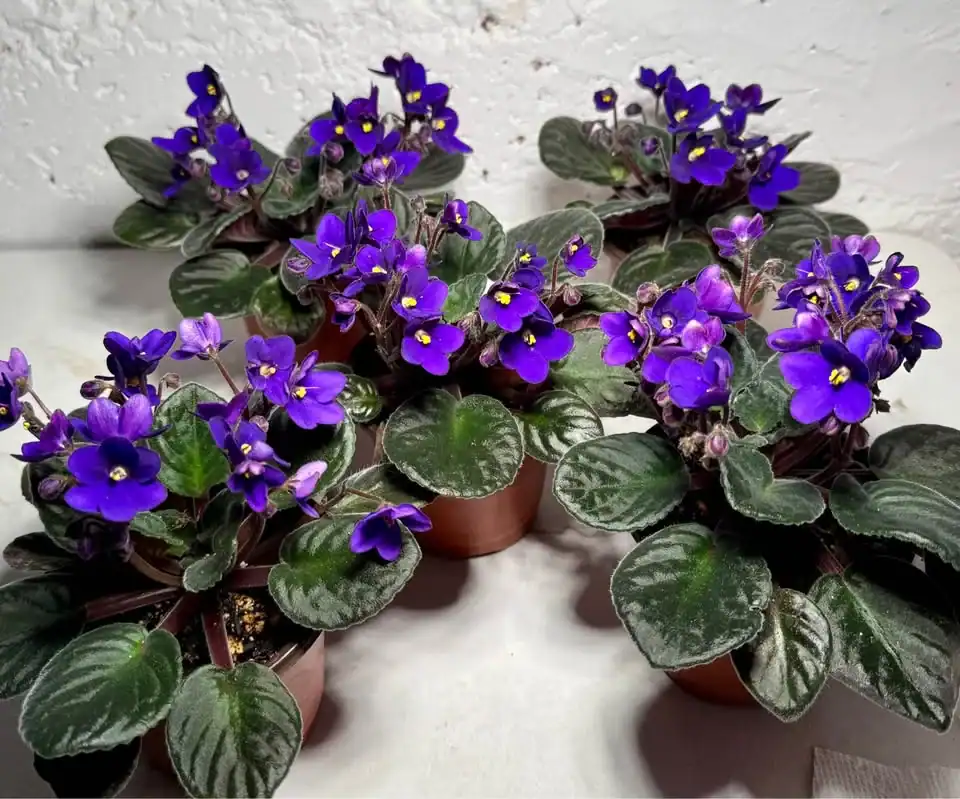
Most bloom problems trace back to light, water, or stress. The plant usually gives you a clear sign if you know what to look for.
What do limp leaves and wet soil signal?
Limp, droopy leaves on soil that is still wet point to root rot. The roots have stopped working, so the plant can’t take up water even though there’s plenty. Gently slide the plant out and check the roots.
Healthy ones are white or light tan, and rotted ones are brown and mushy. If the center crown is still firm, trim off bad roots and repot into fresh, barely damp mix.
If the crown is soft, the best move is often to root a healthy leaf and start over.
Why do flower buds drop before opening?
Bud drop comes from sudden stress. The usual causes are:
- The soil drying out completely between waterings
- Cold drafts or a big temperature swing
- Very dry air
- Moving the plant to a new spot
Normal resting is different. A healthy plant may go a few weeks with no buds at all between flower flushes. Buds that form and then shrivel or fall signal a problem in the plant’s environment.
When should you check a nonflowering violet for pests?
If your light, watering, and feeding are on track and the plant still won’t bloom after a couple of months, look for pests. Thrips leave spilled yellow pollen on flowers and streaks on petals.
Mealybugs look like bits of white cotton at the leaf bases. Cyclamen mites cause a tight, hairy, stunted center of leaves. Keep an infested plant away from your others, and treat it right away.
Frequently Asked Questions
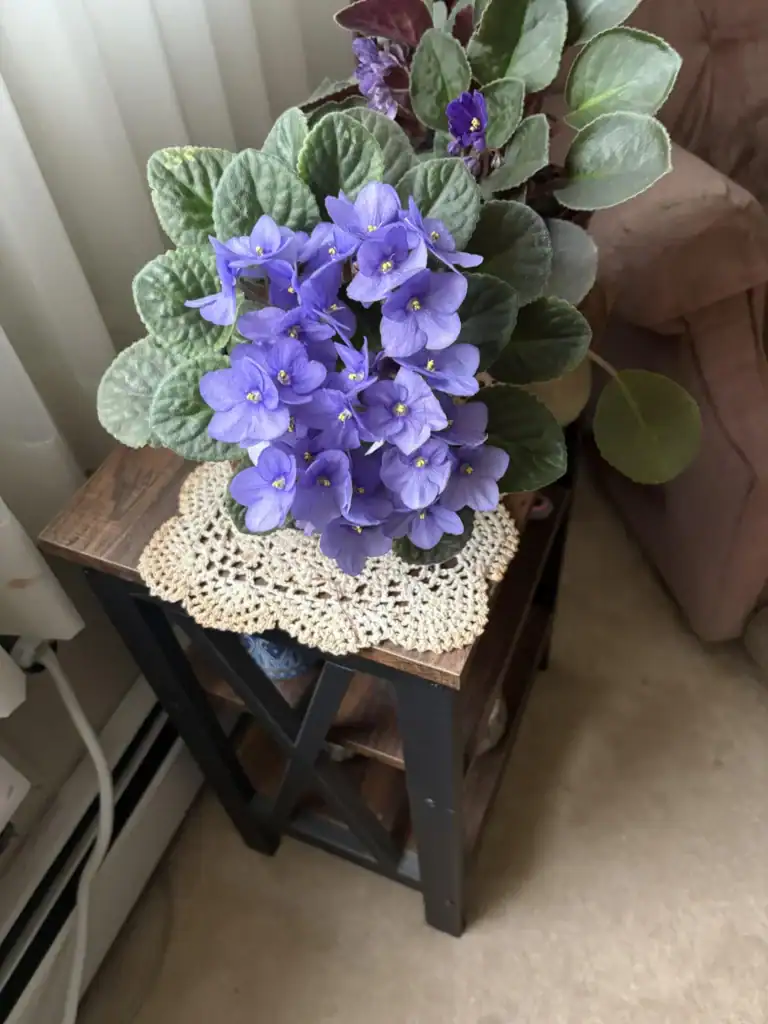
Do African violets bloom all year indoors?
They can bloom for most of the year with steady light and care.
A healthy plant usually flowers in waves, with short rests of a few weeks between them. Those breaks are a normal part of the cycle.
How long does it take an African violet to bloom again?
A healthy violet often starts new buds within about 4 to 8 weeks after a flush of flowers fades.
If you just fixed its light or watering, give it a month or two to respond. Look for tiny buds tucked down near the base of the leaves.
Can you force an African violet to bloom?
No single trick forces flowers, but good conditions bring them on reliably. Moving a dim plant to brighter light or under a grow light is the fastest change you can make. Pair that with steady watering and light feeding.
What should you do after an African violet finishes blooming?
Remove the faded flowers and their stems, then keep up normal care. Check for suckers and trim any tired outer leaves. If the mix is more than six months old, it’s a good time to repot.
Is homemade fertilizer a good choice for African violets?
I stick with a fertilizer made for African violets. Homemade options like coffee grounds or eggshells don’t give a steady, balanced supply of nutrients and can make soil soggy or moldy. A diluted violet fertilizer is easier to measure and gentler on fine roots.
Note: Some images in the articles are sourced from Reddit and Other Platforms For Reference Purpose.