Why Your African Violet Is Not Flowering?
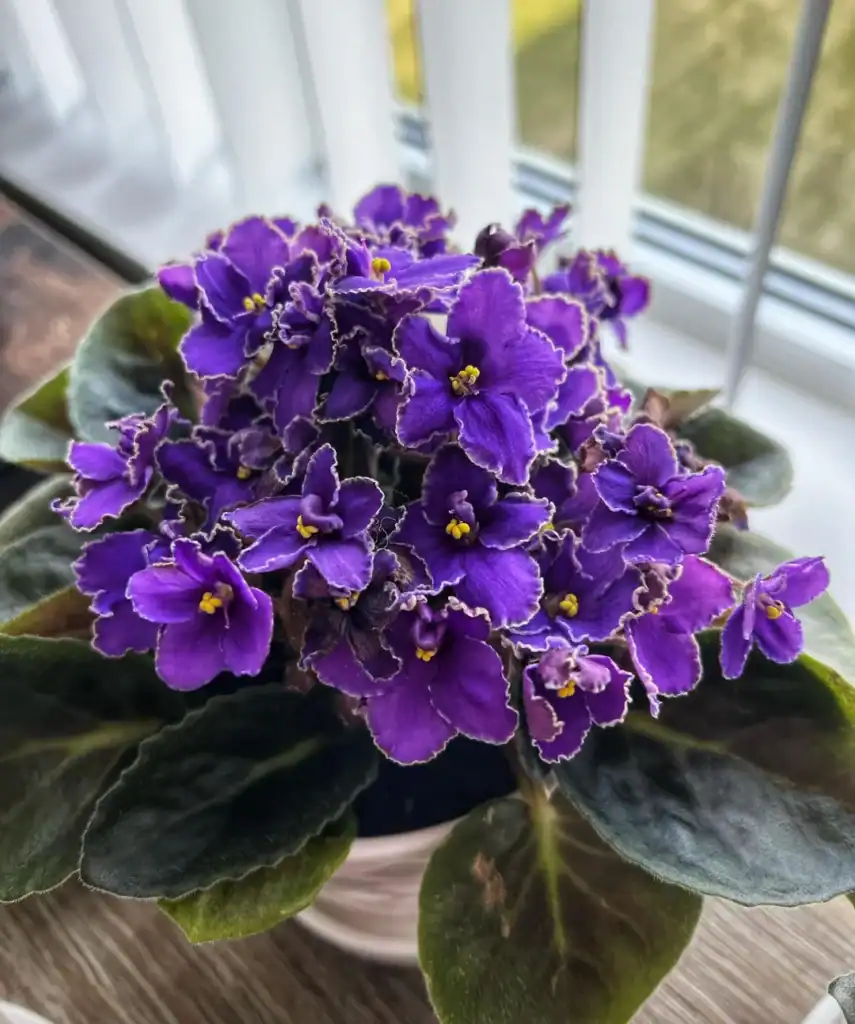
African violets are such a favorite among houseplant lovers, mostly because of those colorful blooms—until they just stop flowering for no apparent reason. If your plant looks healthy but won’t produce flowers, you’re definitely not alone.
Honestly, it’s one of the most common headaches for African violet owners. The upside? Most of the time, the reason is something pretty basic—light, water, temperature, or just a little hiccup in your care routine.
Once you figure out what’s holding your plant back, you can usually coax it into blooming again within a few weeks or maybe a couple of months.
From what I’ve seen, it’s usually something simple—like not enough light or using the wrong fertilizer. So let’s get into the main reasons African violets refuse to flower and what you can do about each one.
Please note: Simplify Plants is reader-supported. As an Amazon Associate, I earn from qualifying purchases made by our readers with no extra cost added to you all! Some links in the post are affiliate links and I get a commission from purchases made through links in the post.
1) Insufficient bright, indirect light
African violets really need the right kind of light for those blooms. If yours isn’t flowering, it might just be missing out on enough brightness during the day.
I’ve found they do best near a window where there’s plenty of light, but not direct sun beating down on them. Direct sunlight can seriously burn their leaves, but too little light means you’ll get leaves and not much else.
They want around 10-12 hours of bright, indirect light each day to actually bloom.
Quick Tip: Try placing your African violet about three feet from an east or west-facing window, or right up next to a north-facing one.
You can usually tell if your plant needs more light by checking the leaves. If they’re stretching upwards or the stems are getting long and leggy, that’s your clue.
Dark green leaves can also mean it’s not getting enough light to flower.
In winter, when the days are short and gloomy, your plant might need extra help. A simple grow light nearby for a few hours can make a world of difference.
2) Overwatering causing root rot
I’ve seen so many African violets struggle just because their owners got a bit carried away with watering.
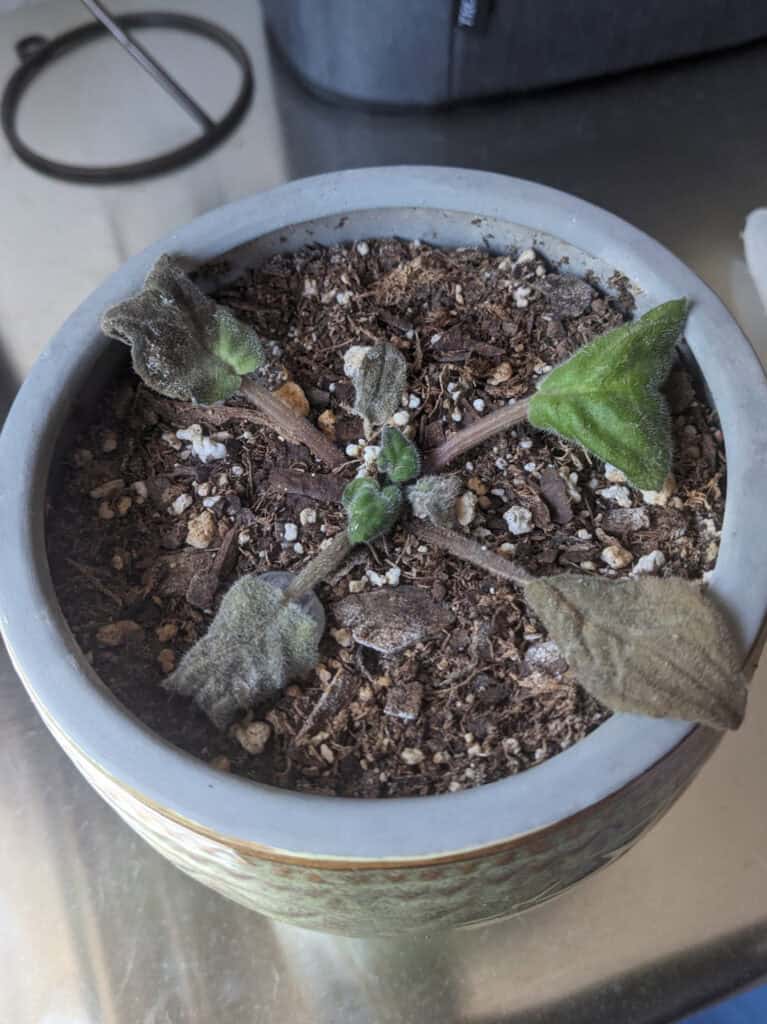
When you water too often, the soil stays soggy and the roots can’t breathe.
The roots start to rot, and once they’re damaged, your plant can’t get the nutrients it needs to make flowers.
You might notice the leaves look droopy or feel mushy at the base. Sometimes the soil even smells a bit sour if you get close.
I always poke the top inch of soil before watering. If it still feels damp, I just wait another day or two. African violets like their soil to dry out a bit between waterings.
Quick Tip: Water from the bottom by setting the pot in a tray of water for about 20 minutes, then take it out so the roots don’t just sit in water.
If you catch root rot early, you can trim away the mushy brown roots and repot in fresh soil. Just make sure your pot has proper drainage.
3) Underwatering and dry soil
African violets need steady moisture if you want blooms. When the soil dries out too much, the plant just stops flowering and focuses on surviving.
I’ve seen African violets refuse to bloom simply because they weren’t getting enough water. The soil should feel just a bit damp when you stick your finger about an inch down.
If it’s bone dry, your plant is definitely thirsty.
Dry soil is stressful for these plants. They can’t make the energy for flowers when they’re struggling just to stay alive.
Leaves might feel thinner or look a bit droopy too.
Quick Tip: Water when the top inch of soil feels dry, but don’t let it get dusty.
I like watering mine from the bottom, letting the pot sit in a shallow dish of water for about half an hour. It keeps the leaves dry and lets the roots take up what they need.
Just remember to dump any leftover water so the roots don’t end up sitting in it.
4) Low temperatures below 65°F (18°C)
African violets are tropical plants, so they hate the cold.
When temperatures drop below 65°F, your plant goes into survival mode. It stops putting energy into flowers and just tries to hang on.
I’ve seen this happen when people keep their violets near drafty windows or in chilly basements.
The sweet spot for blooming is between 65°F and 75°F. If your home is chilly, especially at night, that’s probably why you’re not seeing any flowers.
Quick Tip: Move your violet away from cold windows, air conditioning vents, and exterior doors where temps bounce around.
You might see the leaves droop or get darker when it’s too cold. That’s your plant’s way of saying it’s uncomfortable.
A small room thermometer near your plant is surprisingly helpful.
If you can’t warm up the whole room, try a heat mat for plants. Or just move it to a warmer spot—sometimes that’s all it takes.
5) Too much direct midday sun (Yes, your violet can actually get sunburned)
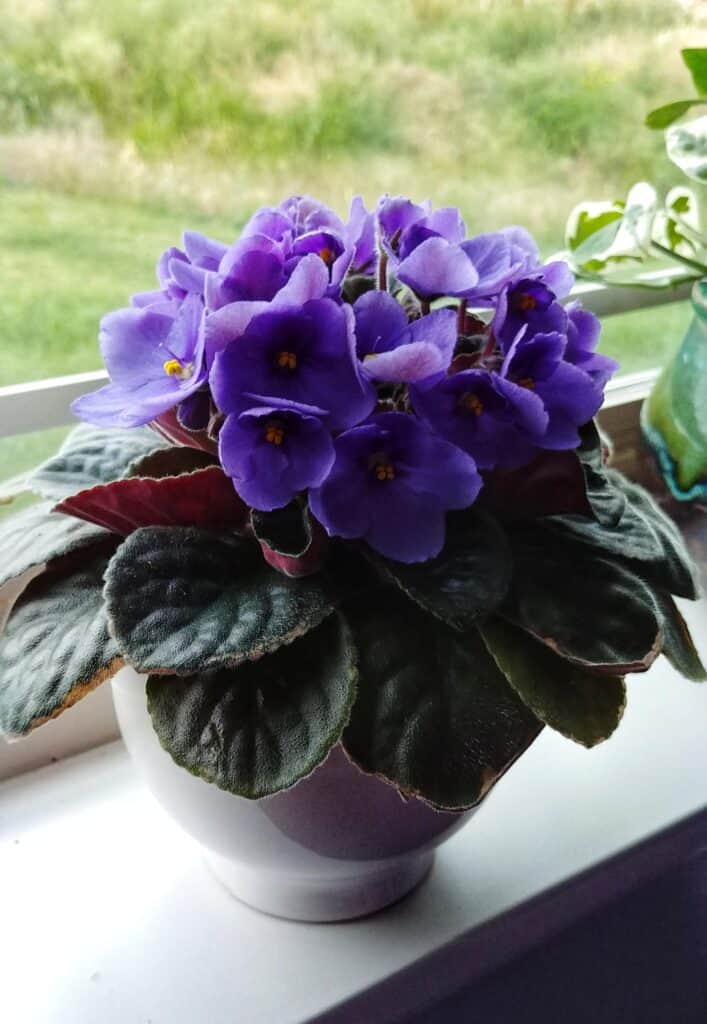
African violets really do love bright light, but harsh midday sun is just too much for those soft leaves.
I’ve seen plenty of violets with pale, bleached spots or even crispy brown patches from sitting in a south-facing window during hot afternoons.
The strong rays just stress the plant out. Instead of making flowers, your violet puts all its energy into surviving the heat and sun damage.
Quick Tip: Move your violet to a spot with bright, indirect light—an east-facing window works great, or a few feet back from a sunny window with a sheer curtain.
Keep an eye out for faded leaves or a yellowish tint. If you spot that, it’s a sign your plant’s getting too much sun.
Shift it to a gentler spot and it should recover in a few weeks.
In winter or cooler climates, you might get away with a bit more direct light. But when temperatures climb, that’s when you need to be careful.
6) Incorrect potting mix (heavy garden soil)
I’ve seen so many African violets struggle because they’re planted in regular garden soil. These plants need something much lighter and fluffier than what you’d use for your outdoor veggies.
Garden soil holds too much water and packs down tight. African violets have delicate roots that need air pockets to breathe.
When the soil stays soggy and dense, the roots can’t get oxygen and start to rot.
You really want a special African violet mix or make your own with peat moss, perlite, and vermiculite. The mix should feel light and crumbly, not heavy or sticky.
Quick tip: If water just sits on top of the soil instead of soaking in right away, your mix is too heavy.
When roots are stuck in wet, compacted soil, your plant just tries to survive and forgets about making flowers.
Switch to a proper airy mix and you’ll probably notice a big change in a few weeks.
7) Nutrient deficiency—low phosphorus
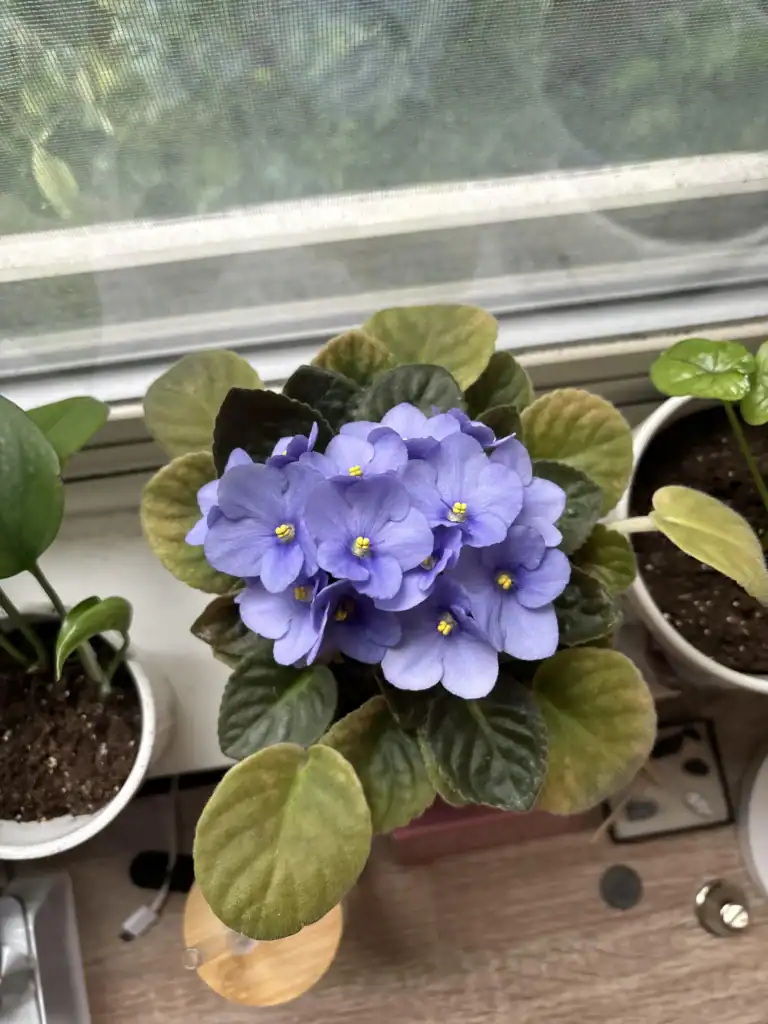
African violets need phosphorus if you want them to bloom. Without it, they’ll grow leaves just fine but won’t bother with flowers.
Most standard fertilizers have three main nutrients, and phosphorus is the middle number on the label.
If you’ve been using a balanced fertilizer or none at all, your plant might be missing out.
I’d go for a fertilizer made for blooming plants—look for one where the middle number is higher, like 5-10-5. Feed your African violet every couple of weeks during the growing season.
Quick Tip: Yellow leaves at the bottom can also signal low phosphorus, not just a lack of blooms.
Don’t go wild with fertilizer, though. Too much can cause salt buildup in the soil, and that’s a headache you don’t want.
If you see white crust on top of the soil, flush the pot with water to rinse away the extra salts.
8) Plant potbound roots restricting blooms
When my African violet’s roots run out of space, the plant puts all its energy into just surviving. The roots circle around at the bottom, forming a tight mass that can’t absorb water or nutrients properly.
I check for this by gently lifting the plant out of its pot. If I see a thick tangle of roots and barely any soil, it’s time to repot.
Sometimes the plant even starts pushing itself up out of the container.
Quick Tip: Repot your African violet once a year into a pot that’s only one inch wider than the current one.
They actually like being a bit snug in their pots, but there’s a difference between cozy and just plain cramped.
When roots fill up the whole container, the plant stops blooming and the leaves may droop even after watering.
I always use fresh potting mix made for African violets when I repot. It gives the roots space to spread and helps the plant focus on making flowers again.
9) Too high humidity causing fungal issues (and why that stops blooms cold)

African violets love humidity, but there’s definitely such a thing as too much. When the air stays damp for too long, you’re basically inviting fungal problems.
Fungi thrive in wet conditions. If your humidity is over 70% for days on end, you might notice fuzzy gray mold on leaves or stems.
These infections stress your plant out so much it stops making flowers and focuses on survival.
I’ve seen this happen when people keep their violets in terrariums or bathrooms with no airflow. The leaves start looking soggy or develop dark spots, and the buds either drop or never show up at all.
Quick Tip: Aim for 50-60% humidity and make sure air can move around your plant—a small fan on low can help.
Watch for condensation on leaves in the mornings. That’s a sign the air is too moist overnight.
If you spot any moldy-looking patches, remove the affected leaves right away and drop the humidity before it spreads.
10) Using high-nitrogen fertilizer (e.g., 10-5-5)
I learned this the hard way when my African violets gave me tons of leaves but not a single flower. High-nitrogen fertilizers like 10-5-5 just push plants to grow more foliage.
African violets actually need more phosphorus (that middle number) to really put on a good flower show. When I switched to a balanced formula or one with extra phosphorus, my plants started budding within a few weeks.
Check your fertilizer label before you feed. If that first number towers over the others, you’re basically telling your plant to focus on leaves, not flowers.
Quick Tip: Look for fertilizers labeled for blooming plants or African violets—these usually have equal or higher middle numbers.
Now, I use a 7-9-5 formula during growing season. My violets finally reward me with steady blooms instead of just a jungle of green.
If you’ve been feeding regularly but still seeing no flowers, your fertilizer choice might be the missing piece.
Understanding African Violet Lifecycle
African violets follow a pretty predictable growth pattern, and it affects when and how often they bloom.
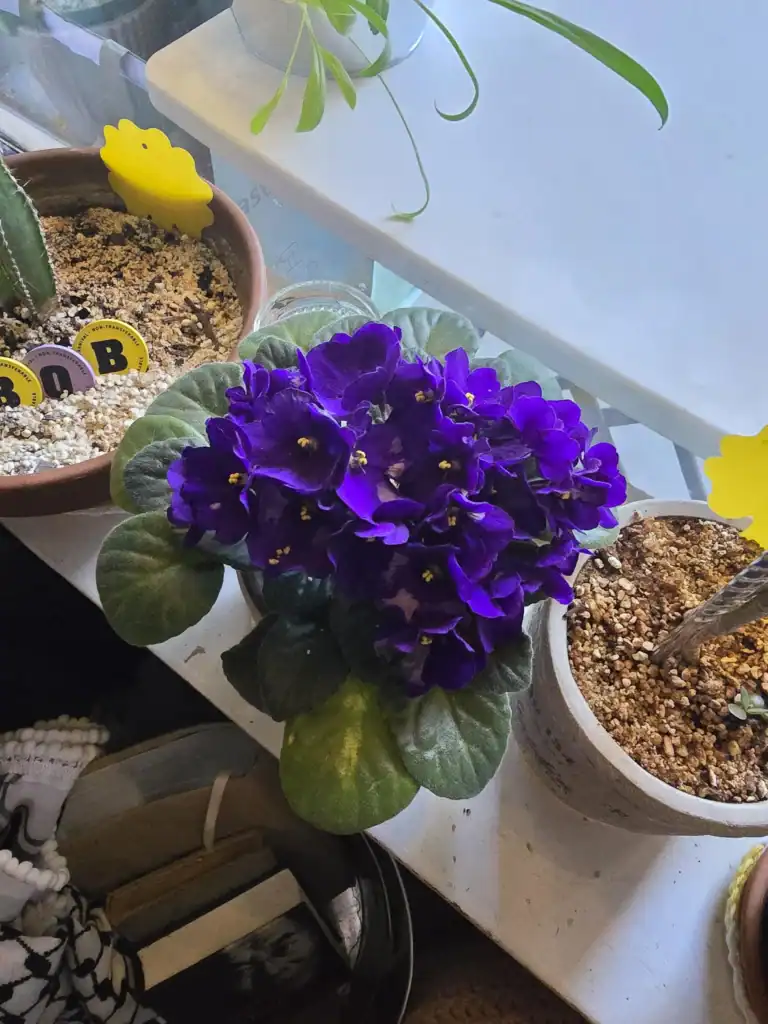
A lot of plant owners seem to think these should flower constantly, or they fall for old wives’ tales about blooming.
Growth Stages Explained: From Baby Plant to Blooming Machine
When you first get an African violet, it needs time to settle in before it starts flowering. Young plants usually spend their first 8-10 months building a strong root system and growing leaves.
I’ve learned, sometimes the hard way, that patience here really does pay off. Once your plant matures, it enters its prime blooming phase.
A healthy adult African violet can bloom almost year-round if you get the conditions right. The plant produces flowers in cycles, and each bloom lasts about 2-3 weeks.
Between flowering cycles, your plant takes a little break. This rest usually lasts 2-4 weeks while it stores up energy for the next round.
During these breaks, the leaves keep growing and the plant looks healthy—just no flowers for a bit.
Quick Tip: If your African violet is under 9 months old, it might just need more time before it flowers.
Common Myths About Blooming: What Actually Doesn’t Work
I’ve heard people swear that playing music or talking to African violets makes them bloom. Honestly, there’s no real evidence that sound does anything for flowering.
What actually matters is light, water, and temperature. Another myth says putting a rusty nail in the soil encourages blooms.
Nope—African violets need specific nutrients, not random iron from rusty metal. Some folks also believe these plants only bloom in spring.
That’s not true. With proper care, African violets bloom multiple times throughout the year, no matter the season.
There’s also the “ice cube watering trick” floating around. Cold water actually shocks the roots and can damage your plant instead of helping it flower.
Quick Tip: Stick to proven care methods like good lighting and fertilizer instead of chasing trendy hacks.
Environmental Influences on Blossoming
Your African violet needs the right light spectrum and balanced air conditions to trigger those cheerful blooms we all want to see.
The Role of Light Quality (Not Just Brightness)
I’ve learned that African violets are picky about the kind of light they get, not just how much. They bloom best under light that includes both blue and red wavelengths.
Blue light helps with leaf growth, while red light tells the plant it’s time to flower. Natural light from an east-facing window works great—it’s bright but not harsh.
If you’re using artificial lights, I recommend full-spectrum LED or fluorescent bulbs about 12 inches above your plant. Standard incandescent bulbs just won’t cut it—they’re too warm and miss the right spectrum.
Quick Tip: If your violet has loads of healthy leaves but no flowers, try a grow light with more red spectrum.
Watch the duration too. African violets need 12 to 14 hours of good light each day to bloom.
Too much darkness throws off their internal clock and halts bud formation.
Impact of Humidity and Air Circulation (The Forgotten Duo)
Stagnant air is a silent bloom killer. African violets originally grew on forest floors where gentle breezes kept the air moving.
Without some circulation, they get stressed and often drop buds before they even open. A small fan running nearby (not blasting the plant directly) helps a ton.
It keeps fungal problems away and lets the plant breathe. Just keep it on low.
Humidity between 50% and 60% is ideal for flowering. Dry air causes buds to shrivel before they open.
I use a humidity tray filled with pebbles and water under the pot—just be sure the pot sits on the pebbles, not in the water.
Quick Tip: Group several African violets together to create a mini humid microclimate that encourages blooming.
In winter, when heating systems dry out indoor air, I mist the area around my violets (never the leaves directly) once daily.
Frequently Asked Questions
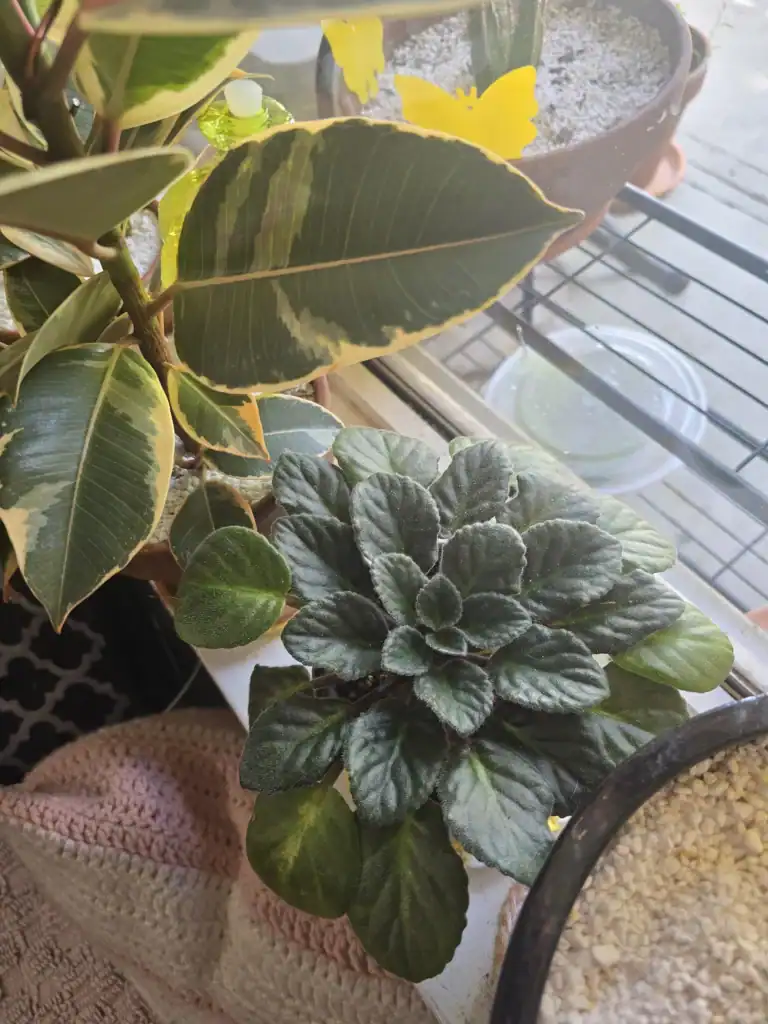
African violets need bright indirect light for at least 10-12 hours daily, balanced fertilizer every 2-4 weeks during active growth, and proper spacing to channel energy into blooms rather than excess foliage.
What are the most common reasons an African violet won’t bloom indoors, and how can I fix them?
Honestly, poor lighting is the biggest culprit when African violets refuse to flower. These plants need bright, indirect light for most of the day, but direct midday sun will scorch their leaves and stress them out.
Watering problems come in next. Too much water leads to root rot, which stops blooming entirely.
Too little water stresses the plant and makes it focus on survival instead of flowers. Temperature matters more than most people think.
If your home drops below 65°F regularly, your African violet will sulk and skip flowering. I keep mine in rooms that stay between 65-75°F year-round.
Quick Tip: Move your plant closer to a window if it hasn’t bloomed in three months, but watch for direct sun that might burn the leaves.
How long does it usually take an African violet to start flowering again after repotting, and what can speed up the process?
Most African violets take about 6-8 weeks to settle in and start blooming after repotting. The plant needs time to recover from the stress and get its roots established in the fresh soil.
I’ve noticed that using a pot that’s just a bit small (about one-third the diameter of the plant’s leaf span) actually encourages faster blooming. African violets like feeling a bit root-bound—it signals them to flower instead of just growing more roots.
You can speed things up by keeping the plant warm and giving it consistent light. I also use a diluted bloom-booster fertilizer about three weeks after repotting.
Quick Tip: Don’t repot during winter months when growth naturally slows—spring and early summer give the best results.
How much light does an African violet need to bloom consistently inside the house, and where should I place it?
African violets need 10-12 hours of bright, indirect light every day to produce flowers reliably. I place mine about 3-4 feet from an east or west-facing window where they get plenty of brightness without harsh direct sun.
North-facing windows work if they’re unobstructed, but you might need to move the plant closer. South-facing windows give too much intense light unless you filter it with a sheer curtain.
If natural light isn’t enough, I use a grow light positioned 12-15 inches above the plant. The leaves should feel just a bit warm to the touch, not hot.
Quick Tip: Rotate your plant a quarter turn every week so all sides get equal light and the plant grows evenly.
What kind of fertilizer helps African violets flower, and how often should I use it to see results?
I use a balanced fertilizer with equal parts nitrogen, phosphorus, and potassium (like 14-14-14) or one a little higher in phosphorus to promote blooming. Water-soluble formulas are my go-to because they’re easy to control and won’t burn the roots.
During active growth in spring and summer, I fertilize every 2-3 weeks at half strength. In fall and winter, I cut back to once a month since the plant slows down.
Some people fertilize lightly with every watering, which can work if you dilute the fertilizer to about one-quarter strength. I’ve tried both ways and gotten good results.
Quick Tip: If you see leaf tips turning brown, you’re over-fertilizing—flush the soil with plain water and wait a month before feeding again.
Can too many leaves or a crowded crown prevent an African violet from blooming, and should I remove them?
A crowded crown full of leaves definitely slows down flowering. The plant puts all its energy into maintaining extra foliage instead of making buds.
I remove the bottom row of leaves when they start looking tired or when the center gets too packed. This opens things up and redirects energy toward blooming.
Suckers (those baby plants growing from the base) also steal energy from the main crown. I pinch these off as soon as I see them unless I want to start new plants.
Quick Tip: Keep only 3-5 rows of healthy leaves on your plant and remove any that touch the soil to prevent rot.
How often do African violets typically bloom, and does the season affect indoor plants even with controlled conditions?
Healthy African violets can bloom pretty much all year if you keep their environment steady. Each bloom cycle usually lasts somewhere between 2 and 4 weeks.
There are short pauses between cycles, which I guess is just how they roll. Even with everything indoors and under control, I’ve noticed my own plants slow down a bit in winter.
Maybe it’s the drop in natural light, or that dry air from the heater—honestly, it seems to bother them more than I expected. Some types just naturally put on more flowers in spring and summer anyway.
So, if your violet decides to chill out during winter, don’t stress too much. That’s just how some of them are wired.
Quick Tip: Try jotting down when your plant blooms—if it skips more than two cycles, it might be time to rethink your light or watering.
Note: Some images in the articles are sourced from Reddit and Other Platforms For Reference Purpose.