Why Is Your Pilea Growing Tall but Not Full? 7 Common Reasons and Easy Fixes for a Bushier Plant
A Pilea is supposed to look round and full, with lots of coin-shaped leaves. So it can be confusing when yours grows tall, thin, and a little bare instead. I’ve had this happen with my own plants, and it usually happens slowly enough that you don’t notice it right away.
In most cases, a Pilea grows tall but not full because it isn’t getting enough light, though watering, pot size, and pruning can also play a part.
The good news is that these problems are easy to spot and fix. In this article, I’ll walk you through the most common reasons and the simple steps you can take to help your plant grow bushy again.
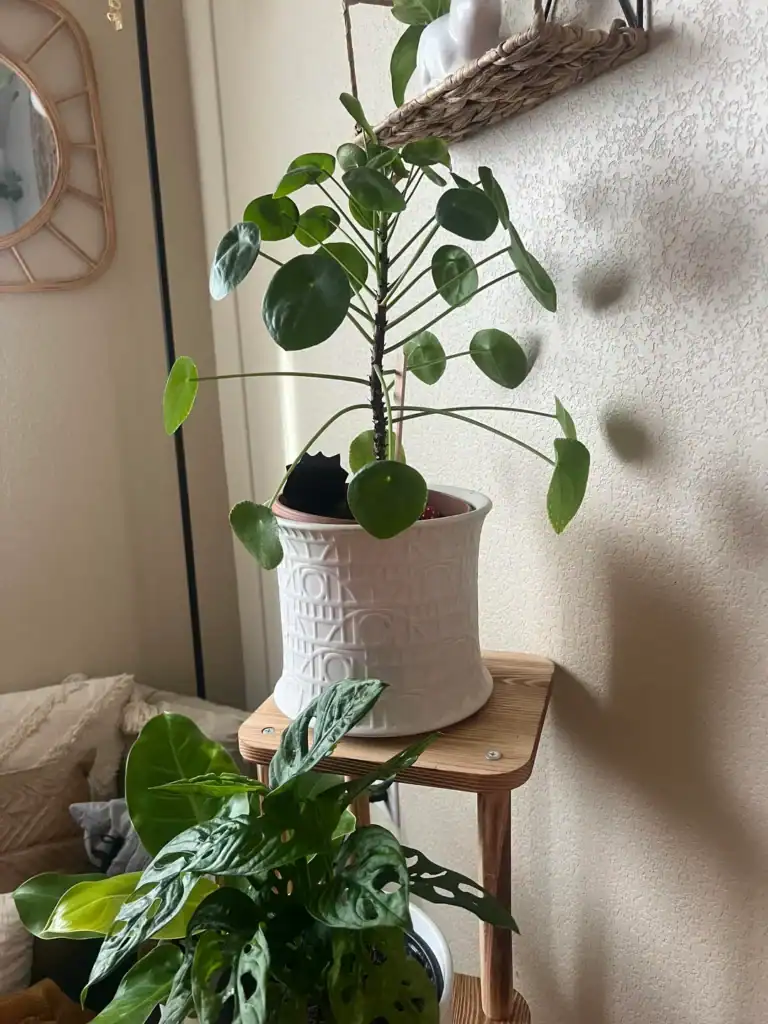
Please note: Simplify Plants is reader-supported. As an Amazon Associate, I earn from qualifying purchases made by our readers with no extra cost added to you all! Some links in the post are affiliate links and I get a commission from purchases made through links in the post.
1) Insufficient light causing leggy growth
Not enough light is the most common reason a Pilea grows tall instead of full. When I see a Chinese money plant with long, bare stems and leaves spaced far apart, light is the first thing I check.
Plants need light to make food. When a Pilea doesn’t get enough, it starts stretching toward the brightest spot it can find. This stretching is called etiolation.
How to Spot Low-Light Stretching
Here are the signs I look for:
- Long gaps between leaves. The stem grows longer, but fewer leaves fill it in.
- Leaning to one side. The plant bends toward the nearest window.
- Smaller, paler leaves. New leaves may look lighter green and less round.
- Long leaf stems. The petioles get longer as they reach for light.
If your plant shows two or more of these signs, low light is likely the cause.
Find the Right Spot
Pileas like bright, indirect light. In my home, a spot a few feet back from an east-facing window works well. A south or west window can also work if a sheer curtain filters the sun.
Be careful with strong midday sun. Direct sun through glass can burn the round leaves and leave brown or white patches. You want the plant to see a lot of sky, but not sit in harsh rays all afternoon.
If your home is dim, a grow light can help. I set mine about 12 to 18 inches above the plant and run it for 10 to 12 hours a day.
Rotate Your Plant
A Pilea grows toward its light source. If you never turn it, it will lean and grow lopsided.
I give my Pilea a quarter turn every week or so. This helps the stem grow straight and keeps the leaves spread out more evenly.
What Better Light Can and Can’t Fix
Moving your plant to brighter light will help new growth come in more compact. The new leaves should be closer together and look healthier.
However, the stretched part of the stem will not shrink back. Those bare sections will stay bare. If the look bothers you, you can cut the top off and replant it once the plant is in better light. The base often sends out new growth or pups after a cut.
I suggest fixing the light first and waiting a few weeks before you prune. That way, the new growth that follows will be fuller instead of stretching again.
2) One-sided light making the plant lean
Pilea plants are well known for leaning toward the light. If your plant sits next to a window, it will slowly tilt its stems and leaves toward that bright side. Over time, this can make the plant look tall and lopsided instead of round and full.
This leaning is a normal plant behavior called phototropism. It does not mean your Pilea is sick. It just means the plant is trying to get as much light as it can.
Here is what happens inside the plant. A growth hormone called auxin builds up on the shaded side of the stem. That side grows a little faster than the bright side, which pushes the stem to bend toward the light.
The problem is where the plant puts its energy. Instead of spreading out evenly, it grows in one direction. The leaves on the far side may stay small, and the plant can start to look thin and stretched.
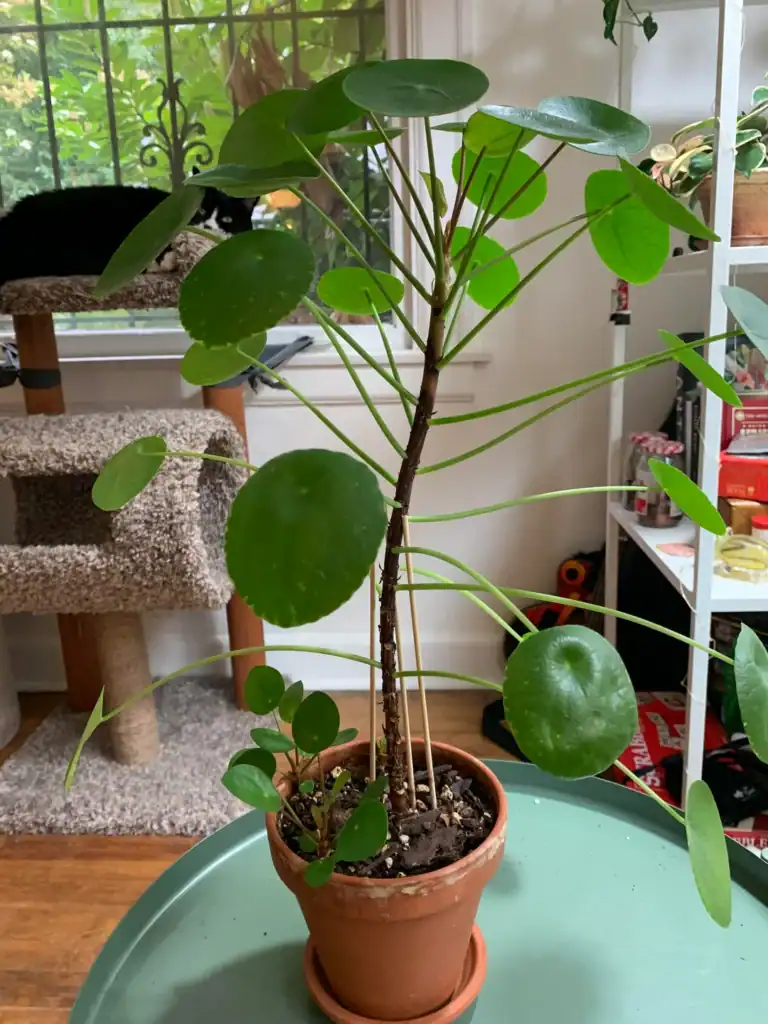
I check my own Pilea for this every couple of weeks. The signs are usually easy to spot:
- The main stem tilts toward the window
- Leaf stems on one side are longer than the other
- The plant looks flat or bare on the side facing the room
- The top of the plant looks heavy and starts to droop
The easiest fix is to rotate the pot. I turn my Pilea about a quarter turn once a week. This gives every side a turn facing the light, so the plant grows more evenly.
Try to make it a habit. I turn mine on the same day I check whether it needs water, so I don’t forget.
If the lean is already strong, rotating will help, but it takes time. The stem will slowly straighten as new growth comes in. You may not see much change for a few weeks.
You can also change where the light comes from. A spot with bright, indirect light from more than one side can reduce leaning. A small grow light placed above the plant also works well, since light from overhead helps the plant grow straight up.
For a plant that is leaning a lot, a small stake can help. Place it gently in the soil next to the stem and tie the stem loosely with soft plant tape. Don’t tie it too tight, or you could damage the stem.
Keep in mind that leaning and stretching often go together. If your Pilea is leaning hard and also has long gaps between leaves, it likely needs more light overall, not just more even light. In that case, moving it closer to a bright window can make a big difference.
3) Crowded leaves or nearby plants limiting light
Sometimes your Pilea is near a bright window, but it still stretches up. In that case, I look at what is around it. Other plants or its own crowded leaves may be blocking the light.
Pileas need bright, indirect light to stay compact. When light can’t reach the plant evenly, it grows taller to find more. This leads to a long, bare stem and leaves bunched at the top.
How nearby plants block light
I like grouping my plants together. But I learned that a big plant can easily shade a small Pilea. A tall fern or a bushy pothos placed between your Pilea and the window can cut its light by a lot.
Even if the room looks bright to you, the Pilea may be sitting in a shadow. It will then lean and stretch toward any gap it can find.
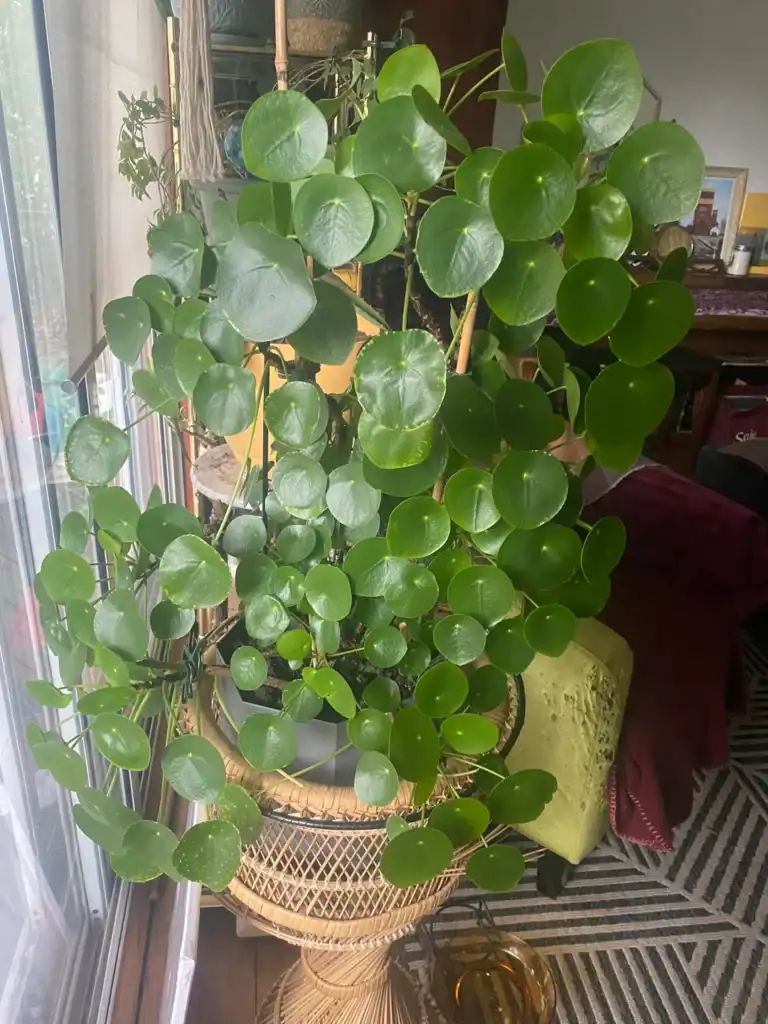
Here is a quick check I use:
- Stand where your Pilea sits and look toward the window.
- See if leaves, stems, or pots from other plants are in the way.
- Check if your Pilea is leaning in one direction.
If you notice any of these, the plant is likely not getting enough light.
How crowded leaves cause problems
A Pilea can also shade itself. As it grows, the top leaves get bigger. They can cover the lower leaves and the center of the plant.
When the lower leaves don’t get light, they may turn yellow and drop. Over time, this leaves a bare stem with a crown of leaves on top. The plant looks tall instead of full.
Pots with many baby plants (called pups) can get crowded too. The pups compete for light and space. Some of them may grow thin and leggy as they reach past each other.
Easy fixes
The good news is that these problems are simple to solve. Here is what I do:
- Give your Pilea some space. Move other plants so they don’t block the window side. I try to leave a few inches of room around my Pilea.
- Put shorter plants in front. If you keep plants in a group, place the Pilea where taller plants won’t shade it.
- Remove old or damaged leaves. Gently pull off yellow or dying lower leaves. This keeps the plant tidy and lets more air and light reach the base.
- Separate the pups. Once pups are a few inches tall, I cut or pull them away and pot them on their own. This gives the main plant more room. It also gives you new plants to keep or share.
- Rotate the pot. I turn my Pilea about a quarter turn each week. This helps all sides get light so it grows evenly.
After you make these changes, new growth should come in shorter and fuller. The plant won’t fix its old stretched stem, but the new leaves will stack more neatly.
4) Natural growth that leaves a bare stem
Sometimes a tall Pilea is not a sign that you did anything wrong. This plant simply grows that way.
A Pilea grows from one main stem. New leaves form at the top, in an area called the crown. As the plant gets taller, the stem below the crown gets longer.
Over time, the oldest leaves at the bottom turn yellow and fall off. This is normal. The plant puts its energy into the newer leaves at the top, so it lets the older ones go.
After a year or two, you may end up with a bare stem and a cluster of round leaves on top. I’ve had this happen to my own Pilea, even when it had good light and regular care. It looked more like a small tree than a full, round plant.
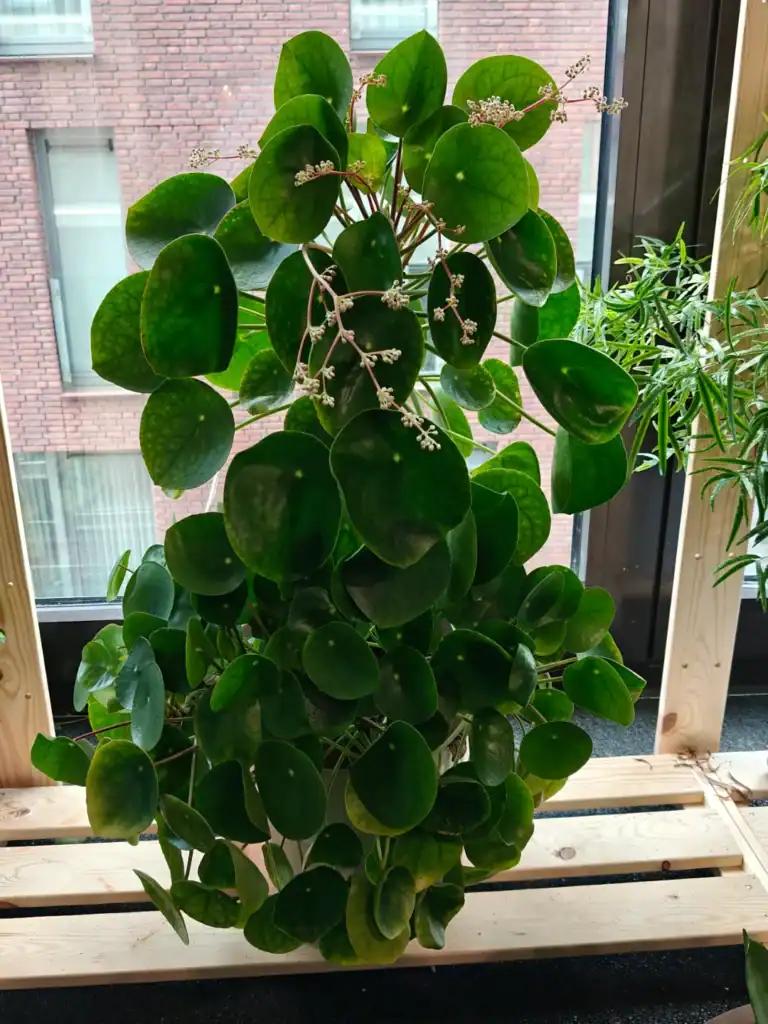
How to tell if it’s normal
Here is how I tell the difference between natural aging and a care problem:
- Normal: One or two bottom leaves turn yellow and drop now and then, while new leaves keep growing at the top.
- Not normal: Many leaves fall at once, the new leaves are small or pale, or the stem leans hard toward a window.
If your plant fits the first group, you don’t need to worry. The bare stem is just part of how a Pilea ages.
Easy fixes for a fuller look
A bare stem won’t grow new leaves along its length. But you still have a few simple ways to make your plant look fuller.
Plant the babies in the same pot. Pileas often send up small plants, called pups, from the soil around the main stem. I like to leave these pups in place. They fill in the space around the base and make the pot look bushier.
Add pups from another plant. If your Pilea has no pups yet, you can plant a few rooted pups from a friend’s plant around the main stem. This gives you fullness right away.
Cut and restart the top. If the stem is very long, you can cut off the top crown with a clean knife. Leave a few inches of stem attached to the crown. Then root it in water or moist soil. I find spring and summer work best for this, since the plant grows faster then.
Keep the old stem. After you cut the top, don’t throw away the bare stem in the pot. It will often grow new shoots near the cut or along the stem. This can turn one tall plant into a bushier one.
Turn the pot often. I rotate my Pilea about once a week. This keeps the stem growing straight up instead of leaning to one side, which helps the plant look more balanced as it grows.
5) Overwatering stressing roots and weakening growth
Overwatering is one of the most common problems I see with Pilea plants. It may not seem linked to a tall, thin plant at first. But when the roots are stressed, the whole plant has a harder time growing full and bushy.
How too much water affects the roots
Pilea roots need air as well as water. When the soil stays soggy, the spaces that hold air fill up with water. The roots can’t breathe well, so they start to weaken.
Weak roots can’t take up water and nutrients the way they should. This means the plant has less energy to push out new leaves. Instead of filling out, it may put its limited energy into a few stems and grow upward in a sparse way.
If the soil stays wet for too long, root rot can set in. This is when the roots turn brown, mushy, and sometimes smelly. Root rot can damage a Pilea badly if it isn’t caught early.
Signs your Pilea is getting too much water
Here are the signs I look for:
- Yellow leaves, often starting with the lower ones
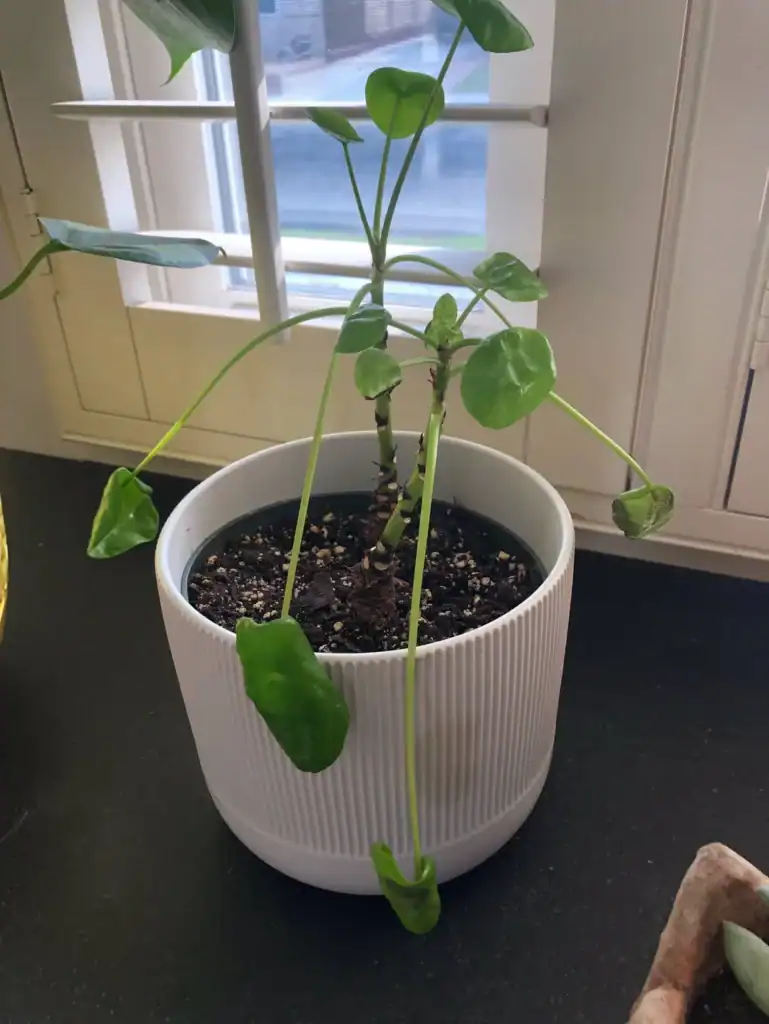
- Drooping leaves even when the soil is wet
- Soft or dark spots on the stem near the soil
- Leaves dropping from the bottom of the plant
- Soil that stays damp for many days after watering
Bare lower stems with leaves only at the top can make a Pilea look even more leggy. So overwatering can add to that tall, thin look.
Common causes
In my experience, overwatering often comes from a few simple habits. Watering on a set schedule is a big one, since the plant’s needs change with the season and light.
Poor drainage is another cause. A pot without drainage holes lets water pool at the bottom. Heavy soil that holds too much moisture can do the same thing.
How I fix an overwatered Pilea
The first step is to stop watering right away. Let the top inch or two of soil dry out before you water again.
Next, check the roots if the plant looks very unhealthy. Gently slide it out of the pot. Healthy roots are white or light tan and firm.
If you find mushy, dark roots, trim them off with clean scissors. Then repot the plant in fresh, well-draining soil. I like to mix regular potting soil with perlite to help water drain faster.
Make sure your pot has at least one drainage hole. Empty any saucer under the pot so the plant isn’t sitting in water.
How to water going forward
I check the soil with my finger before every watering. If the top inch or two feels dry, it’s time to water. If it still feels damp, I wait a few more days.
When you do water, give the plant a good soak until water runs out the bottom. Then let it dry out again. Your Pilea will likely need less water in winter, when growth slows down.
Once the roots recover, your plant has more energy to grow new leaves. Over time, this helps it fill out instead of just growing tall.
6) Underwatering causing drooping or stalled growth
Underwatering is easy to miss. Many people worry so much about overwatering that they swing too far the other way. A thirsty pilea can stop putting out new leaves, which makes it look thin and sparse.
When the soil dries out completely, the plant’s cells lose water pressure. That is what keeps the stems and leaves firm. Without it, the leaves go limp and the stems start to bend.
Signs your pilea needs more water
Here are the signs I look for:
- Leaves that droop and feel soft or thin
- Soil that feels dry several inches down
- A pot that feels very light when you lift it
- Soil pulling away from the sides of the pot
- Lower leaves that turn crispy or brown at the edges
- Few or no new leaves for weeks during spring or summer
The last sign matters most for fullness. A pilea needs steady water to grow new leaves and pups. When it is stressed, it saves its energy instead of growing. You may see one tall stem with only a few leaves at the top.
Why it happens more in winter
I notice this problem most in the colder months. The plant grows slower, so it is easy to forget that it still uses water. It just uses less of it.
Indoor heating can also dry out the soil faster than you expect. So I check my pilea more often once the heater turns on.
How I fix a thirsty pilea
My favorite fix is bottom watering. Here is how I do it:
- Fill a saucer or bowl with room-temperature water.
- Set the pot in the water.
- Let it soak for about 20 to 30 minutes.
- Remove the pot and let any extra water drain out.
This lets the dry root ball soak up water slowly and evenly. Very dry soil can push water away when you pour it on top. The water may run straight down the sides and out the bottom.
In most cases, the leaves perk up within a day. If they don’t, the plant may have a different problem, like root damage or low light.
How to water going forward
I don’t water my pilea on a strict schedule. Instead, I check the soil with my finger. When the top inch or two feels dry, it is time to water.
When you water, give the plant a full drink until water comes out of the drainage holes. Then empty the saucer so the roots don’t sit in water.
A few other tips can help:
- Use a pot with drainage holes.
- Pick a well-draining potting mix that still holds some moisture.
- Water a bit more often in spring and summer when the plant is growing.
- Lift the pot after watering so you learn how heavy it feels when the soil is wet.
Once your pilea gets steady water, it has the energy to grow new leaves along the stem and send up pups. Over time, that helps it look fuller instead of just taller.
7) A pot that is too large or poorly draining
The pot you choose can affect how your Pilea grows. A pot that is too big or does not drain well can lead to weak, tall growth instead of a full plant.
Pilea plants have shallow roots. They do not need a lot of soil to grow well.
When a pot is too large, the extra soil holds water that the roots cannot use. The soil stays wet for a long time. This can stress the roots and slow down healthy growth.
Wet roots can also lead to root rot. When the roots are damaged, the plant has a harder time taking in water and nutrients. You may see yellow lower leaves, drooping stems, or a plant that grows up but does not fill out.
Drainage matters just as much as size. If water cannot leave the pot, it collects at the bottom. I always make sure any pot I use for a Pilea has at least one drainage hole.
Soil can be part of the problem too. Heavy potting mix holds moisture too long and can pack down over time. This makes it harder for air to reach the roots.
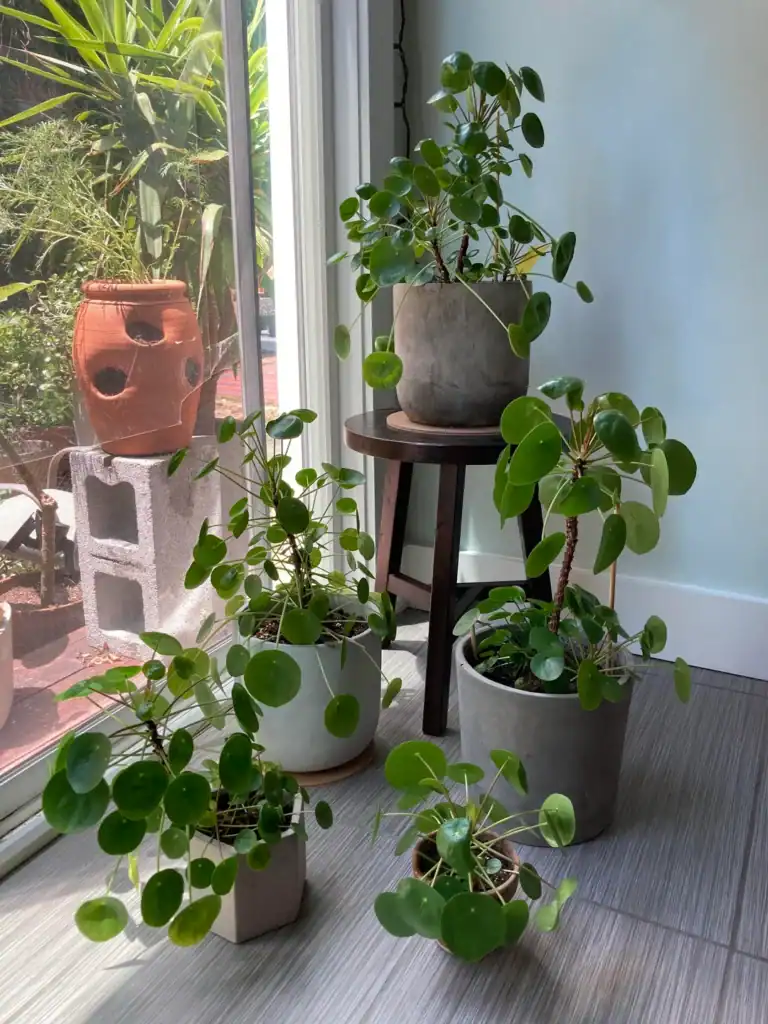
Here is what I recommend to fix this:
- Pick the right size. Choose a pot that is about 1 to 2 inches wider than the root ball.
- Use a pot with drainage holes. If you love a decorative pot without holes, place a plastic nursery pot inside it.
- Use a light, well-draining mix. I like regular potting soil mixed with perlite. This helps water drain and lets air reach the roots.
- Empty the saucer. After you water, pour out any water that collects under the pot.
- Let the soil dry a bit. Wait until the top inch or so of soil feels dry before you water again.
If your Pilea is already in a pot that is too big, you can move it to a smaller one. Gently remove the plant and check the roots. Healthy roots are white or light tan and firm. Brown, mushy roots are a sign of rot and should be trimmed off with clean scissors.
Spring and early summer are good times to repot. The plant is actively growing then and can recover faster.
You do not need to repot often. I usually repot my Pilea every one to two years, or when I see roots growing out of the drainage holes. Each time, I go up only one pot size.
A pot that fits well and drains well helps keep the roots healthy. Healthy roots support steady growth, which gives your Pilea a better chance to grow full instead of just tall.
Understanding Your Pilea’s Natural Growth Habit
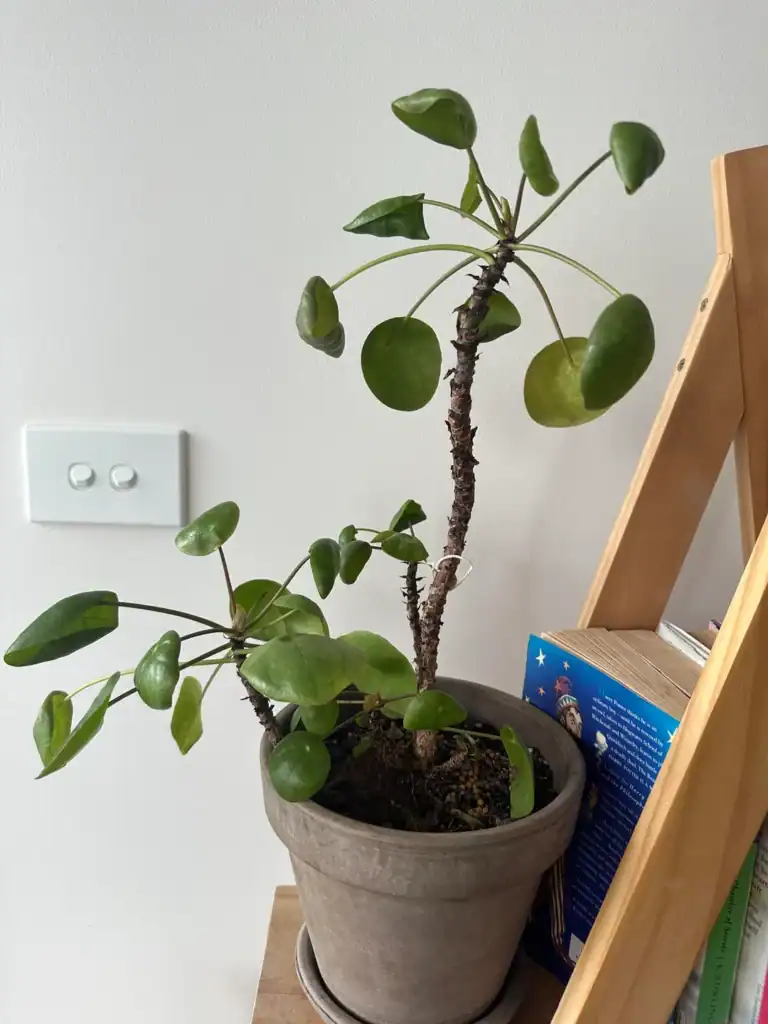
A Pilea grows upward from one main stem, so it gets taller and loses its lower leaves as it ages. Its full, bushy look comes mostly from the baby plants, called pups, that sprout from the soil and stem.
How Your Pilea’s Shape Changes With Age
A young Pilea looks round and compact. Its leaves sit close together on a short stem.
As the plant gets older, it puts most of its energy into the main central stem. The stem grows taller each year. The oldest leaves at the bottom slowly turn yellow and drop off, and that is normal.
Over time, many Pileas look like a small tree, with a bare stalk and leaves clustered at the top. I’ve seen this happen with my own plants after about one to two years.
Here’s what you can expect:
| Plant Age | Typical Shape |
|---|---|
| Young (under 1 year) | Short, round, and leafy |
| Mature (1–2 years) | Taller stem, fewer lower leaves |
| Older (2+ years) | Tree-like, leaves mostly at the top |
Some bare stem is natural. But very long gaps between leaves usually mean the plant needs more light.
The Role of Pups in a Fuller Appearance
A single Pilea stem will not grow side branches like many other plants. So the bushy look most people want comes from pups.
Pups are small new plants that grow in two places:
- From the roots, popping up through the soil near the main plant
- From the stem, growing right out of the main stalk
When you leave pups in the pot, they fill in the space around the tall stem. This makes the plant look wider and fuller.
I like to keep a few pups in the pot and move the extras to new pots. A healthy plant with good light and steady care tends to make more pups, especially in spring and summer.
What to Expect as Your Pilea Recovers
After you fix the light or water problem, new leaves on your Pilea will grow closer together within a few weeks to a few months. The long, bare part of the stem will not grow leaves back, so you may need to cut it or wait for baby plants to fill in the pot.
How Long Fuller New Growth Can Take
In my experience, the first sign of recovery is a new leaf that sits closer to the one below it. In spring and summer, this often shows up in 2 to 4 weeks. In fall and winter, growth slows down, so it can take longer.
Here is a rough timeline I use:
| Change | Spring/Summer | Fall/Winter |
|---|---|---|
| First compact new leaves | 2–4 weeks | 4–8 weeks |
| Rounder, fuller top | 1–3 months | 3–5 months |
| New pups from the soil | 2–4 months | Often waits until spring |
Try not to move the plant around too much during this time. Steady light and a regular watering routine help it settle in faster.
Why Older Bare Stems May Stay Bare
A Pilea grows new leaves from the top of its stem. Once lower leaves fall off, the plant does not grow new ones in those spots. The stretched part of the stem also stays long, even after the light gets better.
You have two good options:
- Cut the top off and root it in water or soil. The cutting usually grows roots in 2 to 4 weeks.
- Leave the stem alone and let pups grow around it to fill out the pot.
I usually cut the top when the stem leans or looks very thin. The old base often sends out new shoots after a few weeks, too.
Frequently Asked Questions
Most Pilea stretching comes from low or uneven light. Pruning, turning the pot weekly, and careful watering help the plant grow shorter, fuller, and more likely to make pups.

Why is my Pilea growing tall and leggy instead of bushy?
The most common cause is not enough light. When a Pilea can’t get the light it needs, it stretches its stem upward to reach a brighter spot. This stretching is called etiolation.
Other causes can add to the problem. Light coming from only one side can make the plant lean. Nearby plants or crowded leaves can also block light.
Some height is normal, too. As a Pilea ages, it drops lower leaves and forms a bare stem, even with good care.
How much light does my Pilea need to grow fuller?
Pileas do best in bright, indirect light for about 6 hours or more each day. I like placing mine a few feet from an east- or west-facing window. A sheer curtain on a sunny south window also works well.
Avoid strong afternoon sun hitting the leaves directly, since it can cause brown, scorched spots. If your home is dim, a basic LED grow light set 12 to 18 inches above the plant can help.
To keep growth even, turn the pot a quarter turn every week. This stops one side from stretching more than the other.
Can pruning help my Pilea become bushier?
Yes, but it works a bit differently than with many other plants. A Pilea grows from a single main stem, so cutting off the top won’t make it branch out like a pothos or basil plant.
Here is what pruning can do:
- Top cutting: Cut the leafy top off a tall, bare stem and root it in water or soil. This gives you a new, compact plant.
- New growth from the stump: The leftover stem often grows new shoots or pups once it’s in good light.
- Pup removal: Taking off older pups and repotting them lets you start fresh, fuller plants.
I always use clean, sharp scissors and wait until spring or summer, when the plant is actively growing.
Why is my Pilea losing its lower leaves?
Losing a few bottom leaves now and then is normal. Older leaves fade and fall off as the plant puts its energy into new growth at the top.
If many leaves drop at once, check for these issues:
- Overwatering: Soggy soil can damage roots and cause yellow, drooping leaves.
- Low light: The plant may drop lower leaves it can’t support.
- Sudden changes: Cold drafts, a big move, or quick temperature shifts can stress the plant.
How can I encourage my Pilea to grow more pups?
A healthy, slightly mature Pilea is more likely to send up pups. Good light is the biggest factor, so make sure your plant gets plenty of bright, indirect light.
A few other things can help:
- Use a pot that gives the roots a little room, but not too much extra space.
- Feed with a diluted balanced fertilizer once a month in spring and summer.
- Keep a steady routine with watering and temperature, ideally between 60°F and 75°F.
Be patient. Young plants often take several months before they start making pups.
Could watering or fertilizer problems be causing my Pilea’s sparse growth?
Yes, both can play a part. Too much water is a common problem. It keeps the roots wet and weak, which slows healthy growth. I let the top inch or two of soil dry out before watering again, and I always use a pot with drainage holes.
Fertilizer matters too. Too little can lead to small, pale leaves. Too much can burn the roots and cause brown leaf edges.
A pot that’s too small can also limit growth. If roots are circling the bottom or poking out of the holes, move the plant to a pot about 1 to 2 inches wider.
Note: Some images in the articles are sourced from Reddit and Other Platforms For Reference Purpose.