Why Some Pilea Plants Have So Many Babies (And Yours Doesn’t!): Simple Tips to Get More Pups
The Pilea peperomioides, also called the Chinese money plant, is known for its round leaves and the small baby plants it grows. These babies are called pups. Some people end up with more pups than they can give away, while others wait months and see none.
I have grown these plants for years, and I know how frustrating it can be when yours stays bare. Most Pilea plants make more pups once they are mature, healthy, and getting enough bright, indirect light. In this article, I’ll explain why some plants make so many babies and what you can do to help yours.
Please note: Simplify Plants is reader-supported. As an Amazon Associate, I earn from qualifying purchases made by our readers with no extra cost added to you all! Some links in the post are affiliate links and I get a commission from purchases made through links in the post.
1) Plant age and maturity
The most common reason a Pilea has no babies is simple. It is still too young.
A Pilea needs to grow a solid root system and a sturdy main stem before it starts making pups. Young plants put their energy into growing taller and adding leaves. Making babies comes later.
In my experience, most Pileas start producing pups once they are around a year old. Some take a bit longer, especially if they grow in lower light or cooler rooms. If you bought a small plant recently, it may just need more time.
So how can you tell if your plant is mature enough? Here are a few signs I look for:
- A thicker main stem that can hold the plant up on its own
- A full set of leaves, often a dozen or more
- Larger leaves, usually a few inches across
- Roots that fill most of the pot
If your Pilea has most of these signs, it is likely old enough to make babies. If it is still small and leggy, I would focus on helping it grow first.
It also helps to know where pups come from. Most grow from the roots under the soil and pop up a short distance from the main stem. Others sprout right from the base of the stem. Both kinds need a well-established mother plant to form.
I had one Pilea that sat in my kitchen for almost a year without a single pup. Then, during its second spring, three tiny babies showed up within a few weeks. Nothing about my care had changed. The plant had simply reached the right size.
That is why I tell people not to worry too much about a young plant. A lack of pups does not mean you are doing something wrong. It often means the plant is still building the strength it needs.
Older plants can also slow down in some cases. A Pilea that has grown very tall with a long, bare stem may put out fewer pups from the base. Many growers find that older plants still keep sending up babies from the roots, as long as they stay healthy and get good light.
If you want to speed things up, the best thing you can do is support steady growth. Give your plant bright, indirect light, water it when the top inch or so of soil is dry, and keep it in a pot that fits its size. A healthy plant reaches maturity faster than a stressed one.
Patience really is part of growing Pileas. Once your plant is mature, you will probably start spotting small green shoots in the soil. Then you will have babies to keep or share.
2) Genetic differences between plants
Not every Pilea peperomioides starts with the same set of genes. Small differences in a plant’s genes can affect how fast it grows and how often it makes pups.
This is a normal part of how plants work. Some traits are passed down mostly through genes, and the environment has little effect on them. Other traits come from a mix of genes and growing conditions.
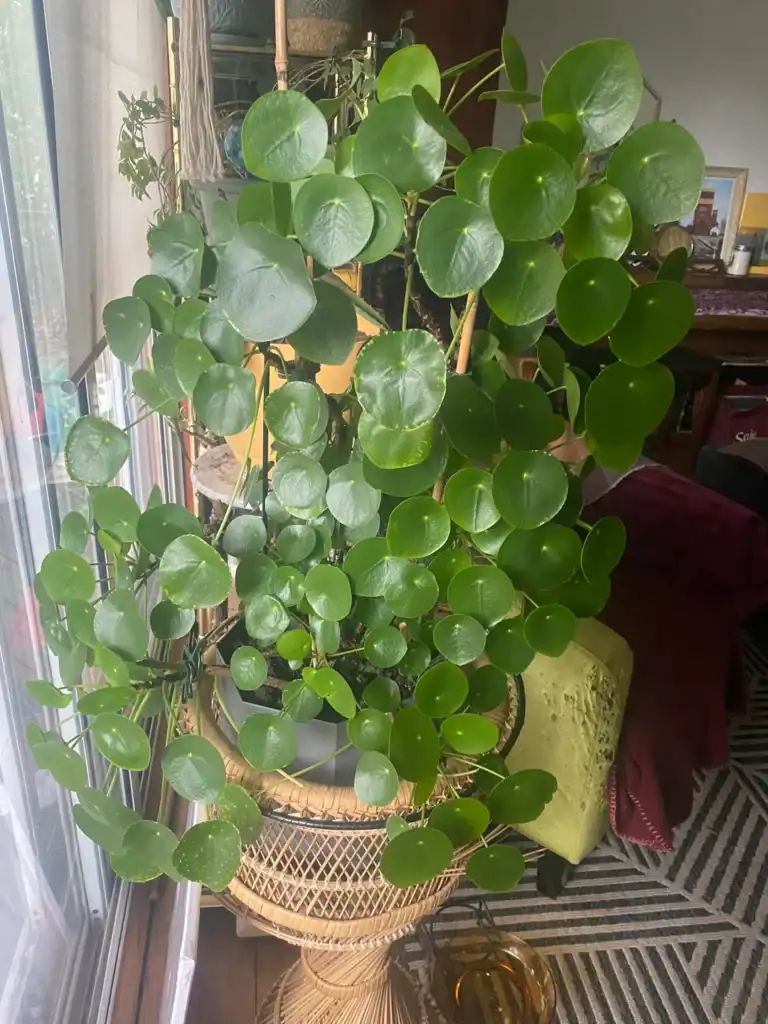
Where your Pilea came from matters
Many Pileas sold today started as pups from other Pileas. That means a lot of them are close copies, or clones, of their parent plant.
Some nurseries also grow Pileas from seed or through lab methods like tissue culture. Plants grown from seed can carry slightly different genes from one another. So two Pileas from two different shops may not act the same, even in the same window.
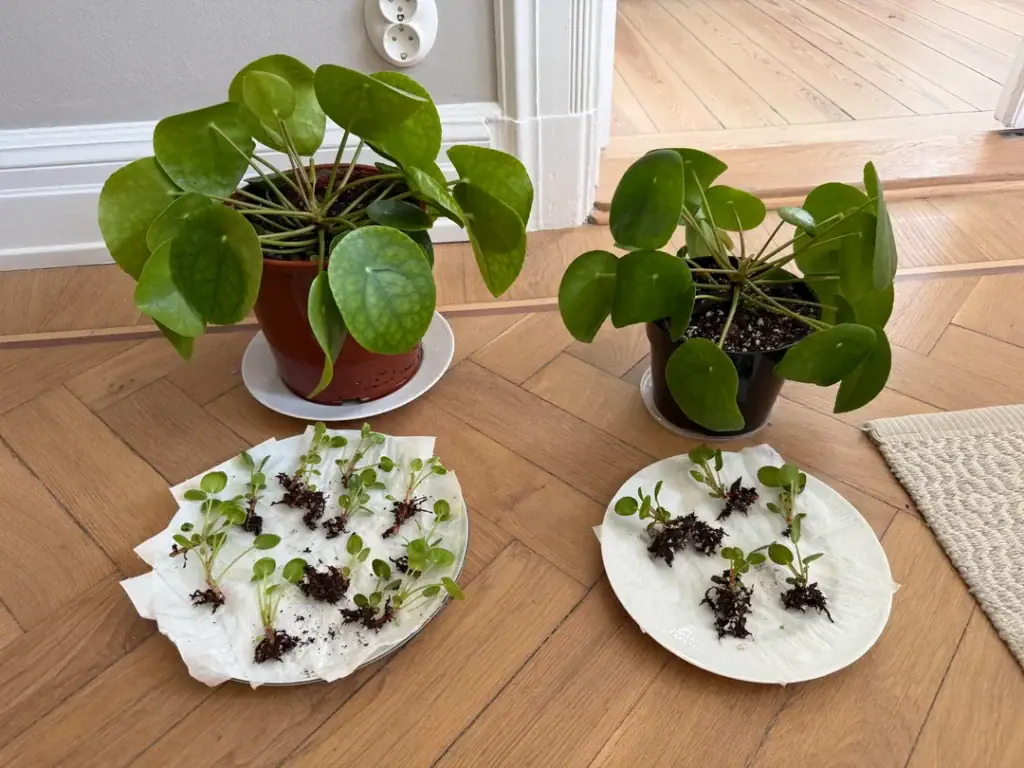
I’ve seen this with my own plants. I had two Pileas side by side, with the same soil and the same light. One pushed out new pups every few weeks, while the other made only a few each year.
Some plants are just more “pup-happy”
Some Pileas seem to have a natural habit of making lots of offsets. People online have shared stories of pulling dozens of babies from one pot. In those cases, the roots often grow back quickly, and new pups show up again soon after.
Other Pileas put more energy into growing taller or making bigger leaves. They may still make pups, just not as many. This doesn’t mean anything is wrong with your plant.
Special varieties can grow differently
There are a few named types of Pilea peperomioides, such as ‘Mojito’ and ‘Sugar.’ These have leaves with light patches, spots, or streaks.
Plants with less green in their leaves have less chlorophyll. Chlorophyll is what plants use to turn light into energy. With less of it, these types often grow more slowly, and that can mean fewer pups.
If you own one of these varieties, I’d expect slower growth than with a plain green Pilea. That’s a normal trade-off for the unique look.
Even pups from one plant can differ
You might notice that pups from the same mother plant don’t look alike. One might look just like the parent. Another might grow small pups off its own stem early on.
In many cases, this comes down to where the pup grew from and how it was rooted. A pup that grows from the roots may act differently than one that grows from the stem. Light, water, and pot size also play a big part.
What you can and can’t control
You can’t change your plant’s genes. If your Pilea is a slow pup-maker by nature, good care may help, but it likely won’t turn into a pup factory.
What you can do is give it the best conditions possible. If you want a plant that makes lots of babies, I recommend getting a pup from a friend whose Pilea already does this. Since that pup is often a clone of its parent, it has a good chance of sharing the same habit.
3) Bright, indirect light
Light is one of the biggest reasons some pilea plants make lots of babies while others don’t. A pilea needs energy to grow new pups, and it gets that energy from light. If your plant sits in a dim spot, it will put its energy into staying alive, not into making offsets.
So what does “bright, indirect light” mean? It means your plant sees a lot of daylight, but the sun’s rays don’t hit the leaves directly. Direct sun can burn the flat, round leaves and leave brown or pale patches.
In my home, the best spot has been near an east-facing window. My pilea gets gentle morning light there and stays out of the harsh afternoon sun. West-facing windows can also work well.
If you have a south-facing window, keep your pilea a few feet back from the glass. A sheer curtain can also soften the light. North-facing windows are often too dim, but a spot right next to the glass may be enough.

How to tell if your pilea needs more light
Your pilea will show you when it’s not getting enough light. Here are the signs I look for:
- Long, bare stems. The plant stretches toward the light and looks “leggy.”
- Smaller new leaves. Each new leaf comes in smaller than the last one.
- Leaves that droop or curl downward. This can mean the plant is reaching for more light.
- Few or no pups. A plant without enough light often stops making babies.
On the other hand, too much direct sun can cause:
- Brown, crispy spots on the leaves
- Faded or yellowish leaves
- Leaves that curl inward like a dome
Rotate your plant every week
Pileas grow toward the light. If you never turn the pot, your plant will start to lean to one side.
I give my pot a quarter turn once a week. This helps the plant grow straight and even. It also lets light reach more of the soil and the base of the plant, which is where many pups start to grow.
Watch your watering in low light
A pilea in lower light grows slower and uses less water. This is a common problem for beginners. If your plant is in a dimmer spot, the soil stays wet longer, and that can lead to root rot.
If you can’t move your plant to a brighter place, water it less often. Always check that the top inch or two of soil is dry before you water again.
Tips if your home is low on light
Not every home has a great window. That’s okay. You still have options:
- Use a grow light. A simple LED grow light can make a big difference. I suggest keeping it on for about 10 to 12 hours a day.
- Try a mirror. Placing a mirror near your plant can bounce more light onto it.
- Clean your windows. Dusty glass blocks some of the light.
- Wipe the leaves. Dust on the leaves can make it harder for the plant to use light.
One more tip: keep your pilea away from cold drafts. A window you open often can let in chilly air that stresses the plant.
When I moved my pilea to a brighter spot, I noticed new growth within a few weeks. The leaves got bigger, and small pups started popping up from the soil a little later. Good light won’t fix everything, but it gives your plant the energy it needs to grow and share.
4) Active growing-season conditions
Pilea plants make most of their babies during the growing season. For most homes, this runs from spring through summer. During these months, the days are longer and the plant has more energy to spare.
In my experience, a Pilea that sits in a dim corner all year rarely sends up pups. It needs good conditions during the warm months to do more than just survive.
Light matters most. I keep my Pileas near a bright window with indirect light. An east-facing window works well for me. If you only have a south or west window, a sheer curtain can help block harsh afternoon sun that may burn the leaves.
More light means the plant can make more food. Extra food is what lets it grow new offsets from the stem and roots.
Warmth helps too. Pileas grow best when the room stays between about 60°F and 75°F. I try to keep mine away from cold drafts, open doors, and air conditioning vents. Sudden temperature changes can slow growth.
Water on a steady schedule. During the growing season, your Pilea will use water faster. I let the top inch or two of soil dry out, then water until it drains from the bottom. Soggy soil can cause root rot, and a plant fighting rot won’t put energy into babies.
Feed it lightly. I give my Pileas a balanced liquid fertilizer about once a month from spring to late summer. I dilute it to half strength. Too much fertilizer can burn the roots, so less is often better.
You can skip feeding in fall and winter. The plant slows down then and doesn’t need the extra nutrients.
Keep it a little snug in its pot. Many growers, including me, notice that Pileas tend to produce more pups when their roots are slightly crowded. This doesn’t mean you should leave it in a tiny pot forever. It just means you don’t need to move it to a much bigger pot right away.
Rotate the plant. Pileas lean toward the light. I turn my pot a quarter turn every week or so. This keeps the plant growing evenly and helps light reach all sides of the soil, where pups often pop up.
If your Pilea isn’t making babies, check these conditions first. A plant that gets bright light, steady warmth, regular water, and light feeding during spring and summer has a much better chance of producing offsets.
Keep in mind that young plants may not make pups yet, even with perfect care. A Pilea usually needs to reach a certain size and age before it starts to spread. Patience is part of the process.
5) Consistent warmth
Pilea plants like steady, warm temperatures. When the air around them stays in a comfortable range, they have more energy to grow. That extra energy is what lets them push out new pups.
I keep my Pilea in a room that stays between about 65°F and 75°F (18°C to 24°C). This is a normal indoor temperature for most homes, so you may not need to change much. The key word here is steady.
Big temperature swings can stress the plant. A stressed Pilea tends to focus on staying alive instead of making babies. It may also drop leaves or grow more slowly.

Here are some common spots that can cause sudden changes:
- Near a drafty window or door
- Right next to a heater or radiator
- Under or in front of an air conditioning vent
- On a cold windowsill in winter
I learned this the hard way. One winter, I left my Pilea right against a single-pane window. The leaves curled, and it stopped making pups for months. Once I moved it a few feet back, it slowly started growing again.
Heat can be a problem too. Pilea plants can get heat stress if they sit in very hot spots. A sunny window in summer can get much warmer than the rest of the room.
That’s why I suggest checking the temperature right where the plant sits, not just in the room. A small, cheap thermometer placed next to the pot works well. You might be surprised how different it reads from your thermostat.
Cold is usually the bigger issue, though. Pilea plants do not like temperatures below about 50°F (10°C). Long periods of cold can damage the leaves and slow growth.
In my experience, Pilea plants make the most pups in spring and summer. The days are longer, and the temperatures are more even. If yours slows down in winter, that is normal. Keeping it warm and away from drafts can help it stay more active during the colder months.
If you want more babies, look at where your plant lives. Is it near a vent, a door, or a cold window? A small move to a more stable spot can make a real difference over time.
6) Healthy roots and overall vigor
Pilea pups grow from the roots and the base of the stem. That means the roots have a big job. If they are weak or damaged, the plant will not have much energy left to make babies.
I always tell friends to check the roots first when a Pilea stops producing pups. It is often the part of the plant people forget about because it is hidden in the soil.
What healthy roots look like
Healthy Pilea roots are white or light tan. They feel firm. There should be enough of them to hold the soil together in the shape of the pot when you slide the plant out.
Unhealthy roots look different. They may be brown, black, mushy, or crumbly. Sometimes they smell sour or rotten.
To check, gently tip the pot on its side and ease the plant out. You don’t need to pull hard. If the roots look good, just set it back in place.
Common causes of root problems
The most common cause I see is overwatering. Pilea roots need air as well as water. When the soil stays wet for too long, the roots can’t breathe and start to rot.
Here are a few other things that can harm roots:
- Pots without drainage holes. Extra water has nowhere to go.
- Heavy, dense soil. It holds too much water and packs down over time.
- Being very root-bound. Roots circle the pot and run out of room.
- Cold, wet conditions. Soil dries slowly in a cool room.
I let the top inch or two of soil dry out before I water again. I also use a well-draining mix, such as regular potting soil with some perlite added.
Fixing damaged roots
If you find rot, don’t panic. You can often save the plant.
Remove the plant from the pot and gently shake off the old soil. Use clean scissors to cut away any soft or dark roots. Then repot it in fresh, dry soil in a pot with drainage holes.
Wait a few days before watering. This gives the cut roots time to heal.
Your Pilea may not make pups right away after this. It needs time to grow new roots first. In my experience, a recovering plant can take several weeks or more before it starts pushing out babies again.
Signs of a strong, vigorous plant
A plant with good roots usually shows it above the soil too. I look for these signs:
- Leaves that are flat, green, and firm
- Steady new growth from the top
- A stem that stands up without drooping
- No yellowing or curling leaves
When I see these signs, I know the plant has the energy it needs. A strong, healthy Pilea is the one most likely to send up new pups around its base.
Weak plants tend to focus on survival. They put their energy into keeping the main stem alive, not into making babies. So if your plant looks tired, I’d focus on its health before expecting any pups.
7) Adequate nutrients during growth
A Pilea needs food to make new leaves, roots, and babies. Making pups takes extra energy. If the soil runs low on nutrients, the plant will often focus on staying alive instead of making new plants.
I see this a lot with Pileas that have been in the same pot for a long time. Over time, watering washes nutrients out of the soil. The plant then has less to work with each month.

Signs your Pilea may need food
Slow growth is the most common sign. You might also notice small new leaves or pale green color. Some plants get floppy stems or leaves that look weak.
These signs can have other causes, like low light or root problems. So I always check light and watering first. If those look fine and the plant still seems weak, low nutrients are a likely reason.
When to feed
I feed my Pileas in spring and summer. This is when they grow the most and push out the most pups. In fall and winter, growth slows down, so I stop feeding or cut back a lot.
Feeding a plant that is barely growing does not help much. The extra fertilizer can build up in the soil and harm the roots.
What to use
I like a balanced liquid houseplant fertilizer. “Balanced” means the three main numbers on the label are close to the same, like 10-10-10 or 20-20-20. These numbers stand for nitrogen, phosphorus, and potassium.
Nitrogen helps with green leaves. Phosphorus supports roots. Potassium helps the plant stay strong overall.
How much and how often
I mix my fertilizer at half the strength listed on the bottle. Then I feed about once a month during the growing season. Some people feed every two weeks at an even weaker strength, and that works too.
I always water the plant with plain water first if the soil is very dry. Putting fertilizer on dry roots can burn them.
Don’t overdo it
More fertilizer does not mean more babies. Too much can cause brown leaf edges, a white crust on the soil, or damaged roots. If you see these signs, flush the soil by running plain water through the pot for a minute or two.
Fresh potting mix also helps. When I repot a Pilea into new soil, I usually wait about a month before I start feeding again. New mix often already has some nutrients in it.
Why this matters for pups
A well-fed Pilea has the energy to grow strong roots. Many pups come up from those roots, a few inches away from the main stem. When the plant has what it needs, it is more likely to send up new babies during the warm months.
8) Room for roots to spread
Pilea pups don’t just pop up from the main stem. Many of them grow from the roots under the soil. That means the space your roots have can affect how many babies you see.
When a pilea sits in a tight pot, the roots circle around the edges and have nowhere new to go. The plant may still grow leaves. But it often has fewer chances to send up new shoots.
I’ve noticed this with my own plants. After I moved one pilea into a slightly wider pot, it started sending up pups within a few months. The roots finally had some room to travel.
Pick a wider pot, not a much bigger one
Since pups often come up a short distance from the parent, a pot that is wider than it is deep can work well. This gives the roots more surface area to spread out sideways.
Try to go up only about 1 to 2 inches in size. A pot that is too large holds extra soil that stays wet for a long time. Wet soil can lead to root rot, which is much worse than having no pups at all.
Use a pot with a drainage hole
A drainage hole lets extra water escape. This keeps the roots healthy so they can keep growing and spreading.
I like terracotta pots for pileas. The clay lets the soil dry out a bit faster, which suits this plant. Plastic pots are fine too, as long as you are careful not to overwater.
Signs your pilea needs more space
You can check whether your plant is running out of room. Look for these signs:
- Roots growing out of the drainage hole
- Roots circling tightly when you gently slide the plant out
- Water running straight through the pot without soaking in
- Slower growth, even with good light and care
If you see a few of these, it may be time to repot. Spring and summer are good times, since the plant is actively growing then.
Loosen the roots gently
When you repot, gently tease apart any roots that are wrapped in circles. This helps them grow outward into the fresh soil instead of staying in a tight ball.
Use a light, well-draining potting mix. I usually mix regular indoor potting soil with some perlite. This keeps the soil airy so roots can push through it easily.
Giving the roots room won’t make pups appear overnight. But it removes one common reason a healthy pilea might not be making babies.
9) A well-draining potting mix
My Pilea did not start making lots of babies until I changed its soil. Before that, it sat in heavy, dense potting mix that stayed wet for days. The plant was alive, but it was not growing much.
Pilea plants do not like wet roots. When soil holds too much water, the roots can’t get enough air. Over time, this can lead to root rot, and a plant with weak roots has no extra energy to make pups.
Pilea babies grow from the roots and the base of the stem. So healthy roots matter a lot here. If the roots are struggling, you will likely see fewer new shoots pop up from the soil.
What I use
I treat my Pilea a bit like a succulent or a peperomia. I start with a good indoor potting mix. Then I add perlite to help water drain and let air reach the roots.
My basic recipe looks like this:
- About 2 parts indoor potting mix
- About 1 part perlite
- A small handful of orchid bark or coco coir chunks (optional)
You don’t need to measure exactly. The goal is soil that feels light and loose, not packed down or muddy.
Don’t go too far the other way
Soil can also drain too fast. If your mix is very coarse, water may run straight through before the roots can take any in. Some people find their pot is bone dry just a few days after watering.
If that happens to you, add a bit more regular potting mix or some coco coir. This helps the soil hold a little moisture while still letting extra water escape.
The pot matters too
Even the best soil won’t help much if water has nowhere to go. I always use a pot with drainage holes in the bottom. If you love a decorative pot without holes, you can set a plastic nursery pot inside it.
After watering, I empty any water that collects in the saucer or outer pot. Letting the plant sit in standing water can undo all the work of a good soil mix.
How to tell if your soil is the problem
Here are a few signs your mix may be holding too much water:
- The soil stays damp for more than a week after watering
- The lower leaves turn yellow or droop
- The soil smells sour or musty
- The plant grows very slowly with few or no pups
I check by pushing my finger about an inch into the soil. I only water when that top layer feels dry. With a well-draining mix, this usually happens in about one to two weeks, depending on light and temperature.
If you decide to switch soils, spring or summer is a good time. Your Pilea is actively growing then, so it can recover faster. Be gentle with the roots, shake off the old soil, and settle the plant into its fresh mix.
10) Seasonal winter dormancy
Sometimes nothing is wrong with your pilea at all. It may just be resting for the winter.
Pilea plants have a growing season, much like plants outside. When the days get shorter and the air gets cooler, they slow down. This slow period is called dormancy.
Dormancy is a pause, not a sign that your plant is dying. During this time, the plant saves energy instead of spending it on new leaves or babies.
Since today is in mid-October, this is worth thinking about right now. If you live in the northern half of the world, late fall and winter are the most likely reasons your pilea has stopped making pups.
I’ve noticed this with my own plants every year. Around November, my pileas start to look a bit “frozen in time.” They stay green and healthy, but they don’t push out new growth or babies.
Then spring comes, and things change. Once the days get longer and warmer, new pups often start popping up through the soil again.

How to tell if your pilea is dormant
Here are a few signs I look for:
- Growth slows down or stops in late fall or winter.
- The leaves still look healthy and firm.
- The plant needs water less often than it did in summer.
- No new pups appear, even on a mature plant.
If your plant has drooping, yellow, or mushy leaves, that’s a different issue. Dormancy usually looks calm and steady, not sick.
How I care for my pilea in winter
I change my routine a little when the cold months come. Here’s what I do:
- Water less. The soil dries out more slowly in winter. I wait until the top inch or two feels dry before watering.
- Stop or cut back on fertilizer. The plant isn’t growing much, so it doesn’t need much food. I usually pause feeding until spring.
- Keep it bright. I move my pilea closer to a window so it gets as much light as possible. Just make sure the leaves don’t touch the cold glass.
- Avoid cold drafts. I keep my plants away from drafty doors and heater vents.
You can also try a grow light if your home is very dark in winter. Some extra light and steady warmth may keep your plant a bit more active. Still, I don’t expect a lot of babies during these months, and I don’t think you should either.
Be patient until spring
The best thing you can do is wait. Your pilea is following its natural cycle.
When spring arrives, I start watering and feeding a bit more as growth picks up. That’s usually when my plants start making babies again.
If your pilea is still not making pups by late spring or summer, then it’s time to look at other causes, like light, plant age, or pot size.
How Pilea Offsets Develop
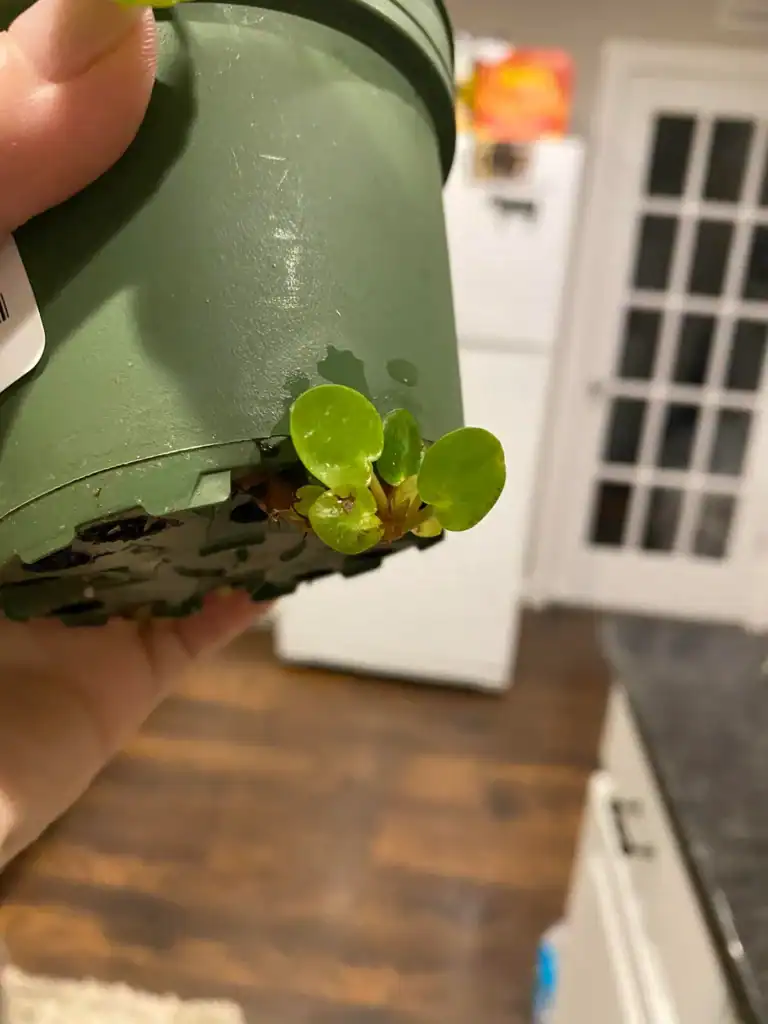
Pilea offsets usually show up once a plant is a few months old and growing actively in spring and summer. They can sprout from the roots under the soil or from the main stem, and each type needs slightly different care when you separate it.
The Role of Plant Maturity and Seasonal Growth
A young Pilea puts most of its energy into growing leaves and roots. In my experience, pups rarely appear until the plant has a sturdy root system and at least 10 to 15 healthy leaves.
Season matters too. Most pups form in spring and summer, when days are longer and the plant gets more light.
Growth slows down in fall and winter. You may see few or no new babies during these months, and that is normal.
Here is what tends to help a mature plant produce pups:
- Bright, indirect light for several hours a day
- Warm temperatures between 65°F and 75°F
- A pot that is not too large, so roots can fill the space
- Steady watering, letting the top inch of soil dry out between waterings
If your plant is young or it is winter, give it time.
The Difference Between Root and Stem Pups
Pilea pups come in two main types. Knowing which one you have helps you decide how to remove it.
| Feature | Root Pups | Stem Pups |
|---|---|---|
| Where they grow | From roots under the soil | From the main stem above the soil |
| Roots at removal | Often already have roots | Usually have no roots yet |
| How to separate | Dig down and cut the root connecting to the mother | Cut close to the stem with a clean blade |
| Next step | Plant directly in soil | Root in water or moist soil first |
Root pups start as thick underground roots. Small scale-like leaves form along them and grow larger until a baby plant pokes through the soil, sometimes a few inches from the mother.
Stem pups grow right out of the trunk. I like to wait until they are about 2 inches tall before cutting them off. They usually grow roots in water within a few weeks.
When to Separate Pups From the Parent Plant
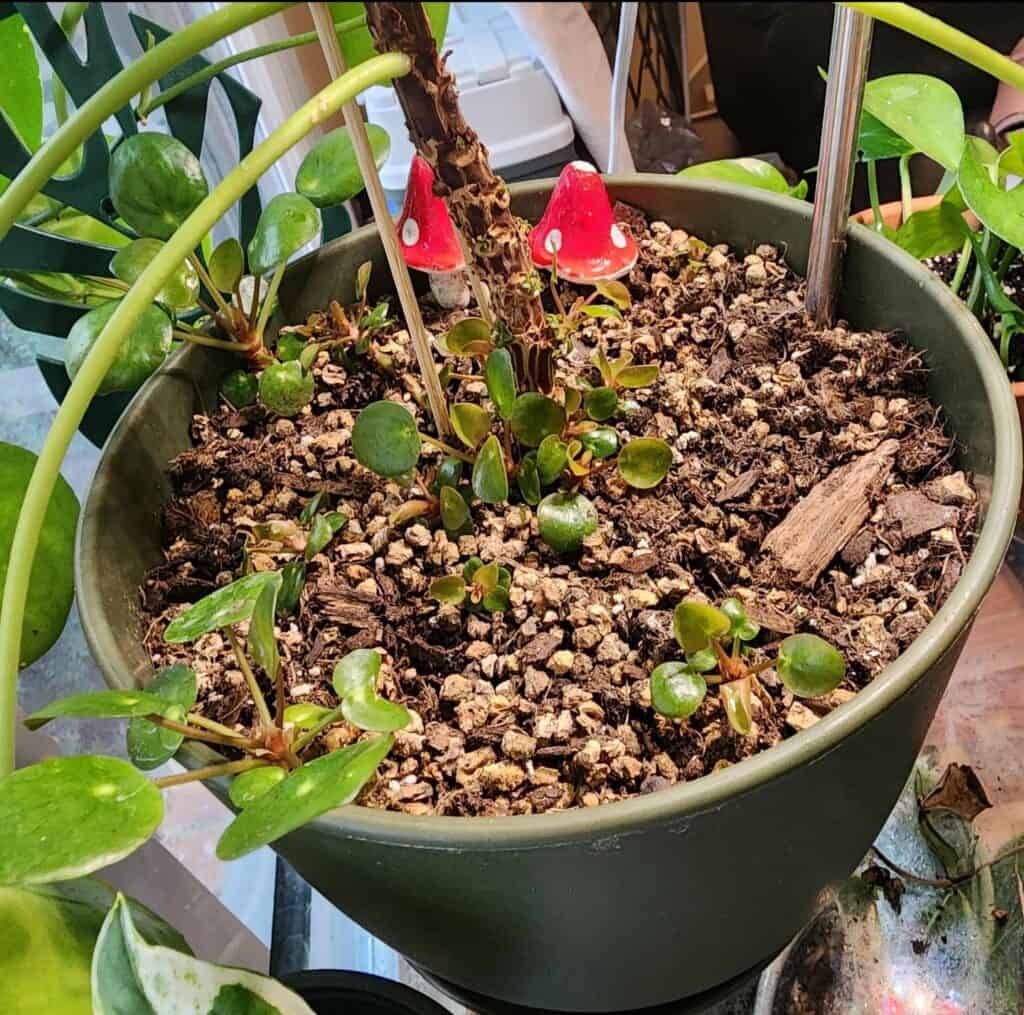
The best time to separate a pilea pup is when it is about 2 to 3 inches tall and has at least four or five leaves of its own. After the split, the mother plant needs steady light, a short break from extra water, and no fertilizer for a few weeks.
How to Tell Whether a Pup Is Ready
I wait until a pup looks like a small plant on its own. A pup that is too young has few roots and a weaker chance of surviving.
Here are the signs I look for:
| Sign | What It Means |
|---|---|
| 2–3 inches tall | The pup has enough size to grow on its own |
| 4–5 true leaves | It can make enough food from light |
| Its own small roots | It will settle into soil faster |
| Growing a few inches from the main stem | It is easier to cut without harming the parent |
To check for roots, gently brush away some soil at the base of the pup. If you see thin white roots, it is ready.
You can separate pups any time of year indoors. Still, I find they root a bit faster in spring and summer, when there is more light.
Helping the Parent Plant Recover After Separation
Cutting a pup away leaves a small wound in the soil and roots. The parent plant usually bounces back within a couple of weeks if you give it simple care.
After I separate pups, I do the following:
- Press the soil back down around the gap so the roots are not exposed to air.
- Water lightly only if the top inch of soil is dry. Wet soil around a fresh cut can lead to rot.
- Keep it in bright, indirect light, the same spot it was in before.
- Skip fertilizer for 3–4 weeks. This gives the roots time to heal first.
A leaf or two may droop for a few days. That is normal. If the plant still looks limp after two weeks, check the soil for soggy spots.
Frequently Asked Questions
Most Pileas start making babies once they are about a year old and get bright, indirect light, steady warmth, and room for roots to spread. Spring and early fall are the easiest times to separate pups, and a sterile, sharp tool keeps the roots safe.
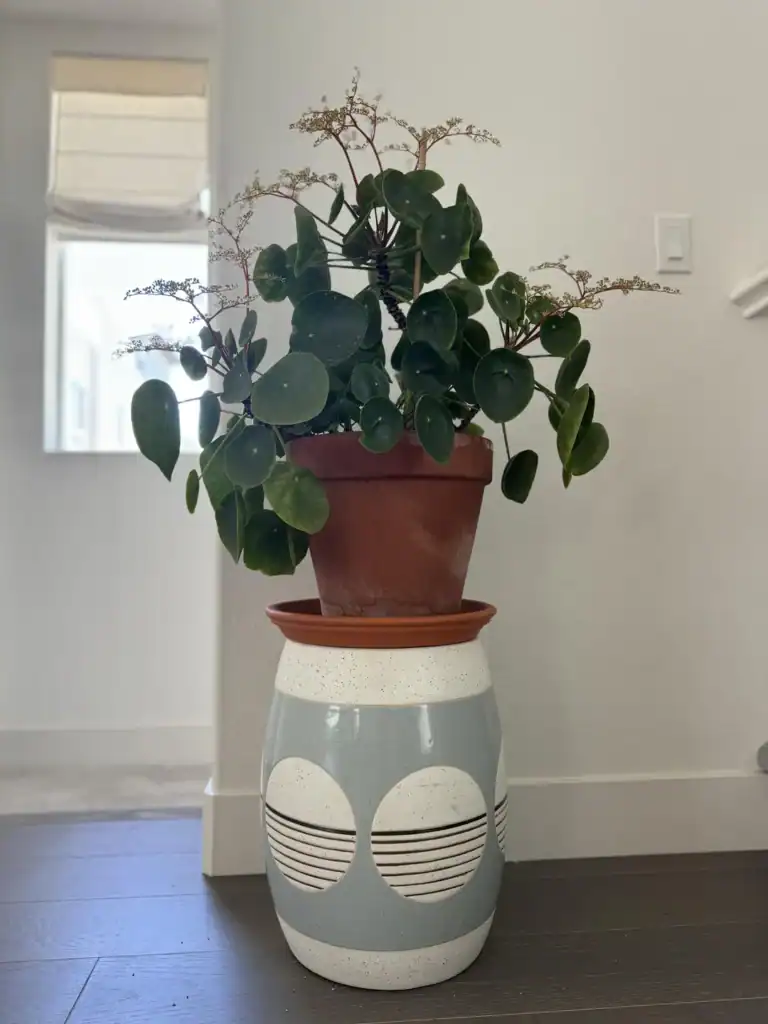
Why isn’t my Pilea producing any babies?
The most common reason is age. A young Pilea puts its energy into growing leaves and roots first, so it may not make pups yet.
Low light, cold rooms, and the winter season can also slow things down. Some plants are just slower by nature. I’ve had two Pileas in the same window, and one made far more pups than the other.
How can I encourage my Pilea to grow more pups?
Start with the basics. Here is what has worked best for me:
- Give it bright, indirect light. A spot near an east or west window works well.
- Keep it warm. Aim for 65–75°F (18–24°C) and keep it away from cold drafts.
- Water when the top inch of soil is dry. Soggy soil can lead to root rot.
- Feed it during spring and summer. A balanced houseplant fertilizer once a month is enough.
Some growers also cut off the top of a tall, healthy plant. This can push the plant to send energy into new shoots. I only try this on strong plants, and the top can be rooted as a new plant.
How old does a Pilea need to be before it starts producing babies?
Many Pileas start making pups when they are around 6 to 12 months old. Some take longer, especially in lower light.
Once a Pilea starts, it can keep making pups for as long as it lives. A larger, healthy plant often makes more of them.
What light conditions help a Pilea produce more pups?
Bright, indirect light is best. The plant needs enough energy to make new growth, and light is its main source.
Direct afternoon sun can burn the leaves, so I filter strong sun with a sheer curtain. If your plant leans toward the window, turn it a quarter turn each week. This helps it grow evenly.
Does pot size affect how many babies a Pilea grows?
Yes, it can. Pups often grow from the roots, so they need space in the soil to come up.
A pot that is too small can crowd the roots. A pot that is much too big holds extra water and can cause root rot. I move up only 1 to 2 inches in pot size at a time and always use a pot with drainage holes.
When is the best time to separate Pilea babies from the mother plant?
Spring and early fall are the best times. The plant is actively growing, so the pups settle into new pots faster.
I wait until a pup is about 2 to 3 inches tall and has a few leaves of its own. Here’s how I do it:
- Clean a sharp knife or scissors with rubbing alcohol.
- Dig gently around the pup to find where it connects to the mother plant.
- Cut about half an inch below the soil line.
- Plant the pup in fresh soil, or put it in water until roots grow.
If the pup has its own roots, it can go straight into soil. If not, rooting it in water first works well.
Note: Some images in the articles are sourced from Reddit and Other Platforms For Reference Purpose.