Spider Plant Leaves Turning Pale?
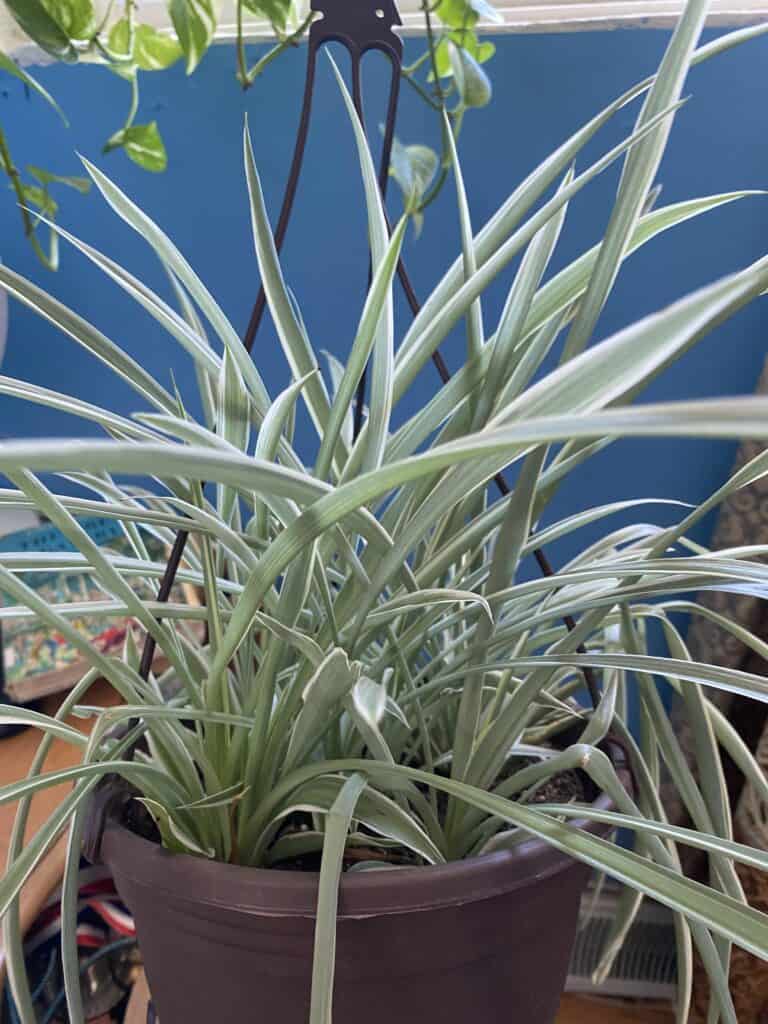
Spider plants are some of the easiest houseplants to care for, but even they can run into trouble. If your spider plant’s leaves are turning pale, it’s trying to tell you something is off with its care or environment.
Pale leaves usually mean your plant is dealing with a watering issue, lighting problem, nutrient shortage, or environmental stress. The good news is that most of these problems are easy to fix once you know what to look for.
I’ll walk you through the most common reasons spider plant leaves lose their color and show you how to get your plant back to its healthy, vibrant green. From watering mishaps to pest problems, we’ll cover what’s happening and what you can do about it.
Please note: Simplify Plants is reader-supported. As an Amazon Associate, I earn from qualifying purchases made by our readers with no extra cost added to you all! Some links in the post are affiliate links and I get a commission from purchases made through links in the post.
1) Overwatering causing root rot
I’ve seen this happen so many times with spider plants. When you water too often, the roots sit in soggy soil and can’t breathe.
They start to rot, which means they can’t absorb nutrients properly anymore.
Your plant’s leaves turn pale because those damaged roots aren’t delivering the good stuff your spider plant needs.
The paleness usually shows up as a washed-out green or yellowish color that spreads across the leaves.
You can check if this is your problem by feeling the soil. Stick your finger about an inch down.
If it’s still wet days after watering, that’s a red flag. The pot might also feel heavy, and you might notice a musty smell coming from the soil.
Quick Tip: Let the top inch of soil dry out completely between waterings, and make sure your pot has drainage holes.
Pull back on watering during winter when spider plants grow slower. They need way less water when it’s cold or if they’re in a darker spot in your home.
2) Underwatering leading to dehydration
When I forget to water my spider plant, the leaves start looking washed out and pale. The plant pulls moisture from its leaves to survive, which drains the green color right out of them.
Spider plants store water in their thick roots, but they can’t do it forever. If the soil stays dry too long, those pale leaves are basically the plant waving a white flag.
You might also notice the leaf tips turning brown and crispy.
I check the soil by sticking my finger about an inch down. If it feels bone dry, my plant needs a drink.
Spider plants like their soil to dry out a bit between waterings, but not completely.
Quick Tip: Water until it drains from the bottom holes, then wait until the top inch dries before watering again.
During hot summer months, I water more often because the soil dries faster. In winter, I cut back since the plant grows slower and needs less.
3) Insufficient light (too dim)
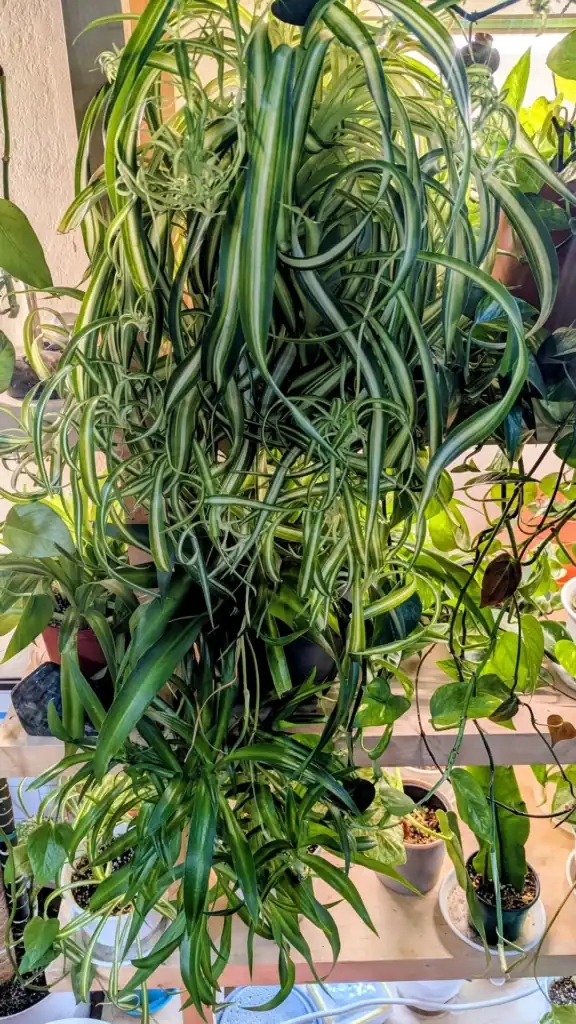
Spider plants can handle some shade, but too little light will drain the color right out of their leaves.
When mine sits in a dark corner for too long, the green fades to a washed-out pale yellow or almost white.
These plants need bright, indirect light to keep their stripes bold and their color rich. A spot near a window with filtered sun works best. If your plant is tucked away from natural light, it’s basically starving for energy.
Quick Tip: Move your spider plant closer to a window, but not in direct harsh sun that can scorch the leaves.
You’ll know the light is better when new growth comes in darker and healthier looking. The pale leaves won’t magically turn green again, but fresh ones will show the improvement.
If you only have low-light spaces, consider a grow light to give your plant the boost it needs.
4) Sunscald from direct afternoon sun
Spider plants can handle some sunlight, but intense afternoon rays are a different story.
I’ve seen plenty of plants develop pale, washed-out leaves after sitting in a west or south-facing window during summer. The harsh sun basically bleaches the color right out of them.
Quick Tip: If your plant sits in direct afternoon sun, move it back a few feet from the window or shift it to a spot with bright, indirect light instead.
The damage usually shows up as faded streaks or patches on the leaves closest to the window.
Sometimes the tips turn brown or crispy too. My spider plant looked almost yellowish-white after just a week of too much direct sun.
These plants naturally grow under tree canopies in the wild, so they’re used to filtered light. A sheer curtain works great if you can’t change the plant’s location.
Morning sun is usually fine since it’s gentler, but watch those hot afternoon hours between 2 and 5 PM.
5) Nutrient deficiency—nitrogen lack
When my spider plant’s leaves start looking pale and washed out, nitrogen deficiency is often the culprit.
Nitrogen helps plants produce chlorophyll, which gives leaves their rich green color. Without enough of it, the oldest leaves fade first and turn yellowish or pale green.
I’ve noticed this happens most with plants that have been in the same soil for over a year.
The plant uses up the nutrients, and there’s nothing left to fuel new growth. You might also see slower growth or smaller leaves than usual.
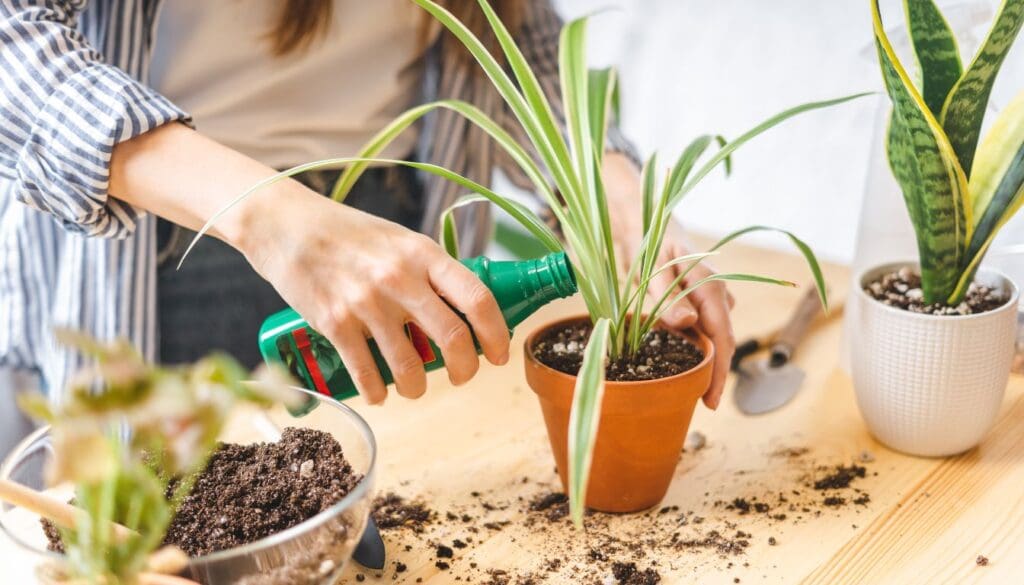
The fix is pretty straightforward. I feed my spider plants with a balanced liquid fertilizer diluted to half strength every 2-4 weeks during spring and summer.
Cut back to monthly in fall and skip winter feeding when growth naturally slows.
Quick Tip: Always water your plant before fertilizing to avoid burning the roots.
If you’ve been fertilizing regularly and still see pale leaves, check your watering habits. Overwatering can wash nutrients out of the soil faster than your plant can use them.
6) Salt buildup from hard water
Hard water leaves behind mineral deposits that collect in the soil over time. I’ve seen this turn spider plant leaves pale and crispy at the tips.
The salts don’t just disappear when you water—they stick around and build up.
You can spot this problem by checking the soil surface for a white crusty layer. That’s your sign that minerals have taken over.
Spider plants are pretty sensitive to these salts, which block them from taking in nutrients properly.
Quick Tip: Flush your soil every month or two by running distilled or rainwater through the pot until it drains out the bottom.
Switching to filtered or distilled water helps prevent new buildup. If your tap water feels slippery or leaves spots on dishes, it’s probably hard.
You can also repot your spider plant with fresh soil if the buildup is really bad—just shake off the old stuff gently.
7) Cold drafts or low temperatures
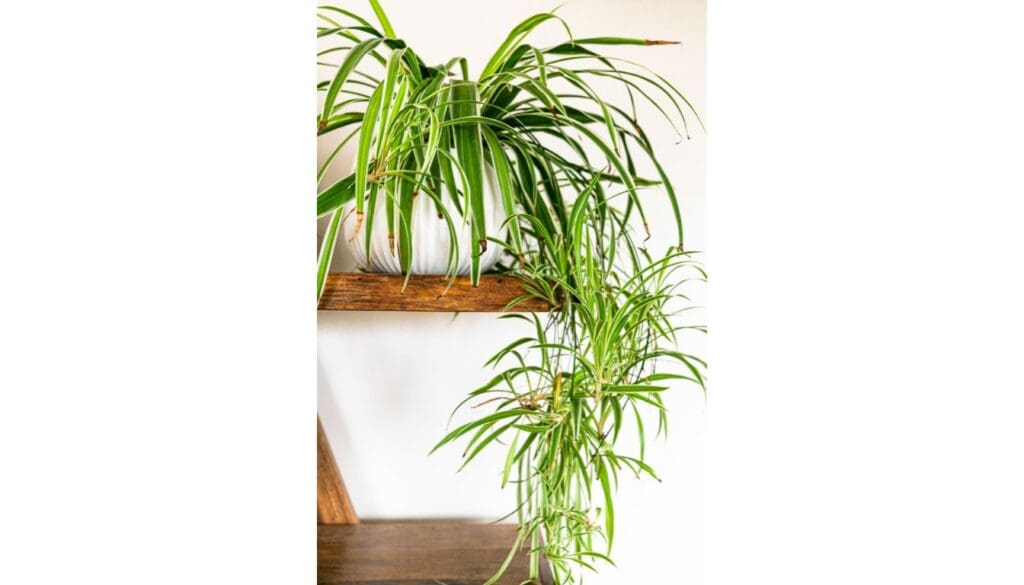
Spider plants don’t like the cold much. When temperatures drop below 50°F or they sit near drafty windows and doors, their leaves start losing color and turning pale.
I’ve noticed this happens fast in winter when heat vents push cold air around or when plants sit too close to exterior walls.
The cold stress messes with how the plant moves nutrients and water through its leaves.
If your spider plant lives near an air conditioner, drafty entryway, or cold window, that’s probably your problem. Even a basement or unheated room can cause this issue during colder months.
Quick Tip: Move your plant away from cold spots and keep it in a room that stays between 65-75°F.
Watch for leaves that feel thin or look translucent along with the pale color. That’s a sign the cold has done some damage. I always check for drafts by holding my hand near windows and doors where my plants sit.
8) Pest infestation—spider mites
Spider mites are tiny pests that love to attack spider plants when conditions get dry and warm.
They’re so small you might not spot them at first, but they leave behind telltale signs like tiny yellow or white speckles on the leaves.
These pests suck the sap right out of your plant’s leaves. That’s why the foliage starts looking pale and sickly.
If you look closely, you might see fine webbing between the leaves or along the stems.
I’ve found that spider mites spread fast when the air is dry, so they’re especially common in winter when indoor heating kicks in.
They can turn your once-green spider plant into a pale, droopy mess if you don’t catch them early.
Quick Tip: Spray your plant with water every few days to keep humidity up and make life harder for these pests.
To get rid of spider mites, wash your plant’s leaves with a damp cloth or give it a gentle shower. You can also use insecticidal soap or neem oil if the problem is bad.
9) Natural leaf aging and shedding
Spider plants don’t live forever, and neither do their leaves. The oldest leaves on your plant will naturally turn pale, yellow, or brown over time before they die off completely.
This usually happens to the outermost leaves first since they’re the oldest. You might notice them losing their green color from the tips downward. It’s just part of the plant’s life cycle.
I wouldn’t worry if you see one or two older leaves fading while the rest of your plant looks healthy and produces new growth. That’s normal aging, not a problem.
Quick Tip: If only the outer leaves are pale and new growth looks green and strong, just trim off the dying leaves at the base with clean scissors.
The key difference between natural aging and actual problems is where the pale leaves show up.
Natural aging affects the oldest outer leaves first. Issues like overwatering or nutrient problems usually cause pale leaves throughout the plant or on new growth.
10) Pot-bound roots restricting growth and starving your spider plant of nutrients
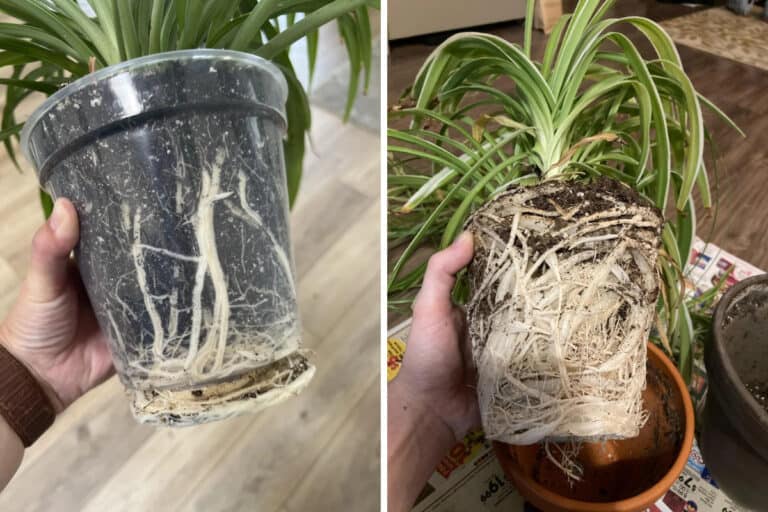
When my spider plant’s roots run out of room, they start circling the pot like they’re trapped in a maze. This crowding means the roots can’t absorb water and nutrients properly anymore.
The leaves respond by turning pale because they’re not getting what they need to stay green and healthy.
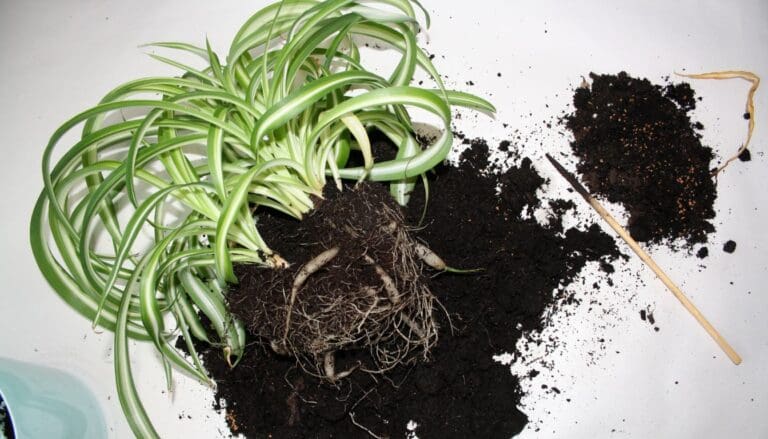
I’ve learned to check for pot-bound roots by gently lifting my plant and looking at the drainage holes. If roots are poking out or wrapped around the soil in tight circles, it’s time for a bigger home.
Moving up to a pot that’s 1-2 inches wider gives the roots space to spread out again. I always use fresh potting mix when I repot because old soil gets depleted and compacted.
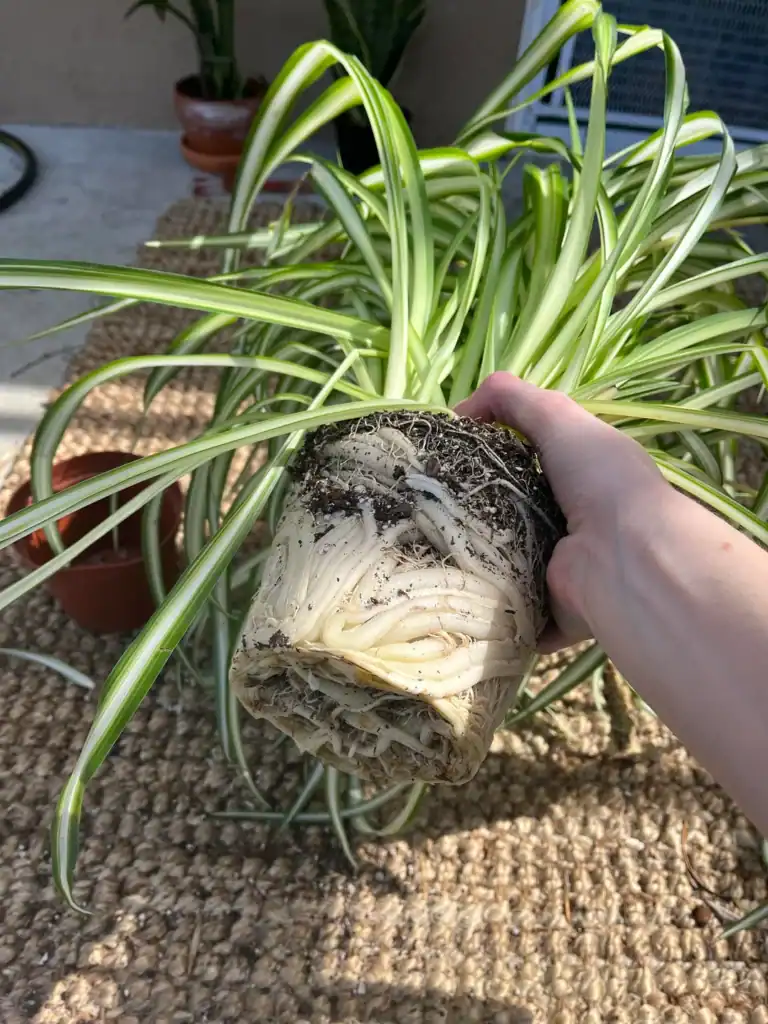
Quick Tip: If your spider plant hasn’t been repotted in over two years, pale leaves might be your plant’s way of asking for more space.
The color should bounce back within a few weeks once the roots can breathe and feed properly again.
Common Environmental Stressors
Your spider plant’s pale leaves often point to stress from watering issues, poor lighting, or shifts in humidity levels.
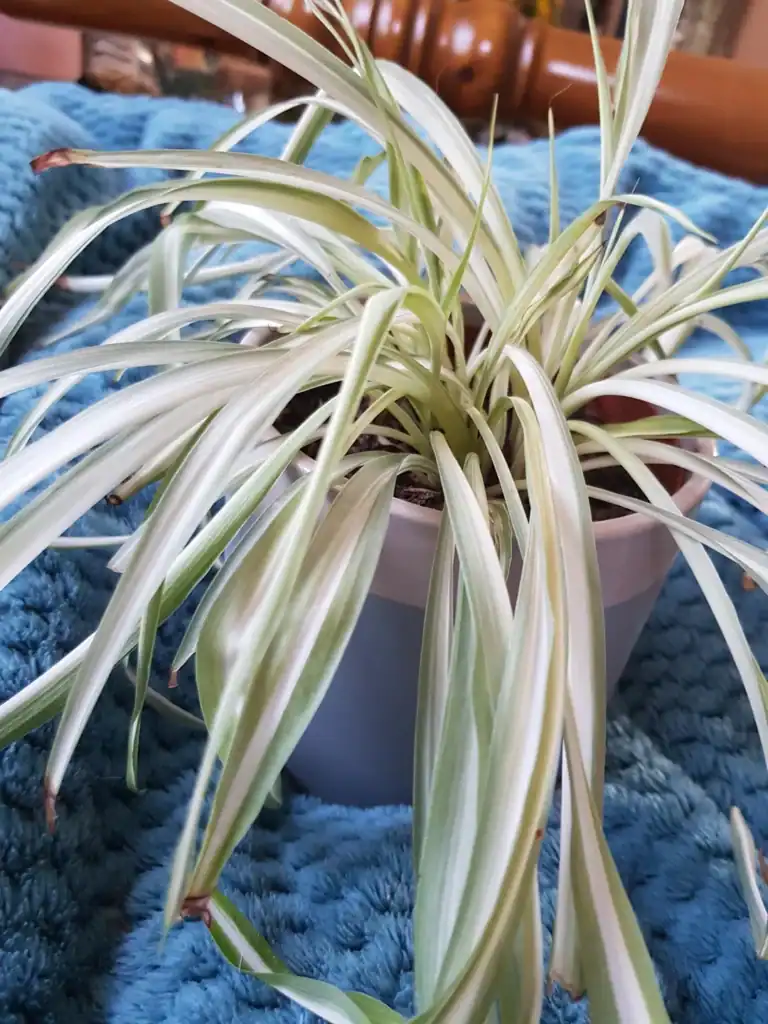
Inconsistent Watering Habits (And Why Your Plant Keeps You Guessing)
I’ve learned that spider plants are pretty forgiving, but they don’t appreciate a chaotic watering schedule.
When I water too frequently, the roots sit in soggy soil and can’t absorb nutrients properly. This leads to pale, washed-out leaves.
On the flip side, letting the soil dry out completely for weeks stresses the plant just as much. The leaves lose their vibrant green color and start looking dull and faded.
I check the top inch of soil before watering. If it feels dry to the touch, it’s time to water. If it’s still damp, I wait another day or two.
Quick Tip: Stick your finger in the soil up to your first knuckle—if it’s dry there, go ahead and water.
The key is finding a rhythm that works for your home’s temperature and humidity. In summer, I water more often because the soil dries faster.
In winter, I cut back since growth slows down and water evaporates less quickly.
Effects of Low Light Exposure (When Your Spider Plant Lives in the Shadows)
Spider plants need bright, indirect light to maintain their rich green color. I’ve noticed that when mine sits too far from a window, the leaves gradually turn pale and lose their punch.
The plant is essentially starving for light. Without enough brightness, it can’t produce chlorophyll effectively. That’s the green pigment that gives leaves their color and helps with photosynthesis.
I place mine about 3-5 feet from an east or west-facing window. North-facing windows work too, but I might need to move the plant a bit closer to the glass.
Quick Tip: If your spider plant stretches toward the light or produces pale new growth, it needs a brighter spot.
Direct sunlight through a south-facing window can actually scorch the leaves, so I avoid that placement. A sheer curtain works great if that’s your only option.
Impact of Humidity Changes (When the Air Gets Too Dry for Comfort)
Spider plants come from tropical areas where humidity stays fairly consistent. When the air in my home gets too dry, especially during winter heating season, the leaves start looking pale and crispy at the tips.
I’ve found that humidity below 40% causes problems. The plant struggles to maintain proper moisture levels in its leaves, which affects their color and overall health.
Brown tips usually show up first, followed by a general fading of the green color. Sometimes the leaves look almost yellowish-pale if the dry air persists for weeks.
Quick Tip: Mist your spider plant 2-3 times per week during dry months, or place it on a pebble tray with water.
I also group my plants together to create a small humid microclimate. Another option is running a humidifier nearby, which helps all my houseplants stay happy.
Nutrient Concerns and Soil Health
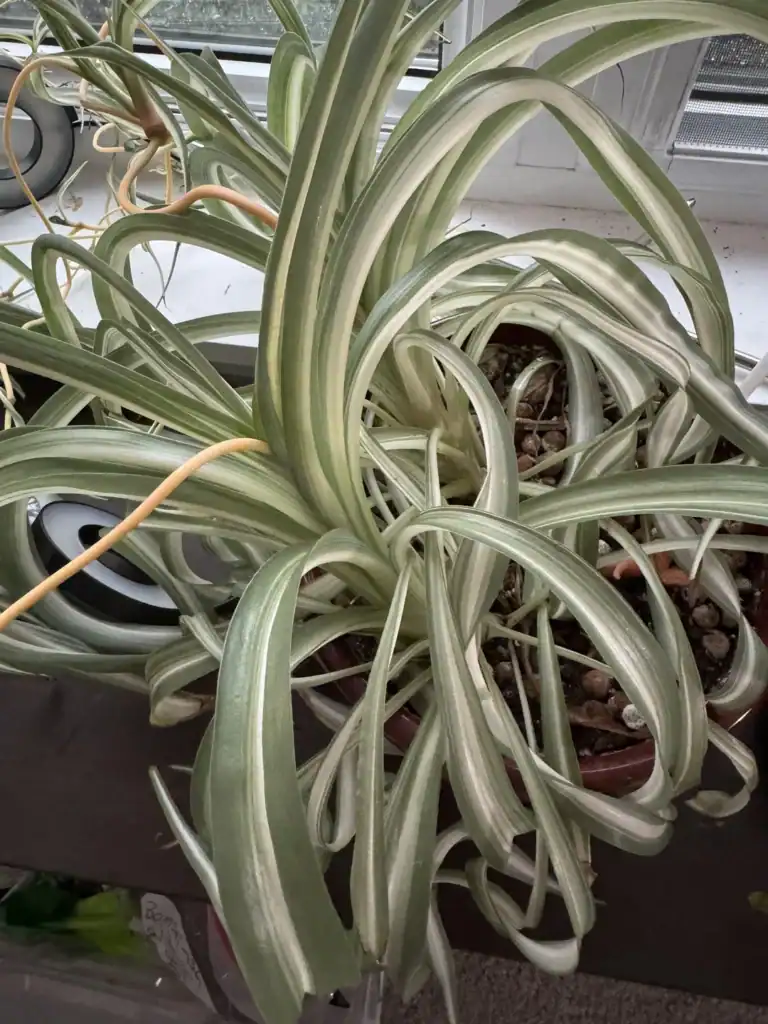
Spider plants need the right nutrients and soil conditions to keep their leaves bright green. When the soil lacks key nutrients or the pH is off, those vibrant stripes start to fade.
Signs of Fertilizer Deficiency (And Why Your Spider Plant Is Staging a Protest)
I’ve noticed that spider plants get pale when they’re hungry. The oldest leaves at the base turn light green or yellowish first. This happens because the plant moves nutrients from old growth to support new leaves.
Nitrogen deficiency is the main culprit behind pale leaves. Spider plants need regular feeding during their growing season from spring through summer. Without it, they slowly lose their rich color.
Other signs include slower growth and smaller leaves. The white stripes might look wider because the green parts fade. New leaves come in looking weak and washed out instead of vibrant.
Quick Tip: Feed your spider plant with a balanced liquid fertilizer diluted to half strength every 2-3 weeks during spring and summer.
I recommend stopping fertilizer in fall and winter when growth slows down. Too much fertilizer causes brown leaf tips, so less is better than more.
Role of Soil pH in Leaf Color (The Hidden Factor Behind Fading Stripes)
Spider plants prefer slightly acidic to neutral soil with a pH between 6.0 and 7.0. When pH goes outside this range, the plant can’t absorb nutrients properly even if they’re in the soil.
High pH (alkaline soil) locks up iron and other micronutrients. This causes chlorosis where leaves turn pale yellow but veins stay green. I’ve seen this happen when people use tap water with high mineral content over time.
Low pH below 6.0 is less common but can happen with peat-heavy mixes that break down. This affects calcium and magnesium uptake.
You can test soil pH with an inexpensive kit from any garden center. If your pH is off, repotting in fresh potting mix usually fixes the problem. Use a well-draining mix made for houseplants.
Quick Tip: Flush your spider plant’s soil with distilled water every few months to prevent mineral buildup that raises pH.
Frequently Asked Questions
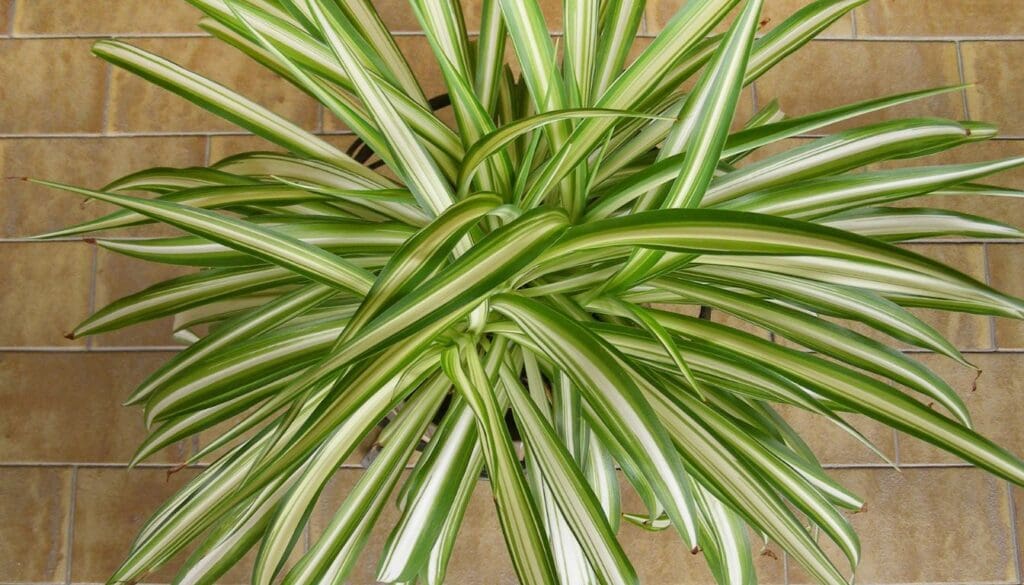
Pale spider plant leaves usually point to watering problems, light issues, or missing nutrients. Brown tips often show up when more than one problem happens at the same time.
Why are my spider plant leaves turning pale all of a sudden?
A sudden color change usually means something in your plant’s environment shifted recently. Maybe you moved it to a new spot, changed your watering schedule, or the seasons changed and the light is different now.
I’ve noticed this happens most when people water too much and the roots start to rot. The roots can’t take in what the plant needs, so the leaves lose their green color fast.
Check if the soil feels soggy or smells off. If it does, you’re probably dealing with root rot from overwatering.
Quick Tip: Stick your finger two inches into the soil—if it’s wet down there, skip watering for now.
What does it mean if my spider plant is pale and limp?
Pale and limp leaves together tell me your plant isn’t getting enough water to stay firm and healthy. The leaves lose their structure when the plant cells don’t have enough moisture.
This can happen from underwatering or from root damage that stops water from reaching the leaves. Root rot causes the same droopy look even if the soil is wet.
Pull the plant out gently and look at the roots. Healthy roots are white or tan and firm. Mushy brown roots mean rot.
Quick Tip: If the soil is bone dry and the pot feels light, give it a good soak and the leaves should perk up within a day.
Can too little light make a spider plant’s leaves look washed out or faded?
Yes, spider plants need decent light to make the green pigment in their leaves. In dim spots, they can’t produce enough chlorophyll and the color fades to pale green or yellowish.
I keep mine in bright indirect light and the stripes stay crisp. When I had one in a dark corner, the whole plant looked washed out within a month.
Move your plant closer to a window but not in harsh afternoon sun. North or east-facing windows work well in most homes.
Quick Tip: If you can barely read a book in the spot where your plant sits, it’s too dark for good growth.
Why are my spider plant leaves turning pale with brown tips?
This combo usually means you have two problems happening at once. The pale color comes from a watering issue or not enough light, while brown tips point to low humidity, too much fertilizer, or chemicals in your tap water.
I see this a lot when people underwater their plants and the air is dry. The plant struggles overall and the leaf tips die back first since they’re farthest from the roots.
Sometimes overfeeding causes salt buildup in the soil, which burns the tips brown while nutrient imbalance makes the rest of the leaf pale.
Quick Tip: Switch to filtered or rainwater if your tap water has fluoride or chlorine—spider plants are sensitive to both.
Do pale, thin spider plant leaves mean it’s not getting enough water or nutrients?
Thin, pale leaves often mean your plant lacks nitrogen, which it needs to build strong leaf tissue and make chlorophyll. Without enough nitrogen, new growth comes in weak and light-colored.
Underwatering can make leaves thin too since the plant can’t fill out the cells properly. You’ll notice the leaves feel papery instead of slightly thick and bendy.
Feed your spider plant with a balanced liquid fertilizer diluted to half strength once a month during spring and summer. Skip fertilizer in fall and winter when growth slows down.
Quick Tip: Yellow-pale leaves that start at the bottom of the plant usually mean nitrogen deficiency.
How can I tell if pale spider plant leaves are from too much sun or something else?
Sunscald from too much direct light shows up as bleached or whitish patches on the leaves, sometimes with crispy brown spots. The pale areas look almost white or cream-colored instead of just light green.
This happens when direct afternoon sun hits the leaves for hours. I learned this the hard way when I put mine on a south-facing windowsill in summer.
Other causes of pale leaves look more uniform across the whole leaf. The color fades evenly instead of in specific sun-exposed patches.
Quick Tip: If only the side facing the window looks bleached, move your plant back a few feet or add a sheer curtain to filter the light.
Note: Some images in the articles are sourced from Reddit and Other Platforms For Reference Purpose.