Why Your Prayer Plant Has Crispy Edges?
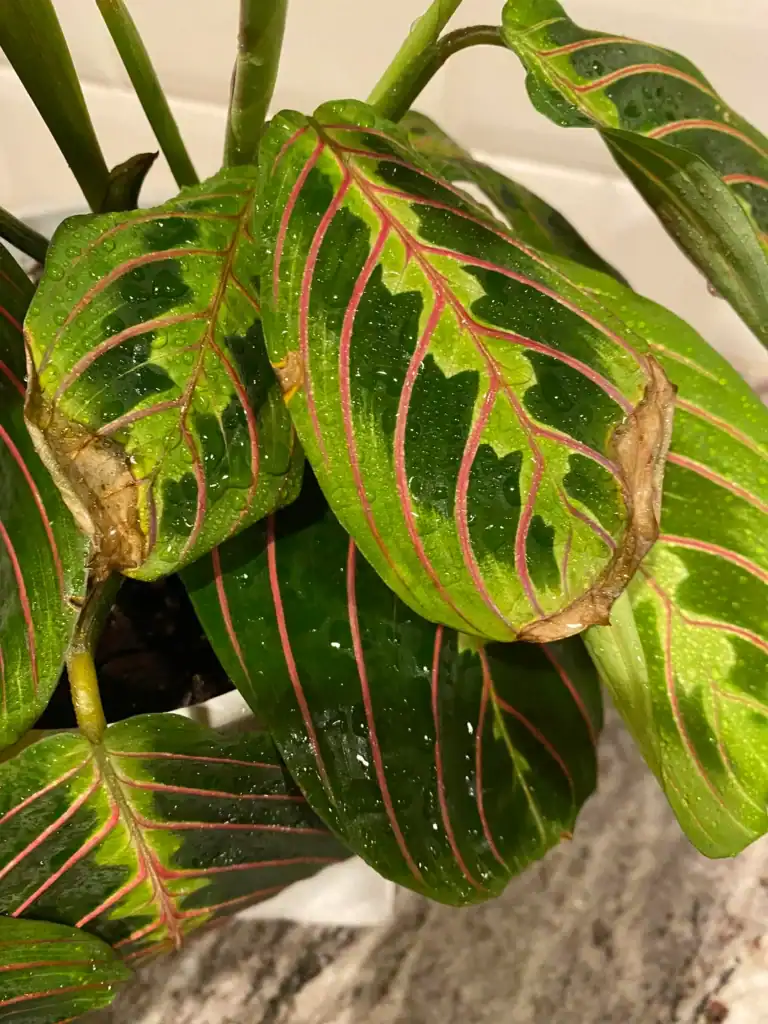
Prayer plants are some of my favorites. The bold patterns and the way their leaves fold up at night? Just so cool. But when those stunning leaves start developing brown, crispy edges, it’s a bit of a gut punch. Something’s definitely off.
The good news? Crispy edges are usually fixable once you know what’s going on. Most of the time, it’s watering issues, humidity problems, or just general environmental stress.
Prayer plants are actually pretty good at letting you know when they’re unhappy. They just want the right balance of moisture, warmth, and gentle light to keep their leaves looking sharp.
Let’s break down the most common reasons your prayer plant might be getting crispy. I’ll go through everything from watering habits and indoor air to light and water quality.
By the end, you’ll have a good idea of what to look for and how to help your plant bounce back.
Please note: Simplify Plants is reader-supported. As an Amazon Associate, I earn from qualifying purchases made by our readers with no extra cost added to you all! Some links in the post are affiliate links and I get a commission from purchases made through links in the post.
1) Underwatering during hot weather
Prayer plants get extra thirsty when it’s hot. If you’re seeing crispy brown edges creeping across those beautiful leaves, there’s a good chance your plant is just plain thirsty.
During summer heat waves, soil dries out way faster than you’d expect. What worked in spring might leave your prayer plant parched by July.
I always poke the top inch of soil with my finger before watering. When it’s hot, you might need to water twice as often. Don’t wait until the leaves start curling or crisping at the tips—once those edges are brown, they’re not coming back.
Quick Tip: Stick your finger in the soil every few days during hot weather. If it feels dry past your first knuckle, it’s time to water.
Pay attention to how quickly the water drains, too. If it sits on top, your soil might be compacted. If it drains super fast and the pot feels light the next day, you probably need to water more often.
2) Low humidity in dry indoor air makes leaf edges crispy and brown
Prayer plants are rainforest natives; they crave moist air. When I grow them at home and the air’s dry, the leaf edges start to turn brown and crispy. It’s just the plant losing water faster than it can take up.
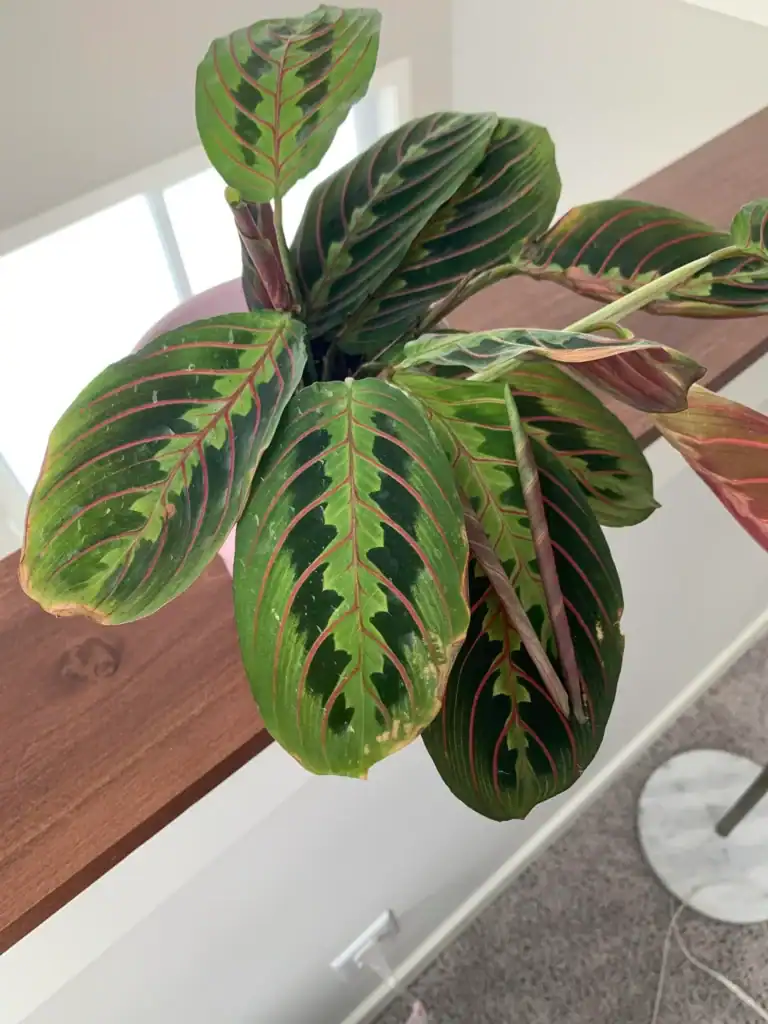
Indoor air gets especially dry in winter when heaters are blasting. Air conditioning in summer? Same deal. Your prayer plant will let you know it’s struggling by developing those classic brown edges.
Quick Tip: Place a small humidifier near your prayer plant or group it with other plants to boost humidity.
Setting your plant on a pebble tray with water underneath (but not touching the pot) can also help. The evaporating water adds a bit of moisture to the air right around your plant.
Misting helps for a few minutes, but honestly, it’s not a long-term fix. If those edges are getting crunchier, check your humidity and try one of these tricks.
3) Direct afternoon sunlight scorch (when those hot rays cook your plant’s delicate leaves)
Prayer plants evolved under the forest canopy, so they’re used to soft, filtered light. When direct afternoon sun hits those thin leaves, it can literally burn them.
Afternoon sun between 1 and 5 PM is brutal. If your plant’s sitting in a west or south-facing window during those hours, crispy brown edges are probably sunburn. The leaves just can’t take that kind of intensity.
I’ve seen prayer plants go from healthy to crispy in just a few days of direct sun. The edges brown and get papery first, then the damage creeps in.
Quick Tip: Move your prayer plant at least 3-6 feet away from windows that get afternoon sun, or try an east or north-facing window instead.
You want bright but indirect light. If you can see a sharp shadow, it’s probably too much sun. A soft, blurry shadow is what you’re after.
4) Overfertilization salt build-up
It’s easy to get carried away with plant food. Too much fertilizer leaves salt deposits in the soil, which pull moisture away from the roots and leaf edges, making those tips crispy.
A white or crusty layer on top of the soil is a dead giveaway for salt build-up. Prayer plants don’t need much fertilizer—feeding every watering or using full-strength plant food is asking for trouble.
I like to flush the soil every few months by running water through the pot until it drains out. That helps wash away excess salts.
Quick Tip: If you see white crust on the soil, flush the pot and back off on feeding.
Once you get rid of the salts and ease up on fertilizer, your plant should perk up.
5) Root-bound pot restricting moisture (when roots have nowhere left to grow)
When roots circle the inside of the pot with nowhere to go, they can’t absorb water like they should.
There’s barely any soil left to hold moisture, so water just runs straight through.
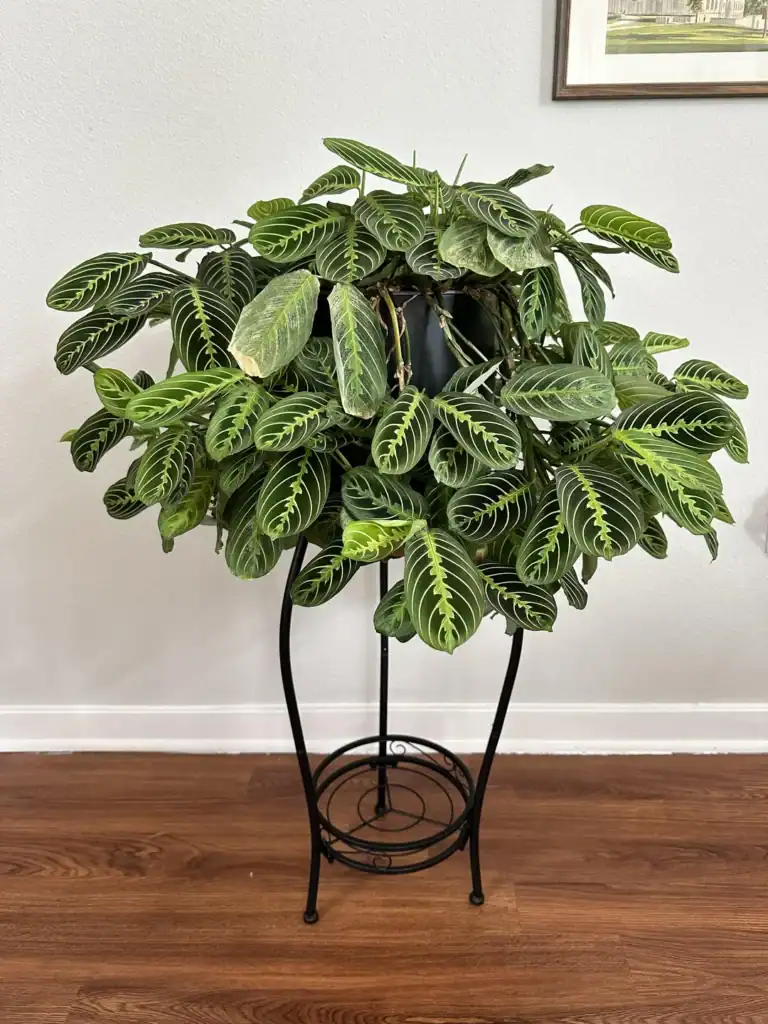
I check for this by gently lifting the plant out of its pot. If I see a mass of roots wrapping in circles or poking out the drainage holes, it’s time for a bigger home.
Quick Tip: Repot your prayer plant into a container that’s 1-2 inches wider.
Root-bound plants dry out faster than you’d expect. I might stick to my usual watering schedule, but the leaves still get crispy because the roots can’t reach enough moisture.
Fresh potting soil and a little extra room make a world of difference. The roots can finally spread out and do their thing.
6) Cold drafts from windows or AC
Prayer plants are tropical—they hate cold air. Sudden cold drafts from a window or air conditioner can turn their leaf edges crispy fast.
If your plant is near a drafty window in winter or under an AC vent in summer, those crispy edges are trying to tell you something. Cold air dries out the tips, and the plant can’t keep up.
I’ve seen prayer plants go from green to brown in just a few days next to an AC vent. Move your plant at least three feet away from any direct cold airflow.
Quick Tip: Hold your hand near your plant for a minute—if you feel a steady breeze or chill, that’s probably the issue.
Windows can be sneaky. Even when closed, they let in cold drafts during winter months. If browning gets worse as the weather drops, try moving your plant to a warmer spot.
7) Hard water mineral accumulation (and why those white crusty spots spell trouble)
This one’s sneaky. When you water with hard tap water, minerals like calcium and magnesium build up in the soil. These salts collect at the leaf edges, burning the tissue and causing crispy brown tips.
A white crust on the soil or around drainage holes is your warning sign.
The fix? Switch to filtered, distilled, or rainwater if you can. If you’re already seeing damage, flush the soil by running room-temperature water through the pot for a few minutes.
Quick Tip: Can’t switch water types? Let tap water sit out overnight before using—it helps a little.
Your prayer plant should look fresher once you make the change.
8) Leaf-edge bacterial or fungal infection (Yes, plants can catch bugs too)
Sometimes, crispy edges aren’t about water or humidity. Bacterial and fungal infections love to start at leaf edges where moisture lingers. I’ve seen this sneak up on prayer plants that stay too wet or don’t get enough airflow.
Look for brown or black edges that feel mushy before they dry out and crisp up. Sometimes there’s a yellow halo or the pattern spreads unevenly.
If you spot this, trim off infected leaves with clean scissors. Move your plant somewhere with better airflow and cut back on misting.
Let the soil dry out a bit more between waterings—pathogens love constant moisture.
Quick Tip: Wipe your scissors with rubbing alcohol between cuts so you don’t spread the infection.
Keep an eye on new growth for a few weeks. If it keeps spreading, you might need a fungicide, but usually, better care solves it.
9) Sudden temperature fluctuations (like drafty windows or AC blasts)
Prayer plants hate surprises—especially quick temperature swings. If they’re near a drafty window, heating vent, or air conditioner, hot and cold air hits them in waves. That stress shows up as crispy, brown leaf edges.
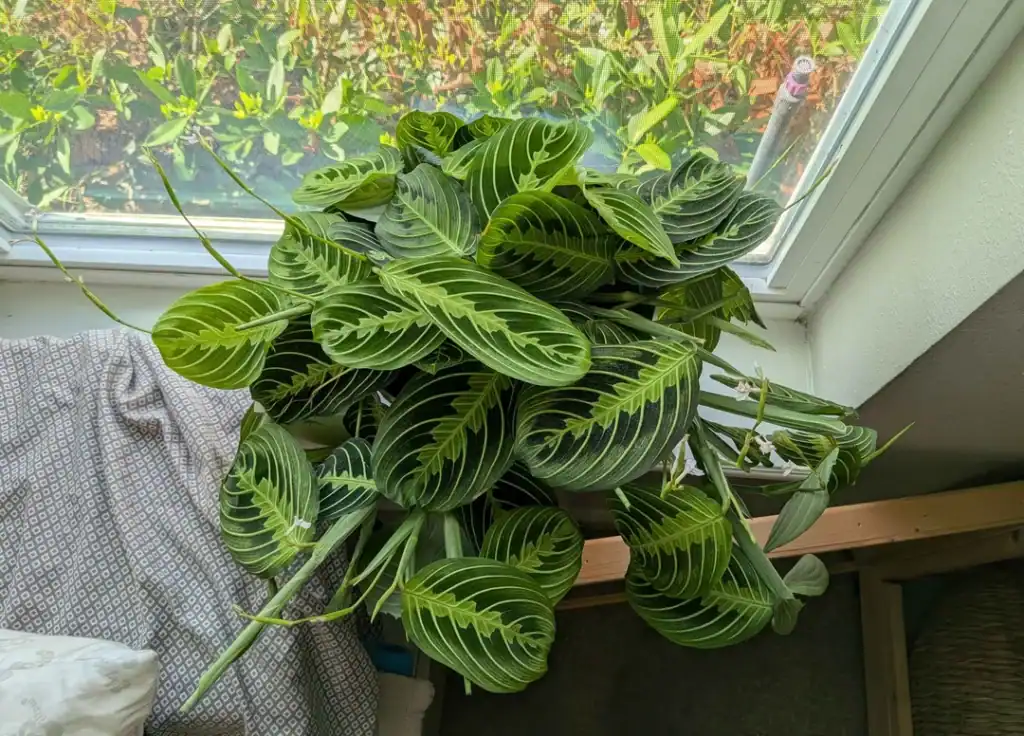
I always check where my prayer plant lives compared to vents and windows. Sometimes just moving it a few feet away makes a huge difference. They really prefer stable temps between 65-80°F—no wild swings.
Quick tip: Feel the air around your plant at different times of day. If you notice cool drafts or hot blasts, that’s probably the problem.
Watch out during seasonal changes, too. Opening windows in spring or cranking the heat in winter can create temperature swings your plant won’t appreciate. Even moving it from one room to another can cause shock if there’s a big difference.
10) Chemical sensitivity to foliar spray
Prayer plants can be a bit fussy about what lands on their leaves. Even sprays that claim to be gentle sometimes cause trouble—I’ve seen those crispy edges show up after using anything with salts, oils, or synthetic stuff that just sits there.
Their thin foliage can’t really tolerate harsh chemicals the way a rubber plant might. If you’ve been misting with fertilizer or using insecticidal soap, that could be your issue.
Quick Tip: Always dilute foliar sprays more than the label says for prayer plants, and maybe just test it on one leaf first.
Watch your plant for a few days after spraying. If those edges start browning, it might be time to switch to plain water or just skip foliar feeding altogether.
Some sprays leave a residue that blocks up the leaf pores, which stresses the plant even more. It’s honestly not worth the risk.
If you need to treat pests, I’d go for a gentle wipe-down with diluted neem oil instead of a heavy spray. Your prayer plant will thank you with smoother, greener edges.
Understanding the Needs of a Prayer Plant
Prayer plants are from tropical forest floors and they’ve really adapted to some specific conditions. If you can mimic those at home, those crispy edges are less likely to show up.
Natural Habitat and Adaptations (Why Prayer Plants Are So Picky About Their Environment)
They naturally grow on the forest floor in Brazil. I like to imagine them tucked under thick canopies, getting dappled light instead of anything harsh.
Humidity in their native spot sits around 60-80% all year. Their leaves are thin and soft because that’s what works in that environment, which is why they struggle with our dry indoor air.
When the air gets too dry, moisture escapes from the leaf edges faster than the roots can keep up. It’s just not what they’re built for.
They also prefer steady temperatures between 65-75°F. Sudden changes or cold drafts? Not their thing.
Out there, the soil stays moist but drains well and is packed with organic matter from fallen leaves. Prayer plants have shallow roots that expect this kind of setup.
Common Environmental Stressors (What Usually Goes Wrong in Your Home)
Low humidity is probably the top issue for prayer plants. Most of our homes hover around 30-40% humidity, and it gets worse in winter when heaters run constantly.
Quick Tip: Try putting a humidifier near your plant or group it with other plants to boost humidity.
Inconsistent watering is another common stressor. The soil shouldn’t dry out completely, but letting it stay soggy is just as bad.
I usually check the top inch of soil every few days. It’s a simple habit that saves a lot of headaches.
Direct sunlight is rough on these guys. Even just an hour of afternoon sun through a window can leave burns. North or east-facing windows are my go-to.
Tap water with chlorine, fluoride, or high minerals can cause brown edges. I let my tap water sit overnight or just use filtered water.
Cold drafts from air conditioners or leaky windows can shock the plant. Anything below 60°F really doesn’t go over well.
How Environmental Factors Influence Leaf Edges
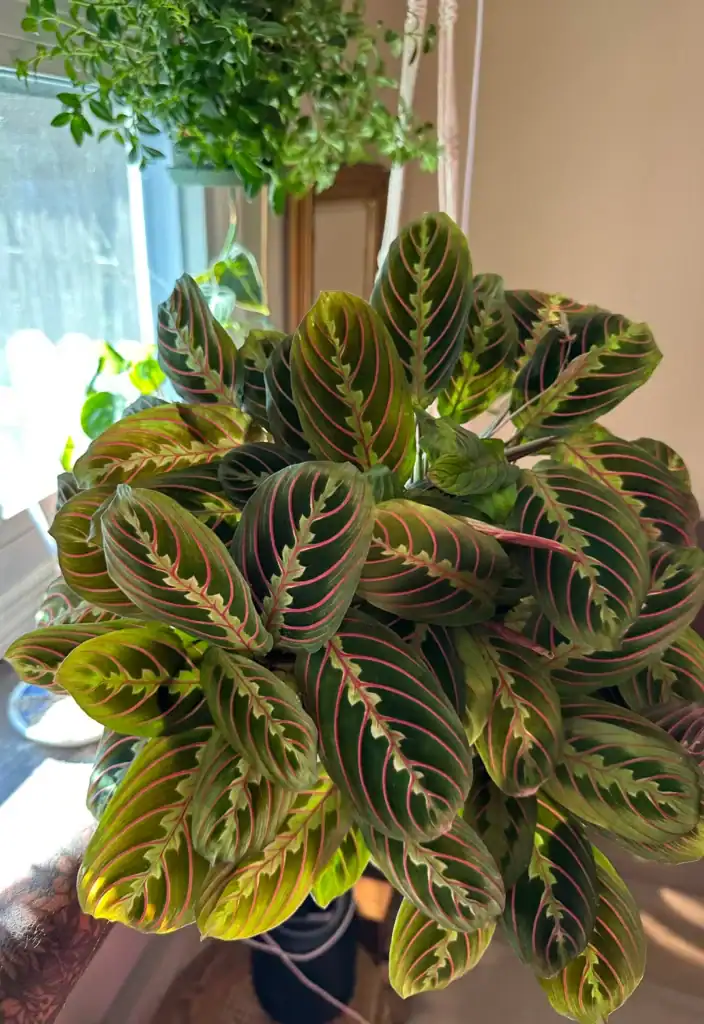
Prayer plants need pretty specific conditions to keep their leaves soft and healthy. When humidity drops, watering gets inconsistent, or the light isn’t right, those leaf edges start drying out and turning brown.
Impact of Humidity Levels (And Why Your Plant Misses the Rainforest)
These plants come from tropical zones where the air is always moist. In my home, the air is usually much drier, especially in winter when the heat’s blasting.
When humidity drops below 50%, the leaf edges lose moisture faster than the plant can keep up. The tips and edges get brown and crispy because they’re the farthest from the water source in the stem.
I’ve noticed this gets worse near heating vents or air conditioners. Those just blast dry air right onto the leaves.
Quick Tip: Stick a humidity meter near your plant to see what you’re actually working with.
You can help by grouping your plants, using a pebble tray with water, or running a humidifier nearby. Misting helps for maybe half an hour but honestly doesn’t fix the problem long-term.
Effects of Watering Practices (Too Much or Too Little Both Cause Problems)
I water my prayer plant when the top inch of soil feels dry. If I wait too long, the roots can’t get water to the leaves, and those edges crisp up.
Watering too much is a different headache. Soggy soil leads to root rot, which means the roots can’t absorb water well. You still get crispy edges, even though the soil is wet.
Water quality matters, too. Tap water sometimes has chlorine, fluoride, and minerals that build up in the soil. Those salts collect at the leaf edges and burn the tissue, which shows up as brown, crispy spots.
Quick Tip: Let your tap water sit out overnight, or switch to filtered or distilled water if you can.
I poke my finger about an inch deep into the soil to check. It should feel slightly moist, not soggy or completely dry.
Role of Light Exposure (Finding the Sweet Spot Between Too Bright and Too Dark)
Prayer plants do best with bright, indirect light. Direct sun burns the leaves, causing brown, crispy edges that start at the tips.
I keep mine by an east-facing window for that gentle morning light. South or west windows can work if you keep the plant a few feet back or use a sheer curtain.
Too little light causes weak, floppy growth. The plant can’t support healthy leaves, so they’re more likely to get damaged by other stressors.
Quick Tip: If the leaves fold up during the day (not just at night), you might be dealing with too much direct light.
Look for bleached or faded spots, too—that’s a sign the light is too strong. Just move the plant back or add a thin curtain to soften things up.
Frequently Asked Questions
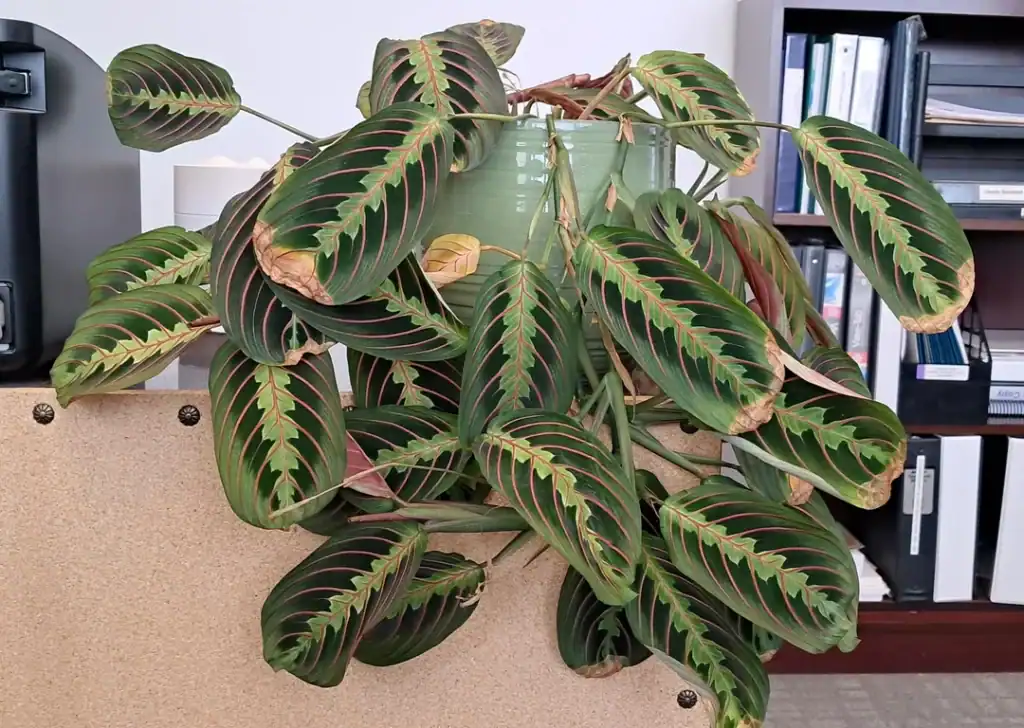
Brown edges usually point to watering habits, humidity, or light exposure. Salt buildup from fertilizer and cramped roots can also push the leaves over the edge.
Why are the edges of my prayer plant leaves turning brown and crispy even though I water it regularly?
Brown, crispy edges happen when your plant can’t get enough moisture to its leaf tips. It sounds odd if you’re watering on schedule, but low humidity or inconsistent watering are usually to blame.
Dry indoor air pulls moisture out of the leaves faster than the roots can keep up. If you’re watering lightly but often, the water might not reach deep into the root zone—so the top inch gets wet, but the bottom stays dry.
Salt buildup from tap water or fertilizer can also block moisture absorption. The salts collect in the soil and make it harder for roots to take up water, even when the soil feels damp.
Quick Tip: Water deeply until it drains out the bottom, then let the top inch dry before watering again.
What does it mean when my prayer plant leaves curl and develop brown tips at the same time?
Curling plus brown tips usually means your plant is trying to save water. The leaves roll up to reduce surface area and slow down moisture loss.
This combo usually points to underwatering during hot spells or super low humidity. I see this a lot in summer when air conditioning dries out the air indoors.
Check if your plant is root-bound, too. When roots circle the pot edges, they can’t absorb water efficiently. The soil might feel moist on top, but the packed roots can’t spread it around.
Quick Tip: Feel the soil at different depths and peek for roots poking out the drainage holes.
Why are my prayer plant leaves turning yellow one by one instead of just getting brown edges?
Yellow leaves that drop one at a time usually mean overwatering or root rot. It’s a different story than crispy edges.
When soil stays soggy, roots suffocate and can’t absorb nutrients. The oldest leaves turn yellow first as the plant redirects energy to new growth. Sometimes there’s a musty smell from the soil, too.
Yellowing can also happen from too much direct sunlight. Afternoon sun bleaches the leaves before they brown and crisp up, and you’ll see yellow patches where the light hits hardest.
Quick Tip: Stick your finger two inches into the soil before watering—if it’s still damp, wait a few days.
How often should I water a prayer plant to prevent crispy edges without causing root rot?
I water mine when the top inch of soil feels dry. For me, that’s every 5-7 days in spring and summer, and maybe every 10-14 days in winter.
Your schedule will depend on your home’s temperature, humidity, and light. A plant in bright, indirect light dries out faster than one in a dim corner. Smaller pots dry out quicker too.
Always water deeply until it runs out the drainage holes. That flushes out salt buildup and keeps the whole root ball hydrated. Don’t forget to empty the saucer after about 15 minutes.
Quick Tip: Crispy edges mean you’re watering too little or waiting too long—yellow leaves mean you’re watering too much.
Should I mist my prayer plant, or will that make leaf edges worse?
Misting gives a quick humidity boost but won’t prevent crispy edges by itself. The moisture evaporates in minutes and doesn’t really move the needle on humidity.
I prefer a pebble tray with water under the pot. As the water evaporates, it creates a little humid zone around your plant. Just make sure the pot’s on the pebbles, not sitting in water.
A humidifier works even better, especially if you’ve got a bunch of tropical plants. Aim for 50-60% humidity to keep those edges soft and green.
Grouping plants together also helps them create a humid bubble. It’s kind of neat how they help each other out.
Quick Tip: Misting is fine for a quick refresh, but don’t count on it as your main humidity fix.
What are the most common causes of a prayer plant looking like it’s dying, and how can I narrow them down?
Honestly, the first thing I’d check is your watering routine. Just stick a finger into the soil—if you can, peek at the roots too.
Mushy, brown roots? That’s almost always overwatering. On the other hand, if the soil’s bone-dry and the roots are crispy, it’s probably been too long since the last drink.
Now, think about where your plant lives. Prayer plants really don’t appreciate direct afternoon sun, and dry air can make them miserable.
Is your plant sitting near a south or west-facing window, or maybe right by a heating vent? That could be stressing it out more than you’d expect.
Give the soil a feel. If the top is crusty or you notice a white residue, salt buildup from fertilizer or tap water might be irritating the roots.
Sometimes, plants get root-bound, too. If you spot roots circling inside the pot or poking out of the drainage holes, that’s a sign.
Quick Tip: Jot down your watering habits and double-check the soil before you water. It might help you spot a pattern you hadn’t noticed.
Note: Some images in the articles are sourced from Reddit and Other Platforms For Reference Purpose.