Why Your Monstera Is Growing Small Leaves: Common Causes and Simple Solutions
You know that proud feeling when your Monstera pushes out a new leaf? I do too.
But when those leaves come in smaller than expected, it’s easy to wonder what went wrong.
Small leaves on your Monstera usually mean the plant isn’t getting enough light, water, or nutrients to support larger growth. The good news? Once you figure out what your plant needs, those big, dramatic leaves will start showing up again.
This happens to most Monstera owners at some point. Your plant might need a sunnier spot, a bigger pot, or just a little more consistent care.
Let’s look at the most common reasons and how to fix them.
Please note: Simplify Plants is reader-supported. As an Amazon Associate, I earn from qualifying purchases made by our readers with no extra cost added to you all! Some links in the post are affiliate links and I get a commission from purchases made through links in the post.
1) Insufficient light—move near bright, indirect window
Light is usually the first thing I check when my Monstera starts pushing out smaller leaves. These plants come from tropical forests where they climb trees to reach filtered sunlight.
When they don’t get enough light indoors, they conserve energy by making smaller leaves. I’ve learned that a spot within 3-6 feet of an east or west-facing window works best.
North-facing windows can work too, but you might need to move your plant closer to the glass. South-facing windows give the most light, but you’ll want to keep your Monstera back from the window or use a sheer curtain to avoid direct sun.
Direct sunlight will actually scorch the leaves and create brown patches. The goal is bright but filtered light, like what the plant would get under a tree canopy.
Quick Tip: If your Monstera leans hard toward the window or the stems look stretched out and thin, it’s begging for more light.
You can test your light levels pretty easily. Hold your hand between the plant and the light source.
If you see a soft, fuzzy shadow, that’s bright indirect light. A sharp, dark shadow means too much direct sun, and barely any shadow means the light is too dim.
Most small-leaf problems get better within a few months once you fix the lighting. The new growth should come in larger and with more of those signature splits.
Just remember, older small leaves won’t grow bigger—only the new ones will show improvement.
2) Underwatering—check soil moisture and water deeply
When my Monstera doesn’t get enough water, it starts pumping out tiny leaves to survive. The plant basically goes into conservation mode because it can’t support big, dramatic foliage without consistent moisture.
I’ve learned to check the soil before watering instead of sticking to a rigid schedule. I push my finger about two inches down into the pot.
If it feels dry at that depth, it’s time to water. If it still feels damp, I wait another day or two.
Quick Tip: Water until you see it draining out the bottom holes—that’s how you know the whole root ball got soaked.
Shallow watering is a sneaky problem I’ve dealt with before. When I only wet the top layer, the roots at the bottom stay bone dry.
Those deeper roots need water too, or the plant can’t function properly. That leads to stressed, small leaves even though I think I’m watering enough.
In hot summer months, my Monstera drinks faster than usual. I check the soil more often during heat waves.
In winter, growth slows down and it needs less frequent watering. One thing I watch for is crispy leaf edges or curling leaves.
Those are signs my plant has been too dry for too long. When I start watering deeply again, the next new leaves usually come out bigger and healthier.
It takes a few weeks to see the improvement, but consistent deep watering makes a real difference.
3) Overwatering and root rot—inspect roots and repot if mushy
Too much water is one of the biggest reasons Monsteras start pushing out tiny leaves. When soil stays wet for too long, roots can’t breathe.
They start to rot, and a plant with damaged roots can’t pull up the nutrients it needs to grow big, healthy leaves. I always check the soil before watering.
If the top two inches feel damp, I wait. Monsteras like to dry out a bit between waterings.
If your plant has been sitting in soggy soil, it’s time to check the roots. Gently remove the plant from its pot and look at the root system.
Healthy roots are firm and white or light tan. Mushy, brown, or black roots mean rot has set in.
Trim off any damaged roots with clean scissors. Repot your Monstera in fresh, well-draining soil.
Make sure the new pot has drainage holes so excess water can escape. Quick Tip: Smell the roots when you inspect them—rotten roots have a sour, unpleasant odor that’s hard to miss.
After repotting, hold back on watering for a few days. Let the plant settle in and start recovering.
In cooler months or lower light, Monsteras need even less water than usual. Root health is everything when it comes to leaf size.
4) Young plant naturally producing juvenile leaves
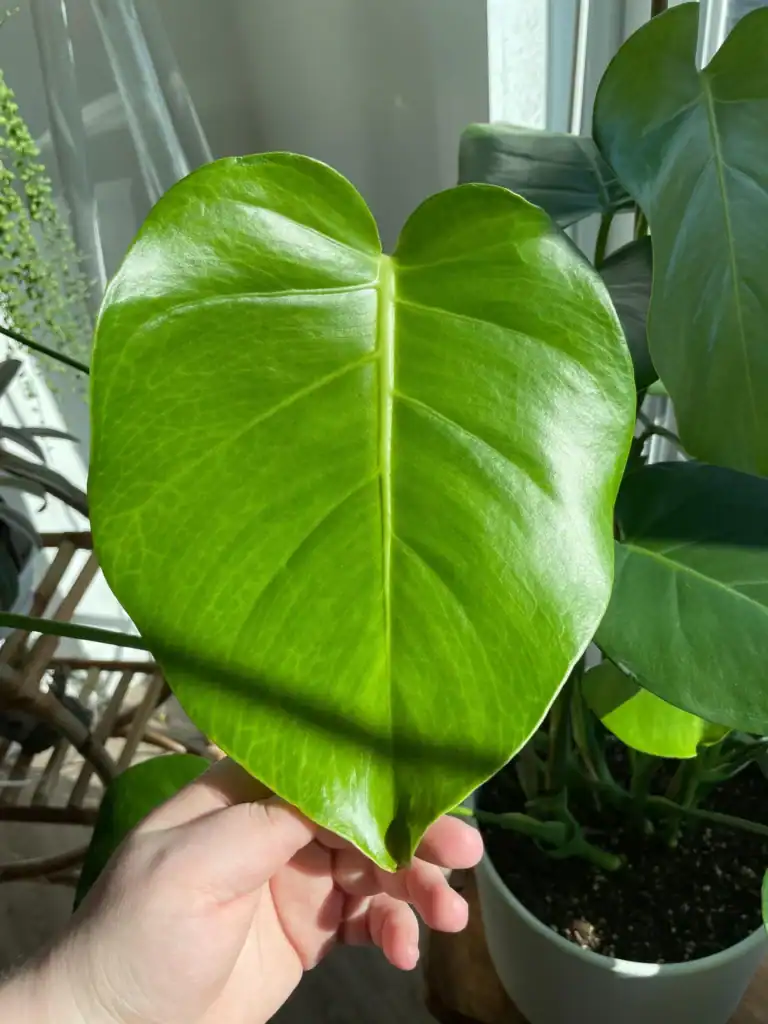
When I first got my baby Monstera, I kept wondering why the leaves looked so plain. No splits, no holes—just smooth, heart-shaped leaves.
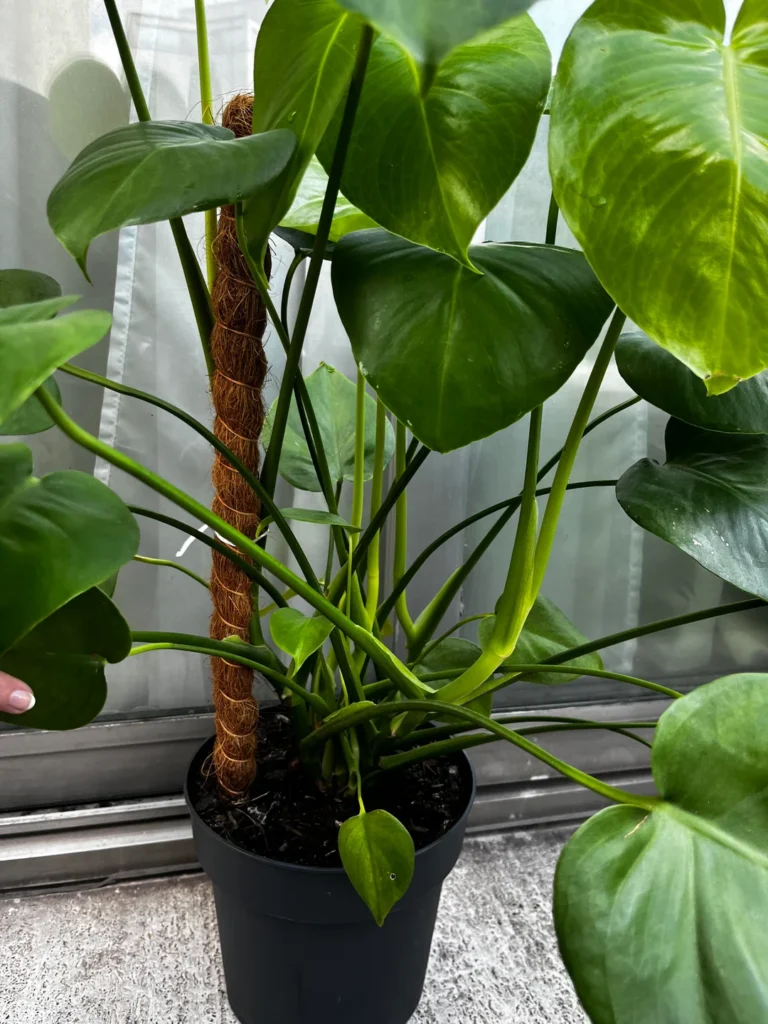
Turns out, that’s completely normal. Young Monsteras start their lives producing what we call juvenile leaves.
These leaves are smaller and lack the fenestrations (those cool splits and holes) that mature plants are famous for. It’s just part of their natural growth cycle.
Think of it like a plant childhood. A young Monstera focuses its energy on building a strong root system and growing taller before it starts making fancy adult leaves.
This phase can last months or even a year depending on growing conditions. You’ll know your plant is maturing when the leaves start getting bigger and developing their first splits.
This usually happens once the plant reaches about two to three feet tall and has enough light and nutrients to support those larger, more complex leaves.
Quick Tip: Give your young Monstera a moss pole or stake to climb—this encourages faster maturity and helps trigger those fenestrations sooner.
The waiting can feel long, but there’s nothing wrong with your plant. Patience is key here.
Keep providing bright indirect light, regular watering, and occasional fertilizer during the growing season. Your Monstera will eventually reward you with those signature split leaves once it’s ready to enter its adult phase.
5) Low humidity—raise with humidifier or pebble tray to help your Monstera thrive
Monstera plants come from tropical rainforests where the air stays moist most of the time. When I keep mine in a dry room, the leaves start coming in smaller because the plant can’t pull enough moisture through its pores.

If the air in my home drops below 40% humidity, my Monstera slows down. It won’t unfurl new leaves as big as it could.
I notice this happens more in winter when the heating runs constantly. Quick Tip: Place a small humidifier near your plant to keep humidity between 50-60%, which mimics its natural environment.
A pebble tray works too if I don’t want to buy a humidifier. I fill a shallow tray with pebbles and add water until it sits just below the top of the stones.
Then I set my Monstera pot on top. As the water evaporates, it creates a little moisture cloud around the leaves.
I also group my plants together. They naturally release moisture through their leaves, so a cluster of plants raises the humidity for all of them.
It’s like they help each other out. Misting sounds helpful, but it only works for about 10 minutes before the water evaporates.
I skip this method because it’s not worth the effort. If I live in a naturally humid climate, I might not need any of these tricks at all.
Dry air stresses the plant and forces it to conserve energy by making smaller leaves. Once I fix the humidity problem, the next leaves should grow bigger again.
6) Nutrient deficiency—apply balanced houseplant fertilizer (e.g., Jack’s Classic)
When my Monstera runs out of nutrients in its soil, it starts producing smaller leaves. The plant needs nitrogen, phosphorus, and potassium to grow those big, dramatic leaves we all want.
I use a balanced houseplant fertilizer like Jack’s Classic 20-20-20 during the growing season. This gives my Monstera all the nutrients it needs without overloading it with one specific element.
I dilute the fertilizer to half strength and feed my plant once a month from spring through summer. In fall and winter, I cut back to every six to eight weeks since growth slows down naturally.
Quick Tip: Always water your Monstera before fertilizing to avoid burning the roots.
If you’ve been skipping fertilizer altogether, your plant is probably hungry. Potting soil loses its nutrients after a few months, so even fresh soil won’t feed your Monstera forever.
Watch for yellowing leaves along with small growth—that’s often a sign of nitrogen deficiency. If the new leaves come in pale or stunted, your plant is telling you it needs food.
Don’t go overboard with fertilizer thinking more is better. Too much can damage roots and cause brown, crispy leaf edges.
Stick to the directions on the bottle and use less rather than more. After you start feeding your Monstera regularly, you should see larger leaves on new growth within a few weeks.
The older small leaves won’t grow bigger, but fresh ones will come in at their proper size.
7) Restricted root space—repot into a slightly larger pot (because cramped roots can’t fuel big, healthy leaves)
When my Monstera’s roots run out of room, the plant can’t pull in enough water and nutrients to make those big, dramatic leaves I love. Instead, it pushes out smaller ones just to survive.
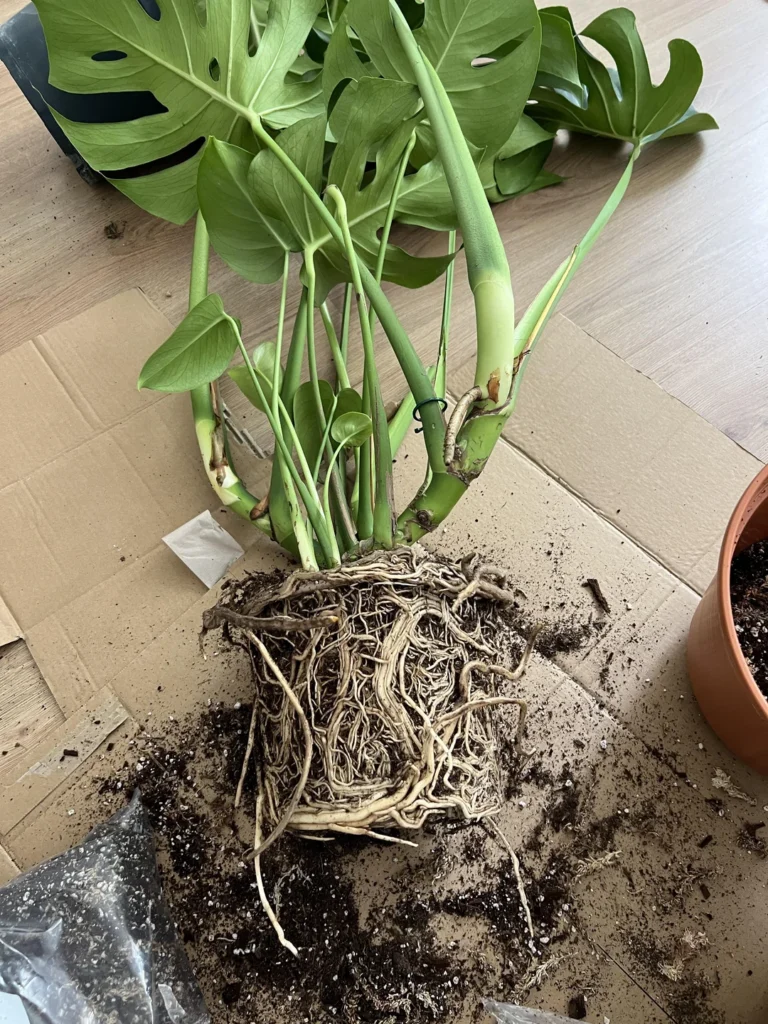
I check for root-bound signs by lifting the plant and peeking at the drainage holes. If I see roots circling the pot’s edge or poking out the bottom, it’s time to move up.
The leaves might also yellow or the soil dries out way faster than usual. I repot into a pot that’s only one or two sizes larger—usually about 2 inches wider in diameter.
Going too big can hold too much moisture and cause root rot. I use fresh, well-draining potting mix and gently loosen any tangled roots before placing the plant in its new home.
Quick Tip: Repot in spring or early summer when your Monstera is actively growing so it can recover faster.
After repotting, I water thoroughly and let the excess drain completely. Then I keep an eye on the plant for a week or two.
It might look a little droopy at first, but that’s normal. Once it settles in, new growth should come in bigger and healthier.
In cooler months or low light, my Monstera grows slower, so I skip repotting until conditions improve.
8) Incorrect potting mix—use airy, well-draining mix with orchid bark to keep roots happy and leaves full-sized
The soil you use matters more than you might think. Regular potting soil is too dense for Monsteras and holds water for too long.
This suffocates the roots and stops them from absorbing nutrients properly. I always mix my own blend using potting soil, orchid bark, perlite, and a bit of peat moss or coco coir.
The orchid bark creates air pockets that let roots breathe. Perlite helps water drain quickly so roots don’t sit in soggy conditions.
When roots can’t get enough oxygen, they struggle to feed the plant. That’s when you start seeing smaller leaves that never reach their full size.
The plant is basically stressed and conserving energy. Quick Tip: If water pools on top of the soil or takes forever to drain through, your mix is too heavy and needs more bark or perlite.
You can buy pre-made aroid mixes if mixing your own feels like too much work. Just check that the bag includes chunky pieces like bark or wood chips.
The mix should look loose and crumbly, not thick like mud. I repot my Monstera every year or two into fresh mix because the bark breaks down over time.
If you notice the soil looking compacted or staying wet for days after watering, it’s time for new mix. Your plant will thank you with bigger, healthier leaves.
9) Cold drafts or temperature stress—keep above 60°F (15°C)
Monsteras are tropical plants and, honestly, they just can’t handle the cold. If the temperature drops below 60°F, your plant shifts into survival mode and stops putting energy into making those big, dramatic leaves.
Most of the time, I’ve seen this happen near drafty windows in winter or right under an air conditioning vent. Your Monstera might look okay at first glance, but the new leaves keep popping out small and, well, a little disappointing. It’s like the plant is bracing for winter, even if it’s warm everywhere else.
Cold stress doesn’t always mean your whole space is chilly. Even a steady cool breeze hitting the same spot can be enough to cause issues. Take a minute to check where your plant sits and see if you can feel any sneaky cold air, especially when day turns to night.
Quick Tip: Try moving your Monstera at least three feet from AC vents, exterior doors, and single-pane windows during winter months.
The sweet spot for Monsteras is 65°F to 85°F. Brief dips below 60°F probably won’t kill it, but if it’s happening all the time, you’ll definitely notice smaller leaves. I usually keep a cheap room thermometer near my plants if I’m worried about temperature swings.
If you live somewhere with cold winters, keep your Monstera away from windows at night when it gets chilly. You might not notice the cold in the middle of the room, but right next to the glass, it can get much colder than you’d think. Your plant feels that drop, even if you don’t.
10) Pruning for encouraging fenestrated leaves—tip prune to promote growth
Pruning your Monstera can feel a bit nerve-wracking, but it’s honestly one of the best tricks for encouraging those fenestrations you’re after.
When you snip the growing tip of a stem, you’re basically telling the plant to redirect its energy elsewhere.
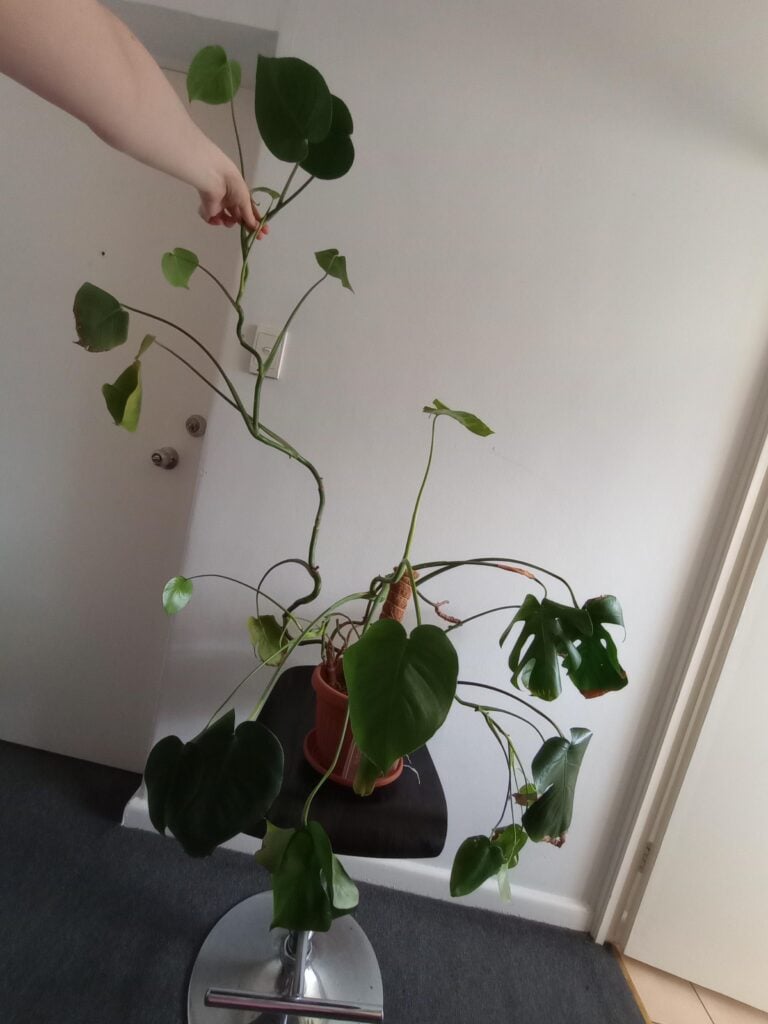
This is called tip pruning, and Monsteras usually respond by waking up dormant growth nodes lower down the stem. Suddenly, you’ll spot new shoots popping up from places that looked totally inactive before.
Quick Tip: Always use clean, sharp scissors or pruning shears and cut just above a node, ideally at a slight angle.
I usually prune in spring or early summer, when my Monstera is in full growth mode. That’s when it bounces back fastest and sends out fresh shoots. If you prune in winter, don’t be surprised if the plant just sits there and pouts for a while.
Don’t overdo it. Just start with one or two stems and see how your plant reacts over the next few weeks. You should notice new leaves within a month if conditions are good.
But keep in mind—pruning by itself won’t magically create fenestrations if your plant is too young or isn’t getting enough light. It’s just one part of the equation. Paired with bright, indirect light and decent care, tip pruning really does help push your Monstera toward those gorgeous split leaves.
How Light and Water Impact Leaf Size
Light and water are basically the fuel for your Monstera’s growth. If either one is lacking, your plant will start producing smaller leaves to save energy.
Signs Your Monstera Isn’t Getting Enough Sunlight (And What That Means for Leaf Size)
From what I’ve seen, Monsteras in weak light just make smaller, thinner leaves. The plant simply doesn’t have the juice to build those big, fenestrated leaves everyone wants.

Low light symptoms include:
- Leaves turning pale or yellow-green instead of a deep green
- Long gaps between each leaf along the stem
- New leaves staying small as they mature
- Few or no splits in mature leaves
Your Monstera needs bright, indirect light for at least 6-8 hours a day. A spot near an east or south-facing window is usually good, but keep it a few feet back to avoid sunburn.
If your plant’s in a dim corner or only gets light from a north-facing window, it’s probably struggling. You’ll notice the new leaves getting smaller with each round of growth.
Quick Tip: Rotate your Monstera every week so all sides get a fair shot at the light and growth stays even.
Watering Practices That Actually Make a Difference to Leaf Development
I usually water my Monstera when the top 2 inches of soil are dry. For me, that’s about every 7-10 days, but it really depends on your home’s humidity and temperature.
Inconsistent watering throws the plant off. If you let it dry out completely, then flood it, then dry it out again, the roots can’t deliver steady nutrients. End result? Smaller leaves that just don’t reach their potential.
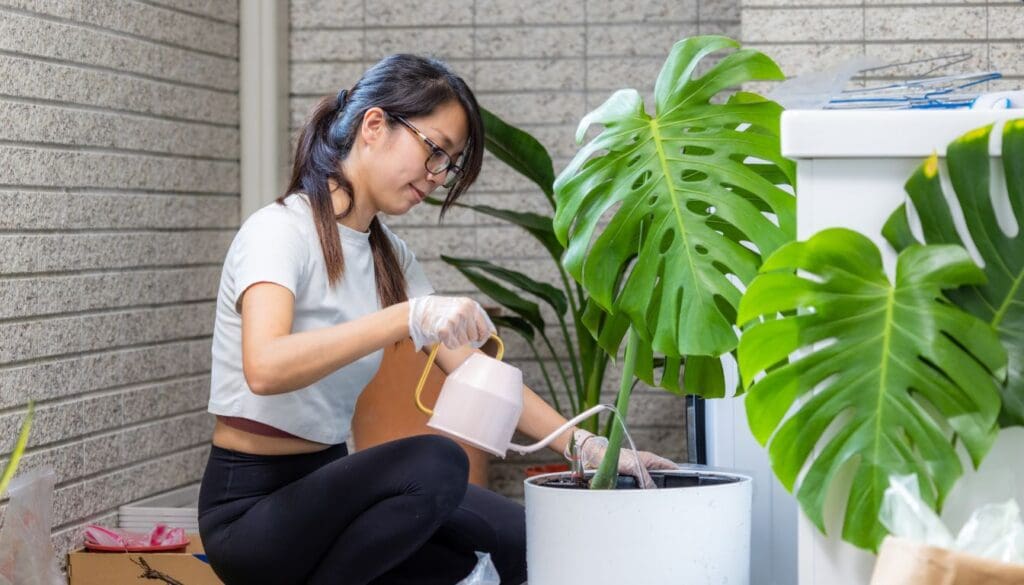
Overwatering causes:
- Root rot, which blocks nutrients
- Yellowing leaves and stunted growth
- Smaller new leaves as the plant struggles
Underwatering leads to:
- Crispy, brown leaf edges
- Droopy stems
- Reduced leaf size as the plant tries to save moisture
I always poke my finger into the soil before watering. When I do water, I make sure it drains all the way through—no soggy roots, please.
Quick Tip: Use room-temperature water and make sure your pot has drainage holes. Monsteras hate sitting in wet soil.
Understanding Monstera Growth Stages
Monsteras don’t pop out of the pot with those famous splits and holes. They grow through different phases, and the size of their leaves depends a lot on where they are in that process.
What to Expect From Young Plants (Hint: Smaller Leaves Are Normal)
When I first got my baby Monstera, I was honestly surprised by how plain the leaves looked. Young plants just make small, heart-shaped leaves—no splits or fenestrations yet. That’s totally normal and not a sign of trouble.
These juvenile leaves usually measure 2-4 inches across. They’re solid green, smooth-edged, and honestly a little underwhelming at first. The plant is busy building a strong root system in this stage, not fancy leaves.
Most Monsteras stay in this phase for about 2-3 years. Timing depends on things like light, water, and nutrients. If you’re giving your plant what it wants, you’ll eventually see bigger leaves with some splits as it matures.
Quick Tip: Don’t expect splits on leaves smaller than 8-10 inches—the plant just isn’t ready yet.
Mature Plant Leaf Development (When the Magic Happens)
Once a Monstera matures, the leaf size can get wild. I’ve seen mature plants throw out leaves that are 12-24 inches wide, with deep splits and holes everywhere. It’s honestly pretty cool to watch.
This shift happens when the roots are well-established and the plant has plenty of energy stored up. Giving your Monstera a climbing support, like a moss pole, really speeds up this process. They’re natural climbers, and when they grow upward, leaf size usually jumps.
Each new leaf should be a bit bigger than the last on a healthy, mature plant. If your Monstera suddenly starts making smaller leaves after it’s matured, something’s up—could be less light, crowded roots, or maybe it needs a nutrient boost.
Frequently Asked Questions
Monstera leaves can shrink for all sorts of reasons, from lighting issues to watering mistakes. Young plants also just naturally make smaller leaves until they grow up a bit.
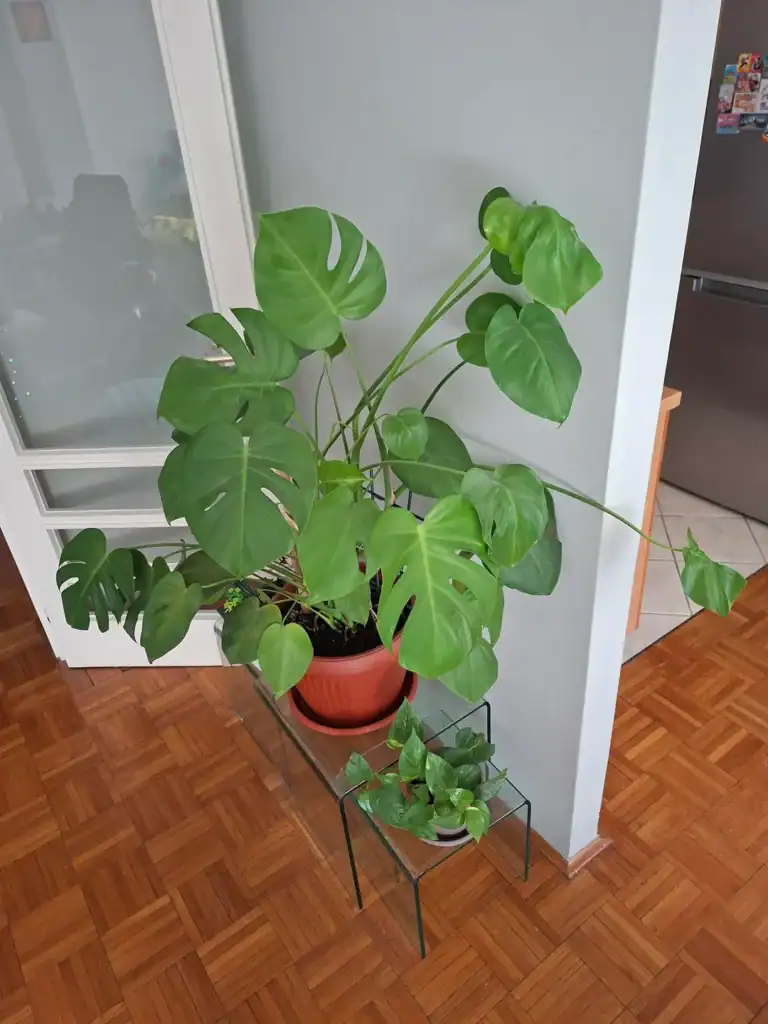
Why are my Monstera’s new leaves coming in smaller than the older ones even though I haven’t changed my care routine?
Smaller new leaves usually mean your plant isn’t getting what it needs. Most of the time, it’s a light problem—Monsteras really want bright, indirect light to make those big, showy leaves.
If your plant’s too far from a window, it might put out smaller leaves just to get by. Try moving it closer to a bright spot, but keep it out of harsh direct sun.
Age plays a part too. Young Monsteras naturally make smaller leaves until they hit maturity. If your plant is still settling in or recently went through a change, give it a little time to adjust.
Quick Tip: Check if your plant has grown taller or bushier since you got it—sometimes a growth spurt means it suddenly needs more light.
Do small Monstera leaves eventually grow bigger, or will they stay that size forever?
The leaves won’t get any bigger once they’ve unfurled. What you see is what you get for each leaf.
The upside is, if you fix whatever caused the small growth, the next leaves can come in bigger and better. Brighter light, more consistent watering, and good nutrients all help your next round of leaves reach their potential.
Don’t cut off the small leaves unless they turn yellow or brown. They’re still helping the plant photosynthesize and grow.
Quick Tip: Snap a photo of each new leaf as it opens—if the next ones are bigger, you’ll know your tweaks are working.
What light conditions can cause a Monstera to produce smaller leaves than normal?
Low light is the main culprit. Monsteras come from forest floors, climbing toward dappled sunlight, so they need that brightness for big leaves.
Anything more than six feet from a window probably isn’t enough. North-facing windows give the weakest light, so I’d skip those unless you add a grow light.
But too much direct sun isn’t great either. Harsh rays can burn leaves and stress the plant out. I’d go for a spot near an east or west window with a sheer curtain, or a few feet back from a south-facing window.
Quick Tip: If you can read a book in that spot during the day without extra lights, your Monstera will likely be happy there.
Can being root-bound or in the wrong pot size lead to smaller Monstera leaves that don’t split?
Absolutely. If the pot’s too tight, roots can’t get enough water or nutrients and the plant responds by making smaller leaves.
Check if roots are poking out of the drainage holes or circling the inside of the pot. That’s a sure sign it’s time to size up.
Pick a pot about 2 inches wider than the current one. Go too big and you risk overwatering, since extra soil stays wet longer than the roots can handle.
Fresh potting mix helps, too. Old soil gets compacted and loses nutrients, making it harder for roots to do their thing.
Quick Tip: I repot my Monstera every year or two in spring, when it’s actively growing and can recover quickly.
Why are the small leaves at the bottom of my Monstera shrinking or turning yellow instead of staying healthy?
Bottom leaves naturally yellow and drop off as the plant gets bigger. It’s just making room for new growth up top. Losing one or two yellow leaves every few months is pretty normal.
If a bunch of leaves turn yellow at once, though, something’s off. Overwatering is the usual suspect—soggy soil suffocates roots and leads to rot.
Always check the soil before you water. The top inch or two should feel dry to the touch. If it’s still damp, hold off for a few more days.
Underwatering can cause yellowing, too, but those leaves feel crispy and dry. Overwatered leaves are soft and might look a bit mushy at the base.
Quick Tip: Stick your finger deep into the soil—if it’s wet past the first couple inches, wait before watering again.
Could watering or nutrient issues be causing my Swiss cheese plant to grow small leaves without fenestrations?
Honestly, poor watering habits are a big deal when it comes to leaf size. Too much or too little water—either one will stress out your Monstera.
If the plant can’t stay hydrated, it just tries to survive, not thrive. That’s when you start seeing those tiny leaves.
I usually wait until the top couple inches of soil are dry before watering deeply. That seems to help the roots get stronger.
Shallow watering? It just leads to weak roots, and then, well, forget about big leaves.
Nutrients are a whole other story. Monsteras really want to be fed, especially when they’re growing in spring and summer.
If you skip the fertilizer or use something too weak, don’t expect lush foliage. They just won’t have what they need to build those big, dramatic leaves.
I go with a balanced liquid fertilizer every month or so, but I definitely cut back when fall hits. Growth slows way down then, so there’s no point overdoing it.
Another thing—low humidity can make the issue worse. Monsteras are tropical after all, and they really seem to love humidity above 60%.
Dry air just makes it tough for new leaves to open up all the way. It’s kind of frustrating to watch, honestly.
Quick Tip: Try setting up a small humidifier or just bunch your plants together. They sort of help each other out that way, creating a little pocket of humidity.
Note: Some images in the articles are sourced from Reddit and Other Platforms For Reference Purpose.