How To Get Rid Of Fungus Gnats In Houseplants?
Fungus gnats are those tiny black flies that swarm around your houseplants, always seeming to appear out of nowhere. Annoying? Absolutely. The good news is, they’re actually pretty manageable once you know what to do.
I’ll walk you through some practical ways to kick fungus gnats out—methods that deal with both the flying adults and those pesky larvae hiding in your soil. The trick is realizing these pests thrive in damp conditions, so most fixes are about changing how you water and treating the soil where their eggs are.
I’ve rounded up a bunch of techniques, from letting the soil dry out to using natural predators and soil treatments. Some work quickly, while others are more about prevention, so you can mix and match depending on what you’re dealing with.
Please note: Simplify Plants is reader-supported. As an Amazon Associate, I earn from qualifying purchases made by our readers with no extra cost added to you all! Some links in the post are affiliate links and I get a commission from purchases made through links in the post.
1) Allow soil to dry between waterings
Fungus gnats are obsessed with wet soil. If you’re keeping your soil soggy, you’re basically rolling out a red carpet for them.
I let the top inch or two of soil dry before watering again. Just stick your finger in—if it’s damp, give it another day or two.
This alone interrupts the gnat life cycle. Larvae just can’t survive in dry soil, and honestly, most houseplants prefer it this way.
Quick Tip: If you’re unsure, a wooden skewer or chopstick helps check deeper moisture.
Some plants (looking at you, ferns and calatheas) like more water, so you’ll want to adjust your timing. In winter, plants drink less, so I cut back even more than usual.
2) Top-dress with 1/2 inch horticultural sand
I’m a fan of horticultural sand for this. It creates a dry barrier that fungus gnats really can’t stand.
Spread about half an inch of horticultural sand right over the top of your soil. Make sure you cover everything—no gaps, or the gnats will find them.
The sand lets water through to the roots but dries out super fast on top. Larvae can’t handle it.
Quick Tip: Use coarse horticultural sand, not beach or play sand. The wrong sand can mess up drainage.
If you repot or the sand mixes into the soil, just add more. I check every few months to make sure the layer’s still thick enough.
3) Use sticky traps (yellow adhesive cards) to catch adult gnats before they multiply
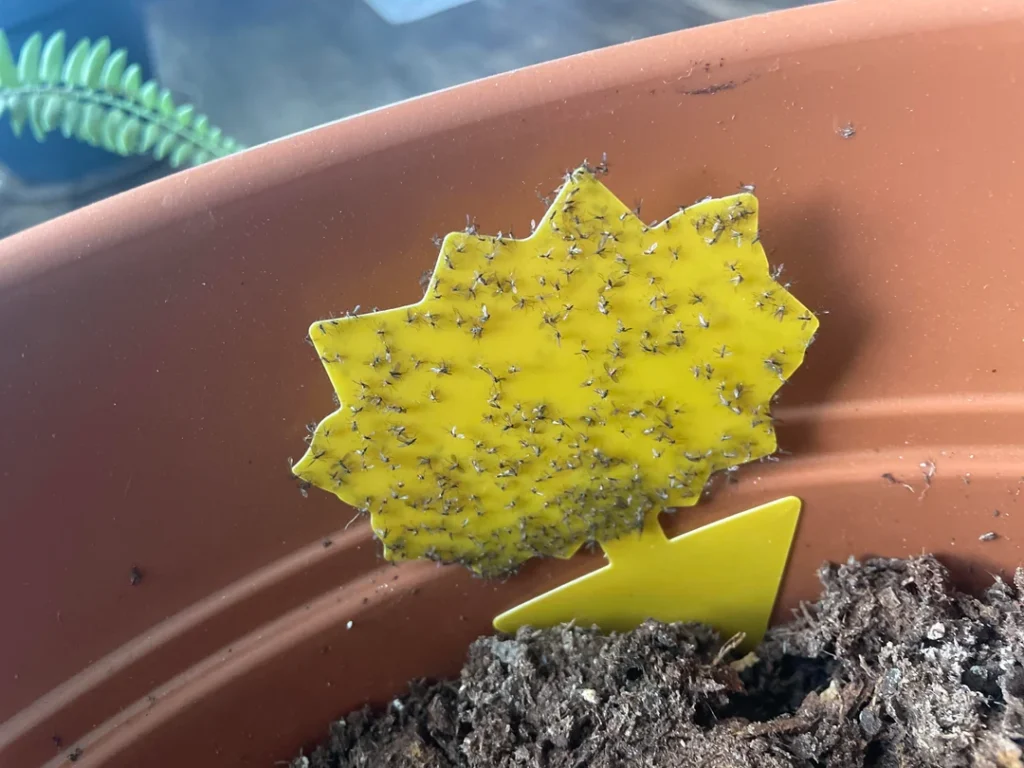
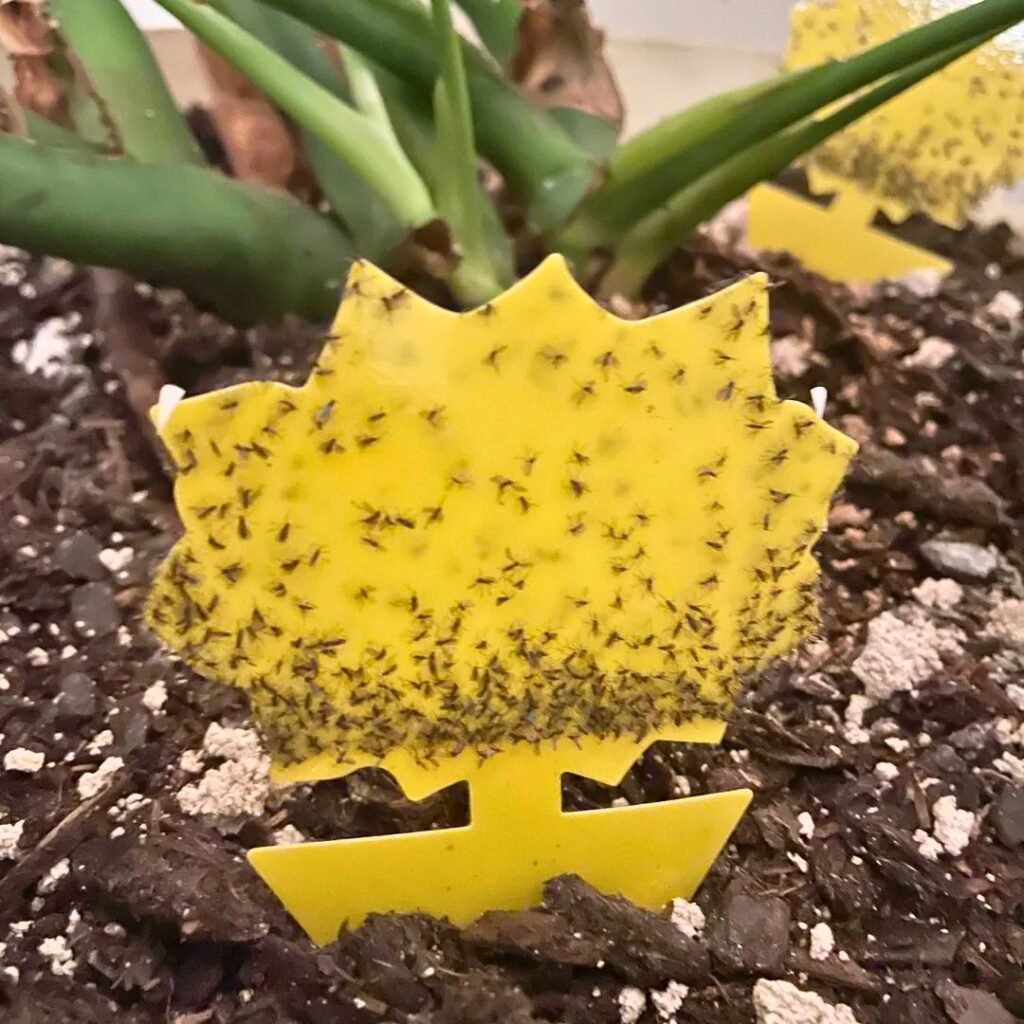
Sticky traps are honestly one of the easiest fixes. Those bright yellow cards are coated with glue, and for some reason, gnats can’t resist landing on them.
Stick them into the soil or hang them nearby. The yellow color draws in the adults, and once they land, well, that’s it for them.
Quick Tip: Put the traps close to the soil surface—right where gnats hang out. Swap them out every few weeks, or sooner if they’re covered in bugs.
I usually use one or two traps per pot if I notice gnats. You’ll see results fast—sometimes in just a day or two. Just remember, these only catch adults. You’ll need to combine this with other methods to really wipe them out.
4) Apply Bacillus thuringiensis israelensis (BTI) granules
BTI granules are my go-to for the larvae hiding in the soil. They contain bacteria that kill gnat larvae before they can grow up and fly around.
I sprinkle the granules on the soil and water them in. The bacteria only target fungus gnat and mosquito larvae, so they won’t hurt your plants or pets.
I reapply every two or three weeks until the gnats are gone. One round isn’t enough—eggs can hatch after the first treatment.
Quick Tip: Mix the BTI into the top inch of soil for better coverage.
The granules work best if the soil stays a little moist. If the soil dries out completely, the bacteria can’t move around as well.
5) Repot with sterile potting mix and clean pot
Sometimes, if things get really out of hand, I just start over. I take the plant out, shake off as much old soil as I can (without wrecking the roots), and toss that soil.
The pot gets a good scrub with hot, soapy water, and I let it dry totally. Then I fill it up with fresh, sterile potting mix from a new bag.
Quick Tip: While repotting, check the roots. If they’re mushy or smell funky, trim off the bad parts with clean scissors.
Fresh soil gives your plant a clean slate. Just don’t overwater after repotting—soggy soil is a gnat magnet. I only do this if nothing else works or if the soil never seems to dry out.
6) Introduce predatory nematodes (Steinernema feltiae)
Predatory nematodes sound intense, but they’re just tiny worms that hunt down fungus gnat larvae in your soil. Safe for plants and pets, which is a relief.
You can buy them as a powder or sponge and mix them with water. Then, just water your plants with the solution.
The nematodes get right to work, searching for larvae to eat. They work best when the soil is moist, so don’t let it dry out for the first week or two.
Quick Tip: Apply nematodes in the evening or on cloudy days—they don’t like bright light.
They’re happiest in soil temps between 55-85°F. If your home is colder, they might not be as effective. You’ll usually notice fewer gnats within a week, but for tough cases, it can take up to three weeks.
7) Treat soil with hydrogen peroxide solution (1:4 dilution)

I mix one part 3% hydrogen peroxide with four parts water and use it as a soil drench. It kills gnat larvae but doesn’t hurt the plant.
I water the soil with this mixture until it runs out the bottom. You’ll hear fizzing—that’s the peroxide reacting with organic matter and larvae.
Quick Tip: Use the solution when the soil is slightly dry. It spreads better that way.
I repeat this every few days for about two weeks. One round isn’t enough since eggs hatch at different times. The peroxide breaks down into plain water and oxygen fast, so no worries about buildup.
Sometimes my plants look a bit droopy after treatment, but they bounce back. If I see leaf burn, I dial back the strength or frequency.
8) Reduce humidity and improve airflow around plants
Fungus gnats thrive in damp, stagnant air. I space my plants out and turn on a small fan to help the soil surface dry faster.
I try to keep humidity below 50% when possible. Even a low-speed fan helps. It doesn’t need to blow directly on the plants—just enough to keep air moving.
Quick Tip: Set a small desk fan a few feet from your plants and let it run a few hours a day.
If you live somewhere humid or it’s rainy, a dehumidifier can help. Just don’t let your plants dry out completely. Always check the soil before watering.
Don’t cram your plants together, either. Give them space so air can reach the soil and leaves.
9) Water from the bottom to keep surface dry
Bottom watering is a sneaky but effective trick. I set my plant’s pot in a tray or bowl of water and let the soil soak it up from below. The top layer stays dry, which is exactly where gnats want to lay eggs.

It takes about 20–30 minutes. When the top feels just barely moist, I pull the pot out.
Gnats need a damp surface to survive and breed. If I keep that top inch dry, they lose their favorite spot. The roots still get plenty of water from below.
Quick Tip: Dump any leftover water from the tray after your plant’s done drinking—that helps prevent root rot.
I don’t bottom water every single time. I mix it up with careful top watering so I’m not causing salt buildup. In dry winter months, I bottom water more since the surface dries so quickly.
10) Apply Neem Oil Soil Drench to Kill Larvae Where They Live
Neem oil is a solid natural option. I mix neem oil with water (about a teaspoon per quart) and add a drop of dish soap to help it blend. Then I water the soil until it runs out the drainage holes.

Neem oil disrupts the larvae’s growth cycle and stops them from turning into adults.
Quick Tip: Apply when the soil is already a bit moist so it spreads through the dirt more easily.
I repeat this every week for three weeks to catch all the life stages. The smell is… earthy, but it fades.
Neem works slower than chemicals, but it’s safer for the plant and your home. I skip this in winter when plants are barely drinking, since wet soil can cause root issues.
Understanding Fungus Gnat Behavior
Fungus gnats thrive in moist soil and complete their life cycle in about three to four weeks.
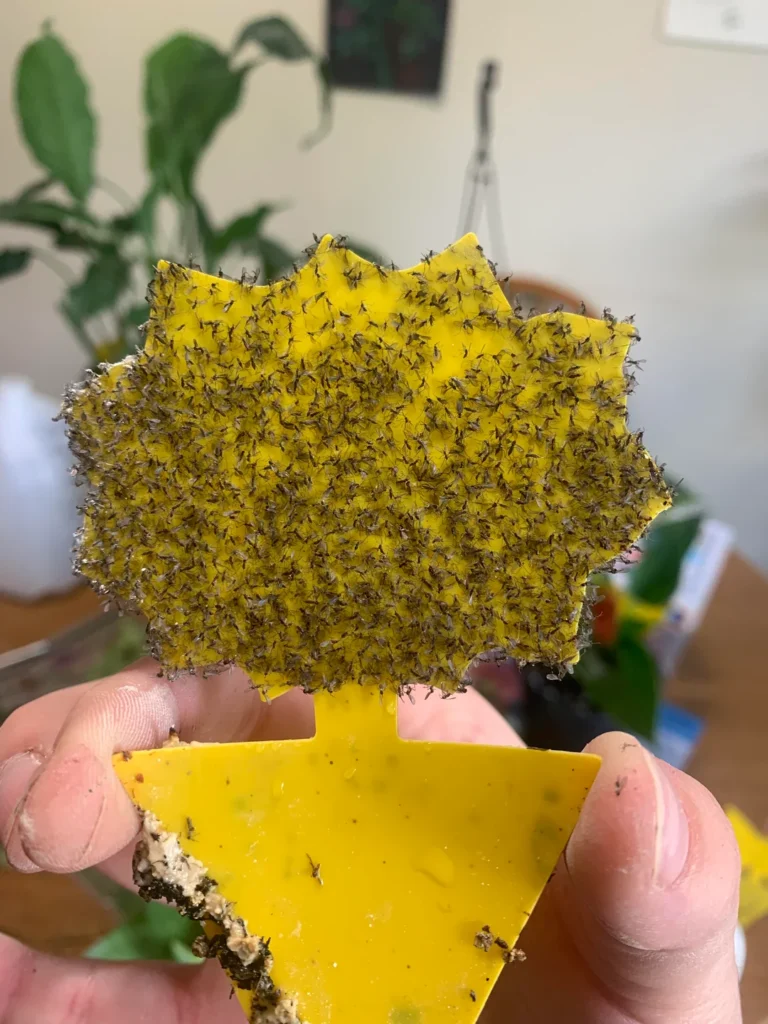
They show up when plants stay too wet for too long.
Life Cycle and Habitat Preferences: Why These Tiny Flies Love Your Overwatered Plants
Adult fungus gnats only live about a week, but during that time, they lay up to 300 eggs. The eggs usually hatch in four to six days if they’re tucked away in damp soil with plenty of organic matter.
The larvae spend roughly two weeks munching on fungi, algae, and sometimes your poor plant roots in the top couple inches of soil. This is when they really do the most harm. They just can’t survive without moisture, so you almost never see them in dry potting mix.
After that, they pupate for three or four days before popping out as adults. The whole process—from egg to flying gnat—can take anywhere from 18 to 28 days, depending on how warm it is. If it’s hot, the cycle goes even faster.
Quick Tip: Adult gnats won’t hurt your plants themselves, but if you see them, there’s a good chance a whole army of larvae is already snacking on your roots.
Common Causes of Infestation: How These Pests End Up in Your Home
Overwatering is honestly the main culprit when it comes to fungus gnats. If the soil stays wet all the time, you’re basically rolling out the red carpet for them.
Poor drainage just makes things worse. Pots without drainage holes or soil that hangs onto water give gnats exactly what they want. Dense, heavy potting mixes can be a problem too.
Sometimes I accidentally bring gnats home in new plants or bags of potting soil. The eggs or larvae are already hidden in there when I buy it. Using outdoor soil or home compost for houseplants is another easy way to invite them in.
Dead leaves and organic debris on top of the soil? That’s just extra food for larvae. And if your plant corner is humid, adults will multiply even faster.
Prevention Strategies for Houseplant Owners
The best way I’ve found to avoid fungus gnats is to manage soil moisture and pick the right products from the start.
Watering Techniques to Deter Gnats (Because Wet Soil is Their Happy Place)
Fungus gnats are obsessed with constantly moist soil. That’s where they lay eggs and where their larvae thrive. So, I try to let the top 1-2 inches of soil dry out between waterings.
I just stick my finger in the soil; if it feels dry at my first knuckle, it’s watering time. If it’s still damp, I give it another day or two.
Quick Tip: Watering in the morning helps extra moisture evaporate during the day.
Bottom watering is another trick I use. I set the pot in a tray of water and let the soil soak it up from the bottom. That keeps the top layer dry, and gnats really hate that.
Some plants are thirstier than others. Ferns and calatheas like more moisture, but even they don’t need soggy soil. I tweak my watering schedule based on the plant and the season. In winter, most plants just don’t drink as much.
Soil Management Tips (Your First Line of Defense)
I stick with well-draining potting mix for all my houseplants. Regular garden soil just holds too much water and gets compacted. A good mix has perlite, vermiculite, or bark to help water drain quickly.
Adding a layer of sand, perlite, or fine gravel on top of the soil works surprisingly well. I usually spread about half an inch across the surface. This dry barrier makes it tough for adult gnats to reach the soil and lay eggs.
Quick Tip: If you spot gnats, swap out the top inch of soil—there are probably eggs in there already.
I always check my potting soil bags before using them. Sometimes gnats sneak in there, waiting for a chance. I store unopened bags in sealed containers or a dry garage. Once a bag is open, I try to use it up within a few months.
Frequently Asked Questions
People fighting fungus gnats tend to ask the same things: what actually works, and how do you use it?
Letting soil dry out, sticky traps, and BTI products are my go-tos.
What are the most effective natural ways to eliminate gnats from indoor plant soil without using harsh chemicals?
Letting the top two inches of soil dry out between waterings is my number one method. Larvae need moist soil, so if you cut off their water, they just can’t survive.
I’m also a fan of adding a half-inch layer of horticultural sand on top of the soil. It creates a dry barrier adult gnats can’t get through to lay eggs. Honestly, it looks pretty tidy too.
Yellow sticky traps help catch the flying adults before they can lay more eggs. I stick them right into the soil near the plant stems.
Quick Tip: Using dry soil, a sand barrier, and sticky traps all at once usually knocks out gnats in about two weeks.
How can I get rid of tiny flying gnats around my houseplants quickly before they spread to other rooms?
Sticky traps are great for instant results with adult gnats. I put a few around each infested plant and start seeing dead gnats almost right away.
Mixing up a BTI (Bacillus thuringiensis israelensis) solution and drenching the soil will kill larvae in a few days. You can find BTI in products like Mosquito Bits or Gnatrol.
Cut back on watering immediately. Let the soil dry out more than usual to speed things along.
Quick Tip: Go after both the flying adults and the larvae in the soil at the same time—focusing on just one stage won’t do the trick.
How do you kill gnat larvae living in potting soil before they turn into flying adults?
BTI is hands-down the most effective larva killer I’ve tried. It’s a natural bacteria that targets gnat larvae and doesn’t harm plants.
You can sprinkle BTI granules on top of the soil and water them in. The bacteria stay active in moist soil for several days. I reapply every two weeks until I stop seeing adults.
A hydrogen peroxide solution works in a pinch. Mix one part 3% hydrogen peroxide with four parts water, then pour it into the soil. It fizzes and kills larvae on contact.
Quick Tip: BTI usually takes about 24-48 hours to start working, so don’t worry if you spot a few gnats the next day.
Do Mosquito Bits work for houseplant gnats, and how should they be used to actually see results?
Yep, Mosquito Bits really work because they contain BTI. I use them in two ways, depending on how bad things are.
For a quick fix, I sprinkle about a tablespoon of Bits on the soil of a six-inch pot and water as usual. The BTI spreads as you water.
My favorite method is making “Mosquito Bit tea.” I soak a quarter cup of Bits in a gallon of water for half an hour, strain it, and water my plants with that. It seems to work faster.
Quick Tip: Reapply Mosquito Bits every two or three weeks for at least two cycles to catch any new larvae.
What’s the best indoor-plant-safe gnat killer that won’t harm my plants or damage their roots?
BTI products are by far the safest I’ve found. They only affect fungus gnat larvae, mosquito larvae, and black fly larvae—your plants won’t even notice.
Sticky traps don’t bother plants at all since they just sit on the soil or hang nearby. They’re my go-to for catching adults.
Horticultural sand is just crushed rock, so it’s safe for everything from succulents to ferns. No issues there.
Quick Tip: Stay away from dish soap or oil sprays in the soil—they can coat roots and end up doing more harm than the gnats ever would.
How can I prevent gnats from coming back after I treat my houseplants and get rid of the current infestation?
Water less often, and always check that the top inch of soil is dry before giving your plants another drink. I just poke my finger in there to check—honestly, I never bother with a strict schedule.
Keep those yellow sticky traps out, even once it seems like you’ve won the battle. They’ll snag any sneaky survivors before they get a chance to lay more eggs.
Adding a layer of sand or fine gravel on top of the soil can really help, especially for plants that need to stay a bit on the moist side. I do this for my fussier plants that can’t handle drying out too much.
Always, always inspect new plants before you bring them home. I’m in the habit of peering at the soil for any sign of gnats or their larvae. If you spot something suspicious, just go ahead and repot with fresh, sterile mix right away.
Quick Tip: Keep your potting soil sealed up tight—don’t leave open bags hanging around in the garage or basement. Those spots are basically gnat egg hotels just waiting to happen.
Note: Some images in the articles are sourced from Reddit and Other Platforms For Reference Purpose.