Want a Bigger Snake Plant? These 9 Simple Changes Can Help Today for Faster, Healthier Growth
Snake plants are easy to keep alive, but getting them to grow bigger can take a little more effort. I have grown snake plants for years, and I know how slow they can seem. Many people wait months and see only one or two new leaves.
You can help your snake plant grow bigger by giving it more light, the right amount of water, a good pot, and some food during the growing season.
These are small changes you can make today. In this article, I will share nine simple tips that you can try at home to help your plant grow.
Please note: Simplify Plants is reader-supported. As an Amazon Associate, I earn from qualifying purchases made by our readers with no extra cost added to you all! Some links in the post are affiliate links and I get a commission from purchases made through links in the post.
1) Choose a pot one size larger than the root ball
When I want my snake plant to grow bigger, the first thing I check is the pot. Pot size has a direct effect on how well the roots grow. A pot that fits well gives the plant room to spread without causing other problems.
Snake plants grow from thick underground stems called rhizomes. As these spread, new leaves come up. If the pot is packed full of roots, the plant has little room to make new growth.
How big is “one size larger”?
For most snake plants, I go up about 1 to 2 inches in width. So if your plant is in a 6-inch pot, an 8-inch pot is a good next step. Very large plants can handle a jump of 2 to 3 inches.
I try not to go much bigger than that. It can seem like a large pot would help the plant grow faster, but it often does the opposite.
Why a huge pot can hurt
A big pot holds a lot of soil. The roots can’t reach all of it, so the extra soil stays wet for a long time.
Snake plants don’t like wet soil. When the roots sit in damp soil for days, they can start to rot. Root rot is one of the most common reasons I’ve seen snake plants die.
A slightly snug pot dries out faster. That matches how snake plants like to be watered, which is a deep soak followed by time to dry out.
Signs your plant needs a bigger pot
Here are the signs I look for:
- Roots are coming out of the drainage hole.
- Roots are circling on top of the soil.
- A plastic pot is bulging or changing shape.
- Water runs straight through the pot and the soil dries out very fast.
- The plant tips over because it’s top-heavy.
If you see one or more of these, it’s likely time to repot. Most snake plants need this every 2 to 3 years.
Pick the right type of pot
I always choose a pot with at least one drainage hole. Without one, water collects at the bottom and the roots can rot.
I like terracotta pots for snake plants. The clay lets water escape through the sides, so the soil dries more evenly. Terracotta is also heavy, which helps keep tall plants from falling over.
Plastic and glazed ceramic pots work too. They just hold moisture longer, so you may need to water a little less often.
When to repot
I repot my snake plants in spring or early summer. This is when they are actively growing, so they recover faster.
When you move the plant, use a fast-draining mix, like a cactus or succulent soil. Set the plant at the same depth it was in the old pot. Then wait about a week before watering so any damaged roots have time to heal.
2) Use a well-draining cactus and succulent potting mix
The soil you pick has a big effect on how well your snake plant grows. I learned this the hard way when one of my plants sat in heavy soil and stopped growing for months.

Snake plants come from dry areas in Africa. Their roots are used to soil that dries out fast after it rains.
Why regular potting soil can be a problem
Most regular potting soil is made to hold water. That works well for many houseplants, but not for snake plants.
When the soil stays wet for too long, the roots can’t get enough air. This can lead to root rot. Roots with rot turn soft, brown, and mushy, and they can’t take up water or food anymore.
A plant with weak roots won’t grow much. Healthy roots are what let a snake plant put out new leaves.
What a good mix looks like
I use a cactus and succulent potting mix for all of my snake plants. You can find bags of it at most garden centers and hardware stores.
These mixes usually contain things like:
- Sand to help water pass through
- Perlite, which is small white bits that add air pockets
- Pumice, a light rock that helps with drainage
- Peat or coco coir in smaller amounts to hold a little moisture
The goal is soil that feels loose and gritty, not dense or sticky.
How I make the mix even better
Some store-bought cactus mixes still hold more water than I like. So I often add extra perlite or pumice.
My usual recipe is about two parts cactus mix to one part perlite. It’s simple, and it helps the soil dry out between waterings.
If you want to try this, mix it in a bucket before you pot your plant. That way the materials spread out evenly.
A quick way to test your soil
You can check how well your soil drains with a simple test. Water the pot and watch how fast the water comes out of the bottom.
If water flows out within a few seconds, your mix is draining well. If it pools on top or takes a long time to soak through, the soil may be too heavy.
Don’t forget the pot
Even the best soil won’t help much if water has nowhere to go. Make sure your pot has at least one drainage hole at the bottom.
I like terracotta pots for snake plants. The clay lets moisture escape through the sides, which helps the soil dry faster.
When to switch your soil
If your snake plant is in regular potting soil right now, you don’t need to panic. But the next time you repot, it’s a good chance to switch to a cactus mix.
Spring and early summer are the best times to do this. The plant is actively growing then, so it can settle into its new soil more easily.
3) Make sure the pot has drainage holes
Snake plants do not like wet feet. If water sits at the bottom of the pot, the roots can start to rot. A plant with rotting roots will not grow bigger, and it may not survive.

That is why I always check the bottom of a pot before I plant anything in it. I look for at least one hole. More than one is even better.
Why drainage matters so much
This plant stores water in its thick leaves and roots. Because of that, it needs much less water than many other houseplants.
When there is no drainage hole, extra water has nowhere to go. It collects at the bottom of the pot. The soil stays soggy for days, and the roots cannot get the air they need.
Healthy roots are white or light tan and firm. Rotting roots turn brown or black and feel mushy. They may also smell bad. Once root rot spreads, the leaves can turn yellow, get soft, or fall over.
What I do with pots that have no holes
I have bought a few pretty pots that had no holes at all. I still use them, but only as a cover pot.
Here is how that works. I plant the snake plant in a plain plastic nursery pot with holes. Then I set that pot inside the nice one. When I water, I lift the plastic pot out and let it drain in the sink before putting it back.
If you are handy with tools, you can also drill a hole in some pots. Ceramic and clay pots need a special drill bit made for tile or masonry. Go slowly and keep the spot wet while drilling so the pot does not crack.
A few simple tips
- Empty the saucer. If your pot sits on a saucer, pour out any water that collects there about 15 to 30 minutes after watering.
- Don’t block the hole. Some people put rocks or gravel at the bottom of the pot. I skip this step. It does not help drainage, and it can actually cause water to sit higher in the soil.
- Check the hole now and then. Roots or packed soil can clog it over time. If water drains very slowly, take a look underneath.
- Pick the right material. I like terracotta pots for snake plants. The clay lets the soil dry out a bit faster, which suits this plant well.
How to tell if drainage is working
After you water, you should see water come out of the bottom within a minute or so. The top inch or two of soil should feel dry again after several days, depending on light and temperature.
If the soil stays wet for more than a week, something is off. The pot may need more holes, or the soil may be too heavy.
Good drainage is a small detail. But in my experience, it is one of the easiest ways to keep roots healthy so your snake plant has a better chance to grow.
4) Place the plant in bright, indirect light
Light is one of the biggest factors in how fast a snake plant grows. These plants can survive in dim corners, which is why many people put them there. But surviving is not the same as growing.
In low light, a snake plant grows very slowly. It may add only a leaf or two in a year. When I moved one of my plants from a dark hallway to a brighter room, I saw new growth within a few months.

What “bright, indirect light” means
Bright, indirect light is a spot that gets plenty of daylight but no strong sun hitting the leaves for hours. The room should feel bright during the day. You should be able to read a book there without turning on a lamp.
Here are some good spots I like to use:
- A few feet back from a south- or west-facing window
- Right next to an east-facing window, which gets softer morning sun
- Near a window with a sheer curtain that filters the light
A north-facing window can work too. It gives gentler light, so the plant may grow a bit slower there.
Why not full, direct sun?
Snake plants can handle some direct sun. A couple of hours of morning sun is usually fine. However, strong afternoon sun through glass can burn the leaves.
Sunburn shows up as pale, yellow, or brown patches. These marks do not go away. If you see them, move the plant a little farther from the window.
Signs your plant needs more light
Your snake plant will often show you when it is not getting enough light. Watch for these signs:
- Very slow or no new growth
- Leaves that lean or stretch toward the window
- New leaves that are thin, floppy, or pale
- Soil that stays wet for a long time after watering
That last one is easy to miss. Plants in low light use less water, so the soil dries slowly. This raises the risk of root rot.
Make changes slowly
If your plant has been in a dark spot, don’t move it straight into strong light. A sudden change can stress the leaves. I like to move mine closer to the light over one to two weeks.
You can also turn the pot a quarter turn every week or two. This helps all sides get light, so the plant grows evenly instead of leaning one way.
What if you don’t have a bright window?
A grow light is a simple fix. I use a full-spectrum LED grow light for plants in darker rooms. Place it about 12 to 24 inches above the plant and keep it on for around 10 to 12 hours a day.
A basic timer makes this easy. You won’t have to remember to turn the light on and off each day.
5) Water thoroughly only when the soil has dried out
Snake plants store water in their thick leaves. Because of this, they do not need to be watered often. In my experience, too much water is the most common reason these plants stop growing or start to rot.

The best approach is simple. Wait until the soil is dry, then give the plant a deep drink.
How to tell when the soil is dry
I check the soil by pushing my finger about 2 inches into the pot. If it feels dry at that depth, it is time to water. If it still feels damp, I wait a few more days and check again.
You can also lift the pot. A dry pot feels much lighter than one that was just watered. After a few tries, you will learn the difference.
For large pots, a wooden chopstick works well. Push it deep into the soil and pull it out. If it comes out clean and dry, the soil is ready for water.
How to water thoroughly
When I water, I pour slowly until water drains out of the holes at the bottom of the pot. This helps make sure the whole root area gets wet, not just the top layer.
After a few minutes, I empty any water sitting in the saucer. Snake plant roots should not sit in standing water. This can lead to root rot, which is hard to fix.
Deep watering also encourages roots to grow down into the pot. A healthy root system helps the plant support new leaves.
How often this usually means
There is no fixed schedule that works for every home. It depends on light, temperature, pot size, and soil type.
As a general guide, many snake plants need water about every 2 to 3 weeks in spring and summer. In fall and winter, growth slows down. I often water only once a month or even less during those months.
Plants in bright light dry out faster than plants in low light. Clay pots also dry faster than plastic ones.
Signs you may be watering too much
Watch for these signs:
- Leaves that feel soft or mushy
- Yellow leaves, especially near the base
- A bad smell coming from the soil
- Leaves that fall over or lean
If you see these, stop watering and let the soil dry out fully. You may need to check the roots for rot.
Signs you may be watering too little
Underwatering is less common, but it can happen. Leaves may look wrinkled, thin, or curled. The tips may turn brown and crispy.
If this happens, give the plant a thorough watering. The leaves often firm up again within a few days.
I find that checking the soil before every watering is the habit that helps most. It takes only a few seconds, and it keeps your snake plant’s roots healthy so it can keep growing.
6) Keep the plant warm and away from cold drafts
Snake plants come from warm parts of Africa. They grow best when the air stays between about 60°F and 85°F (15°C to 29°C). If your home feels comfortable to you, it is usually fine for your plant too.

Cold slows everything down. When the temperature drops, a snake plant uses less water and puts out fewer new leaves. That means less growth, even if you do everything else right.
Know the danger zone
Below 50°F (10°C), snake plants can start to get hurt. Frost or freezing temperatures can kill the leaves. Damaged leaves often turn soft, mushy, or pale, and they do not recover. You may need to cut them off.
I keep a cheap indoor thermometer near my plants in winter. It helps me spot cold corners I would not notice otherwise.
Watch out for drafts
A room can feel warm while one spot near a window or door stays much colder. Cold air leaks in around old windows, especially at night. A plant sitting right against the glass can get chilled without you knowing.
Here are spots I avoid:
- Windowsills with thin or drafty glass in winter
- Near outside doors that open often
- Right under or in front of air conditioning vents
- Unheated porches, garages, or sunrooms in cold months
Hot drafts can cause problems too. I keep my snake plants a few feet away from heaters and radiators. Blasts of hot, dry air can dry out the leaf tips.
Simple ways to keep it cozy
If your plant sits by a window, try moving it a foot or two back on cold nights. You can also close the curtains in the evening to block some of the chill. In summer, turn your plant so it is not in the direct path of the AC.
If your plant spends summer outdoors, bring it inside before night temperatures fall below 50°F. I check the weather forecast in early fall so I don’t get caught off guard.
Cold and wet is the worst mix
Cold soil dries out very slowly. If you water a snake plant that is sitting in a cool room, the roots can stay wet for a long time. This raises the risk of root rot.
In winter, I water much less often and always let the soil dry out completely first. Warmth and dry soil together keep the roots healthy, which gives your plant a better chance to grow bigger once spring arrives.
7) Feed lightly with a balanced houseplant fertilizer during spring and summer
Snake plants don’t need much food. But a small amount at the right time can help them grow a bit faster and look healthier.
I feed my snake plants only during spring and summer. That’s when they are actively growing and can use the extra nutrients.
In fall and winter, growth slows down a lot. I stop feeding during those months because the plant can’t use the fertilizer well. Unused fertilizer can build up in the soil and harm the roots.
A balanced houseplant fertilizer works well for snake plants. “Balanced” means the three main numbers on the label are equal or close, like 10-10-10 or 20-20-20. These numbers stand for nitrogen, phosphorus, and potassium.
I like to use a liquid fertilizer because it’s easy to measure and mix. Some people prefer a fertilizer made for cacti and succulents. That can also work fine.
The key word here is “lightly.” I dilute my fertilizer to about half the strength the label suggests. Snake plants are slow growers, so full strength is often more than they need.
How often should you feed? I fertilize about once a month during the growing season. Some growers feed only two or three times a year, and their plants still do well.

Here is the simple routine I follow:
- Water the plant first so the soil is slightly moist.
- Mix the fertilizer at half strength.
- Pour it evenly over the soil, not on the leaves.
- Let any extra water drain out of the pot.
Watering first matters. Putting fertilizer on very dry soil can burn the roots.
It’s easy to think more fertilizer means more growth. With snake plants, that isn’t true. Too much can cause brown leaf tips, soft or yellow leaves, or a white crust on top of the soil.
If you see that white crust, the soil may have too much salt from fertilizer. I flush the pot by running plain water through the soil for a minute or two. Then I let it drain fully.
Also, skip feeding if your plant was just repotted. Fresh potting mix usually has some nutrients already. I wait about one to two months before I start fertilizing a newly repotted plant.
A plant that is sick, stressed, or dealing with root rot should not be fed either. Fix the main problem first. Fertilizer won’t help a plant that is struggling with poor drainage or too little light.
Feeding is a helpful extra, not a fix for everything. Good light, the right soil, and careful watering matter more. When those are in place, a light monthly feeding in spring and summer gives your snake plant a small boost.
8) Repot when crowded roots are circling the pot
Snake plants like to be a little snug in their pots. But there is a point where snug turns into too crowded. When that happens, growth can slow down.
I check the roots about once a year. It only takes a few minutes, and it tells me a lot about how my plant is doing.
Signs your snake plant needs a bigger pot
Here are the signs I look for:
- Roots are poking out of the drainage holes.
- Roots are wrapped in circles around the inside of the pot.
- The pot is bulging, cracking, or tipping over.
- Water runs straight through without soaking in.
- The plant has not grown much in a full growing season, even with good light.
If you slide the plant out and see more roots than soil, it is time. Circling roots are the clearest clue. They mean the roots have hit the wall and have nowhere else to go.
When to repot
I like to repot in spring or early summer. That is when snake plants are actively growing, so they bounce back faster.
Most snake plants need a new pot every two to three years. Some grow slower, so yours may need it less often.
How to choose the new pot
Pick a pot that is only 1 to 2 inches wider than the old one. A pot that is too big holds extra wet soil. That can lead to root rot, which is one of the most common problems with snake plants.
Make sure the pot has drainage holes. I prefer terracotta because it dries out faster than plastic. A heavy pot also helps keep tall plants from falling over.
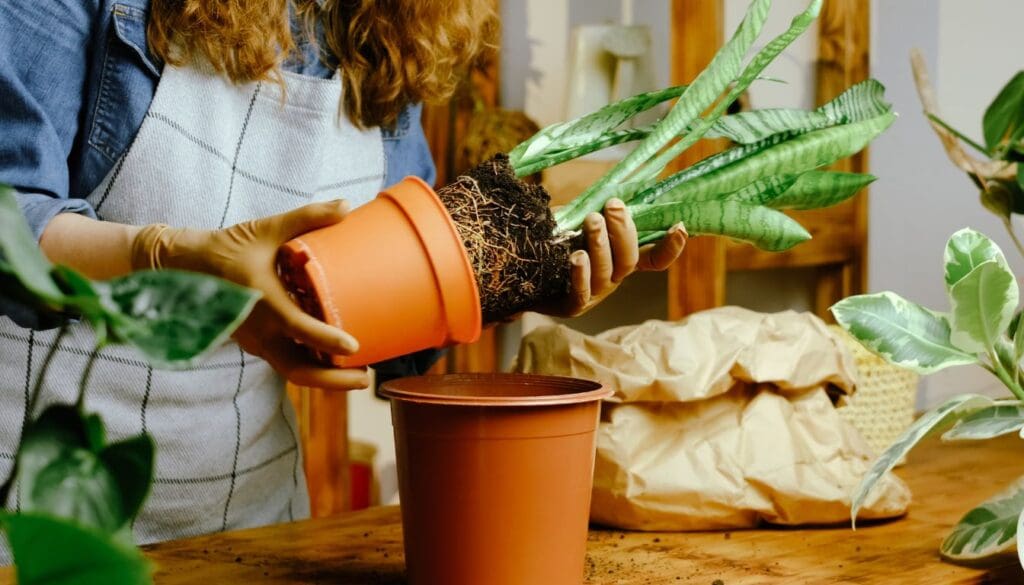
How I repot my snake plant
- I water the plant a day or two before. This makes the root ball easier to remove.
- I tip the pot on its side and gently slide the plant out. If it is stuck, I squeeze the sides or run a butter knife around the edge.
- I loosen the circling roots with my fingers. If some are very tight, I tease them apart so they can spread out in the new pot.
- I trim any roots that are black, mushy, or smell bad. Healthy roots are firm and light in color.
- I add a layer of fresh, fast-draining soil to the new pot. A cactus or succulent mix works well.
- I set the plant in at the same depth it was before. Then I fill in around it with more soil and press it down lightly.
Aftercare
I wait about a week before watering. This gives any damaged roots time to heal and lowers the chance of rot.
Keep the plant in bright, indirect light while it settles in. Do not be surprised if it takes a few weeks to show new growth. The roots usually spread into the new soil first, and new leaves come after that.
You can also divide the plant at this time if it has several clumps. That gives you extra plants and a little more room for each one to grow.
9) Separate and replant healthy rhizome divisions
Snake plants spread by growing thick roots called rhizomes under the soil. Over time, these rhizomes fill the pot and send up new leaves in every open spot. When the pot gets too crowded, growth can slow down.
Dividing the plant gives each section more room. It won’t make one plant bigger overnight. But each healthy piece now has fresh soil and space to grow, so you often see new shoots sooner.
When I divide my snake plants
I usually divide mine in spring or early summer. That’s when the plant is actively growing and recovers faster.
Here are the signs I look for:
- Roots are poking out of the drainage holes.
- The pot is bulging or cracking.
- New leaves are coming up crowded against the pot’s edge.
- Water runs straight through because the pot is mostly roots.
If you see two or more of these, your plant is likely ready.
How I separate the rhizomes
First, I water the plant a day before. Slightly moist soil makes the roots easier to pull apart.
Next, I slide the plant out of the pot. I gently shake off the old soil so I can see the rhizomes clearly. Sometimes I tap the sides of the pot or run a butter knife around the edge to loosen it.
Then I look for natural breaking points. Each division should have at least one or two healthy leaves and a firm piece of rhizome with roots attached. If the rhizomes won’t pull apart by hand, I use a clean, sharp knife to cut them.
I check every piece before replanting. Healthy rhizomes are firm and light in color. I throw away any parts that are soft, mushy, or smell bad, since those can be signs of rot.
Letting the cuts heal
After cutting, I leave the divisions out for one or two days. This lets the cut ends dry and form a callus. It helps lower the chance of rot once the pieces go back in soil.
Replanting each division
I plant each section in a pot that is only a little wider than its root mass. A pot that is too big holds extra water, and snake plants don’t like soggy soil.
I use a fast-draining mix, like a cactus or succulent soil. Make sure the pot has drainage holes. I set the rhizome at the same depth it was growing before and press the soil lightly around it.
Care after dividing
I wait about a week before watering. This gives any small root damage time to heal. After that, I go back to my normal routine and let the soil dry out between waterings.
I keep the new pots in bright, indirect light. Direct, harsh sun can stress fresh divisions. You may not see new growth for a few weeks, and that’s normal while the roots settle in.
Once they’re settled, each division can grow on its own. And if you’d like a fuller look, you can plant two or three divisions together in one pot.
What Healthy Snake Plant Growth Looks Like
A healthy snake plant grows slowly, and its final size depends a lot on which variety you have. Growth also happens in two ways: leaves get taller, and new shoots fill out the pot.

Why Mature Size Depends on the Variety
Not every snake plant is meant to get big. Some types stay small no matter how well you care for them.
Here are typical indoor heights for common varieties:
| Variety | Typical Indoor Height |
|---|---|
| ‘Hahnii’ (Bird’s Nest) | 6–12 inches |
| ‘Moonshine’ | 1–2 feet |
| ‘Laurentii’ | 2–4 feet |
| Whale Fin (masoniana) | 2–3 feet |
| Cylindrical (angolensis) | 2–4 feet |
I always check the plant tag before judging growth. If you have a ‘Hahnii’ that is 8 inches tall, it may already be close to full size.
Most snake plants grow slowly indoors. A healthy plant may add only a few new leaves each year, and that is normal.
How Taller Leaves Differ From Fuller Clumps
Snake plants get bigger in two separate ways.
Taller leaves grow up from the center of each rosette. Each leaf reaches a set height and then stops growing. New leaves may come in a bit taller as the plant matures.
Fuller clumps come from underground stems called rhizomes. These send up new shoots, often called “pups,” near the main plant. Over time, the pot fills with more rosettes.
Signs of healthy growth include:
- Firm, upright leaves
- Even color with clear patterns
- New pups near the soil edge
I find that most “bigger” snake plants are really fuller ones. If you want more width, focus on helping pups grow.
When to Expect Noticeable Growth
Most snake plants grow 1 to 3 new leaves per year indoors, and nearly all of that growth happens in spring and summer. A plant that grows slowly is often healthy, while soft, yellow, or wrinkled leaves point to a real problem.
How Seasons Affect New Leaf Development
Snake plants respond to light and warmth. When days get longer and rooms stay above 65°F, they start pushing out new leaves.
Here’s what I usually see with my own plants:
| Season | What to Expect |
|---|---|
| Spring | New shoots appear at the soil line |
| Summer | Fastest growth; leaves get taller |
| Fall | Growth slows down |
| Winter | Little to no new growth |
A new leaf can take 4 to 8 weeks to fully unfurl. So if you make changes in March, you may not see results until early summer.
In winter, I water less and skip fertilizer. The plant is resting, not failing.
Signs of Slow Growth Versus Plant Stress
Slow growth by itself is normal. Stress shows up as changes in the leaves you already have.
Signs your plant is just growing slowly:
- Leaves are firm and upright
- Color is deep green with clear patterns
- Roots are white or light tan
Signs your plant is stressed:
- Mushy or soft leaves, often from overwatering
- Wrinkled or curling leaves, which can mean underwatering
- Yellow leaves starting at the base
- Leaves flopping over from too little light
If I see mushy leaves, I check the roots first. Brown, soft roots mean rot, and the plant needs fresh, dry soil right away.
Frequently Asked Questions
Snake plants grow best with bright, indirect light, water only after the soil dries out, and a fast-draining cactus mix.
A pot just one size larger and light feeding in spring and summer can also help them get taller and fuller.
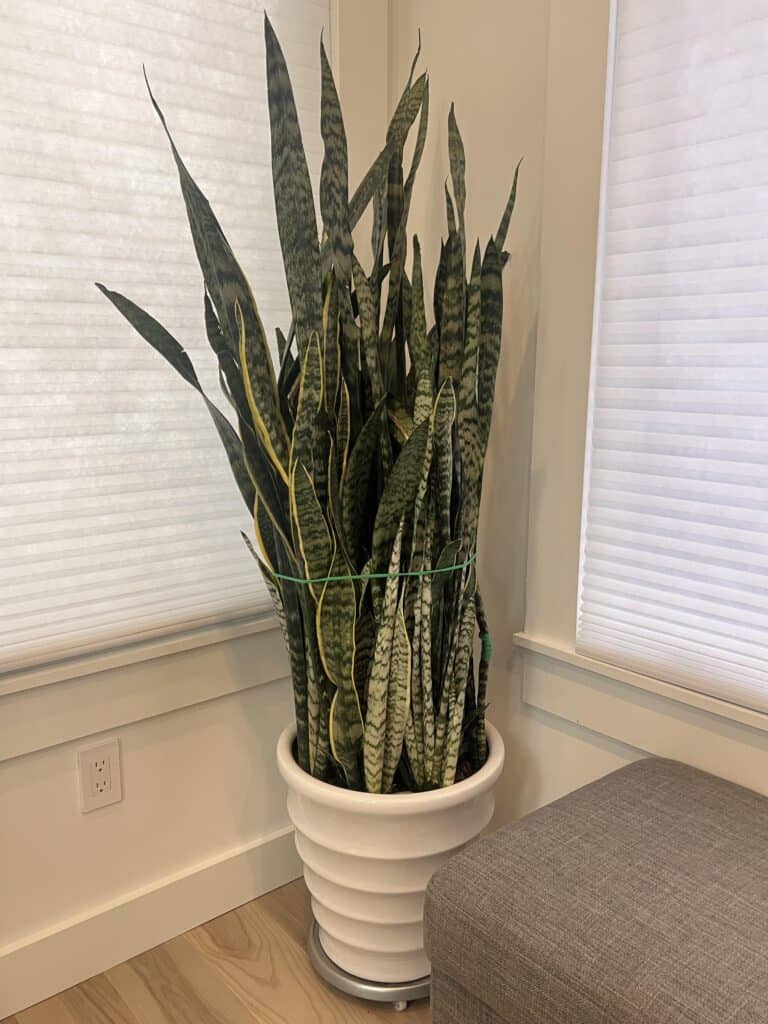
How can I help my snake plant grow bigger and faster?
Snake plants are slow growers by nature. You can’t make them grow overnight, but you can give them the right conditions to grow at their best pace.
Here are the changes I recommend most:
- Move the plant to a spot with bright, indirect light.
- Water deeply, but only when the soil is fully dry.
- Use a well-draining cactus and succulent mix.
- Pick a pot with drainage holes.
- Repot into a pot one size larger when the roots fill the current one.
In my experience, more light makes the biggest difference. A snake plant in a dim corner will stay alive, but it will barely grow.
How much sunlight does a snake plant need for healthy growth?
Snake plants grow best in bright, indirect light for about 6 to 8 hours a day. A spot a few feet from a south- or west-facing window works well.
They can handle low light. However, growth slows down a lot in dark rooms.
Strong, direct afternoon sun can scorch the leaves. If your plant has been in low light, I suggest moving it to brighter light slowly over a week or two.
How often should I water my snake plant to encourage growth?
There is no set schedule. Water only when the soil has dried out all the way down.
For many homes, this means about every 2 to 3 weeks in spring and summer. In fall and winter, it may be once a month or less.
When you do water, soak the soil until water runs out the drainage holes. Then empty the saucer. I check dryness by pushing my finger or a wooden stick a few inches into the soil.
Overwatering is the most common reason snake plants struggle. Wet soil can cause root rot, which stops growth and can kill the plant.
What type of soil is best for growing a bigger snake plant?
A cactus and succulent potting mix is the best choice. It drains fast and does not stay soggy.
Regular potting soil holds too much water on its own. If that’s all you have, I like to mix it with perlite or coarse sand. A simple ratio is:
| Ingredient | Amount |
|---|---|
| Regular potting soil | 2 parts |
| Perlite or pumice | 1 part |
| Coarse sand | 1 part |
Healthy, airy soil lets the roots spread out. Strong roots support new leaves and pups.
When should I repot my snake plant into a larger pot?
Most snake plants need repotting every 2 to 3 years. Spring and early summer are the best times because the plant is actively growing.
Signs it’s time to repot include:
- Roots growing out of the drainage holes
- A pot that is cracking or bulging
- Water running straight through without soaking in
- Many new pups crowding the pot
Choose a pot only one size larger than the root ball, about 1 to 2 inches wider. A pot that is too big holds extra wet soil, which raises the risk of root rot. I also prefer heavy pots like terracotta, since tall snake plants can tip over.
Does fertilizer help snake plants grow taller and fuller?
Yes, light feeding can help. Snake plants don’t need much, though.
I use a balanced houseplant fertilizer or a cactus fertilizer diluted to half strength. Feed once a month in spring and summer.
Skip fertilizer in fall and winter when growth slows. Too much fertilizer can burn the roots and cause brown leaf tips, so less is better with this plant.
Note: Some images in the articles are sourced from Reddit and Other Platforms For Reference Purpose.