Why Your Pink Princess Philodendron Is Losing Its Pink Variegation?
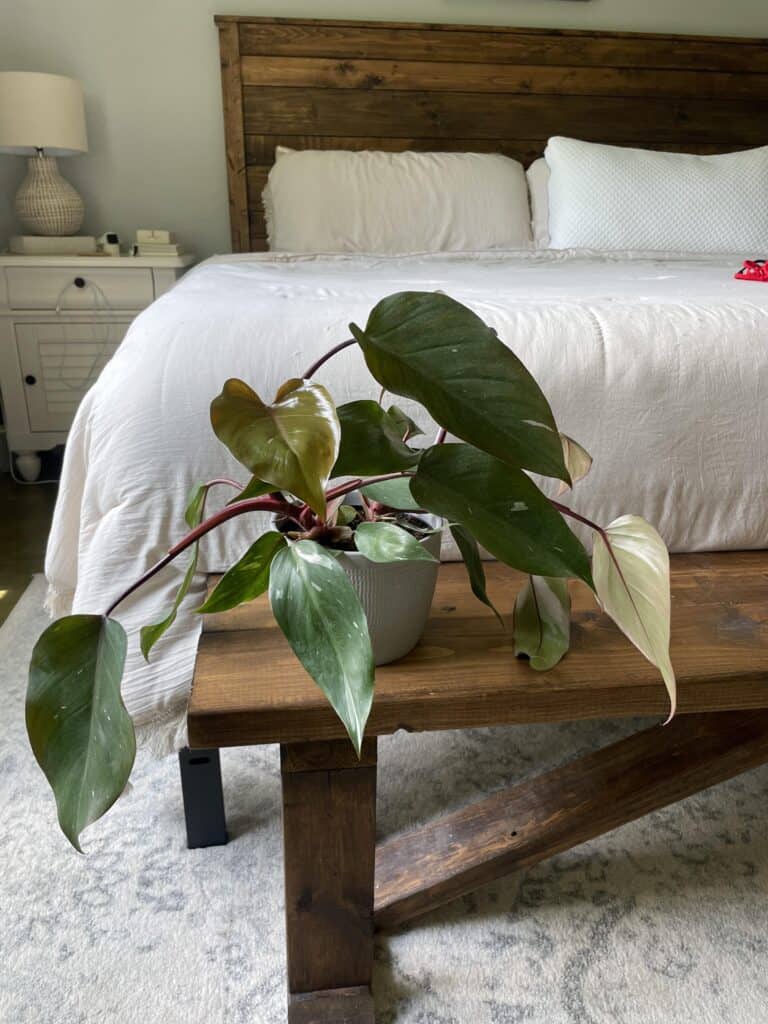
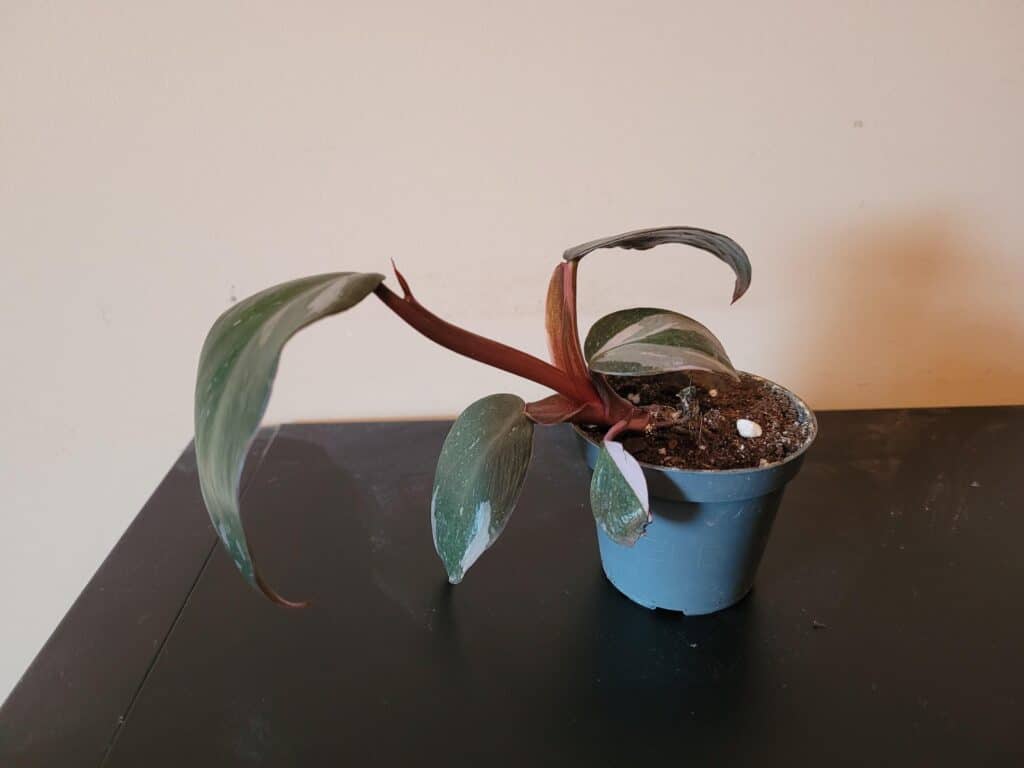
I know how disappointing it is when your gorgeous pink princess philodendron starts losing those stunning pink streaks. You bring it home with leaves covered in bright pink and white, and then a few weeks later, it’s pushing out plain green growth.
The good news is that pink variegation loss usually comes down to fixable care issues like lighting, watering, or feeding habits. Once you figure out what’s going wrong, you can adjust your care routine and help your plant get back to producing those pink leaves you fell in love with.
I’m going to walk you through the most common reasons your pink princess is turning green, what variegation actually is and why it disappears, and how to keep those pink leaves coming long-term.
Please note: Simplify Plants is reader-supported. As an Amazon Associate, I earn from qualifying purchases made by our readers with no extra cost added to you all! Some links in the post are affiliate links and I get a commission from purchases made through links in the post.
1) Insufficient light in current spot
Your Pink Princess needs bright, indirect light to keep those gorgeous pink patches. When light levels drop too low, the plant shifts into survival mode. It starts producing more chlorophyll (the green stuff) to capture whatever light it can find.
I’ve seen this happen countless times. The pink fades to cream, then slowly turns green from the edges inward. It’s not permanent damage, but you’re losing what makes this plant special.
Check where your plant sits right now. North-facing windows or spots far from any window usually don’t cut it. If you’re squinting to read in that spot during the day, your plant probably needs more light too.
Quick tip: Place your Pink Princess within 3-5 feet of an east or west-facing window, or use a sheer curtain to filter harsh southern light.
The leaves growing in now will show you what’s happening. New growth coming in mostly green? That’s your plant telling you it needs a brighter home.
2) Too much direct afternoon sun

Your Pink Princess might be fading because afternoon sun is too intense for her delicate pink leaves. I’ve learned that those gorgeous pink sections have less chlorophyll than the green parts, which means they burn faster under harsh rays.
Direct afternoon light usually hits between 2 PM and 5 PM when the sun is strongest. If your plant sits in a south or west-facing window during these hours, the pink variegation can bleach out or turn brown at the edges. The plant tries to protect itself by producing more green chlorophyll, which slowly overtakes the pink.
Quick Tip: Move your Pink Princess to a spot with bright, indirect light or use a sheer curtain to filter afternoon sun.
I recommend checking your plant’s leaves for crispy edges or washed-out pink patches. These are telltale signs of sun stress. East-facing windows work great because they get gentler morning light instead.
3) Nitrogen-rich fertilizer overuse
Too much nitrogen can actually wash out your pink variegation. I know it sounds backwards since we want our plants to grow strong, but nitrogen pushes your philodendron to produce more chlorophyll (the green stuff).
When chlorophyll production ramps up, it takes over those pretty pink and white areas. Your plant thinks it needs to work harder at photosynthesis, so it ditches the decorative colors for practical green.
Quick Tip: Feed your Pink Princess with a balanced fertilizer (like 10-10-10 or 5-5-5) at half strength, and only during spring and summer.
Watch for new leaves coming in greener than usual. That’s your first warning sign that you might be overdoing the nutrients. If you’ve been fertilizing every week or using full-strength plant food, dial it back immediately.
I recommend fertilizing once a month at most during the growing season. In fall and winter, skip it completely since your plant grows slower anyway.
4) Inconsistent watering schedule

I’ve noticed that erratic watering can mess with your Pink Princess’s ability to produce those gorgeous pink leaves. When the soil goes from bone-dry to soaking wet over and over, the plant gets stressed out. It starts focusing on survival instead of making colorful variegation.
Your philodendron needs steady moisture to keep its pink patches bright. If you’re watering randomly—sometimes once a week, sometimes twice, sometimes you forget for two weeks—the roots can’t settle into a rhythm. This confusion often leads to more green growth and less pink.
Quick tip: Check the top inch of soil before watering. If it’s dry, water thoroughly until it drains out the bottom.
I recommend sticking to a consistent schedule based on your plant’s needs. Most Pink Princesses do well when the top inch or two of soil dries out between waterings. In summer, this might mean watering every 5-7 days. During winter, you might stretch it to 10-14 days.
Keep a simple log on your phone or calendar if you tend to forget. Your plant will reward consistent care with better pink variegation.
5) Root-bound in a small pot (When roots run out of room, pink fades fast)
When my Pink Princess runs out of space in her pot, she puts all her energy into survival instead of making that gorgeous pink variegation. The roots get tangled and cramped, which means they can’t pull in enough nutrients or water.
I check for this by gently lifting the plant and peeking at the drainage holes. If I see thick roots circling around or poking out the bottom, it’s time for a bigger home.
A root-bound plant also dries out super fast because there’s more root than soil. You might notice you’re watering way more often than usual.
Quick Tip: Move your Pink Princess to a pot that’s 1-2 inches wider in spring or early summer when she’s actively growing.
Fresh soil gives those roots room to spread and access to the nutrients needed for pink leaves. I always use a well-draining mix so the roots stay healthy and happy.
6) Low ambient humidity around plant (When dry air steals your pink)
I’ve noticed that pink princess philodendrons really struggle when the air around them gets too dry. These plants come from tropical areas where humidity stays pretty high most of the time.
When humidity drops below 50%, your plant starts to stress out. It puts more energy into survival than making those gorgeous pink sections. The variegation fades to mostly green because producing chlorophyll becomes the priority.
Dry air also messes with how well your plant absorbs nutrients through its leaves. Without enough moisture in the air, the pink parts can turn brown at the edges or just stop appearing on new growth altogether.
Quick Tip: Place a small humidifier near your plant or group it with other tropical plants to create a humid microclimate.
You can also set your pot on a pebble tray filled with water. Just make sure the pot sits above the water line, not in it. In winter, when indoor heating really dries things out, you might need to mist your plant daily or run that humidifier more often.
7) Cold drafts or sudden temperature drops
Cold air sneaking in from windows, doors, or air vents can stress your Pink Princess out fast. When temperatures drop suddenly or cold drafts hit the leaves, the plant puts its energy into survival instead of making pink pigment.
I always check if my plant is sitting near an AC vent or a drafty window during winter. Even a few hours of cold air each day can cause the variegation to fade or turn brown at the edges.
Your Pink Princess likes steady warmth between 65-80°F. Anything below 60°F can shock the plant and cause it to lose its pink coloring over time.
Quick Tip: Move your plant away from exterior doors, cold windows, and air conditioning units during colder months.
If you live somewhere with chilly winters, pull your plant a few feet back from the window glass at night. I’ve seen pink leaves turn completely green after just one week near a cold draft.
8) Natural reversion to green phase (when your plant decides pink isn’t its color anymore)
Sometimes a Pink Princess just wants to go back to being a regular philodendron. It’s not something you did wrong. The plant’s DNA contains genes for both green and pink leaves, and occasionally those green genes take over a stem or branch.
When this happens, you’ll notice new leaves coming in fully green without any pink streaks. This is called reversion, and it’s pretty common with variegated plants.
The green leaves actually grow faster because they have more chlorophyll to make food. If you let them keep growing, they can eventually take over the whole plant since they’re more efficient at photosynthesis.
Quick Tip: Cut off fully green stems as soon as you spot them to stop the reversion from spreading.
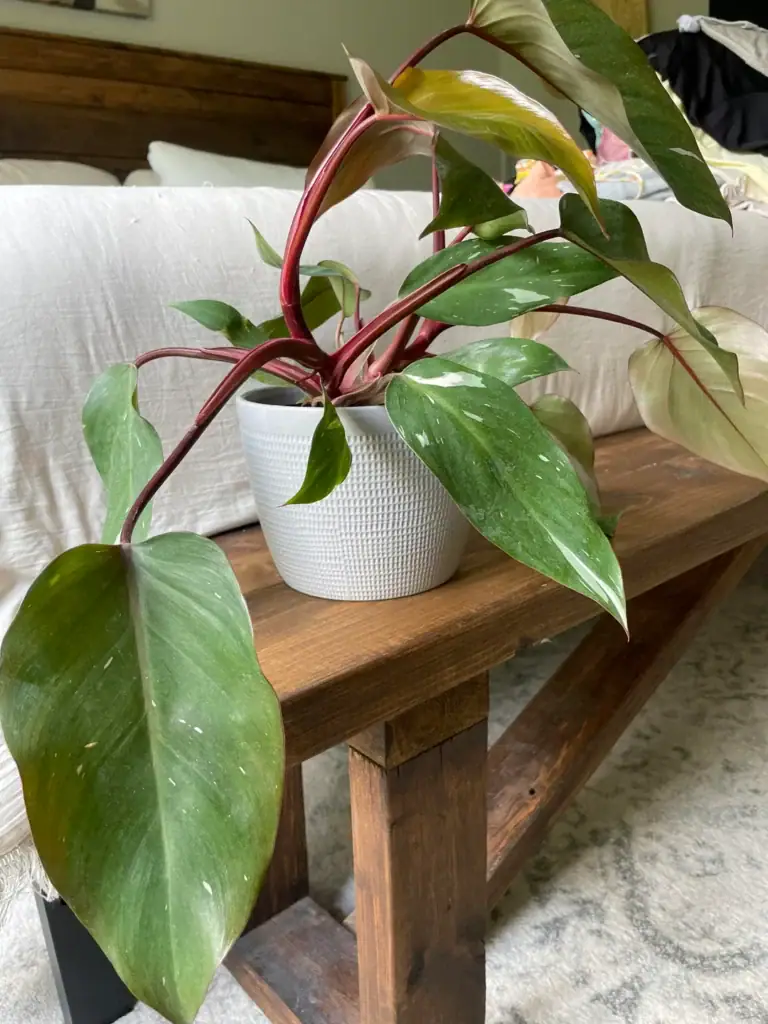
I always prune reverted growth right above a node that still shows pink. This encourages the plant to push out new variegated leaves instead of more green ones. The sooner you catch it, the easier it is to keep your Pink Princess actually pink.
9) Viral or fungal leaf infection can steal your plant’s signature pink coloring
Infections don’t just make leaves look sick. They can actually mess with the cells that produce pink pigmentation in your philodendron.
Fungal problems usually show up as spots, yellowing, or mushy areas on the leaves first. If I notice the pink fading along with these symptoms, there’s a good chance a fungus is involved. Viral infections are trickier because they can cause odd patterns, streaking, or a general loss of color without obvious damage.
The tricky part is that both types of infections stress the plant. When your philodendron is fighting off disease, it often can’t maintain its variegation properly.
Quick Tip: Check the undersides of leaves and stems for fuzzy growth, dark spots, or slimy patches.
If you suspect an infection, remove affected leaves right away to stop it from spreading. I always use clean scissors and wipe them with rubbing alcohol between cuts. Moving the plant away from others helps protect your collection too.
10) Excessive pruning of pink growth
When I trim away too much of the pink foliage, my plant loses its ability to keep making those colorful leaves. The pink parts contain less chlorophyll than green sections, so they’re not as good at making food for the plant. If I cut them off too often, the plant starts pushing out more green growth instead because it needs to survive.
I’ve noticed that some people get excited and prune every pink leaf thinking it helps the plant focus its energy. That actually backfires. The pink tissue still does some photosynthesis, and the plant needs to keep some around to maintain that trait.
Quick Tip: Leave at least 2-3 pink or variegated leaves on the plant at all times, even if they’re not perfect.
My philodendron will naturally balance green and pink growth on its own. When I let it do its thing and only remove damaged or dead leaves, the variegation stays more consistent. Overcutting sends a signal that the plant needs more green to stay healthy.
Understanding Pink Variegation in Philodendrons

The pink color in your philodendron comes from a genetic mutation that affects chlorophyll production, and it needs specific light conditions to stay vibrant.
How Genetic Factors Influence Leaf Color (And Why Some Leaves Just Won’t Stay Pink)
The pink variegation in your Princess Philodendron happens because of a natural genetic mutation. This mutation reduces chlorophyll in certain parts of the leaf, which normally makes plants green. When chlorophyll is absent or reduced, other pigments show through—mainly pink and white.
Each leaf cell carries instructions for how much pigment it should produce. Some cells get the signal to make less chlorophyll, creating those gorgeous pink streaks. Other cells produce full chlorophyll and stay green.
Quick Tip: New leaves emerge with the most pink because they have less mature chlorophyll—that’s your plant working exactly as it should.
The variegation pattern is unstable by nature. Your plant might produce mostly pink leaves one month and mostly green leaves the next. This isn’t necessarily a problem—it’s just how variegated plants work.
The Role of Light and Environment in Variegation (What Your Plant Actually Needs to Keep That Pink)
Bright, indirect light is what keeps the pink coloring strong. I’ve found that plants near east-facing windows or a few feet back from south-facing windows do best. The pink parts of leaves have less chlorophyll, so they can’t photosynthesize as well as green parts.
When light is too low, your plant compensates by producing more chlorophyll-rich (green) leaves to survive. It’s a smart adaptation, but it means less pink for you.
Temperature and nutrients also matter. Cool temps below 65°F can slow down the processes that create pink pigments. Too much nitrogen fertilizer pushes green growth because nitrogen fuels chlorophyll production.
Quick Tip: If you’re seeing more green than pink, move your plant closer to a light source before changing anything else.
Long-Term Care Tips for Vibrant Pink Leaves

Keeping those pink leaves bright comes down to two main things: managing water and humidity levels, plus feeding your plant the right nutrients at the right time.
Adjusting Watering and Humidity (Because Pink Leaves Are Picky About Moisture)
I’ve learned that watering mistakes kill pink variegation faster than almost anything else. Too much water and the roots can’t breathe, which stresses the plant and triggers it to produce more chlorophyll (green) instead of those gorgeous pink tones.
I check the top two inches of soil before watering. If it’s dry, I water thoroughly until it drains out the bottom. If it’s still moist, I wait another day or two.
Pink Princess Philodendrons come from tropical areas, so they love humidity between 60-80%. When the air gets too dry, the leaves can turn brown at the edges and lose their pink coloring.
Quick Tip: Place a humidifier near your plant or set it on a pebble tray filled with water.
I mist my plant occasionally, but I’m careful not to leave water sitting on the leaves overnight. That can cause fungal problems. In winter when indoor heating dries out the air, I bump up my humidity efforts since that’s when pink variegation fades most often.
Fertilization Tricks for Healthy Growth (Without Overdoing the Nitrogen)
I fertilize my Pink Princess every 4-6 weeks during spring and summer when it’s actively growing. The trick is using a balanced fertilizer that won’t push too much green growth.
High-nitrogen fertilizers make plants produce tons of chlorophyll, which means more green and less pink. I use a balanced formula like 10-10-10 or 20-20-20, diluted to half strength.
I skip fertilizing completely in fall and winter when growth naturally slows down. Feeding during dormancy wastes nutrients and can actually damage roots.
Quick Tip: Always water your plant before fertilizing to prevent root burn from concentrated nutrients.
I watch my plant’s new leaves as they unfurl. If they’re coming in mostly green, I cut back on fertilizer for a month. If growth seems slow or leaves look pale, I know it needs a feeding.
Frequently Asked Questions
Light levels and care habits directly control how much pink your plant produces. Stress from watering, temperature swings, and being root-bound can all push your Pink Princess toward more green growth.
Why are the new leaves on my Pink Princess coming out with less pink than before?
Your plant probably isn’t getting enough bright, indirect light. When light levels drop, the plant makes more chlorophyll to capture what little light it can find. That means more green and less pink.
I’ve seen this happen when someone moves their plant away from a window or during winter months. The plant is just trying to survive, so it prioritizes green over pink.
Check where your plant sits. If it’s more than a few feet from a window, that’s likely your problem.
Quick Tip: Move your Pink Princess closer to an east or west-facing window where it gets several hours of bright, filtered light each day.
How can I stop my Pink Princess Philodendron from reverting to mostly green leaves?
You need to give it the right light and avoid overfeeding with nitrogen. Too much nitrogen pushes leafy green growth instead of balanced variegation.
If you’re using a high-nitrogen fertilizer or feeding too often, cut back. I use a balanced fertilizer at half strength once a month during the growing season.
Also watch your watering schedule. When you water inconsistently, the plant gets stressed and produces more green leaves as a survival response.
Quick Tip: Stick to a regular watering routine where you let the top inch of soil dry out between waterings.
Does light level affect how much pink variegation my Pink Princess produces?
Yes, light is the biggest factor in how much pink you’ll see. Bright, indirect light encourages more pink variegation. Too little light makes the plant produce mostly green leaves.
But here’s the tricky part: direct afternoon sun can actually bleach out the pink areas and damage the leaves. You want bright light without harsh rays hitting the foliage.
I keep mine near an east-facing window where it gets morning sun and bright indirect light the rest of the day. That balance works really well.
Quick Tip: Aim for bright, indirect light for at least 6-8 hours daily, but shield your plant from direct afternoon sun.
Should I prune or cut back green-only stems to encourage more pink variegation?
Yes, I cut back stems that come out completely green. Those all-green stems grow faster and can take over your plant if you let them.
The green parts have more chlorophyll, so they’re stronger growers. They’ll outcompete the variegated parts for resources.
I prune green stems back to where they meet variegated growth. This encourages the plant to put energy into stems that have pink.
Just don’t expect pruning alone to fix the problem. You still need to address light levels and care issues.
Quick Tip: Use clean, sharp scissors to cut all-green stems back to the main stem, right above a node that shows some pink or white variegation.
What’s the difference between a Pink Princess Marble and a regular Pink Princess, and does it affect variegation stability?
A Pink Princess Marble has more white and cream tones mixed with the pink. A regular Pink Princess shows mostly green with hot pink sections.
The Marble version isn’t more or less stable. Both can revert to green if care conditions aren’t right. The Marble just has a different color pattern in its variegation.
Some people think the Marble is a separate variety, but it’s really just a Pink Princess with extra white in the variegation. The same care rules apply to both.
Quick Tip: Whether you have a Marble or regular Pink Princess, focus on consistent bright light and proper watering to maintain variegation.
Can stress from watering, humidity, or temperature changes cause my Pink Princess to lose its pink?
Yes, stress pushes your plant to produce more green growth. When a plant feels threatened, it makes extra chlorophyll to help it survive.
Inconsistent watering is a big culprit. Going from bone dry to soaking wet confuses the plant and triggers a stress response.
Temperature swings and low humidity can also stress your Pink Princess. I keep mine in a spot where temps stay between 65-80°F and humidity is around 60%.
Being root-bound in a small pot stresses the plant too. Check if roots are circling the bottom of the pot. If they are, it’s time to size up.
Quick Tip: Keep conditions stable with regular watering, steady temperatures, and repotting when roots fill the current container.
Note: Some images in the articles are sourced from Reddit and Other Platforms For Reference Purpose.