Why Your Monstera Leaves Are Not Opening Properly and How to Fix It
Monstera plants are known for their stunning split leaves, but what happens when those new leaves refuse to open the way they should? I’ve been there, watching a tightly furled leaf sit unchanged for weeks while wondering what went wrong. It’s frustrating when your plant seems stuck, especially when you’re doing everything you think is right.
When monstera leaves won’t open properly, it usually means something in their environment or care routine needs adjusting. The good news is that most of these issues are fixable once you know what to look for.
From lighting problems to watering mishaps, there are several common reasons why your monstera might be struggling with new growth. I’ll walk you through the main causes and help you figure out what’s going on with your plant. Once you understand what your monstera needs, you can get those leaves unfurling beautifully again.
Please note: Simplify Plants is reader-supported. As an Amazon Associate, I earn from qualifying purchases made by our readers with no extra cost added to you all! Some links in the post are affiliate links and I get a commission from purchases made through links in the post.
1) Insufficient bright indirect light (Your monstera might be stuck in the dark)
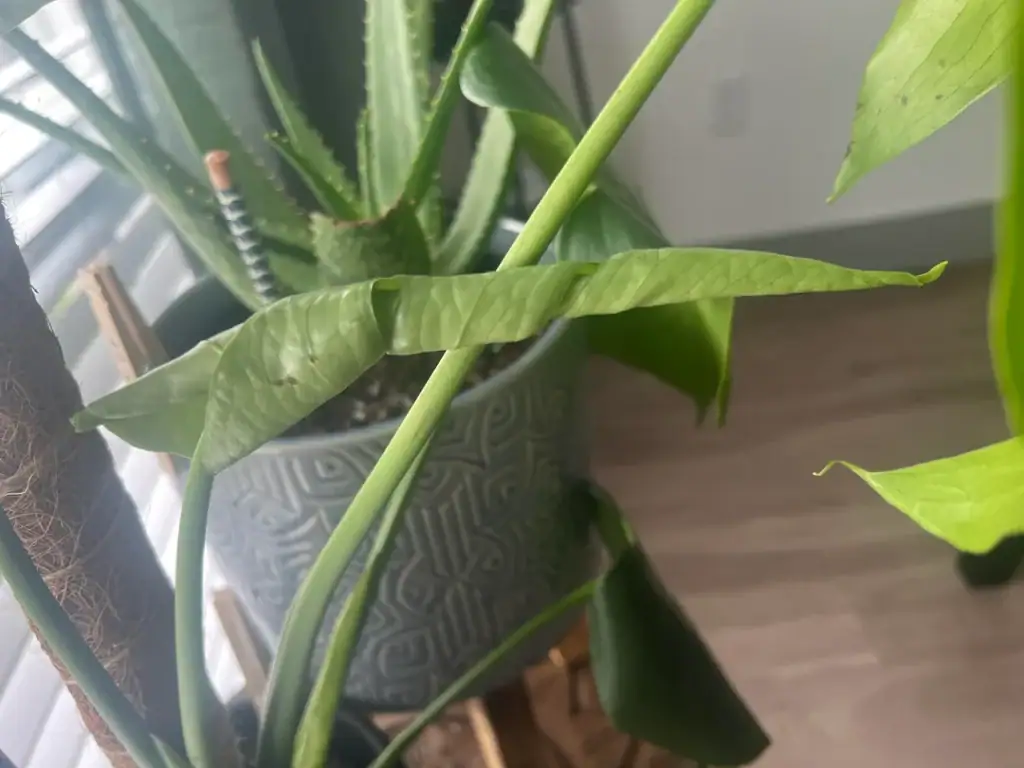
I’ve noticed that monsteras get confused when they don’t receive enough light. The new leaves stay curled up tight because the plant doesn’t have the energy to unfold them properly.
Your monstera needs bright indirect light to fuel leaf development. Think of a spot near an east-facing window or a few feet back from a south-facing one. Without enough light, the plant conserves energy and skips the full unfurling process.
I can tell when my monstera isn’t getting enough light because the new leaves emerge smaller and stay partially closed. Sometimes they’ll open halfway and just stop there. The plant is basically saying it can’t afford to make big, beautiful leaves right now.
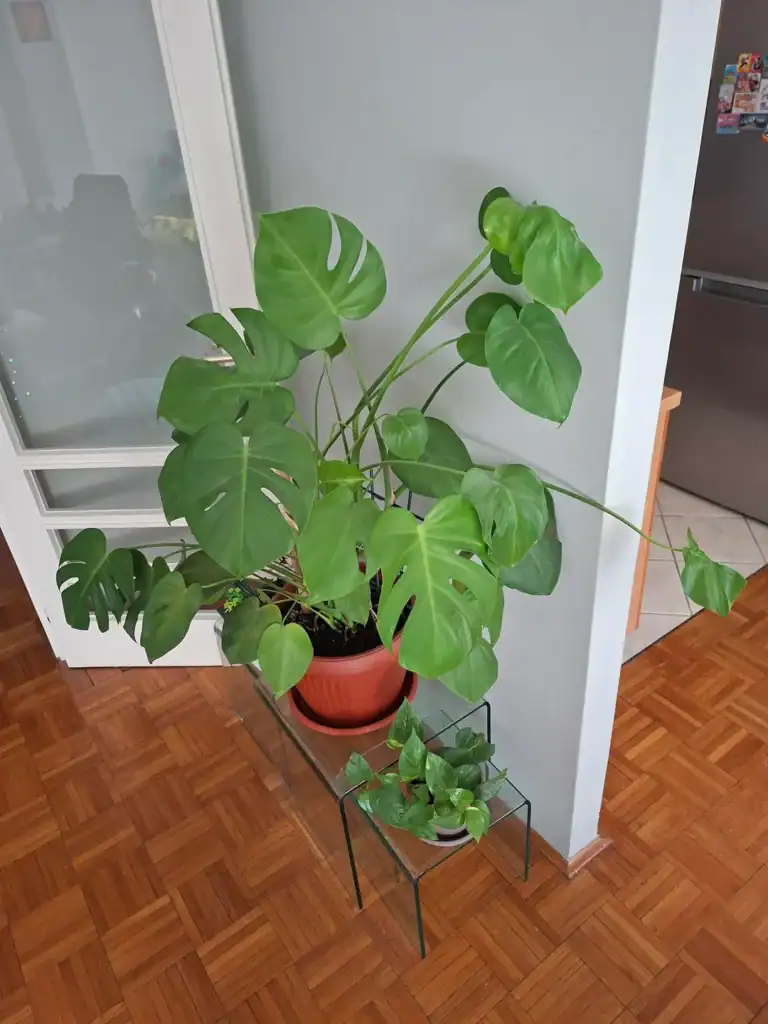
Quick Tip: Move your monstera closer to a window but out of direct sun rays, which can burn the leaves.
In dimmer rooms, I’ve had success using a grow light for 10-12 hours daily. The difference shows up within a few weeks as new growth starts opening completely.
2) Overwatering causing root rot
I’ve seen this happen more times than I can count. Too much water in the soil pushes out all the oxygen your monstera’s roots need to breathe.
When roots sit in soggy soil for days, they start to rot and turn mushy.
Root rot stops your plant from taking up water and nutrients properly. Even if the soil is wet, your monstera can’t use it.
This means new leaves won’t get what they need to unfurl, so they stay curled up or only partially open.
You’ll notice the soil stays wet for over a week between waterings. The pot might feel heavy, and you could smell something sour or rotten coming from the soil. Stems near the base can turn soft or dark too.
Quick Tip: Stick your finger two inches into the soil before watering—if it’s still damp, wait a few more days.
If you think root rot is the problem, you’ll need to check the roots. Pull the plant out and look for black or brown mushy roots instead of firm white ones.
3) Underwatering leading to dry soil
When I don’t water my monstera enough, the soil gets bone-dry and the new leaves struggle to unfurl.
Dry conditions make the leaves stiff and brittle, so they can’t push through like they’re supposed to.
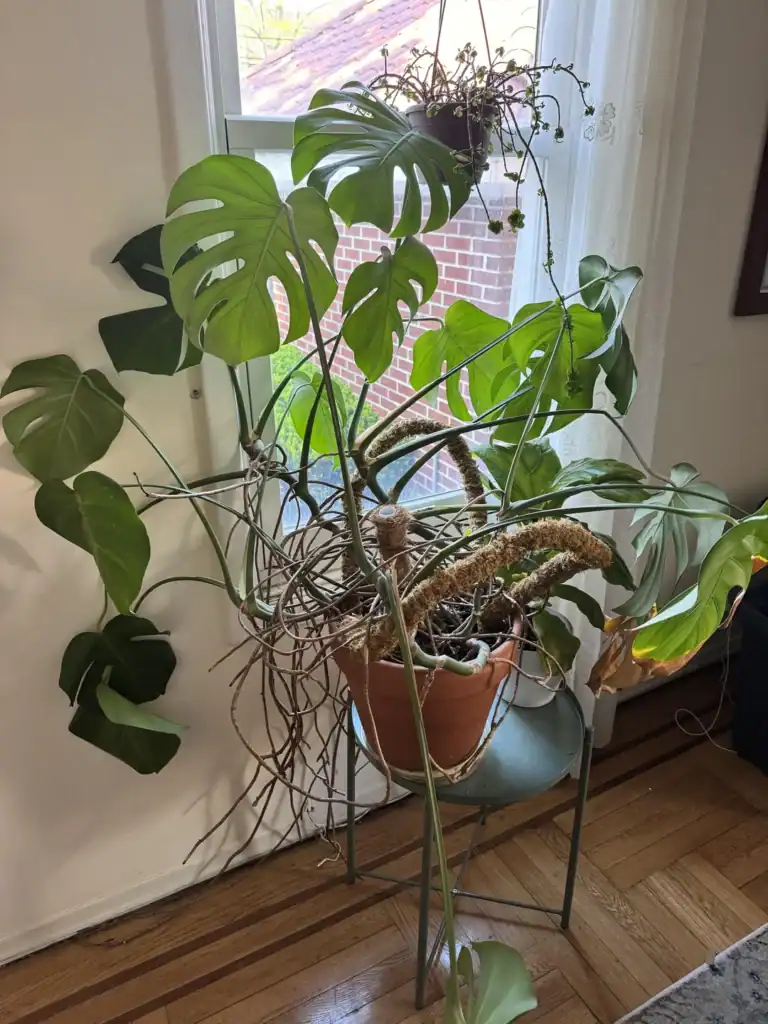
I check the top two inches of soil with my finger before watering. If it feels dry that far down, it’s time to give the plant a good drink. Monsteras like their soil to dry out a bit between waterings, but not completely.
Quick Tip: Stick your finger in the soil up to your second knuckle—if it’s dry, water until it drains from the bottom.
In hot weather or if you have the heat cranked up, the soil dries out faster than normal. I keep a closer eye on my plants during summer or in rooms with low humidity. If the leaves feel papery or the edges look crispy, that’s a sign I’ve been slacking on watering.
4) Low humidity around the plant
Monsteras come from tropical rainforests where the air stays moist most of the time. When humidity drops too low in your home, the new leaves struggle to unfurl properly. They might get stuck halfway or come out wrinkled and damaged.
Dry air makes the delicate new leaves stiff before they can open. I’ve seen this happen most often during winter when heaters run constantly, or in air-conditioned rooms during summer.
Quick Tip: Place a small humidifier near your monstera or group it with other plants to create a more humid microclimate.
You can also mist the leaves lightly every few days, though this gives only temporary relief. Another option is setting your pot on a tray filled with pebbles and water. Just make sure the pot sits above the water line, not in it.
If you notice brown, crispy edges on leaves along with opening problems, low humidity is likely your culprit. Most monsteras do best when humidity stays above 50 percent.
5) Cold drafts or temperatures below 60°F (15°C)
Monstera plants hate the cold. When temperatures drop below 60°F, the leaves slow down their growth and often get stuck halfway open.
I’ve seen this happen near air conditioning vents, drafty windows, and even front doors that get opened frequently in winter. The cold air shocks the plant and basically tells it to pause everything, including unfurling new leaves.
Quick Tip: Move your monstera at least three feet away from AC units, heaters, and exterior doors.
Check the spots where you keep your plant. Put your hand near the leaves and feel for any cold air moving around. Even a gentle draft can cause problems if it’s cold enough.
If your home runs cool in winter, try to keep your monstera in the warmest room. A steady temperature between 65-85°F works best. The plant can handle some variation, but sudden temperature swings will mess with leaf development every time.
6) Pot-bound roots in a small container (when roots run out of room to breathe)

When my monstera’s roots completely fill the pot, they start circling around themselves with nowhere else to go. This means the plant can’t take up enough water or nutrients, even if I’m doing everything else right.
I always check the drainage holes at the bottom of the pot. If I see thick roots poking out or circling around, that’s a clear sign my monstera needs a bigger home.
Pot-bound plants struggle to unfurl new leaves because they’re putting all their energy into survival mode instead of growth. The leaves might get stuck halfway open or come out smaller than usual.
Quick Tip: Gently slide your monstera out of its pot once a year to peek at the roots—if they’re packed tight in the shape of the container, it’s time to repot into something 2 inches wider.
I usually repot in spring or early summer when my plant is actively growing. This gives it the best chance to settle into its new space and start pushing out healthy, fully opened leaves again.
7) Inadequate fertilizer or nutrient deficiency
Your monstera needs food to grow strong, healthy leaves. When it doesn’t get enough nutrients, new leaves struggle to unfurl properly.
They might stay curled up or only partially open.

I feed my monstera every 4-6 weeks during spring and summer when it’s actively growing. A balanced liquid fertilizer diluted to half strength works well. Winter is different though—plants rest during cold months, so I skip feeding completely.
Nitrogen helps with leaf development, so a deficiency shows up fast. You’ll notice smaller leaves and that trademark splitting might not happen either.
Quick Tip: Yellow leaves combined with slow unfurling usually mean your plant is hungry.
Don’t go overboard with fertilizer. Too much causes brown, crispy leaf edges and can actually prevent proper leaf opening. I learned this the hard way when I got too enthusiastic with feeding.
Start with a gentle approach. Give your monstera a weak dose of fertilizer and watch how it responds over the next few weeks.
8) Using heavy, compacted potting mix that suffocates your monstera’s roots
Heavy potting soil is one of the sneakiest reasons your monstera leaves get stuck. When the mix is too dense, water sits around the roots instead of draining through. That makes it hard for oxygen to reach the root system.
Monstera roots need air pockets to breathe and grow properly. Compacted soil squeezes those pockets shut. The roots can’t absorb nutrients well, and new leaves struggle to unfurl because the plant isn’t getting what it needs.
You’ll notice this problem if water pools on top of the soil or takes forever to soak in. The mix might feel hard or clumpy when you poke it with your finger.
Quick Tip: Mix in perlite, orchid bark, or coco coir to lighten up dense soil and improve drainage.
I recommend repotting with a chunky, airy blend made for aroids. Your monstera will thank you with leaves that open smoothly instead of staying cramped and curled.
9) Too much direct midday sun scorching leaves
I’ve seen this happen more times than I can count. Monsteras love bright light, but harsh afternoon sun can actually damage new leaves before they even unfurl.
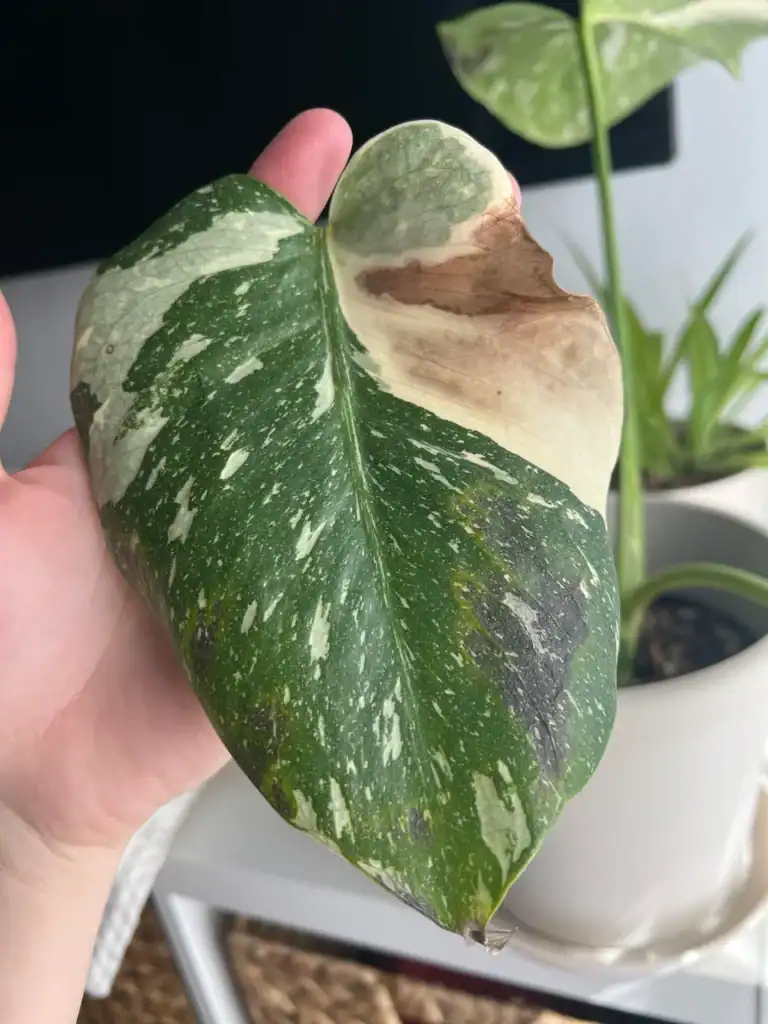
When those intense rays hit developing leaves, they can cause brown spots or crispy edges. The leaf might still try to open, but it won’t look right. Sometimes it gets stuck partially closed because the damaged tissue can’t expand properly.
If your plant sits near a south or west-facing window, that midday sun might be too strong. The leaves can literally get sunburned while they’re still curled up and vulnerable.
Quick Tip: Move your monstera back a few feet from the window or use a sheer curtain to filter the strongest rays.
Watch for leaves that turn yellow or develop brown patches on one side. That’s your sign the light is too intense. Morning sun from an east window is usually perfect because it’s gentler.
10) New growth slowed by recent repotting shock
When I move my monstera to a new pot, it usually takes a few weeks to settle in. During this time, new leaves might get stuck halfway unfurled or take forever to open up completely.
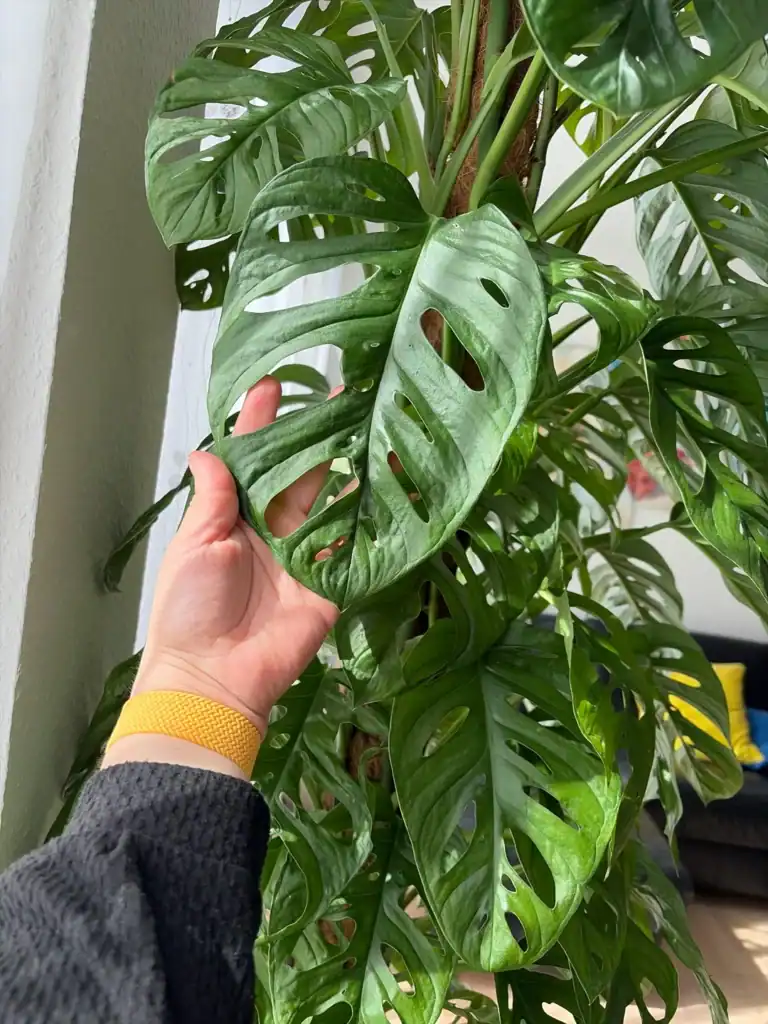
Repotting shakes things up for your plant. The roots need time to spread out and get comfortable in fresh soil before they can push energy into leaf growth again.
I’ve noticed that leaves already forming when I repot tend to be the most affected. They might stay curled or open really slowly compared to normal.
Quick Tip: Wait at least 3-4 weeks after repotting before expecting normal leaf development.
The best thing I can do is be patient and keep care consistent. I water only when the top two inches of soil feel dry, and I avoid fertilizing for the first month after repotting.
Most monsteras bounce back on their own once their roots adjust. If you see new growth starting to emerge normally after a month or so, your plant is recovering just fine.
Understanding Monstera Leaf Development
Monstera leaves go through predictable stages from emergence to full maturity, and small changes in light, humidity, or water can slow down or mess up the unfurling process.
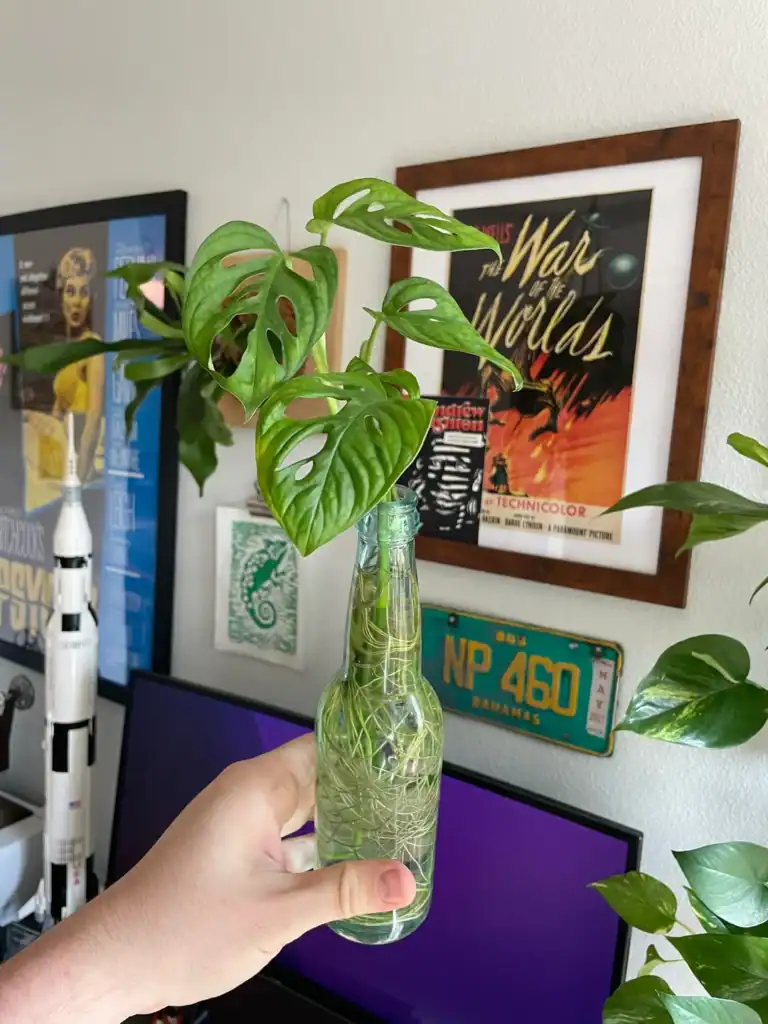
Natural Growth Stages: What Happens as Your Monstera Pushes Out New Leaves
When I watch a new leaf emerge, it starts as a tight, rolled-up cylinder called a cataphyll. This protective sheath wraps around the baby leaf inside. The cataphyll is usually light green or brownish.
The leaf slowly pushes out from this sheath over 1-3 weeks. At first, it looks like a pale green cigar. Once the leaf is ready, the cataphyll dries up and falls off on its own.
The newly opened leaf is soft and light green. It takes another 2-4 weeks to harden and darken to its final color. Young leaves won’t have their splits or holes yet. Those fenestrations only show up on mature plants with proper care.
Quick Tip: Don’t try to peel off the cataphyll yourself—you can damage the delicate leaf inside.
How Environment Affects Leaf Unfurling: The Conditions That Make or Break the Process
Low humidity is the biggest culprit when leaves get stuck. Monsteras come from tropical rainforests where humidity stays above 60%. When the air is too dry, the leaf edges dry out and stick together.
Insufficient light also slows things down. If your plant isn’t getting enough bright, indirect light, it doesn’t have the energy to push out new growth properly. The leaf might stay partially closed or take weeks longer than normal.
Temperature matters too. Monsteras prefer 65-80°F. Below 60°F, growth basically stops.
Inconsistent watering stresses the plant. If I let my monstera dry out completely, then drench it, then let it dry again, the leaf development gets jerky and uneven. The leaf might unfurl crooked or develop brown edges.
Quick Tip: Run a humidifier near your monstera during leaf unfurling, or group it with other plants to boost moisture in the air.
Troubleshooting Environmental Factors
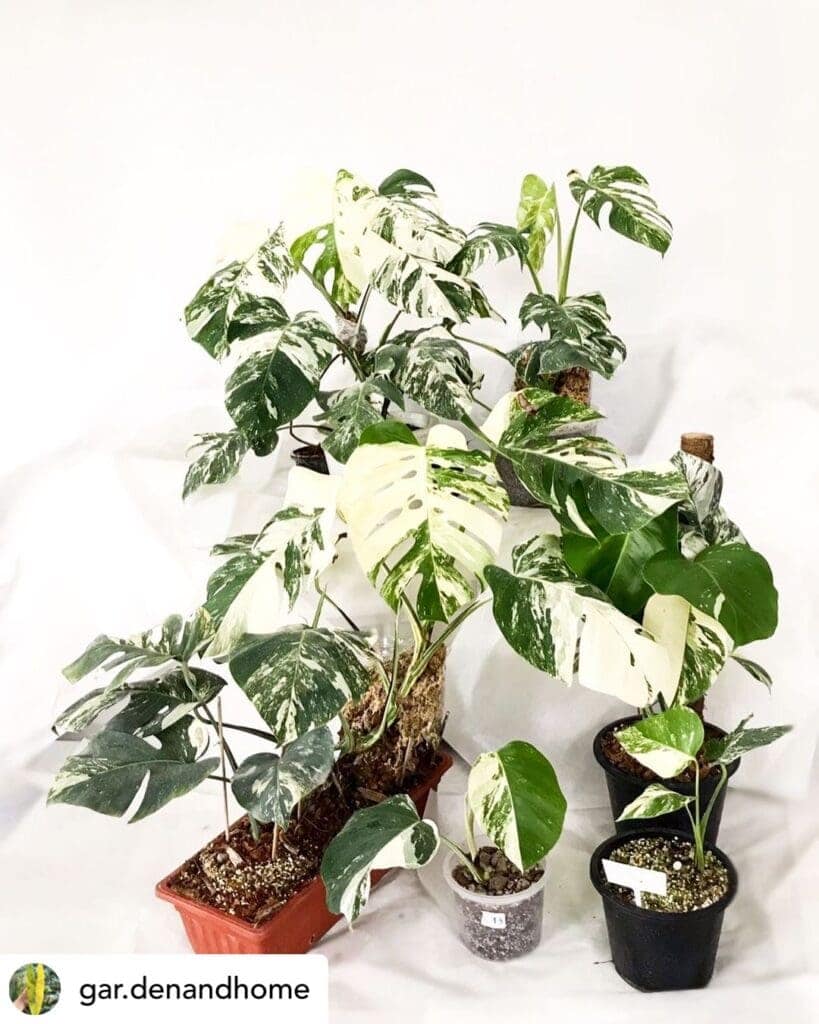
When your Monstera leaves refuse to unfurl, the problem usually comes down to light or humidity issues. These two factors work together to help your plant grow healthy leaves.
Light and Water Balance: Finding the Sweet Spot Between Too Much and Too Little
I’ve noticed that Monsteras struggle when they get either too much direct sun or not enough light at all. Your plant needs bright, indirect light to produce the energy for new leaves to open.
If your Monstera sits in a dark corner, the leaves might stay curled because the plant doesn’t have enough energy to push them open. Move it closer to a window where it gets filtered light throughout the day. East-facing windows work great for this.
Too much direct sunlight causes a different problem. The leaves might start to open but then curl back up or develop brown edges. This happens because the plant is trying to protect itself from burning.
Quick Tip: Place your Monstera about 3-5 feet from a bright window, or use a sheer curtain to filter harsh afternoon sun.
Water plays into this too. I always check the top 2 inches of soil before watering. If it’s dry, I water thoroughly until it drains out the bottom. If it’s still moist, I wait a few more days.
Overwatering leads to root rot, which stops nutrients from reaching new leaves. They’ll stay closed because the plant is stressed. Underwatering causes leaves to curl inward as the plant tries to conserve moisture.
Humidity Requirements: Why Your Monstera Needs More Moisture in the Air
Monsteras come from tropical rainforests where humidity stays around 60-80%. When your home drops below 40% humidity, new leaves struggle to unfurl properly.
Low humidity makes the delicate new leaves stick together. They dry out before they can fully open. I’ve seen this happen most often in winter when indoor heating runs constantly.
You can fix this by misting your plant daily or placing it near a humidifier. I prefer humidifiers because they provide consistent moisture without making the leaves wet.
Quick Tip: Group your Monstera with other plants to create a mini humid zone, or set it on a pebble tray filled with water (just don’t let the pot sit in the water).
Watch for brown leaf edges or tips. This tells you the air is too dry. In homes with central air conditioning or heating, you might need to run a humidifier year-round to keep your Monstera happy.
The Role of Plant Health in Leaf Formation
A monstera’s leaves won’t unfurl properly when the plant is struggling with missing nutrients or dealing with pests and diseases that drain its energy.
Nutrient Deficiencies: What Your Monstera Is Missing
When my monstera doesn’t get the right nutrients, new leaves stay curled up or open partially with weird shapes. The plant needs three main nutrients to form healthy leaves: nitrogen for leaf growth, phosphorus for energy transfer, and potassium for water regulation.
Nitrogen deficiency shows up first in older leaves turning yellow while new leaves stay small and tight. I’ve noticed that these new leaves often give up halfway through unfurling.
Calcium plays a big role too. Without enough calcium, leaf tips die before they even open. The edges might look brown or crispy on leaves that do manage to unfurl.
Quick Tip: Feed your monstera with a balanced fertilizer (like 20-20-20) once a month during spring and summer.
Here’s what to watch for:
- Yellowing older leaves = nitrogen problem
- Stunted new growth = phosphorus issue
- Brown leaf edges = potassium or calcium shortage
- Weak, floppy stems = general nutrient depletion
I always check the soil pH too. Monsteras absorb nutrients best when soil pH sits between 5.5 and 7.0.
Pest and Disease Impact: Hidden Threats to New Leaves
Pests suck out the plant’s energy before it can finish opening new leaves. Spider mites and thrips are the worst culprits because they target fresh growth.
I check the base of unopened leaves for tiny insects. Thrips hide in the curled parts and cause leaves to open deformed or with silvery streaks. Spider mites leave fine webbing between the stem and leaf.
Fungal infections create another problem. Root rot stops water from reaching new leaves, so they stay limp and never fully expand. The plant basically shuts down leaf production to survive.
Bacterial leaf spot causes dark, wet-looking patches that prevent proper unfurling. I’ve seen leaves rot while still curled up when infection hits early.
Quick Tip: Wipe leaves with neem oil solution every two weeks if you spot any pests.
Check these spots weekly:
- Under leaves and in leaf folds
- Where the petiole meets the stem
- The top two inches of soil for fungus gnats
- New growth points for webbing or sticky residue
Catching problems early means my monstera can redirect energy back to opening those gorgeous new leaves.
Frequently Asked Questions
New leaves take anywhere from one to four weeks to open fully, but problems like low humidity or pests can slow things down or stop the process completely.

How long does it usually take for a new Monstera leaf to unfurl from start to finish?
Most Monstera leaves take about one to two weeks to fully open once they start emerging. Some leaves might take up to four weeks if the conditions aren’t ideal.
The speed depends on how much bright indirect light your plant gets and whether the humidity is high enough. Warmer temperatures also help leaves unfurl faster.
If a leaf has been stuck for more than three weeks, something is probably wrong. Check for dry soil, low humidity, or pests that might be interfering.
What are the most common reasons a Monstera leaf gets stuck while unfurling and won’t budge?
Low humidity is the biggest culprit when leaves get stuck. The new leaf needs moisture in the air to stay flexible enough to open.
Pests like thrips or spider mites can also damage the delicate new growth. They feed on the leaf while it’s still curled up, causing it to stick together or tear when it tries to open.
Underwatering makes the plant conserve energy, so it might pause leaf development. Cold temperatures below 60°F can slow everything down too.
Quick Tip: Mist the stuck leaf daily or place a humidifier nearby to help soften it.
Can low humidity cause a Monstera leaf to curl or refuse to open fully even with proper watering?
Yes, low humidity is one of the main reasons leaves stay curled or only partially open. The air needs to be moist enough to keep the new leaf tissue flexible.
When humidity drops below 50%, the edges of the unfurling leaf can dry out and stick together. This prevents the leaf from spreading out properly.
I’ve seen this happen a lot in winter when indoor heating dries out the air. A humidifier or pebble tray can make a real difference.
Why is my new Monstera leaf turning brown while it’s still unfurling instead of staying green?
Brown spots on unfurling leaves usually mean the plant is getting too much direct sun. The delicate new growth burns easily before it has a chance to harden off.
Root rot from overwatering can also cause browning. When the roots are damaged, they can’t deliver enough water and nutrients to the new leaf.
Cold drafts are another common cause. If your plant sits near an air conditioner or drafty window, the new growth can get damaged and turn brown.
Quick Tip: Move your Monstera away from direct sun and check the roots if browning continues.
Is it safe to help a stuck Monstera leaf open, and how can I do it gently without damage?
You can help a stuck leaf, but you need to be very gentle. Wait until the leaf has been trying to open for at least two weeks before you intervene.
Mist the leaf thoroughly and let it sit for 10 minutes to soften. Then use clean hands to gently separate the edges where they’re stuck.
Never force it or pull hard. If you feel resistance, stop and wait another day or two. Tearing the leaf will leave permanent damage.
Quick Tip: Work in a humid bathroom after a hot shower when the leaf is most flexible.
Why are my Monstera leaves flopping or drooping even though I’m watering regularly and the soil feels moist?
Overwatering can cause drooping just as easily as underwatering. When roots sit in soggy soil, they rot and can’t support the leaves anymore.
Check if your pot has drainage holes and if water is actually draining out. Soil that stays wet for more than a week is a red flag.
Low light can also make leaves droop because the plant doesn’t have enough energy to hold them up. Monsteras need bright indirect light to stay strong.
Cold temperatures below 60°F will cause drooping too. The plant basically goes into survival mode and stops supporting its foliage properly.
Quick Tip: Let the top two inches of soil dry out between waterings and make sure your pot drains well.
Note: Some images in the articles are sourced from Reddit and Other Platforms For Reference Purpose.