21 Evergreen Groundcover Plants For Sunny And Shady Gardens
I’ve always been amazed by how groundcover plants can totally transform a garden. They fill in those awkward empty spots, help keep weeds in check, and just make everything look vibrant, no matter the season.
If you pick the right mix of evergreen groundcovers, your garden can stay colorful whether it’s sunny or shady. It really does make a difference.
In this article, I’ll go through a bunch of plants that thrive in all kinds of conditions. Some love the sun, like creeping thymes, while others, like soft mosses, can really brighten up shady corners.
Each one brings a different texture, color, or vibe, so you can build a garden that feels full and cozy all year round.
Please note: Simplify Plants is reader-supported. As an Amazon Associate, I earn from qualifying purchases made by our readers with no extra cost added to you all! Some links in the post are affiliate links and I get a commission from purchases made through links in the post.
1) Ajuga Reptans (Bugleweed)

Ajuga Reptans, or Bugleweed, is a favorite of mine for quickly covering bare soil. The dense, low-growing leaves make a thick mat that keeps weeds at bay.
It’s especially handy for tucking in around stepping stones or along the edge of a bed. The leaves aren’t just green—they can show off bronze, purple, or even burgundy shades.
In spring, it sends up short blue flower spikes that bring in bees and butterflies. The color pop looks awesome next to lighter plants or gravel.
Ajuga’s pretty flexible—it’ll grow in sun or partial shade. It likes moist, well-drained soil, but once it’s settled, it can handle a little dryness.
I try to avoid planting it in spots that stay too wet, since root rot can be a problem. When I need a low-care plant, Ajuga’s one of my go-tos.
It spreads by runners, so dividing and moving it around is easy. I just trim back any overgrowth to keep things tidy and make sure it doesn’t smother neighbors.
With its bold leaves and delicate flowers, Ajuga Reptans adds color and texture all year. It works in rock gardens, under shrubs, or even in containers.
Honestly, it’s one of those groundcovers that just fits almost anywhere.
2) Creeping Thyme

Creeping Thyme has to be one of the easiest, most rewarding groundcovers I’ve grown. It’s tough, low-growing, and the scent is amazing.
It forms a tight mat of tiny leaves that stay green most of the year. When it blooms, the little purple or pink flowers almost cover the whole plant and bees seem to love it.
I like to tuck it between stepping stones or along paths. It can handle some light foot traffic, which is perfect for garden walkways.
Creeping Thyme loves full sun and needs well-drained soil. Once it’s settled in, I barely have to water it.
It spreads at a good pace but doesn’t get out of control. After it blooms, I give it a trim to keep things neat.
The fine texture and bright flowers really stand out next to larger plants. Plus, it helps keep weeds down, which is a nice bonus.
Creeping Thyme just gives sunny beds a polished look. It’s easy, cheerful, and keeps my garden lively from spring to fall.
3) Vinca Minor (Periwinkle)

Vinca minor, or Periwinkle, is one of those plants I keep coming back to. It’s evergreen, spreads easily, and just fills in awkward gaps with glossy leaves.
The little purple-blue flowers in spring (and sometimes again in fall) are a nice surprise. I’ve found it’s great for those spots where you want groundcover but don’t want to fuss over it.
It does well in both sun and partial shade, though I think it’s happiest with a bit of afternoon shade in really hot places. The roots spread fast, which helps block out weeds.
It’s not picky about soil, as long as it drains well. I water new plants regularly, but once they’re going, they can handle short dry spells.
Once established, it barely needs any care, which is perfect for me. I use Periwinkle around trees, on slopes, or under bushes—places where grass just won’t make it.
It only grows a few inches tall, so it always looks tidy. Once a year, I trim it back to keep it from taking over and to let new growth come in.
With just a little attention, Vinca minor stays good-looking all year and gives my garden that calm, neat feel.
4) Liriope Muscari (Lilyturf)

Liriope Muscari, or Lilyturf, is honestly one of the easiest evergreen groundcovers I’ve tried. It grows in neat, grass-like clumps that stay green nearly all year.
It’s happy in both sunny and partly shady spots, which is super handy. I usually plant it along borders or paths where other plants just don’t seem to fill in.
The leaves are tough and can handle foot traffic, heat, and dry spells better than most groundcovers. It makes a simple, tidy edge and doesn’t need much trimming.
Late summer brings short spikes of purple or lavender flowers, and then you get small black berries that last into winter. Those little extras keep things interesting without any extra work.
Liriope does fine in average garden soil as long as it drains. I water it regularly at first, but once it’s settled, it’s basically on autopilot.
I just cut back any old leaves in early spring to freshen it up. Since it spreads slowly by short rhizomes, it fills small areas without becoming a nuisance.
I’ve used it on slopes, under trees, and even as a green patch where grass just refuses to grow. Sometimes I’ll mix in different varieties for more color and texture—‘Moneymaker’ is compact, and ‘Silver Dragon’ has cool variegated leaves.
Liriope Muscari just delivers dependable color and texture with almost no effort. It’s tough, adaptable, and keeps things looking neat all year.
5) Hedera Helix (English Ivy)

English Ivy is one of those plants that instantly makes a space look lush. It grows fast, stays green all year, and gives you that classic, steady green vibe even in winter.
The small, glossy leaves form a thick carpet that really helps with weed control. In sunny spots, the leaves stay tight and bright, while in shade, the plant stretches out more for a softer look.
It’s pretty adaptable—I’ve used it to cover bare soil under trees or fill in gaps between shrubs. It also climbs walls and fences, which can be charming if that’s what you’re after.
Regular trimming is important to keep things under control and healthy. I always keep an eye out so it doesn’t climb where I don’t want it.
It grows best in well-drained soil and does fine in both sun and shade once it’s settled in. I water it regularly at first, then just let it do its thing.
English Ivy doesn’t ask for much but gives you loads of greenery all year.
6) Pachysandra Terminalis

Pachysandra terminalis, or Japanese spurge, is a lifesaver for those shady spots where nothing else seems to grow. It spreads fast and forms a low, dense mat of glossy green leaves that stay fresh year-round.
I like planting it under trees or along shaded walkways. The leaves stay vibrant even in deep shade, which is great for brightening up darker corners.
In early spring, it puts out small white flowers that are subtle but add a nice touch. It grows best in moist, well-drained soil, but it’s pretty adaptable as long as things don’t get too soggy.
Once it’s established, I barely have to do anything—just the occasional trim to keep it tidy. I always leave space for it to spread, since it can get dense over time.
It’s excellent for weed prevention because it covers the ground so well. If it starts to crowd other plants, I just pull out a few runners to keep it in check.
Pachysandra terminalis is a low-effort, neat-looking option for shady gardens. The rich green color and easy growth make it a go-to for tricky spots.
7) Sweet Woodruff (Galium odoratum)

Sweet Woodruff is one of those soft, low-growing groundcovers that just works in shady spots. It forms a lush green carpet that stays fresh through the seasons.
The little star-shaped white flowers bloom in late spring and add a gentle, sweet scent. It thrives in part shade to full shade, making it perfect for under trees or along shaded paths.
It’s easy to grow in moist, well-drained soil, though it can handle a bit of dryness once it’s established. The more shade it gets, the fuller and greener it looks.
I think Sweet Woodruff looks best in clusters. It spreads by underground stems but stays pretty manageable with just a little trimming.
It’s great at suppressing weeds, so it actually saves me time. The neat growth and soft texture create such a calm, natural vibe in shady beds.
In the warmer months, I like brushing my hand over the leaves—the scent is clean and a bit sweet, especially after it rains. When dried, the leaves smell even stronger and can be used in potpourri or sachets.
It pairs nicely with ferns, hostas, and other shade-loving perennials. I often use it as a ground layer beneath taller plants to fill empty spots and keep the soil from drying out.
It’s not fussy, and deer usually ignore it. Sweet Woodruff’s adaptability and gentle charm have made it one of my favorites for shady gardens.
8) Mazus Reptans
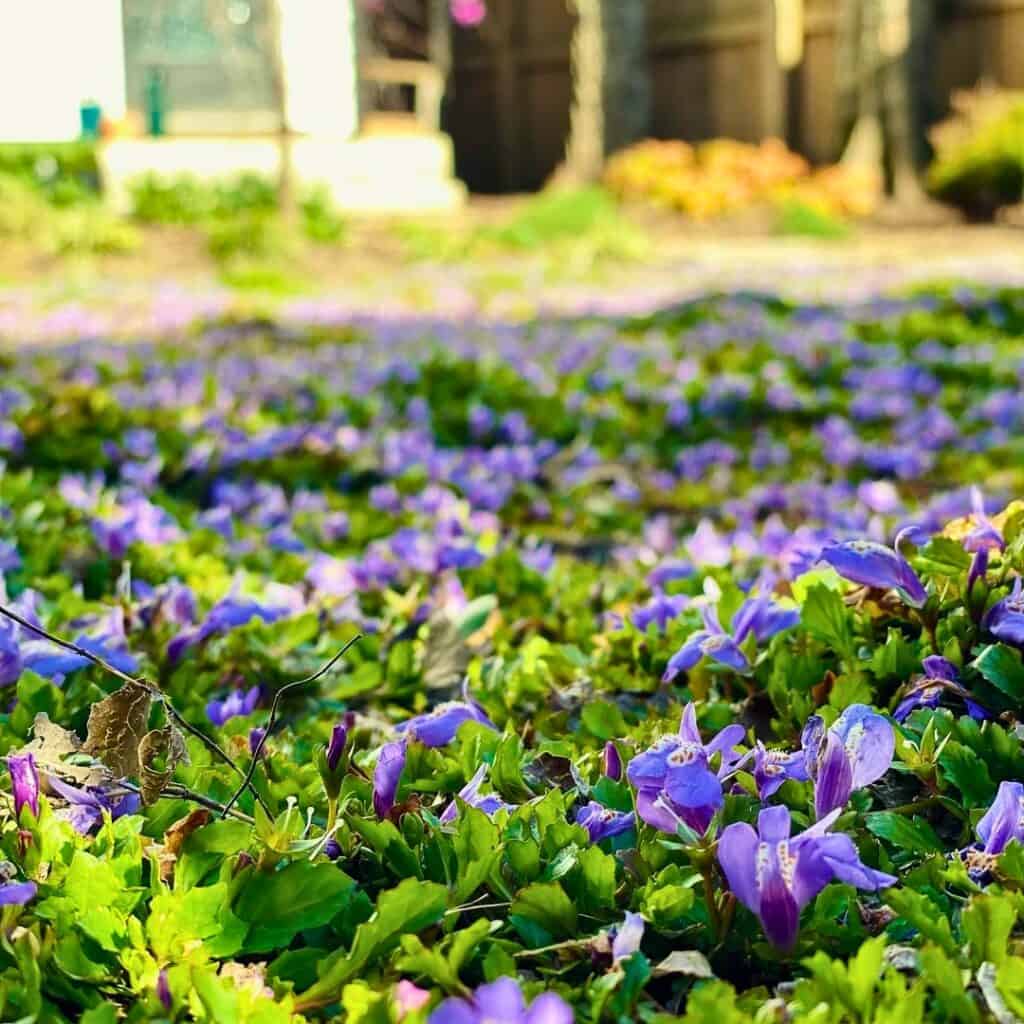
Mazus reptans is one of those plants I reach for when I need to fill a space fast but don’t want anything too aggressive. It forms a dense mat of green leaves that stays lush most of the year.
It’s great between stepping stones, around borders, or as a soft carpet under taller plants. In spring and early summer, tiny purple-blue flowers pop up everywhere.
Each bloom has a yellow and white center that adds a cheerful touch to both shady and sunny spots. The flowers attract small pollinators, which I always enjoy seeing in the garden.
Mazus reptans loves moist, well-drained soil and prefers partial shade, but it’ll do fine in full sun if you keep it watered. Regular watering helps it spread evenly and keeps the foliage looking good.
It’s a hardy, low-maintenance plant. After flowering, I trim it back to keep it neat and prevent it from wandering where I don’t want it.
If I need to fill a gap or cover bare soil, this is one of my top picks. In milder winters, the foliage often stays semi-evergreen, so there’s still some green even when most plants have faded.
It’s just a nice way to keep the garden looking alive all year.
9) Sagina Subulata (Irish Moss)

I really enjoy how Sagina subulata, or Irish Moss, forms this soft, green carpet that stays bright all year. It’s not technically a moss, but honestly, it looks and feels like one.
The tiny, dense leaves create a cushiony mat that just fills in those awkward spaces between stones or along the edges of a garden bed. I find it easy to grow in both sun and partial shade, though it definitely prefers cooler corners if you’re somewhere hot.
It likes moist, well-drained soil—let it dry out too much, and it’ll sulk. Regular watering keeps it happy and looking vibrant.
In late spring and early summer, you get these tiny white flowers that pop up, giving the ground a clean, fresh look. The blooms are small, but somehow they add a delicate charm.
After flowering, the foliage quickly fills in again, so the ground stays neat and covered. I like tucking Irish Moss between stepping stones since it can handle a bit of foot traffic.
It grows slowly enough to stay tidy, but spreads well enough to cover bare soil. It’s great for softening hard edges and blending pathways naturally into the rest of the garden.
For design, I like pairing it with creeping thyme or low sedums—the mix of color and texture just works. It also does well in containers, rock gardens, or around water features where that splash of green really stands out.
It’s evergreen, but I’ve noticed it can brown a bit during really hot or dry weather. Usually, it bounces back once things cool down or get wetter.
A little mulch around the edges helps keep moisture in and the roots cool. If you want a dependable, easy-care groundcover that makes any space feel more lush and finished, Sagina subulata is a solid pick.
Its soft look and smooth texture just invite you to slow down and take in the garden’s details.
10) Lamium Maculatum (Dead Nettle)

I like Lamium maculatum, or dead nettle, because it’s such an easy plant for shady spots. It forms a thick mat of leaves that stay green all year, and those silver or light markings really brighten up the darker corners of my garden.
It spreads quickly, so if you need to cover bare ground under trees or along paths, this one’s a winner. It stays low—usually under 8 inches—and the leaves feel soft when you brush past.
I trim it back in spring to keep things neat and encourage new growth. The small pink, purple, or white flowers show up from late spring through summer.
Bees and pollinators seem to love them, and it’s nice to see a bit of gentle activity in the shade. Even after the flowers fade, the foliage keeps everything looking fresh.
Dead nettle grows well in partial to full shade, but it’ll handle some sun if the soil stays moist. I make sure the soil drains well since it doesn’t like sitting in water.
Once it’s settled in, it barely needs any care—just a little water in dry weather. I use it near walkways, borders, and around shrubs where grass just won’t grow.
It pairs nicely with ferns, hostas, and heucheras. The evergreen leaves give the garden some color even in winter.
11) Ceratostigma Plumbaginoides (Hardy Plumbago)

I’m a fan of Ceratostigma plumbaginoides, or Hardy Plumbago, because it brings color to the garden almost all year. This low, spreading plant forms a tidy mat that keeps the ground looking neat.
In late summer, those bright blue flowers really stand out against other plants that are starting to fade. As the weather cools, the leaves turn red and bronze, giving everything a warm, autumn vibe.
It grows best in well-drained soil and handles both full sun and partial shade. Regular watering helps at first, but once it’s settled, it’s pretty drought-tolerant.
I like that it doesn’t lose its deep green foliage even when it’s hot. This groundcover spreads slowly by underground stems, so it’s easy to fill gaps between stepping stones or near borders.
I trim back old stems in early spring to keep things tidy. It grows about 8 to 12 inches tall and can spread up to 18 inches wide, which keeps it manageable.
What really sells me is how low-maintenance it is once established. Plus, it resists deer and rabbits, so there’s less to worry about.
Whether it’s in a sunny rock garden or a shady edge, this plant adds lasting texture and color with very little effort.
12) Phlox Subulata (Creeping Phlox)
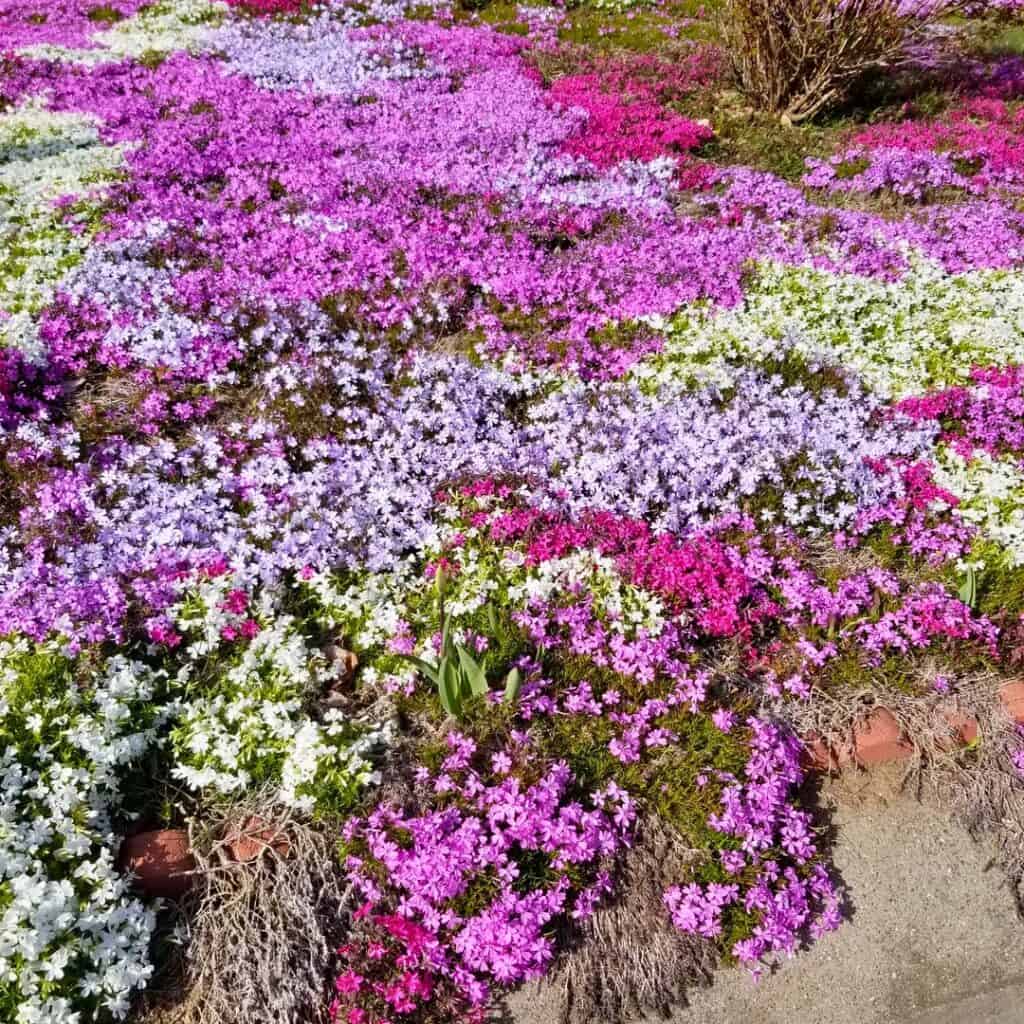
I really like how Creeping Phlox spreads out like a soft, colorful carpet. It forms low mats that stay green most of the year.
Come spring, it explodes with blooms in shades of pink, purple, white, or blue. I plant it along edges, paths, or on slopes where it can just flow and do its thing.
It helps prevent soil erosion and brings color to sunny spots. This plant loves well-drained soil and needs full sun for the best show.
Once it’s established, it’s pretty hands-off. It resists drought and bounces back fast after dry spells.
I give it a light trim after flowering to keep it neat and encourage thicker growth. Bees and butterflies seem to flock to the blooms on warm days, which is always fun to watch.
Even when it’s not blooming, the evergreen foliage keeps things looking fresh. It pairs well with spring bulbs or small shrubs for a nice contrast in texture and color.
Honestly, it’s one of the easiest ways to fill in bare garden spaces without a lot of fuss.
13) Dymondia Margaretae

I love how Dymondia margaretae, or silver carpet, spreads into a soft, low mat that covers up bare soil. The leaves are narrow, gray-green on top, and silvery underneath.
When the wind blows, you get this subtle shimmer that’s kind of mesmerizing. This plant only grows a few inches tall, so it’s perfect between pavers or along paths.
I use it where I want greenery but don’t want to mow or trim all the time. It handles light foot traffic and stays tidy year-round.
Dymondia needs full sun to really thrive, and it forms a dense cover that keeps weeds out. In very hot spots, it can take a bit of light shade.
I always make sure the soil drains well—soggy roots are a no-go. Once it’s established, it barely needs water, even during long dry spells.
That makes it perfect for low-water gardens or coastal yards. I water it lightly now and then, just enough to keep it looking fresh.
In summer, tiny yellow daisy-like flowers pop up close to the leaves. They’re small but cheerful, and bees seem to find them right away.
When I want a clean, simple groundcover that looks good with stones or succulents, I go for Dymondia margaretae. It gives the garden a neat, modern look with almost no effort.
14) Epimedium

I love Epimedium, or barrenwort (some people call it fairy wings), because it brings a gentle charm to shady garden spots. This hardy perennial keeps its leaves all year, which makes it a solid evergreen groundcover.
The heart-shaped leaves often turn red or bronze in fall, adding a soft splash of color when most things are fading. I find Epimedium thrives in partial to full shade, but it’ll take a bit of morning sun too.
It likes well-drained soil and a little moisture, but once it’s settled, it can handle dry spots under trees. Not many plants can do that.
In spring, the small flowers appear—white, yellow, pink, or purple—floating above the leaves on thin stems. The blooms aren’t big, but their delicate shape gives the plant a graceful look.
I plant Epimedium as a border along paths or beneath shrubs. It spreads slowly by rhizomes, forming neat clusters without taking over.
Deer and rabbits usually leave it alone, which is a relief. To keep it looking fresh, I trim the old leaves in late winter before new growth appears.
That one step lets me enjoy the bright new foliage and flowers in early spring. With minimal care, Epimedium stays attractive all year, and honestly, it’s one of my favorite shade plants.
15) Sedum Spurium (Dragon’s Blood)

I love planting Sedum Spurium, or Dragon’s Blood, because it brings color and texture to the garden all year. This tough groundcover forms a dense mat of small, rounded leaves that turn green in spring and reddish-purple in fall.
The changing color keeps things interesting through every season. In summer, it puts out clusters of tiny pinkish-red flowers that attract bees and butterflies.
They brighten up walkways, rock gardens, and borders without much fuss. The blooms are small but really pop against the dark foliage.
This plant loves full sun and isn’t picky about soil—it’ll thrive in poor, dry ground. I like how it spreads quickly but doesn’t get out of hand.
Once it’s established, I barely need to water it, except during long dry spells. Dragon’s Blood is great for slopes, sunny edges, or containers.
It even handles a bit of foot traffic, so it works well between stepping stones. The low, trailing habit gives everything a tidy, finished look.
To keep it neat, I trim back faded growth after flowering. Propagating is a breeze—just press a small piece into the soil, and it usually roots in a few weeks.
That makes it budget-friendly for covering bigger areas. What I appreciate most is how tough it is.
Sedum Spurium stays evergreen in mild winters and bounces back quickly from frost. Its simple care routine fits right in if you’re short on time.
16) Thymus Serpyllum (Wild Thyme)

I love using Wild Thyme as a groundcover because it’s so low-maintenance and spreads fast. It stays green all year, forming a soft carpet of tiny leaves that give off a light herbal scent when you brush past.
It thrives on sunny slopes and rocky spots, adding color and texture where grass just won’t grow. In summer, Wild Thyme blooms with small pink or purple flowers that bees and butterflies can’t resist.
The flowers sit just above the leaves, giving everything a gentle, colorful look. I like mixing it with other low-growing plants or tucking it between stepping stones.
It prefers well-drained soil and doesn’t need much water once it’s settled in. I rarely have to trim it, and it still looks full and tidy.
If you’ve got heavy clay soil, it helps to add some sand or grit so the roots don’t stay too wet. Wild Thyme isn’t just pretty—it’s tough.
It can handle light foot traffic and keeps its color even in winter. I like that it works in both full sun and partial shade, so it fits almost anywhere.
For a natural, easy-care groundcover with a light fragrance and soft texture, I always go for Thymus serpyllum. It creates a relaxed vibe in the garden without needing much attention.
17) Bergenia Cordifolia

I’ve always loved how Bergenia cordifolia—sometimes called Heartleaf Bergenia or Pigsqueak—brings bold color and texture to my garden. The thick, glossy leaves hang on through most of the year, even when the weather turns cold.
When spring rolls in, clusters of pink or purple flowers pop up above the foliage and brighten everything. It’s a cheerful surprise after winter’s gloom.
This plant is pretty flexible about where it grows. Sun or partial shade—it doesn’t seem to mind much, which is a relief. I usually tuck it under trees or along paths where I want a reliable, low-maintenance groundcover.
The foliage spreads out slowly, forming a dense mat that’s great for keeping weeds down and helping the soil hold onto moisture. That’s always a win in my book.
I admire how tough Bergenia is. It’s not fussy about soil, as long as it drains well. I water it during dry spells, but once it’s settled in, it’s mostly hands-off.
In fall, the leaves often turn shades of red and bronze, which adds a nice seasonal twist. It’s one of those plants that keeps giving.
I like pairing Bergenia with ferns or hostas for a bit of contrast. The shiny leaves really stand out next to finer textures, and the flowers attract pollinators like bees.
In smaller gardens, it works as a border or accent. In bigger spaces, it forms a lush groundcover that stays tidy pretty much all year.
If you’re after a hardy evergreen that can handle both sun and shade, Bergenia cordifolia is a solid pick. It adds color, structure, and year-round interest without asking for much in return.
18) Mondo Grass (Ophiopogon japonicus)

There’s something about Mondo Grass that makes it a go-to for me. It keeps that steady green color, whether it’s in sun or shade.
It grows slowly and stays low, so it’s perfect for borders or edging along paths. I like to use it in those awkward spots where other plants just don’t do well.
The narrow, dark green leaves form tidy clumps, giving beds or lawns a neat look. In summer, you get these small lavender-white flowers, and then shiny black berries that add a little surprise.
Even after the flowers are gone, the foliage keeps things looking lively. That’s a big plus.
Mondo Grass is easy to maintain, which I appreciate. It only needs the occasional trim and handles drought once it’s established.
I just give it a light watering and feed it once a year with some balanced fertilizer to keep it happy. Can’t get much simpler.
It does best in well-drained soil and isn’t picky about light—full sun, deep shade, somewhere in between, it’s all good. I like planting it under trees or near walkways where regular grass won’t make it.
It also fits nicely between stepping stones since it stays short and doesn’t spread too wildly.
Whenever I need a dependable evergreen groundcover, Mondo Grass never lets me down. It blends in well with ferns, hostas, and other shade-loving plants.
The way it stays green all year really makes a garden feel cared for, even in the cold months.
19) Waldsteinia Fragaroides

I’m a fan of Waldsteinia fragarioides, or barren strawberry. It just looks cheerful and is ridiculously easy to care for.
It stays low to the ground and spreads slowly, so it’s a great choice for covering bare soil or filling in between stones.
The bright green leaves look good almost all year. Come spring, you get small yellow flowers that remind me of strawberry blooms.
They add a pop of color without any fuss. That’s always welcome.
I’ve noticed it prefers partial shade, though it can take some sun if the soil stays moist. Once it’s settled in, it’s tough and can handle a range of soil types, as long as they drain.
What I like most is how low-maintenance it is. I barely have to trim or water it after the first season.
It also resists deer and rabbits, so I don’t have to worry about chewed-up leaves.
Since it doesn’t spread too aggressively, I use it around borders, walkways, and under trees where grass just doesn’t work.
It gives a neat, finished look without taking over. If I’m looking for steady coverage, I plant a few about a foot apart.
Over time, they form a soft, natural carpet that brings a quiet charm to the shady corners of my yard.
20) Brunnera Macrophylla

Brunnera macrophylla, or Siberian bugloss, is one of my favorite ways to brighten up shady spots. The large, heart-shaped leaves have this soft texture that makes them stand out.
The foliage often comes with silver or white markings, which reflect light and look amazing. In spring, it sends up tiny blue flowers that remind me of forget-me-nots.
The clusters last several weeks, adding color when most other shade plants are just starting to wake up. The flowers may be small, but they’re definitely noticeable against those silvery leaves.
It does best in partial to full shade and likes moist, well-drained soil. I try to water it regularly during dry spells, but it can get by if I miss a day or two.
A layer of mulch keeps the soil cool and damp, which it seems to appreciate.
I like using Brunnera along borders or under trees since it forms a dense mat that blocks weeds.
It stays attractive from spring to fall, and the leaves usually last until frost. I find it works especially well near ferns or hostas—textures and colors just play nicely together.
There are a few varieties worth checking out. ‘Jack Frost’ and ‘Looking Glass’ have bold silver markings, while ‘Hadspen Cream’ is more about green leaves with pale edges.
Each one brings soft color to shaded areas without much effort.
I appreciate how low-maintenance Brunnera is. I just remove old leaves at the end of the season and divide the clumps every few years.
It’s a simple routine that keeps the plant healthy and full.
21) Carex Muskingumensis (Palm Sedge)

I’ve got a soft spot for Carex muskingumensis, or Palm Sedge. It gives the garden a tropical vibe without any of the usual fuss.
The upright stems and narrow green leaves fan out, making it look a bit like a tiny palm. It grows to about 2 feet tall and forms neat clumps over time.
I plant it in moist soil since it loves damp areas near ponds or spots that stay wet after rain. It can handle a bit of dryness once it’s established, but I still water during long dry spells.
It prefers partial shade, though it’ll take full sun if the soil stays moist.
What I really enjoy is how tough and adaptable it is. It comes back every year and stays green for most of the seasons.
I use it to fill shady borders, line paths, or cover ground under trees. Its soft texture pairs nicely with hostas, ferns, and native grasses.
In early spring, I trim off the old leaves to make way for new growth. It doesn’t need much fertilizer, but I add compost once a year to keep the soil healthy.
Since it spreads slowly, I don’t have to worry about it taking over.
When I want an easy plant that keeps things looking fresh and natural, I reach for Palm Sedge. It’s low-maintenance, reliable, and adds a calm green accent wherever I put it.
Design Tips for Planting Groundcovers
When I’m planting groundcovers, I focus on visual balance and healthy growth. Color, texture, and plant arrangement all play a part in creating a tidy, low-maintenance design that feels finished all year.
Combining Colors and Textures
I like to mix plants with different leaf shapes and shades of green for depth. Pairing creeping thyme (fine leaves) with ajuga (broad, glossy leaves) makes a natural contrast.
Color helps highlight paths or edges—lighter plants near darker ones make things pop. Here’s a quick chart I use:
| Leaf Color | Best Pairing | Example Combo |
|---|---|---|
| Deep green | Silver-gray | Pachysandra + Lamb’s Ear |
| Gold-green | Blue-green | Golden Creeping Jenny + Blue Fescue |
| Variegated | Solid green | Euonymus + Vinca minor |
I try to keep it to two or three main tones so it doesn’t get too busy. Too many colors can just look messy.
Texture contrast works the same way—smooth, glossy leaves next to fine, matte ones for a nice balance.
Spacing and Layering for Maximum Coverage
I plan spacing based on how fast plants spread. Fast growers like creeping phlox fill in quick, so I plant them farther apart—maybe 12–18 inches. Slower ones like heuchera need to be closer to keep weeds out.
I use a layering approach, putting taller groundcovers behind lower ones for a sense of flow. On slopes, I put dense types at the top to help with erosion, and trailing plants below to soften the edge.
For less maintenance, I plant in odd-numbered groups—like 3, 5, or 7. It looks more natural and avoids that stiff, lined-up feel.
A bit of mulch between new plants helps keep moisture in and lets roots settle before they really start spreading.
Caring for Your Groundcover Plants
To keep my groundcovers happy, I pay attention to watering, feeding, and preventing damage from pests or disease. With regular care, they stay green, spread evenly, and keep the soil protected all year.
Watering and Fertilizing Advice
I water most groundcovers deeply once or twice a week, depending on the weather and soil. Sandy soil dries out faster, while clay holds on to moisture longer.
I usually check by touching the top two inches of soil—if it feels dry, it’s time to water. Morning is best so leaves dry quickly and there’s less risk of disease.
Young plants need more frequent watering while they settle in. Once they’re mature, a lot of evergreen groundcovers become drought-tolerant and don’t need much attention.
Mulch around the plants helps lock in moisture and keeps weeds down. For feeding, I stick to a balanced, slow-release fertilizer once in spring and again in midsummer.
Too much fertilizer can make plants grow fast but weak, so I go easy. I prefer organic compost or earthworm castings for a gentle boost. Here’s a quick summary:
| Season | Action | Details |
|---|---|---|
| Spring | Fertilize | Use balanced, slow-release feed |
| Summer | Water | 1–2 deep waterings per week |
| Fall | Mulch | Maintain 2-inch layer around plants |
Managing Pests and Diseases
I check my plants weekly for early signs of insects or disease. Aphids, slugs, and spider mites are the usual suspects.
If I spot damage, I remove affected leaves and rinse the plants with water. For bigger outbreaks, I use insecticidal soap or neem oil—they’re safer for pollinators.
Good airflow helps prevent fungal problems like mildew. I trim crowded plants and clear away fallen leaves so moisture doesn’t build up.
Proper spacing lets sunlight reach every part of the bed. If diseases show up, I avoid overhead watering, switch to drip irrigation if I can, and disinfect my tools after pruning.
Sticking to these steps keeps my groundcovers thick, clean, and healthy for the long haul.
Frequently Asked Questions
People often ask how to keep a garden looking green all year. I’ve found that the right evergreen groundcovers make it much easier to fill sunny and shady areas with color and texture.
Picking plants that fit your conditions means less work and better results.
What are some low-maintenance groundcover plants for full sun areas?
I’m a fan of Creeping Thyme—it handles heat and spreads quickly, plus it doesn’t need much water once it’s going.
Ajuga Reptans (Bugleweed) also grows fast and keeps weeds down in sunny spots.
Can you suggest evergreen plants that thrive in shaded garden spots?
Vinca Minor (Periwinkle) is always a favorite for my shady areas. It forms a neat carpet and has purple-blue flowers in spring.
I also use Hedera Helix (English Ivy) for those darker corners where almost nothing else wants to grow.
Which groundcover plants are best for adding year-round color to my garden?
Honestly, if you want color that sticks around, I’d go with a mix like Liriope Muscari (Lilyturf)—those green, strappy leaves are hard to beat, and the summer blooms are a nice touch. Pair that with Bugleweed; its deep, glossy foliage really pops, and together, they keep things looking lively, even when the seasons change.
How do I choose the right groundcover plants for my climate zone?
First, I always check my USDA Hardiness Zone—it’s just one of those things you can’t skip. After that, I hunt for plants that already thrive in similar temps and rainfall, since fighting nature rarely works out.
Local garden centers usually have a good sense of which evergreen varieties handle the region best. Sometimes I just ask the staff; they’re surprisingly helpful.
Are there drought-resistant evergreen groundcovers suitable for sunny gardens?
Absolutely. Creeping Thyme is a favorite of mine—stays green, smells great, and once it’s settled in, it barely flinches in dry spells.
Some Liriope varieties are also champs in the sun and don’t mind a bit of drought. I’ve found that mulching around them keeps the soil from drying out too fast, which is a nice bonus.
What are the best groundcover plants for creating a lush look in shady areas?
If you’re after that thick, soft vibe under your trees, I’d go for English Ivy blended with a bit of Periwinkle. They really spread out nicely and do a great job of hiding bare soil.
Both bring a calm, steady green that sticks around, no matter the season. Honestly, they make shady spots feel a little more alive.
Note: Some images in the articles are sourced from Reddit and Other Platforms For Reference Purpose.