21 Amazing Hanging Plants For Stunning Displays
I just love how hanging succulents and plants can transform an ordinary spot into something cheerful and alive. These plants hardly ask for much and look fantastic in baskets, on shelves, or just dangling by a sunny window.
If you’re hoping to add a bit of style and a touch of nature indoors, getting into hanging plants is honestly a great place to begin.
In this article, I’m sharing some of my favorite easy-to-grow trailing plants that really liven up a room. You’ll find simple care tips and creative display ideas too—nothing complicated, just what’s worked for me.
Please note: Simplify Plants is reader-supported. As an Amazon Associate, I earn from qualifying purchases made by our readers with no extra cost added to you all! Some links in the post are affiliate links and I get a commission from purchases made through links in the post.
1) String of Pearls (Senecio Rowleyanus)
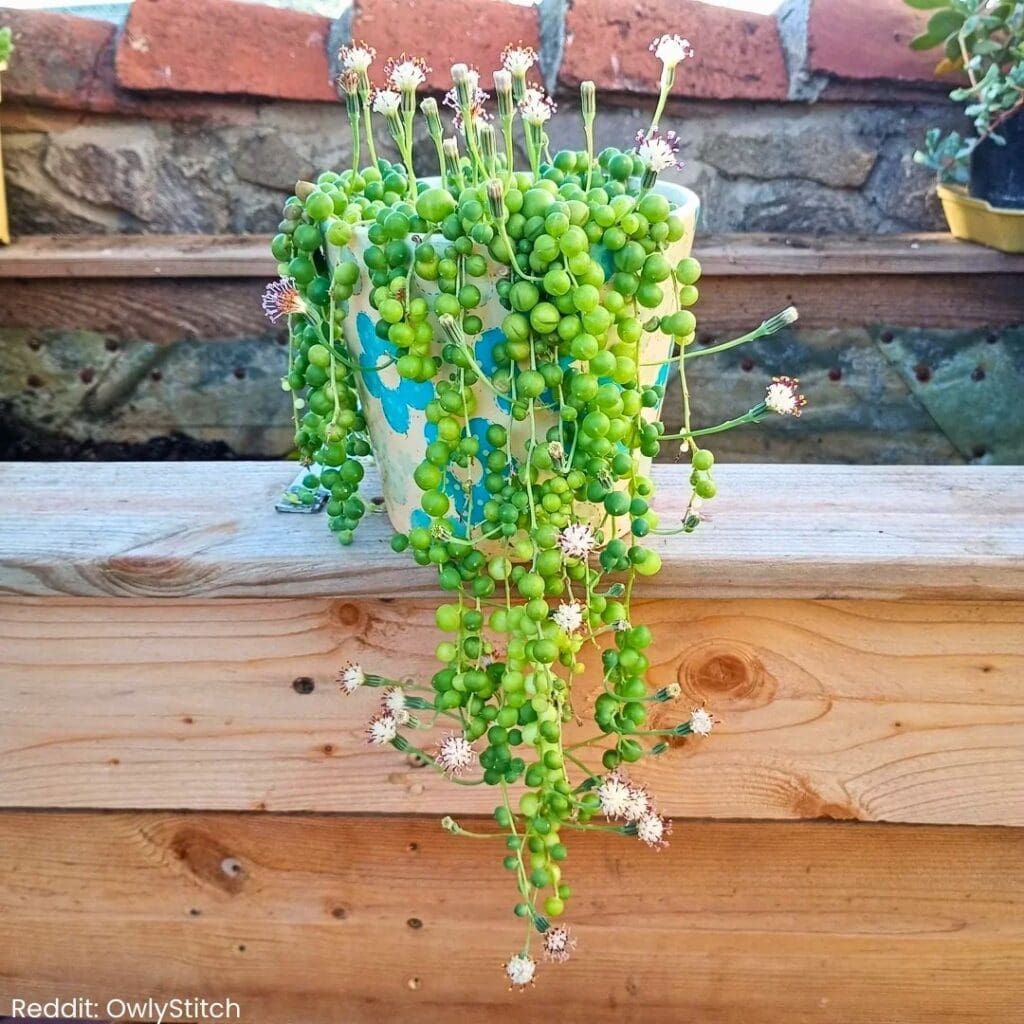
The String of Pearls is such a showstopper. Its little round leaves look like a string of green beads tumbling out of the pot.
I love hanging mine near a window—the light catches those “pearls” and they almost glow. It’s kind of mesmerizing.
This plant is happiest in bright, indirect sunlight. I usually keep it by an east- or south-facing window, so it gets enough light but doesn’t scorch.
If it doesn’t get enough light, the stems get leggy and lose their charm. I learned that the hard way, honestly.
I always use well-draining soil—soggy roots are a quick way to lose this plant. I only water when the top inch of soil is dry.
Overwatering was my downfall at first, so now I’m extra cautious. When it’s thriving, String of Pearls will send out tiny white flowers that smell a little like cinnamon.
The flowers are small, but they’re a sweet sign my plant is happy. I usually keep mine in a hanging planter or on a high shelf so the strands can cascade.
Simple pots work best for me—I like to let those vines be the main event. If the stems get wild, I snip them and propagate the cuttings.
It’s honestly so satisfying to grow new plants or give a piece to a friend. Every new strand feels like a little win.
2) Burro’s Tail (Sedum Morganianum)

Burro’s Tail is just adorable. The long, trailing stems with plump, blue-green leaves are so eye-catching and soft-looking.
When it hangs from a pot or shelf, the vines have this gentle, cascading vibe that feels effortless. It’s soothing to look at, honestly.
This succulent prefers bright, indirect light. I keep mine near a sunny window, but out of harsh direct sun, since that can scorch the leaves.
Well-draining soil is a must. I always let the soil dry out between waterings—if you overdo it, the roots won’t thank you.
One thing to watch out for: the leaves are super delicate. If you bump or move the plant too much, they’ll fall off.
I try to water from the bottom and handle it as little as possible. Sometimes, the fallen leaves sprout into new plants if you set them on soil—which is a nice surprise.
Given the right care, Burro’s Tail can trail 2 to 3 feet long. The thick, trailing stems look fantastic in hanging baskets or tall planters.
If you’re lucky, you’ll get small pink or red flowers. They aren’t flashy, but they add a gentle pop of color.
Personally, I think Burro’s Tail is perfect for anyone who wants a low-maintenance succulent with a bit of character. It’s happy being left alone most of the time.
For me, it’s one of the easiest ways to add a calming, green accent without much fuss.
3) String of Hearts (Ceropegia Woodii)

The String of Hearts is so delicate and charming. Its thin vines can stretch several feet, trailing a curtain of tiny, heart-shaped leaves.
Those leaves have a lovely soft green shade with silvery patterns that really pop in good light. It’s a subtle beauty, but people always notice it.
It’s honestly a breeze to care for, which is great if you’re new to plants. I keep mine in bright, indirect sunlight by a window, and it grows quickly.
If it gets too long, I just trim the vines and root the cuttings for new plants. Win-win, right?
I only water when the soil feels dry. Too much water is a no-go—the roots will rot.
A light, well-draining succulent mix is best. I also make sure the pot has drainage holes so nothing sits soggy.
Fertilizer isn’t a big deal for this plant. I’ll feed it once a month during spring and summer, using a diluted succulent fertilizer.
During the cooler months, I just let it rest and skip the feeding. It’s pretty forgiving.
String of Hearts does well indoors, but also enjoys warm, sheltered spots outside. The vines grow fast and look great on shelves, in hanging baskets, or even wall planters.
The leaves are thin, so I try to be gentle when moving it. People always ask about it—it’s got a unique look that stands out, but not in a flashy way.
Honestly, it’s one of my favorites—easy care, graceful style, and just a hint of whimsy.
4) Fishbone Cactus (Epiphyllum Anguliger)

The Fishbone Cactus is such a fun plant. Its zigzag, wavy stems dangle and twist, making it a real conversation starter.
Some folks call it the Ric Rac Cactus because of those cool, jagged edges. It’s got a relaxed, tropical vibe that looks fantastic in a hanging basket.
This plant hails from Mexico’s rainforests, where it grows on trees and soaks up filtered light. It doesn’t need direct sun, which means it’s right at home in a bright indoor spot.
I usually set mine near a window with gentle light all day. The Fishbone Cactus likes humidity and well-draining soil.
I water only when the topsoil is dry, just to make sure the roots never sit in water. Too much moisture and the stems get mushy—not ideal.
If you’re lucky, you might get fragrant white or yellow flowers that bloom at night. They don’t last long, but they’re really something.
Even when it’s not flowering, the plant’s unusual shape always grabs attention. Propagating is easy—just cut a section of stem, let it callous, and plant it.
It roots quickly, so you can share with friends or fill out your own display. I trim the longer stems now and then to keep things tidy.
The Fishbone Cactus gives my space a lush, modern look with almost zero effort. I think it’s one of those plants you just have to see in person to appreciate.
5) Donkey Tail Succulent

The Donkey Tail succulent is just plain fun. Its long, trailing stems look like ropes covered in soft, plump leaves—almost cartoonish in the best way.
The pale green color is calming and bright at the same time, which I really like. It keeps my space looking fresh all year.
This one prefers bright but indirect sunlight. I keep mine by a sunny window for a few hours a day, but if it starts to drop leaves, I’ll move it somewhere less intense.
I only water when the soil is totally dry. These guys hate wet feet, so I use a pot with drainage holes and a coarse, gritty soil.
When the stems get long, they look amazing in hanging baskets. The trailing effect is soft and dramatic at the same time.
During the warmer months, I’ll hang it outside, but bring it in when it gets chilly. The Donkey Tail succulent grows slowly, which is perfect for someone who doesn’t want to fuss too much.
If a leaf breaks off, I’ll just pop it on some dry soil in a bright spot—most of the time, it’ll root and start a new plant. Propagating is half the fun, honestly.
It totally fits my low-maintenance style and always gets a comment or two from guests.
6) Lipstick Plant (Aeschynanthus Radicans)
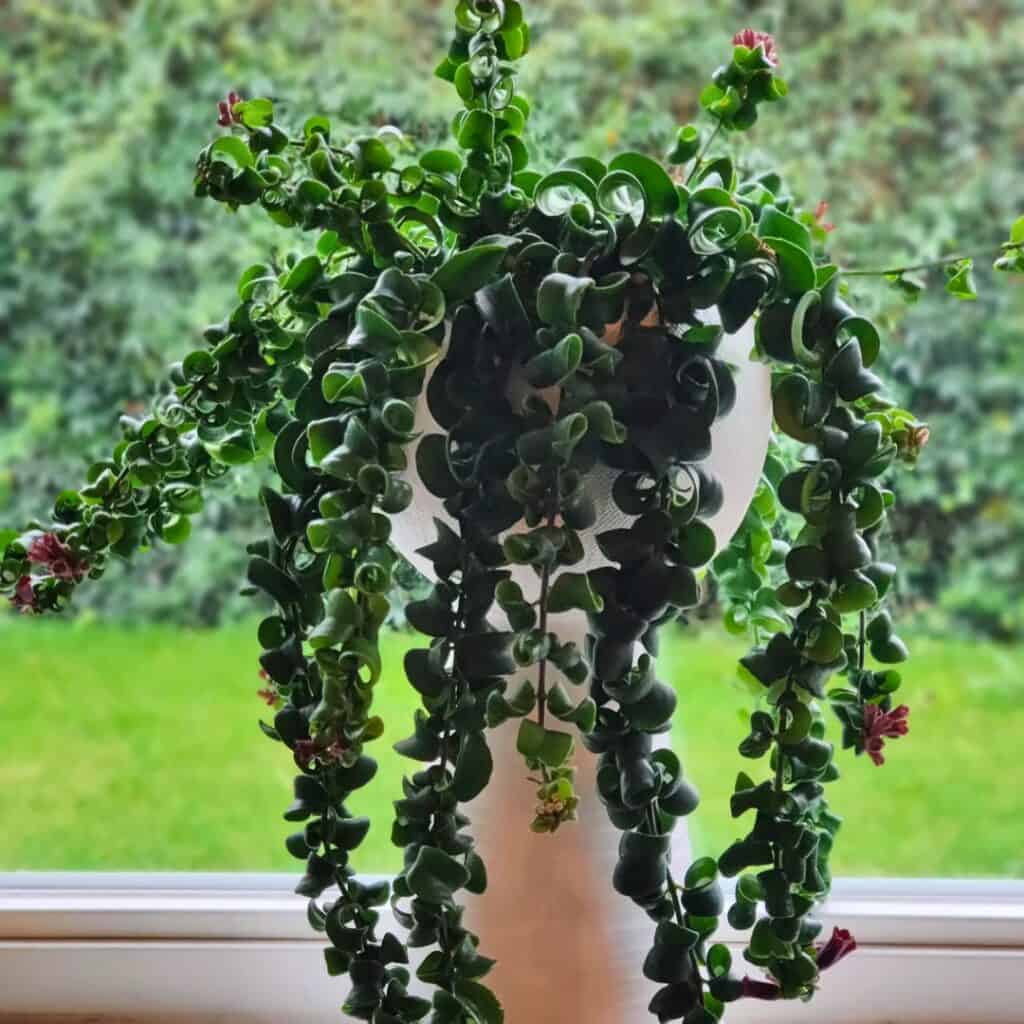
The Lipstick Plant is such a cheerful addition to any room. The bright red flowers look just like lipstick tubes poking out—how cute is that?
When it’s blooming, it’s hard not to smile at it. I hang mine in a basket near a window with bright, indirect light.
It really thrives there, sending out long, trailing stems with shiny green leaves. Too much direct sun can scorch it, so I stick to filtered light.
I like to keep the soil lightly moist, watering when the top inch is dry. Good drainage is key, so I never let it sit in water.
If the air gets dry, I’ll mist it every now and then—seems to keep the leaves happy. This plant is surprisingly easygoing.
Regular feeding during the growing season helps; I use a balanced liquid fertilizer every few weeks. The reward? Loads of blooms.
I let the vines trail naturally from their basket. The look is soft and flowing, and those vivid red flowers really pop next to my other hanging succulents.
7) Hoya Pubicalyx

Hoya Pubicalyx is one of those plants that just feels classy. The long, trailing vines are covered in shiny green leaves with silvery flecks—so elegant, even when it’s not in bloom.
When it does flower, you get clusters of star-shaped blossoms that smell sweet and look delicate. The blooms last for days, which is always a nice bonus.
Depending on the light and age, the flowers range from pink to reddish-purple. It’s a subtle but lovely touch.
This plant likes bright, indirect sunlight best. I keep it near a window where it gets plenty of light, but not too much heat.
It prefers to dry out a bit between waterings, which is perfect if you sometimes forget a day or two. The leaves are waxy and hold moisture well.
I use well-draining soil and always pick a pot with drainage holes—root rot is not my friend. It’s a low-maintenance plant that still manages to look lush.
If the vines get too long, I’ll prune them to keep things neat. For fuller growth, I take cuttings and root them in water—they’re quick to root and make great gifts.
All in all, Hoya Pubicalyx is a simple, rewarding choice for hanging baskets. It’s beautiful, easygoing, and fits right in with my laid-back plant care style.
8) Snow White Senecio
There’s just something about the Snow White Senecio that gives any plant display a soft, silvery vibe. Its trailing stems, covered in fuzzy white leaves, almost look frosted and really pop next to anything green. I find the texture especially lovely for hanging baskets.
Honestly, this succulent is pretty low-maintenance. I keep it in a bright spot, but not in direct sun—those leaves can scorch way too easily, so filtered light is best.
When I water, I always wait until the soil feels bone dry. It hates sitting in moisture, and overwatering is a sure way to get root rot. Well-draining soil is a must for this one.
I like how flexible it is for display. Whether I toss it in a hanging planter, wall pot, or just let it spill off a shelf, those pale leaves give a clean, modern feel that works with almost any décor.
Sometimes I snip the longer vines to tidy it up and encourage it to grow thicker. The cuttings root so easily that I end up with new plants to share with friends—a nice bonus if you’re into gifting.
What really makes Snow White Senecio stand out for me is its calm, elegant energy. It looks amazing paired with darker succulents or green trailing plants, adding a gentle contrast that feels fresh and balanced.
9) Rabbit’s Foot Fern
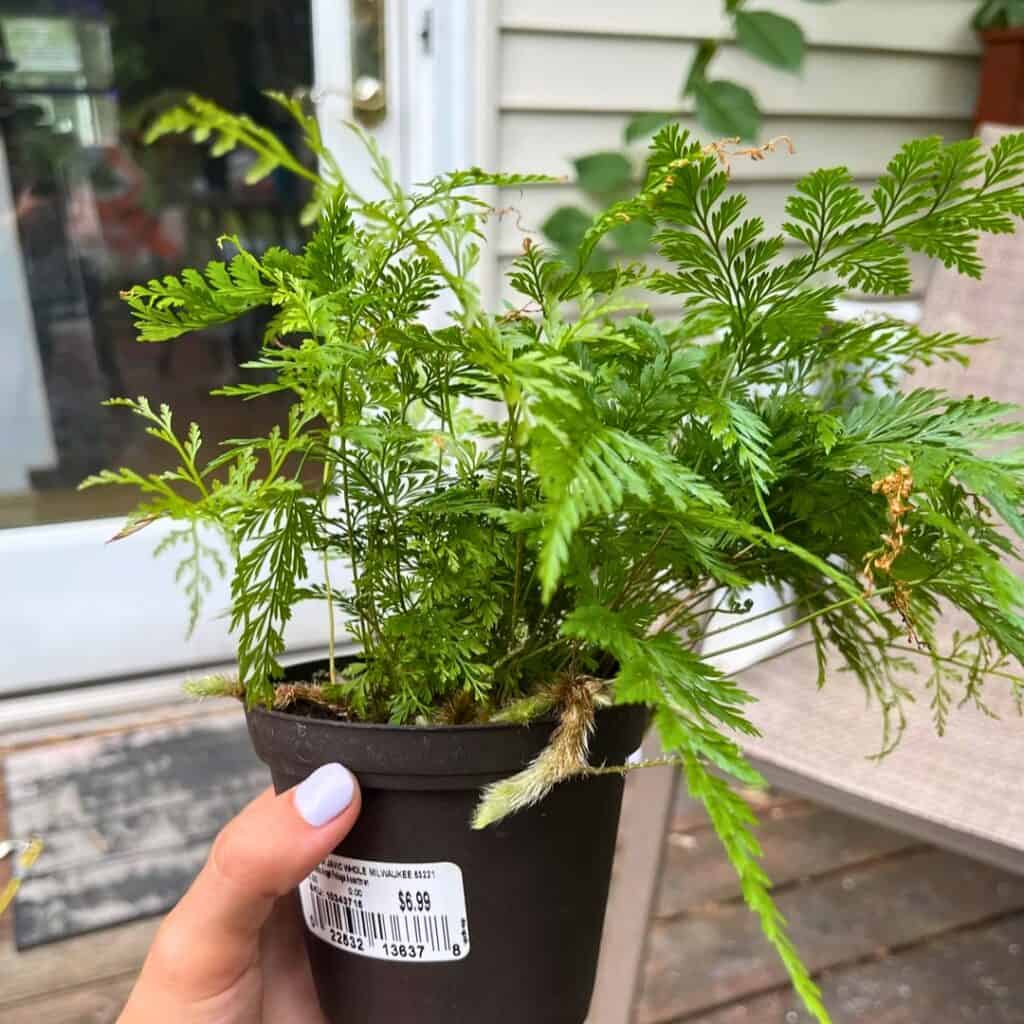
I’m a big fan of the Rabbit’s Foot Fern for its quirky texture and charm. The fuzzy rhizomes spilling over the pot’s edge honestly do look like little rabbit feet, and they always get comments from guests.
This fern likes bright, indirect light. I keep mine near a window but out of direct sun—those leaves burn fast if you’re not careful. It likes its soil moist but not wet, so I check the top inch before watering.
The delicate, lacy fronds give it a light, airy feel. When the air is humid, the fronds seem to perk up, so I mist it often or use a small humidifier nearby.
Compared to other ferns, I think Rabbit’s Foot is surprisingly easy to care for. It doesn’t drop as many leaves and bounces back from stress pretty well. I try not to touch those fuzzy roots much, though—they’re fragile and can break off if you’re rough.
For hanging, I love using a shallow basket or a wire planter so those furry roots can show off. The cascading effect is a real conversation starter, and that fresh green color always catches the eye.
10) Rat Tail Cactus (Aporocactus Flagelliformis)
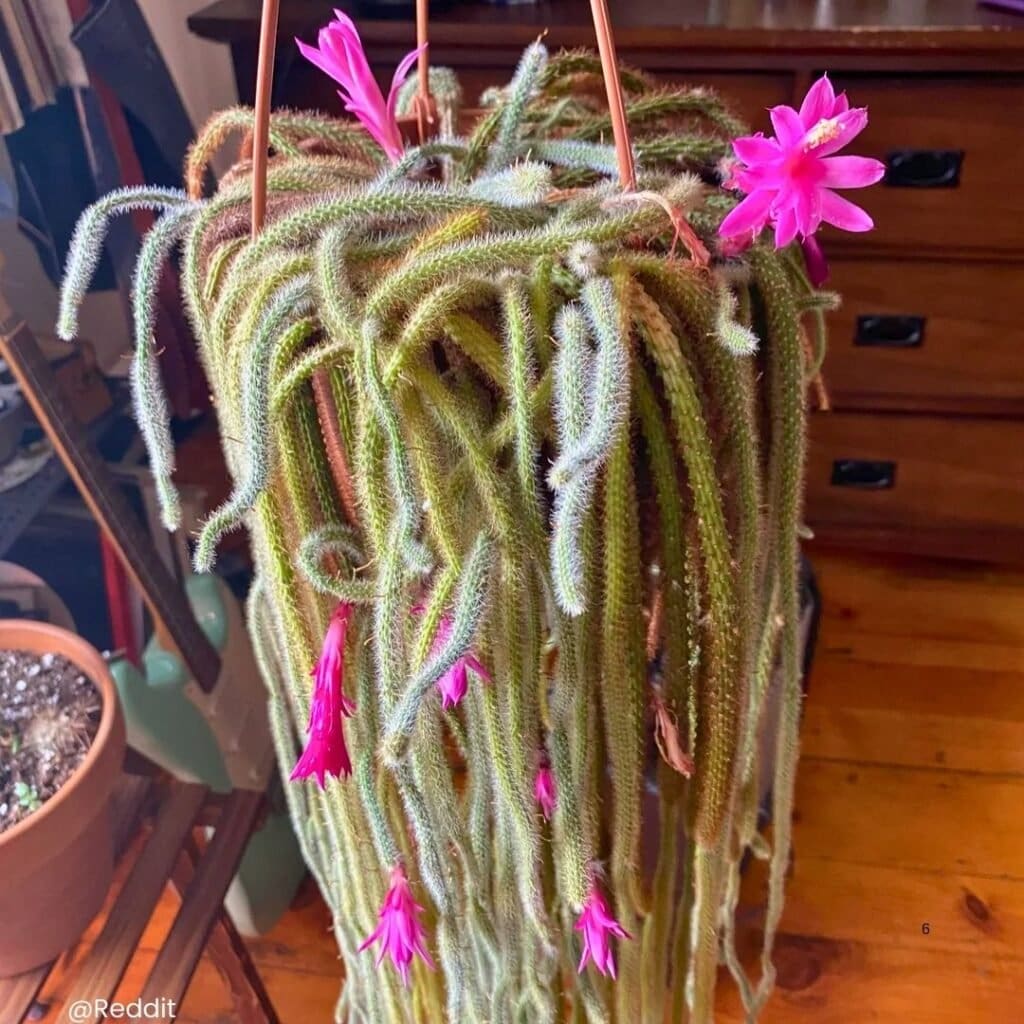
The Rat Tail Cactus is one of my favorites for dramatic, trailing stems. The long, soft, spiny vines can reach several feet, and they look fantastic spilling from a basket.
This cactus is native to Mexico’s dry forests, so it loves warm, dry conditions. I keep mine in bright, indirect light, but it can handle some direct sun too. Fast-draining soil is crucial—root rot can sneak up on you if the soil stays wet.
Come spring, I get these bright pink or magenta flowers popping up along the stems. They don’t last long, but wow, they’re vivid and show up often enough to keep things interesting. Hummingbirds seem to love them, so that’s a nice bonus if you put it outdoors.
I water it sparingly, letting the soil dry out completely in between. In winter, I barely water at all. Overwatering is the fastest way to ruin this plant, so I’m careful.
When it’s happy, the Rat Tail Cactus grows fast. I’ll trim and propagate cuttings now and then—just stick them in dry soil and they usually root without much fuss. It’s a fun way to fill more baskets or share with friends.
Lightweight pots are best so the stems can really hang. I like putting mine up high on a shelf or balcony so it can drape down naturally. It’s such a unique shape and texture—definitely not your average houseplant.
11) Elephant Bush (Portulacaria Afra)

The Elephant Bush always brings a lively, tidy look to my hanging displays. Its small, round, glossy leaves on reddish stems spill over the pot’s edge and just look so fresh. There’s something about the structured shape that feels modern, whether indoors or outside.
It’s a forgiving succulent, too. If I forget to water for a bit, it’s fine—it stores moisture in those thick leaves. I always let the soil dry out before watering again since it really doesn’t like damp feet.
Bright, indirect sun keeps it looking lush. Sometimes the stems get a pinkish hue if it’s in a sunny spot, which I think is a cool bonus. Too little light, though, and it gets leggy, so I keep it somewhere bright.
This plant grows faster than you might expect. It can trail several feet, making it great for hanging baskets or tall planters. I trim it when it gets unruly and use the cuttings to start new plants. They root fast in well-draining soil.
It likes warm, dry conditions best. I bring mine inside if it drops below 50°F, but outside on the balcony, it goes wild in the summer. Plus, it’s supposed to help with air quality, which is a nice perk.
For me, Elephant Bush is a low-stress, rewarding plant. It grows gracefully and adds a calm, natural vibe to any space—without asking for much in return.
12) Golden Pothos

I’ve got a soft spot for Golden Pothos. It’s probably one of the easiest hanging plants out there. The heart-shaped leaves with their green and yellow mix always brighten up a room, even if there isn’t much sunlight.
I usually hang mine near a window with indirect light. The vines grow fast and can get impressively long, which makes it perfect for creating a lush display. When things get too wild, I just trim the vines and root the cuttings in water for more plants.
It’s not fussy about water, which is great if you’re busy. I wait until the top of the soil is dry before watering. Overwatering can cause root rot, so I’m careful not to overdo it.
Golden Pothos is also known for helping to freshen the air. That’s partly why I keep a few around. With its fast growth and easy care, I get the greenery I want without much work.
If you want to add some color and movement to a bland spot, this one’s a safe bet. Hang it high and let the leaves cascade down—it just looks effortless and natural. No matter where you put it—bedroom, office, patio—it somehow just fits.
13) Asparagus Fern

The Asparagus Fern is one of those plants that instantly softens up a space. The thin, feathery leaves create a gentle, cascading look that feels fresh and green. Funny enough, it’s not a true fern—it’s actually in the lily family.
It grows fast and fills out a basket in no time. I hang mine where it gets bright, indirect sunlight, and it’s pretty happy with just a little care. I water when the top inch of soil dries out, and if the air feels dry, I give it a quick mist.
The fine stems can get long, giving a dramatic trailing effect. If it starts looking messy, I’ll trim the ends—it always bounces back and gets fuller. Feeding it during the growing season keeps the foliage a nice, vibrant green.
I like that it adapts easily if I want to move it around. It looks great inside or on a shaded patio. The delicate look hides a surprisingly tough plant, so it’s perfect if you’re just starting out and want a hanging plant that’s easy to keep looking good.
14) Bird’s Nest Fern

The Bird’s Nest Fern is one of those plants that always stands out. Its wide, wavy leaves grow in a rosette, and the bright green color gives any spot a clean, tropical vibe. It’s not technically a succulent, but it pairs up nicely with them in mixed displays.
It likes indirect light and a bit of humidity. I keep mine away from harsh sun to avoid burned leaves, so a bright room with filtered light is perfect. When it’s happy, the fronds get long and full, creating a lush, soft look.
I water when the top inch of soil dries out, and I make sure the soil drains well to avoid root rot. A peat-based mix or orchid blend seems to work best for me.
It’s a pretty easy fern once you get the hang of its care. No real pruning needed—just remove old fronds as they fade. I always keep the central nest dry though, since water collecting there can cause problems for new growth.
I hang mine in a basket so the fronds can spill over the sides a bit. It adds a nice texture and helps brighten up shady corners. Grouped with other hanging succulents, it really helps create a calm, lively green vibe at home.
15) Pink Quill
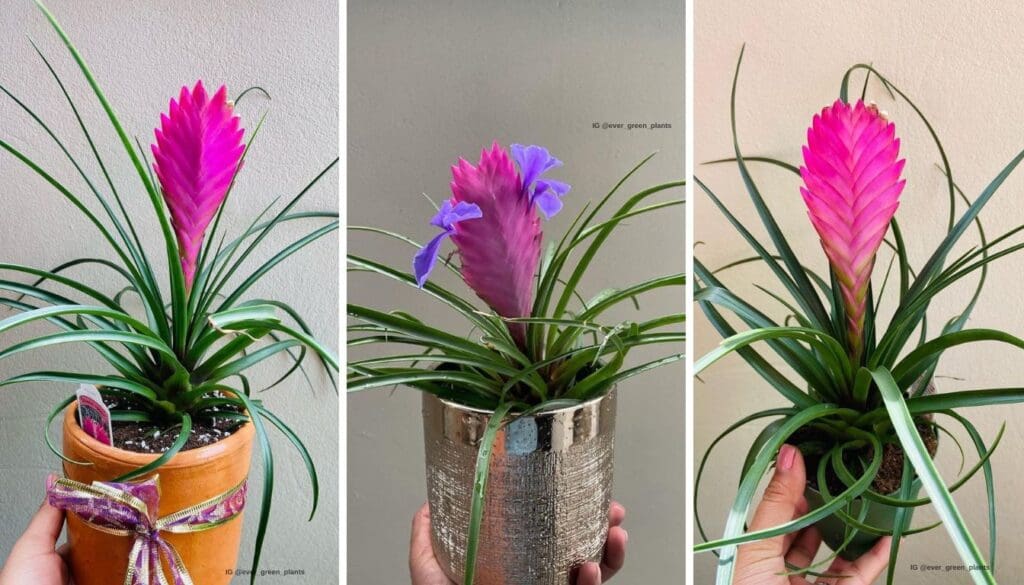
The Pink Quill is such a fun plant for adding a splash of color. The flat, fan-shaped bracts are a soft pink that stands out against the narrow green leaves. The blooms are tiny but vivid, sometimes purple or blue, and they really catch the eye.
Since it’s part of the bromeliad family, it doesn’t even need soil to grow. I like to pop mine in a hanging basket or mount it on some wood with a bit of moss. It’s compact, so it fits easily into smaller rooms or apartments.
I’ve noticed the Pink Quill likes bright, indirect light. Too much sun and the color fades, but too little and the bract isn’t as bright. I mist it a few times a week to keep the humidity up, otherwise the leaves can curl.
Watering is simple—I fill the center “cup” made by the leaves, let it soak briefly, then drain out any leftover water. That mimics how it collects rain in nature. I try to keep it slightly moist but never soggy to avoid root rot.
When the pink bract fades after flowering, new “pups” start growing at the base. I separate and replant these to make more hanging displays. Watching one plant multiply over time is honestly pretty satisfying.
For feeding, I only use a diluted bromeliad fertilizer every month or two. That keeps the foliage green and encourages more blooms. The low-maintenance routine makes it easy to recommend, especially for beginners.
Hanging near a window or grouped with other succulents, the Pink Quill always draws attention. Its unique shape and color add a cheerful, modern touch to any room.
16) Aeonium Sunset

I can’t get enough of how Aeonium Sunset lights up my plant shelf. The rosettes glow in these wild shades of yellow, green, and pink—it’s honestly one of the happiest succulents I’ve ever had.
When the sunlight hits just right, those colors pop even more. This plant grows on sturdy stems that love to spill over the edge of a pot or basket.
I always put mine somewhere with plenty of bright sunlight so the colors get deeper and richer. If it sits in too much shade, the leaves turn mostly green, which feels like a waste of its potential, so I try to keep it near a sunny window or outdoors in soft light.
Aeonium Sunset prefers mild temperatures and isn’t a fan of frost. When it gets cold, I bring it inside to keep it cozy.
I only water when the soil feels dry—soggy roots are a no-go for this one, just like most succulents. I’ve found it really thrives in well-draining soil with sand or perlite mixed in, which keeps water moving and rot away.
A container with drainage holes is a must so the extra water can escape. When it starts getting too tall or leggy, I snip the stems to shape it or start new cuttings.
The cuttings root quickly in dry soil, so it’s super easy to grow more. I like giving them away to friends who love a splash of color.
Its rosette shape and sunset colors really make it pop in hanging displays. Whether it’s mixed with trailing greens or just left to shine on its own, it always adds a bright, cheerful vibe.
17) Peperomia Hope

There’s something about Peperomia Hope that just feels easygoing and charming. The little round leaves grow in pairs along the stems, giving it a tidy, graceful look.
The soft green color and thick leaves make it stand out from other indoor plants. I usually hang mine near a bright window where it gets gentle, indirect light—too much sun fades it, but too little slows it down.
It’s happiest in a spot with steady brightness but no harsh rays. This plant stores water in its leaves, so I let the soil dry before watering again.
Overwatering can cause root rot, so I try not to get carried away. A light, well-draining potting mix keeps the roots happy.
Peperomia Hope grows slowly, so it’s not going to take over your space. I like how it trails gently over the pot’s edge, giving off a relaxed, uncluttered vibe.
It’s great for shelves, hanging baskets, or even a small desk corner. The best part? Low-maintenance all the way.
It doesn’t need much pruning and stays compact even with minimal care. Just a bit of attention keeps it looking fresh year-round.
If you want something tidy and easygoing with a little personality, Peperomia Hope is a solid choice. It adds a soft touch without demanding much time—perfect for anyone with a busy schedule.
18) Fern Leaf Sedum
I’m a big fan of how Fern Leaf Sedum brings a soft, textured feel to my planters. The leaves look like tiny fern fronds, which gives it a delicate, almost whimsical charm.
When it spills over the edge of a pot, it creates a gentle curtain of green that’s just so satisfying to look at. This succulent grows pretty fast but stays compact, which makes it easy to handle.
It deals with heat well and can handle a dry spell or two. Bright light helps the leaves keep their rich green color, so I always hang mine where it’ll catch plenty of sun.
I water only when the soil feels dry—too much water is a quick way to run into root issues. Using a well-draining potting mix really helps it thrive.
What I like most is how flexible it is for design. You can mix it with other succulents for some texture, or let it stand out on its own.
When I trim back long stems, new growth pops up fast, keeping the plant looking full and neat. Even a small cutting roots easily, so it’s simple to propagate and share with friends.
Fern Leaf Sedum might look delicate, but it’s tougher than it seems. Its simple care and lovely shape make it a go-to for my hanging arrangements.
19) Black Knight Hoya

The Black Knight Hoya really grabs attention with its deep green, almost black leaves. They’re thick, glossy, and give off this elegant, slightly mysterious vibe.
It reflects light in such a cool way, too. This is a slow-growing trailing plant, ideal for hanging baskets or shelves where its vines can just spill over.
I like pairing it with lighter green or variegated succulents—the contrast is striking. The dark leaves make everything around them pop.
It’s honestly easy to care for, which is a relief. I let the soil dry between waterings and keep it in bright, indirect light.
Too much sun can scorch the leaves, but low light will slow it down. Finding the sweet spot gives you the best color and healthy vines.
When it’s happy, the Black Knight Hoya sometimes produces little clusters of star-shaped flowers. They have a soft fragrance, which is a nice surprise, but honestly, I’d grow it just for the foliage.
It doesn’t need much space and does fine in pots with good drainage. If I want it fuller, I trim and replant cuttings around the base—they root with barely any fuss.
For me, the Black Knight Hoya brings a calm, rich tone to my indoor garden. It fits in anywhere, whether it’s hanging by a sunny window or trailing from a high shelf.
It’s a low-fuss plant that rewards patience and a little care with timeless beauty.
20) Rhipsalis Cactus

The Rhipsalis cactus is just a fun one to have around. Its long, thin stems trail from a hanging pot, creating this soft, almost wild look.
It’s not like most cacti—it likes gentle light and a bit more moisture. I find it easy to care for because it doesn’t demand much.
I give it bright, indirect light and water when the top inch of soil feels dry. It grows best in a light, fast-draining potting mix.
Most people are surprised to learn Rhipsalis comes from tropical forests, not deserts. In the wild, it hangs from trees, which explains why it likes higher humidity and filtered light.
I love watching the stems grow and twist over time. They can get really long, giving my shelf or basket a relaxed, natural vibe.
The soft green color fits with almost any decor. Sometimes it even produces tiny white or pink berries—not flashy, but a sweet little detail.
For me, it’s perfect when I want a hanging succulent that’s both different and easygoing.
21) String of Nickels (Dischidia Nummularia)

The String of Nickels brings a gentle, natural feel to any spot. The small, round leaves grow along thin trailing stems, looking like a cascade of tiny coins.
It’s neat but also a little playful, so it works great in hanging baskets or wall planters. I think it’s pretty easy to care for since it likes bright, indirect light and doesn’t need constant watering.
I let the soil dry out a bit before watering again—soggy roots are a no-go. It does best in well-draining soil and a humid spot.
The compact size makes it perfect for small spaces. I usually hang it near a window where it gets gentle light but no harsh sun.
With time, the stems can really stretch out, creating a lush and layered look. I appreciate how low-maintenance it is—it keeps its shape without much pruning.
If I want it fuller, I just pinch back a few vines to encourage more growth. It also pairs nicely with other hanging succulents.
The round leaves look great next to longer, slender varieties, adding more texture to my collection. When the subtle silver-green color catches the light, the room just feels calmer.
I honestly think the String of Nickels is a smart pick for anyone who wants an easy, decorative plant that stands out without much fuss.
How to Care for Hanging Succulents
I try to keep my hanging succulents happy with bright sunlight, just enough water, and a light feeding schedule. These little routines help them grow strong and show off their best colors.
Light and Placement Tips
I put my hanging succulents near a bright window that gets indirect sunlight for at least four to six hours a day. Direct sun can burn their leaves, especially through glass, so I hang them a few feet away from harsh rays.
If I see pale or stretched leaves, I move the plant to a brighter spot. Good air circulation matters too—it helps keep moisture from building up and causing rot.
For outdoor displays, I pick partial sun spots, like patios or balconies with soft morning light. In colder months, I bring them inside since most don’t like frost.
Rotating the pot every week helps keep growth even and stops them from leaning too much.
Watering Guidelines
I stick with the “soak and dry” method. I water deeply until it drains out the bottom, then wait for the soil to dry completely before watering again.
Succulents store water in their leaves, so too much moisture just leads to root rot. I use the finger test—poke the soil about an inch deep. If it’s dry, it’s time to water; if not, I wait a few days.
Hanging pots dry out faster because of all the airflow, so I check them more often, especially in warmer rooms. I use pots with drainage holes and never mist the leaves, since that can leave marks or invite fungus.
In winter, I cut back on watering since the plants slow down.
Fertilizing Recommendations
I feed my hanging succulents every two to three months with a diluted, balanced liquid fertilizer. Heavy feeding isn’t needed—too much makes them grow soft and weak.
Before I fertilize, I water the soil a bit to keep from burning the roots. A half-strength mix is all they need.
During spring and summer, I’ll fertilize a little more often since that’s their growing season. In the cooler months, I skip it.
I avoid quick-release pellets because they dump too much at once. Light, steady feeding keeps my hanging succulents looking good.
Creative Display Ideas for Hanging Succulents and Plants
Hanging succulents and plants are my go-to for adding life and color to tight spaces. I like simple projects that look good, save space, and keep the plants healthy with enough light and air.
DIY Hanging Planter Projects
Making my own planters is half the fun. With a few easy supplies—macramé cord, recycled jars, or wire baskets—I can put together creative hanging planters.
I always use a lightweight pot with drainage holes to avoid overwatering, which is the quickest way to lose a succulent. Sometimes I add a layer of pebbles or activated charcoal at the bottom for extra drainage.
For a simple wall display, I’ll glue small terracotta pots onto a wooden board using strong adhesive hooks. It’s affordable and easy to move if I need to chase the sun.
Outdoors, I’m a fan of metal mesh baskets lined with coconut fiber. They let water drain but keep soil just moist enough for roots to soak it up. These are perfect for sunny patios or balconies.
Mixing and Matching Varieties
Honestly, mixing different types of succulents just makes everything pop a bit more. I love pairing trailing plants—like String of Pearls or Burro’s Tail—with upright ones such as Echeveria or Haworthia.
It gives the whole setup more dimension, you know? Height and texture together just feel right.
To keep things balanced, I always group plants that have similar light and water needs. Most hanging succulents are happiest in bright, indirect sunlight and only need water when the soil’s bone dry.
I like to play around with color and shape too. Mixing greens, purples, and those silvery tones can really make a planter stand out.
Trying out different pots—maybe something round, or a geometric shape, or even rustic clay—lets the arrangement fit in just about anywhere.
Frequently Asked Questions
Keeping my hanging succulents healthy isn’t too complicated. I make sure they get enough light, water them properly, and use the right soil.
Honestly, I have a lot of fun testing out new display ideas and figuring out easy ways to grow more plants from the ones I already have.
What are the best conditions to grow hanging succulents indoors?
I put mine near a bright window so they get plenty of indirect sunlight. They really like well-draining soil and a warm, dry environment.
Too much humidity? That just makes them look a bit sad and floppy.
How often should I water my hanging succulents?
I only water when the soil feels completely dry—no exceptions. Overwatering is the easiest way to mess things up, so I always check first.
In winter, I barely water at all since they just don’t grow as much.
Can hanging succulents survive in low light areas?
Most really do best with bright, indirect light. A few, like String of Hearts, can handle low light for a while, but honestly, they just look better with more sun.
What are some creative ways to display hanging succulents at home?
I’m a big fan of macramé hangers, wall shelves, or tiny glass planters. Sometimes I’ll pair my String of Pearls or Burro’s Tail with a bold, colorful pot—makes even the plainest room feel fresh.
How do I propagate hanging succulents for more displays?
I’ll snip off a healthy stem or leaf, let it dry out for a day or two, then plop it on top of slightly damp soil.
Roots usually show up in a few weeks. That’s pretty much how I’ve started most of my Donkey Tail plants.
What are common issues to look out for when caring for hanging succulents?
I keep an eye out for soft or mushy leaves—usually a sign I’ve gone overboard with watering.
If I notice pale colors or stems that are really stretching out, that’s my cue they’re craving more light.
Honestly, good airflow makes a big difference, and I’ll check for pests now and then just to be safe.
Note: Some images in the articles are sourced from Reddit and Other Platforms For Reference Purpose.