How to Make a Snake Plant Grow Taller?
Snake plants have a reputation for being nearly impossible to kill, but if you want one to actually get taller, you’ll need to pay a bit more attention.
If your snake plant just sits there, refusing to gain any height, trust me—you’re not the only one scratching your head.
The good news? Snake plants can definitely shoot up with the right care. Most of it comes down to tweaking things like light, water, and soil.
I’ll share what’s worked for me, from where I set my plant to how I know when it’s time for a bigger pot. You’ll also get a sense for how to keep growth steady all year.
Please note: Simplify Plants is reader-supported. As an Amazon Associate, I earn from qualifying purchases made by our readers with no extra cost added to you all! Some links in the post are affiliate links and I get a commission from purchases made through links in the post.
1) Provide bright indirect light near an east- or west-facing window
Sure, snake plants will survive in low light, but they pretty much stop growing. If you want yours to stretch upward, it needs bright, indirect light.
I keep mine about three to five feet from an east- or west-facing window. That way, it gets plenty of gentle sunlight without those brutal afternoon rays that can scorch the leaves.
If all you’ve got is a south-facing window, just pull the plant back a bit or toss up a sheer curtain to mellow out the light.
Keep an eye on the leaves. If they start looking pale or yellowish, it’s probably getting too much sun. When growth completely stalls and the leaves stay stubbornly dark, it’s likely craving more light.
I rotate my snake plant every couple of weeks so all sides get a fair shot at the sun. This helps it grow straight instead of reaching for the window.
2) Rotate the plant 90° every 4–6 weeks for even growth
Snake plants really lean toward the light, almost like they’re reaching out for it. If you never turn yours, one side hogs all the sun and the other side stays in the shadows.
I give mine a quarter turn every month or so. It’s a simple thing, but it keeps the plant upright and the leaves growing evenly.
A piece of tape on one side of the pot helps me remember which way to turn it next.
If your plant sits in a spot where light comes from all directions, you can probably skip this. But most of us have them near windows or tucked in corners, so a quick spin every few weeks can make a big difference.
3) Repot into a pot 1–2 inches larger with well-draining soil
Once I see my snake plant’s roots poking out of the drainage holes, I know it’s time to upgrade the pot. But I only go up by an inch or two—too big, and the soil stays soggy, which the plant hates.

I always grab a well-draining soil mix made for succulents or cacti. Regular potting mix just holds too much water and can cause root rot. The new soil also gives the plant a fresh batch of nutrients.
Spring or early summer is my go-to time for repotting, since that’s when snake plants are most active.
I loosen the roots a bit before plopping the plant into its new pot. Then I wait about a week before watering, just to let any root damage heal up.
4) Use a cactus/succulent mix or add perlite to potting soil
Snake plants really dislike soggy soil. They need air around their roots to stay healthy and grow tall.
I always use a cactus or succulent mix when it’s time to repot. These mixes drain fast and don’t let water pool up. If I’m out of special mix, I just add perlite to regular potting soil.

Those little white perlite chunks? They’re great. I go with one part perlite to two parts soil. That way, water moves through quickly and the roots can breathe.
When the roots are happy, snake plants grow faster and send up taller leaves. Wet, heavy soil just leads to root rot.
If your soil feels heavy or stays damp for more than a week after watering, it’s probably time to switch things up and get a better-draining mix.
5) Water deeply only when top 2 inches of soil are dry
I never water my snake plant on a schedule. Instead, I stick my finger about two inches into the soil—if it’s dry, then it’s time.

When I water, I make sure to do it thoroughly, letting water run out the bottom. This encourages deeper roots, which means a taller, sturdier plant.
Snake plants don’t want to sit in wet soil. Watering too often just leads to root rot and stunted growth. In winter, I barely water at all since growth slows and the soil dries out much more slowly.
I use the same finger every time so I get a feel for what “dry” actually means for my pot and soil.
Depending on your home, you might only need to water every two to six weeks. I’ve found it’s way better to underwater than overwater these guys.
6) Fertilize with a balanced liquid fertilizer (half strength) every 6–8 weeks in spring/summer
Snake plants don’t need much fertilizer, but a little boost in spring and summer helps them reach upward. I mix a balanced liquid fertilizer at half strength and feed my plant every 6 to 8 weeks during the growing season.
Why half strength? Full-strength fertilizer can burn the roots and leave brown tips, since these plants are used to poor soil in the wild.
I skip fertilizing completely in fall and winter, when the plant slows down and doesn’t use as many nutrients.
Water the plant lightly before you fertilize to help protect the roots from any burning.
Look for a balanced formula—10-10-10 or 20-20-20 works. I pour the diluted mix in until it drains out the bottom, then I’m good until next time.
7) Trim brown or damaged leaves at the base to direct energy to new growth
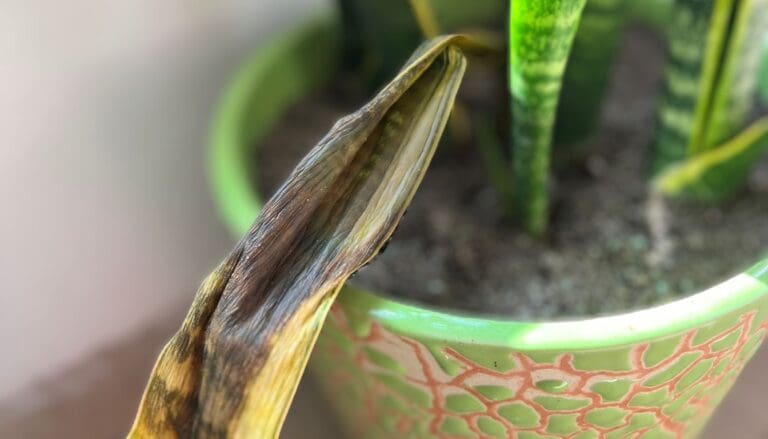
Whenever I spot a brown or damaged leaf, I cut it off at the base. Those leaves won’t bounce back, and they’re just draining energy from the healthy parts.
I use clean scissors or pruning shears and cut as close to the soil line as I can. No need to leave a stub—that just invites rot.
Brown leaves can happen for lots of reasons. Overwatering is a big one, but cold drafts or too much direct sun can do it too.
Wiping your scissors with rubbing alcohol before and after trimming is a good idea, just to keep things clean.
After removing the damaged leaves, the plant looks tidier and can focus on growing new, healthy leaves. I usually notice a difference within a few weeks if it’s the growing season.
8) Stake tall leaves gently with bamboo stakes and soft ties
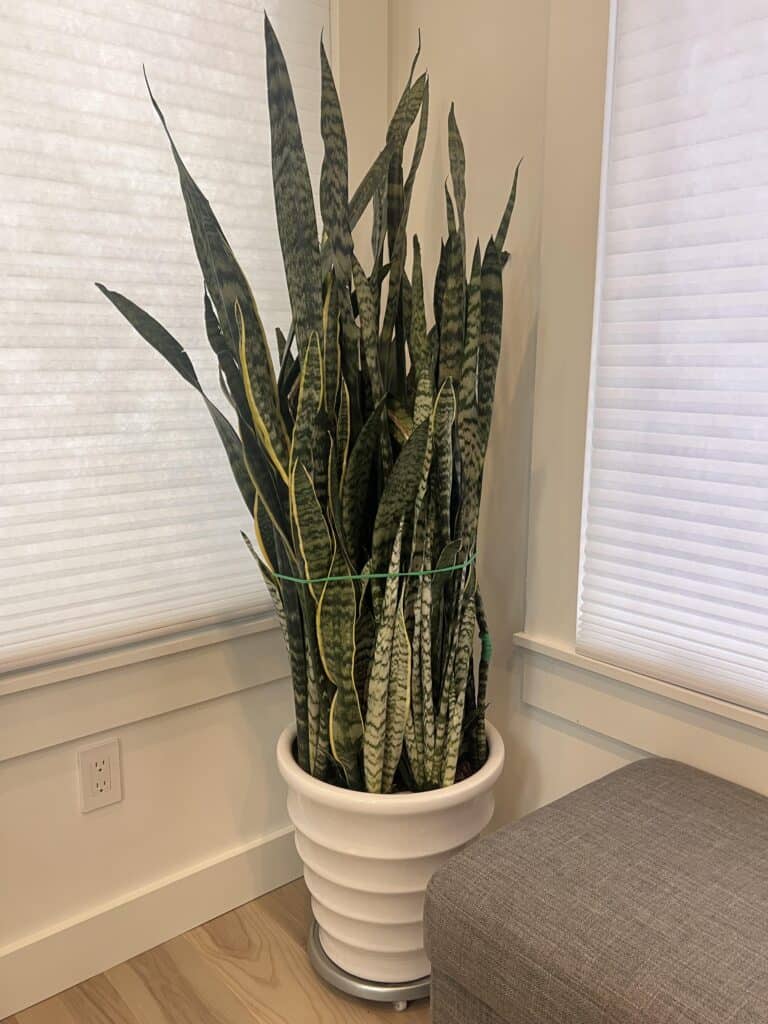
Sometimes, when my snake plant gets really tall, a few leaves start to flop over. I use a bamboo stake, pushing it into the soil right next to the wobbly leaf.
I tie the leaf loosely to the stake with soft plant ties or even strips from an old t-shirt. The trick is to keep it loose so the leaf isn’t pinched—tight ties can cause brown spots or even rot.
Check the ties every few weeks and loosen them if needed as the leaf grows.
Usually, one tie in the middle and another near the top does the trick. If a leaf stands up on its own, I just leave it be.
9) Increase humidity slightly using a pebble tray or humidifier
Snake plants don’t need tons of humidity, but a bit of extra moisture in the air can help them grow taller and sturdier. They’ll survive dry air, but 30–50% humidity keeps growth more consistent.

A pebble tray is easy: just fill a shallow tray with pebbles, add water up to just below the top, and set the plant on it. As the water evaporates, it bumps up the humidity around the leaves.
If you want to go all in, a humidifier works too. I keep mine a few feet from the plant and run it for a couple hours a day in the dry winter months.
Don’t overdo it, though—too much humidity can cause rot and fungus.
If you start seeing condensation on the windows or walls near your plant, that’s a sign things are too damp. Snake plants come from pretty dry regions, so they’re happiest when things aren’t too wet.
10) Ensure soil pH is slightly acidic to neutral (6.0–7.0)
Snake plants aren’t super picky, but they do best when the soil pH is between 6.0 and 7.0. That’s where their roots can easily soak up nutrients.
If the soil is too acidic or too alkaline, your plant might slow down or the leaves might look a bit pale.
A cheap soil pH test kit from the garden store does the trick. It only takes a few minutes. If you need to adjust, add lime to raise the pH or sulfur to lower it.
Most bagged potting mixes are already in the right range, so if you’re using fresh store-bought soil, you’re probably fine.
In places with hard water, pH can creep up over time. Testing once a year is usually enough.
Understanding Snake Plant Growth Patterns
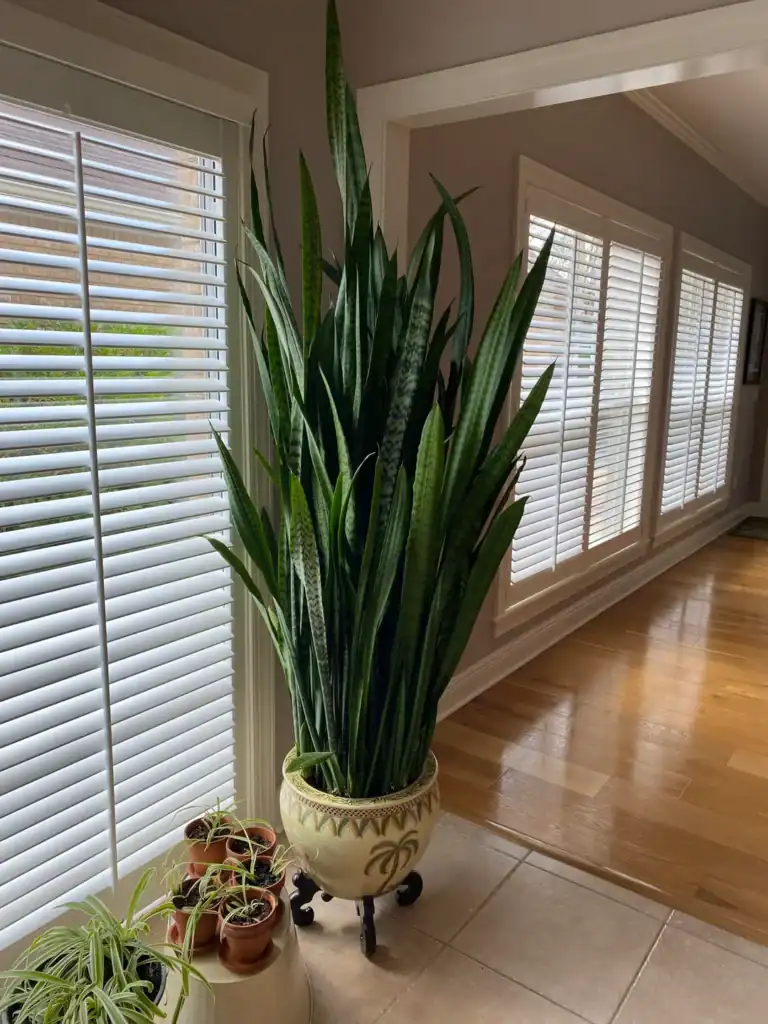
Snake plants are just slow growers by nature, usually putting out only a few new leaves each year. Their height really comes down to getting the light, water, and pot size right—if something’s off, they just stop stretching upward.
Factors Limiting Vertical Growth (And Why Your Plant Might Be Stuck at the Same Height)
Light really makes all the difference in how tall your snake plant gets. I’ve noticed that plants in low light can hang on for ages, but honestly, they barely grow at all.
They need that bright, indirect light to push out new leaves that actually reach upward. Otherwise, they just sit there.
The pot size is a bigger deal than most folks realize. When roots fill up every inch of space, the plant just stops making tall new growth.
It’s like it shifts into survival mode instead of focusing on getting taller.
Quick Tip: Try moving your snake plant within 3-5 feet of a window—growth usually picks up.
Watering habits matter here, too. I only water mine when the soil is bone dry, which is usually every 2-3 weeks.
Too much water? You risk root rot. Too little? The plant goes dormant, and nothing happens.
Temperature is another sneaky factor. Anything below 50°F and growth slows to a crawl.
Snake plants seem happiest between 70-90°F, at least in my experience.
Normal Versus Stunted Development (What Healthy Growth Actually Looks Like)
A healthy snake plant will put out maybe 2-4 new leaves each year. Each leaf should stand up straight, reaching heights similar to the older ones.
The new leaves always come straight from the soil line—not off existing leaves.
Stunted growth is easy to spot. Leaves might come in shorter than the old ones or start growing at weird angles.
Sometimes, the plant just stops making new leaves for a year or more.
Quick Tip: Measure your tallest leaf now, then check again in three months. If conditions are right, you should see at least a bit of progress.
I always look for pale or floppy leaves as a warning sign. Healthy leaves stay firm and dark green.
If new growth shows up weak or wrinkled, I usually check the roots for rot and rethink my watering routine.
Growth comes in bursts during spring and summer. Don’t expect much to happen in winter—snake plants naturally take a break then.
Creating the Ideal Indoor Environment
Snake plants aren’t that picky, but getting the light and temperature right really does make a difference in height. Mimicking their natural habitat helps them hit their full potential.
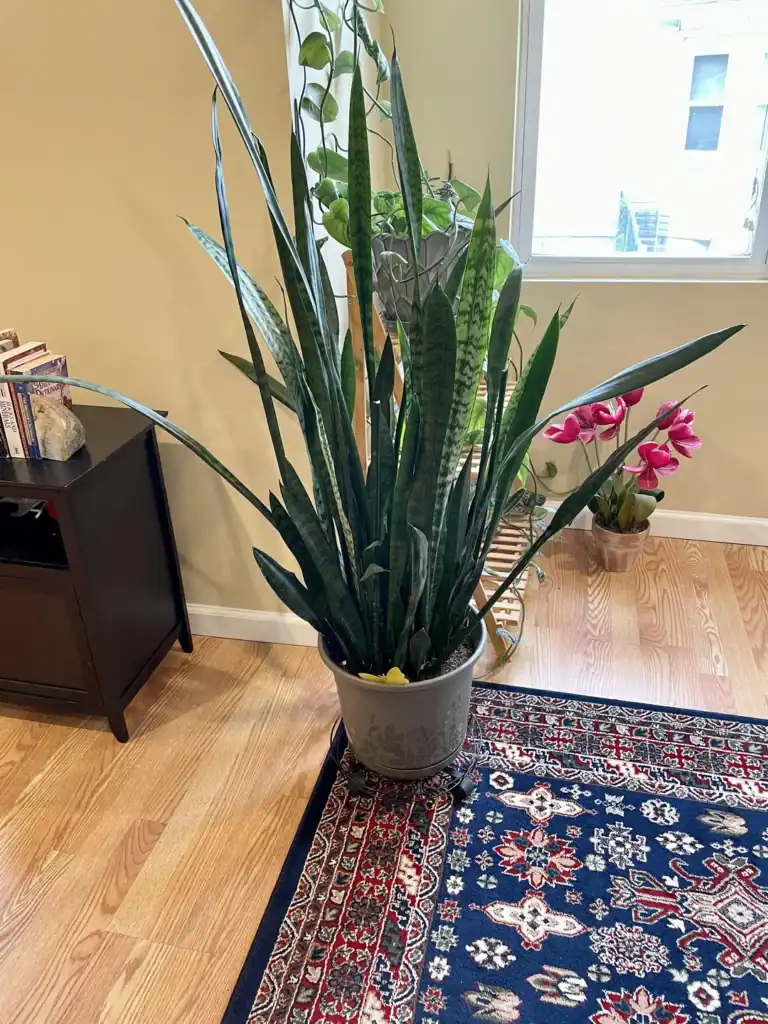
Optimizing Light Conditions (What Your Snake Plant Actually Needs to Stretch Upward)
I always tell people: bright, indirect light is the sweet spot. Snake plants can survive in low light, but they’re not going to shoot up.
They just kind of coast along.
Put your plant within 3-5 feet of a window with decent natural light. East or west-facing windows are great.
South-facing works too, but maybe pull the plant back so it doesn’t get scorched.
If you only have north-facing windows or a dim room, expect your snake plant to stay short. I’ve seen some take years just to add a single new leaf.
Quick Tip: Give your plant a quarter turn every couple of weeks so all sides get decent light. That way, it grows straight instead of leaning.
Watch for pale or floppy leaves. That’s usually a cry for more light.
Dark green leaves that barely grow? That’s another sign your plant isn’t getting enough energy to get taller.
Temperature and Humidity Tips (The Sweet Spot for Maximum Height)
Snake plants seem to stretch up best when daytime temps stay between 70-90°F. They can handle down to 50°F, but below 60°F, growth basically stops.
I keep mine away from cold drafts, air conditioning vents, and those hot air blasts from heating registers.
Sudden temperature swings stress them out and stunt growth. A steady environment lets them focus on getting taller.
Humidity is one thing you don’t have to stress about. Normal indoor humidity—say, 30-50%—is totally fine.
I’ve never bothered with a humidifier for mine.
Quick Tip: If you’re somewhere with cold winters, move your snake plant away from windows at night when it gets chilly.
And keep it away from doors that get opened a lot in winter. That cold blast can really mess with the leaves and slow things down for weeks.
Frequently Asked Questions

Snake plants can be slowpokes when it comes to visible growth, so it’s normal to wonder about light, water, soil, and feeding. Here’s what I’ve picked up about getting these stubborn plants to reach their full height.
Why isn’t my snake plant getting taller even though it looks healthy?
Snake plants just grow slowly. Even if you’re doing everything right, you might only see a couple of new leaves a year.
If yours looks green and firm but hasn’t budged in months, it could be too comfortable. When snake plants are root-bound or stuck in low light, they just maintain—they don’t push out new growth.
Peek at the roots—are they circling the pot or poking through the drainage holes? That’s a sign it’s time for more space.
Also, think about whether it’s getting enough bright indirect light by a window.
Quick Tip: Move your snake plant closer to an east- or west-facing window, then give it 2-3 months. Watch for new shoots.
What light conditions help a snake plant grow taller indoors?
Bright indirect light is really the key. Put your plant a few feet from an east- or west-facing window—plenty of light, but not that harsh afternoon sun.
South-facing works if you keep it back a little. North-facing windows? Eh, usually not enough for real growth.
Rotate the pot 90° every month or so. That way, all the leaves get their fair share and grow straight instead of leaning.
Quick Tip: If the leaves start to look pale or yellowish, move the plant closer to the light.
How often should I water my snake plant if I want it to grow taller?
I only water when the top 2 inches of soil are totally dry. Just stick your finger in to check.
Spring and summer, that’s every 2-3 weeks for me. In fall and winter, sometimes I wait 4-6 weeks.
When you do water, soak the soil until water runs out the bottom. Deep watering helps roots grow down and supports taller leaves.
Quick Tip: Overwatering is the fastest way to stunt growth. If you’re not sure, wait a few extra days before watering.
What type of pot and soil mix encourages taller growth in a snake plant?
Pick a pot with drainage holes, just 1–2 inches bigger than the old one. Too big, and you risk soggy soil and slow growth.
For soil, I like a cactus or succulent mix. Or just mix regular potting soil with perlite or coarse sand—about 2:1.
This keeps things draining fast, so water doesn’t hang around the roots.
Terra cotta pots dry out quicker than plastic, which is nice if you tend to overwater. But plastic is fine if you’re careful.
Quick Tip: Repot in spring, right as the plant starts waking up for the growing season.
Is it okay to use Miracle-Gro or other fertilizers on a snake plant, and how should I apply it?
Yep, I use a balanced liquid fertilizer like Miracle-Gro, but always diluted to half strength.
Feed once a month in spring and summer—no need to overdo it.
Snake plants don’t need much food. Too much and you’ll burn the roots, or get brown tips.
I skip fertilizer entirely in fall and winter. The plant isn’t growing then, so there’s no point.
Quick Tip: Always mix fertilizer into your watering can and pour it onto damp soil—never when the soil’s bone dry.
How can I propagate a snake plant from cuttings, and how long does it take to start growing?
First, grab a healthy leaf and cut it into 3-4 inch sections using clean scissors. Let those cut ends sit out for a day or two—just enough time to dry and form a callus.
Once they’ve dried, stick the bottom end of each cutting into moist cactus mix, about an inch deep. Try to keep the soil just lightly moist; don’t let it get soggy.
Set the pot somewhere with bright, indirect light. Roots usually show up after about 3-4 weeks, though honestly, you might be waiting 2-3 months before you see any new shoots. It’s a bit of a waiting game.
If you’re after quicker results, you can always divide the plant instead. Just take it out of its pot and gently separate the root clumps—it’s way faster than messing with leaf cuttings.
Quick Tip: Mark the bottom of each cutting with a pencil so you don’t accidentally plant it upside down. Sounds silly, but it really does make a difference!
Note: Some images in the articles are sourced from Reddit and Other Platforms For Reference Purpose.