25 Best Fence Plants For Privacy & Style
I just love how the right fence plants can turn an ordinary yard into a private, beautiful retreat.
Whether it’s tall evergreens or flowering vines, each plant brings its own shape, color, and character—making outdoor spaces feel calm and inviting.
Let’s talk about how to pick plants that give you both privacy and style for your fence. You’ll find a mix of fast-growing trees, neat shrubs, and climbing vines that fit all sorts of spaces and designs.
By the time you’re done reading, you’ll have plenty of ideas for a natural, green boundary that looks impressive every season.
Please note: Simplify Plants is reader-supported. As an Amazon Associate, I earn from qualifying purchases made by our readers with no extra cost added to you all! Some links in the post are affiliate links and I get a commission from purchases made through links in the post.
1) Arborvitae ‘Green Giant’
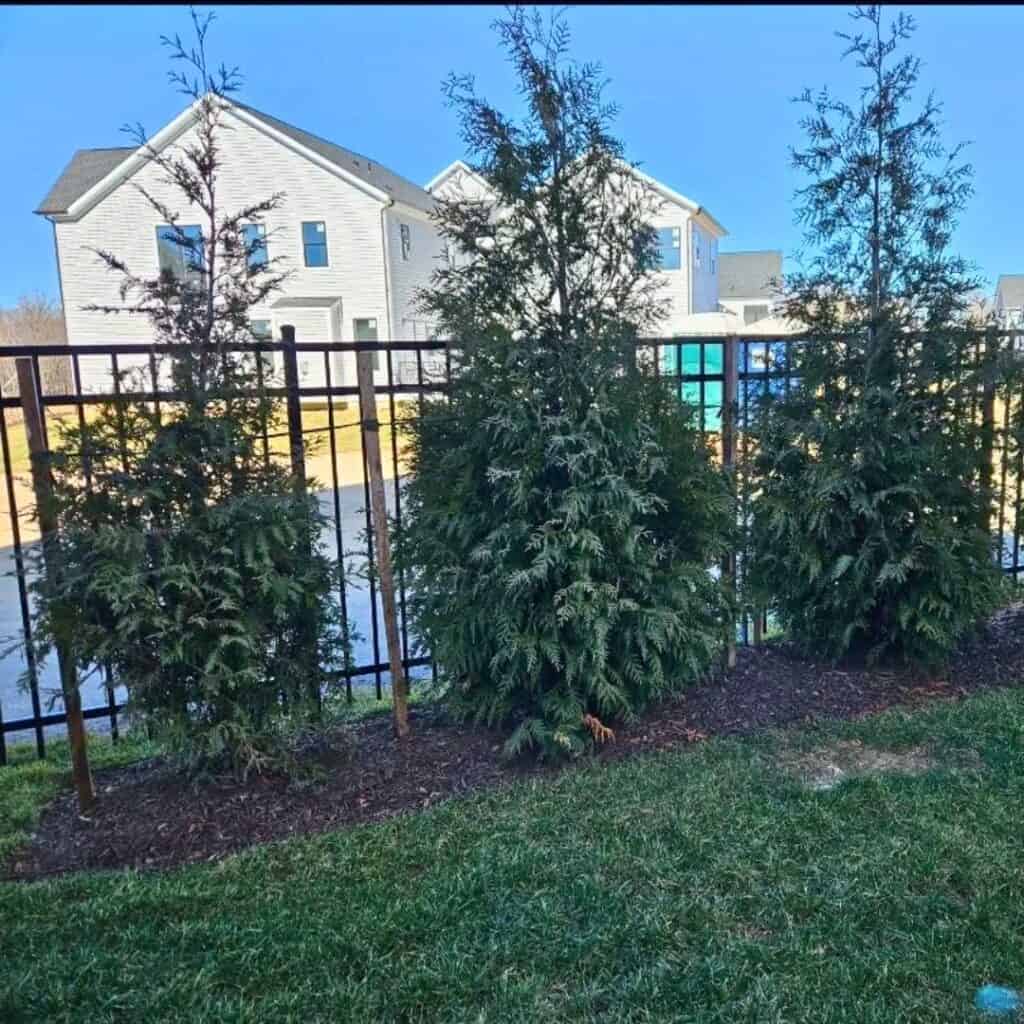
I’m a big fan of Arborvitae ‘Green Giant’ for fast, reliable privacy in the yard. This evergreen keeps its rich green color all year and forms a thick screen that really cuts down on noise and blocks out those not-so-lovely views.
When I plant these, I usually space them about 5 feet apart. That way, they fill in nicely and create a tall, solid wall of greenery.
They can grow up to 3 feet each year, which is honestly pretty satisfying if you want quick results. I’ve found they handle different soil types well and prefer full sun, but they don’t complain too much in partial shade either.
Once they’re settled, these trees are low-maintenance and seem to resist most pests. Regular watering during the first year is key for strong roots.
After that, I just water them during dry spells. A light mulch helps keep the soil moist and the weeds away.
I like how ‘Green Giant’ adds both height and texture, acting as a lush backdrop for flowers or smaller shrubs. It’s a simple, reliable pick for natural privacy that doesn’t require much fuss.
2) Black Bamboo
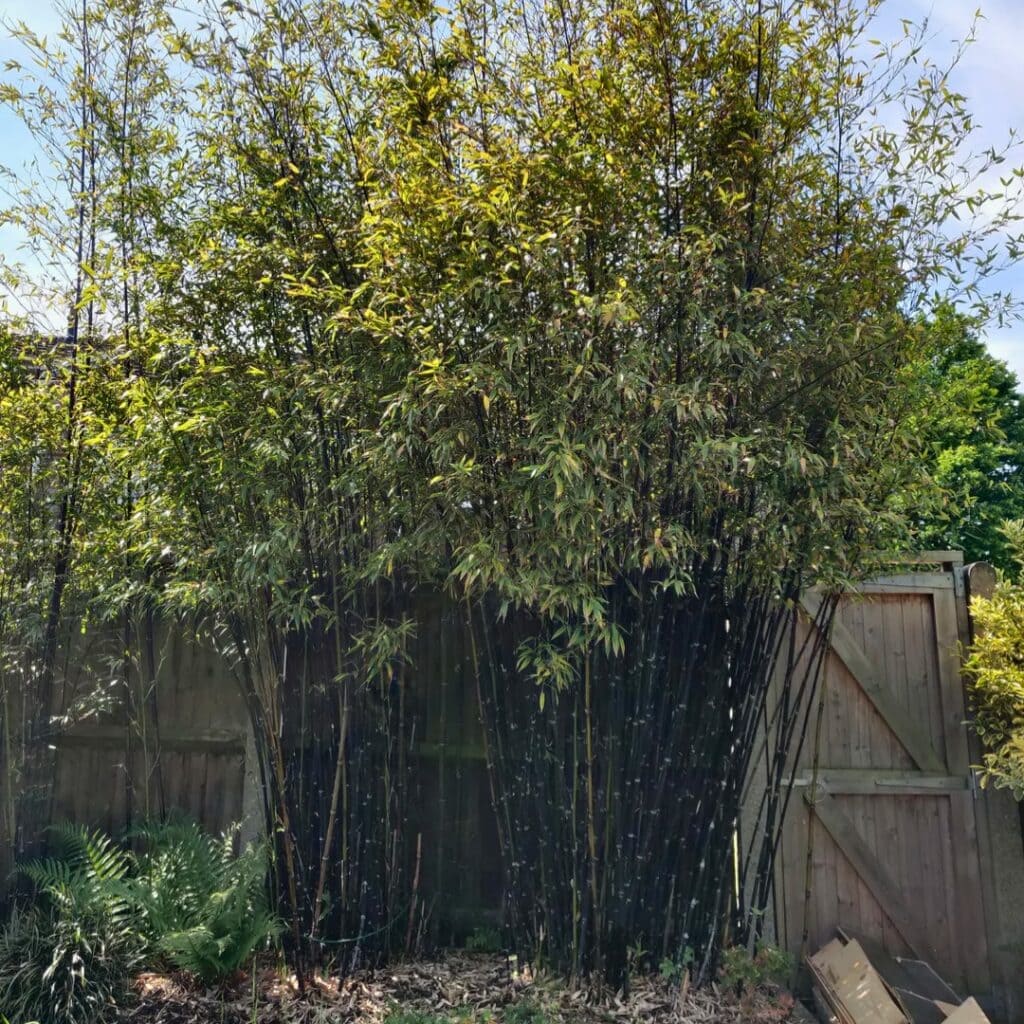
There’s something striking about Black Bamboo—it’s both modern and natural at the same time. The dark canes stand out against all that green, giving the yard a crisp, stylish vibe.
It grows fast and forms a dense screen, so privacy comes quickly. This bamboo can reach 20 to 30 feet tall, so it’s best for bigger outdoor spaces.
I make sure to give it plenty of room since the roots are pretty ambitious. To keep things tidy, I usually install a root barrier or plant it in big containers.
Black Bamboo thrives in full sun to partial shade and likes well-drained soil. I water it regularly during the first year to help it get settled.
After that, it’s surprisingly hands-off. I trim out old canes in early spring to keep it looking fresh.
The dark color pops even in winter, so my garden never feels dull. Black Bamboo is a smart pick for a natural fence that’s quick, classy, and just a little bit different.
3) Boxwood ‘Wintergreen’
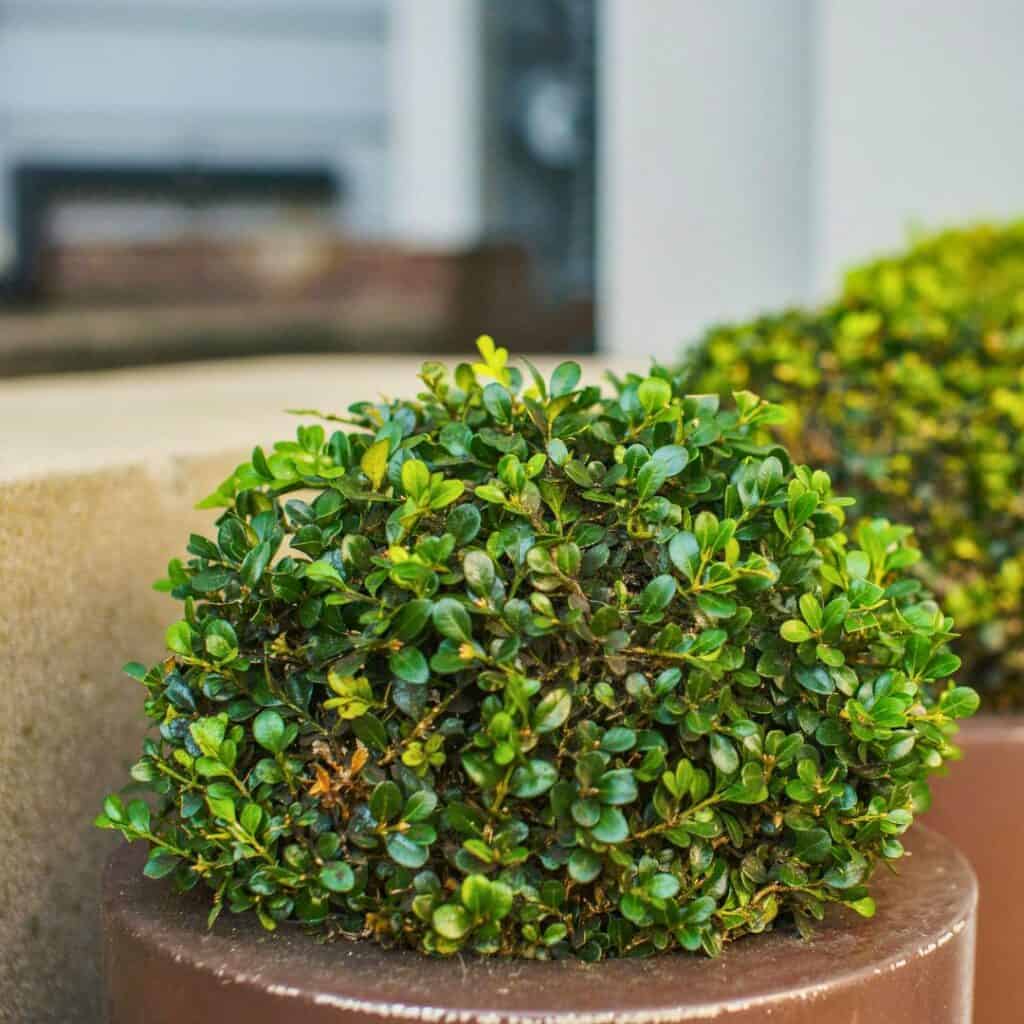
Boxwood ‘Wintergreen’ is my go-to for a clean, classic fence line. Its dense evergreen leaves give great privacy but still keep things bright and welcoming.
It blends in easily with other shrubs and flowers, so I can get creative with the look. This plant grows slowly and evenly, so I don’t have to trim it all the time.
When I do need to shape it up, it responds well to pruning. Just a few cuts a year and it keeps its tidy form through every season.
I appreciate how hardy and reliable this boxwood is. ‘Wintergreen’ handles heat, cold, and a bit of drought once it’s established.
The foliage stays green and glossy, even in winter when other plants fade. I plant it in well-draining soil and give each shrub a bit of breathing room.
It does best in partial to full sun, and I water it regularly until the roots are set. After that, it just kind of takes care of itself.
When I want a fence that’s tidy but not stiff, this boxwood is always near the top of my list. It works for formal hedges or casual rows, and the color stays fresh all year.
4) Holly ‘American Holly’

I really enjoy using American Holly for a privacy fence that’s green all year round. Its dense, glossy leaves make a thick screen that blocks both wind and wandering eyes.
The tree looks elegant and neat, so my yard feels private without being closed-off. This holly grows 8 to 15 feet tall, which fits medium or larger fences.
Trimming it once or twice a year keeps things tidy and helps it fill out. It responds well to shaping, so I can get it just how I want.
The bright red berries are a bonus, popping against the dark green leaves. They show up in fall and stick around through winter, adding color when most plants are bare.
Plus, the berries attract birds, which makes the garden feel lively. American Holly does best in full sun to partial shade and likes well-drained soil.
I give it regular water when it’s young, but after that, it’s pretty tough. It can handle cold and even a bit of salt if you’re near the coast.
This plant is both functional and beautiful. It brings privacy, year-round color, and a bit of wildlife, too.
5) Privet ‘Japanese Privet’
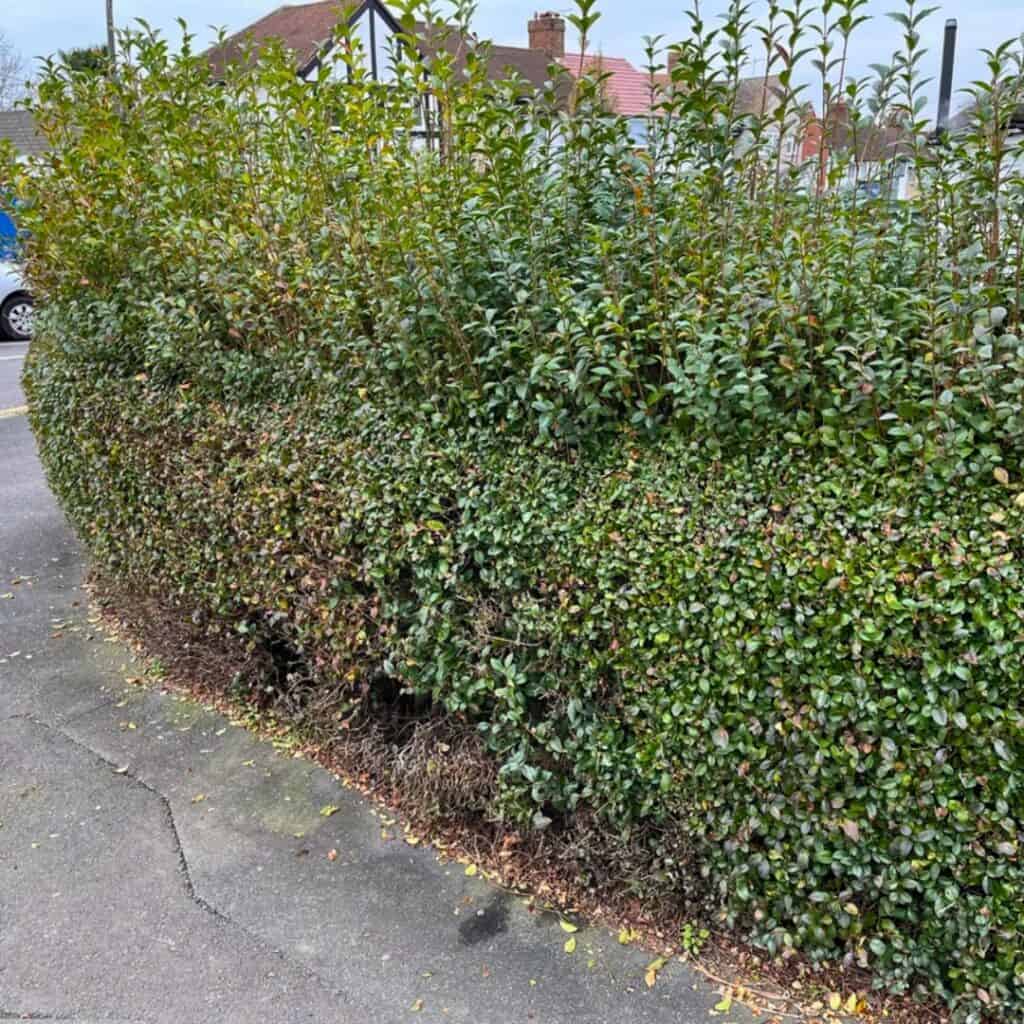
Japanese Privet is a fast grower that stays neat all year. Its glossy green leaves create a dense hedge, perfect for privacy.
I can shape it easily with a little pruning, which helps keep the yard looking sharp. This plant usually grows between 8 and 10 feet tall, but it’ll go higher if you let it.
It forms a thick barrier that blocks views and softens noise. The dense leaves also give birds a place to hide.
In spring, you’ll get clusters of white flowers that smell faintly sweet. They look nice against the dark leaves, and later on, small black berries appear for a bit of contrast.
Japanese Privet does best in full sun or partial shade and is pretty adaptable to soil types. Just make sure the soil drains well and water during dry spells.
I prune it once or twice a year to keep it full and healthy. If you skip pruning, it can outgrow a small space fast.
It also handles urban conditions like pollution and wind, making it great for front yards or busy streets. I like that it still looks good even if the environment isn’t perfect.
When planting, I space the shrubs about 2 to 3 feet apart for a solid hedge. Within a year, they fill in nicely, and I get to enjoy the privacy they bring.
6) Leyland Cypress
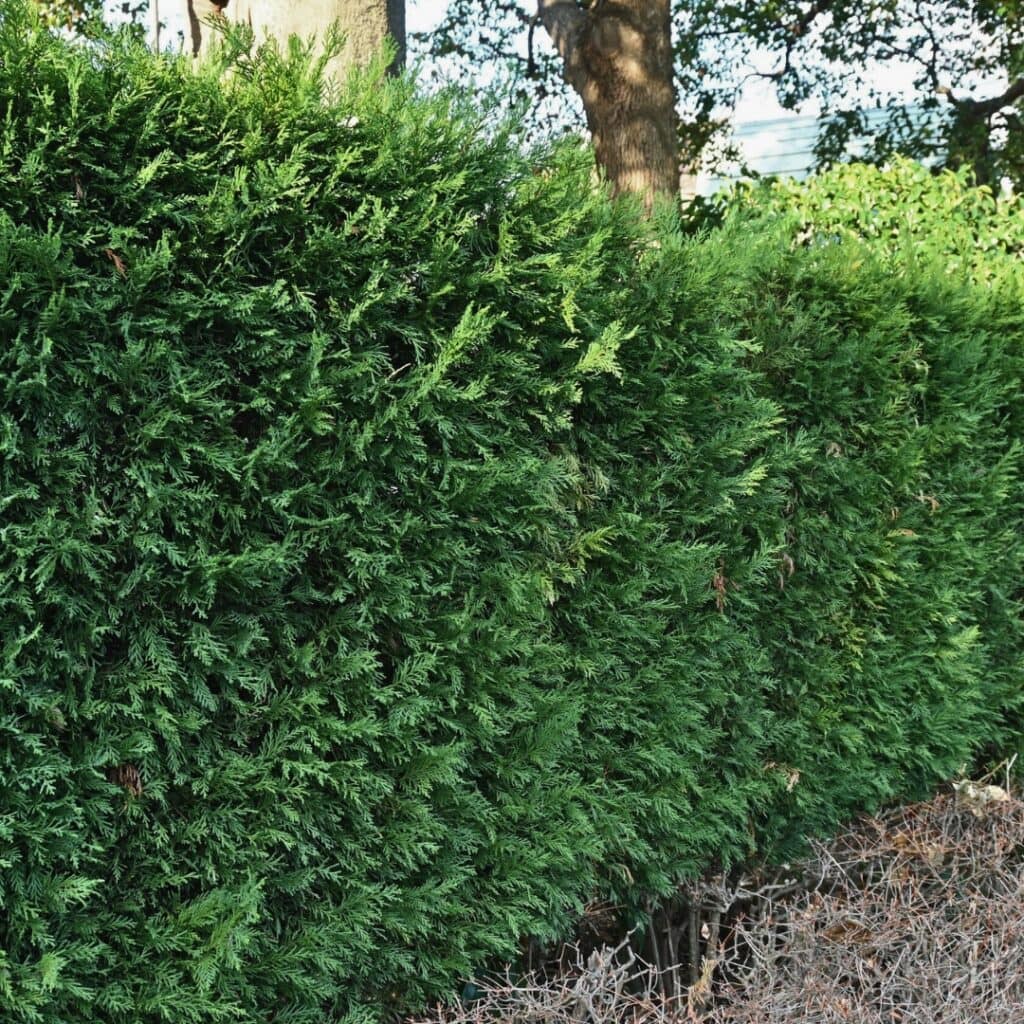
The Leyland Cypress is a classic for a quick, natural privacy wall. It grows fast and fills in gaps quicker than most evergreens.
In just a few years, you can have a solid green screen along your fence. The tree has dense, soft foliage that stays green all year.
Its rich color adds a calm, classic feel to the yard. Plus, it does a good job blocking out noise and wind, so the space feels more comfortable.
I plant these about 3 to 4 feet apart for an even hedge. With regular trimming, they stay neat, or you can let them get tall for a wilder look.
They can reach up to 50 feet if you don’t keep them in check. Leyland Cypress likes full sun and well-drained soil.
I water them regularly for the first few seasons to help the roots get established. After that, they’re pretty good at handling heat and moderate drought.
What I appreciate most is how low-maintenance they are after the first year. Just a light trim once or twice annually keeps them tidy.
I avoid overwatering or heavy pruning, since that can stress the young trees. Leyland Cypress fits both big and small yards, as long as there’s space.
When you use them along a fence, they give instant style and privacy—no need for a solid barrier. It’s my go-to when I want a green, living wall that looks good year-round.
7) Photinia ‘Red Robin’
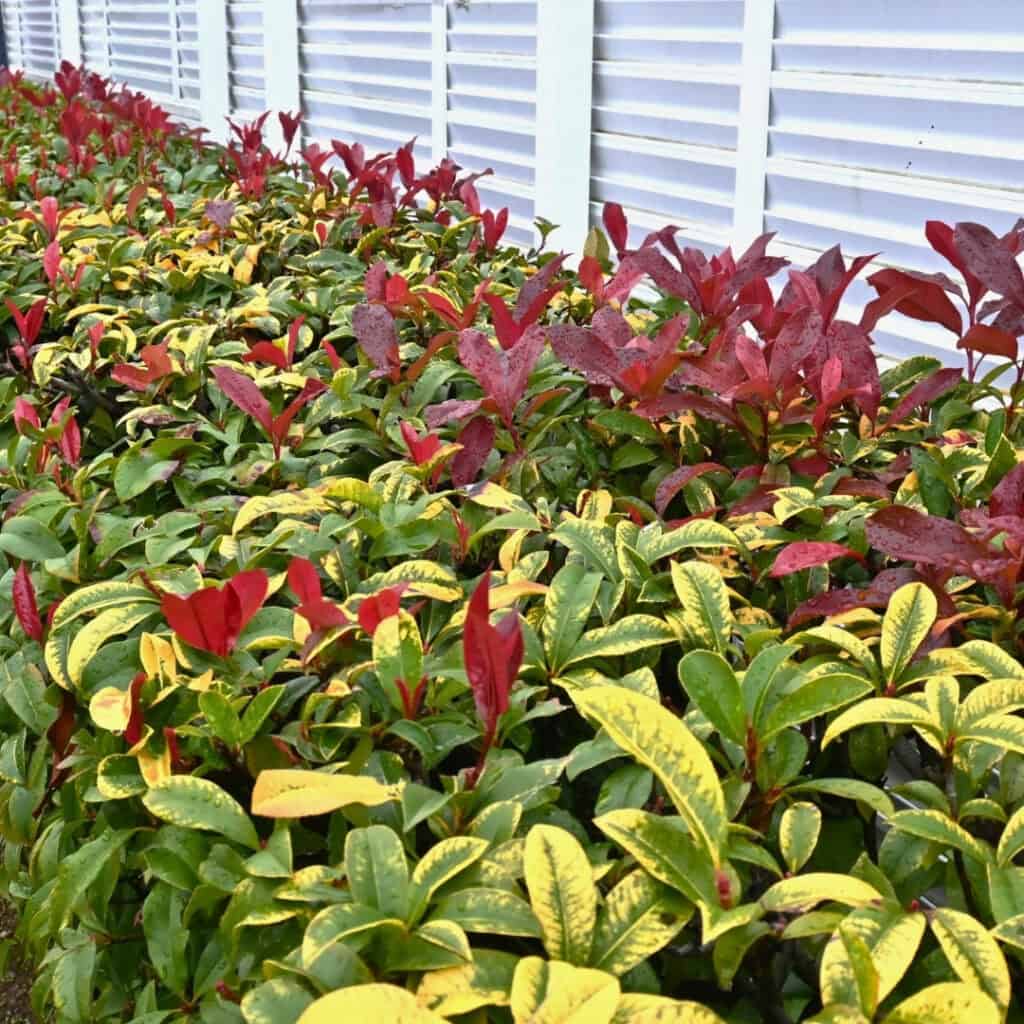
Photinia ‘Red Robin’ really brightens up a plain fence line. The new leaves come in red and glossy, then slowly shift to green as they age.
That changing color keeps things lively all year. This shrub grows best in full sun or light shade.
It grows quickly with enough sunlight and water, which is great for fast privacy. Left untrimmed, it can hit 10 to 13 feet tall, but I like to prune it for a neat shape.
One of my favorite things about Red Robin is how low-maintenance it is. Once it’s established, it doesn’t need much beyond a few trims each year.
With regular pruning, the hedge fills in thick and blocks both wind and noise. It stays evergreen, so the yard doesn’t look bare in winter.
Even in the colder months, it keeps its leaves and adds color when other plants fade. The bright red new growth in spring always stands out.
If I want more variety, I’ll plant Red Robin with lighter green shrubs for contrast. It goes well with boxwood, laurel, or bamboo—making the fence line feel private and stylish, but not too stiff.
8) Euonymus ‘Emerald Gaiety’
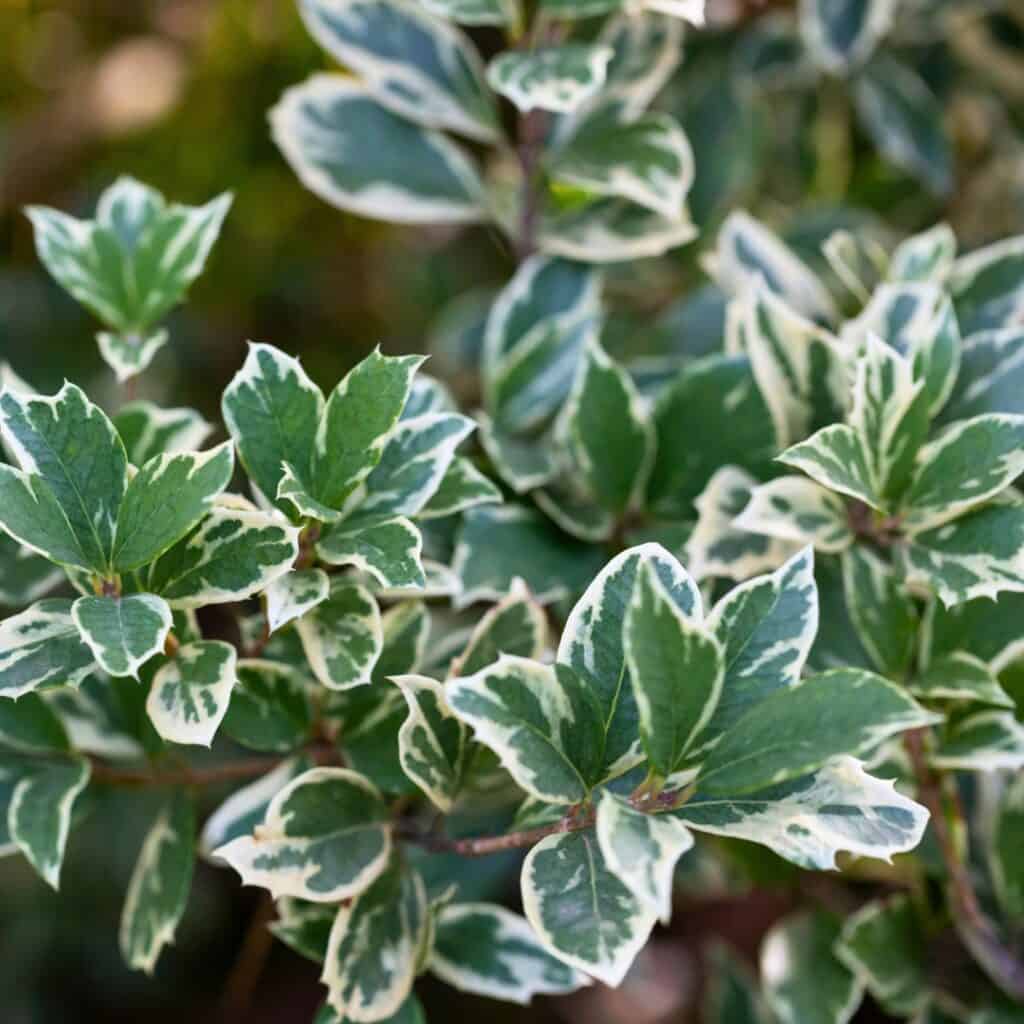
Euonymus ‘Emerald Gaiety’ is one of those plants that just works—pretty and tough at the same time. This evergreen shrub has green leaves edged in creamy white, which stay colorful through every season.
In winter, the edges often turn slightly pink, adding a soft hint of color when most plants fade. It’s great as a low privacy fence or border plant.
It grows about 3 to 5 feet tall and spreads evenly, so you get nice coverage without it going wild. I trim it once or twice a year to keep its shape neat and full.
This plant isn’t fussy at all. It tolerates sun or partial shade and grows in most soils, as long as they drain well.
I water it during hot months but let the soil dry a bit between waterings. Once established, it holds up well in all sorts of weather.
I like how it blends easily with other shrubs or flowers. The variegated leaves help brighten up darker garden spots, making fences and walkways look more inviting.
It also looks good in planters or mixed hedges if you want more texture. Because it’s low-maintenance and attractive all year, ‘Emerald Gaiety’ fits both small and large yards.
Whether you use it as a hedge or just an accent along the fence, it always brings a clean, crisp look without much effort.
9) Cherry Laurel
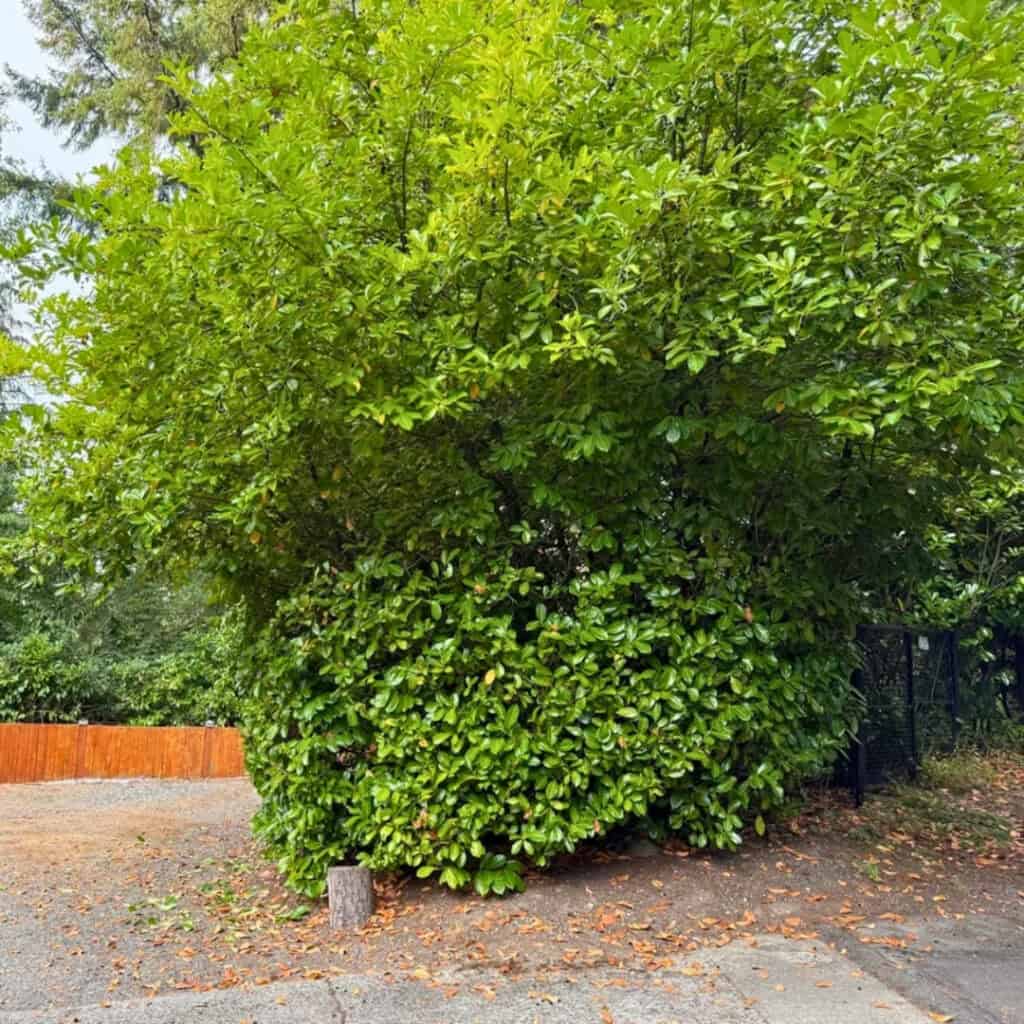
I really like how Cherry Laurel brings both beauty and privacy to my yard. It’s an evergreen shrub with shiny green leaves that honestly look good no matter the season.
The thick foliage creates a solid natural screen against noise and wind. It grows fast, so I can get a living fence pretty quickly.
I find it easy to trim if I want to keep a certain shape, or I just let it get taller for more coverage. The little white flowers in spring are simple, clean, and not too much.
Cherry Laurel handles different soil types well, but I always make sure the drainage is decent. It does best in full sun to partial shade, which fits most of my garden spaces.
I water it regularly, but I try not to let it get soggy. The dark berries show up in late summer and bring in birds, which is a nice bonus.
The thick leaves help block dust from the street, so my garden feels fresher. For a fence or border, Cherry Laurel’s hardy nature makes it a favorite of mine.
It stays green, looks tidy, and gives me a quiet spot outside without a lot of work.
10) Forsythia

There’s something about Forsythia that just cheers up the whole yard. When spring hits, those bright yellow blooms cover the branches before any leaves show up.
The flowers make a bold statement, especially along fences or property lines. This shrub is a fast grower, so if I want privacy in a hurry, it’s a solid choice.
It can reach 6 to 10 feet tall and forms a thick screen when planted close together. I always trim it after flowering to keep it neat and stop it from spreading too far.
Forsythia does best in full sun and well-drained soil, but honestly, it’s not that picky. I’ve seen it handle less-than-perfect soil with no problem.
Regular watering helps at first, but once it’s settled in, I don’t worry much. In winter, the bare branches make a simple outline against the snow, which is kind of nice.
When spring comes back, the bright flowers remind me that warmer days are finally on the way. I like planting Forsythia near other shrubs for a layered look.
Its early blooms pair well with evergreens or flowering trees. If you want a natural fence that changes with the seasons, Forsythia is a reliable and vibrant choice.
11) Lilac ‘Miss Kim’

Growing Lilac ‘Miss Kim’ is one of my favorite ways to add beauty and privacy. It stays compact, so it fits nicely along fences or property lines.
The dense growth makes a natural screen without feeling too heavy. In late spring, clusters of pale purple flowers cover the branches, and the sweet scent attracts butterflies and hummingbirds.
The blooms last longer than most lilacs, so I get color and fragrance well into early summer. I love how the leaves stay clean and green through summer, then turn red or burgundy in fall.
That seasonal change keeps things interesting even after the flowers are gone. Miss Kim lilac likes full sun and well-drained soil.
I water during dry spells but avoid soggy spots. Once it’s established, it barely needs any care—just a little pruning after flowering to shape it.
Since it only grows about 6 to 8 feet tall, I can plant it near patios or walkways without worrying it’ll get out of hand. It also handles cold winters better than most lilacs, which is a relief.
I often pair these shrubs with evergreens or ornamental grasses for some contrast. The bright flowers really pop against darker foliage.
If you want a low-maintenance, sweet-smelling fence plant, this lilac is a great pick. It brings privacy and a bit of charm to any outdoor space.
12) Mock Orange
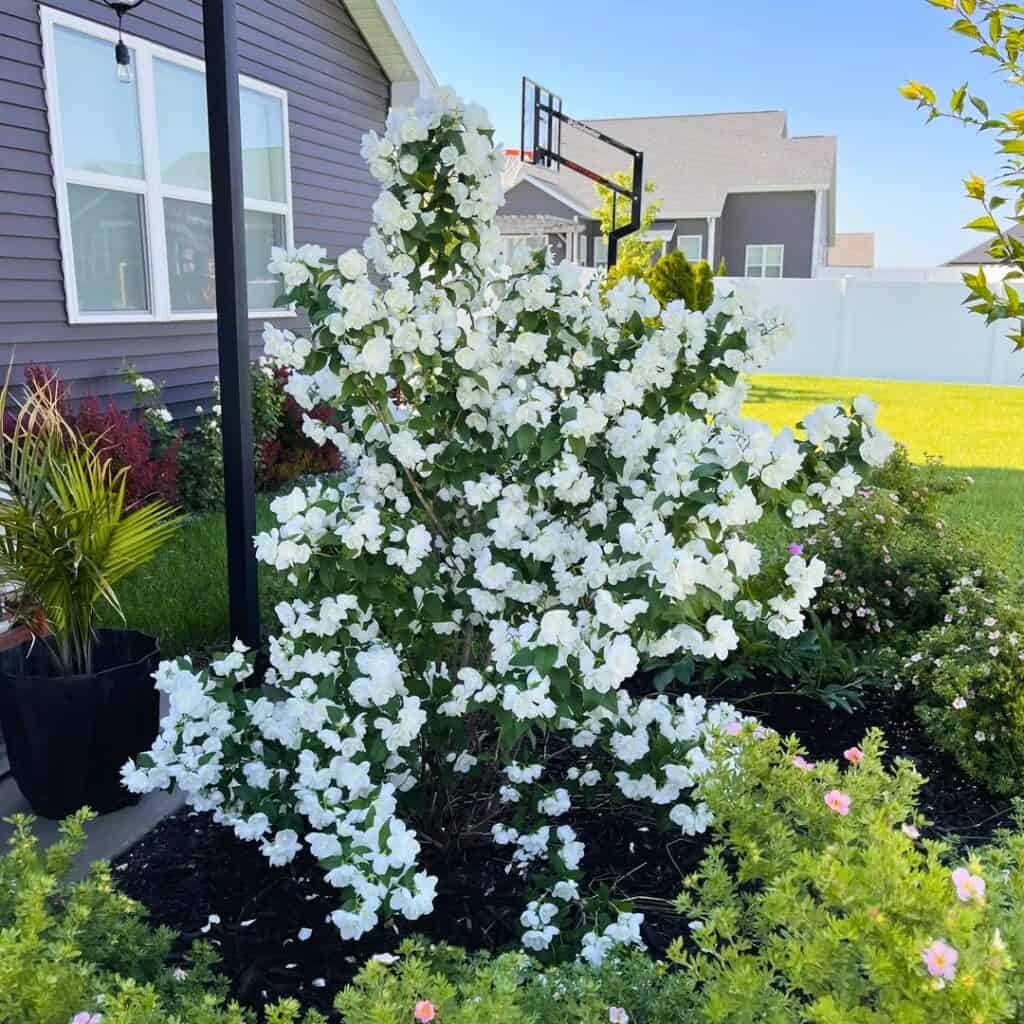
I’m a big fan of Mock Orange for both privacy and its sweet, citrusy scent. In late spring, it’s covered in white, citrus-scented flowers that attract bees and butterflies.
When I plant it in a row, it makes a thick, pretty hedge that still looks good after the flowers fade. This shrub grows best in full sun to partial shade and likes well-drained soil.
I find it easy to care for—a quick prune after flowering keeps it tidy. It can reach 6 to 10 feet tall, which is plenty for privacy without feeling too bulky.
I like how mock orange works with almost any garden style. It looks classic next to roses or hydrangeas, but it also fits in with modern landscapes.
The bright blooms stand out against darker evergreens, giving a clean, balanced look. If you want a little extra wow, try planting it near walkways or patios.
The fragrance is strongest in the evening, which makes the space feel especially inviting. Some well-placed lights on the white flowers make the hedge look even better at night.
For me, mock orange combines beauty and function. It adds privacy, texture, and a touch of charm without much fuss.
13) Spirea ‘Anthony Waterer’
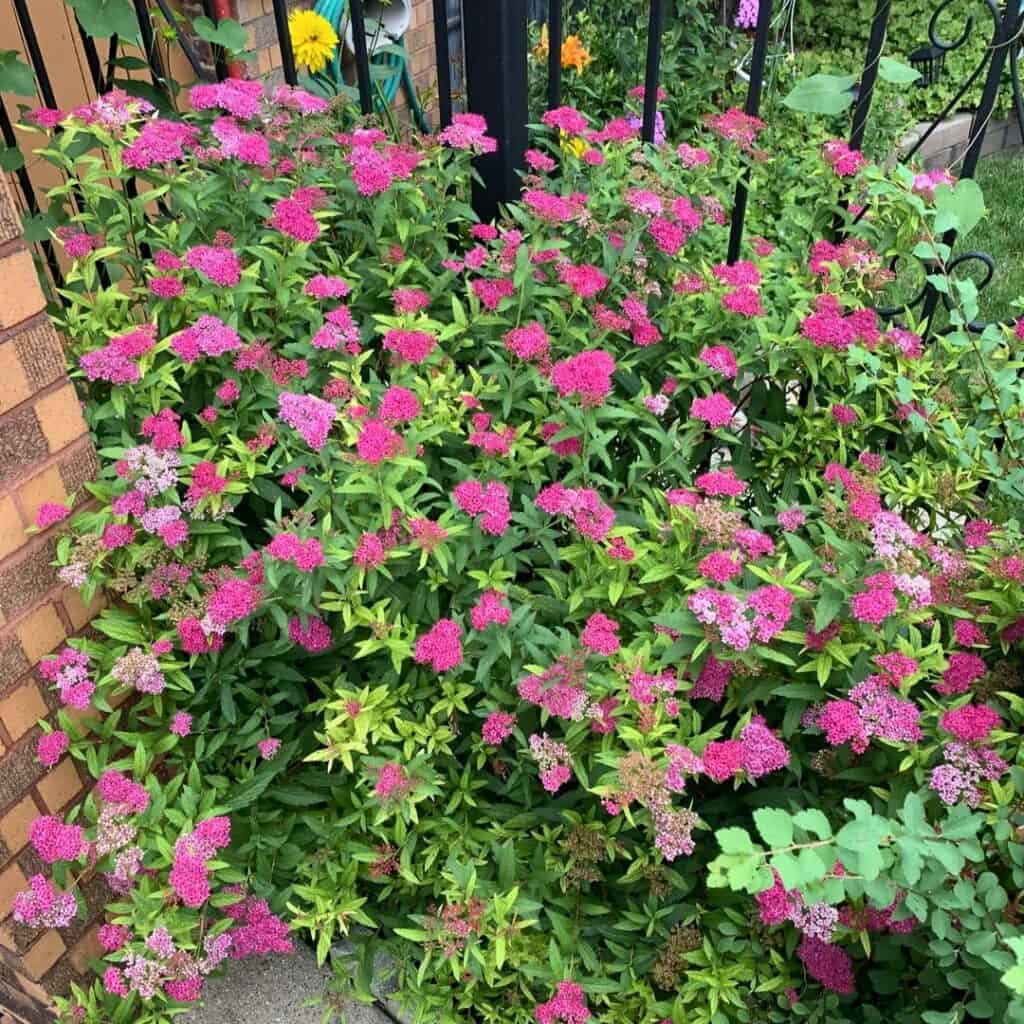
I always enjoy using Spirea ‘Anthony Waterer’ for a colorful, low-maintenance hedge. It stays neat and compact, which is perfect for lining fences or marking garden edges.
The foliage starts out red-tipped in spring, then turns green, and ends up with gold and red by fall. That shift keeps my yard looking lively all year.
In early summer, it bursts with clusters of bright pink flowers that attract butterflies and bees. I usually plant Spirea in full sun for the best blooms.
It can handle part shade, but honestly, too much shade makes the flowers less impressive. I appreciate that it’s drought-tolerant once established, so it doesn’t need constant watering.
Trimming it once or twice a year keeps it in shape and encourages more blooms. I prune mine right after flowering to keep things tidy.
The plant usually grows 2 to 3 feet tall and wide, which is just right for most small to medium gardens. For a layered privacy screen, I sometimes mix Spirea with taller shrubs or ornamental grasses.
It softens the look of a fence while adding a gentle pop of pink and green. Spirea ‘Anthony Waterer’ brings reliable color and charm with almost no effort, which is exactly what I want.
14) Hydrangea ‘Limelight’
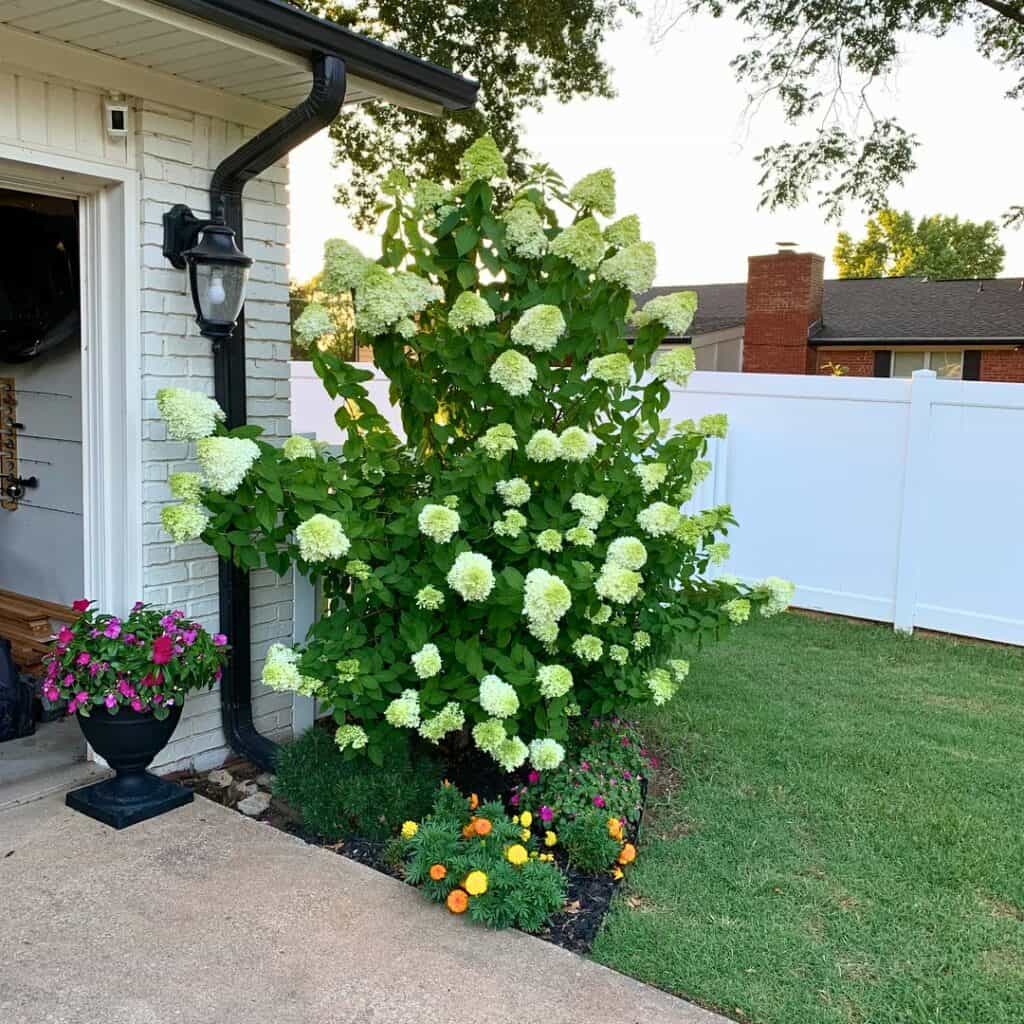
I can’t help but love how Hydrangea ‘Limelight’ brings a burst of color and life to any fence line. The big, cone-shaped blooms start pale green in summer and turn a soft pink by fall.
That color shift makes it feel like I get a new plant every season. The plant grows upright and thick, so it creates a natural privacy screen without needing much trimming.
I’ve found it fits well along fences or tucked into yard corners where I want something bold. Even when the flowers fade, the dried blooms look pretty into early winter.
Full sun to partial shade works best for this hydrangea. I make sure it has well-drained soil and give it regular water during dry spells.
The flowers last a long time, and the sturdy stems keep them upright even after rain. I like using the cut blooms indoors—they brighten up any room.
Hydrangea ‘Limelight’ feels elegant but is honestly easy to care for. It’s one of my top picks for adding style and privacy at the same time.
15) Viburnum ‘Alleghany’

I like how Viburnum ‘Alleghany’ brings both privacy and a bit of charm to my yard. This dense, evergreen shrub grows thick enough for a natural screen and still looks good all year.
Its rich green leaves have a leathery texture that holds up even through winter. In spring, clusters of small white flowers brighten up the fence line.
These blooms have a light, pleasant scent and attract pollinators like bees and butterflies. When summer ends, the flowers turn into bright red berries that stand out against the dark foliage.
Viburnum ‘Alleghany’ does best in full sun to partial shade. I’ve found it’s not too picky about soil, as long as it drains well.
Regular watering helps young plants settle in, but once mature, they handle short dry spells easily. This plant can reach 8 to 10 feet tall and wide, which is great for a medium-height privacy hedge.
I trim mine once a year to keep it neat and encourage thicker growth. A light pruning in late spring after flowering helps maintain its shape.
I appreciate how low-maintenance it is compared to other screening plants. It resists most pests and diseases, and the glossy leaves stay full even in colder months.
If I want a hedge that’s both structured and naturally pretty, Viburnum ‘Alleghany’ is an easy choice.
16) Wisteria

There’s something magical about Wisteria and its graceful vines with hanging blooms. It gives any fence a soft, romantic vibe, especially in spring and early summer.
The clusters of purple, blue, or white flowers really brighten up the space. This plant grows fast and strong, which makes it perfect for privacy.
I always train my Wisteria along sturdy fences or trellises since it gets pretty heavy as it matures. It clings tightly and can quickly cover a fence with lush leaves.
I’ve noticed Wisteria does best in full sun and well-drained soil. It needs at least six hours of direct sunlight for the best flowers.
Once it’s settled in, it’s surprisingly hardy and low-maintenance. I make sure to prune every year to keep it from taking over.
Without trimming, it can get wild and tangled. Pruning in late winter helps it put energy into blooming instead of just growing long vines.
When it’s in bloom, my fence looks like it’s draped with colorful curtains. The sight always draws people in and adds a bit of magic to the yard.
Wisteria finds a nice balance between privacy and style, and I wouldn’t want my garden without it.
17) Climbing Rose ‘Eden’

Adding Climbing Rose ‘Eden’ to a fence or trellis is always a win in my book. The soft pink flowers brighten up the whole yard and bloom in clusters, bringing gentle color and a lovely scent.
This rose grows tall and strong, so it’s perfect for privacy. I train the vines to climb along the fence, and within a season or two, it fills in beautifully.
It doesn’t need much space at the base, which is handy for smaller gardens. I make sure it gets at least six hours of sunlight each day.
Regular watering and pruning keep it healthy and blooming. When I deadhead the old flowers, new ones keep popping up all summer.
The ‘Eden’ rose likes well-drained soil and doesn’t want to sit in water. I usually add compost at planting and a little fertilizer in spring.
Its glossy green leaves stay neat, so the fence looks good even when it’s not blooming. I think this rose is perfect for anyone wanting a mix of privacy and style.
It’s not just practical—it’s beautiful, and it adds a timeless touch to any outdoor space.
18) Jasmine ‘Star’

I’ve got a soft spot for Jasmine ‘Star’—it just brings a fence to life and adds a bit of privacy without even trying. The glossy green leaves stay lush all year, which is honestly a relief when everything else looks a bit tired in winter.
When it blooms, those little white flowers really pop against all that green. It’s a simple thing, but it always makes me smile.
This plant grows fast, so covering a fence or trellis doesn’t take long at all. I usually guide the vines here and there to keep things even, and a little pruning now and then keeps it looking tidy.
But the best part? The sweet fragrance drifting through the air in late spring and summer. It’s not overpowering, just enough to make evenings outside feel special.
The scent brings in bees and butterflies too, which I love—there’s something calming about watching them flit around.
I appreciate that Jasmine ‘Star’ is pretty adaptable. It loves full sun but won’t sulk in partial shade, and as long as the soil drains well, it’s happy. I water it more when it’s young, then back off once it’s settled in.
If your fence needs a bit of style and coverage, this plant does the trick. The evergreen leaves soften those hard fence lines, and it keeps things looking fresh all year.
It’s honestly one of my favorite ways to add a little privacy with some elegance thrown in.
19) Clematis ‘Nelly Moser’
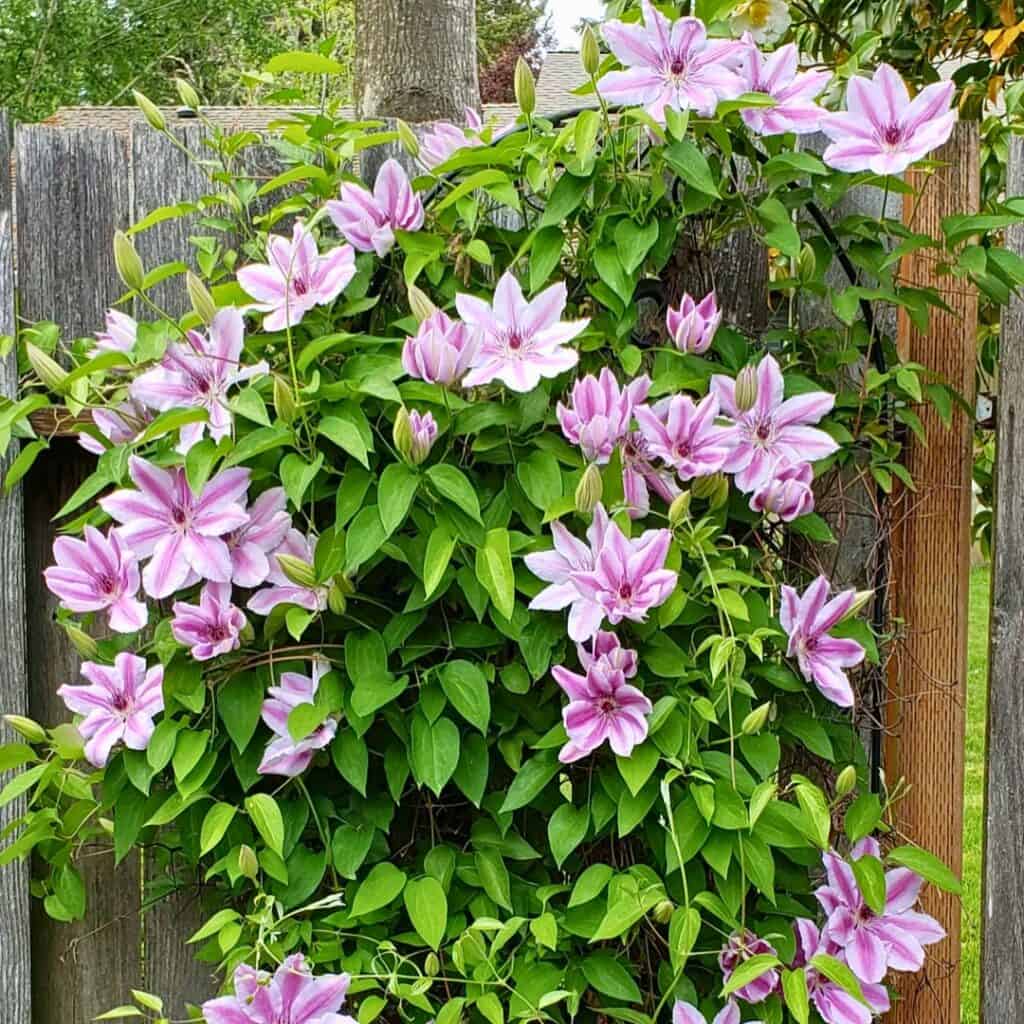
There’s something special about Clematis ‘Nelly Moser’ climbing up a garden fence. Those big pink-and-white striped blooms just light up the greenery, and in partial shade, the colors really hold their own.
I like guiding this vine along a trellis, arbor, or fence—it just needs a bit of support, nothing fancy. It prefers well-drained soil, and I try to keep the roots cool with some low ground cover or mulch.
The flowers show up in late spring and again in late summer, so there’s color for a good chunk of the year. After the first round of blooms, I give it a light prune, and that usually encourages more flowers later on.
Regular watering helps, especially if the weather’s dry. What I like most is how quickly ‘Nelly Moser’ creates a soft, natural screen without eating up space.
It climbs so gracefully, turning a boring fence into a colorful backdrop. Plus, bees and butterflies seem to love it, which is always a bonus.
If you want something that brings beauty and privacy together, this clematis is a winner. It’s a pretty easy way to add color to your outdoor space without a lot of fuss.
20) Hop Hornbeam
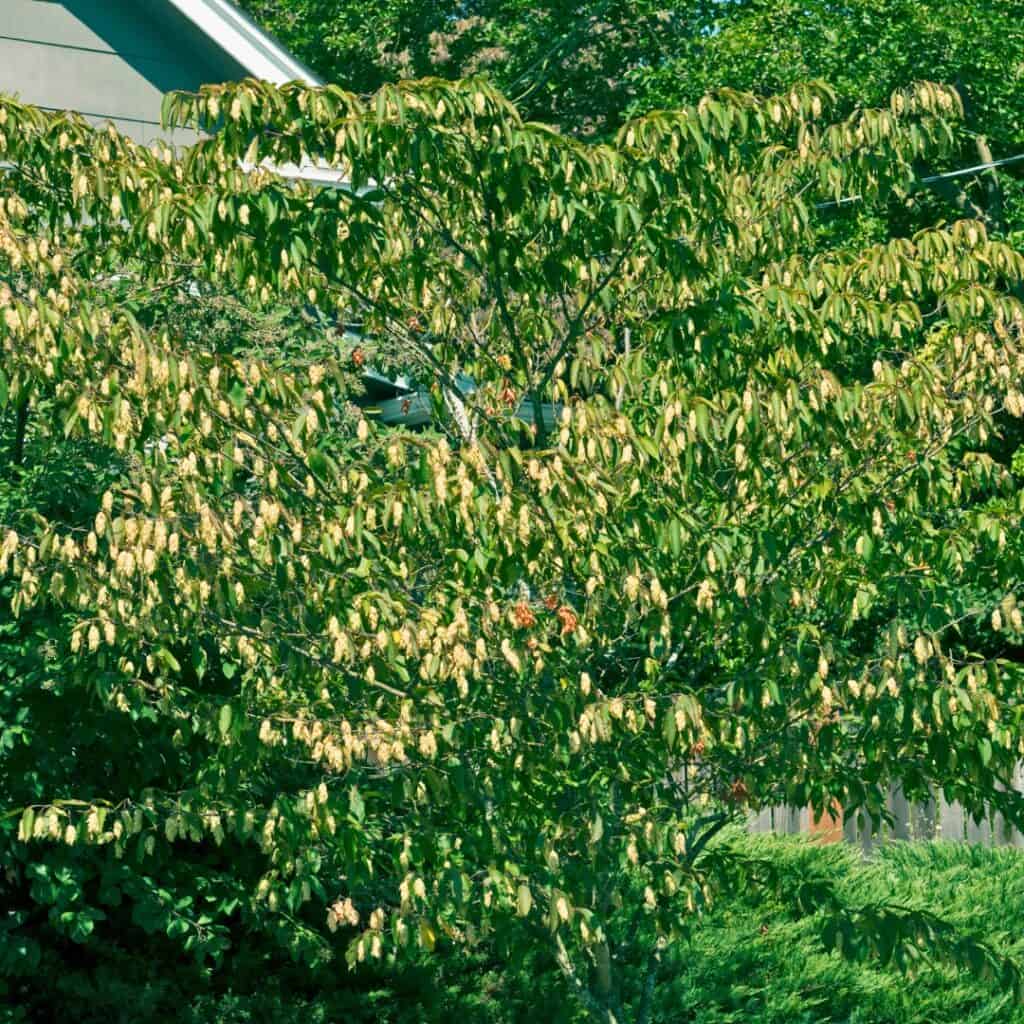
I’m a fan of Hop Hornbeam for its clean, structured look and reliable coverage. This tree grows slowly—so I barely have to worry about pruning.
Its dense branches make a great natural privacy screen. The oval leaves turn a warm yellow in fall, which adds a bit of color without being too bold.
I like that the leaves hang on late into the season, making the fence line feel full for longer. The bark has this light, textured look that works with both wood and metal fences, which is handy if your style changes.
I’ve noticed Hop Hornbeam does best in full sun to partial shade and likes well-drained soil. It can handle heat and cold, so it’s pretty low-maintenance.
It’s also tough against most pests and diseases, which means less hassle for me.
When spaced right, these trees form a quiet, green barrier that helps cut noise and wind. The compact shape keeps things neat without much trimming.
I think it’s a solid pick for anyone who wants natural privacy but doesn’t want to fuss over it.
Watching birds use the branches for shelter and nesting is a nice bonus. It brings a bit of life to the yard and helps the local ecosystem.
For me, Hop Hornbeam is a go-to for combining privacy with a bit of charm.
21) Red Twig Dogwood
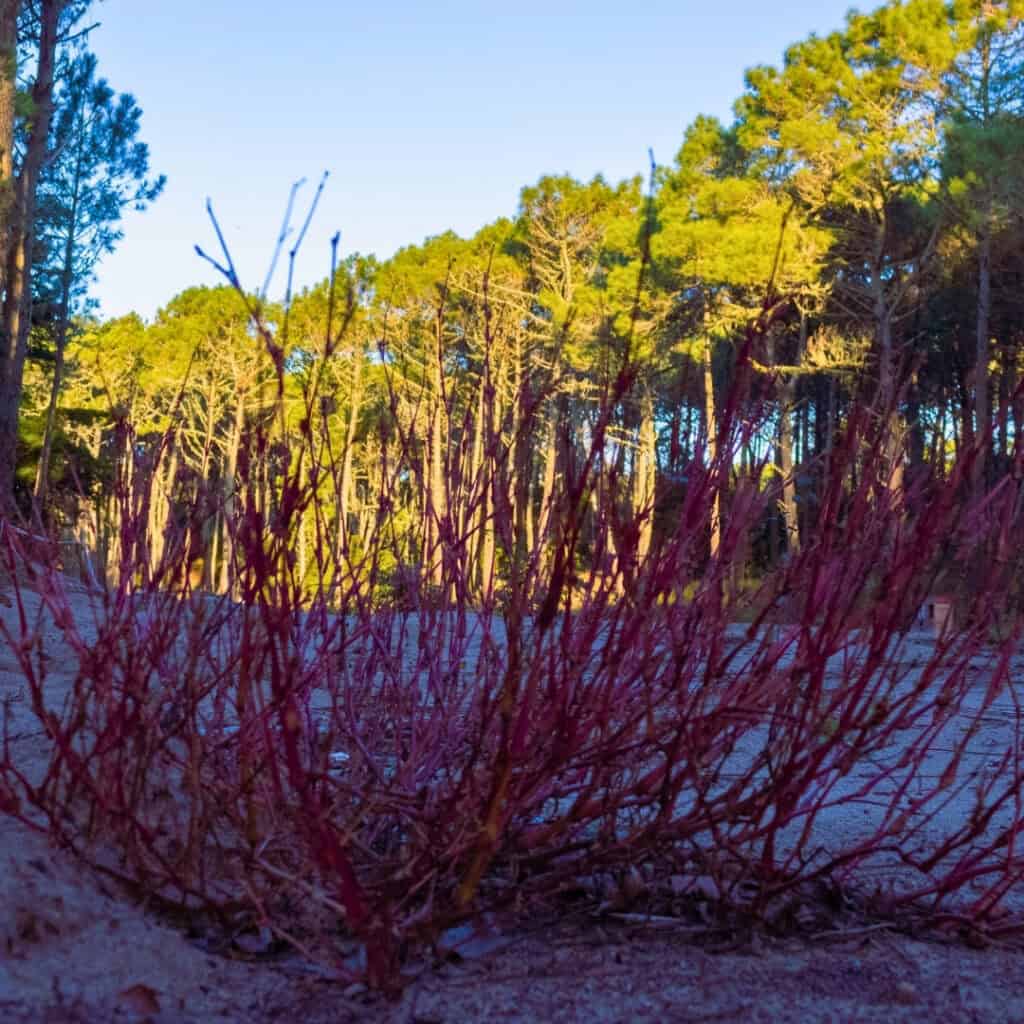
I keep coming back to Red Twig Dogwood because it’s just so colorful, especially when everything else goes gray. The bright red stems are striking in winter, even against snow or bare branches.
During the warmer months, it puts out green leaves and little white flowers, so the fence line never looks dull.
I usually plant this shrub in full sun to partial shade for the best color—it really makes a difference. It thrives in moist, well-drained soil, but honestly, I’ve seen it do fine in wetter spots too.
That’s great if you’ve got areas that stay damp after rain.
Every few years, I trim out the oldest stems, and the new red growth comes back even brighter. Regular pruning keeps it dense, which means better privacy and coverage along the fence.
Red Twig Dogwood grows to about 6 to 9 feet tall—tall enough for privacy, not so big it takes over a small yard.
I like mixing it with evergreens so the red really pops in winter. Birds and pollinators love it too, so there’s always a bit of activity around.
For me, this plant is an easy way to add natural color and structure to my space. It’s reliable, eye-catching, and doesn’t ask for much—just what I want for a stylish privacy fence.
22) Snowberry

I always enjoy using Snowberry when I want a fence plant that stands out, no matter the season. The small, round berries and soft green leaves give any yard a bit of quiet charm.
Its dense branches also make a nice screen for privacy. Snowberry is pretty flexible—it grows well in sun or partial shade, so I can tuck it almost anywhere along the fence.
It likes soil that drains well but doesn’t mind a bit of moisture. Once it’s settled in, it needs only light care.
In late spring and summer, tiny pink or white flowers show up and attract bees and butterflies. By fall, the clusters of white berries appear and stick around into winter, adding some brightness when other plants fade.
I usually plant Snowberry in groups for a fuller look. It gets to about 3 to 6 feet tall, forming a tidy, natural barrier.
A trim once a year keeps it neat and stops it from spreading too much.
If I want a fence line that looks good year-round without much fuss, Snowberry is always on my list. It offers privacy, seasonal interest, and easy maintenance—what’s not to like?
23) Virginia Creeper

I really like how Virginia Creeper just takes over fences, walls, or trellises with big, green leaves. It’s a fast-growing vine that gives you privacy in no time once it gets going.
By summer, it forms a thick screen, which is perfect if you want to block out unwanted views.
Then fall hits, and the leaves turn these amazing shades of red and orange—it’s almost like the plant puts on a show without you lifting a finger.
That seasonal color shift keeps things interesting compared to plain evergreens.
I usually plant Virginia Creeper in full sun or partial shade, depending on how much space I want it to fill. It’s not picky about soil and doesn’t need much attention.
I just keep the soil moist at first, then it handles dry spells pretty well.
It climbs with small tendrils and suction cups, so it sticks to fences, brick, or wood. I like how secure it is, but I do check that it’s not damaging delicate surfaces.
A bit of trimming keeps it from getting out of hand.
Wildlife loves it too. Birds eat the small blue-black berries that pop up after flowering, and it’s fun to watch them come and go.
If you want a simple way to add privacy and seasonal color to your fence, Virginia Creeper is a strong choice. It’s quick, easy, and looks good year-round.
24) Winter Honeysuckle
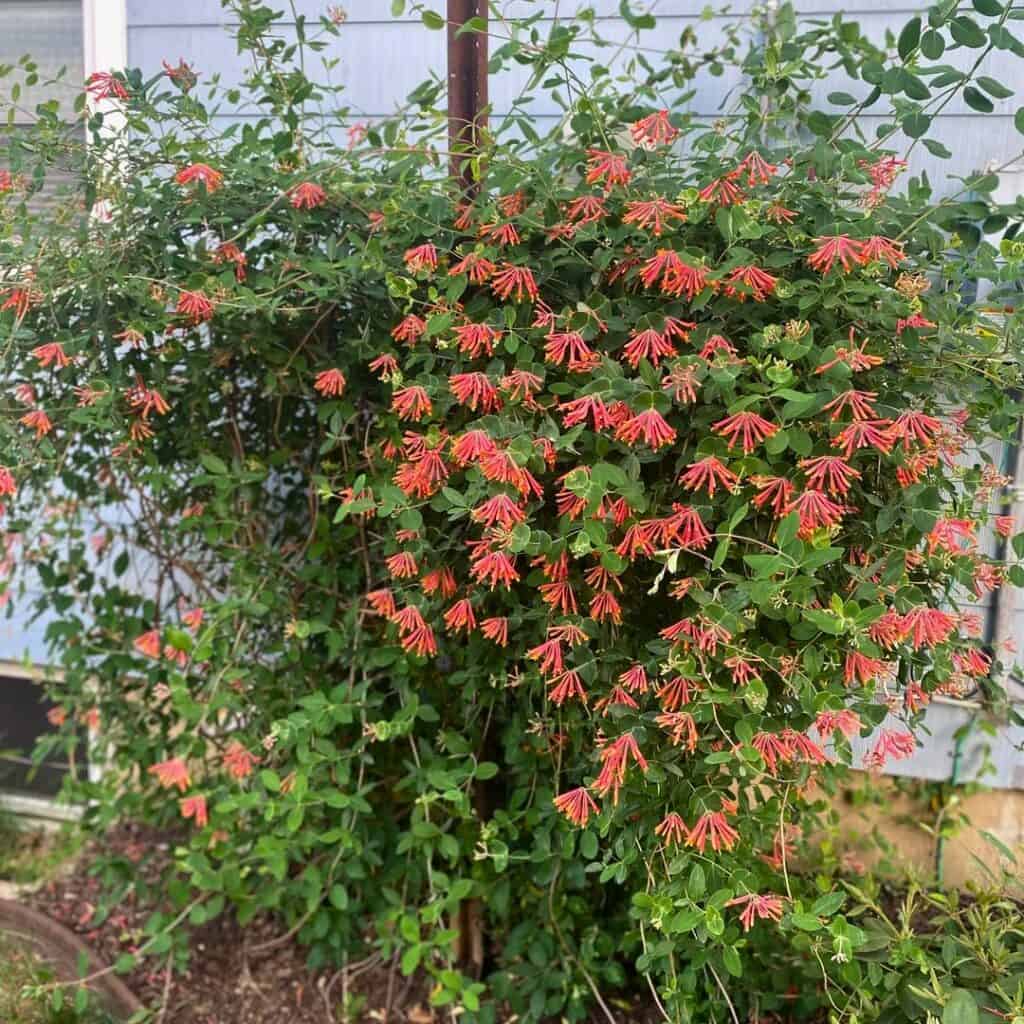
I have a soft spot for Winter Honeysuckle—it brings life to the yard when everything else is asleep. In late winter, it blooms with creamy white flowers that smell sweet, even on chilly days.
That scent can drift across the garden, and honestly, it’s one of my favorite things about being outside in the cold months.
This shrub is easy to grow and doesn’t ask for much once it’s established. I like to plant it along a fence for the dense, green leaves that give good coverage in spring and summer.
Even when it drops some leaves in winter, the tangled branches still add shape and interest. I’ve found it grows best in full sun to partial shade and likes well-drained soil.
I water it regularly the first year, then only if it’s really dry after that. It handles cold weather well, so it’s a safe pick for lots of climates.
Winter Honeysuckle can reach 6 to 10 feet tall, so it makes a nice screen without feeling heavy. When it flowers, bees show up early in the season, which helps the rest of my garden later on.
If I want to keep things tidy, I just prune it lightly after it blooms. The stems are flexible and easy to shape along a fence or in a corner.
A few trims each year keep it looking full and healthy.
What I love most is seeing this plant wake up the garden before spring’s even here. It’s simple, reliable, and quietly beautiful—pretty much everything I want in a fence plant.
25) Weigela ‘Wine and Roses’

I can’t get enough of Weigela ‘Wine and Roses’ for fence lines. The dark burgundy-purple leaves really stand out, and the plant’s bright pink flowers in late spring and summer are a magnet for hummingbirds and bees.
It grows about 4 to 5 feet tall and wide, which makes it easy to shape into a neat hedge or use as a low privacy border. I find it works well in mixed beds too.
It doesn’t mind being pruned after it blooms, and that keeps it looking sharp and encourages new growth.
What I like is that it’s tough and low-maintenance. It loves full sun and well-drained soil, but it can handle a bit of shade.
Once it’s settled, it even tolerates some dry spells, though I do water during long hot stretches.
The contrast of dark leaves and pink blooms gives my garden a lively look for most of the season. It pairs well with lighter green plants or ornamental grasses, and a layer of mulch around the base helps keep the soil cool and moist.
If you want a colorful fence line that stays neat, Weigela ‘Wine and Roses’ is a great pick. It brings style and function with hardly any effort—definitely one of my favorites for easy beauty.
How to Choose the Right Fence Plants
When I’m picking plants for my fence, I’m looking for a mix of privacy, color, and easy care. The best ones fit the space, match the vibe of my yard, and actually thrive in my climate.
I pay attention to height, growth habits, and how much trimming I’m willing to do.
Factors to Consider for Privacy and Style
First up, I think about height and density. Tall, thick plants like bamboo or arborvitae give fast privacy, while smaller shrubs like boxwood add shape and color.
Growth rate is another thing. Fast growers fill gaps quickly, but they can get a bit wild and need more trimming. Slower growers take their sweet time but usually stay neater.
Leaf type and texture matter, too. Evergreens keep their leaves year-round for steady coverage, while deciduous plants bring color changes with the seasons.
Flowering options like lilac or hydrangea add beauty and scent, which is always a nice bonus.
Here’s a quick guide I find helpful:
| Goal | Good Options | Notes |
|---|---|---|
| Year-round privacy | Arborvitae, Privet | Needs regular shaping |
| Seasonal color | Rose of Sharon, Hydrangea | Flowers attract pollinators |
| Natural texture | Bamboo, Holly | Varying leaf shapes and tones |
Matching Fence Plants With Your Landscape Design
I want my fence plants to tie in with the rest of my yard. For a modern look, I’ll go with sleek, uniform hedges like podocarpus.
If I’m after a cottage-style feel, soft flowering shrubs or vines are better.
Mixing evergreens for structure with flowering species for interest keeps the fence line looking good all year. I like to repeat similar shapes or leaf colors to help everything feel pulled together.
I also think about spacing and layering. If the fence is wide enough, I’ll plant in rows—tall plants in back, medium ones in the middle, and ground covers up front.
It gives the space some depth and color variety without crowding the roots.
Climate and Maintenance Needs
I always try to pick plants that actually fit my local climate and how much sun my fence gets. Heat-lovers like oleander or bougainvillea really only do well in warm spots, while boxwood or juniper are much happier if things are a bit cooler.
Maintenance matters, too. If I know I won’t be out there trimming all the time, I go for slow-growers or compact types. Soil and water needs can’t be ignored either—lavender, for example, just loves dry soil, but hydrangea will sulk without steady moisture.
It’s honestly way simpler to group plants that have similar care needs. That way, watering and fertilizing don’t turn into a juggling act. I always check for pest and disease resistance as well; healthier plants mean less hassle and fewer chemicals along my fence.
Care Tips for Healthy Fence Plants
Keeping fence plants looking good mostly comes down to a few basics—consistent watering, proper pruning, and regular pest checks. If I stick to those, they usually stay green and healthy all year.
Watering and Soil Requirements
I adjust my watering based on the plant type and whatever season we’re in. Most fence plants want moist but well-drained soil—soggy roots are a recipe for disaster, so I avoid letting the soil get swampy.
To check moisture, I just poke my finger in about two inches deep. If it’s dry, I water thoroughly. When it’s hot, I water more often, especially for shallow-rooted plants. Cooler weather? I cut back, since overwatering can creep up on you.
Compost or organic mulch around the base helps a lot with water retention. Mulch keeps things cool, slows down evaporation, and feeds the soil as it breaks down. I try to water deeply at the roots instead of just sprinkling the surface.
Quick tip: If water just runs off, I use a drip line or soaker hose to slow things down and help it soak in.
Pruning for Shape and Growth
Regular pruning keeps my fence plants looking full and balanced. Pruning encourages new shoots and stops overcrowding, which lets in air and light. I always start by cutting away anything dead or damaged.
For hedges, little trims here and there work better than waiting and having to hack off big branches. I try to cut just above a leaf bud that’s pointing where I want the new growth to go.
Timing’s different for each plant. Evergreens usually get pruned in late winter or early spring, while flowering types wait till after their bloom. I make sure my shears are sharp and clean to avoid spreading disease.
Simple rule: I never cut off more than a third of the plant at once. It just keeps things healthier.
Pest and Disease Prevention
I take a peek at leaves and stems every week or so. Catching problems early is the best way to handle pests and disease. I look for yellowing, holes, sticky spots, or any bugs hanging around.
If I spot something, I try to act quickly. For mild infestations, a rinse with water or a mild soap spray usually does the trick. If it’s a fungus issue, I cut off the bad parts and skip overhead watering.
It really helps to keep the area clean. Fallen leaves and weeds just invite trouble. I’ll switch up organic treatments—like neem oil or insecticidal soap—so pests don’t get used to one thing.
Strong, healthy plants can usually fend off most issues, so I keep up with watering, pruning, and feeding. If I do that, I rarely need to reach for anything harsh.
Frequently Asked Questions
People ask me all the time about picking plants for privacy, color, and keeping things neat year-round. I stick to options that are easy to grow and fit different styles or maintenance needs. If a plant’s got bold leaves, grows steadily, and holds up well, it’s usually a winner for fences.
What are some fast-growing plants for a privacy fence?
I’m a fan of Arborvitae ‘Green Giant’—it shoots up fast and makes a great green wall. Bamboo ‘Black Bamboo’ is speedy too, plus it’s got that cool, modern vibe. Plant them close and you’ll have privacy in a year or two.
Can you recommend flowering plants that are good for fencing?
Hydrangeas are a favorite for their big summer blooms, and roses never go out of style for color. Climbing jasmine is perfect if you want fragrance and don’t mind training it along a fence or trellis. These choices really soften up the look and bring in pollinators.
What shrubs make the best natural fences?
For that classic, tidy look, I go with Boxwood ‘Wintergreen’. Privet ‘Japanese Privet’ grows thick and fast if you keep it trimmed. Holly ‘American Holly’ brings texture and those bright berries for winter.
How do I choose plants that will complement my outdoor decor while providing privacy?
I try to match plant colors and shapes to whatever style I have going on in the yard. For a modern setup, I like bamboo or anything with simple, clean lines. If it’s more of a cottage garden, I mix flowering shrubs with leafy evergreens for some contrast.
Are there any evergreen plants that work well for privacy fences?
Absolutely. Arborvitae, Boxwood, and Holly are my go-tos since they stay green all year. They give steady coverage, even in winter, and make a nice backdrop for whatever else you want to plant.
How much maintenance do privacy fence plants typically require?
Most privacy plants need regular watering, a bit of pruning, and some mulching here and there. Fast growers like Privet or Bamboo can get a little wild, so you’ll want to trim them back now and then to keep things tidy.
Evergreens, honestly, are pretty chill once they’ve settled in. Still, I like to check for pests and snip off any dead branches whenever I notice them.
Note: Some images in the articles are sourced from Reddit and Other Platforms For Reference Purpose.