21 Tall Plants For Natural Backyard Privacy
I honestly love the calm and quiet that tall plants bring to a backyard. They create a living screen that blocks noise, wind, and nearby views, while adding shade and a bit of beauty.
Tall plants give you privacy without needing fences or walls.
In this article, I’ll share some of my favorite tall plants that help turn any outdoor space into a peaceful retreat.
You’ll find out which ones grow fast, need little care, and manage to keep their green color through every season.
Please note: Simplify Plants is reader-supported. As an Amazon Associate, I earn from qualifying purchases made by our readers with no extra cost added to you all! Some links in the post are affiliate links and I get a commission from purchases made through links in the post.
1) Arborvitae ‘Green Giant’
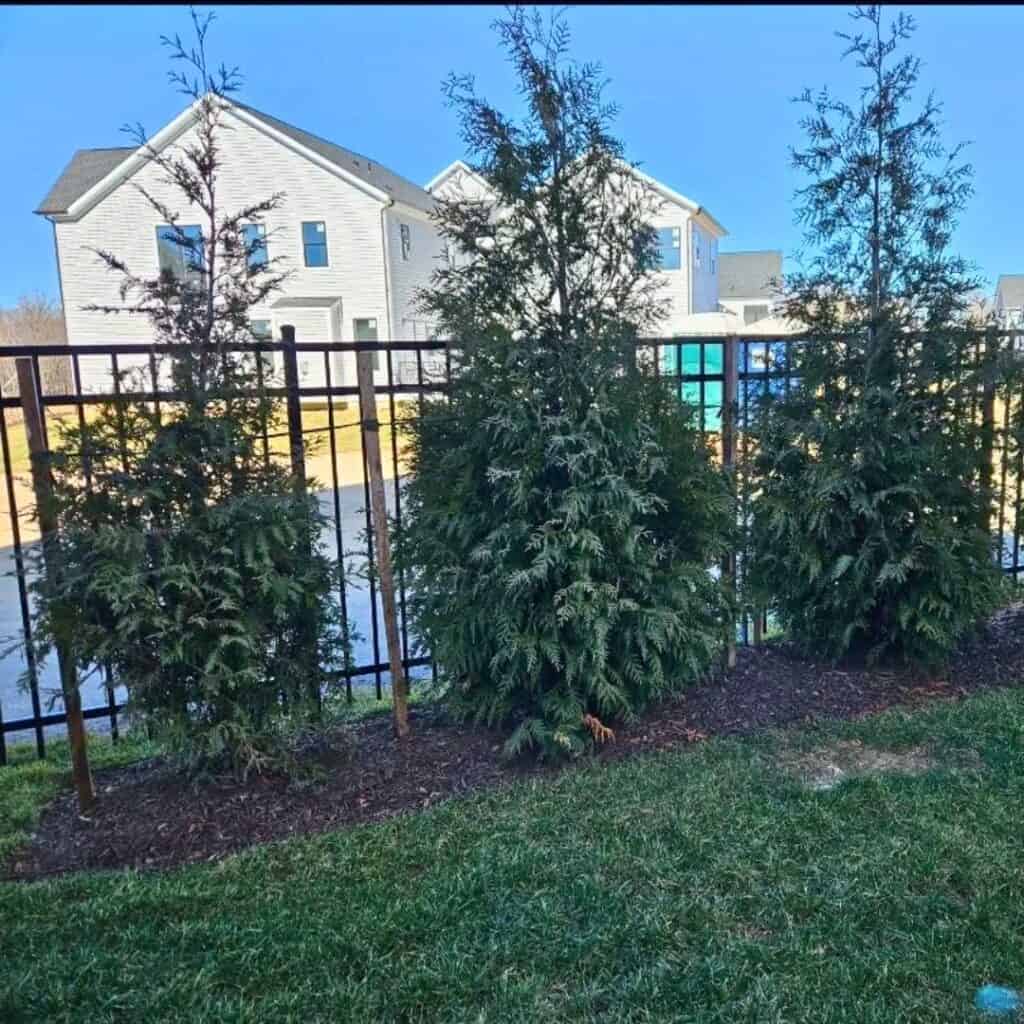
I like Arborvitae ‘Green Giant’ because it grows fast and looks full year-round. It forms a solid wall of green that works well for privacy screens.
I can plant it in a line to block views from neighbors or along the back of my yard for a natural border. This evergreen grows upright with a neat, uniform shape.
It can reach 30 to 40 feet tall and about 10 to 15 feet wide. That’s tall enough to create instant privacy without swallowing up the whole yard.
I find it easy to trim if I want a more defined hedge. I appreciate how low-maintenance it is once established.
It needs regular watering the first year, but after that, it handles both heat and cold pretty well. I’ve noticed it grows best in well-drained soil and full sun, though partial shade is fine too.
When I first planted mine, I spaced them about 5 to 6 feet apart for quick coverage. They filled in faster than I expected.
Now, they block wind and noise while giving my yard a calm, private feel. I like that the foliage stays green all year, even in winter.
The dense branches also give nesting spots for birds, which adds life to my garden. For me, the ‘Green Giant’ is one of the easiest ways to make a backyard feel more secluded.
2) Leyland Cypress
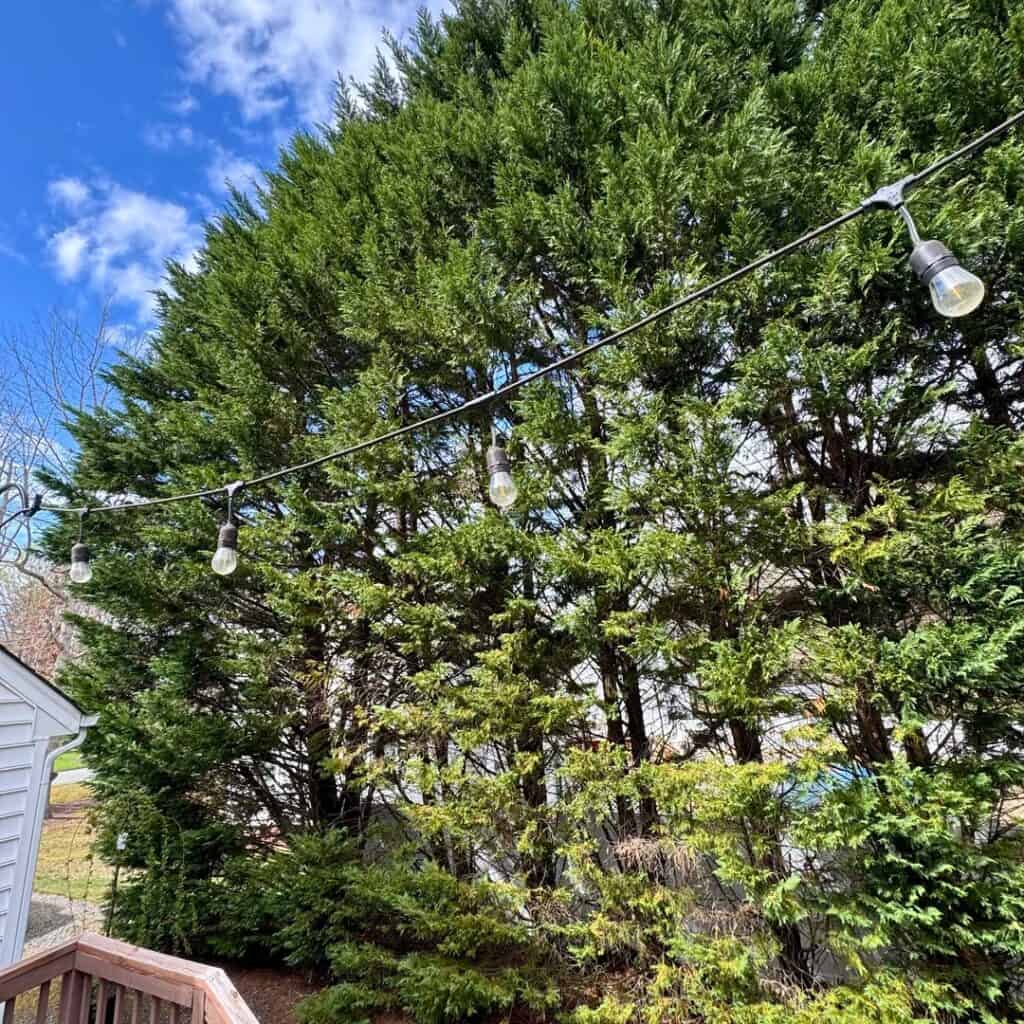
I like using Leyland Cypress when I need fast, natural privacy in my yard. These tall evergreens grow quickly and stay green all year, which makes them great for screening views or blocking noise.
I’ve found they create a living fence that looks much softer than a wooden wall or metal panel. This tree can grow up to 3 feet per year under good conditions.
I usually plant them about 6 to 10 feet apart so they have space to spread out while still forming a dense barrier. Their soft, feathery leaves make them pleasant to touch and easy to shape with light pruning.
They thrive best in full sun and well-drained soil. Once established, they handle a range of soils and light drought, which keeps maintenance simple.
I just give young trees regular water during the first year to help roots settle in. I like that they stay green even in winter, keeping the yard private when other plants lose their leaves.
Still, I watch for signs of diseases like canker or bagworms, as these can affect their health if ignored. With early care, my Leylands stay healthy and strong.
If I need instant impact, I plant a row across the property line or use them as a tall backdrop for smaller flowering shrubs. Their dense, upright growth adds structure and gives the garden a calm, secluded feel.
I can count on them to grow tall and full without needing constant effort.
3) Bamboo Phyllostachys Aurea
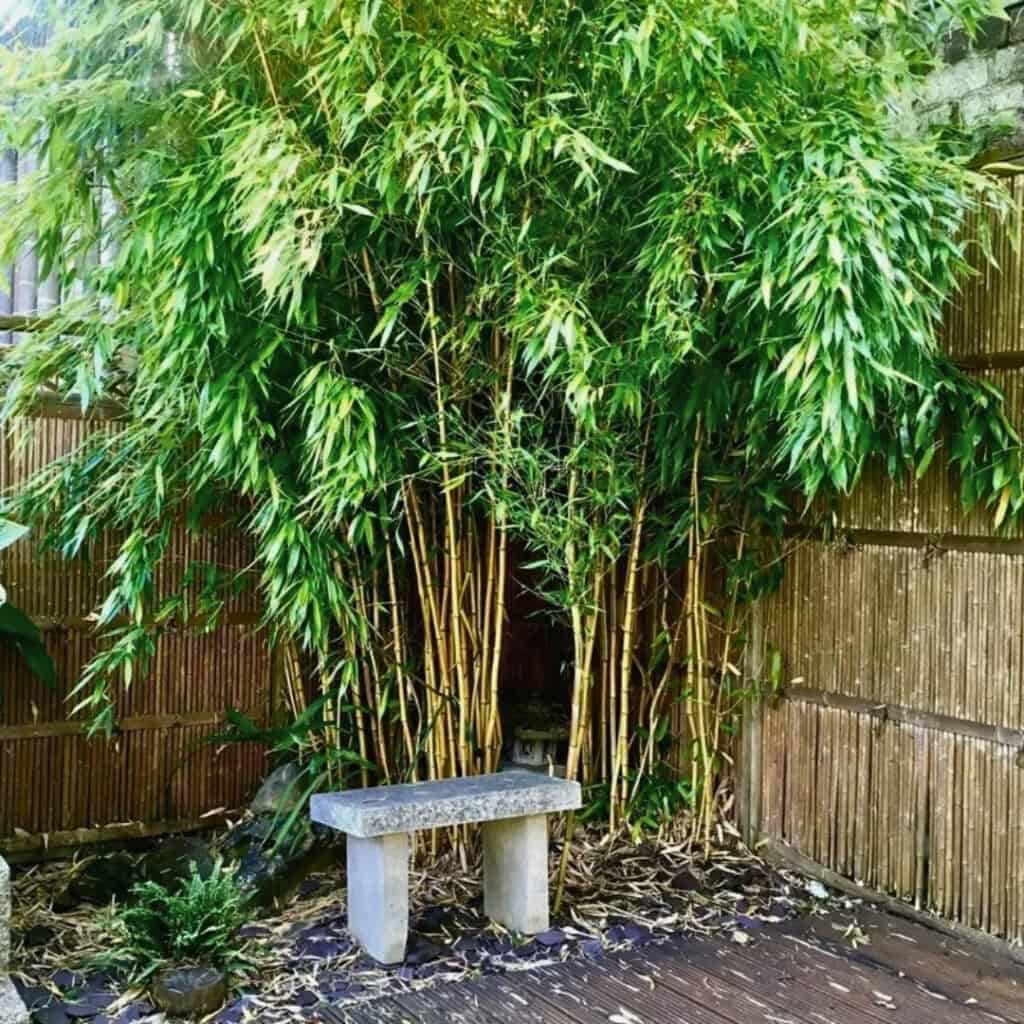
I love how Bamboo Phyllostachys Aurea instantly adds height and texture to my yard. It creates a natural green wall that feels peaceful and private.
The tall, slender canes sway softly in the wind, giving my space movement and life. This bamboo, also called Golden Bamboo, grows fast and dense.
In good conditions, it can reach 15 to 30 feet tall, forming a thick screen. I find it best for lining fences or corners where I want extra privacy.
I’ve learned it spreads quickly through underground rhizomes, so I always use a root barrier to keep it contained. This makes it easier to manage while still enjoying the full, lush look I want.
Bamboo Phyllostachys Aurea thrives in full sun to partial shade and likes moist, well-drained soil. I water it regularly during dry spells and trim older canes to keep it neat.
These simple steps help it stay healthy and strong year-round. The golden color that appears on the canes with age gives my garden a warm touch.
Even in winter, its evergreen leaves keep my space green and inviting. It’s honestly one of the easiest ways I’ve found to add beauty and privacy at the same time.
4) Italian Cypress
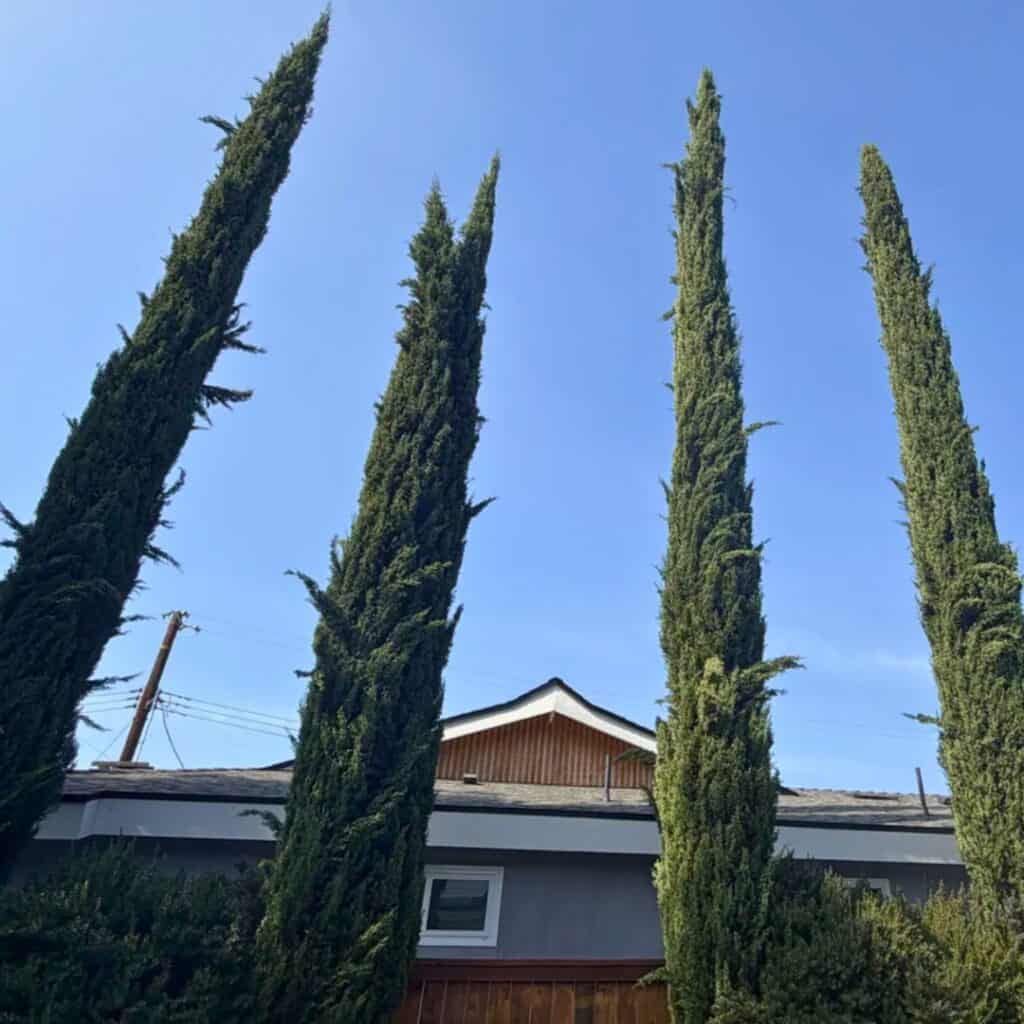
I love how Italian Cypress trees bring a tall, elegant shape to my yard. They have a slim, upright form that can reach 40 to 60 feet high, but they rarely grow more than 3 to 5 feet wide.
That makes them perfect when I want privacy without using too much space. Their dense, evergreen foliage creates a green wall year-round.
I like planting them along fences or driveways to form a clean border. The dark green leaves stay beautiful even in winter, which keeps my backyard looking lush when other plants fade.
These trees grow best in full sun and well-drained soil. I make sure not to overwater them because too much moisture can cause root rot.
Once established, they handle drought well, which makes them easy to maintain in dry climates. I’ve noticed that Italian Cypress trees add a touch of order and structure to any garden design.
When I plant several together, they form a natural screen that blocks wind, noise, and nearby houses. The vertical lines also make my yard feel taller and more refined.
To keep them healthy, I prune lightly once a year. This keeps their shape neat but still natural.
Italian Cypress trees work great for small spaces where wide hedges don’t fit. I often see them framing entryways or standing in rows behind patios.
They offer privacy and beauty without taking over the landscape.
5) Sky Pencil Holly

I love how Sky Pencil Holly adds height and structure to a yard without taking up much space. Its narrow, upright shape makes it perfect for small gardens or tight spots along fences and walkways.
I can plant several together to create a natural privacy screen that still looks neat and tidy. This evergreen shrub grows up to 8-10 feet tall but stays only a few feet wide.
I don’t have to worry about it spreading or crowding other plants. Its glossy green leaves look fresh all year, which keeps my space looking alive even in winter.
I find this plant easy to care for. It thrives best in well-drained soil and prefers full sun to partial shade.
I water it regularly while it’s young, then less often once it’s established. With minimal trimming, I can keep its shape perfect.
I like using Sky Pencil Holly to frame entryways or line patios. When I plant several in a row, they form a green wall that blocks views but doesn’t feel heavy or closed in.
It also works great in containers if I want flexibility in placement. Deer rarely bother this plant, which is another reason I add it to my garden.
In late summer, tiny white flowers may appear, followed by dark berries that attract birds. It brings subtle life to the space while keeping things clean and organized.
For me, Sky Pencil Holly is an easy way to create privacy and elegance with very little effort. Its tall, straight shape fits almost anywhere, and it stays beautiful through every season.
6) Eastern White Pine

I love how Eastern White Pines can instantly change the look of a yard. These trees grow tall and full, making them one of my favorite choices for natural privacy.
Their soft needles and light green color add a calm, relaxed feel to any outdoor space. I like that they grow fast, often reaching over 50 feet tall if they have room.
Even young trees can form a solid screen within a few years. I plant them in a row with enough space so their branches can spread without crowding each other.
These pines stay evergreen, so I never lose my privacy in winter. The tree keeps its soft needles year-round, which also helps block wind and noise.
They do best in full sun and well-drained soil. I water them regularly when young but less once they’re established.
I also check for pests or browning needles to keep them healthy. I appreciate how little maintenance they need once they’re settled.
A bit of pruning keeps their shape neat, but otherwise, they grow well on their own. Their tall, natural form gives the right balance of beauty and function without much effort.
7) Thuja Occidentalis ‘Smaragd’

I really like Thuja Occidentalis ‘Smaragd’, also known as Emerald Green Arborvitae, for its neat and tidy shape. It has bright green foliage that stays fresh-looking all year.
I find it’s a great choice if I want backyard privacy but don’t have much space. This evergreen grows in a narrow, upright form, reaching about 10 to 15 feet tall and 3 to 4 feet wide.
The steady growth rate makes it easy to plan for, and it won’t overwhelm smaller yards. I appreciate that it doesn’t drop many needles, which helps keep things looking clean.
I like to plant these trees in a row to create a dense, living screen. They block views well and can also soften noise a bit.
When spaced about 2 to 3 feet apart, the trees fill in nicely and form a solid wall of green within a few years. Smaragd Arborvitae prefers full sun but tolerates light shade.
I’ve noticed it grows best in well-drained soil and with occasional watering during dry spells. It doesn’t require much pruning, but a little shaping keeps it looking tidy if I want a more formal look.
This plant is also resistant to most pests and diseases, which makes it low-maintenance once established. I like that I can plant it and mostly let it take care of itself.
Its evergreen color helps my yard stay lively even in winter.
8) Mexican Feather Grass
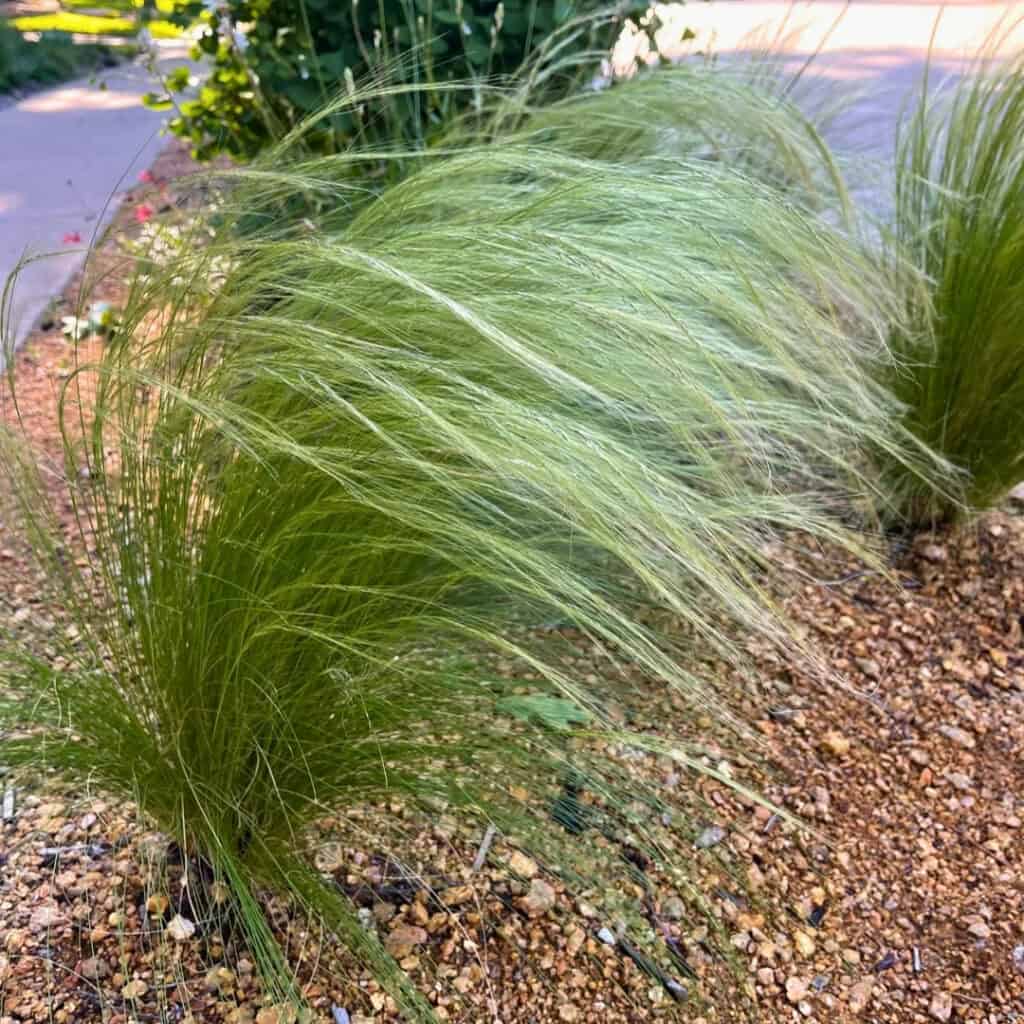
I love how Mexican Feather Grass adds movement and texture to my backyard. Its fine, silky blades sway even in a light breeze, creating a calm and natural feel.
This grass looks soft but stands up well in different weather conditions. It grows to about 2 to 3 feet tall, making it a great choice for gentle privacy without blocking sunlight.
I like using it along fences or garden edges where it softens harsh lines and blends easily with other plants. Mexican Feather Grass thrives in full sun and doesn’t need much water once it’s established.
I find it perfect for low-maintenance gardens because it grows well in poor soil and doesn’t need frequent trimming. In my garden, I plant it in groups for a fuller look.
The feathery texture catches the light beautifully, especially in the early morning or late afternoon. It adds a light, flowing effect that feels natural rather than overly structured.
I also appreciate that this grass stays attractive through most of the year. When the seasons change, the green tones shift to golden hues, adding warm color to my landscape.
It gives the backyard a sense of calm that I enjoy every day.
9) Japanese Cedar

I’m a big fan of Japanese Cedar when I want a tall, green screen that grows fast and keeps things fresh all year. The soft, feathery needles create a calm vibe—honestly, it’s got a way of making the yard feel peaceful.
This tree can get pretty tall, which is perfect for backyard privacy. I like how its rich green color shifts a bit with the seasons, bringing subtle changes that keep things interesting.
It keeps a neat shape with barely any trimming, which is a lifesaver if you’re not into constant yard work. Full sun and well-drained soil are best, but it’ll deal with some shade if that’s all you’ve got.
When I plant Japanese Cedar in a row, it forms a dense barrier that knocks down noise and wind. The upright growth means it doesn’t sprawl everywhere, so it fits even if your yard isn’t huge.
I always leave a good six to ten feet between each one—roots need their space, right? And honestly, that spacing helps them thrive.
This tree is low-maintenance, which is a huge plus. I just water it during dry spells and toss on some mulch to keep the roots happy.
Once it’s settled in, there’s not much else to do. In the hottest months, those thick branches throw enough shade to make the yard way more comfortable.
If you’re aiming for a privacy screen that feels natural and peaceful, Japanese Cedar is a solid pick. It’s tall, calm, and evergreen—just what I want for a quiet retreat out back.
10) Nellie Stevens Holly
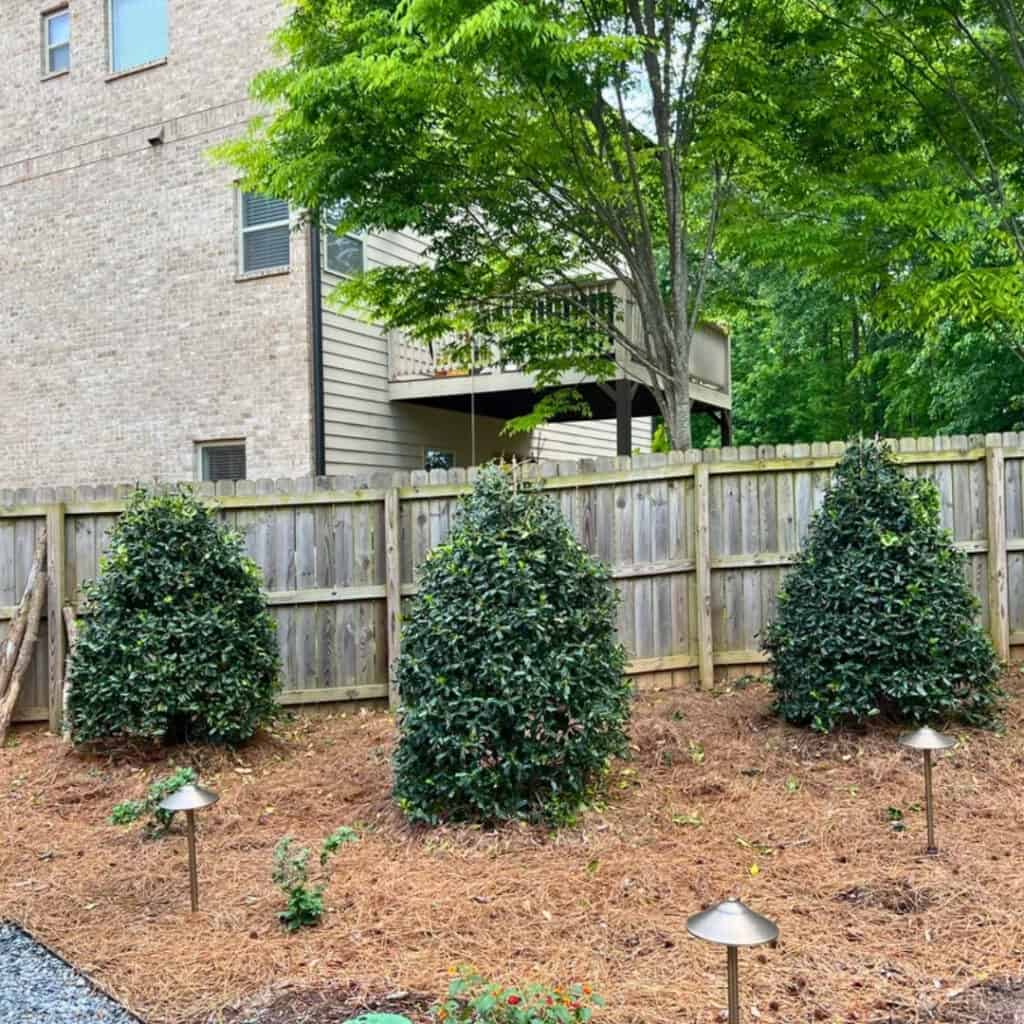
I really like Nellie Stevens Holly for a privacy screen because it grows dense and tall without much fuss. The deep green leaves stay lush year-round, so I get good cover even in winter.
Its neat shape keeps my yard looking tidy and a bit more structured. This holly can get 20 to 25 feet tall, which is great for blocking views from next door.
I usually plant them in a row for a thick hedge. They grow fast, so I don’t have to wait ages for privacy.
It’s easygoing—handles both sun and partial shade just fine. I water it regularly for the first year, then only when things get really dry.
It also handles trimming well, so shaping it to fit the space is no problem. In fall, little bright red berries show up and stick around through winter.
They add a pop of color and attract birds, which I love watching from my porch. Just a heads-up: you’ll need both male and female hollies for berries, so I always plant a mix.
Nellie Stevens Holly is low-maintenance, evergreen, and fast-growing. It gives me privacy without a fence and keeps things peaceful and private all year.
11) Western Red Cedar
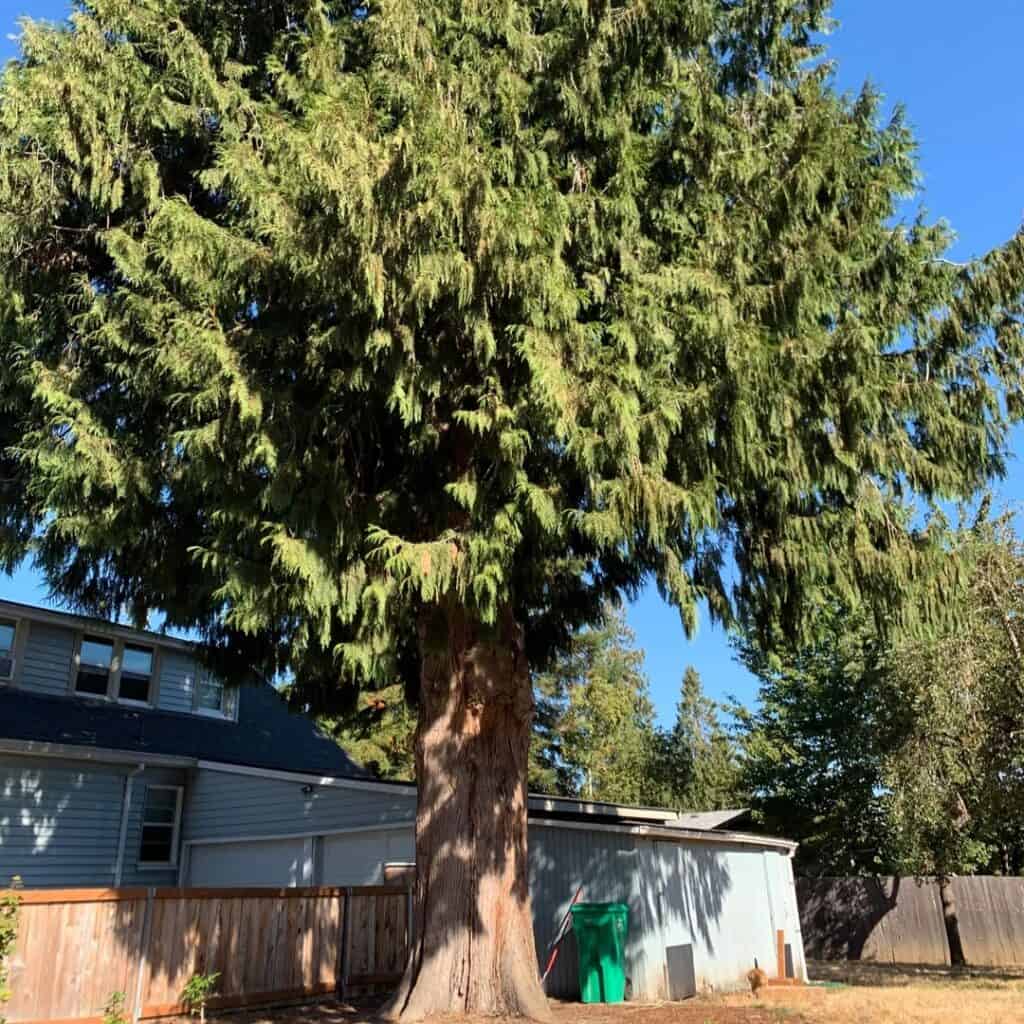
I love how Western Red Cedar gives instant privacy without looking too heavy. This evergreen grows thick and tall, so it forms a natural screen that feels relaxing and inviting.
Its soft green needles keep their color all year, which keeps my backyard lively even in the cold months. It grows quickly—usually 2 to 3 feet per year if it’s happy.
With enough sun and regular watering, it can hit 30 to 50 feet tall. That means I don’t have to wait forever for solid coverage.
The scent is a bonus—Western Red Cedar has this pleasant, woodsy smell that always reminds me of hiking in the forest. The bark and foliage resist pests, so it stays healthy with very little effort.
I plant them about 3 to 5 feet apart for good airflow and space. Once they’re established, they can handle a bit of drought, though I still give them a deep drink during hot spells.
A little pruning once or twice a year keeps things tidy. Because it’s dense yet graceful, this cedar fits into just about any landscape.
It works as a windbreak, a sound barrier, or just a divider between yards. When sunlight hits the foliage, the branches almost glow, giving the whole space a cozy feel.
12) Wax Myrtle

I reach for Wax Myrtle when I want privacy that still feels soft and natural. This evergreen shrub is a fast grower and has dense, fragrant leaves that keep things private year-round.
It’s easy to shape into a hedge or let it grow wild for a looser look—depends on my mood, honestly. What I really appreciate is how low-maintenance it is.
Wax Myrtle shrugs off heat, wind, and salt like it’s nothing, so it’s perfect near the coast or in open, breezy spots. Once it’s settled in, I hardly have to fuss with it.
I plant it in full sun to partial shade, and it still grows strong and healthy. It can reach 10 to 15 feet tall, so there’s plenty of coverage without feeling heavy.
The light green leaves brighten things up and blend well with other plants. Birds seem to love it too—the small berries in late summer attract all sorts of wildlife.
Watching them perch in the branches is one of my favorite backyard perks. For easy privacy and a little greenery all year, Wax Myrtle is a practical, good-looking choice.
It gives me shade, coverage, and a clean, natural look—without much work at all.
13) False Cypress

False Cypress just brings so much texture and height to a backyard. The soft, feathery foliage looks elegant year-round and comes in shades of green, gold, and even blue, if you’re into that.
It’s a great pick if you want privacy and a little color at the same time. I usually plant False Cypress where I want things to look calm and organized.
It grows upright and dense, forming a screen that doesn’t feel bulky or overbearing. Plus, it keeps a tidy shape with barely any trimming, so it’s good for low-maintenance spaces.
False Cypress can get between 10 and 30 feet tall, depending on which kind you choose. I go for smaller types in tight spots and taller ones for strong privacy along fences.
It grows slowly, so I can shape it gradually if I want. I’ve noticed it loves well-drained soil and full sun—the more light, the better the color.
I water it regularly at first, then cut back once it’s settled in. What I like best is how quietly it does its job.
The soft needles move with the breeze, adding texture but never stealing the show. It gives privacy without feeling boxed in, which is a win for most backyards.
14) Tall Fescue Grass

I like Tall Fescue Grass because it’s quick to grow and forms thick, upright clumps for instant green privacy. It’ll hit about 3 to 4 feet tall if you let it go, so it’s great for filling open spots or edging a walkway.
This grass is a champ in tough spots where other plants struggle. It handles both sun and partial shade and stays green most of the year in many climates.
Honestly, it’s tougher than most lawn grasses—especially when it comes to moderate drought and foot traffic. I often use Tall Fescue as a natural border or screen.
Its strong blades stand tall and create a soft, flowing look that’s neat but not overly formal. For extra privacy, I’ll plant it near fences or low hedges to block small gaps and keep things lush.
Taking care of Tall Fescue is easy. I water it deeply once a week during dry spells and trim it a few times a year to keep it looking good.
It doesn’t spread all over the place, so it stays where I put it—less hassle in the long run. If you want a backyard that feels full and private without big shrubs or trees, Tall Fescue Grass is a solid, green choice.
It keeps things natural and inviting, which is all I really want.
15) Giant Miscanthus

I’m a big fan of Giant Miscanthus when I want a tall, thick screen that still feels soft and easy on the eyes. This grass can get 10 to 12 feet high, so it’s definitely one of the best for backyard privacy.
It grows fast and fills in quickly, which I appreciate—who wants to wait forever? The leaves arch gently, giving it a graceful look even as it forms a dense wall.
I love the plumes that show up in late summer—they add texture and move with the wind, which brings the whole yard to life. In fall, the golden tones warm things up and make the space feel extra inviting.
I plant Giant Miscanthus in full sun to help it reach its full height. It’s not picky about soil, as long as it drains well.
Once it’s established, it barely needs watering, which honestly saves me a lot of time. Each spring, I cut the old stalks down to a few inches and new shoots pop up fast—fresh, green blades by early summer.
That one step keeps the plant healthy and neat. I like that Giant Miscanthus stays upright even when it gets windy.
The tall stems don’t flop, so my privacy screen looks tidy most of the year. It also gives birds a nice place to hide, which adds some life to the yard.
If I’m after a natural, modern vibe, I’ll plant a row behind the patio or along the fence. The tall grass gives a sense of separation without closing things in.
It’s a practical way to add beauty and privacy at the same time. Giant Miscanthus is definitely one of my go-tos for quick, low-fuss screening.
It’s got height, texture, and reliability—hard to beat, honestly.
16) Silver Maple

I really like how Silver Maple trees grow fast and fill up open spaces in no time. Their tall height and wide canopy make them perfect for natural backyard privacy.
The leaves have this silvery underside that shimmers in the breeze, which adds a soft, calming touch to the yard. I’ve noticed Silver Maples do best in full sun and moist soil, but they’re pretty adaptable.
They can reach up to 60 feet tall, so I always plant them far enough from buildings and driveways. The roots spread wide, and honestly, that can be an issue if they’re too close to sidewalks or pipes.
What I love is how quickly they create shade. In just a few years, you get a thick screen that blocks views and cools everything underneath.
I use them along property lines when I want privacy without a big fence. The fall color isn’t super bright, but the light gray bark and silver-tinted leaves keep things interesting all year.
They add a quiet charm that works with almost any landscape style. I water young trees regularly to help them get established.
Once they’re mature, they barely need any care besides a trim now and then. Their toughness and adaptability make them one of my favorite low-maintenance privacy trees.
17) Red Twig Dogwood
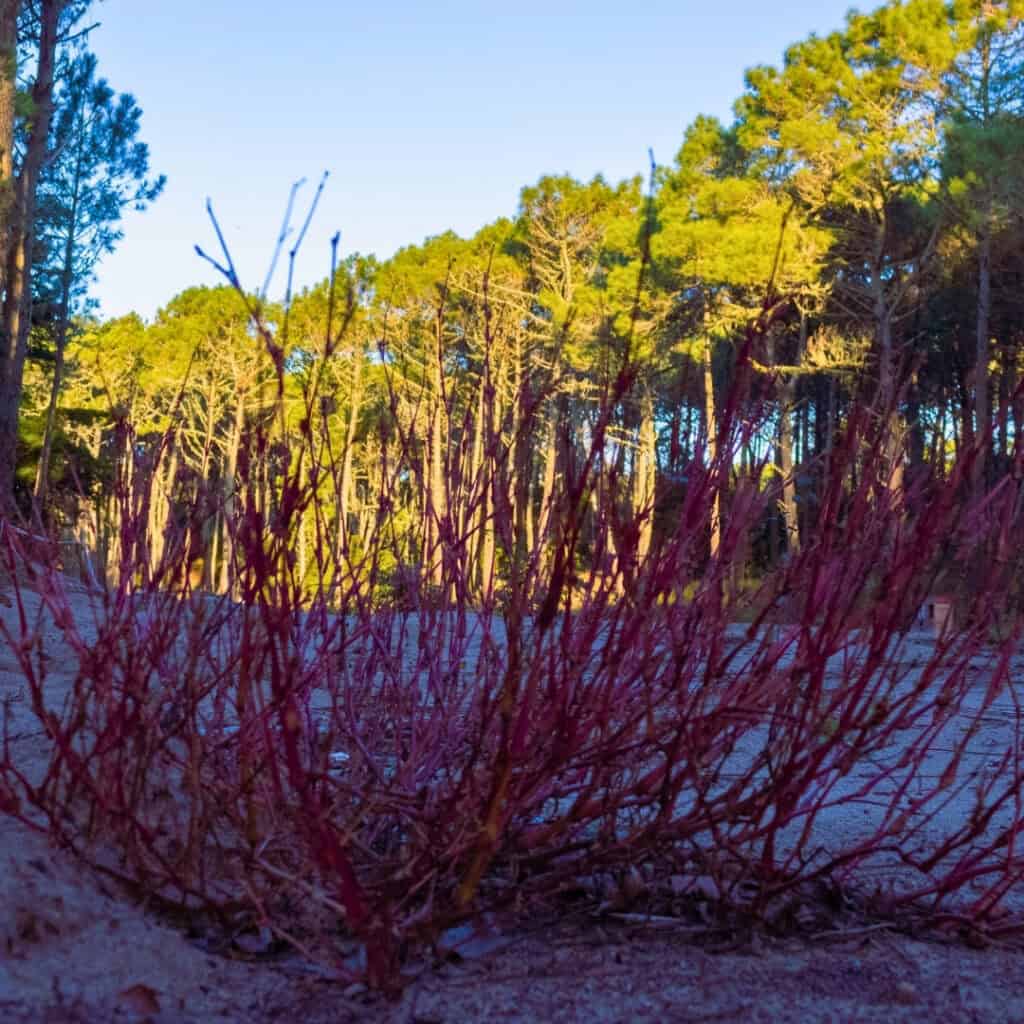
Red Twig Dogwood is one of those plants that stands out in every season. The bright red stems look amazing in winter after the leaves drop.
Even in summer, the green leaves and white flowers make it a beautiful and useful shrub. It grows about 6 to 9 feet tall, which is just enough for privacy without making the space feel boxed in.
I like that it forms a natural screen but still lets in some light. It fits well along fences and garden edges, adding just the right amount of coverage.
It’s easy to care for and can handle both sun and partial shade. Plus, it grows well in a variety of soils—even wet spots—so it’s flexible for different yards.
The fast growth rate means you get privacy in just a few seasons. When fall comes around, the leaves often turn shades of red and purple.
Then in winter, those bright red twigs really pop against the snow or bare ground. I like cutting a few branches for winter arrangements—they always look great.
It also attracts birds and pollinators, which brings extra life to the backyard. For me, that’s a big plus.
To keep it looking its best, I prune it every couple years to encourage new red stems—the most colorful ones. A little trimming here and there keeps it tidy and healthy all year.
18) Weeping Willow

The Weeping Willow just brings a peaceful vibe to any yard, doesn’t it? Those long, graceful branches sort of drift in the wind, making a soft green curtain that always catches my eye, especially near water.
This tree grows fast, so you’ll get privacy in just a few years. It can hit 30 to 50 feet tall, with those wide, drooping branches that really block out unwanted views.
Honestly, I think it’s best for larger yards since it needs space for that big canopy. It does well in moist soil and even seems happy in spots where water likes to collect.
That said, you’ve got to watch out for the roots—they’re strong and can travel far, sometimes finding pipes underground if you’re not careful. In spring and summer, the leaves are bright green and full, then turn a soft yellow in fall before dropping.
Even in winter, I think the bare shape looks beautiful against the sky. If you’re after both shade and privacy, the Weeping Willow is a solid pick. It just gives the backyard a relaxed, welcoming look all year.
19) Quaking Aspen

I can’t help but love Quaking Aspen trees for the movement they bring to a yard. Their round, fluttering leaves catch even the smallest breeze, and that soft rustling sound is honestly calming.
In summer, the leaves are a bright green, then they turn a glowing yellow in fall—such a pop of color. These trees grow fast and tall, often getting up to 40 to 50 feet.
Because they’re narrow and quick-growing, they make a great living screen for privacy. I’ve found that grouping several together really thickens up the barrier against noise and wind.
Quaking Aspen trees love cooler climates and want full sun. They adapt to different soil types but seem happiest in moist, well-drained ground.
Once they’re settled in, you barely need to fuss—just water during dry spells and prune if branches get crowded. The white bark is another thing I like; it stands out against the greenery, and even in winter, it keeps things looking interesting.
If you want privacy that feels lively and peaceful, Quaking Aspen is a good bet. The gentle sound and graceful shape just make the backyard feel like a retreat.
20) Douglas Fir

I’m a big fan of Douglas Fir for strong, evergreen privacy in the backyard. It stays full and green all year, so you get steady coverage even in the cold months.
This tree grows tall—60 to 80 feet isn’t unusual—so I always give it lots of space. Each tree needs room to spread its branches, which helps them stay healthy and keeps things from getting crowded.
Douglas Fir likes well-drained soil and plenty of sun. I water it regularly the first few years, then ease up once it’s established.
It’s low-maintenance, which is honestly a relief if you want easy privacy. The soft, fragrant needles are a bonus, and the shape works for both formal and natural settings.
Birds love it, too, so you’ll get a bit more life and sound in your yard. If I’m aiming for a dense screen fast, I’ll plant younger trees closer and trim lightly as they grow.
Over time, they fill in and make a thick, peaceful green wall.
21) Eastern Red Cedar
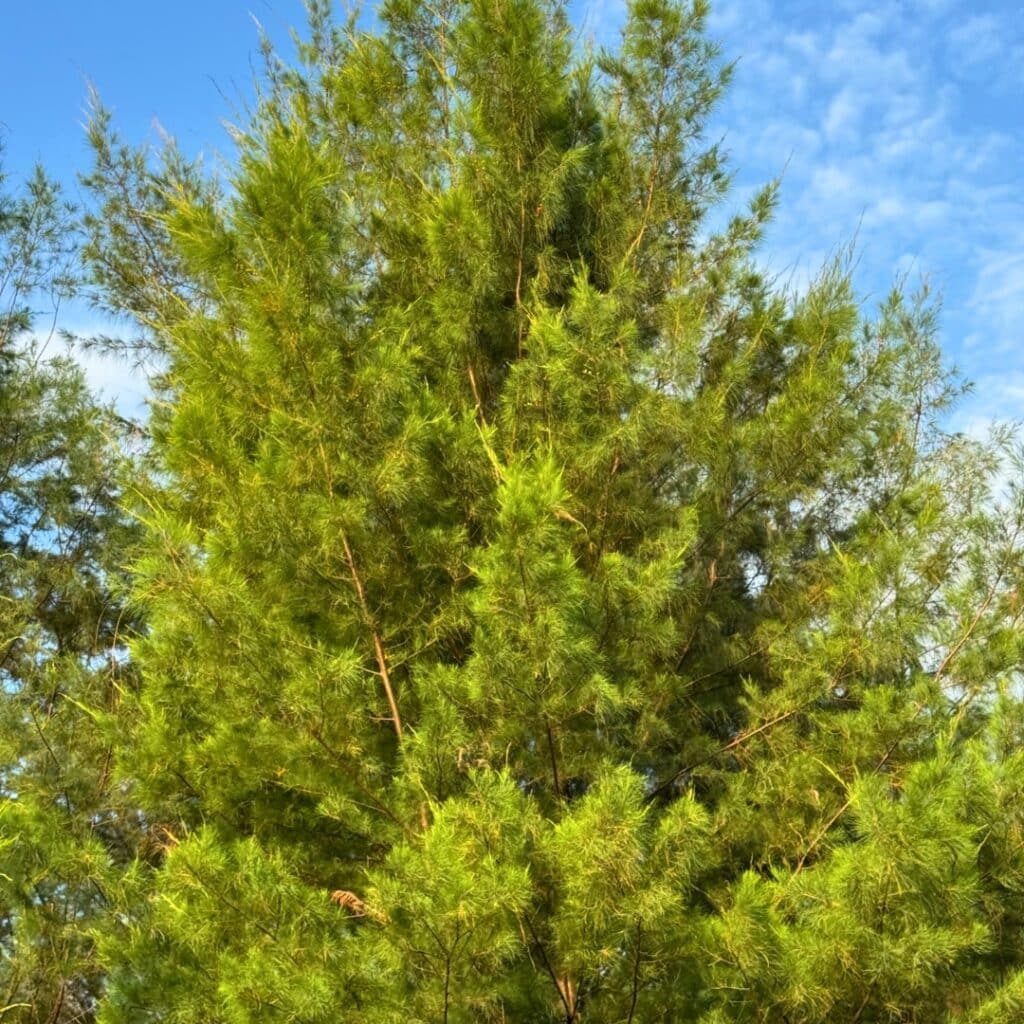
I always like using Eastern Red Cedar for natural backyard privacy. It grows tall and dense, so it’s perfect for blocking out unwanted views.
The evergreen needles keep their color year-round, so it looks good even in winter. You can expect it to reach 30 to 40 feet tall, giving you plenty of shade and coverage.
I find it works best planted in a row, forming a living wall that feels warm and natural. The blue-green foliage is a nice contrast to other plants, too.
Eastern Red Cedar is tough—it likes full sun and well-drained soil, and once it’s established, it can handle heat, cold, and even dry spells. That means less stress about watering or special care.
Wildlife love this tree. Birds nest in the thick branches and seem to enjoy the little bluish berries. It’s a simple way to bring more life into the yard while adding privacy.
Since it’s a native tree, it fits right into lots of landscapes and supports local ecosystems. I plant mine with a few feet between each so they have room.
They fill in nicely without crowding. If you want a durable, low-maintenance plant for year-round privacy, Eastern Red Cedar is one of my top picks. It works hard and just makes the backyard feel peaceful.
How Tall Plants Create Backyard Privacy
Tall plants really help shape a yard into a private, relaxing space. They block views, soften noise, and bring in birds and helpful insects that make the garden feel alive.
Visual Screening Benefits
When I’m planning privacy planting, height and density matter most. Tall plants create a natural wall that hides patios, pools, and fences from neighbors or the street.
Instead of harsh barriers, I get a green screen that just feels calm and inviting. I like to mix evergreens like arborvitae with flowering shrubs so there’s coverage all year.
Layering plants—tall in back, medium in the middle, short in front—makes the screen look full and adds some texture.
A few good options for different uses include:
| Purpose | Example Plants |
|---|---|
| Fast coverage | Bamboo, hybrid poplar |
| Decorative privacy | Lilac, holly, hydrangea |
| Year-round screen | Arborvitae, Leyland cypress |
Spacing is key. Too close, and they fight for light; too far, and you get gaps. I usually check each plant’s mature width before planting so the barrier is even and solid.
Natural Noise Reduction
Tall plants help lower noise from traffic or neighbors. Thick leaves, sturdy stems, and layers catch and scatter sound, making the yard quieter.
I like mixing trees and shrubs with dense foliage because that combo absorbs more sound. Evergreens are especially good since they keep their leaves all year, so you get noise reduction even in winter.
Tips for better noise control:
- Pick taller, denser species
- Plant in multiple rows for extra thickness
- Add mulch under plants to cut down sound reflection
Plants won’t block all noise, but they make a real difference. Plus, the rustling leaves replace harsh sounds with something softer and more natural.
Wildlife Attraction
Surrounding the yard with tall greenery brings in more birds, butterflies, and beneficial insects. These plants offer shelter, nesting spots, and food.
The privacy barrier also acts as a small habitat, supporting local ecosystems. Trees with berries and flowering shrubs attract a nice mix—hollies bring songbirds, lilacs draw pollinators like bees.
A birdbath or feeder near tall plants keeps wildlife around longer. Using native species helps local creatures thrive and makes care easier.
Native plants just fit better with the local soil and climate and usually need less water. That boosts biodiversity and keeps the space lively without much extra work.
Essential Care Tips for Tall Privacy Plants
I stick to three basics for healthy tall privacy plants: give them space, keep the watering and soil right, and prune regularly. A little care early on helps them grow tall and lush for years.
Planting and Spacing Guidelines
I always give each plant enough room to grow so roots and branches don’t compete. For rows, I leave 3–5 feet between shrubs and 5–8 feet between trees, depending on how big they’ll get.
This spacing lets sunlight reach every plant and keeps air moving, which helps prevent disease. Before planting, I loosen the soil about a foot deep and mix in compost or aged manure.
That helps the roots spread easily. I make sure each plant sits at the same depth as in its nursery pot.
On slopes, I stagger rows to block gaps and keep things looking natural. Mulch around the base helps retain moisture, control weeds, and protect roots from heat or frost.
Watering and Soil Needs
Tall plants like consistent moisture but need well-drained soil too. I water deeply once or twice a week, depending on the weather.
Shallow watering just wets the surface and doesn’t help roots much. During hot spells, I give extra water in the early morning to cut down on evaporation.
A 2–3 inch layer of mulch keeps the ground damp longer. I never pile mulch against trunks or stems to avoid rot. If you’ve got clay soil, mix in sand or compost for drainage; sandy soil likes extra organic matter to hold moisture.
I test soil pH about once a year. Most privacy plants like slightly acidic to neutral soil (6.0–7.0 pH). If it’s too acidic, I add crushed limestone; too alkaline, I’ll use sulfur or peat moss.
Pruning for Long-Term Health
I prune to control size, shape, and density. Light trimming after flowering or at winter’s end removes dead or weak branches.
I try not to cut more than a third of the plant at a time to avoid stressing it. Sharp, clean tools make cuts that heal faster.
For hedges, I shape the top a bit narrower than the base so sunlight gets to all sides. That keeps the privacy wall full from top to bottom.
If a plant grows unevenly, I trim the faster side first to balance things out. Regular pruning also helps me spot insects or disease early, so it’s easier to deal with problems before they get big.
Frequently Asked Questions
People often ask about fast-growing, tall, and low-maintenance plants for natural privacy outdoors. Many of these also work in tight spaces, shady spots, or gardens where you want year-round interest.
What are some fast-growing tall plants that are perfect for backyard privacy?
I like Arborvitae ‘Green Giant’ and Leyland Cypress since they fill in fast and make thick green walls that block views and cut down noise.
Bamboo ‘Phyllostachys Aurea’ grows quickly and gives a modern look, but I always use root barriers to keep it from spreading too much.
Can you recommend any tall perennials for creating a natural privacy screen?
I usually go for Miscanthus or Joe Pye Weed.
They get tall enough to shield the yard and attract birds and butterflies. They die back in winter but return strong in spring, so they’re pretty sustainable.
What tall shrubs would thrive in low-light conditions while providing privacy?
For shade, Sky Pencil Holly and Camellia are my go-tos.
They stay upright, evergreen, and don’t mind limited sunlight. Plus, their glossy leaves and tidy shape add some nice texture.
Are there any tall ornamental grasses suitable for adding privacy to my garden space?
Definitely. Pampas Grass and Feather Reed Grass both give you soft, airy privacy.
They sway in the breeze and barely need any maintenance once they’re settled in.
Which tall plants are best for creating privacy in a small backyard?
In tight spaces, I like Italian Cypress or Sky Pencil Holly for their narrow, upright growth.
They don’t hog ground space but still make a strong vertical screen.
How do I maintain tall plants to ensure they provide maximum privacy year-round?
I like to trim and shape my plants every season—helps keep them looking thick and full. Regular watering, some mulch, and a bit of pruning here and there really make a difference for healthy growth.
When it comes to evergreens, I’ll usually check for pests and toss on a light feed in spring. That seems to keep their color nice and vibrant.
Note: Some images in the articles are sourced from Reddit and Other Platforms For Reference Purpose.