9 Reasons Why Pothos Leaves Are Turning Yellow and How to Fix Them Fast
Pothos plants are usually tough and easy to care for, but yellow leaves can show up even when you think you’re doing everything right. Honestly, it’s kind of annoying when it happens to my own plants.
Yellow leaves on pothos usually mean something about their care needs to change, whether it’s water, light, or something else in their environment. The upside? Most causes are easy to fix once you figure out what’s going on.
This guide covers the main reasons your pothos might be turning yellow and what you can do about it. We’ll talk about watering, light, pests, and a few other things that could be messing with your plant.
Please note: Simplify Plants is reader-supported. As an Amazon Associate, I earn from qualifying purchases made by our readers with no extra cost added to you all! Some links in the post are affiliate links and I get a commission from purchases made through links in the post.
1) Overwatering causing root rot
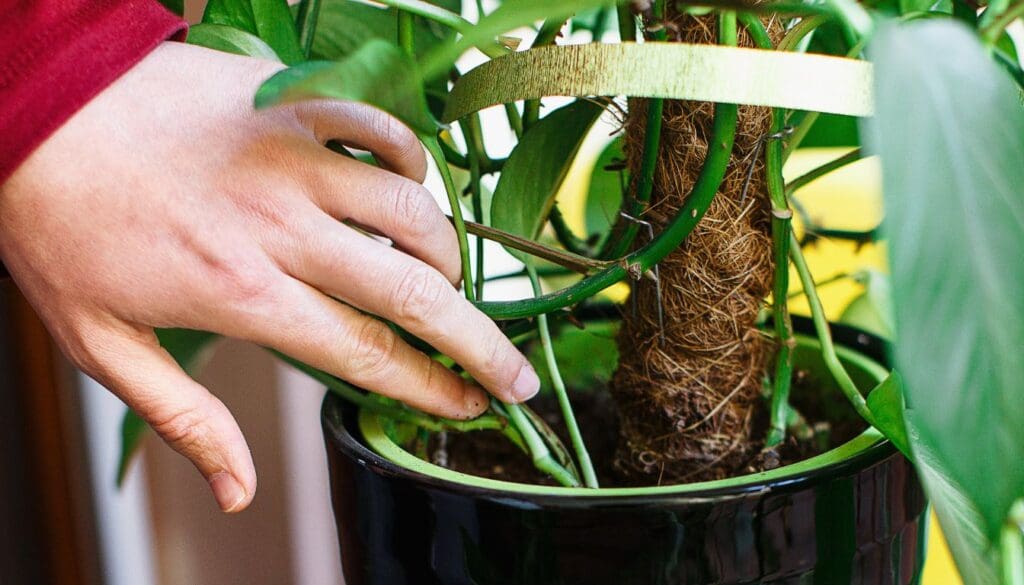
I know it’s tempting to shower your pothos with water, but too much love can actually harm it. When soil stays soggy for too long, the roots can’t breathe properly.
They start to rot, which means they can’t pull up nutrients anymore. Your plant’s leaves turn yellow because those damaged roots aren’t doing their job.
The yellowing usually starts at the bottom of the plant first.
Quick Tip: Stick your finger about an inch into the soil before watering—if it feels damp, wait a few more days.
Root rot has a few telltale signs beyond yellow leaves. The stems might feel mushy near the base, and you could notice a funky smell from the soil.
If you pull the plant out, the roots look brown and slimy instead of white and firm. The good news is that pothos are pretty forgiving.
I always let the top inch or two of soil dry out between waterings. In winter, I water even less since plants aren’t growing as much.
2) Insufficient sunlight exposure

Pothos plants are pretty forgiving, but they still need light to keep their leaves green. When mine don’t get enough sunlight, the older leaves start turning yellow first.
The plant basically can’t make enough food without adequate light. I’ve noticed this happens most often when I put a pothos in a dark corner or far from any window.
They can survive in low light, but “survive” isn’t the same as “thrive.” If your pothos sits in a dim spot for weeks, those yellow leaves are its way of telling you something’s wrong.
The fix is simple: move your plant closer to a window with bright, indirect light. I avoid direct sun because it can scorch the leaves, but a spot a few feet from an east or north-facing window works great.
Quick Tip: If you can barely read a book in the spot where your pothos lives, it’s probably too dark for the plant.
Watch for new growth too. If new leaves come in pale or yellowish instead of deep green, that’s another sign your pothos needs more light.
3) Natural aging of older leaves

Not every yellow leaf means something’s wrong with your pothos. Sometimes leaves just get old and tired, like the rest of us.
Pothos plants naturally shed their oldest leaves as they grow. The lower leaves closest to the soil are usually the first to go.
They turn yellow, then brown, and eventually drop off. This is completely normal and actually a sign your plant is making room for fresh growth up top.
Quick Tip: If only one or two bottom leaves are yellowing while the rest look healthy and green, don’t panic—your plant is just doing its thing.
You can gently tug on the yellow leaf once it’s mostly brown. If it comes off easily, go ahead and remove it.
If it resists, leave it alone for a few more days. The plant will release it when it’s ready, and pulling too early can damage the stem.
4) Too much direct sunlight

Pothos plants don’t actually like bright, direct sun. I know it sounds odd for a plant, but too much sunlight will scorch their leaves and turn them yellow.
The leaves might also look pale or washed out before they go fully yellow. I always keep my pothos in indirect light.
A spot a few feet back from a window works great. East-facing windows are perfect because they get gentle morning sun.
If your pothos sits right in a sunny window, that’s probably your problem. The leaves closest to the glass usually show damage first.
Move it to a shadier spot and the new growth should come in green.
Quick Tip: If you can only offer bright windows, hang a sheer curtain to filter the light.
Watch for brown, crispy edges along with the yellowing. That’s a dead giveaway that sun damage is happening.
Your plant will thank you for the move to a cooler, shadier location.
5) Low humidity levels

Pothos plants come from tropical areas where the air stays moist most of the time. When I keep mine in a dry room, the leaves start to yellow at the tips and edges.
Indoor heating and air conditioning pull moisture out of the air, which stresses the plant. I’ve noticed this problem gets worse in winter when furnaces run constantly.
The dry air makes it hard for pothos to pull water through their leaves properly. If you see crispy yellow spots along with the color change, low humidity is probably your culprit.
Quick Tip: Mist your pothos a few times a week or set the pot on a tray filled with pebbles and water.
You can also group plants together since they create their own little humid zone. A small humidifier nearby works great too, especially if you live in a desert climate or experience harsh winters.
I aim for humidity levels around 40-50% for happy pothos leaves.
6) Nutrient deficiency in soil
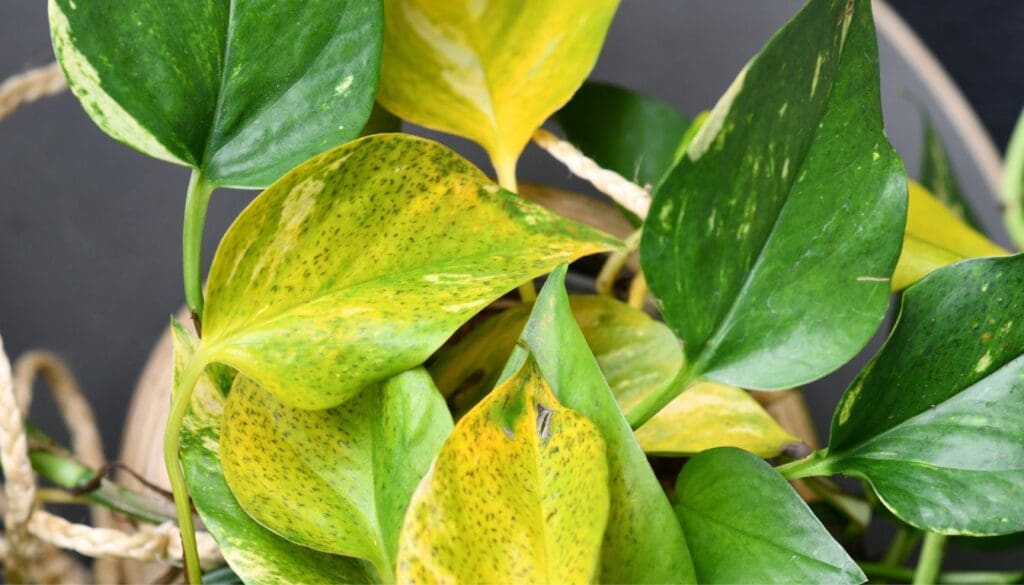
Pothos aren’t picky plants, but they still need food to stay green and healthy. When the soil runs out of nutrients like nitrogen, iron, or magnesium, the leaves start turning yellow.
Nitrogen deficiency usually shows up on older leaves first, while iron problems make new growth look pale and yellow. I’ve found that pothos growing in the same pot for years without fresh soil or fertilizer are the most likely to develop this issue.
The plant basically eats through what’s available and has nothing left to work with. During the growing season (spring and summer), I feed my pothos with a balanced liquid fertilizer once a month.
That keeps the leaves lush and prevents that sad yellowing look.
Quick Tip: Dilute your fertilizer to half strength to avoid burning the roots.
If you haven’t repotted in over two years, consider refreshing the soil. New potting mix gives your plant a boost of nutrients right away.
7) Cold drafts affecting leaves

Pothos plants hate sudden temperature drops. When cold air hits their leaves, they can turn yellow and start to droop.
I’ve seen this happen near air conditioning vents, drafty windows, and doorways that open to the outside. The cold stress messes with how the plant moves water and nutrients through its leaves.
Think of it like getting a chill—your pothos reacts the same way. Even a few hours of cold drafts can cause damage that shows up as yellowing over the next few days.
Quick Tip: Feel around your plant’s spot with your hand during different times of day to catch sneaky drafts.
I always check if my pothos is sitting too close to an AC unit or a window that gets opened at night. Moving it just a few feet away usually fixes the problem.
If you live somewhere with cold winters, keep your plant away from single-pane windows where the glass gets icy.
8) Pests like spider mites
Spider mites are tiny bugs that love to snack on pothos leaves. They’re so small you might not notice them at first, but they cause big problems.
These pests suck the sap right out of the leaves, which makes them turn yellow and look sickly. I always check the undersides of leaves because that’s where spider mites like to hide.
You might see tiny webs or notice small dots moving around. The leaves can also look speckled or dusty before they turn yellow.
Getting rid of spider mites takes some effort, but it’s totally doable. I wipe down the leaves with a damp cloth to remove the bugs.
You can also spray the plant with water or use insecticidal soap to kill them off.
Quick Tip: Mist your pothos regularly since spider mites hate humidity and thrive in dry conditions.
If you catch the problem early, your plant will bounce back pretty quickly. Just keep an eye on it for a few weeks to make sure the pests don’t come back.
9) Using hard tap water
Hard tap water might be the sneaky reason your pothos leaves are turning yellow. I’ve seen it happen more times than I can count.
Hard water contains high levels of minerals like calcium and magnesium that build up in the soil over time. These minerals don’t just disappear.
They create a crusty white layer on the soil surface and block your plant from absorbing the nutrients it actually needs. When your pothos can’t get proper nutrition, the leaves start yellowing from the bottom up.
You can spot hard water issues by checking for white residue on your pot or soil. If you live in an area with hard water, switching to filtered or distilled water makes a real difference.
I usually let tap water sit out overnight before using it, which helps some of the minerals settle.
Quick Tip: Water with room-temperature filtered water to prevent mineral buildup and keep leaves green.
Some plant owners collect rainwater when possible, which works great for pothos. Just make sure whatever water you use doesn’t shock the roots with extreme temperatures.
How to Diagnose Yellowing Pothos Leaves

Yellow leaves on my pothos don’t always mean the same thing. I need to check where the yellowing starts and how it spreads to figure out what’s wrong.
Spotting the Early Signs
I always start by looking at where the yellow leaves appear first. If I notice yellowing on the oldest, bottom leaves near the soil, that’s usually a different problem than when new growth comes in yellow.
The pattern matters too. When leaves turn yellow all over at once, I’m dealing with one issue.
But if I see yellow spots, edges, or patches, that points to something else entirely. I also check how fast the yellowing happens.
A sudden change over a few days tells me something stressed my plant quickly. Gradual yellowing over weeks suggests a slower problem like nutrient issues or natural aging.
Quick Tip: Take a photo each week so I can track how fast the yellowing spreads and spot patterns I might miss day-to-day.
The texture of yellow leaves gives me clues too. Crispy, dry yellow leaves feel different from soft, mushy ones.
Dry leaves often mean underwatering or too much sun, while mushy leaves point to overwatering or root rot.
Distinguishing from Other Leaf Issues
Yellow leaves look different from other common pothos problems. Brown, crispy tips without yellowing usually mean low humidity or fertilizer burn.
Pure yellow is its own thing. I don’t confuse yellowing with the natural variegation on my pothos.
Variegated varieties have cream or white patches that were always there. New yellow sections that weren’t there before signal a problem.
Pest damage can trick me at first. When I see yellowing with tiny holes, webbing, or sticky residue, I know bugs are involved.
Plain yellow leaves without these signs point to water, light, or nutrient issues instead.
Quick Tip: Run my finger along the underside of leaves and check the stems closely—pests hide in spots I don’t usually look.
Diseases create yellow leaves with other symptoms. If I spot black or brown spots spreading on the yellow areas, or if leaves feel slimy, that’s likely a fungal or bacterial infection rather than a simple care issue.
Long-Term Care for Healthy Pothos

Keeping your pothos thriving means getting the watering schedule right and giving it the light it needs. The soil mix and fertilizer you choose also make a big difference in preventing yellow leaves down the road.
Preventive Watering and Lighting Tips
Honestly, I’ve found that watering only when the top couple inches of soil feel dry is what works best for pothos. Just stick your finger in the soil—if it feels dry, then it’s time to water.
Too much water? That spells root rot, and yellow leaves show up fast. If you’re watering more than once a week, you’re probably doing too much.
Pothos likes bright, indirect light to stay happy and green. I usually keep mine roughly 5 to 8 feet from a window or just somewhere the sun isn’t blasting the leaves directly.
Quick Tip: Got your pothos in a gloomy corner? Try moving it closer to a window or adding a grow light for 10-12 hours a day.
Low light makes the plant sluggish, and the leaves might lose their color. Direct sun isn’t great either—it burns the leaves and leaves behind brown or yellow spots. North or east-facing windows? Can’t go wrong with those, honestly.
Choosing the Best Soil and Fertilizer
I always reach for a well-draining potting mix for my pothos. Regular houseplant soil mixed with perlite or some orchid bark (about a 2:1 ratio) keeps those roots from sitting in soggy misery.
Heavy, compact soil just holds onto too much water, and that suffocates roots. Even if you’re doing everything else right, yellow leaves can still show up if the soil’s not right.
For feeding, I go with a balanced liquid fertilizer—something like 10-10-10 or 20-20-20—about once a month in spring and summer. I usually dilute it to half strength, just to play it safe and avoid burning the roots.
Quick Tip: Skip the fertilizer in fall and winter, since pothos growth slows down anyway.
Too much fertilizer? That can leave a salty build-up in the soil, which fries the roots and gives you yellow leaves with brown tips. If you spot a white crust on the soil, just flush it with water to wash those salts away.
Frequently Asked Questions
Yellow pothos leaves sometimes pop up with browning tips, droopy stems, or seem to appear more in winter or when you’re growing the plant in water. Sure, older leaves yellow naturally, but often it’s a sign of watering issues, light problems, or missing nutrients.
Why are my pothos leaves turning yellow and brown at the same time?
When I see yellow leaves with brown edges or tips, it’s usually my plant dealing with a couple of stress factors at once. Yellowing tends to come from overwatering or root rot, while brown edges show up from dry air or too much sun beating down on the leaves.
First thing I do is check the soil. If it’s soggy, I let it dry out and make sure the pot drains well. If the soil feels fine, I check where my pothos is sitting—sometimes harsh afternoon sun is the culprit, even if the roots are too wet.
Quick Tip: Feel the leaves. Crispy brown edges? That’s dry air or sun damage. Soft brown spots? Probably rot.
What should I do if my pothos leaves are turning yellow and drooping?
Drooping yellow leaves usually mean the roots aren’t happy. Most of the time, it’s from overwatering, which basically suffocates the roots and messes with how they absorb water and nutrients.
I pick up the pot—if it feels heavy, the soil’s probably waterlogged. I’ll also poke my finger in a couple inches; if it’s wet, I wait to water and try to get more air moving around the plant.
If the soil stays wet for days, I’ll repot into fresh, well-draining mix. If I spot mushy brown roots, I trim them before replanting—root rot spreads fast.
Quick Tip: If your pothos is droopy from underwatering, it’ll perk up within hours of a drink. Overwatered leaves, though, just stay limp.
Should I cut off yellow leaves on my pothos, or leave them on?
I always snip off fully yellow leaves. They’re not coming back, and they just drain energy from the plant. Once a leaf loses all its green, it’s done its job and the plant will focus on new growth instead.
Clean scissors or pruning shears do the trick—I cut the stem close to the main vine. Keeps the plant tidy and makes it easier to spot any new yellowing that might mean a bigger problem.
Quick Tip: If a leaf is only partly yellow, I leave it—there’s still some photosynthesizing going on.
Can yellow pothos leaves turn green again, or are they permanently damaged?
Once a leaf turns yellow, it’s not going to turn green again. The chlorophyll is gone for good, whether it’s from age, overwatering, or light issues. I just try to fix the cause so the next leaves grow in healthy.
If I catch a leaf just as it’s starting to fade or get little yellow spots, sometimes tweaking care can stop it from getting worse. But if it’s gone bright yellow, that’s pretty much it for that leaf.
Quick Tip: Keep an eye on the newest leaves at the vine tips—if they’re coming in green, you’re on the right track.
Why is my pothos turning yellow in winter, and how can I help it?
Winter’s tricky—less natural light and indoor heating both drop humidity fast. Pothos slows down in the cold months and can’t handle as much water, so if you keep up your summer watering, you’ll get yellow leaves from overdoing it.
I water less in winter—usually waiting for the top two inches of soil to dry out completely. I’ll also move my pothos closer to a window if I can, since winter sun is weaker and doesn’t reach as far.
Heaters dry out the air, so I’ll group my plants together or run a little humidifier nearby. Dry air stresses pothos and makes yellowing, especially on older leaves, more likely.
Quick Tip: In winter, I end up watering my pothos about half as often as I do in the growing season.
Why are my pothos leaves turning yellow when it’s growing in water?
Water-grown pothos needs more than just plain water—there aren’t enough nutrients in there for the long haul. After a few weeks or maybe a couple months, you’ll probably notice yellowing leaves because the plant’s run out of what it needs.
I usually add a diluted liquid fertilizer meant for hydroponics about once a month. It seems to help keep things green and happy.
Stagnant water is another headache. I swap out the water entirely every week, just to keep oxygen up and stop any nasty bacteria from wrecking the roots.
If the water sits in direct sunlight, it heats up and algae starts to take over. Algae basically steals nutrients from the pothos, which is just annoying.
I keep my water-grown pothos in bright, indirect light instead, and I use an opaque container so the roots stay in the dark. It’s not fancy, but it works.
Quick Tip: Use room-temperature filtered or tap water that’s been left out overnight. Fresh tap water with chlorine can really stress those roots out, and nobody wants that.
Note: Some images in the articles are sourced from Reddit and Other Platforms For Reference Purpose.