
Best Fertilizer For Blooming Peace Lily (+Ideal Ratios and Feeding Tips)
Peace lilies are usually pretty forgiving, but getting them to bloom? That takes a bit more effort. If yours hasn’t flowered in ages or the blooms seem lackluster, chances are it’s something in the feeding routine.
The best fertilizer for blooming peace lilies is a balanced, water-soluble formula with a 20-10-10 or 3-1-2 NPK ratio, applied at half strength every 6-8 weeks during the growing season. Extra nitrogen helps with those lush leaves, while phosphorus is key for flower production.
Honestly, the right fertilizer schedule makes all the difference between a peace lily that’s just sitting there and one that’s actually showing off those classic white blooms.
This guide will walk you through picking the right product and steering clear of the common feeding mistakes that can set your plant back.
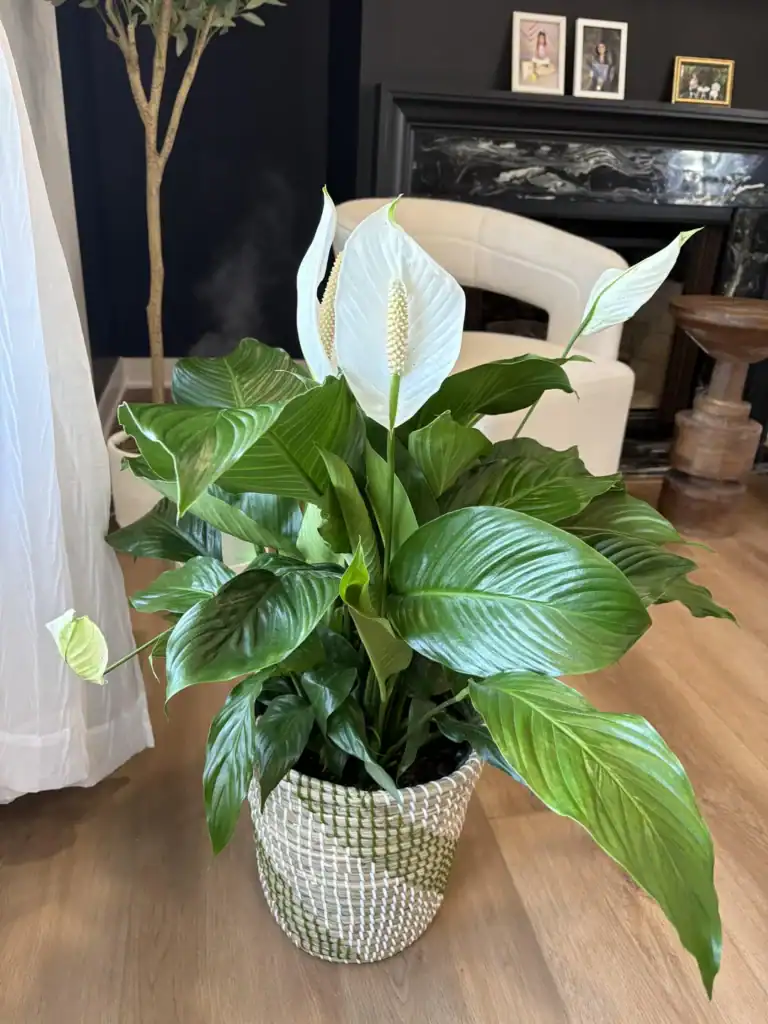
Please note: Simplify Plants is reader-supported. As an Amazon Associate, I earn from qualifying purchases made by our readers with no extra cost added to you all! Some links in the post are affiliate links and I get a commission from purchases made through links in the post.
Why Fertilization Matters for Blooming Peace Lily
Peace lilies rely on the right nutrients to push out their signature white blooms. Fertilizer fills in what regular potting soil just can’t provide.
Without proper feeding, you might get lots of leaves but no flowers. Kind of disappointing, right?
Nutrient Needs During Blooming
When peace lilies bloom, they pull extra energy. Nitrogen is for healthy leaves, phosphorus triggers flower production, and potassium keeps the whole plant sturdy.
During blooming, phosphorus is especially important. It basically tells the plant, “Hey, it’s time for flowers, not just more leaves.”
I’ve also noticed peace lilies need small amounts of micronutrients like magnesium and iron. These help with chlorophyll and keep leaves green even while the plant is working on blooms.
Quick Tip: Look for a balanced fertilizer with an NPK ratio like 10-10-10, or go a bit higher in phosphorus, like 10-15-10.
Common Signs of Nutrient Deficiency

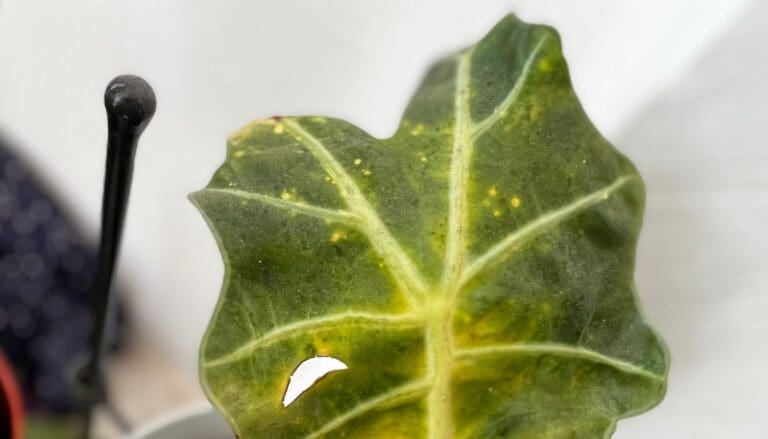
Yellow leaves? That’s usually a sign something’s off with nutrients. If the veins stay green, iron might be the issue.
Brown tips often mean salt buildup from over-fertilizing or maybe a potassium shortage. If growth is stunted or leaves are smaller, your plant probably wants more nitrogen.
No blooms at all, even with plenty of light? That could mean a phosphorus shortage. Sometimes the leaves look fine, but the flowers just never show up.
Pale or washed-out leaves suggest a need for more magnesium. I always check the older leaves first—deficiencies usually pop up there before you see them on new growth.
How Fertilizer Affects Flower Production
Phosphorus is the key player for blooming. It triggers the plant’s hormones to switch gears from growing leaves to making flowers.
If your peace lily doesn’t get enough phosphorus, it’ll keep growing leaves but skip the blooms. It’s a common frustration.
Balanced nitrogen matters too. Too much and you get a jungle of leaves, too little and the plant can’t support flowers at all.
I stick with a diluted liquid fertilizer every 6-8 weeks in spring and summer when my peace lily is busy growing. This seems to keep the blooming cycle going without overwhelming the roots.
Best Fertilizer Types for Peace Lily Blooms
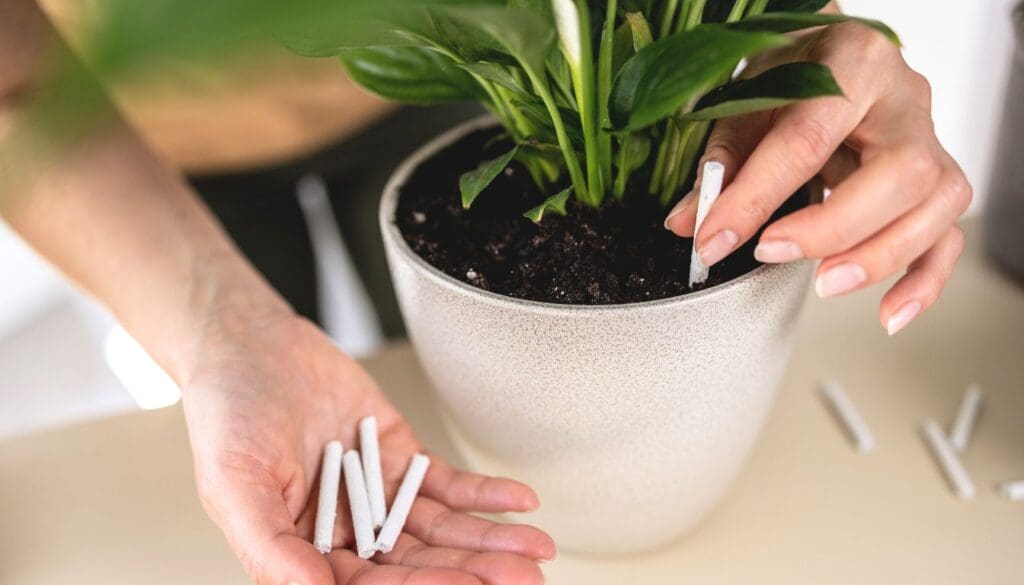
Peace lilies can thrive with different fertilizer formats. Picking the right one really depends on how much you want to fuss with feeding and your usual watering routine.
Let’s break down the main options so you can figure out what fits your style best.
Organic vs. Synthetic Fertilizers
Organic fertilizers come from things like fish emulsion, worm castings, or composted manure. They release nutrients slowly, so there’s less risk of burning the roots.
I like organic options because they help the soil over time and feed the good microbes. Downside? They’re slow, and honestly, some of them smell terrible indoors. Fish emulsion is not for the faint of heart.
Synthetic fertilizers give nutrients in a form plants can use right away. They’re odorless and consistent, and you know exactly what you’re giving your peace lily. The label tells you the N-P-K content, no guesswork.
The catch? Synthetics can build up salts if you overdo it. I’ve seen this cause brown tips plenty of times. If you go this route, flush the soil with plain water every few months to keep things balanced.
Quick Tip: Can’t decide? Mix half organic and half synthetic for quick results and long-term soil health.
Liquid vs. Granular Fertilizers
Liquid fertilizers dissolve in water and go straight to the roots. I find them super convenient for peace lilies—you can adjust the strength and feed while you water.
Most liquid formulas work every 2-4 weeks in spring and summer. Just add to your watering can and go. The plant gets an instant boost.
Granular fertilizers either sit on top or get mixed in. They break down slowly with each watering, releasing nutrients over weeks or even months.
I don’t use granular types much for peace lilies. It’s harder to control how much the plant gets, and if you water inconsistently, you might run into problems. Still, they’re fine if you like a set-it-and-forget-it approach—just be careful about fertilizer burn.
Quick Tip: Dilute liquid fertilizer to half strength—peace lilies don’t need a heavy hand.
Slow-Release Fertilizer Options
Slow-release fertilizers come as coated granules or spikes and feed your peace lily for 3-6 months. The coating breaks down with moisture and temperature, releasing nutrients little by little.
These are great if you travel or just don’t want to think about fertilizing all the time. I use them for peace lilies at my office, where I tend to forget about feeding.
The downside? You can’t really adjust once they’re in the pot. If your peace lily slows down in winter or gets overfed, you just have to wait it out.
I’ve also found that fertilizer spikes can burn roots if they’re too concentrated. Granular slow-release types seem to spread out more evenly.
Quick Tip: Apply slow-release fertilizer in early spring so it lasts through the growing season and tapers off as your peace lily slows down in fall.
Ideal Fertilizer Ratio for Blooming Peace Lily
Peace lilies need a specific nutrient balance to show off those elegant blooms. The right N-P-K ratio gives your plant what it needs without going overboard.
Understanding N-P-K Ratios

N-P-K stands for nitrogen, phosphorus, and potassium—the three big nutrients in every fertilizer. You’ll see numbers like 10-10-10 or 20-20-20 on the package.
Nitrogen helps with green leaves and stems. Phosphorus is all about roots and flowers. Potassium keeps the plant healthy and helps fight off disease.
For peace lilies, phosphorus is the secret for blooms. More phosphorus equals more flowers—at least, that’s what I’ve seen with my own plants.
Quick Tip: Check the middle number on the fertilizer package—that’s the phosphorus, and it’s what really matters for blooming.
Recommended Fertilizer Ratio for Blooming Periods
I usually go with a 10-10-10 or 20-20-20 balanced fertilizer for regular feeding. If I’m aiming for more blooms, I switch to something like 10-30-10 or 5-10-5.
These bloom-boosters have extra phosphorus. That tells your peace lily to put energy into flowers, not just leaves.
Apply bloom-focused fertilizer every 2-3 weeks in spring and summer, but dilute it to half or even quarter strength. Peace lilies are sensitive and don’t need a heavy dose.
Quick Tip: Never fertilize a dry peace lily—always water first to avoid burning the roots.
Balancing Nutrients for Healthy Flowers
Too much nitrogen means lots of leaves, but not many flowers. Learned that the hard way—my plant turned into a leafy monster and stopped blooming for ages.
You’ll also want a bit of calcium, magnesium, and iron. Most complete fertilizers already include these, but if you use distilled or soft water, pick a fertilizer with added micronutrients.
Watch for brown tips or yellowing leaves—those are signs you’re overdoing it. Peace lilies really don’t need much fertilizer at all.
Every few months, flush the soil with plain water to wash out any built-up salts from the fertilizer.
How to Apply Fertilizer to Peace Lilies
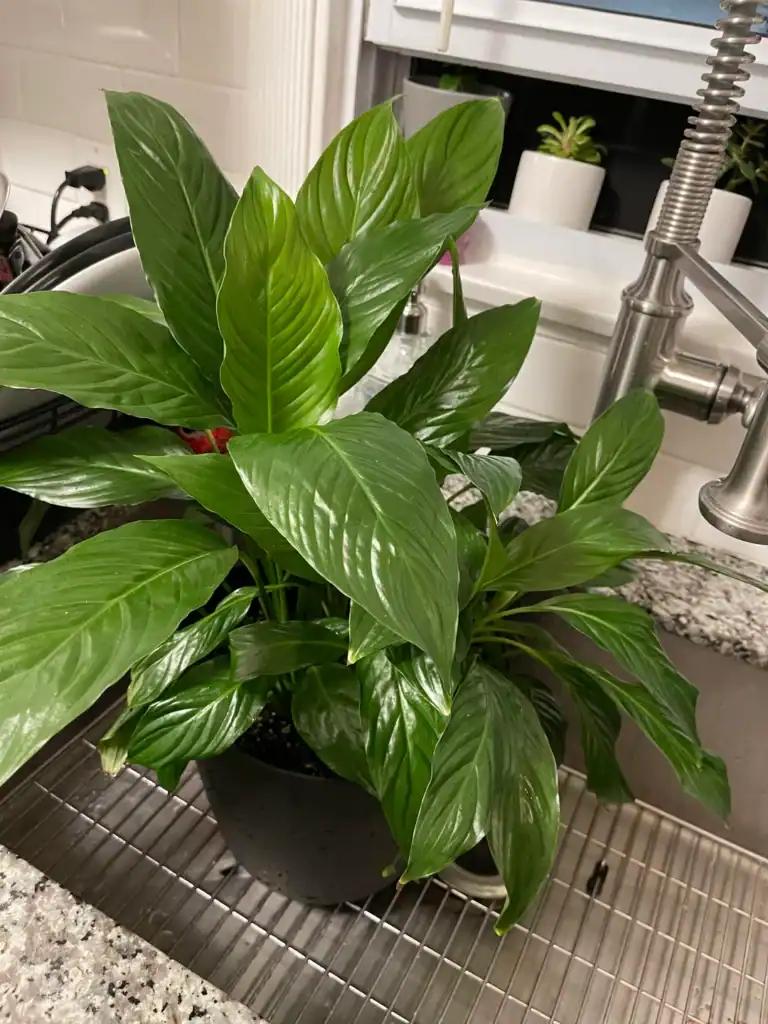
Getting fertilizer right is about timing, dilution, and spreading it evenly. A little care here keeps your peace lily happy and avoids root burn or nutrient drama.
Frequency and Timing of Application
I fertilize my peace lily every 6 to 8 weeks in spring and summer, when it’s actually growing. This lines up with its natural cycle and helps with blooms.
In fall and winter, I cut back to every 10 to 12 weeks or just stop entirely. With less light and cooler temps, peace lilies slow down and don’t need much food.
I always water the soil before adding fertilizer. Putting it on dry soil is a recipe for root burn. Moist soil helps spread the nutrients and keeps roots safe.
Quick Tip: If your peace lily isn’t blooming, double-check your feeding schedule—sometimes less is more.
Dilution and Dosage Tips
I always use half the strength suggested on the label. Peace lilies are sensitive, and full strength can cause brown tips and root issues.
For liquid fertilizers, I just mix the recommended amount with twice as much water. If it says 1 teaspoon per gallon, I use 1/2 teaspoon. It’s gentle, but it works.
I try to measure each time instead of guessing. Too much fertilizer builds up and causes more problems than it fixes.
Quick Tip: Notice a white crust on the soil? Flush the pot with plain water to get rid of excess salts.
Techniques for Even Distribution
I pour diluted liquid fertilizer slowly around the base, covering the whole soil surface. That way, all the roots get fed—not just one spot.
I avoid getting fertilizer on the leaves or the crown. If it splashes, I just wipe it off with a damp cloth to avoid burns.
For granular fertilizers, I sprinkle them evenly and water thoroughly. The water activates the granules and moves nutrients down to the roots.
Quick Tip: Water until you see it drain out the bottom—this helps push fertilizer through the roots and prevents salt buildup.
Top Fertilizer Brands for Peace Lily Blooms
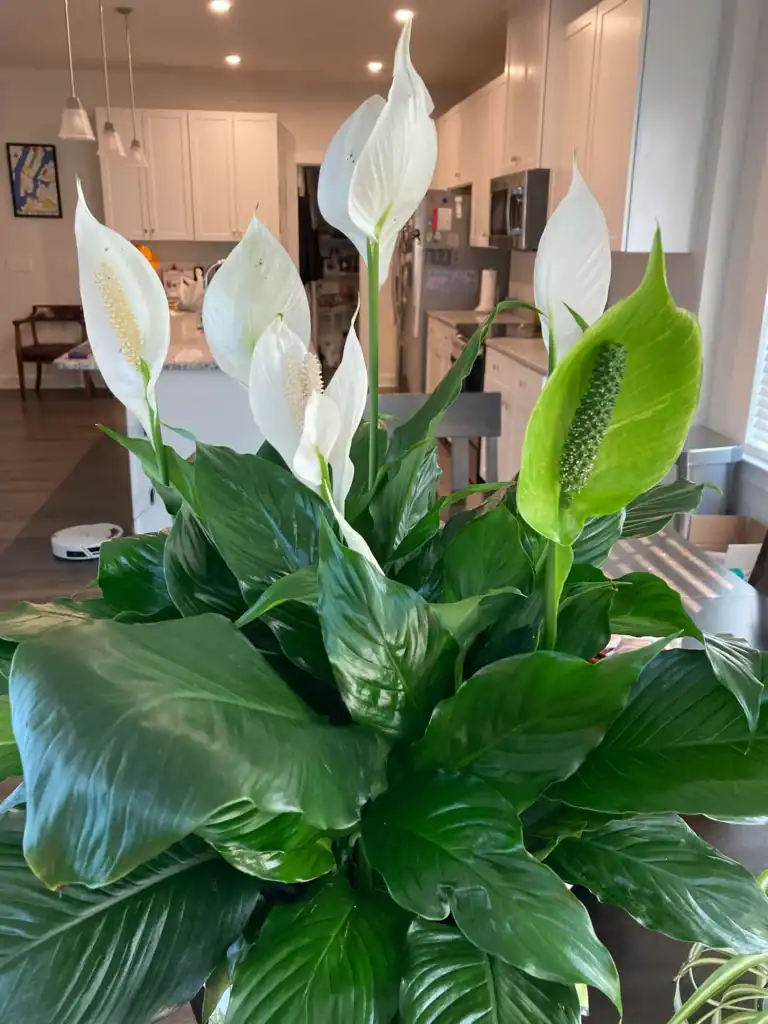
There are plenty of trusted brands that work well for peace lilies. Some are budget-friendly, others are premium or organic.
Honestly, the right brand depends on your budget and whether you want synthetic or natural ingredients.
Most Popular Picks Among Growers
Miracle-Gro Indoor Plant Food is probably the one I spot most often at garden centers. It’s a liquid with a gentle 1-1-1 NPK ratio—safe for peace lilies. Just dilute it with water and pour it right onto the soil.
Espoma Organic Indoor Plant Food has a big following among peace lily folks. With its 2-2-2 ratio, it gives balanced nutrition without being too much. I appreciate that it also brings beneficial microbes to the table, helping roots soak up nutrients.
Jack’s Classic Blossom Booster (10-30-20) is the go-to if you’re after more flowers. That high phosphorus really kicks blooming into gear, but honestly, I only use it in the growing season. It’s just too strong for year-round use.
Schultz Liquid Plant Food Plus has a 10-15-10 formula that a lot of growers trust. The dropper bottle is handy for measuring, and I think the price is fair for how long it lasts.
Budget-Friendly Choices
Jobe’s Houseplant Food Spikes are super affordable and couldn’t be simpler to use. Just pop them into the soil and they slowly release nutrients. The 13-4-5 ratio works, though sometimes I stick with diluted liquid fertilizer if I want more say over the feeding.
Osmocote Smart-Release Plant Food covers you for months with just one application. The 14-14-14 formula is a bit heavier on nitrogen than I’d usually choose, but since it’s slow-release, burning isn’t really a worry. For under $10, the container lasts a really long time—sometimes a year or more.
Generic 20-20-20 fertilizers from hardware stores are a cheap fix if you dilute them down to a quarter strength. I’ve used them by mixing just a small pinch into my watering can. They’re way cheaper than name brands, but you do have to be careful with the measuring.
Premium and Organic Alternatives
Fox Farm Happy Frog Houseplant Fertilizer is my favorite organic pick. The 5-5-5 ratio comes from things like bat guano and kelp. It smells earthy (not bad, just… earthy), and honestly, my peace lily’s leaves have looked healthier since I switched.
Dr. Earth Organic Wonder Fertilizer is loaded with probiotics and mycorrhizae for better soil health. Its 4-4-4 formula feeds both the plant and the soil, which I find pretty cool. It costs a bit more, but you don’t need much each time.
Espoma Organic Liquid Bloom (1-3-1) is all about flowers, with fish bone meal and kelp extract. I only use it in spring and summer when my peace lily is gearing up to bloom. The smell is pretty strong at first, but it fades after a day.
Neptune’s Harvest Organic Fish & Seaweed Fertilizer has a 2-3-1 ratio that a lot of organic growers swear by. It’s easy to dilute, and the seaweed helps the plant handle stress. Just a heads-up: it does have that fishy smell if you’re using it indoors.
Mistakes to Avoid When Fertilizing Peace Lilies

Fertilizing peace lilies seems simple, but there are a few easy mistakes that can really set your plant back. Too much fertilizer, bad drainage, or the wrong nutrient ratios are usually behind most of the problems I see with sad-looking peace lilies.
Overfertilization Risks
Honestly, I’ve seen way more peace lilies suffer from too much fertilizer than too little. They’re just not heavy feeders and don’t need a strict feeding schedule.
When you overdo it, salt builds up in the soil and ends up burning the roots. First you’ll see brown tips and edges on the leaves, then wilting even if the soil’s still moist. Sometimes the leaves turn yellow or get brown spots that spread fast.
Peace lilies only need fertilizer every 6-8 weeks in spring and summer. I skip it entirely in fall and winter when the plant slows down. I always dilute my fertilizer to half the recommended strength—full strength is just too much.
Quick Tip: If you suddenly see crispy brown tips, flush the soil with water to wash out the excess salts and hold off on fertilizing for at least two months.
Poor Drainage and Salt Build-up
Peace lilies really need well-draining soil, or salts from fertilizer will pile up. If water can’t drain, salts just stick around the roots.
I always double-check that my pots have drainage holes. Without them, salts have nowhere to go and can reach toxic levels. If you spot a white crust on the soil, that’s a sign of serious salt build-up.
Flushing the soil every few months is a simple way to avoid problems. I just run water through the pot until it drains well—this helps rinse away salts. It keeps the roots healthier between feedings.
Using tap water that’s high in minerals only makes salt problems worse. If your water is hard, let it sit overnight or switch to filtered water if you can.
Incorrect Ratio Selection
Picking the wrong fertilizer ratio can keep your peace lily from blooming or make it weak. I see a lot of people just grab whatever’s on the shelf without checking the numbers.
For blooms, I stick with balanced ratios like 20-20-20 or sometimes 10-15-10. The middle number (phosphorus) is key for flowers—that’s what you want for those white blooms. High-nitrogen stuff (like 30-10-10) just gives you a bunch of leaves, not flowers.
Bloom boosters like 15-30-15 can help before blooming season. I use them in early spring to nudge flower production. But don’t use them all year—peace lilies still need nitrogen for healthy leaves.
Quick Tip: Check the N-P-K numbers on your fertilizer and pick one where they’re all similar or the middle number is a bit higher for best blooms.
Additional Tips for Maximizing Flowering

Besides fertilizer, peace lilies need steady watering, the right light, and a bit of pruning to keep those white blooms coming.
Watering Practices
I keep the soil moist but never soggy. Peace lilies really hate wet feet—root rot will shut down blooming in a hurry.
Every few days, I poke the top inch of soil with my finger. If it’s dry, I water until it drains out the bottom. I always empty the saucer so the roots don’t sit in water.
During spring and summer, I water more often—usually every 5-7 days. In fall and winter, I pull back to every 10-14 days since the plant isn’t growing much.
Quick Tip: If your peace lily suddenly droops, it’s thirsty, but letting it wilt too often stresses the plant and hurts blooming.
I use room-temp water because cold water can shock the roots. If your tap water is heavy on chlorine or fluoride, let it sit out overnight or use filtered water.
Light Requirements for Blooming
Peace lilies won’t bloom in dark corners, even though they’ll survive there. I put mine where it gets bright, indirect light for at least 6-8 hours a day.
East-facing windows are great—gentle morning sun is just right. North windows usually aren’t bright enough for steady blooms. If you’ve only got south or west windows, keep your plant a few feet back or use sheer curtains to soften the light.
Direct sun can scorch the leaves—I’ve made that mistake before and ended up with crispy edges.
Quick Tip: Give your peace lily a quarter turn every week so all sides get the light and it grows nice and even.
In darker homes, especially in winter, I use a grow light about a foot above the plant for 10-12 hours a day. It really helps keep blooms coming.
Pruning and General Plant Care
I snip off spent flowers as soon as they start turning green or brown, cutting the stem right at the base. That way, the plant doesn’t waste energy on dead blooms and can focus on new ones.
Yellow or beat-up leaves get the same treatment. I use sharp, clean scissors and cut close to the soil, being careful not to nick healthy growth.
Quick Tip: Wipe the leaves once a month with a damp cloth. Dust blocks light, which means fewer blooms.
I check for pests like spider mites and aphids, since they can really stress the plant and stop blooming. If I see any, I hit them with insecticidal soap or neem oil.
Peace lilies love humidity above 50%. I like grouping mine with other plants or setting the pot on a tray of pebbles and water to bump up the moisture around the leaves.
Adjusting Fertilization Based on Plant Health

Your peace lily will usually let you know what it needs if you pay attention. Watching leaf color, adjusting for the seasons, and tweaking things when blooms are missing—it’s all about staying flexible with your feeding routine.
Monitoring Leaf Color and Growth
I check my peace lily’s leaves every week or so—they’re basically little health reports. If they’re dark green and shiny, the plant’s happy with how much it’s getting fed. Pale or yellow leaves usually mean it’s short on nitrogen.
Brown tips? That’s often a sign I’ve gone overboard with fertilizer. Salts build up and burn the edges. When I spot this, I flush the soil with water and skip feeding for a month.
Quick Tip: If new leaves are coming in smaller than the old ones, try feeding every two weeks instead of monthly.
Stunted growth in spring or summer (when it should be growing fast) tells me it wants more nutrients. I up the feeding a bit and look for improvement in a few weeks.
Adapting to Seasonal Changes
Peace lilies really take off in spring and summer, so that’s when I feed every 2-3 weeks. New leaves popping up? Time to fertilize.
When fall and winter roll around, growth slows way down. I cut back to once every 6-8 weeks or sometimes just stop feeding. The plant just doesn’t need much when it’s resting, and extra fertilizer just sits there causing trouble.
Quick Tip: If your place stays above 70°F year-round and you use grow lights, you can keep a lighter feeding schedule even in winter.
Temperature matters too. If your room is cooler (below 65°F), the plant processes nutrients slower, so I feed even less—even in the growing season.
Troubleshooting Non-Blooming Issues
If my peace lily won’t bloom, first thing I check is the light. Fertilizer can’t make up for a dark spot—these plants need bright, indirect light to flower.
If the light seems fine but I’m still not seeing blooms, I switch to a fertilizer with more phosphorus (the middle number). Something like 10-30-10 for a couple months can help trigger flowers.
Too much nitrogen just gives you big, leafy plants with no blooms. If your peace lily looks lush but hasn’t flowered in a year, stop fertilizing for a month, then start again with a bloom formula.
Quick Tip: Older peace lilies (over 3 years) in 6-inch pots or bigger are much more likely to bloom than younger ones.
I also make sure the plant is a little root-bound—believe it or not, that actually helps trigger blooming. If your peace lily has tons of space in a big pot, it might just skip flowering.
Frequently Asked Questions
Peace lilies do best with a balanced fertilizer—something like 20-20-20 or 10-10-10—during their active growing season. I stick to half strength and feed every 6-8 weeks. Phosphorus is key for blooms, and honestly, organic stuff like fish emulsion or compost tea works just as well as the synthetic options.
How often should I feed my peace lily for the best blooms?
I feed mine every 6-8 weeks in spring and summer, when the plant’s growing fast. That seems to give it enough without overdoing it.
In fall and winter, I cut back to every 10-12 weeks or sometimes skip feeding altogether. Peace lilies just don’t need much when they’re not growing.
Quick Tip: Always water your peace lily before fertilizing—this helps avoid root burn from concentrated nutrients.
Can you recommend a great fertilizer to enhance blooming in peace lilies?
I’ve had great luck with Miracle-Gro Indoor Plant Food, but I always use it at half strength. That 1-1-1 nutrient ratio seems to hit the sweet spot for peace lilies.
If you’re after bigger blooms, Jack’s Classic Blossom Booster is worth a shot. It’s loaded with phosphorus (10-30-20), though I’d go easy and only use it once a month during the main blooming period.
Honestly, I prefer liquid fertilizers since the plants seem to respond faster. I just mix it right into the water when I’m doing my regular watering.
What specific nutrients are crucial for a peace lily’s bloom cycle?
Phosphorus is really the key for getting blooms—it’s that middle number you see on fertilizer labels (N-P-K).
If I skip phosphorus, my peace lily just grows a bunch of leaves but refuses to flower. So I always make sure there’s enough in whatever I’m using.
Potassium helps toughen up the plant and makes the blooms look better, while nitrogen keeps things leafy and green. But too much nitrogen, and you’ll just get a jungle of leaves instead of flowers. Who wants that?
Is there a particular time of year I should focus on fertilizing my peace lily for optimal flowering?
I usually ramp up fertilizing from March through September. That lines up with the peace lily’s natural growth spurt and when it’s most likely to bloom.
Spring is when I really get going with feeding, right after the slow winter stretch. The plant seems to wake up once the days get longer and warmer.
Quick Tip: I start feeding when I spot fresh growth or if the temperature is pretty much staying above 65°F.
I pretty much stop fertilizing in winter unless my house is unusually warm and sunny. Otherwise, the plant just wants to rest during those cold, short days.
Are there natural or organic fertilizer options that work well for encouraging peace lily blooms?
Fish emulsion is my favorite organic pick. It’s got a strong smell for a little while, but peace lilies seem to love it and soak up the nutrients fast.
Compost tea is another gentle option I often make at home. I’ll steep finished compost in water for a day or two, strain it, and then use that liquid as fertilizer.
Worm castings are pretty great too—I just mix a tablespoon or two into the top layer of soil every couple of months. The nutrients get released slowly, so there’s not much risk of overdoing it.
Quick Tip: Organic fertilizers are usually milder, so you’re less likely to burn your plant compared to synthetic stuff. That’s a relief, honestly.
Should I adjust the fertilization based on the growth stage of my peace lily?
Young peace lilies really don’t need much fertilizer. I usually stick to feeding new plants at about a quarter strength for their first few months at home.
Once my peace lily starts looking settled and throws out new leaves regularly, I’ll bump it up to half-strength feedings. For me, that’s typically after the first year or so—though sometimes it takes a bit longer.
If my plant’s just been through some stress or I’ve repotted it, I actually hold off on fertilizer for a good 4-6 weeks. The roots need a breather to get comfortable again before I ask more of them.
Quick Tip: Keep an eye on those leaf tips—if you spot brown edges, chances are you’re feeding too much or too often, not too little.
Note: Some images in the articles are sourced from Reddit and Other Platforms For Reference Purpose.




Great advice on the peace lily I have one i have it near my patio door