15+ Fast-Growing Shrubs & Bushes for Privacy
I really love the quiet comfort that comes from having a lush, green screen around my yard.
Fast-growing shrubs and bushes make that possible, adding beauty and privacy—without making you wait forever for results.
Choosing the right plants helps create a private space that actually feels welcoming and peaceful year-round.
In this article, I’ll share some of my favorite fast-growing options that fit all sorts of spaces and climates.
I’ll also throw in a few simple tips for planning and caring for them, just to keep things healthy and strong.
Please note: Simplify Plants is reader-supported. As an Amazon Associate, I earn from qualifying purchases made by our readers with no extra cost added to you all! Some links in the post are affiliate links and I get a commission from purchases made through links in the post.
1) Leyland Cypress
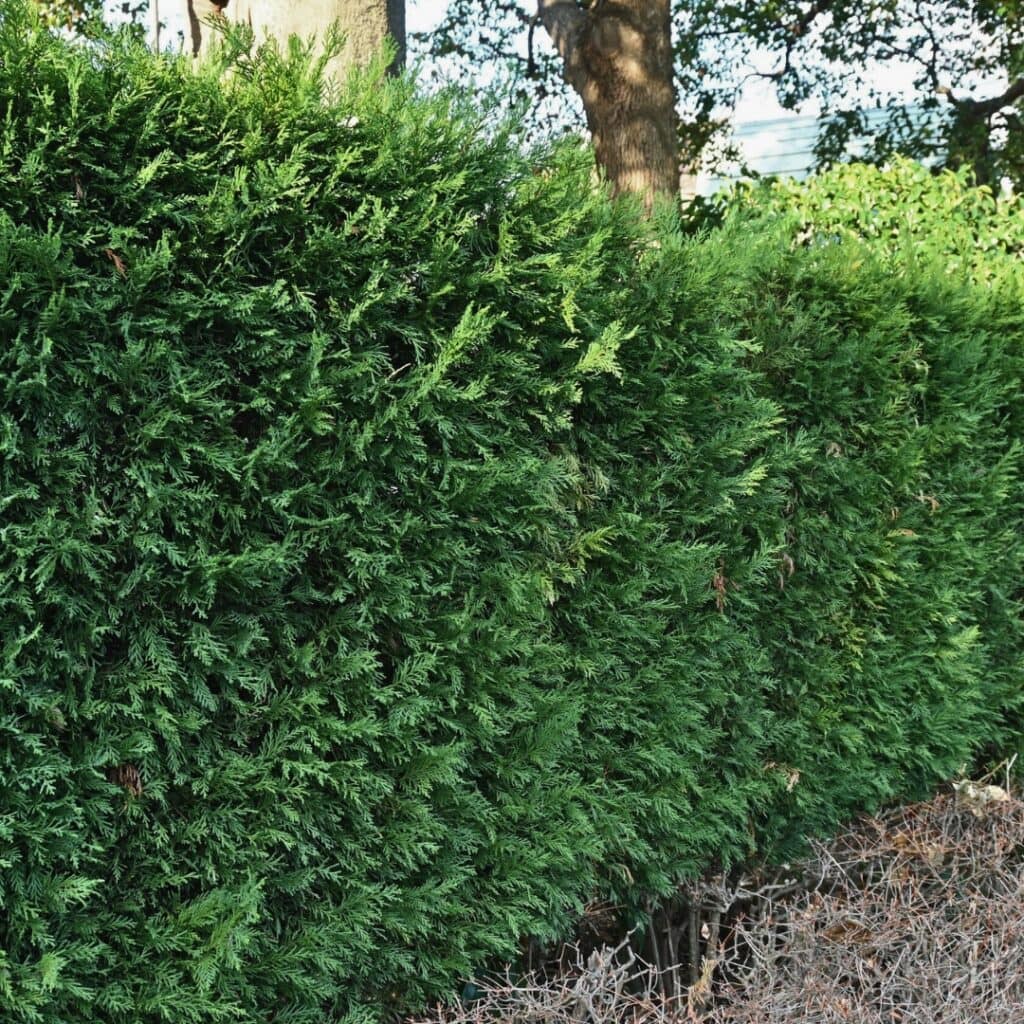
Whenever I want quick, dense privacy, I go for Leyland Cypress. This evergreen grows at an impressive pace and stays green through every season, so it’s a go-to for screening.
I usually plant it along fences or driveways to make a natural wall. It can shoot up to 3 feet per year if the conditions are right.
Full sun and well-drained soil seem to make all the difference for healthy growth. The more sun it gets, the thicker it becomes.
It’s pretty low-maintenance after the first year. I just water it regularly at first, then it’s good to handle dry spells on its own.
A yearly trim helps keep it thick and even, which is nice if you want that solid look. I usually space them 6 to 10 feet apart so they have room to spread out.
Give them a few seasons, and the rows will knit together into a solid green barrier. It’s surprisingly effective at blocking noise, wind, and any views you don’t want.
I like the fine, feathery needles—they give it a soft, friendly look. Whether your yard is formal or more relaxed, Leyland Cypress fits right in.
If you want instant privacy and don’t want to wait a decade, this is probably your best bet.
2) Forsythia

Forsythia is always a favorite of mine because it brings such a burst of yellow to my yard at the very start of spring. The flowers pop out before the leaves, so the branches look like they’re glowing—kind of like a promise that winter’s finally over.
This shrub grows fast and can reach 6 to 10 feet tall, spreading out about as wide. I like using it for a casual privacy screen or along fences, where it fills in really quickly.
Forsythia thrives in full sun, but it’ll tolerate a bit of shade. Too much shade, though, and you won’t get as many blooms.
It’s not too picky about soil, as long as it drains well. I prune it right after the flowers fade in early spring, which keeps it tidy for next year.
If you wait too long to trim, you risk losing next year’s blooms, so timing matters. Regular pruning keeps it loaded with flowers every season.
Forsythia is hardy, too—it handles cold winters and hot summers without drama. A bit of water during dry spells and it’s happy.
Plant a few together and you get a cheerful hedge that brightens up even a plain yard. It’s one of those plants that really feels like a sign of spring.
Fast growth, bright color, and easy care—what’s not to love for privacy and spring interest?
3) Arborvitae Emerald Green

I’m a fan of Arborvitae Emerald Green because it grows tall but stays nicely narrow—perfect for smaller yards. I can plant them close together and get a living wall that gives me privacy and greenery all year.
The foliage is dense and bright green, keeping its color even through winter. I don’t really have to worry about leaves dropping or brown patches when it gets cold.
It’s easy to shape if you want a tidy look, but it’s also fine if you like things more relaxed. These shrubs can reach 12 to 15 feet tall and only about 3 to 4 feet wide.
Because they stay compact, they don’t eat up much space but still do a great job blocking unwanted views. I use them along fences or even beside patios for a bit of privacy.
They like full sun to partial shade, and I make sure the soil drains well—soggy roots are a no-go. Once they’re settled, they only need occasional watering during dry spells.
I love that they’re low-maintenance. A light trim once or twice a year keeps them looking sharp. They’re also tough against pests and cold weather.
Plant a row and you get a clean, elegant border that helps cut down on noise and wind. The uniform look adds structure to the yard, which I appreciate.
If you want privacy without a lot of work, Arborvitae Emerald Green really is a smart pick. It grows steadily, stays vibrant, and just makes the space feel calm.
4) Privet
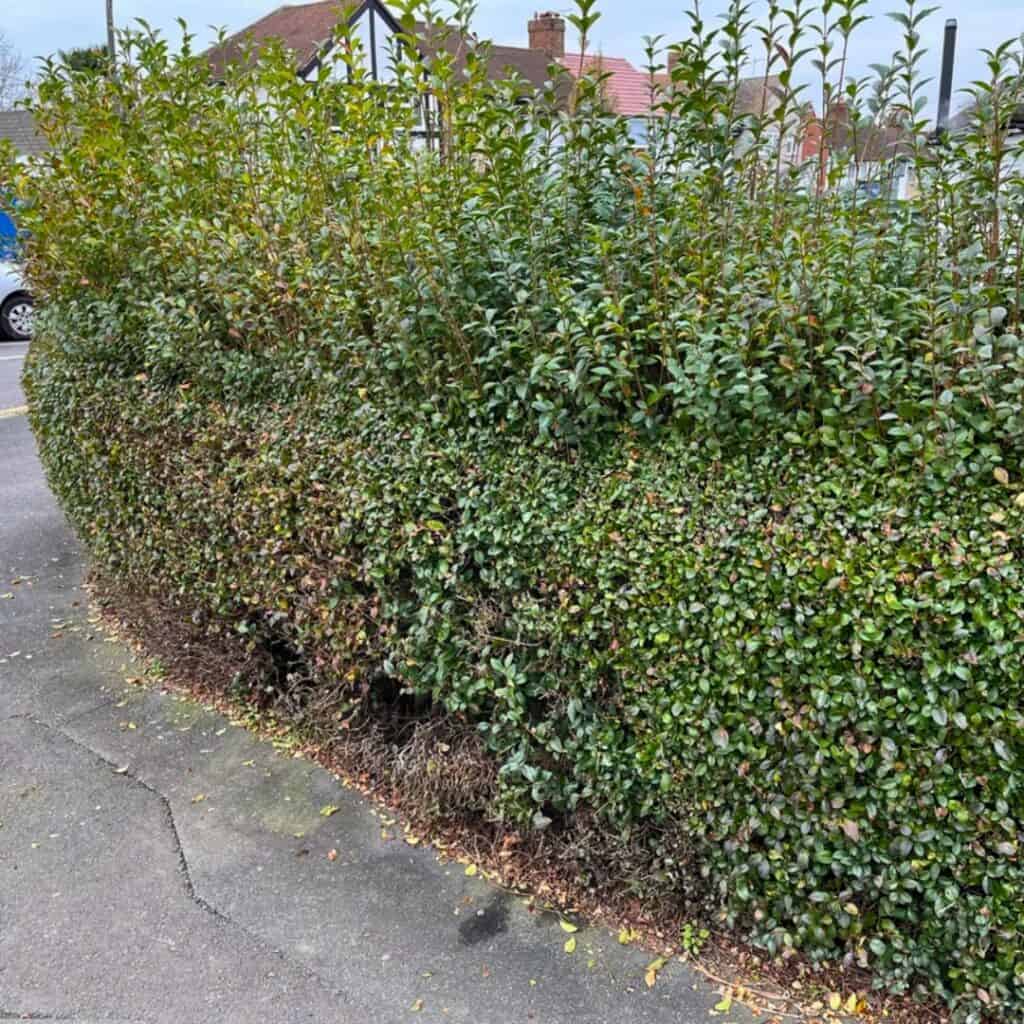
Privet is a classic for fast privacy. It grows quickly and forms a thick green screen in just a few seasons.
I like how it blocks views and muffles noise, making the backyard feel more peaceful. You can trim Privet into a formal hedge or let it go a little wild for a softer look.
Regular pruning keeps it neat and helps new growth fill in. If you skip trimming, it’ll start acting like a small tree.
There are a few types—Japanese Privet, California Privet, Golden Privet—and each one has its own twist on leaf color and growth habit. Most love full sun but can handle some shade.
Privet deals with different soils and prefers well-drained spots. I water it regularly during the first season, then back off once it’s settled in.
Blooming in late spring, Privet puts out small white flowers that attract bees and butterflies. The scent is pretty light, but it does add something to the garden.
After flowering, it gets tiny black berries that birds seem to love. I like that Privet gives me flexibility—plant close for a tight hedge or space out for a looser border.
Its quick growth and easy care make it a top choice for privacy without the long wait.
5) Bamboo Bambusa
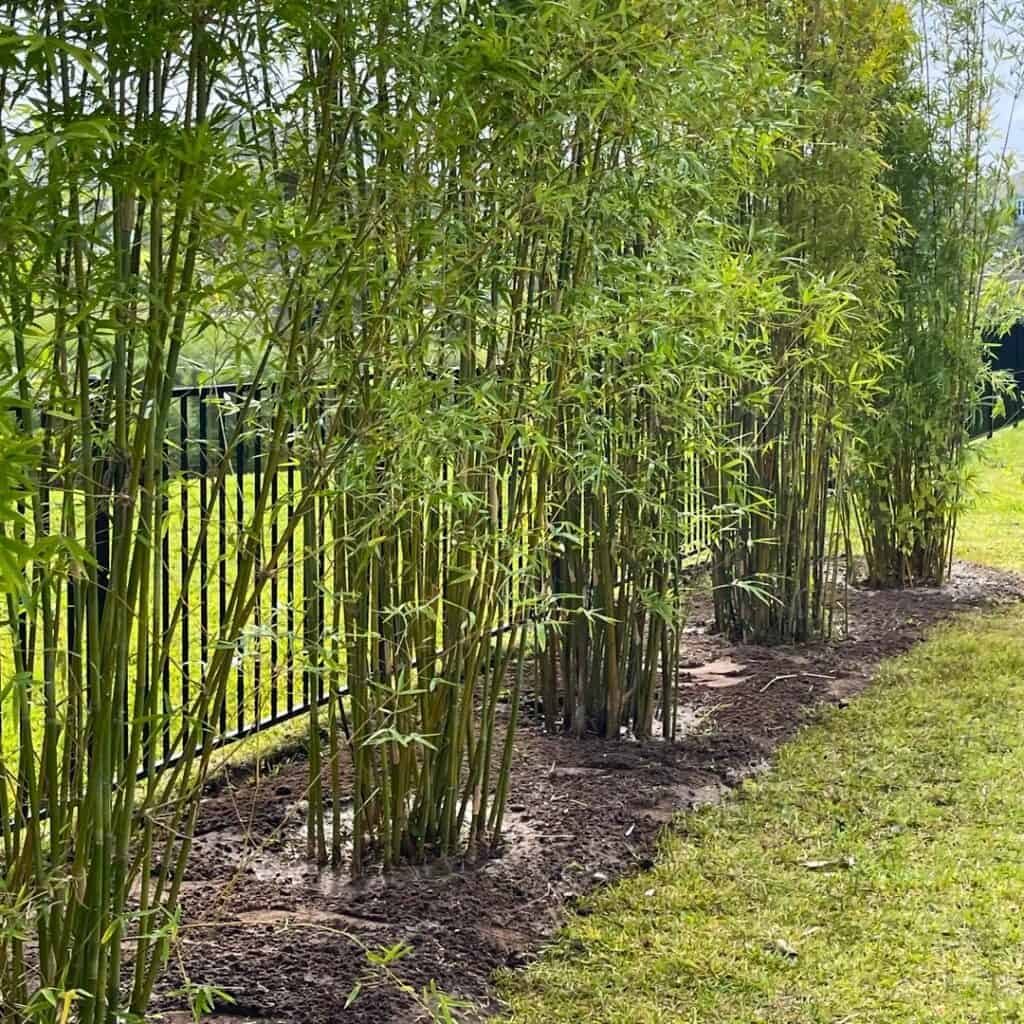
I’m always impressed by how fast Bamboo Bambusa grows. It creates a lush green screen in no time, which is perfect for instant privacy.
The tall, upright canes make a dense wall that blocks wind and noise, and honestly, it just looks cool. This bamboo loves warm, sunny spots but can handle a bit of shade too.
I plant it in well-drained soil and water it regularly the first year. After that, it’s pretty hands-off.
Bambusa is non-invasive, which is a relief if you’ve heard horror stories about running bamboo. Its clumping habit means it won’t take over your yard.
I plant the clumps a few feet apart and, in a year or two, they fill in to make a thick barrier. It’s kind of amazing how quickly it transforms an open space.
If I want a tidier look, I trim the lower stalks. The golden-green canes and soft leaves bring a bit of a tropical vibe, which I love.
Bamboo Bambusa is a strong, stylish option if you want fast privacy with some personality.
6) Photinia Red Robin
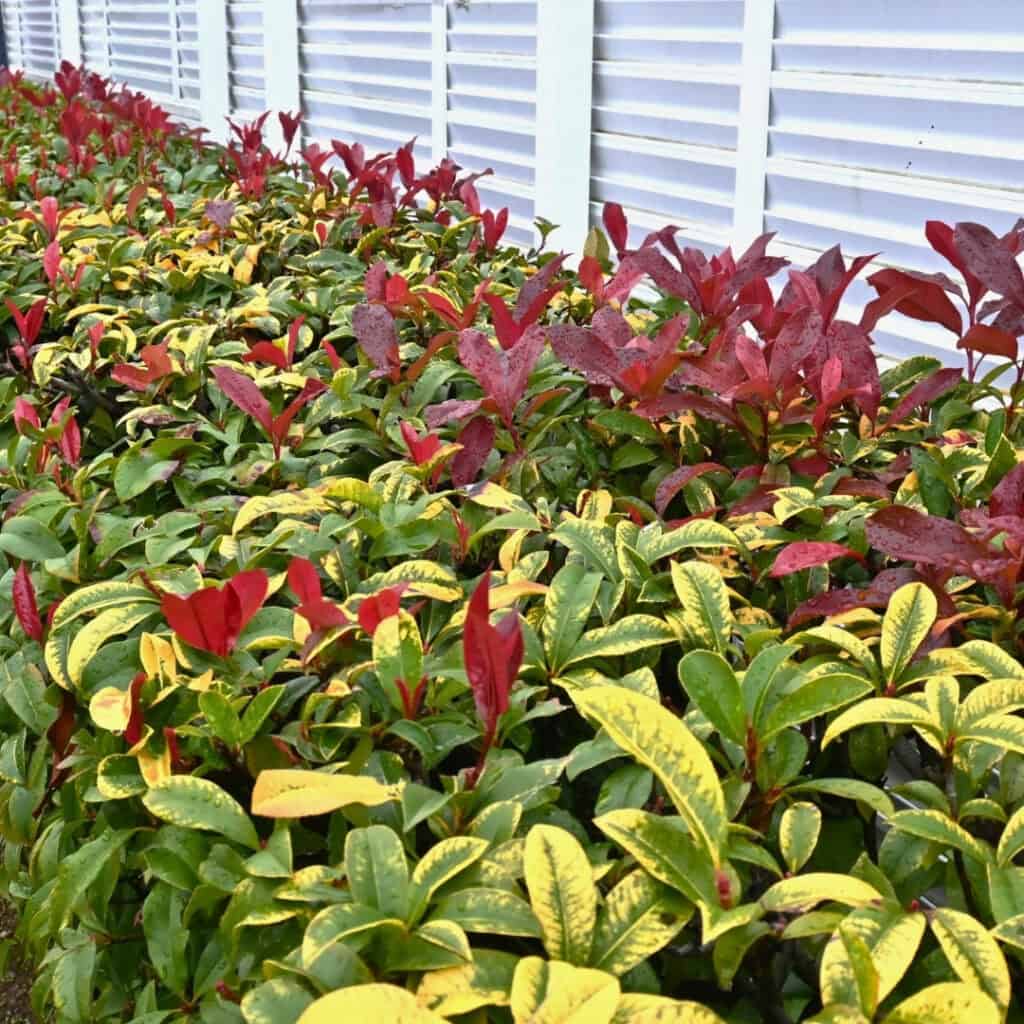
Photinia Red Robin is a real standout for instant color and structure. The new leaves come in bright red, popping against the dark green older ones—definitely eye-catching.
It works great as a privacy screen and a decorative feature. This shrub grows fast, often reaching 10 to 15 feet if you let it go.
If you trim it regularly, you’ll get a neat hedge that blocks noise and wind. It does best in full sun to partial shade, and I always make sure the soil drains well—soggy roots are a dealbreaker.
Once it’s established, it’s pretty low maintenance. Just seasonal pruning and maybe a little feed in spring.
In late spring, you’ll see clusters of small white flowers that attract bees and pollinators. Sometimes I cut it back after it blooms to keep it tidy and encourage more red growth.
Plant it along fences or property lines for a thick barrier, or even in big containers if space is tight. Photinia Red Robin brings both privacy and year-round interest with hardly any fuss.
7) Japanese Holly
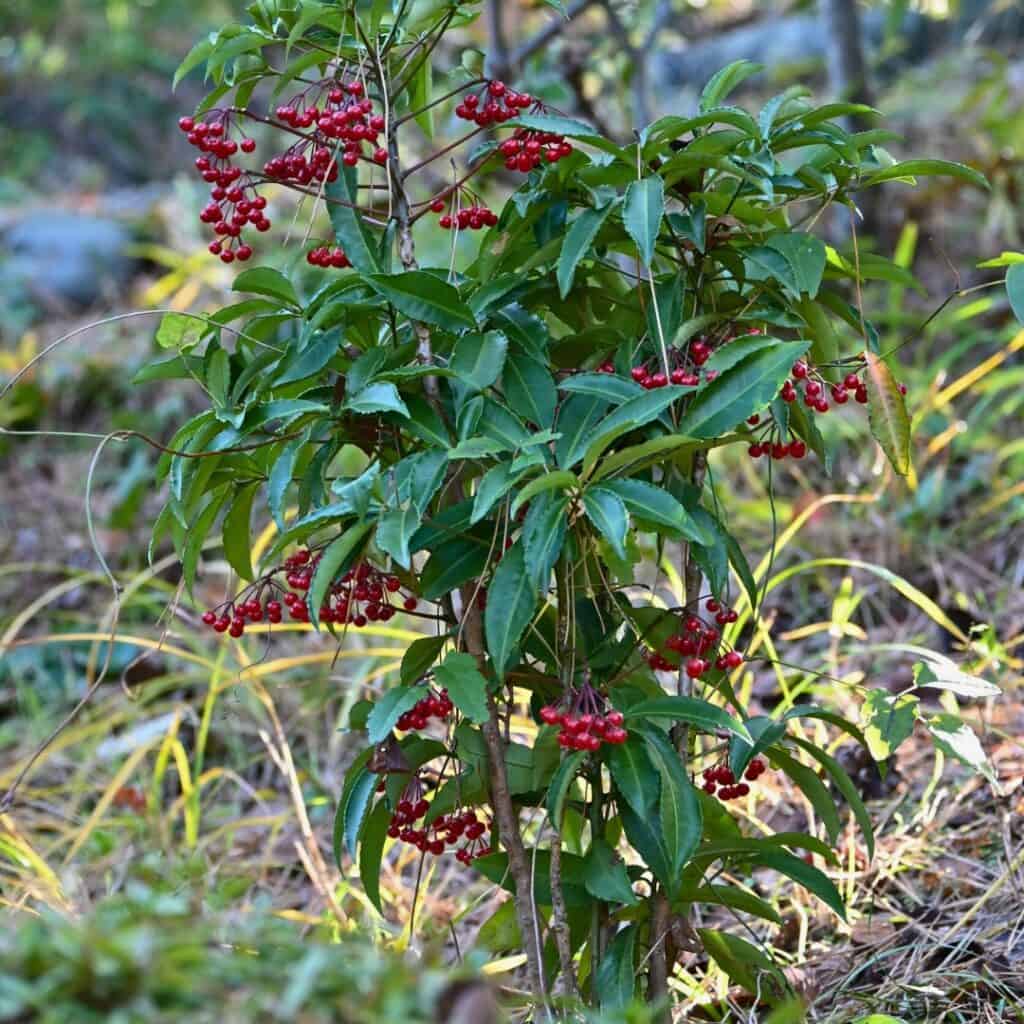
Japanese Holly is one of those plants that’s just easy to live with. The small, glossy green leaves stick around through winter, so it’s great for a dense privacy hedge year-round.
It grows at a moderate to fast rate, usually hitting 6 to 10 feet tall depending on the type. I trim it once or twice a year to keep the shape tidy and encourage dense growth.
Japanese Holly isn’t fussy about soil and does well in both sun and partial shade. I just make sure the soil drains well—wet feet are not its thing.
I like how it stays green all year, giving my yard a classic, soft look. The smooth branches and small leaves make for a hedge that fits pretty much any style.
Birds sometimes use it for shelter, which is a nice bonus. When I plant several together, I keep them 2 to 3 feet apart so they’ll grow into a solid screen.
It takes a little patience at first, but the end result is a private, attractive border that lasts.
8) Boxwood Green Velvet
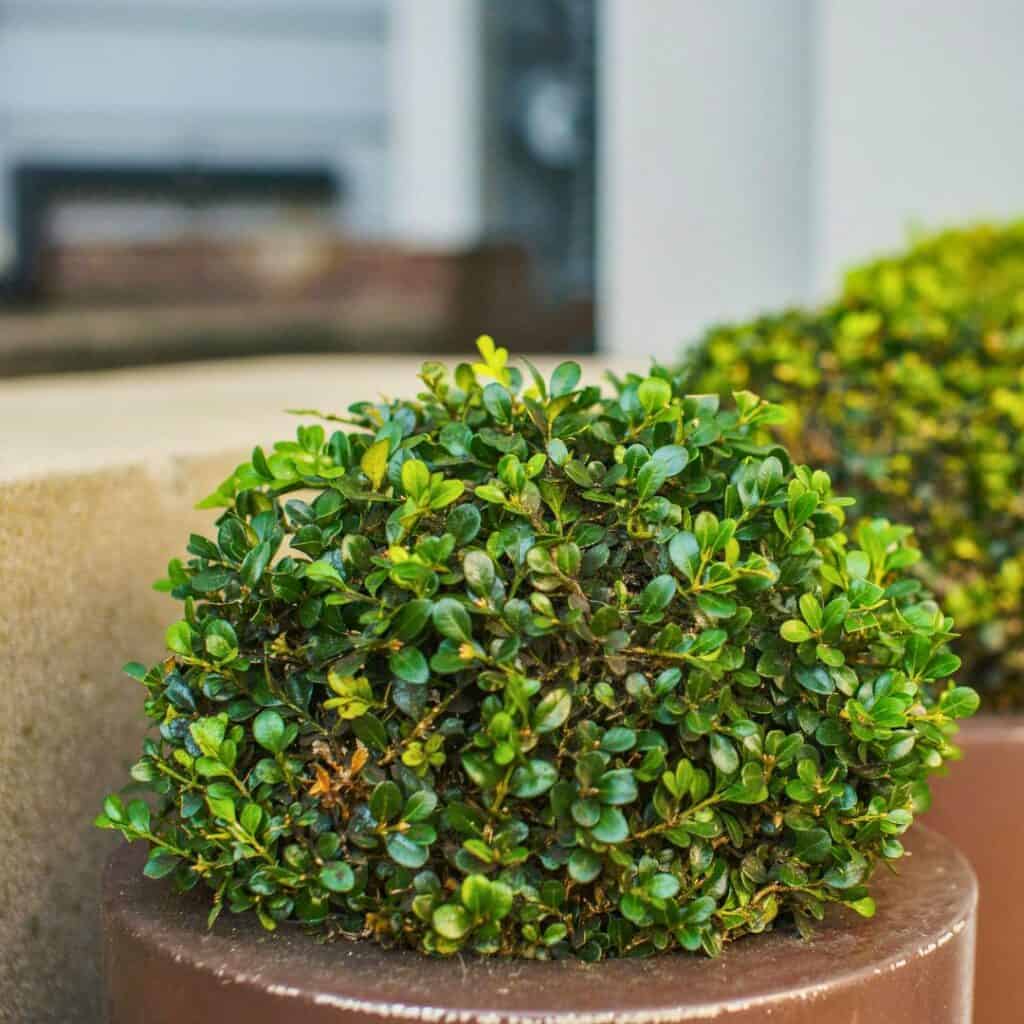
Boxwood Green Velvet is a favorite for thick, tidy hedges that look good all year. The leaves are a deep green in spring and summer, turning a softer bronze-green in winter—honestly, it keeps its color better than a lot of other boxwoods.
It’s great for low privacy hedges or for lining walkways. I’ve used it along fences to make a dense border that looks natural but stays neat.
The growth is slow to moderate, so you’re not constantly pruning—just a light trim once or twice a year does the trick. It likes partial to full sun and soil that drains well.
It handles cold winters pretty well, which is great if you’re up north. Regular watering keeps it lush during dry spells.
I trim it in late spring after new growth hardens, and it responds well, staying compact and uniform. Over time, it’ll get to about 3 to 4 feet tall and wide, which is ideal for smaller yards.
It’s pretty low-maintenance once established. Deer usually leave it alone, and pests aren’t much of a problem.
For a formal look, I plant Boxwood Green Velvet in straight rows. For something softer, I mix it with flowering shrubs. Either way, it adds privacy and structure without taking over the space.
9) Nellie Stevens Holly
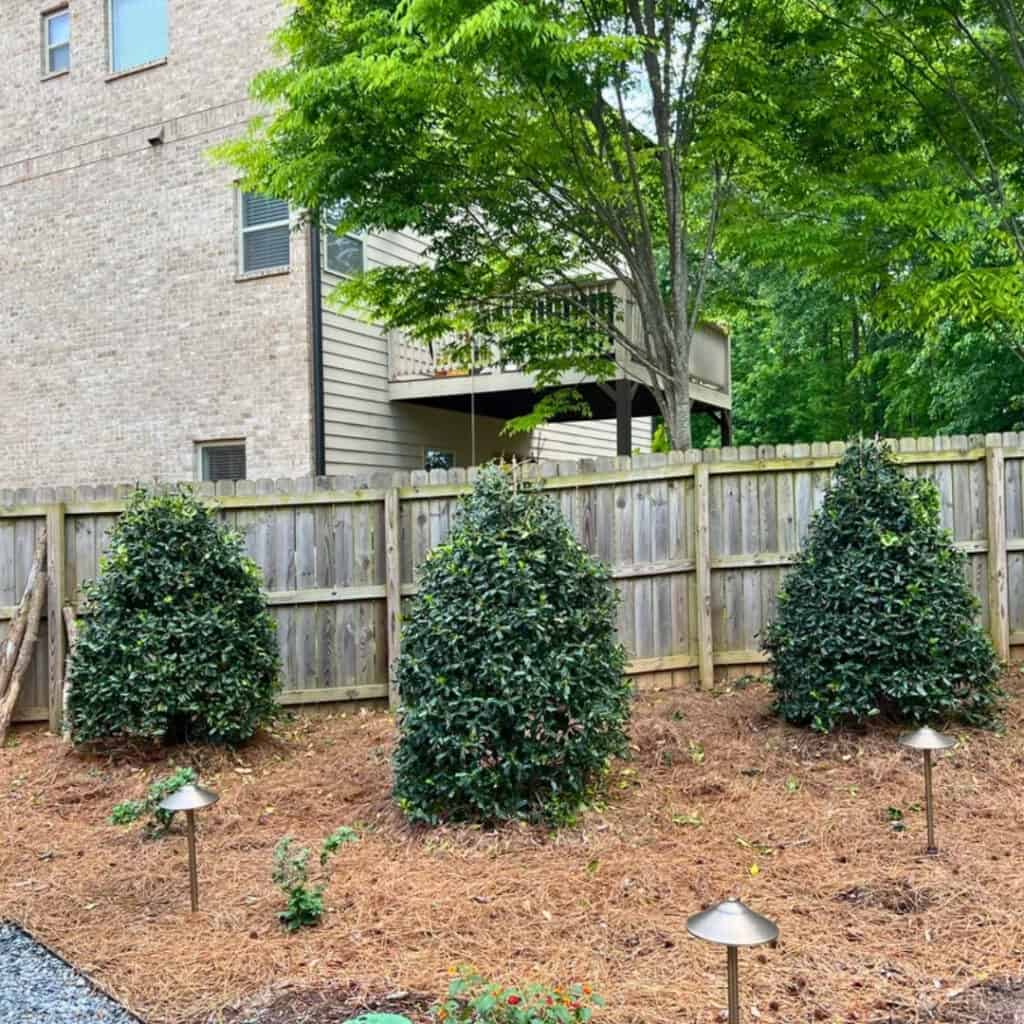
I really like how Nellie Stevens Holly grows so quickly and keeps lush greenery all year. It’s honestly one of my favorite shrubs for privacy—plus, it just looks good.
This hybrid holly does well in lots of climates and delivers a steady wall of dense foliage. The leaves stay a deep, glossy green, even when it’s cold out.
Bright red berries show up in winter and add a pop of color when everything else seems to fade. It’s nice to see birds stop by for the berries, too.
This holly can hit 15 to 25 feet tall, building a solid barrier pretty fast. I usually plant it along fences or property lines to block views and muffle noise.
If I trim it once a year, it works great as a tall hedge. Honestly, it doesn’t need much maintenance.
I’ve found Nellie Stevens Holly is easy to maintain. It’s happy in full sun or partial shade and doesn’t ask for much once it’s settled in.
During the first season, I water it regularly, but after that, it handles short dry spells just fine. That’s a relief.
One thing I like is its tolerance for different soil types. As long as the soil drains, it’ll grow strong roots.
I keep an eye out for pests or leaf spots, but honestly, it’s pretty trouble-free if it’s healthy. When I want structure and privacy, this holly just fits.
Its compact shape and evergreen leaves make my garden look cared for all year. Nellie Stevens Holly gives me both beauty and privacy—can’t complain about that.
10) Wax Myrtle

I’m a fan of Wax Myrtle because it grows fast and quickly fills in empty spaces. It’s a solid choice for privacy screens or windbreaks.
The dense foliage keeps things looking neat year-round. I’m always surprised by how tough and adaptable it is.
Wax Myrtle handles poor soil, salt spray, and drought once it’s established. That makes it perfect for coastal spots and warmer climates.
The small, aromatic leaves have a clean scent when I brush past them. Birds love the waxy berries in fall and winter, so there’s always a bit of activity.
When planting, I space them about 5 to 8 feet apart for good airflow and growth. I water them regularly at first, then cut back as the roots get stronger.
I trim the tops lightly each year to shape them or thicken up the screen. Pruning promotes thicker growth and keeps the hedge looking tidy.
Wax Myrtle can reach up to 15 feet if I let it, or I can keep it shorter for a more compact look. It’s flexible and responds well to light pruning.
In my yard, Wax Myrtle adds both beauty and function. It gives privacy, greenery, and that nice scent—all without needing much from me.
11) Euonymus Emerald Gaiety
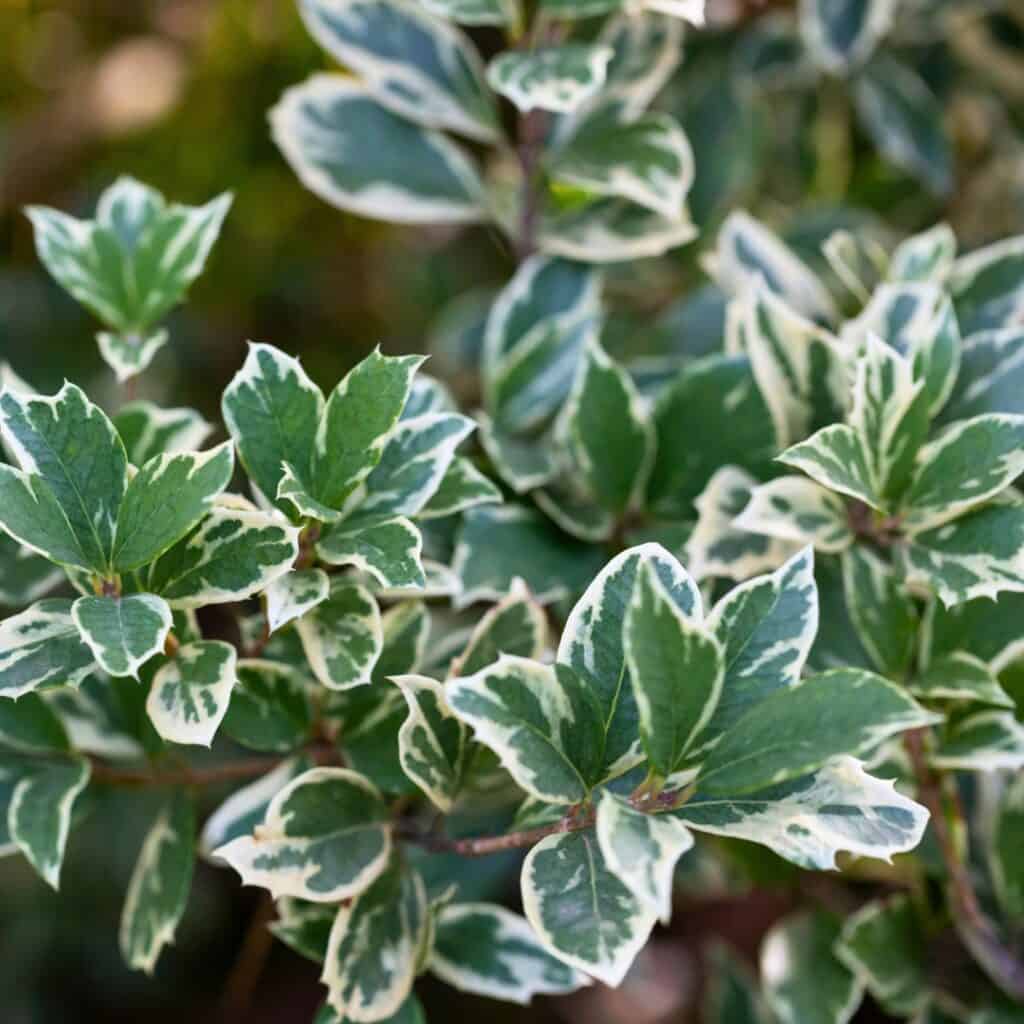
I love how Euonymus Emerald Gaiety keeps its color through every season. The small, oval leaves have green centers and creamy white edges, which brighten up my garden even in winter.
This shrub brings a neat, cheerful vibe to borders and privacy screens. It grows slowly but steadily, reaching about 3 to 5 feet both tall and wide.
I find it easy to trim or shape to fit the space I have. Regular pruning helps it stay dense, making it a nice choice for a low hedge or along a fence.
I usually plant it in well-draining soil and give it plenty of sun, though partial shade works. Too much shade can dull the leaf color, so I try to keep it bright.
Once established, it tolerates some drought, which is always a plus for me. Emerald Gaiety is hardy and resilient.
It stays healthy through cold weather and doesn’t seem bothered by many pests or diseases. I appreciate that it looks neat all on its own, year after year.
In spring, it adds tiny greenish flowers—not showy, but they add a bit of texture. When winter hits, the leaf edges often turn pink, which stands out nicely.
I think it pairs well with colorful flowers or darker evergreens. The lighter tones break up big green areas and give my garden some contrast.
With its manageable size and easy care, Euonymus Emerald Gaiety makes adding privacy and beauty feel pretty effortless.
12) Cherry Laurel
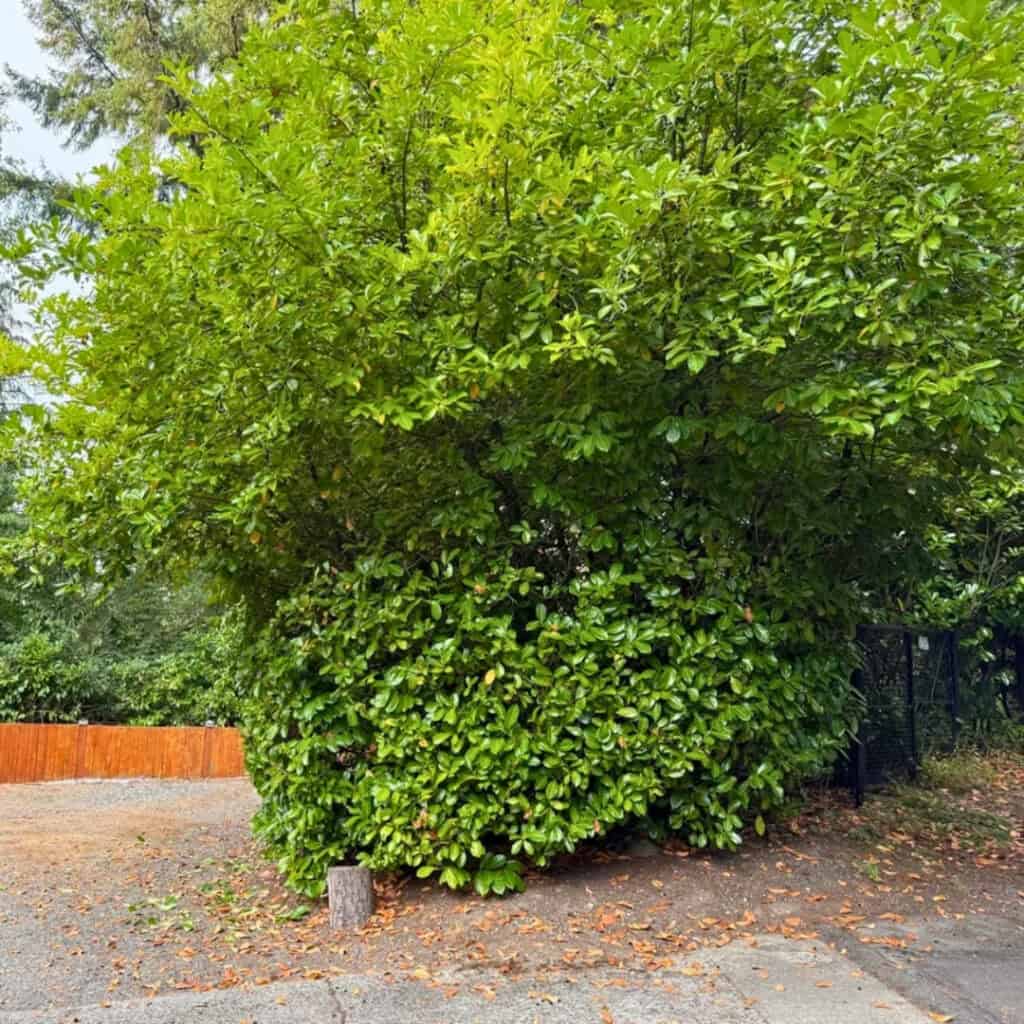
I really like Cherry Laurel because it grows fast and fills in with dense, green leaves in no time. It’s one of the easiest privacy shrubs I’ve planted.
The glossy leaves stay green year-round, so my yard never looks bare in winter. This shrub does well in sun or partial shade, which means I can plant it almost anywhere.
It also handles different soil types, as long as the drainage is good. Cherry Laurel can reach 10 to 20 feet tall, but I usually keep mine around 8 feet for a neat hedge.
A quick prune once or twice a year keeps the growth thick and even. In spring, it puts out small white flowers that smell nice and bring in bees.
Later, those flowers turn into dark berries that birds seem to love. I think the movement and life they bring to the garden is a bonus.
When it’s young, I water Cherry Laurel during dry spells. Once it’s established, it hardly needs any attention.
I do check for yellowing leaves or overgrowth now and then to keep it healthy. Because it grows so densely and quickly, Cherry Laurel makes a great natural green fence.
It blocks noise and adds privacy, which helps my outdoor space feel calm and tucked away. If someone’s looking for a reliable, good-looking privacy shrub, Cherry Laurel is usually my top pick.
It’s sturdy, neat, and doesn’t ask for much in return.
13) Spirea

I’m a big fan of Spirea because it grows fast and always looks good. It’s a tough shrub that works well in privacy borders or mixed beds.
The oval leaves turn bright gold, red, or green depending on the variety. Spirea keeps things interesting for a long stretch.
In spring and early summer, it bursts into clusters of tiny white or pink flowers. Sometimes the blooms are so thick, the branches look almost snowy.
The flowers attract butterflies and bees, which makes the garden feel lively. I love how easy Spirea is to care for.
It grows well in full sun and isn’t picky about soil. As long as I give it a little water during dry spells, it’s happy.
It’s also drought-tolerant once established, which is a relief. When I want to shape it, I trim the branches after flowering.
Pruning keeps it neat and encourages new growth. I can use it as a low hedge or plant several together for a soft, colorful screen.
Spirea usually grows 2 to 5 feet tall, depending on the type. It’s great if I want quick coverage without waiting forever.
Some types spread wider, filling out the garden nicely. I appreciate that Spirea fits in with almost any style, from modern to cottage.
Its simple beauty and easy care make it one of my top picks for privacy and curb appeal.
14) Wintercreeper

I really enjoy how Wintercreeper (Euonymus fortunei) adds color and texture all year. This hardy evergreen shrub grows fast and adapts to just about anywhere.
It’s one of my favorite ways to fill bare spots or set up a low privacy border. The dark green leaves with pale edges stay bright, even in winter.
Some types have yellow or white margins, which gives nice contrast. It keeps its color when many other plants fade, so my garden always looks lively.
Wintercreeper does well in sun or partial shade, making it easy to place. I’ve planted it by fences, walls, and even under trees.
It spreads quickly as ground cover, but I also prune it to grow upright if I want more structure. Maintenance is simple.
I trim it once or twice a year to keep it tidy and stop it from taking over. This shrub handles varied soil types and can get through moderate dry spells once it’s settled in.
A little compost each spring seems to help it grow stronger. When I want privacy fast, I let Wintercreeper climb supports or mix it with taller shrubs.
Its thick growth makes a dense screen that blocks views but still looks neat. It’s tough, versatile, and honestly just a good pick for any size space.
15) Nandina Domestica
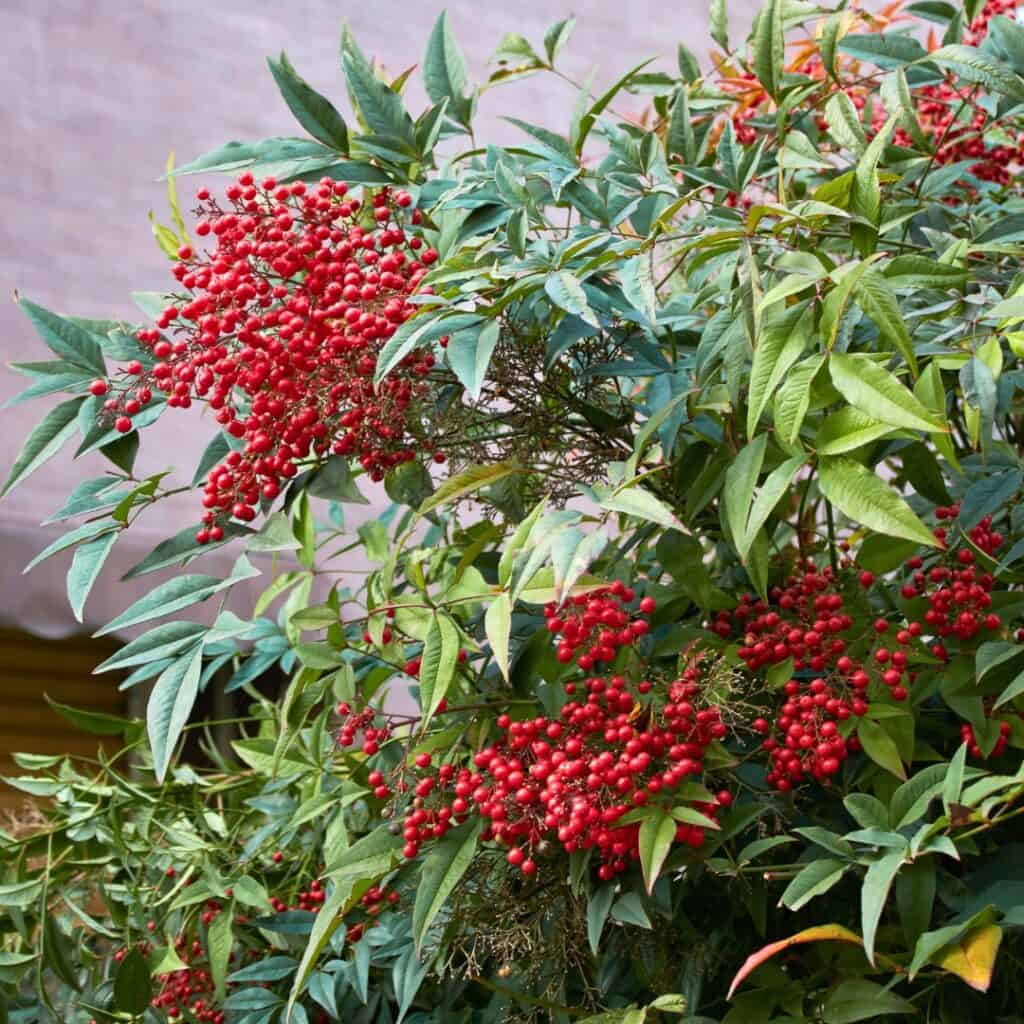
I love Nandina Domestica, or heavenly bamboo, because it looks good all year. It grows fast and has colorful leaves that shift with the seasons.
The plant stays tidy, so it’s great for privacy borders or small hedges. The leaves show off green, red, and bronze, and in winter, they often turn a deep red.
It puts out small white flowers in late spring, which sometimes turn into red berries by fall. The berries add color just when most plants are fading.
I usually plant nandina in a sunny or partly shaded spot with well-drained soil. Once it’s established, it’s easy to maintain.
Regular pruning helps it stay full and healthy. In my garden, I use nandina to brighten corners or line walkways.
The changing leaf colors give a soft, layered look. Its upright habit adds structure without feeling heavy or crowded.
Since it stays under 6 to 8 feet tall, it fits nicely in smaller yards. It’s also drought-tolerant once mature, so I don’t have to water much.
All in all, Nandina Domestica adds beauty and privacy with hardly any fuss.
16) Willow Hybrid
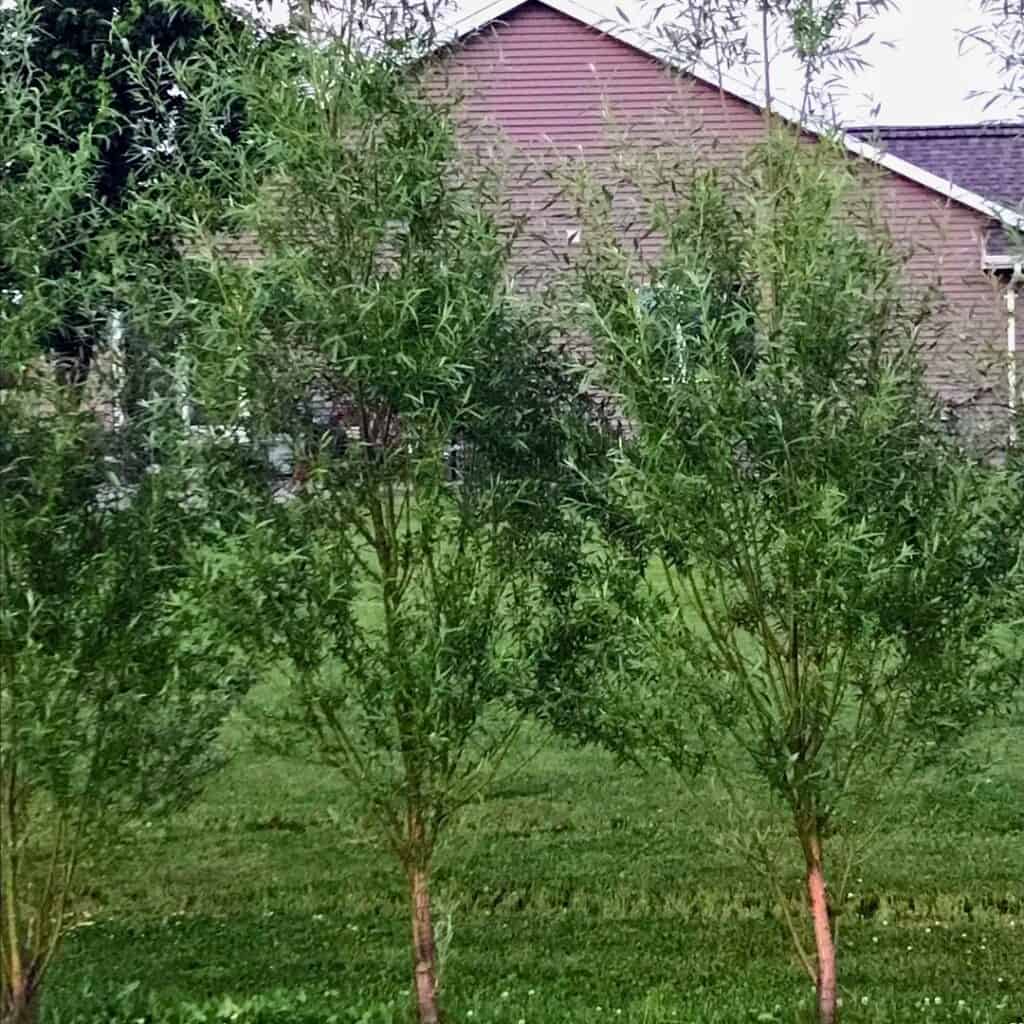
I like the Willow Hybrid for its fast growth and quick privacy. This shrub can shoot up to 6–12 feet in just a few years if you give it what it needs.
The dense, green leaves make a neat barrier that stays lively all year. I plant it when I want a natural fence that fills in fast.
Willow Hybrid grows best in full sun and moist, well-drained soil. I’ve found it’s pretty adaptable and even stands up to wind.
I trim it a few times a year to keep it tidy. Regular pruning helps it grow thicker, which means more privacy.
Once it’s established, it’s easy to care for and doesn’t take much time. I like how it works in both rural and suburban spots.
Whether I use it along a driveway or a property line, the thick green screen just feels peaceful. If you want fast growth and a simple privacy hedge, I think you’ll like how low-maintenance this plant is.
A little watering and some early pruning, and the Willow Hybrid rewards me with beauty and shade before I know it.
17) Escallonia
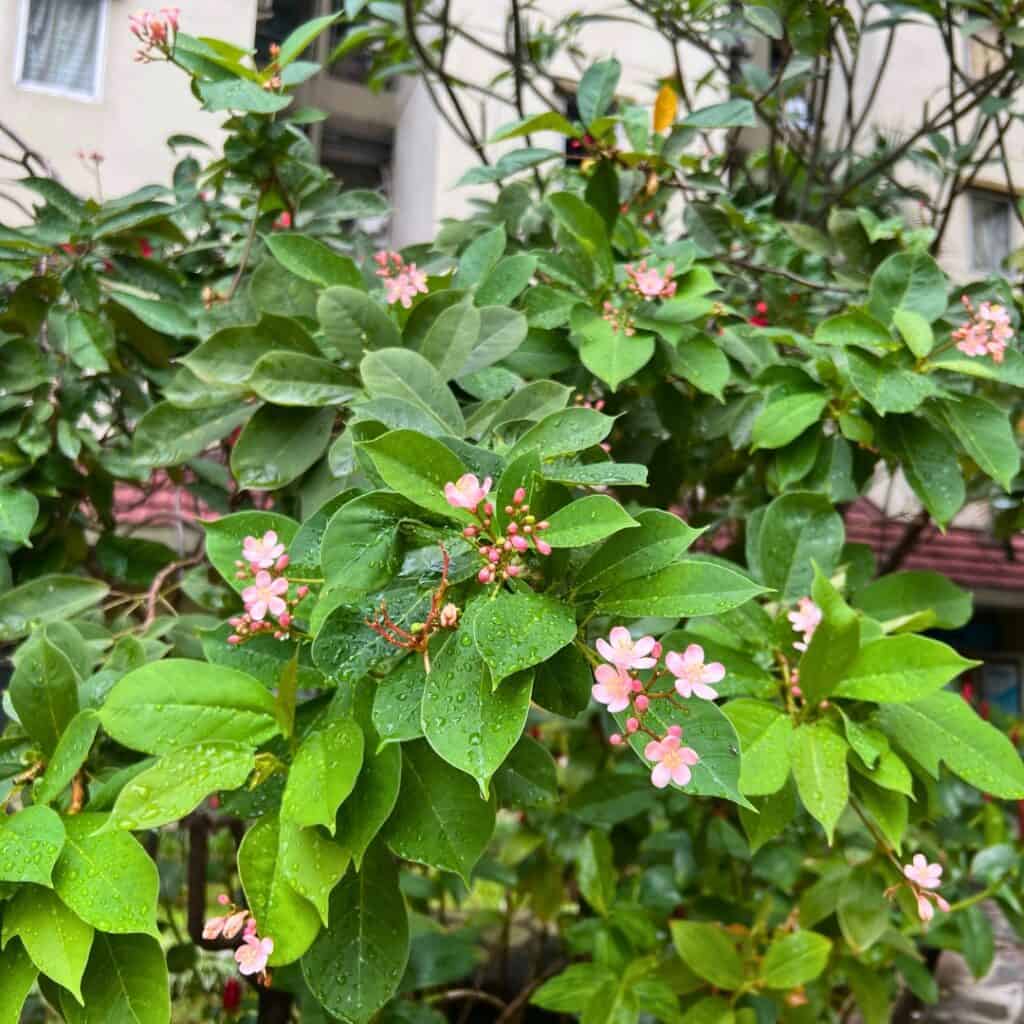
I like Escallonia for its quick growth and the way it combines beauty with privacy. This evergreen shrub has shiny green leaves that stay fresh-looking all year.
It forms dense growth, so it’s great for hedges or borders. In summer, I get clusters of small pink, red, or white flowers that attract bees and butterflies.
The blooms add color and life to my yard without much effort. Even when it’s not flowering, Escallonia still looks neat, so it’s a reliable privacy screen.
I’ve noticed it grows well in full sun and well-drained soil. It can handle coastal conditions and some wind, which is handy if you’re near the sea.
I water it only when the soil is dry, especially during hot spells. To keep it tidy, I trim it lightly after flowering.
Regular pruning helps it stay compact and full. Since it responds well to cutting, I can shape it into a hedge or let it grow naturally.
What I like most is how low-maintenance it is. No need for fertilizers or heavy watering—just basic care.
With that, I get thick coverage and a pleasant, green backdrop all year.
18) Dogwood Red Osier
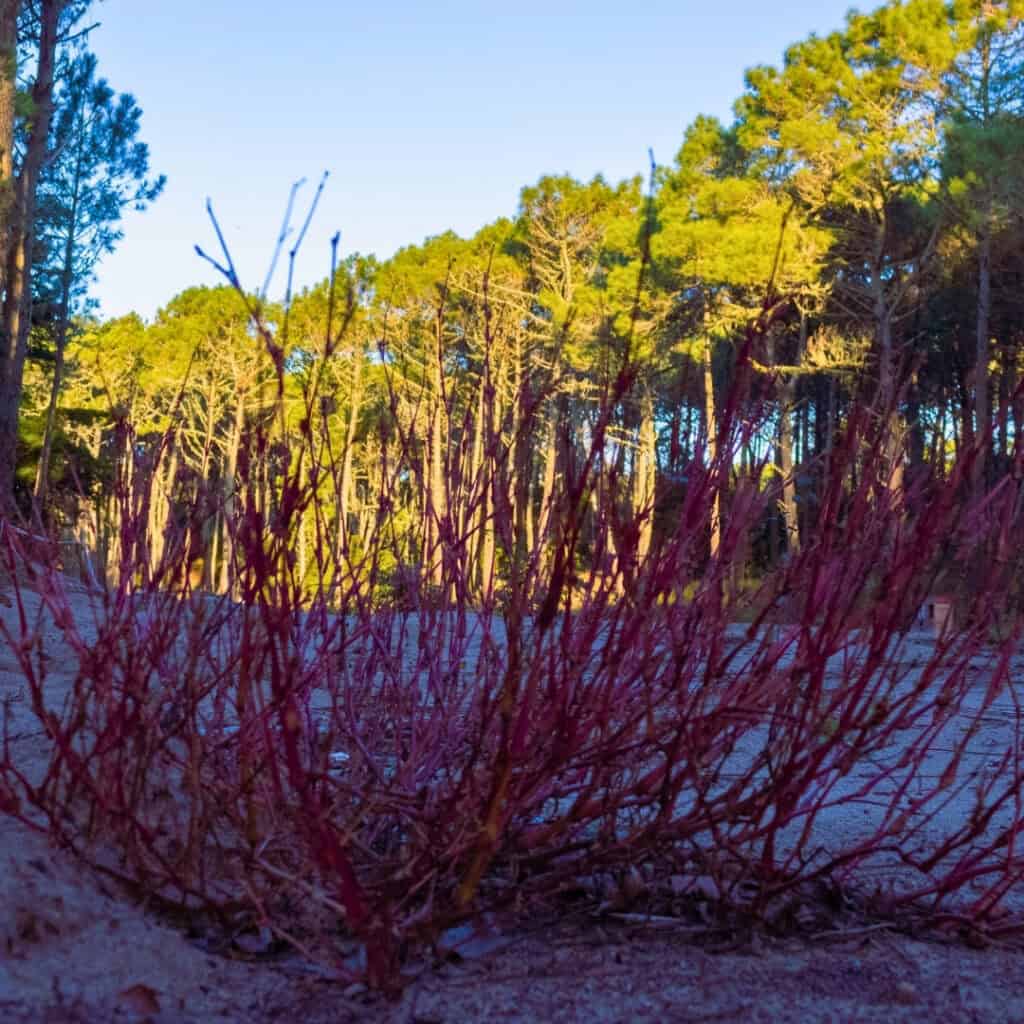
Honestly, I’m a big fan of Dogwood Red Osier. The bright red stems pop out, especially in winter—there’s just something about that color against the snow that’s hard to beat.
Even when the leaves drop, the shrub still looks interesting. It’s one of those plants that never really feels bare.
It grows fast, usually hitting 6 to 9 feet tall, so if you want a privacy screen or border, it’s a solid pick. I like how it fills in a space quickly, making things look lush without a long wait.
It does spread by underground stems, so I have to keep it trimmed back now and then. Otherwise, it might take over.
Come fall, the leaves turn these gorgeous red and purple shades—love that color shift as the seasons change.
In spring and early summer, you get small white flower clusters. Later, white berries show up and attract birds, which I think is a nice bonus.
I’ve noticed it does best in moist soil and spots with sun or partial shade. It even handles wet or poorly drained spots, which is honestly rare for most shrubs.
Once it’s settled in, I barely have to fuss over it. That’s always a plus.
For a more wild, layered look, I like to pair Dogwood Red Osier with willows, elderberries, or other native shrubs. The mix keeps the garden colorful and interesting through every season.
It’s a simple way to get privacy, color, and a bit of wildlife all in one go.
19) Mock Orange
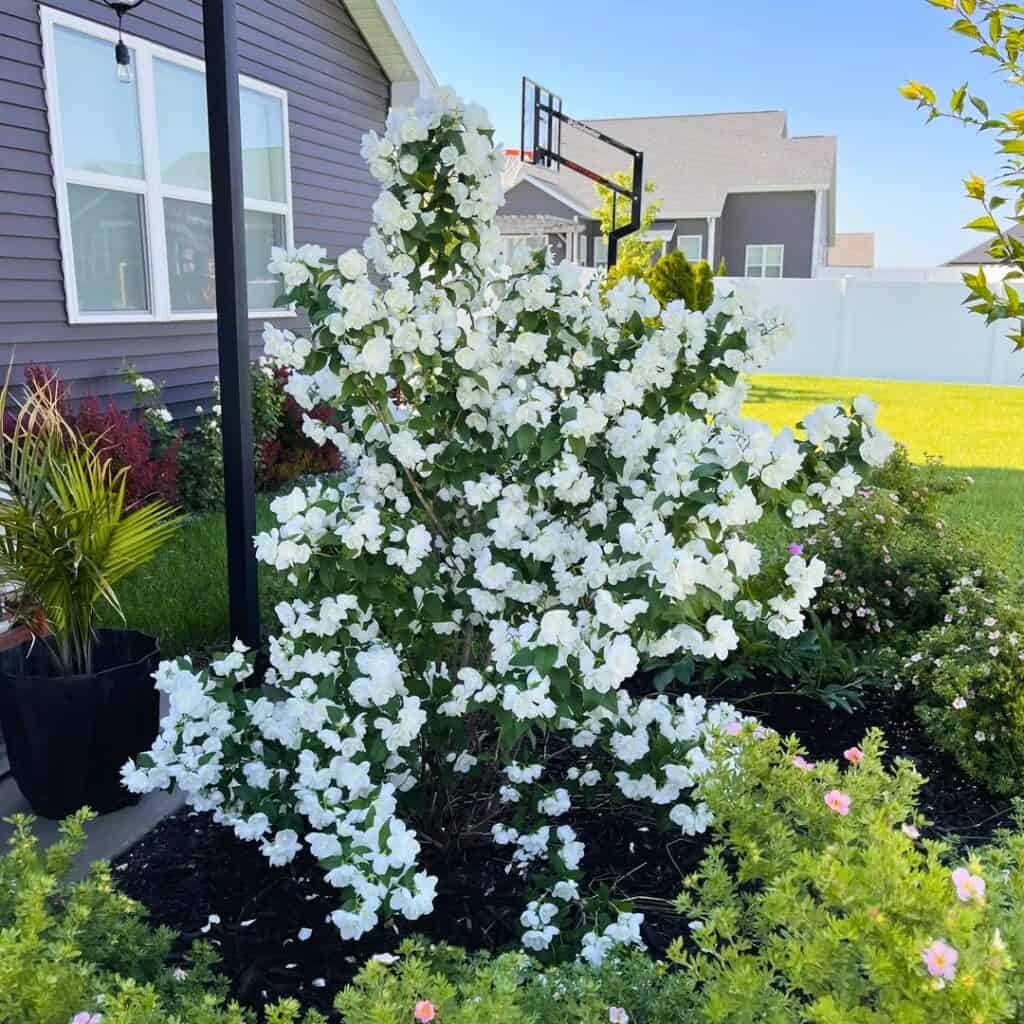
There’s just something about Mock Orange—every spring, it fills the garden with this sweet, citrusy scent. The flowers look a bit like orange blossoms, which is how it got the name.
The vibe is light and cheerful, and I think it fits almost any garden style, whether you’re into modern or classic looks.
I like planting Mock Orange as a privacy screen or border hedge since it grows dense and full. It usually gets to 6 to 10 feet tall, but there are smaller types if you’re short on space.
With a bit of pruning, it’s easy to keep it neat and in shape. It’s not a high-maintenance shrub.
It does best in well-drained soil with full sun to partial shade. Once it’s settled, I just water it moderately—too much can actually cause problems, so I check the soil first.
In late spring, the white flowers open up, and bees and butterflies can’t resist. The blooms stick around for a few weeks, lighting up the yard.
Even after the flowers are gone, the shrub stays green and thick. It keeps the garden looking full year-round.
I appreciate that Mock Orange can handle cold weather and doesn’t ask for much. A yearly trim after it flowers keeps it healthy and blooming for next year.
If you want a fragrant, easy-care privacy plant, Mock Orange is definitely worth a spot in your garden.
20) Sky Pencil Holly

Sky Pencil Holly is one of those plants that instantly gives my garden some structure. Its tall, narrow shape grows straight up, so it’s ideal for small spaces or tight borders.
I like that it gives privacy without hogging all the room. Usually, I plant a few in a row for a neat green screen.
The upright growth can reach 8 to 10 feet tall, but it stays just 2 to 3 feet wide. That makes it easy to shape or just let it do its thing for a clean, vertical look.
The leaves are this deep, glossy green all year, so even in winter, the yard doesn’t look drab. In late summer, little white flowers show up, and if you have both male and female plants, you’ll get tiny black berries that birds love.
I’ve found Sky Pencil Holly grows best in full sun or partial shade. As long as the soil drains well, it’s pretty adaptable.
I make sure to water it regularly during the first year. After that, it’s pretty low-maintenance.
A light trim once or twice a year keeps the column shape looking tidy. I also toss some mulch around the base to hold in moisture and protect the roots from temperature swings.
When I want a modern, clean look or some extra privacy by the patio, Sky Pencil Holly is one of my favorites. It fits into all kinds of garden styles and never takes over the space.
You get height, greenery, and a nice polished look with barely any effort.
Planning Your Privacy Hedge
When I plan a privacy hedge, I try to match the shrubs to my yard’s sunlight and soil. It’s also important to give each plant enough space and think about how the seasons will change their look and growth.
That way, the hedge stays healthy and looks good all year.
Sunlight and Soil Requirements
First, I always check how much sunlight each spot in my yard gets. Some fast-growing shrubs, like forsythia and privet, need full sun, while others, like camellia, actually prefer partial shade.
If I match the plant’s light needs to the spot, I avoid weak, scraggly growth.
Getting the soil right is huge. I usually test pH and drainage by digging a small hole and filling it with water. If it drains in a few hours, we’re good.
Heavy clay? I mix in compost or sand to loosen it up.
Here’s a quick cheat sheet I use:
| Sun Exposure | Example Shrubs | Soil Type Preference |
|---|---|---|
| Full Sun | Forsythia, Lilac | Loamy, Well-drained |
| Partial Shade | Camellia, Azalea | Acidic, Moist |
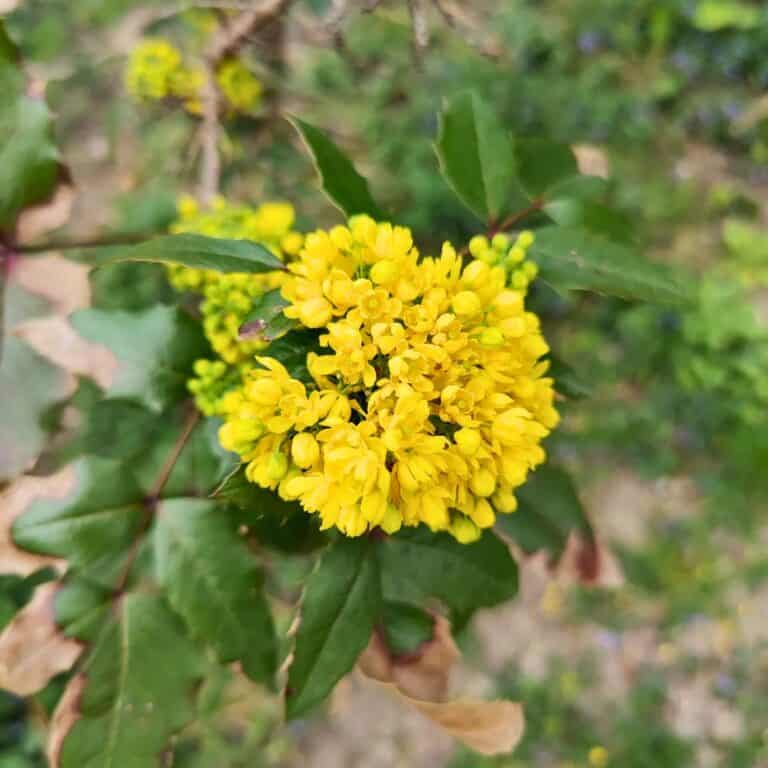
| Full Shade | Aucuba, Mahonia | Rich, Moist |
Consistent moisture is key, but I try not to overdo it. Deep watering once a week—especially during dry spells—keeps the roots happy.
Spacing and Growth Habits
Spacing matters more than you might think. I always look up each shrub’s mature width.
If a plant gets six feet wide, I space them about three or four feet apart. That way, they fill in nicely but don’t compete too much.
Some shrubs grow straight up, others like to spread out. I try to group similar growth habits so the hedge looks balanced.
A staggered double row can make a thicker, more private screen. When I plant, I dig holes twice as wide as the root ball—never deeper.
Mulching with bark chips helps hold moisture and cut down on weeds.
Seasonal Considerations
Seasons really change the look and needs of a hedge. In spring, I do a light prune before new growth starts.
Summer means more watering and keeping an eye out for pests, especially with young plants.
I prefer to plant most shrubs in the fall since the cooler temps and moist soil help roots get established.
I skip heavy pruning late in the year so new shoots don’t get zapped by frost.
In winter, evergreens like holly and arborvitae keep their color and privacy. Deciduous ones lose their leaves but bounce back fast in spring.
If it gets really cold, I’ll wrap tender shrubs in burlap for a little extra protection.
A little seasonal care goes a long way to keeping the hedge thick and vibrant.
Maintaining Healthy Shrubs and Bushes
I try to keep my shrubs looking good by giving them the right amount of water, nutrients, and a bit of regular attention.
It’s not rocket science, but steady care helps them stay green and full all year.
Watering and Fertilizer Tips
I prefer deep watering over frequent light watering. This helps with strong root growth and gets the plants through dry spells.
Most shrubs need about 1 inch of water per week, but it depends on soil and weather. Sandy soils dry out fast, so I water more often. Clay holds water longer, so I back off a bit.
For convenience, I use drip irrigation or a soaker hose. It gets water right to the roots and keeps the leaves dry, which helps avoid disease.
I check soil moisture by poking a finger in the top few inches. If it’s dry, time to water.
I feed my shrubs with a balanced fertilizer in early spring and again in mid-summer. Fast growers sometimes get a slow-release formula that lasts a few months.
Here’s the quick version:
| Shrub Type | Fertilizer Type | Timing |
|---|---|---|
| Evergreen | Acidic or general-purpose | Spring & Mid-summer |
| Flowering | Bloom booster | After first bloom |
| Deciduous | Balanced (10-10-10) | Early spring |
Pruning for Shape and Density
When I prune, I’m aiming for shape and strength, not just size. First, I take out any dead, damaged, or crossing branches.
This opens up the center for sunlight and airflow, which helps keep things healthy.
I usually prune in late winter or early spring before new growth takes off. For flowering shrubs, I wait until after they bloom so I don’t chop off the buds.
Sharp, clean tools are a must. I cut just above leaf nodes or side branches to encourage thicker growth.
For hedges, I trim lightly through the season instead of doing a big cut all at once. I keep the base a bit wider than the top so sunlight hits the lower leaves.
That way, the shrubs stay full from bottom to top.
Pest and Disease Prevention
I keep an eye out for pests like aphids, spider mites, or scale insects. Checking leaves often means I can catch problems early.
If I spot bugs, I’ll rinse them off with water or use insecticidal soap if I have to.
To prevent disease, I avoid getting the leaves wet when I water and make sure there’s enough space for airflow.
Overcrowding just invites mildew. I clean up fallen leaves and snip out any infected branches right away.
Healthy soil is a big help. I add organic compost each year for better drainage and good bacteria.
A 2–3 inch mulch layer keeps in moisture and blocks weeds, but I leave a gap around the stems to prevent rot.
Frequently Asked Questions
People ask me a lot about choosing and caring for fast-growing shrubs for privacy screens. I try to stick with options that grow quickly, stay full, and fit different garden sizes.
What are some of the best shrubs for quickly creating a privacy screen?
My top picks are Leyland Cypress, Privet, and Arborvitae Emerald Green. They grow fast, fill in thick, and keep their color most of the year.
Their upright habit makes them perfect for blocking views in a hurry.
Which fast-growing bushes are suitable for small gardens for maintaining privacy?
For smaller spaces, I’d go with Arborvitae Emerald Green and Privet. They don’t get too wide and are easy to keep trimmed.
They hold their shape well and won’t crowd out the rest of your yard.
Are there any low-maintenance shrubs that can provide privacy all year round?
Leyland Cypress and Arborvitae Emerald Green are both low-maintenance evergreens. I hardly ever need to prune them, and honestly, they look pretty good even when I forget about them for a while.
They stay full through winter, which is a relief. Just regular watering and tossing on a bit of mulch seems to do the trick.
Can you suggest flowering shrubs that also offer a good level of privacy?
I really like Forsythia for its bright yellow blooms in spring—such a burst of color when you need it most.
It fills in quickly and actually makes a pretty cheerful privacy screen. If you want something a little different, some types of Bamboo Bambusa shoot up tall and add a nice texture with their green leaves.
What are the ideal planting conditions for fast-growing privacy shrubs?
Most of these shrubs are happiest in full sun and well-drained soil.
I usually toss in some compost before planting, hoping it gives the roots a good start. Spacing is important—about 3 to 5 feet apart—so they have space to spread out without getting all tangled up.
How often should privacy bushes be trimmed to maintain shape and encourage growth?
I usually trim my hedges once or twice a year, but honestly, it depends on how wild they’re getting. A light pruning in early spring helps give them some shape.
Sometimes I’ll go back for a second trim in mid-summer just to keep things tidy. Regular trimming seems to make the shrubs a lot denser, which is great if you want real privacy.
Note: Some images in the articles are sourced from Reddit and Other Platforms For Reference Purpose.