15 Evergreen Trees for Backyard Privacy
I just love how evergreen trees can turn a backyard into a private little retreat. They stay lush and green all year, keeping outdoor spaces cozy and peaceful.
If you want to block noise, add a bit of beauty, or build a natural fence, evergreen trees offer a lasting solution that grows right along with your home.
In this article, I’ll share a variety of evergreens for different yards and climates. You’ll find out which ones grow fast, need hardly any care, and work best for privacy screens.
Each tree brings its own charm and helps shape a space that feels calm and inviting.
Please note: Simplify Plants is reader-supported. As an Amazon Associate, I earn from qualifying purchases made by our readers with no extra cost added to you all! Some links in the post are affiliate links and I get a commission from purchases made through links in the post.
1) Leyland Cypress
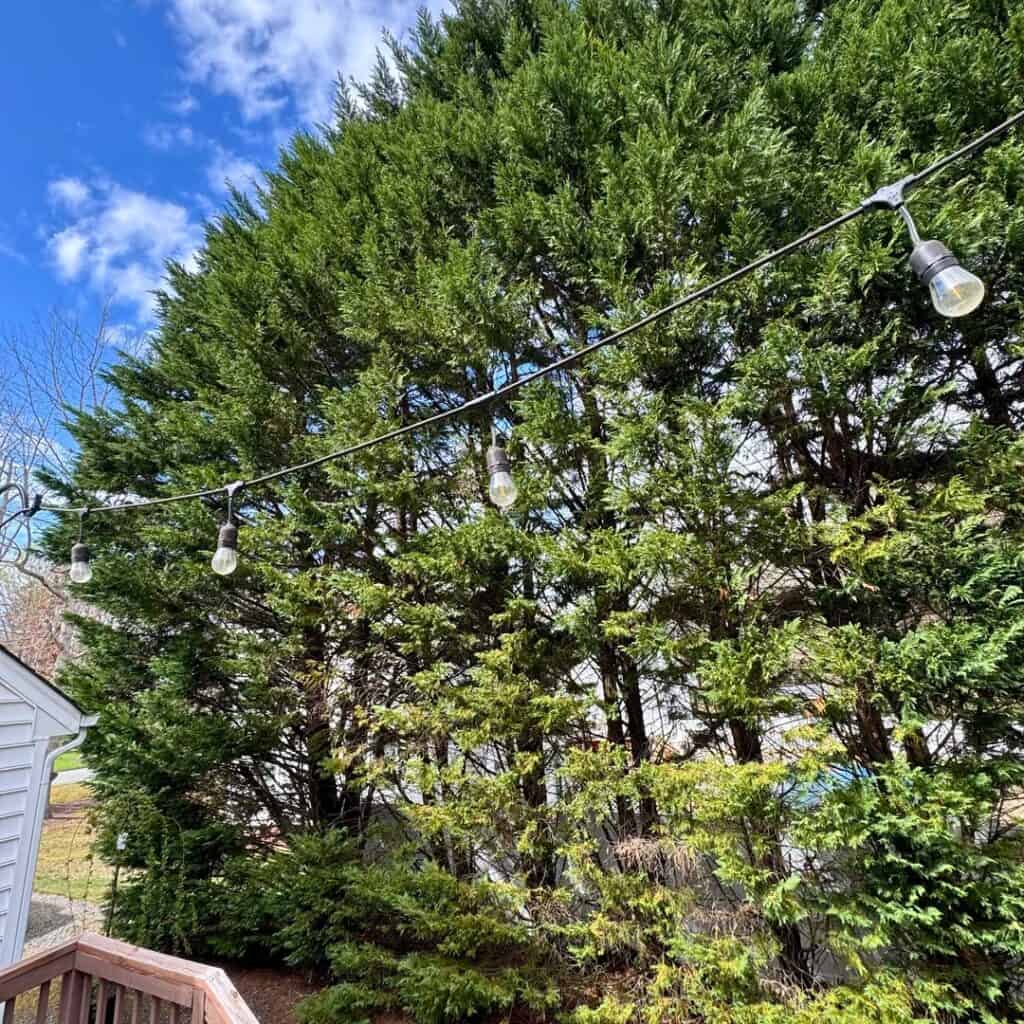
I like planting Leyland Cypress because it grows fast and keeps a neat look all year. This tree forms a thick screen, giving instant privacy and cutting down on noise.
Its soft, feathery foliage stays green through every season. I’ve noticed it does best in full sun and well-drained soil, though it can handle a few different soil types—just not soggy spots.
I usually space the trees about 6 to 8 feet apart so they fill in nicely without crowding each other. When I trim it once or twice a year, it keeps a clean, tidy shape.
Regular pruning helps control its height and keeps the branches dense. If you skip trimming, it can shoot up over 50 feet, which is a bit much for a small yard.
I water them regularly the first season to help roots settle in. After that, they handle dry spells pretty well.
In my experience, Leyland Cypress stays healthy if I avoid overwatering and check for pests now and then. I think this tree works best as a living wall along fences or property lines.
Its thick growth gives both privacy and beauty. The soft green color blends easily with other plants and somehow looks fresh even in the dead of winter.
2) Eastern White Pine

I love how Eastern White Pine adds beauty and a kind of calm to any backyard. Its soft needles and tall, straight trunk make it stand out.
I often pick it when I want quick, natural privacy that still feels gentle and welcoming. This tree grows fast, sometimes two or three feet a year if it’s happy.
That’s really helpful if you don’t want to wait ages for a screen. It forms a thick wall of green that blocks out noise and wind.
I usually plant it in full sun or light shade where it has room to stretch out. It likes well-drained soil but adapts pretty well once it’s settled.
I water it regularly for the first year, then ease up once it’s rooted and strong. The soft, bluish-green needles feel airy, not scratchy.
When I brush past them, there’s this light pine scent that reminds me of being up in the mountains. Because the needles stick around all winter, my yard stays green even when everything else looks dead.
If I’ve got the space, I plant several in a row, spacing them about 15 to 20 feet apart. Over time, they grow together into a solid green barrier that feels private but still natural.
For smaller yards, I just plant one or two as focal trees. Sometimes I trim the lower branches for a tidier look, or let them grow down to the ground for thicker coverage.
Either way, they bring that classic, evergreen charm that fits almost any landscape. I’ve noticed birds love building nests in their branches, which adds a little extra life and sound to the garden.
That’s another reason I like using Eastern White Pine—it supports local wildlife while making my backyard feel peaceful and private.
3) American Arborvitae

I love using American Arborvitae when I want a natural, green privacy wall in my backyard. This evergreen is tall, narrow, and super easy to shape.
It looks neat and adds a soft, natural texture to any space. The leaves stay vibrant green all year, which keeps my yard looking fresh even in winter.
I find it grows best in full sun, but it can handle some shade too. Depending on the type and care, it’ll get about 10 to 15 feet tall.
When I plant them in a row about 3 feet apart, they form a solid screen that blocks wind and noise. I don’t have to worry much about maintenance because they require little pruning.
I just trim them lightly to keep their shape. I also like that this tree attracts birds, offering them shelter and nesting spots.
It makes the yard feel more alive. For best growth, I keep the soil moist but not soggy, and water deeply during dry spells.
The American Arborvitae fits nicely into small or large yards. It gives me privacy without feeling heavy or closed in.
It’s probably one of the simplest and most reliable ways I’ve found to create a peaceful, private space outdoors.
4) Green Giant Arborvitae
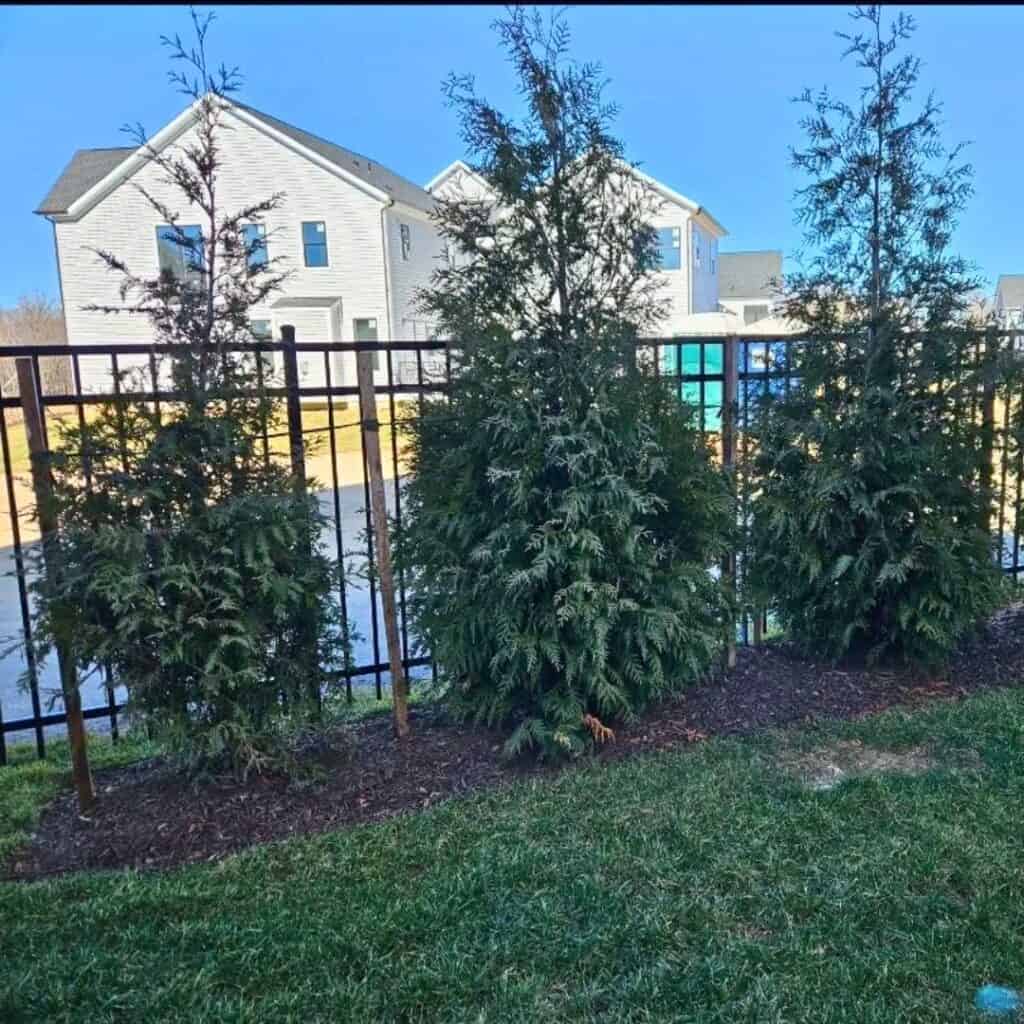
I love the Green Giant Arborvitae because it grows fast and stays green all year. Its rich color and tall shape make it one of my favorites for backyard privacy.
This tree can reach 40 to 60 feet tall and 12 to 18 feet wide, but I can keep it smaller by trimming it once or twice a year. It grows about 3 feet per year, so I get a full privacy screen pretty quickly.
I like that it forms a dense, upright wall of foliage that blocks noise and wind. Even in winter, when other trees lose their leaves, mine stay thick and green.
The soft, feathery needles make it look full without feeling stiff or sharp. It handles a lot of conditions well, from full sun to partial shade, and it’s resistant to deer and many pests.
I don’t have to fuss over it much once it’s established. I just water it regularly during the first year and then less often after that.
When I plant Green Giants as a hedge, I space them 5 to 6 feet apart so they have room to grow together. In a few years, they form a solid screen that feels private and peaceful.
It’s a simple, low-maintenance way to make my backyard look lush and protected year-round.
5) Japanese Cryptomeria
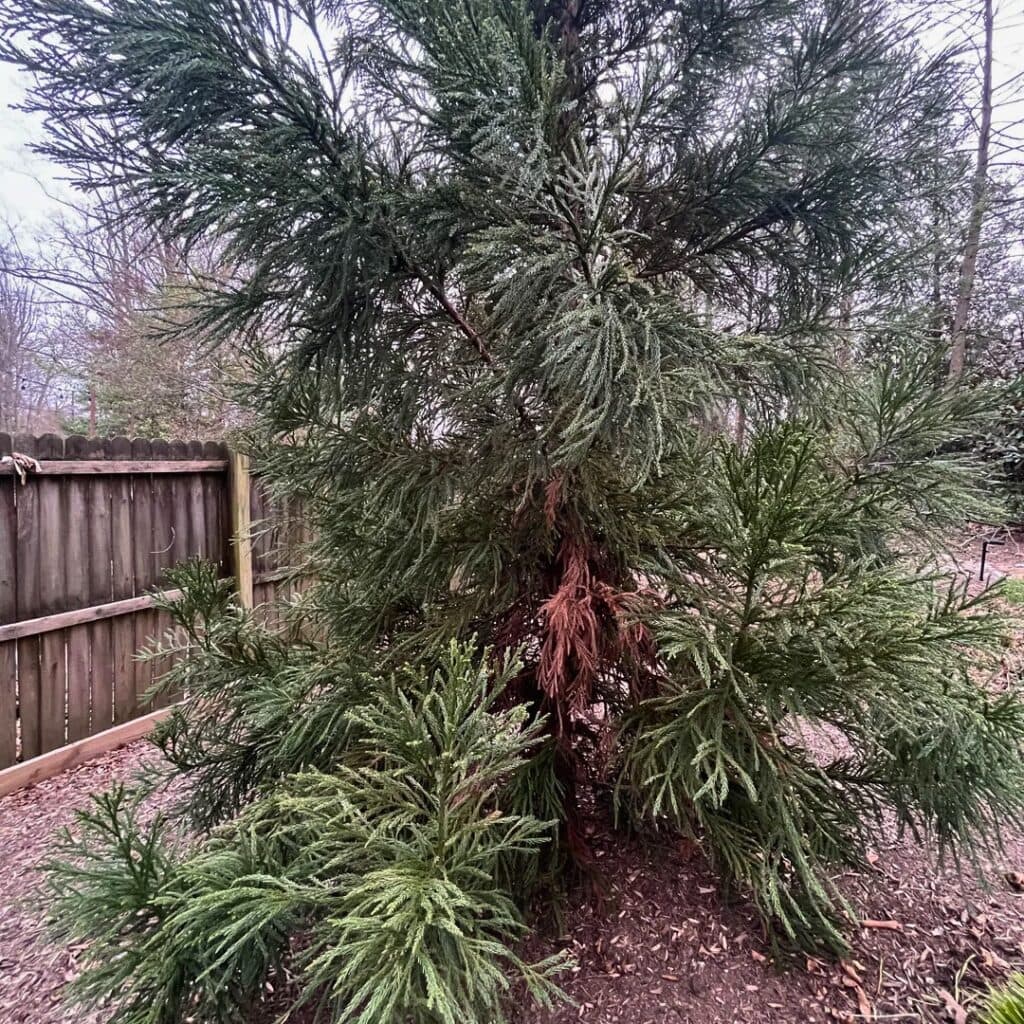
I really like the Japanese Cryptomeria because it’s an evergreen that adds both height and softness to a backyard. Its dense foliage gives year-round privacy without feeling too heavy or dark.
The tree’s bright green needles stand out and look especially nice against fences or walls. I’ve noticed that this tree can grow 40–60 feet tall, depending on the space and conditions.
It works great if I want a tall screen to block views from neighbors or streets. Even better, the lower branches tend to stay full, so there’s no need to worry about gaps near the ground.
The Japanese Cryptomeria grows best in full sun and well-drained soil. I make sure to water young trees regularly until they settle in.
Once established, they handle short dry periods well, which makes them a low-maintenance choice for busy homeowners. I also enjoy how this tree changes a bit with the seasons.
The foliage becomes bronze or reddish in colder weather, adding a nice touch in winter.
It’s subtle but makes the landscape feel more alive through the year. I plant them a few feet apart to form a neat privacy barrier.
Their upright form helps save space while still giving me a solid screen. If kept trimmed and shaped, the Japanese Cryptomeria stays tidy and stylish with very little effort.
6) Western Red Cedar
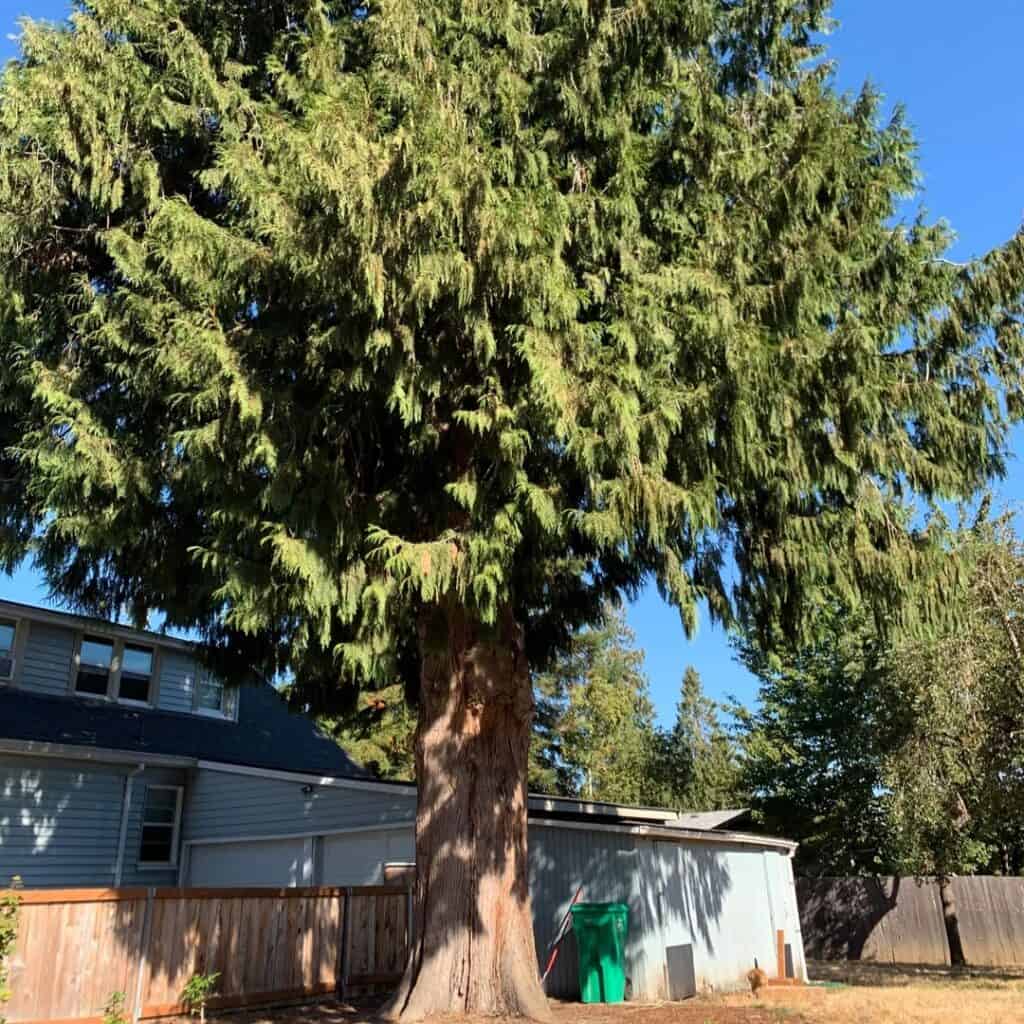
I love using Western Red Cedar for backyard privacy because it grows thick and full. Its soft green needles stay vibrant all year, giving steady color even through winter.
The tree’s pleasant scent makes my space feel natural and calm. This evergreen grows quickly, which helps me block noise and create privacy faster.
I usually plant them in a row along my fence line for a living wall. Each tree can grow up to 60 feet tall, but I often trim mine to keep them shorter and easier to manage.
Western Red Cedar does well in moist, well-drained soil and needs plenty of sunlight. I’ve found that they can handle some shade, but too much makes them thin out.
With regular watering during dry spells, they stay dense and healthy. I also like that this tree naturally resists insects and decay, so it lasts a long time with little maintenance.
The wood gives off a warm color that fits nicely into almost any landscape. With its strong growth and year-round coverage, Western Red Cedar makes an easy and reliable choice for backyard privacy.
7) Colorado Blue Spruce

I love how the Colorado Blue Spruce instantly adds color and structure to a yard. Its blue-gray needles stand out all year, giving my backyard a crisp and clean look even in winter.
The symmetrical shape makes it one of the easiest trees to plant in neat rows for privacy. This evergreen can grow up to 50–75 feet tall when mature, but I often pick smaller or dwarf varieties for a mid-sized yard.
It creates a dense screen that blocks noise and wind, which makes my outdoor space feel more peaceful. I’ve noticed the spruce grows best in full sun and well-drained soil.
Once established, it handles cold weather and dry conditions well, which saves me time on maintenance. I just make sure to water young trees regularly during their first few years.
What I like most is how little I need to prune it. Its natural shape stays tidy without much effort. The stiff branches also make excellent nesting spots for birds, adding life to my garden.
When I mix the Colorado Blue Spruce with other evergreens, I get a nice contrast in color and texture. The blue tones look great next to deep green pines or lighter junipers.
It’s a simple way to create year-round visual interest while keeping my backyard private.
8) Norway Spruce
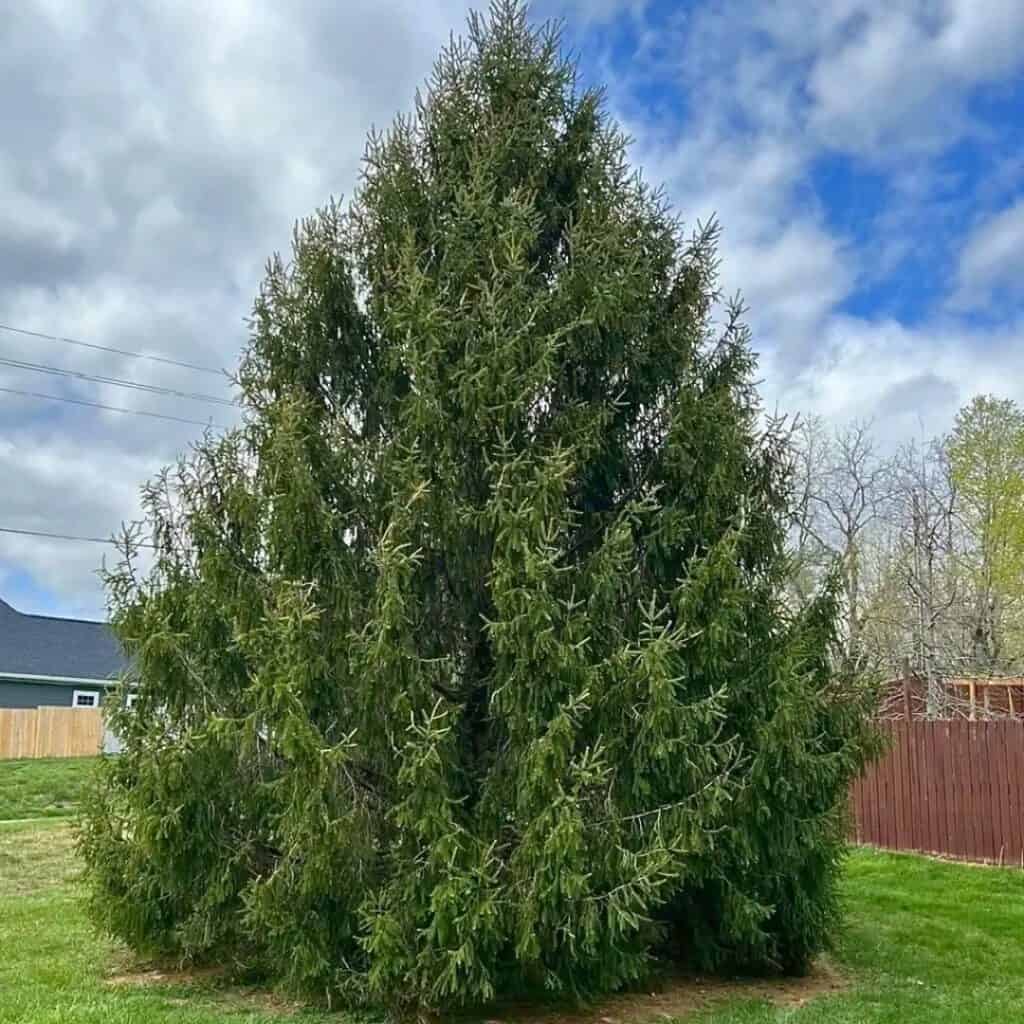
I like planting the Norway Spruce because it grows fast and adds strong year-round cover. It has a dense shape with branches that stay full from top to bottom.
That makes it perfect when I want solid privacy or wind protection in my yard. The needles are short, dark green, and stay on the tree all year.
I think the rich color makes the yard look calm and tidy, even in winter. The cones hang down and add a nice texture to the tree’s look.
This spruce can reach 50 to 100 feet tall when mature, so I give it plenty of space to grow. It does best in full sun and likes soil that drains well.
I’ve noticed it tolerates cold weather and strong winds better than many other evergreens. I plant Norway Spruce trees about 10 to 12 feet apart when I want a privacy screen.
The branches fill the gaps quickly, forming a thick green wall. Once established, it doesn’t need much care beyond watering during dry spells.
I also find this tree useful for reducing noise from nearby roads. Its tight growth helps block sound and creates a quiet spot in my backyard.
The birds enjoy nesting in it too, which adds life and movement to the space. Because it grows fast, I can see results in just a few years.
I prune lightly if a branch sticks out or to shape it a bit, but I don’t need to do much. The low maintenance and steady growth make the Norway Spruce one of my favorite choices for backyard privacy.
9) Black Hills Spruce

I really enjoy planting Black Hills Spruce when I’m after a strong, reliable privacy tree. The neat, pyramid shape always looks tidy, and I don’t have to fuss with trimming much.
The needles are thick and blue-green, which gives my yard a cool, calm vibe all year long.
This spruce grows slowly but steadily. At maturity, it’s usually somewhere between 30 and 60 feet tall.
It stays full and dense, making it perfect for blocking out views and cutting down on noise.
Even in winter, the branches are still covered in needles, so the wind stays out and my yard feels private.
I’ve noticed it handles cold winters and windy days like a champ. It doesn’t seem to mind different soil types, as long as the ground drains well.
For the first couple of years, I water it regularly to help the roots get established. After that, it really doesn’t ask for much.
When I plant several in a row, they create a solid green wall that looks great next to fences or out in the open.
The spruce also brings in birds, giving the yard extra life and movement.
If you’re after an easy-care tree that looks good through every season, the Black Hills Spruce is a solid pick. It adds privacy, texture, and steady color without much effort.
10) Austrian Pine

I like the Austrian Pine because it grows fast and keeps its green color all year. The long, dark needles give my yard a calm, full feel, even when it’s cold outside.
This tree forms a thick screen that blocks noise and wind pretty well.
When I planted a few along my fence line, they filled in quickly. Some of mine have grown up to 60 feet tall, which is great if you have a big yard.
The strong branches hold up well against heavy snow and cold, which is a relief during rough winters.
I always make sure to plant Austrian Pines in full sun so they stay healthy and keep their shape.
They’re surprisingly tolerant of dry soil once they’ve settled in. At first, I water them a lot, but as their roots spread, they need less.
These trees like well-drained soil, but honestly, they adapt pretty well to different spots.
I trim them lightly in late winter to keep them neat and encourage thicker growth. Regular pruning helps avoid weak or crowded branches.
What I appreciate most is how low-maintenance they get after a couple of years. The Austrian Pine doesn’t need special care or fancy soil.
It stands up to storms and gives my backyard a private, peaceful feel all year.
11) Italian Cypress
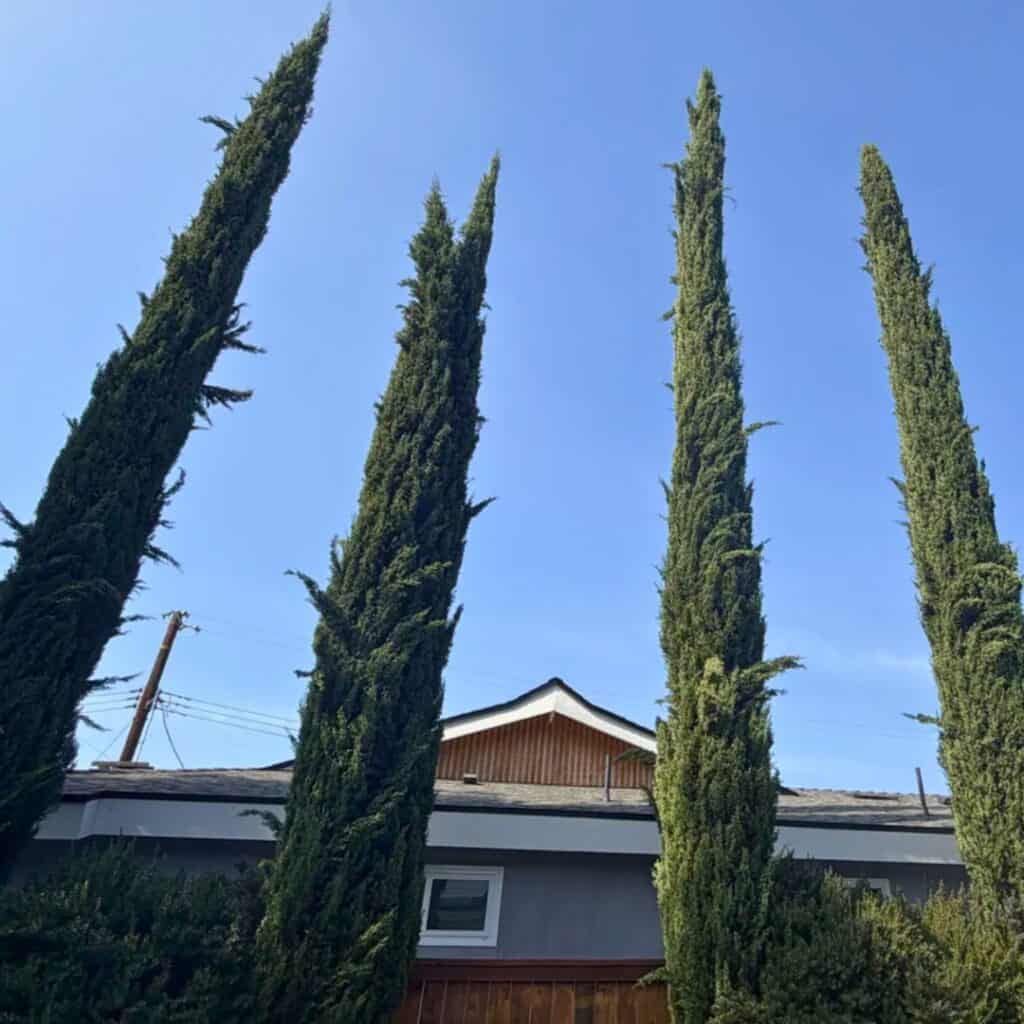
There’s something about Italian Cypress trees that just makes a yard look sharp and elegant. Their tall, narrow shape is perfect for tight spaces or lining a driveway.
They grow upright, so you get a natural wall that adds both privacy and a bit of style.
These evergreens can reach 40–60 feet tall but stay super slender, usually just a few feet wide.
I find that handy when I want height without taking up much space. Their dark green foliage stays bright all year, even in dry or warm weather.
What I like is how Italian Cypress trees are low-maintenance once they’re settled.
They don’t need much water and can handle poor soil, as long as it drains well. I always plant them in full sun to keep them healthy and growing at a good pace.
They work beautifully as a living privacy screen or border. Sometimes I plant them in rows for a dramatic, structured look.
The trees instantly give my backyard a private, quiet vibe without needing a fence.
Regular trimming keeps them tidy, but honestly, they don’t need much pruning. Since they grow slowly, they keep their shape naturally.
If you’re after a tidy, formal appearance, Italian Cypress fits the bill and doesn’t need much fuss.
12) Eastern Red Cedar
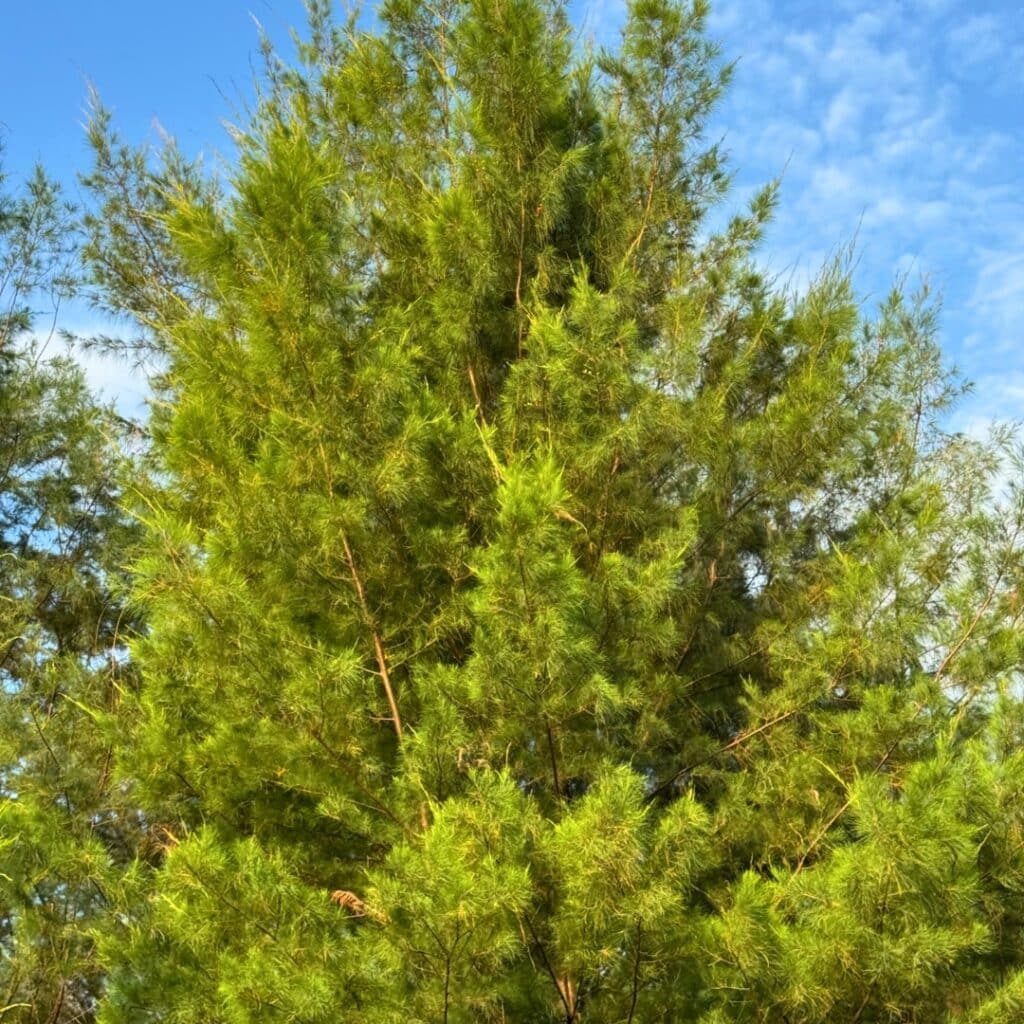
I really love how Eastern Red Cedar brings beauty and privacy to my yard year-round. This evergreen has dense foliage that blocks unwanted views and adds a natural charm.
It’s one of my favorite picks for creating a living fence that feels warm and welcoming.
The tree’s blue-green needles stay vibrant through every season. In winter, when everything else looks bare, my cedars hold their color and shape.
They also produce small blue berries that attract birds, which adds a bit of life and movement to the garden.
I appreciate that Eastern Red Cedar can handle many soil types. It grows well in full sun and doesn’t need much care once it’s established.
I just make sure it has enough space, since it can reach 40 to 50 feet tall if left untrimmed.
With regular pruning, I can shape it to fit smaller yards too.
What I find most useful is its durability. It resists drought, cold, and pests better than a lot of other evergreens.
That makes it a smart, low-maintenance choice for privacy screens or windbreaks.
When I plant these trees, I usually space them 5 to 10 feet apart. This gives them room to grow while still forming a solid barrier.
Over time, they fill in nicely and offer a peaceful, green backdrop that feels private and calm.
I also like the soft woody scent they give off, especially after rain. It just makes spending time outside more enjoyable.
For me, Eastern Red Cedar is more than just a privacy tree—it’s a simple way to make my yard feel cozy, natural, and alive.
13) Bald Cypress

I love how the Bald Cypress stands tall and graceful through every season. This tree brings a calm, natural look to my yard and handles different climates surprisingly well.
It’s one of those trees that just makes a space feel peaceful and a bit more private.
Even though it’s famous for growing in wet areas, it does just fine in regular soil too. I’ve seen it thrive beside ponds and driveways alike.
It adapts easily, which makes it a solid pick for a lot of backyards.
The Bald Cypress grows in a narrow, pyramid shape, so it fits neatly in corners or along property lines.
Its soft, feathery leaves turn a warm, reddish-brown in fall before dropping, but new growth pops back quickly in spring.
Even when it’s bare, the strong trunk and branches still offer decent coverage for privacy.
This tree can reach 50 to 70 feet tall over time, but I can keep it smaller with some simple pruning.
It grows at a moderate pace, so it gives steady results without taking over the yard.
I also like that the Bald Cypress is low-maintenance once it’s settled in. It resists most pests, handles seasonal flooding, and doesn’t need much attention beyond watering during the first year.
Because of its unique look and easy care, I think it adds both beauty and function. Planting a few in a row creates a natural screen that looks clean and timeless.
14) Alaskan Cedar

I love how Alaskan Cedar brings a calm, natural beauty to any backyard. The soft blue-green needles give my space a peaceful look all year.
The tree grows tall but keeps a narrow shape, which is ideal for tight spots or lining a fence.
I find it easy to care for since it doesn’t need much pruning. It grows slowly and forms dense, layered branches that create great privacy without feeling too heavy.
The tree can reach about 20 to 30 feet tall in home landscapes, so it adds height without overwhelming the yard.
This evergreen does best in cool, moist climates, which is perfect if you live in a northern region.
It likes well-drained soil and steady watering, especially when young. Once established, it tolerates light drought and cold temperatures pretty well.
I also appreciate that the wood has a pleasant scent and can resist insects and rot. That means the tree stays healthy and strong for years.
When I plant several Alaskan Cedars together, they form a soft green screen that blocks wind and noise while keeping the backyard private and peaceful.
I like mixing Alaskan Cedar with other evergreens to add texture and contrast. Its color and shape help break up big green spaces.
Overall, this tree has a quiet elegance that fits in nicely with both modern and rustic yards.
15) Nootka Cypress

There’s something about the Nootka Cypress that just adds character and privacy at the same time. Its weeping branches hang gracefully, creating a soft curtain of green that looks elegant all year.
Those blue-green needles stay vibrant, even when it’s freezing out, so I never have to worry about empty spots in winter. It’s a nice change from trees that go scraggly when it gets cold.
This tree is happiest in cool, moist climates, and it handles coastal weather surprisingly well. I’ve found it’s pretty tough against wind and can handle a bit of salt in the air too.
It grows at a moderate pace, usually topping out around 20 to 30 feet in a home setting. That’s tall enough to block out unwanted views, but it won’t take over the whole yard.
The narrow, upright shape is perfect for smaller spaces or along property lines where you don’t have tons of room. I like planting them in a row for a green screen, but they also look great as a single accent by a fence or corner.
A little trimming each year keeps the shape tidy, but it never looks too formal or stiff. It just works.
Birds seem to enjoy perching in the branches, which brings a little extra life to the garden. Plus, it hardly sheds, so my yard stays cleaner.
As long as the soil drains well and you water it regularly at first, the Nootka Cypress settles in quickly. It doesn’t ask for much.
If you want a privacy tree that feels elegant instead of bulky, this one’s high on my list. It brings beauty, structure, and reliable evergreen coverage all year.
Benefits of Evergreen Trees for Privacy
Evergreen trees just make sense if you want privacy that lasts. I love how they keep their color, block out unwanted views, and carve out calm spaces no matter the season.
They do more than look good—they create comfort, invite wildlife, and even help with noise. It’s a win all around.
Year-Round Coverage
What I enjoy most is how evergreens stay green every month of the year. Their leaves or needles don’t drop off in winter, so you never lose your screen.
That steady coverage means privacy, no matter what the weather’s doing. You don’t get that with most other trees.
Species like Thuja Green Giant or Eastern Red Cedar grow in thick, vertical layers. They make a natural fence that blocks direct views from the street or neighbors.
I think they’re perfect along property lines or around patios—anywhere you want consistent seclusion. The effect is instant and lasting.
For the best results, I plant them in staggered rows, maybe 3 to 5 feet apart. This closes up gaps quickly and makes a more solid barrier.
Evergreens give you privacy with minimal seasonal upkeep, so they’re great for almost any climate.
Wildlife Habitat Support
Even in winter, evergreen trees attract life. I see birds, squirrels, and all kinds of insects using their branches for shelter when everything else is bare.
The dense foliage keeps small animals safe from wind and predators. It’s nice knowing your privacy screen is also a little wildlife haven.
Since these trees keep their needles through the cold months, I can hang feeders nearby and always get feathered visitors. Many evergreens drop cones or berries, too—pine, holly, and juniper are great for food and cover.
A lively backyard just feels better. Birds help with pests, and bees and butterflies do their thing in spring. Evergreens offer not just privacy, but a balanced, lively outdoor space.
Natural Sound Barrier
A solid wall of evergreens can really cut down on noise from traffic, neighbors, or lawn mowers. I notice the difference when I plant rows of cypress or spruce—it just feels quieter.
Their layered branches absorb sound better than fences or bare trees. For even more noise control, I mix tall evergreens with shorter shrubs at the base.
That multi-layer planting traps noise at different heights. The end result is a softer, calmer yard that’s just more pleasant to be in.
A healthy windbreak of evergreens can drop noise by several decibels, depending on how dense and wide you plant them. I like how this natural barrier gives me privacy and a more peaceful outdoor space, all year.
Tips for Planting and Maintaining Evergreen Privacy Screens
Getting evergreen screens right is mostly about spacing, soil, and basic care. I always pay attention to how close I plant them, how I water and feed them, and how I trim them to keep things thick and healthy.
Spacing and Arrangement Suggestions
I start by thinking about how close each tree should be for the type I’m planting. Most evergreens need a little breathing room for air and sunlight.
For tall, narrow trees like arborvitae, I go with 3 to 4 feet apart. If I’m planting something wider, like cypress or spruce, I leave 5 to 8 feet between them.
When I want a quick privacy screen, I’ll stagger trees in two rows instead of one straight line. Tighter coverage, less crowding.
I usually let the row follow my yard’s shape—straight lines can look a bit too stiff. Before digging, I mark the spots and check for pipes or wires underground.
Keeping roots from competing helps each tree grow strong. I also avoid planting too close to fences or walls so they have room to fill out.
Soil and Watering Needs
Good evergreens start with well-drained soil. I test by filling a small hole with water and timing how long it takes to drain. If it’s slow, I mix in compost or sand.
Soggy roots are bad news. I keep the soil slightly moist but never soaked.
For new trees, I water deeply once or twice a week so the roots dig down. In hot months, I check the soil with my finger—if it’s dry a few inches down, it’s time to water.
Once they’re established, I water less often. I also add mulch around the base, but leave a little gap near the trunk.
Mulch keeps moisture steady and cuts down on weeds. It’s a small step that makes a big difference.
Ongoing Pruning and Care
Regular care is key for thick, healthy evergreens. I inspect them a few times a year for brown needles, pests, or any weird growth.
Trimming in late winter or early spring encourages new branches. I use sharp, clean tools so I don’t spread anything between cuts.
If a section gets thin, I trim just above a branch node to push new shoots. Some trees, like junipers, don’t bounce back from old wood, so I stick to cutting only the green parts.
A quick seasonal check keeps bigger problems away. I also fertilize lightly in spring with a slow-release formula for evergreens.
With simple upkeep, my privacy screen stays dense, green, and strong year after year.
Frequently Asked Questions
People ask me all the time about the best evergreen trees for privacy, how fast they grow, and what kind of care they need. It’s handy to know their growth habits, spacing, and which ones are truly low-maintenance.
What are the best evergreen trees for creating a natural privacy screen in my backyard?
I usually suggest Leyland Cypress, Eastern White Pine, American Arborvitae, Green Giant Arborvitae, and Japanese Cryptomeria. They stay full year-round and make solid natural barriers.
They’re also pretty adaptable to different climates and soil types.
How fast do evergreen trees grow, and how soon will they provide full privacy?
Growth rates really vary. Leyland Cypress and Green Giant Arborvitae can add 3–5 feet a year if conditions are good.
Most yards see solid privacy within 3–5 years after planting. Not instant, but faster than you’d think.
Can you recommend low-maintenance evergreen trees ideal for backyard privacy?
For easy care, I go with American Arborvitae or Green Giant Arborvitae. They’re tough against pests and don’t need much trimming.
Once they’re established, they just need a bit of water during dry spells.
What spacing should I consider when planting evergreen trees for privacy?
For a tight screen, I like 6 to 8 feet apart for medium-sized trees. Bigger ones, like Eastern White Pine, need 10 to 12 feet between them.
Good spacing keeps air moving and helps prevent disease.
How tall and wide do popular privacy evergreen trees grow?
Some get pretty big over time. Leyland Cypress can reach 50–70 feet tall, and Green Giant Arborvitae often hits 40–60 feet.
If you want something smaller, American Arborvitae usually stays closer to 15–20 feet.
Are there any evergreen trees that are particularly good for small yards or limited spaces?
Absolutely! I’ve noticed that American Arborvitae and Japanese Cryptomeria work really well in smaller yards. They tend to stay pretty narrow, and you can shape them a bit with light pruning if you want them to look extra tidy.
Note: Some images in the articles are sourced from Reddit and Other Platforms For Reference Purpose.