7 Tips to Make Pilea Plant(Chinese money plant) Flower
Pilea plants are famous for their adorable coin-shaped leaves, but getting them to bloom? That’s a whole different challenge.
I’ve had my fair share of these cheerful houseplants, and honestly, flowers aren’t something you just stumble upon—they need a bit of coaxing.
Pileas really want the right combo of light, water, food, and, weirdly, even a touch of stress before you’ll see those tiny pink or cream-colored blooms.
Most folks don’t realize Pileas can actually flower indoors. The blooms aren’t exactly show-stoppers like orchids, but they’re still a fun little reward for good care.
If your Pilea hasn’t flowered yet, don’t stress—it’s not a reflection of your skills.
I’ll walk you through seven tips that have worked for me. We’ll look at lighting tweaks, when to repot, and how to handle those annoying issues that keep blooms at bay.
Please note: Simplify Plants is reader-supported. As an Amazon Associate, I earn from qualifying purchases made by our readers with no extra cost added to you all! Some links in the post are affiliate links and I get a commission from purchases made through links in the post.
Understanding Pilea Blooming Cycles
Pileas bloom on their own timeline, depending on age and how happy they are. Many never flower indoors at all.
The plant needs to be mature, and even then, blooming isn’t a given unless you nail the care and lighting.
How and When Pileas Flower
Pileas usually start thinking about flowering after they’re at least a year old. Some are stubborn and wait two or three years before blooming.
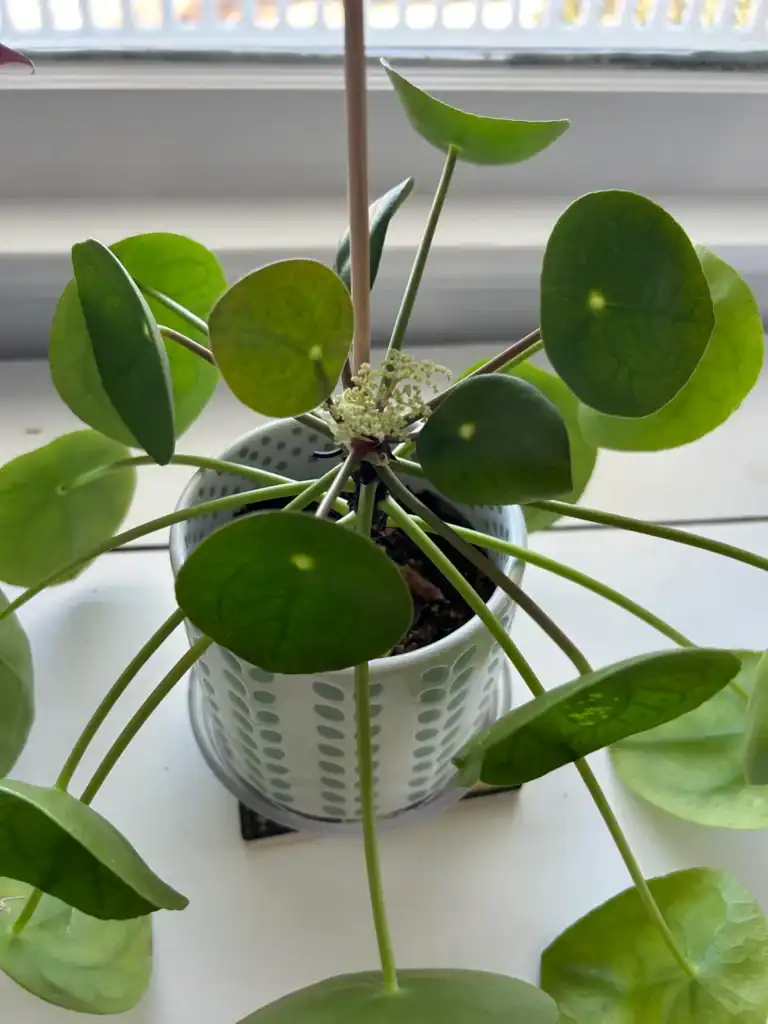
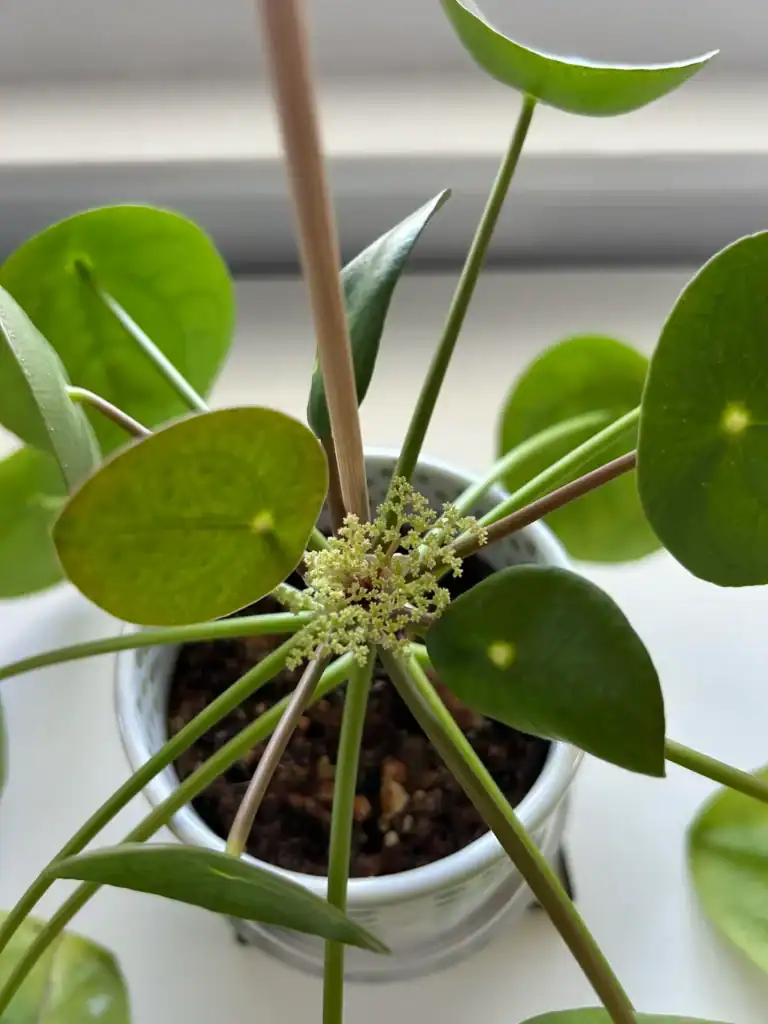
The flowers themselves? They’re honestly pretty subtle—just tiny pink or cream clusters that look more like fuzzy stems than anything else.
Most Pileas flower in spring or early summer when the days stretch out. The plant reacts to all that extra light during these months.
Indoor Pileas might skip blooming because they don’t get those natural seasonal light shifts.
When flowers show up, you’ll find them growing from the stem between the leaves. No petals, no flashy colors.
I’ve had Pileas flower without even realizing at first—the blooms just blend right in.
Quick Tip: If you spot tiny pink fuzz near the stems in spring, relax—that’s flowers, not bugs.
Common Reasons Pileas Don’t Bloom
The main reason Pileas skip flowering? Not enough light. These guys need plenty of bright, indirect light to make blooms happen.
If your plant’s too far from a window or in a gloomy corner, it just won’t have the energy for flowers.
Young plants aren’t ready to bloom anyway. If your Pilea’s not even a year old, it’s still busy building roots and leaves.
Poor soil nutrition is another culprit. If you haven’t fertilized in ages, your plant might just be running on empty.
And if you’re watering all over the place—sometimes too much, sometimes too little—the plant focuses on survival, not reproduction.
Quick Tip: Don’t sweat it if your Pilea never blooms. The leaves are the real reason most of us love this plant anyway.
Optimal Lighting for Pilea Flowers
Light is the big trigger for Pilea blooms. Get it right, and you might finally see flowers. Get it wrong, and you’ll just get more leaves—if you’re lucky.
Best Light Conditions for Flowering
From experience, Pileas want bright, indirect light. An east-facing window is perfect—gentle morning sun, but nothing harsh.
A few feet back from a south or west window can work too, as long as direct sun isn’t blasting the leaves for hours.
Quick Tip: If your Pilea’s stubborn, try moving it closer to a window for a couple of weeks and see what happens.
Low light just doesn’t cut it for flowering. Your plant might limp along in a dim spot, but it’s highly unlikely to bloom.
I try to give mine 6-8 hours of bright, filtered light a day during spring and summer. That’s when flowering usually happens.
In winter, I scoot my plant closer to the window since daylight is in short supply. Some folks use a grow light for 12-14 hours a day if natural light just isn’t enough.
Avoiding Light Stress
Too much direct sun is a recipe for disaster. I’ve seen Pileas with brown, crispy edges after sitting in a hot window all afternoon.
Pale or yellowing leaves? Usually means your plant’s getting scorched.
Quick Tip: If you notice leaf damage, hang a sheer curtain to soften that intense afternoon sun.
If you’re moving your Pilea to a brighter spot, do it slowly—over a week or two. Sudden changes can shock the plant, and you might see leaves drop or turn yellow.
I usually nudge mine a foot closer every few days until it’s where I want it.
Don’t forget to rotate your plant a quarter turn each week. That way, all sides get a fair shot at the light and you avoid a lopsided, sad-looking plant.
Watering Habits to Encourage Blooms
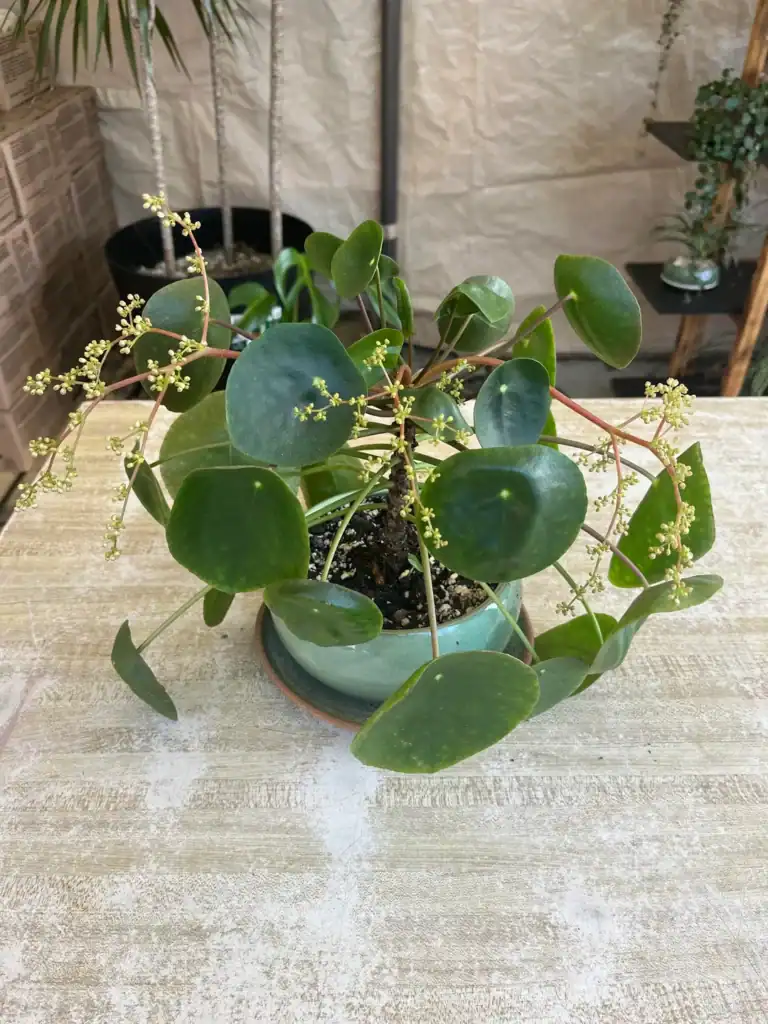
Getting watering right really matters if you’re hoping for flowers. Steady moisture and spotting stressed roots early are both important if you want to see those tiny blooms.
Maintaining Consistent Moisture
Pileas like their soil to dry out just a bit between waterings, but not bone dry. I poke my finger into the top inch—if it’s dry, it’s time to water.
During spring and summer, I water about once a week. When it’s cooler, I cut back to every 10-14 days since growth slows down a lot.
Quick Tip: Use room-temp water so you don’t shock the roots. Cold water and Pileas don’t mix.
I always make sure water drains out the bottom of the pot. Roots like moisture, but sitting in soggy soil is a one-way ticket to root rot—and that means no blooms, ever.
If you’re in a humid climate, you’ll probably water less. But if your indoor air is dry, especially in winter, you might need to water a little more often.
Signs of Overwatering and Underwatering
Yellow, mushy leaves? That’s my first clue I’ve overdone it. Sometimes the stems look dark or feel soft near the soil line, too.
Overwatered Pileas can have droopy leaves even when the soil’s wet. Root rot sets in fast, and you might catch a sour smell from the pot.
If you’ve underwatered, expect crispy brown edges and curling leaves. The plant droops but usually perks up fast after a drink.
Quick Tip: Lift the pot—if it feels super light, it’s probably thirsty.
And just so you know, Pileas in terracotta pots dry out faster than those in plastic. The pot material really does matter for watering schedules.
Fertilization Tips for Vibrant Blooms
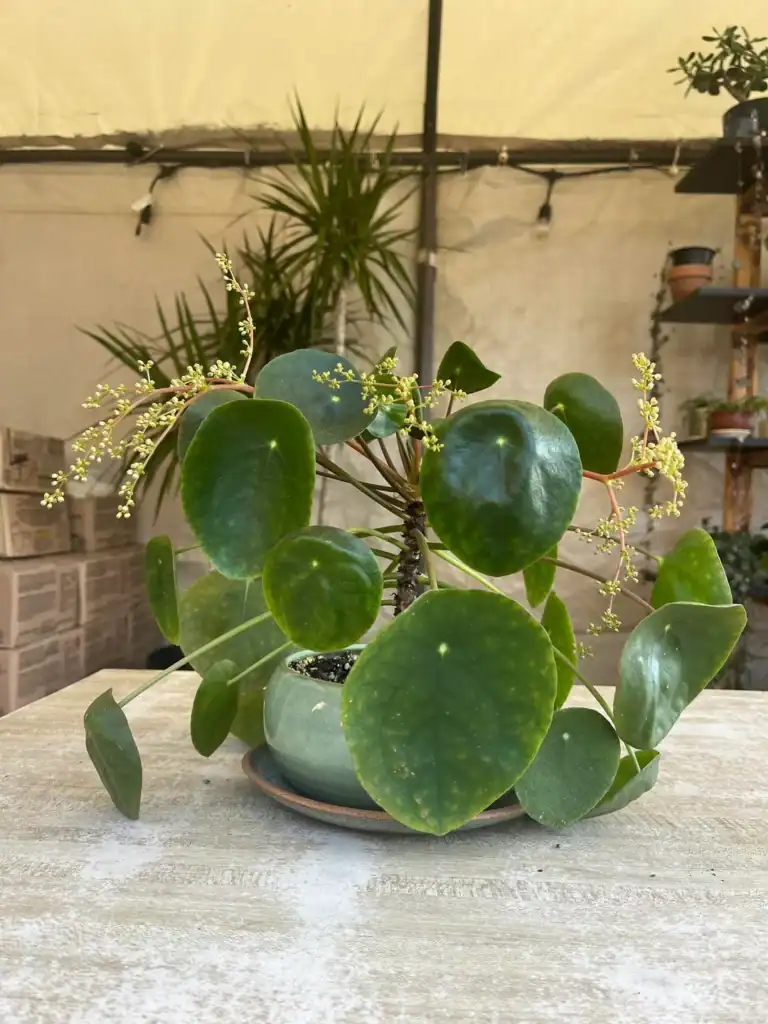
Pileas need the right nutrients, at the right times, to make those little flowers happen. A balanced fertilizer and a steady feeding schedule give your plant a fighting chance.
Choosing the Right Fertilizer
I stick with a balanced liquid fertilizer—think 10-10-10 or 20-20-20 on the label. Equal parts nitrogen, phosphorus, and potassium, nothing fancy.
Liquid fertilizers soak in quickly through the roots. I always dilute to half-strength to avoid burning those delicate roots.
Organic options like fish emulsion or worm castings are great too. They release nutrients slowly and help keep the soil healthy.
Quick Tip: Never fertilize dry soil—always water first or you’ll risk damaging the roots.
How Often to Fertilize Your Pilea
I feed my Pilea every two weeks in spring and summer, when it’s actually growing. That’s when it has enough energy to think about making flowers.
When fall and winter roll around, I cut back to once a month or just stop feeding. Growth slows way down and the plant doesn’t need much.
Watch out for brown leaf tips or a white crust on the soil—those are signs you’ve gone overboard with fertilizer. If I see that, I flush the soil and skip the next feeding.
Quick Tip: Don’t fertilize for at least a month after repotting. Fresh soil is already packed with nutrients.
Temperature & Humidity for Flowering Success
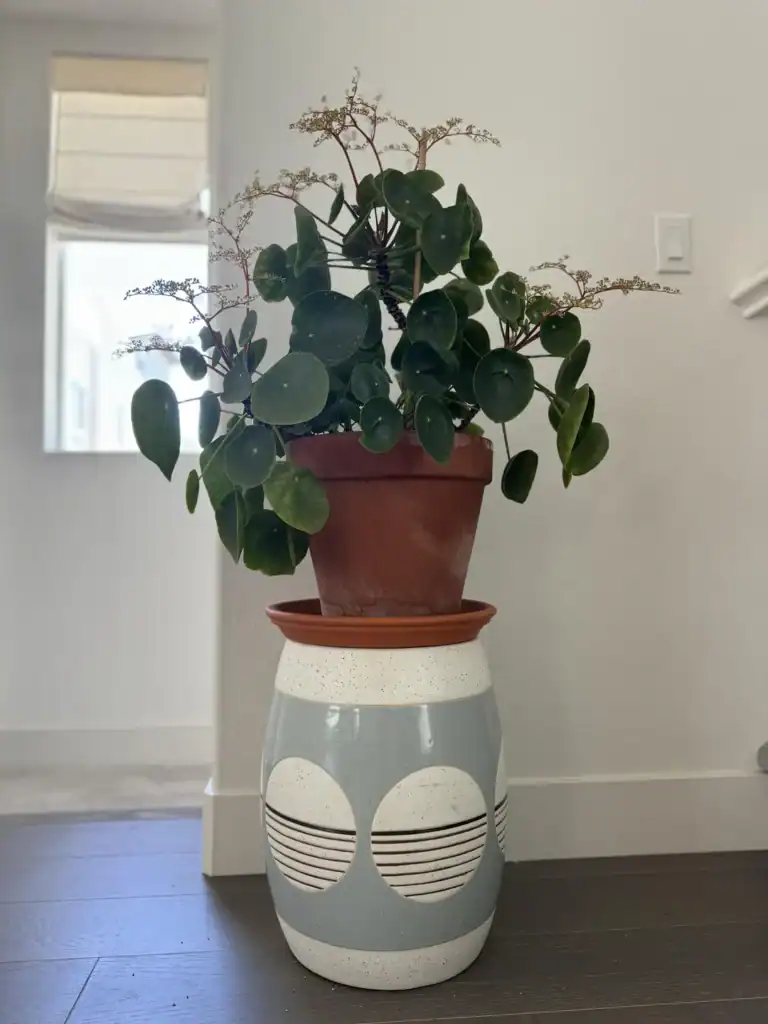
Pileas need a certain temperature and humidity level to get those tiny blooms going. Nailing these two things can really make a difference.
Ideal Temperature Range
From what I’ve seen, Pileas flower best when daytime temps hang around 60°F to 75°F. Nighttime drops to about 55°F are actually helpful.
Keep your plant away from heating vents, radiators, or drafty windows. Sudden temperature swings just stress it out, and stressed Pileas rarely flower.
If summer temps soar above 80°F, pull your plant back from the windows. It won’t die, but it probably won’t bloom in the heat.
Quick Tip: A 5-10 degree drop at night mimics nature and can help trigger blooms.
Managing Indoor Humidity
Pileas like humidity between 50% and 60%. Most homes, especially in winter, sit way lower—sometimes just 30-40%.
I use a cheap humidity meter to keep tabs. To boost humidity, I group plants together or set my Pilea on a pebble tray with water (just make sure the pot isn’t sitting in the water).
Misting? Eh, it doesn’t really do much—the moisture disappears too quickly. A small humidifier works better if you’ve got a bunch of plants.
Quick Tip: Brown leaf edges mean the air’s too dry. Mushy yellow leaves? Probably too much moisture.
Pruning Techniques to Trigger Flower Production
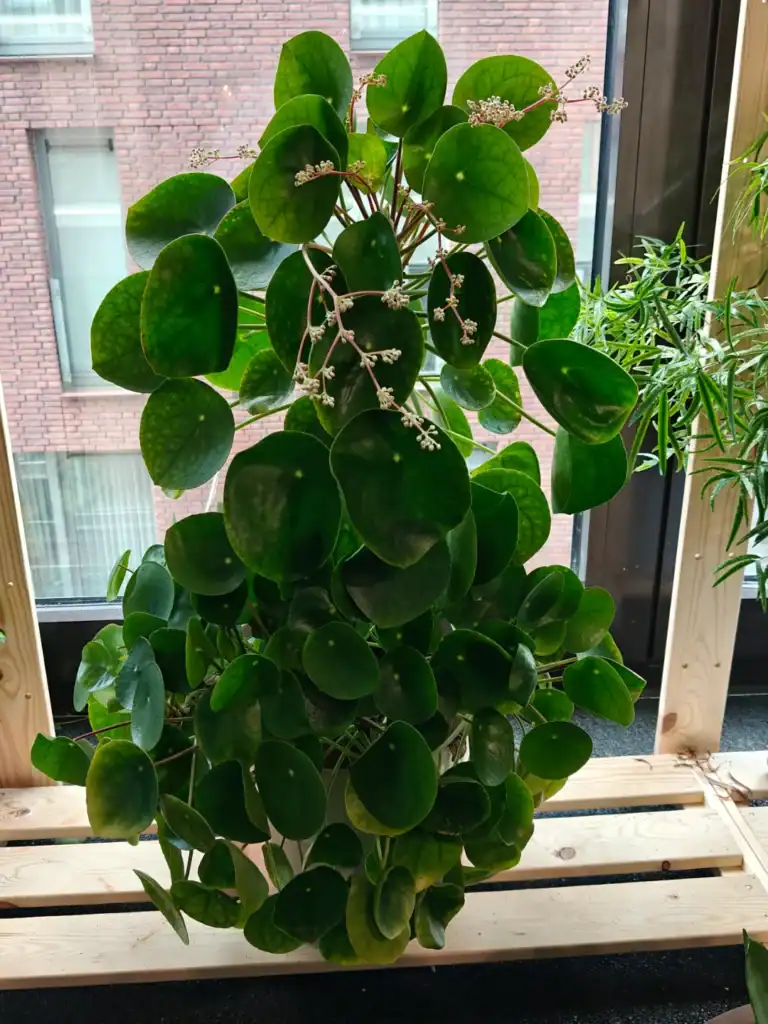
Pruning at the right moment can really encourage new growth and maybe even flowers. The trick is knowing where and when to snip.
When and How to Prune Pilea
I like to prune my Pilea in early spring, just before it gets going for the season. That way, the plant has energy to send out fresh shoots—and maybe flowers.
Always use clean, sharp scissors or shears. I wipe mine with rubbing alcohol first to avoid spreading anything nasty.
Look for leggy stems or yellow leaves near the base and snip just above a leaf node. That’s the little bump where new growth pops out.
Quick Tip: Don’t cut off more than 20-30% of the plant at once. Too much pruning just stresses it out.
If you’ve got long, bare stems with just a few leaves at the top, trim them back by a few inches. This forces the plant to branch out and gives you a bushier, happier Pilea.
Benefits of Regular Pruning
Pruning gets rid of old growth that drains the plant’s energy. When I cut back tired stems, my Pilea seems to focus on making new leaves and, if I’m lucky, flower buds.
It also helps air circulate better around the leaves. Good airflow means less risk of fungal problems that can shut down blooming before it starts.
A well-pruned Pilea grows more compact and balanced, which helps it use light more evenly. That’s good for overall health and ups your odds of seeing flowers.
Quick Tip: Save healthy stem cuttings! You can root them in water and grow new Pileas while encouraging your main plant to bloom.
Repotting for Healthier and Happier Pileas

Fresh soil gives your Pilea a nutrient boost, and a slightly bigger pot keeps roots from getting cramped and stressed.
When to Repot
I like to check my pilea every spring to see if it needs a new pot. If you spot roots poking out of the drainage holes or circling around on top of the soil, it’s probably time to repot.
Sometimes, I’ll gently lift the plant to sneak a peek at the root ball. If the roots have taken over and there’s barely any soil left to see, your pilea is root-bound.
That root crowding means it can’t get enough water or nutrients, and forget about flowers at that point.
Quick Tip: Repot in spring while your pilea is actively growing—it bounces back so much faster.
Young pileas usually need a new pot once a year. Older, more established ones can go about two years between repots.
If your pilea seems stuck and hasn’t grown much even though you’re doing everything else right, the pot might be holding it back.
Choosing the Right Pot and Soil
I always reach for a pot that’s just 1-2 inches wider than the current one. Going too big just leads to soggy soil, since the roots can’t keep up with all that extra moisture.
Drainage holes are non-negotiable. Pileas hate sitting in water, and soggy roots definitely won’t help them bloom.
For soil, I go with a well-draining mix. Usually, a cactus or succulent blend is perfect, or you can mix your own—regular potting soil with some perlite or coarse sand works well.
I like a two parts potting soil to one part perlite ratio. It’s not a science, but it keeps things airy.
Quick Tip: Toss in a handful of compost for a nutrient boost that can support blooming.
The soil should feel light and crumbly, not heavy or sticky. When you water, it should drain pretty quickly—no puddles sitting on top.
Dealing With Flowering Problems
Pileas can be stubborn about blooming, especially if they’re dealing with pests, diseases, or missing something in their care. I’ll walk you through spotting trouble early and nudging a stubborn plant back into bloom.
Pest and Disease Prevention
Pests like spider mites and aphids seem to have a sixth sense for stressed pileas. They suck sap from the leaves and stems, stealing energy that should go to flowers.
I check my plants every week for tiny webs, sticky bits, or little bugs hiding under the leaves. Catching them early makes life so much easier.
Quick Tip: Wipe the leaves with a damp cloth every couple of weeks. It helps with dust and lets you spot pests before they get out of hand.
If I spot bugs, I reach for insecticidal soap or neem oil and make sure to spray the undersides of the leaves, since that’s where they love to hide. Usually, two or three rounds, spaced out by five days, gets rid of them.
Fungal issues show up when the soil stays too wet. Root rot and leaf spot will keep your pilea from flowering, since the plant is just trying to survive. I let the top inch of soil dry out before watering and always use pots with drainage holes.
Reviving Non-Flowering Plants

If my pilea won’t flower, the first thing I check is the light. Is it getting enough bright, indirect sun? Sometimes just moving it a little closer to a window (but not right in the harsh sun) makes a huge difference in a few weeks.
I also double-check my feeding routine. Pileas like a diluted liquid fertilizer every three to four weeks in spring and summer. I use a balanced formula, or sometimes one with a bit more phosphorus if I’m hoping for blooms.
Quick Tip: If your plant hasn’t flowered in ages, try moving it to a cooler spot—around 60°F—for a couple of weeks. Sometimes, that’s the nudge it needs.
And, honestly, sometimes it’s just a matter of age. Younger pileas (under a year) almost never flower. I try to be patient and let them mature before expecting much.
Frequently Asked Questions
Getting a pilea to bloom takes a mix of bright light, the right watering, and a little patience with temperature swings. Here are answers to the main questions about feeding, pruning, and setting up the right conditions for those tiny flowers.
What’s the secret to getting a pilea to bloom?
If there’s a secret, it’s giving your pilea a cool spell in winter. I drop the temperature to about 55-60°F for a few weeks—that usually tells the plant it’s time to make buds.
Bright, indirect light is crucial too. Without it, your pilea will just keep pumping out leaves instead of flowers.
And don’t expect blooms from a baby plant. Most pileas need to be at least a year old before they’re ready to flower.
Quick Tip: Try moving your plant to a cooler room in late fall or winter to trigger flowering.
How often should I water my pilea to promote flowering?
I water when the top inch of soil feels dry. That’s usually every 7-10 days, but honestly, it depends on your home’s humidity and temperature.
Too much water leads to root rot and that’s a surefire way to stop flowering. I always check the soil with my finger before watering—no strict calendar here.
During the cool spell that helps trigger blooms, I cut back on watering a bit since the plant isn’t using as much water in the cooler temps.
Quick Tip: Stick your finger in the soil—if it’s still damp below the surface, give it another day or two before watering.
What type of lighting conditions are ideal for flower growth in pilea plants?
Bright, indirect light is the way to go. I like to keep mine near an east-facing window for gentle morning sun and plenty of light the rest of the day.
Direct afternoon sun can scorch the leaves, so if you only have a south-facing window, try placing your pilea a few feet back from the glass.
Low light will keep your plant alive, but it’s not going to bloom. You really need that consistent brightness for flowers.
Quick Tip: If you notice the leaves getting pale or stretching, it’s time to move your pilea closer to the light.
Are there any special fertilizers that encourage pileas to flower?
I stick with a balanced liquid fertilizer—equal parts nitrogen, phosphorus, and potassium. Something like a 10-10-10 works for me.
In spring and summer, I feed every 2-3 weeks at half strength. Too much fertilizer just leads to more leaves, not flowers.
Once fall and winter hit and I’m trying to trigger that cool period, I stop fertilizing. The plant needs a rest.
Quick Tip: In early spring, you can switch to a fertilizer with a little more phosphorus (the middle number) to help with bud formation.
Can you share any pruning tips to help my pilea produce flowers?
I snip off any yellow or damaged leaves so the plant can focus on healthy growth. Clean scissors or pruning shears do the trick—just cut at the base of the leaf stem.
Pulling out baby plants (the little pups) that pop up around the base can help too. Those guys drain energy that could go into flowering.
Light pruning in early spring encourages bushier growth, which can mean more spots for flowers. I just pinch back the leggy stems to keep things compact.
Quick Tip: Skip pruning during fall and winter when you’re trying to trigger blooms with cooler temps.
What’s the right temperature range to help my pilea plant bloom?
I usually keep my pilea somewhere between 65 and 75°F during most of the year. That seems to keep it happy and growing well enough, at least in my experience.
If I want to encourage it to bloom, though, I’ll let the temperature drop to about 55-60°F for four to six weeks, usually in late fall or winter. Honestly, it feels a bit odd, but this chillier stretch is supposed to copy what the plant goes through in nature.
Once that cool period is over, I bring the plant back to regular room temperature. That shift—going from cold back to warm—is what really nudges the pilea to start making flower buds.
Quick Tip: Try not to put your pilea too close to heating vents or drafty windows. Those spots can cause temperature swings, and the plant really doesn’t appreciate the stress.
Note: Some images in the articles are sourced from Reddit and Other Platforms For Reference Purpose.