15 Gorgeous Flowering Climbers For Your Garden
I just love how flowering climbers can turn a plain old space into something bursting with life and color.
These plants will climb fences, walls, and trellises, adding beauty with every new bloom.
With the right flowering climbers, your garden can become a bright, peaceful retreat.
In this article, I’ll share some of my favorite plants that bring soft fragrance, bold color, and natural texture to any outdoor space.
You’ll find simple tips to care for them through each season so they stay healthy and strong.
Please note: Simplify Plants is reader-supported. As an Amazon Associate, I earn from qualifying purchases made by our readers with no extra cost added to you all! Some links in the post are affiliate links and I get a commission from purchases made through links in the post.
1) Clematis Jackmanii
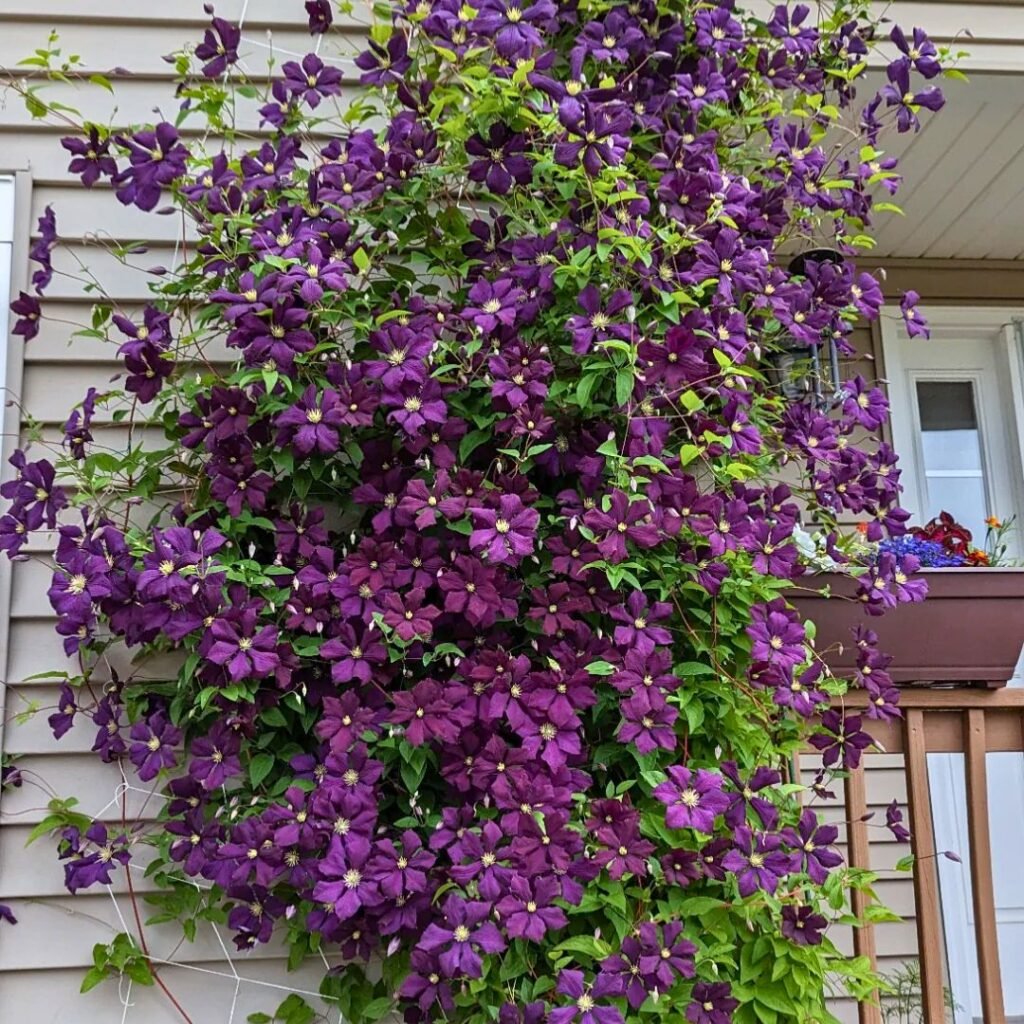
There’s something about Clematis Jackmanii that just instantly adds color and charm to a garden. Those deep purple blooms really pop against green leaves, creating a bold focal point.
When it’s in full bloom, wow, people always notice. This vine climbs easily on trellises, fences, and arbors, reaching about 8 to 10 feet tall.
I like how manageable its size is, so it works for both small and big gardens. It does best in full sun to partial shade and blooms from early summer right through fall.
Clematis Jackmanii seems happiest in well-drained soil. I usually keep the roots cool with a bit of mulch, letting the vines stretch up toward the light.
Regular watering is a must, especially during dry spells. Pruning is pretty straightforward, which is a relief.
I cut mine back to about a foot from the ground each spring to encourage new growth. This trick really helps the plant produce strong vines and more blooms.
I often pair Clematis Jackmanii with climbing roses or honeysuckle for a fun mix of colors and textures. The purple flowers look gorgeous next to pink or white blooms.
Plus, it attracts bees and butterflies, so the garden feels even more alive. For me, this plant brings both beauty and ease.
You get striking flowers without much effort, and that’s always satisfying. It’s one of those classic climbers that makes gardening feel rewarding, not overwhelming.
2) Wisteria sinensis

There’s just something magical about Wisteria sinensis. Those long clusters of soft purple flowers hang like delicate curtains in spring, and the gentle fragrance makes the garden feel peaceful.
When I first planted wisteria, I was surprised by how quickly it grew. This vine can cover walls, fences, or pergolas in no time.
I have to guide and prune it often to keep it tidy and shaped the way I like. Regular trimming helps it produce more flowers, too.
Wisteria sinensis thrives in full sun and well-draining soil. It doesn’t need much fuss once it’s established, which is a win in my book.
I water mine deeply but let the soil dry a bit between waterings. One thing—this plant really needs strong support.
The stems get thick and woody as they mature. I use sturdy trellises and check their anchors every season just to be safe.
Each spring, when my wisteria bursts into bloom, it’s the best reward. The blossoms attract bees and butterflies, filling the garden with life.
Even after the flowers fade, the lush green leaves keep the space looking full through summer. If you’re thinking about adding a vine to your garden, I find Wisteria sinensis both beautiful and dependable.
It brings movement, shade, and a softness that’s hard to beat.
3) Climbing Rose ‘New Dawn’

I have a soft spot for Climbing Rose ‘New Dawn’. Its pale pink blooms open in gentle clusters, giving off a light, romantic vibe that never feels over the top.
The flowers keep coming all summer, so the garden always feels refreshed. When I first grew this rose, I was honestly surprised by how easy it was to care for.
It’s known for being disease-resistant and it handles different weather pretty well. I just trim mine lightly in spring to get rid of old growth, and it rewards me with steady flowers all season.
The scent? Honestly, it’s one of the best parts. The blooms give off a light, sweet fragrance that floats through the air, especially in the mornings.
It’s subtle, but definitely there—makes walking past the vine a little treat every time. I love training mine up a trellis near my patio, but it’s also great along fences or arches.
The long, flexible canes are easy to guide wherever I want them to go. In smaller spaces, I just prune it back, and it still stays healthy and full.
For color, I think ‘New Dawn’ pairs beautifully with white clematis or lavender. The soft tones blend nicely without fighting for attention.
People often ask about it, and honestly, it’s one of those plants that always gets compliments. If you want a climbing rose that’s reliable, low-maintenance, and graceful, this one’s a winner.
It brightens my garden every year with hardly any fuss, adding a timeless touch that never really goes out of style.
4) Honeysuckle Lonicera
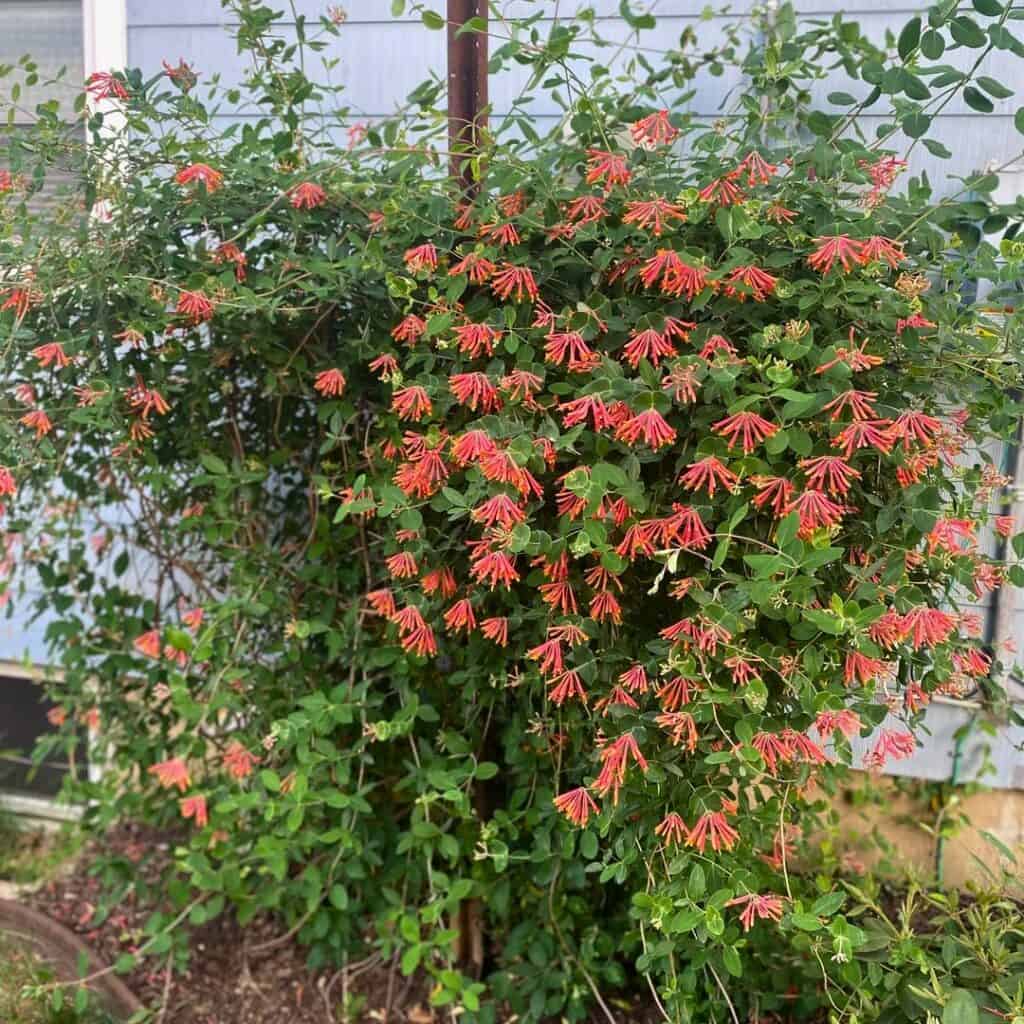
Growing Honeysuckle Lonicera is just fun. It adds both color and scent, and the vines fill up trellises, fences, and arches with pretty clusters of flowers.
Their sweet fragrance fills the air, especially in the evening. There are different varieties, with flowers in shades of creamy white, yellow, pink, and red.
I love how the blossoms attract bees, butterflies, and hummingbirds. The garden feels so lively when they’re around.
Honeysuckle is easy to care for. It likes full sun or partial shade and needs well-drained soil.
Once it’s established, it can handle dry spells, which makes watering less of a chore. I prune it lightly after flowering to keep it tidy and to encourage new growth.
It’s also good to guide younger stems onto supports so they climb neatly and don’t get tangled. One thing to watch for: aphids sometimes gather on new shoots.
If that happens, I just spray them off with water or use a gentle soap mix. Regular checks keep the plant healthy.
Whether I train it along a fence or let it climb an arbor, Honeysuckle Lonicera always brings charm and scent to my garden. It’s a simple plant that gives a big reward with little effort.
5) Passionflower (Passiflora caerulea)
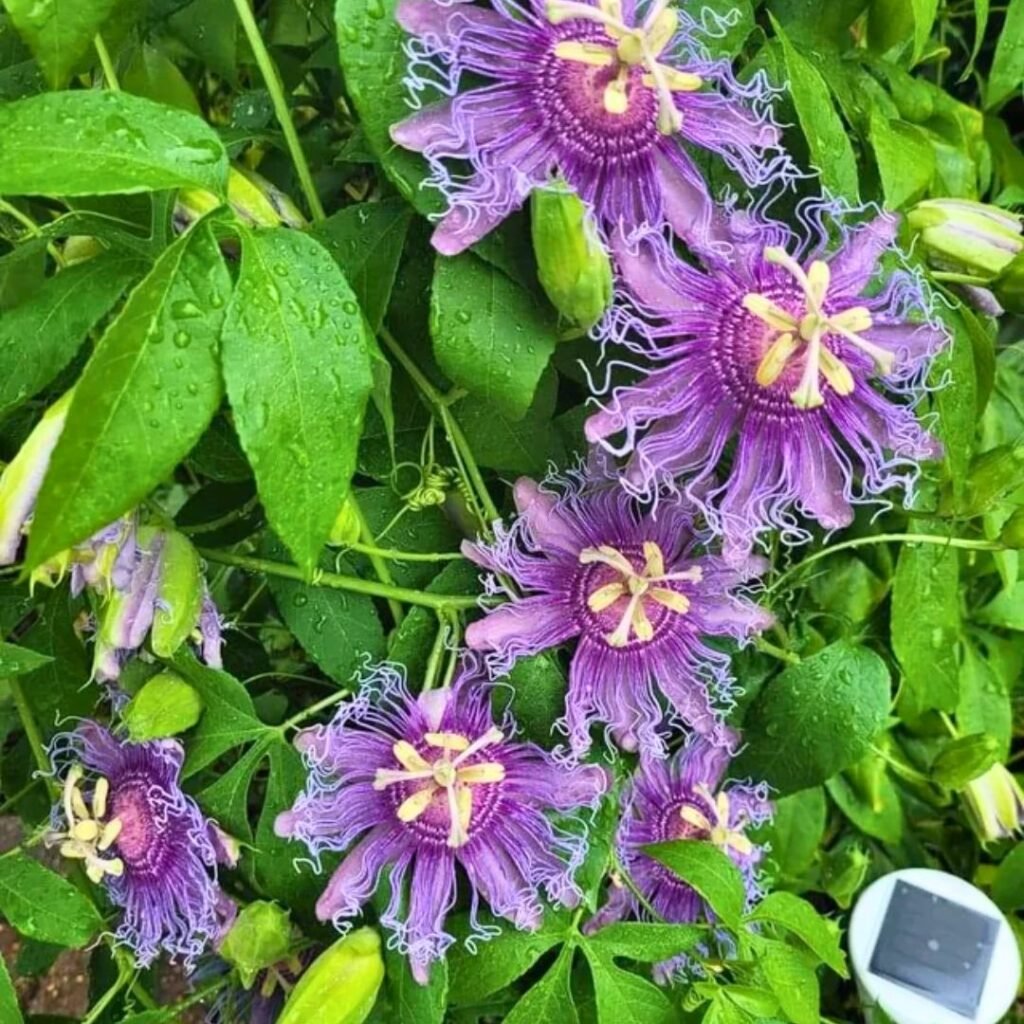
Passionflower is a total showstopper. Those unique, star-shaped blossoms just scream summer.
The flowers come in shades of blue, white, and purple and really stand out against all that green. This climber grows fast and easily covers fences, trellises, or walls.
I’ve found it thrives in full sun with well-drained soil. Regular water and a little pruning keep it looking neat and healthy.
Bees and butterflies love the blossoms, so there’s always movement in the garden. The fruit that follows can be small and orange, which adds another pop of color later in the season.
The vines can reach up to 20 feet if they have strong support. I usually tie new shoots loosely so they go where I want.
In colder months, I mulch around the roots to help protect them from frost. What I love most is how this plant looks delicate but is actually pretty tough.
It handles a range of conditions without much complaint. The Passionflower turns any sunny spot into a lively, inviting space with hardly any effort.
6) Jasmine Star (Trachelospermum jasminoides)

Jasmine Star is such an easy way to add charm to the garden. Its glossy green leaves stay bright all year, so things look fresh even when it’s not blooming.
When the flowers do open, they fill the air with a light, sweet fragrance that’s calming and honestly just lovely. This climber does well in full sun or partial shade and handles different conditions without much fuss.
I usually train it on a fence, trellis, or archway, and it quickly forms a thick, leafy cover. The white star-shaped flowers really stand out against the dark leaves, giving everything a simple but elegant look.
I water it regularly during the growing season, but after it’s established, it’s pretty drought-tolerant. Pruning once a year keeps it neat and helps it bloom even more.
I also appreciate that it doesn’t grow out of control like some other vines do. If you plant it near an entryway or a sitting area, the fragrance drifts in the breeze, making that space feel a little extra special.
Its clean look and light scent make it perfect for patios, balconies, and small gardens. It’s just one of those reliable plants that quietly make everything look better.
7) Bougainvillea glabra

Bougainvillea glabra is a burst of color—no doubt about it. The paper-thin bracts come in bright pink, red, purple, and orange, and they really steal the show.
The true flowers are small and white, but honestly, you barely notice them with all that color. This plant loves warm, sunny spots and well-drained soil.
I make sure it gets at least six hours of sunlight a day for the best blooms. When the weather’s warm, it can flower for months.
I prune it pretty often to keep it from getting wild. The stems get tough and woody, so trimming helps manage the shape and encourages new growth.
Regular pruning means thicker blooms, too. Bougainvillea glabra is great at handling drought once it’s settled in.
I water it deeply but not too often, letting the soil dry between waterings. Overwatering is a no-go since it can cause root rot.
I like training it on trellises or fences—the vines grab onto supports easily and make a colorful backdrop for patios or paths. In containers, it’ll trail beautifully over the edges.
If you live somewhere cold, I’d recommend bringing potted plants inside before the first frost. It really hates cold temperatures, and freezing weather can damage the branches.
A warm, bright window usually keeps it happy through winter. This plant gives you constant color and a tropical vibe with almost no effort.
Bougainvillea glabra adds bold beauty with minimal fuss, and it’s definitely one of my favorites.
8) Sweet Pea ‘Cupani’
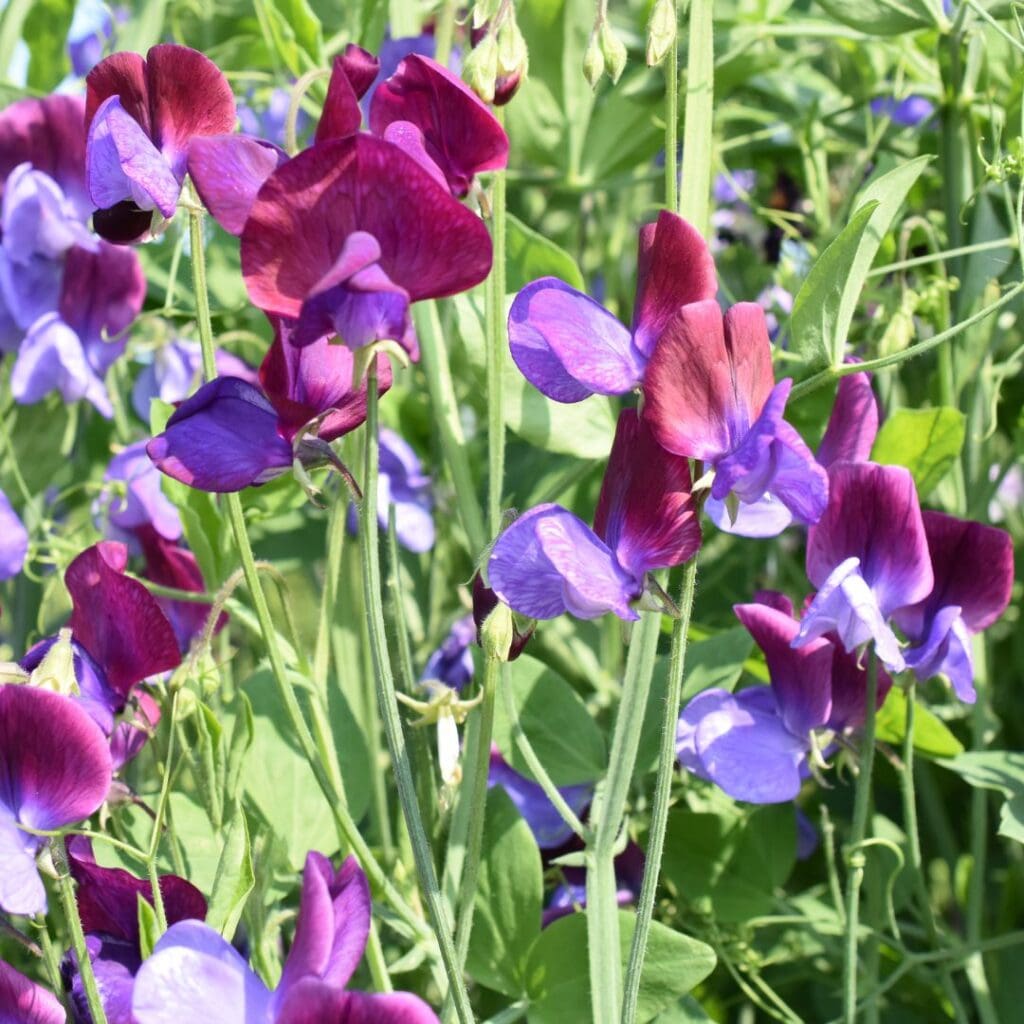
Sweet Pea ‘Cupani’ is a classic for a reason. It adds color and fragrance to my garden with almost no work.
This heirloom variety has deep purple and reddish blooms that look gorgeous climbing along fences or trellises. The flowers have a strong, sweet scent that fills the air on warm days.
I usually plant the seeds in early spring, when the soil is still cool. The vines grow fast and reach about 6 to 8 feet tall if they have something to climb.
I tie them to supports so the stems stay upright and the flowers show off. Picking the flowers often keeps the plants blooming, since it stops seeds from forming and encourages new blossoms.
I make sure the soil stays moist but not soggy. Sweet Peas like sunny spots, though a little afternoon shade is nice in really hot weather.
What I love most is how long the blooms last when cut for vases. A few stems in a jar can brighten any room.
The color and fragrance combo makes Sweet Pea ‘Cupani’ one of my favorite climbing plants for small spaces. If you want a plant that brings classic charm and attracts pollinators like bees and butterflies, this one’s a sure bet.
It’s simple, sweet, and full of life—just what every garden needs.
9) Trumpet Vine (Campsis radicans)
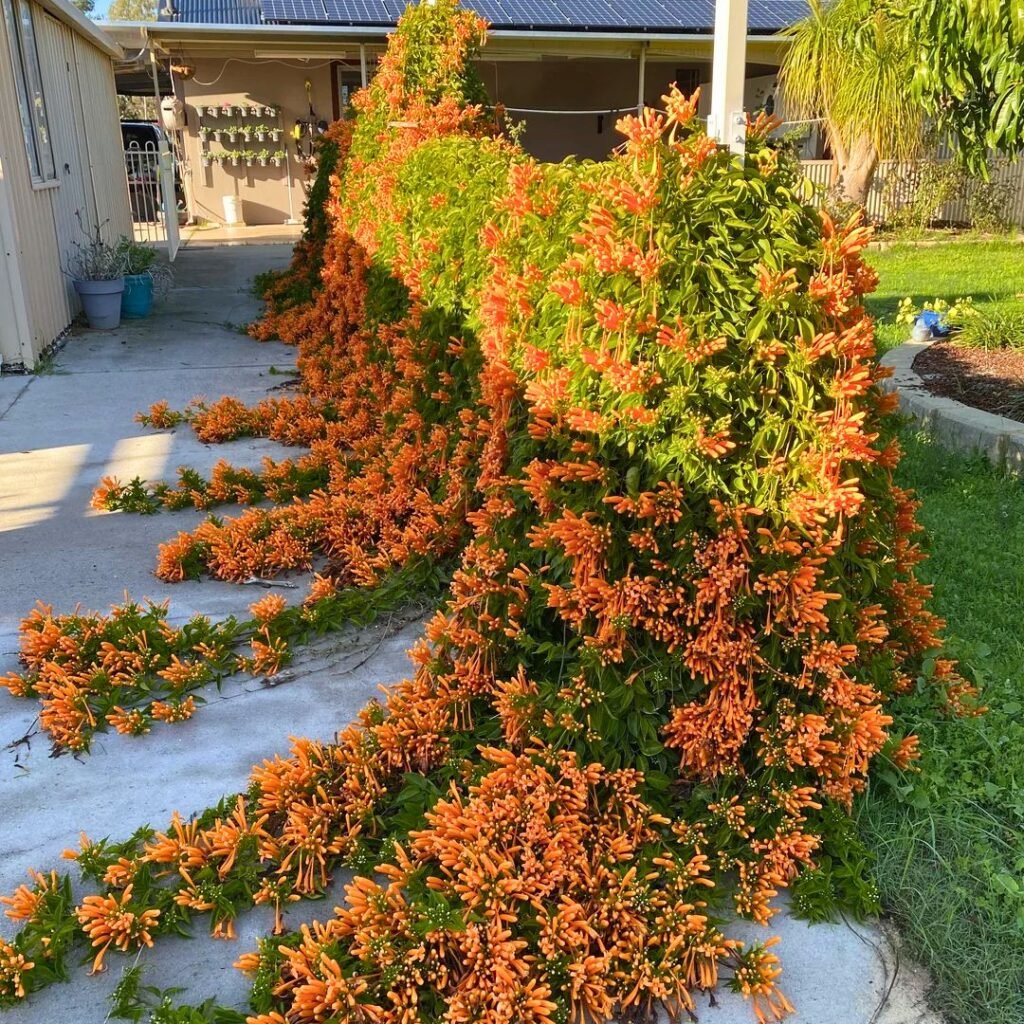
I love how trumpet vine instantly adds color and height to a garden. Its bright, trumpet-shaped flowers attract hummingbirds and butterflies all summer long.
The blooms come in vivid shades of orange, red, and yellow, popping against deep green leaves. This strong climber grows fast and can easily cover fences, trellises, or walls.
I often use it when I want quick coverage and a natural way to soften hard surfaces. It thrives in full sun and can handle many soil types, so beginners usually have good luck with it.
Trumpet vine really shines when it has plenty of space. It can spread aggressively if you let it, so I keep an eye on it and prune every season.
Regular pruning keeps it in check and encourages more flowers. The plant is native to the southeastern United States and does best in warm climates.
It’s also drought-tolerant once it’s settled in, so after the first year, I barely have to water. That’s a relief for busy gardeners like me.
I enjoy training the vine along a pergola or arbor, where the flowers can hang down in clusters. The bright blooms bring life to outdoor seating areas and attract pollinators that keep the garden buzzing.
With a little care and enough space, trumpet vine becomes a real standout in any garden design.
10) Morning Glory (Ipomoea purpurea)

I love how Morning Glory brightens up a garden with hardly any effort. Its trumpet-shaped flowers open early in the morning and close by afternoon, so every day feels like a fresh start.
The blooms come in soft shades of blue, purple, pink, and white. This fast-growing vine climbs fences, trellises, and mailboxes with almost no coaxing.
I like how quickly it covers bare spots, creating a lush wall of color and heart-shaped leaves. It grows best in full sun and really doesn’t need much care once it’s going.
I usually plant Morning Glory from seeds in warm soil right after the last frost. The seeds pop up quickly, and vines can shoot up several feet in a season.
Strong support early on helps the stems twine naturally. Regular watering keeps the plant healthy, but I let the soil dry a bit between waterings.
Too much fertilizer just gives me more leaves instead of flowers, so I keep feeding light. Morning Glory attracts bees, butterflies, and hummingbirds, which makes the garden feel lively.
I find it works best along fences where the flowers face the sun. In cooler areas, it’s an annual, but in warmer spots, it may self-seed and pop up again next year.
Watching the blooms open in the morning always feels like a little reward. This easy vine makes a big impact without asking for much in return.
11) Virginia Creeper (Parthenocissus quinquefolia)

I love how Virginia Creeper brings instant life to a plain wall or fence. This hardy vine grows fast and clings by little tendrils with adhesive pads, so it climbs on its own.
It covers big areas quickly, giving a lush, natural look. In spring and summer, it shows off green, five-part leaves that make a soft screen of foliage.
When autumn hits, the leaves turn bright red and purple, adding incredible color to any spot. I always look forward to that color change—it’s such a showstopper.
Virginia Creeper also produces tiny greenish flowers, which turn into dark blue berries. The berries attract birds, adding even more life to the garden.
I try not to let it spread too far since it can take over if ignored. It grows best in full sun to partial shade and isn’t all that picky about soil.
I like that it can handle different conditions, even in the city. Regular pruning keeps it tidy and stops it from swallowing windows or gutters.
When I need fast, natural coverage for a wall, fence, or pergola, Virginia Creeper is always on my list. It’s adaptable, colorful, and easy—what more can you ask for?
12) Black-eyed Susan Vine (Thunbergia alata)
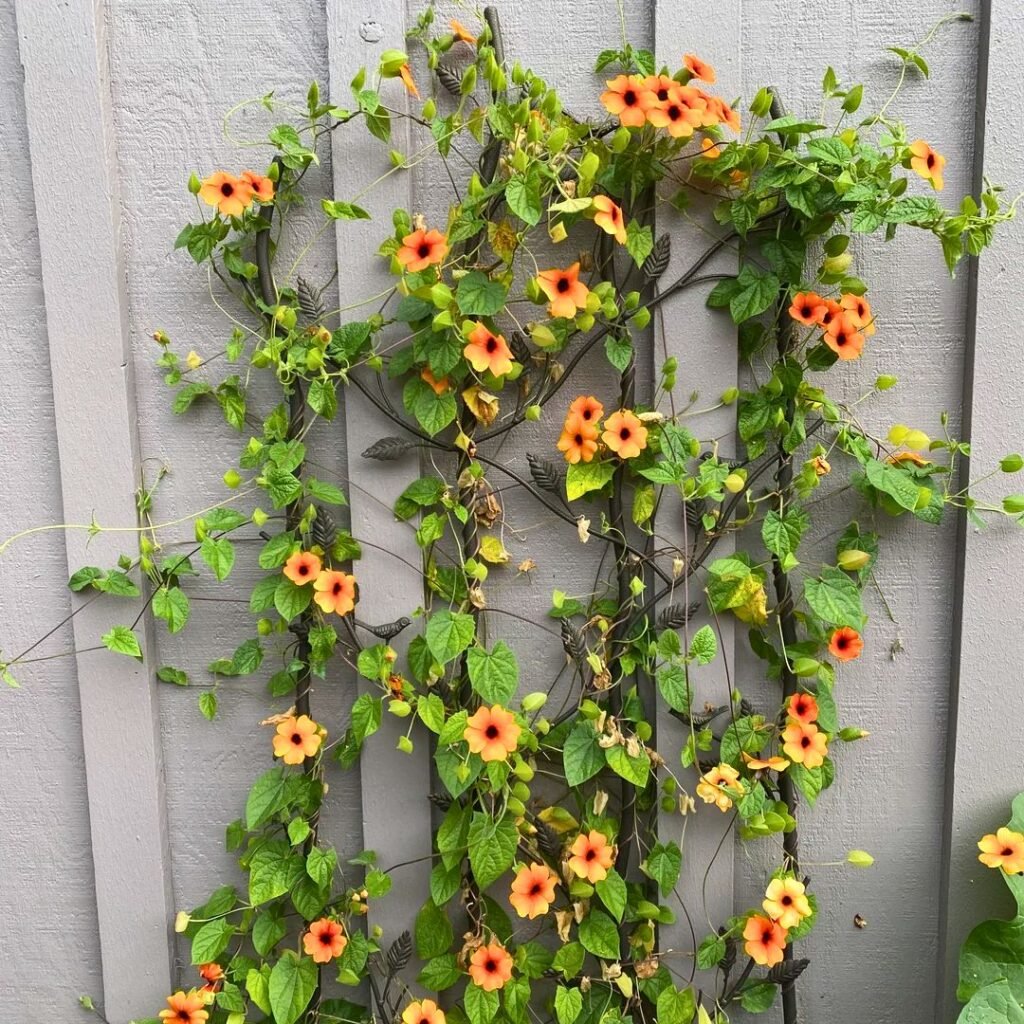
I love how the Black-eyed Susan Vine adds instant cheer to any garden space. Its bright orange-yellow flowers with dark centers really pop against the green leaves.
This climber grows quickly, making it perfect for filling in fences, trellises, or porch railings. I like growing it in a sunny spot since it blooms best with lots of light.
It can handle partial shade, but you’ll see fewer flowers there. The vine usually reaches 6 to 8 feet in one season, so I guide it along strings or a small arch.
Starting from seed in spring is easy if the weather’s warm. I keep the soil moist but not soggy, and good drainage helps avoid root problems.
The flowers attract butterflies and bees, which I always enjoy watching. Sometimes I let the vine trail from a hanging basket—it makes a lovely, soft cascade.
In cooler places, I treat it as an annual since it can’t take frost. If winters are mild, though, it might hang on longer with a little protection.
Either way, it’s a simple, bright choice that makes any garden corner feel more welcoming.
13) Climbing Hydrangea (Hydrangea anomala petiolaris)

I love how Climbing Hydrangea brings gentle charm to shady spots in my garden. It grows slowly at first, but once it settles in, it becomes a sturdy, leafy climber.
Its dark green leaves make a rich backdrop against walls or fences. In late spring and early summer, it surprises me with clusters of creamy white flowers that attract bees and butterflies.
The blooms stand out against the deep green leaves, adding light and texture. Even after the flowers fade, the vines stay handsome through the seasons.
What I appreciate most is how easy it is to grow. It climbs naturally with aerial roots, so I don’t need to fuss with trellises or wires.
It does best in partial shade and moist, well-drained soil, which makes it a good fit for less sunny corners. In winter, the peeling bark adds interest when most plants look bare.
I also like how it can cover stone walls or old fences, softening them without taking over. If I have any advice, it’s to be patient while it establishes roots.
Once it gets going, it rewards me with dense, leafy coverage for years. This plant fits easily into both classic and modern gardens, offering beauty without much fuss.
14) Camellia sasanqua ‘Yuletide’

I love how Camellia sasanqua ‘Yuletide’ brings color when most gardens start to fade. This shrub puts out bright red blooms with golden centers in late fall and winter.
The flowers look fantastic against glossy, dark green leaves. I find this plant easy to grow in partial shade, though it also does fine in full sun if the soil stays moist.
It prefers well-drained, slightly acidic soil, which helps its roots stay healthy. I always mulch it to protect the roots and keep the soil cool.
‘Yuletide’ grows as a compact evergreen shrub or a small climber if you train it on a trellis or wall. I like using it to dress up a fence or as a festive focal point near my entryway.
Its upright shape and dense foliage work well in small gardens too. Regular watering during dry spells keeps the plant looking fresh.
I prune lightly right after flowering to shape it and encourage new growth. With simple care, it rewards me with months of cheerful color when other plants are resting.
For anyone wanting a low-maintenance bloomer that shines during the holidays, ‘Yuletide’ is a solid pick. It’s hardy, dependable, and adds warmth to the garden just when I need it.
15) Climbing Fig (Ficus pumila)

I love how Climbing Fig creates a lush, green wall almost anywhere it grows. Its small, heart-shaped leaves give a soft, elegant texture that makes plain walls come alive.
I find it perfect for covering fences, brick, or concrete. This plant clings tightly to surfaces with tiny rootlets, so it doesn’t need support once it starts growing.
I like planting it where it gets partial shade because too much sun can scorch the leaves. It stays green year-round in mild climates, which keeps my garden looking fresh even in winter.
When I first planted Climbing Fig, I had to be patient—it grows slowly at first. But once it settles in, it spreads pretty quickly.
I trim it often to keep it neat and stop it from taking over nearby plants. Regular pruning helps maintain its shape and control its growth.
I think it works best on walls that need a little life or around garden structures like arbors. Its evergreen foliage adds a calm, natural feel to busy spaces.
It’s a simple, low-maintenance way to add greenery and texture to my garden.
How to Care for Flowering Climbers
I keep my flowering climbers healthy by focusing on two main things: good growing conditions and strong support systems. The right soil and watering routine help them thrive, while proper training keeps them growing neatly and blooming well.
Soil and Watering Tips
I start by planting my climbers in well-draining soil that’s rich in organic matter. I like to mix compost or aged manure in before planting.
This keeps the roots fed and helps the soil hold moisture. Climbers prefer consistent moisture, but I’m careful not to overwater.
When the top inch of soil feels dry, I water deeply so the roots grow strong. I also add mulch around the base to keep moisture in and block weeds.
Here’s what I watch for:
| Condition | Sign of Trouble | Quick Fix |
|---|---|---|
| Too dry | Wilting leaves | Water deeply and add mulch |
| Too wet | Yellowing leaves | Improve drainage |
| Poor soil | Weak growth | Mix in organic compost |
I check the soil weekly, especially when it’s hot. A steady routine keeps my climbers lush and flowering longer.
Training and Support Structures
I guide my climbers early so they grow where I want. For taller plants, I use sturdy supports like trellises, arbors, or fences.
I pick materials that can handle the plant’s weight once mature. When new shoots show up, I gently tie them with soft twine or plant clips to the support.
I avoid pulling or forcing branches, which can snap them. I prune lightly during the growing season to remove tangled or weak stems.
This helps air flow and keeps disease away. I also clean the supports yearly and swap out any broken ties.
By giving them room to climb and the right support, I keep my garden neat and full of color.
Seasonal Maintenance and Pruning
I keep my flowering climbers happy by trimming and feeding them at the right times. Good care helps them bloom longer and get through cold weather without trouble.
Encouraging Continuous Blooms
I prune spent flowers as soon as they fade. This encourages fresh buds and keeps the plant from wasting energy on seeds.
For fast-growing vines like clematis and morning glories, I check them weekly during peak season. Every few weeks, I feed my climbers with a balanced liquid fertilizer.
This supports steady blooms and strong growth. I also water deeply when the soil feels dry, but I’m careful not to soak the roots.
To control shape, I cut back long or tangled stems to promote airflow. This keeps leaves dry and helps prevent fungal spots.
Light pruning also lets sunlight reach inner branches, which improves overall health. When I tie shoots to a sturdy trellis or fence, I guide new growth upward and keep things tidy.
These simple steps keep my climbers colorful and full all season.
Protecting Climbers in Winter
Before the frost really hits, I like to take a good look at each plant, checking for stems that seem weak or broken. If I spot any, I just snip them off—healthy vines always seem to bounce back better when spring rolls around.
For the more delicate types, like bougainvillea or passionflower, I’ll usually wrap the base with burlap or a frost cloth. It’s not foolproof, but it does help trap a bit of warmth.
Mulching around the roots with dry leaves or straw is another trick I use—extra insulation never hurts.
The hardier climbers, like honeysuckle or ivy, don’t need as much fussing over, but I still check that the soil drains well. Standing water that freezes can really mess up the roots, and nobody wants that.
If it’s windy or icy, I secure the vines with soft garden ties so they don’t snap. When snow piles up, I’ll gently brush it off—no one likes broken branches.
Frequently Asked Questions
People ask me all the time which climbing plants are the easiest, how to keep them going, or which ones are good for small gardens or pollinators. I figured I’d pull together some quick answers to make things easier for anyone curious about flowering climbers.
What are the best climbing plants for a sunny garden wall?
If you’ve got a bright wall, I’d go for Clematis Jackmanii, Wisteria sinensis, or Climbing Rose ‘New Dawn’. They absolutely thrive in full sun and put on a real show all summer.
Honeysuckle and Passionflower are good picks too—they just need a sturdy support to get going.
How do I care for and maintain flowering climbers throughout the seasons?
I prune my climbers in late winter or early spring. It keeps them healthy and helps new growth fill in nicely.
When it’s dry, I water deeply and add mulch to help keep the moisture in. A balanced fertilizer once or twice a year seems to do the trick for steady blooms.
Can you suggest flowering climbers that are suitable for small spaces or containers?
If space is tight, Clematis is a favorite of mine—lots of compact varieties that still bloom like crazy.
Dwarf climbing roses or smaller Passionflower types also work in containers. Just give them a little trellis or obelisk and they’re happy.
What climbing flowers would you recommend for attracting bees and butterflies?
Honeysuckle Lonicera and Passionflower are magnets for bees and butterflies. Their open blooms and sweet nectar really draw them in.
I’ve also seen Wisteria buzzing with bees during its big spring show. If you’re after pollinators, go for the fragrant varieties.
How can I train climbing plants on a trellis or support structure?
When I’m training climbers, I start by tying the young stems loosely to the support with soft garden ties. It’s easier to shape them early on.
For things like Clematis or Roses, I’ll weave the stems through the trellis as they grow. Spacing them out a bit helps with airflow and cuts down on tangles.
Are there any fast-growing climbing plants for quick privacy and coverage?
Absolutely! Wisteria sinensis and Honeysuckle are both speedy growers, and they’ll cover up a fence or wall before you know it.
Their thick leaves create a nice, leafy screen—pretty handy for privacy, honestly.
If you’re hoping for something that fills in within just one season, I’ve often turned to Passionflower. It really takes off in warm weather and, honestly, those flowers show up sooner than you’d expect.
Note: Some images in the articles are sourced from Reddit and Other Platforms For Reference Purpose.