11 Stunning Potted Trees For Small Patios
I’m always amazed at how a few well-chosen potted trees can completely change a plain patio.
Even if you only have a small space, the right trees bring in shade, color, and texture that make everything feel fresh and a bit more lively.
Creating a calm, stylish patio is totally possible—just pick trees that stay compact and do well in containers.
I’ve gathered some of my favorite ideas for beautiful potted trees that fit tight spaces and easy-care patios.
I’ll also share a few tips on how to care for them and arrange them so your patio looks balanced, no matter the season.
Please note: Simplify Plants is reader-supported. As an Amazon Associate, I earn from qualifying purchases made by our readers with no extra cost added to you all! Some links in the post are affiliate links and I get a commission from purchases made through links in the post.
1) Dwarf Alberta Spruce

I honestly adore the Dwarf Alberta Spruce whenever I want a small tree that looks neat and polished. It grows slowly, which means it stays compact and manageable in a pot.
Its tidy, cone shape gives my patio a clean, balanced vibe. The soft green needles stay bright all year, even in winter, so there’s always some color out there.
Since it’s an evergreen, I don’t have to deal with bare branches when other plants drop their leaves. I love that it looks fresh and full no matter the season.
This tree likes full sun and well-drained soil. I water often enough to keep the soil moist, but never soggy—potted trees dry out faster, so I check more often in the heat.
A bit of fertilizer in spring keeps it happy. I don’t usually need to trim it, but if I want to shape it, a light pruning does the trick. Its natural form is already pretty tidy.
It’s fantastic as a single focal point or paired with flowering pots. I like mine near a seating area; its texture and shape make things feel calm and organized. Such an easy way to add structure and greenery to a small patio.
2) Japanese Maple (Acer palmatum)

There’s something special about Japanese maples on a small patio. Their delicate, hand-shaped leaves look beautiful in every season.
In fall, the colors turn wild—red, orange, even gold. It’s honestly hard not to stare.
These trees stay compact, so they’re perfect for containers or tight spots. I keep mine in a sturdy pot with good drainage, always.
It likes partial sunlight—enough to keep the leaves bright, but not so much afternoon sun that they burn. The soil is a big deal, too.
Loose, well-drained soil keeps root rot at bay. I water deeply when the top inch is dry, then let it drain. Soggy roots are a no-go.
Japanese maples grow slowly, which I appreciate—no surprise overgrowth. I trim mine lightly in winter, just to shape it or remove dead bits. Too much pruning at once stresses it out, so I go easy.
When it gets cold, I move the pot near a wall for some protection. Sometimes I’ll wrap the pot in burlap if a hard freeze is coming.
What I love most? This tree just works anywhere—on its own or with other potted plants. The color and fine form always make my patio feel calm and balanced.
3) Olive Tree (Olea europaea)

An olive tree instantly brings a bit of the Mediterranean to a small patio. Those silvery-green leaves always catch the light, and the tree’s simple shape never feels like too much.
Even in a pot, it grows slowly—super easy to manage in tight spaces. I keep mine in a large container with good drainage, since olives really dislike soggy soil.
They want full sun, so I make sure it gets at least six hours of light. A warm, sheltered corner is best, especially if your area’s windy.
I let the top inch of soil dry out before watering. Too much water can cause trouble for the roots. In spring, I’ll give it a little balanced fertilizer to help new growth along.
What I enjoy most is that olive trees look good all year. The small leaves stick around through winter, and the smooth bark gives it charm even when there’s no fruit.
In warmer places, you might spot a few tiny olives. For small patios, this tree adds structure without taking over. It pairs beautifully with terracotta pots, lavender, or herbs.
That calm color and simple form? It’s honestly one of my favorite container plants for limited outdoor spaces.
4) Ficus Bonsai

A Ficus Bonsai can add real character to a small patio. Its tiny leaves and twisting trunk give it a mature, artistic look, even when it’s compact.
The best part? It stays small and neat, so it doesn’t take over the space. I keep my Ficus Bonsai in a bright spot with indirect sunlight.
Direct sun can scorch its leaves, but too little light and it gets leggy and sad. With steady light, it grows dense and green—perfect for a patio centerpiece.
Watering takes a gentle hand. I check the top layer of soil and only water when it feels dry.
Overwatering can hurt the roots, so good drainage is a must. I mist the leaves a few times a week to keep them healthy, especially if the air’s dry.
Trimming helps keep its shape balanced and tidy. I snip off any long or crossing branches to encourage new growth. It’s actually pretty relaxing to shape the tree little by little and see how it responds.
Ficus Bonsai does well in ceramic or clay pots with holes. I like picking a pot that matches my patio’s style—maybe simple white for a modern look, or earthy tones for something more natural.
A little top dressing of pebbles can finish the look. If you care for it, a Ficus Bonsai can thrive for years. It’s basically a living piece of art that brings calm and charm to any small outdoor space.
5) Lavender Plant
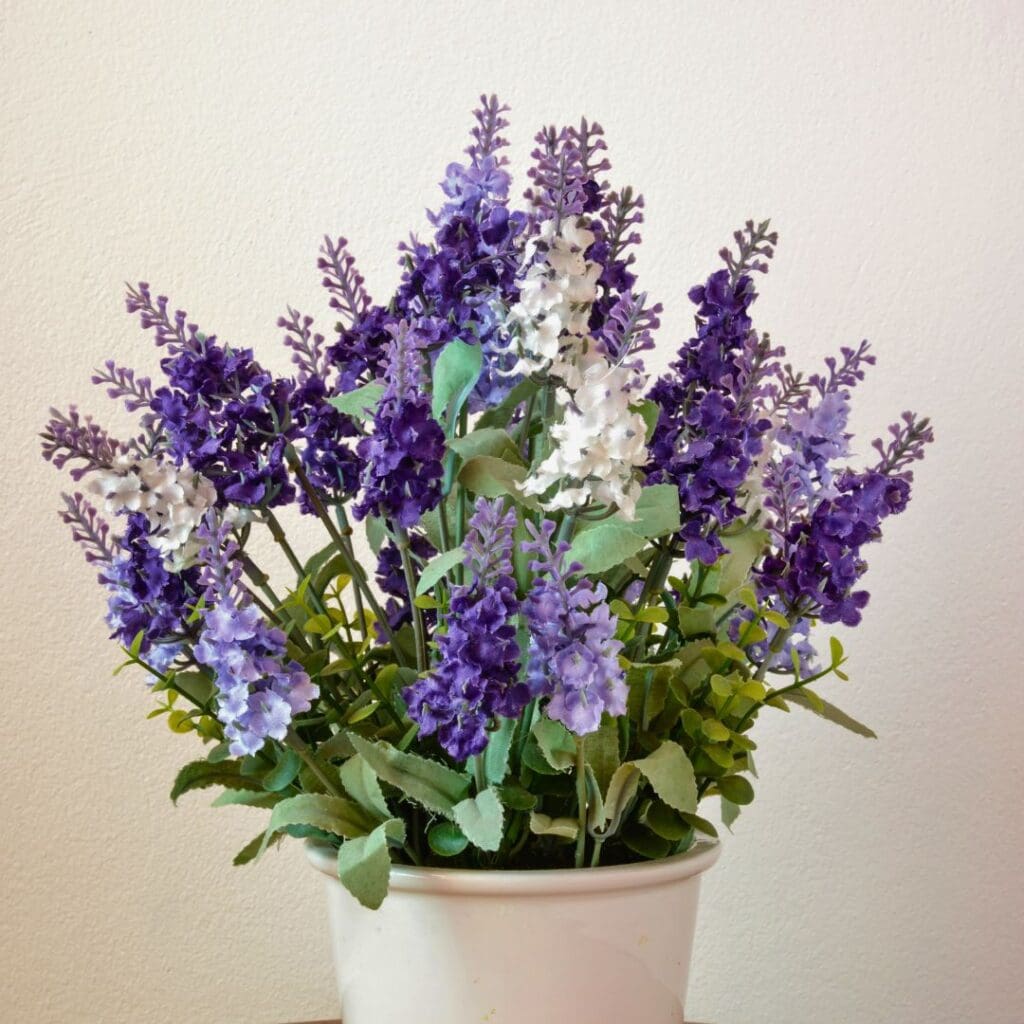
A lavender Plant is one of my favorite additions to the patio. It brings a pop of color and that fresh scent—honestly, it just makes the whole space feel brighter.
The soft purple blooms and silvery leaves are perfect for small areas. This tree does best in full sun and well‑drained soil.
I keep mine in a large pot with plenty of drainage holes so the roots stay healthy. When I water, I let the top inch of soil dry out first to avoid soggy roots.
What’s great is how little care it needs. A light trim after flowering keeps the shape neat and encourages more blooms.
Even in a small pot, it grows into a compact, tidy tree that looks good all season. Plus, lavender attracts bees and butterflies, making my patio feel lively.
Sometimes I pick a few stems to dry and use indoors for a calming scent. It’s both decorative and useful.
If I’m patient, the tree rewards me with blooms from late spring through summer. When frost threatens, I move the pot to a sheltered spot.
With just a little care, my lavender tree brings beauty and fragrance to my patio every year.
6) Citrus Tree (Meyer Lemon)

Meyer lemon trees are such a cheerful pick for small patios. The glossy green leaves and bright yellow fruit add instant charm.
Even just one tree in a pot can make a space feel fresh and inviting. These trees stay compact, which is perfect for containers and balconies.
I always use a sturdy pot with good drainage and fill it with well-draining soil. Meyer lemons love sunlight, so I put mine where it gets at least six hours of direct light.
Regular watering and light feeding keep the tree happy. I check the soil—if the top inch is dry, it’s time to water.
During the growing season, I use citrus fertilizer every few weeks for strong growth and fruiting. When the blossoms show up, the scent is amazing—soft and sweet, it really does make the air smell like summer.
A few months later, I get small, round lemons that are a bit sweeter than the usual kind. In cooler areas, I bring the pot indoors before frost. It still does well near a sunny window.
The Meyer lemon’s adaptability makes it one of my favorite potted trees for small outdoor spaces. It gives a bit of green, a pop of color, and even some homegrown fruit.
7) Bay Laurel Tree

The Bay Laurel Tree is a classic for small patios. Its shiny green leaves look elegant year-round, and it’s happy growing in containers.
I find it easy to shape, whether I want a single stem or a fuller, bushy look. One of the best things is its practical use in cooking.
I can pick a few leaves right from my patio to flavor soups, stews, or sauces. It’s nice having something that looks good and adds flavor to meals.
This tree likes well-drained soil and plenty of sunlight. I let the top of the soil dry out before watering again to avoid root problems.
During colder months, I move the pot to a sheltered spot or indoors—it doesn’t love frost. The Bay Laurel grows slowly, so I barely need to prune.
When I do, I use sharp scissors to keep its shape neat. I feed it with a balanced fertilizer in spring to help new leaves grow strong.
The fragrance and glossy leaves make my patio feel calm and inviting. Bay Laurel is simple, but it offers both beauty and purpose in a small outdoor space.
8) Dwarf Pomegranate
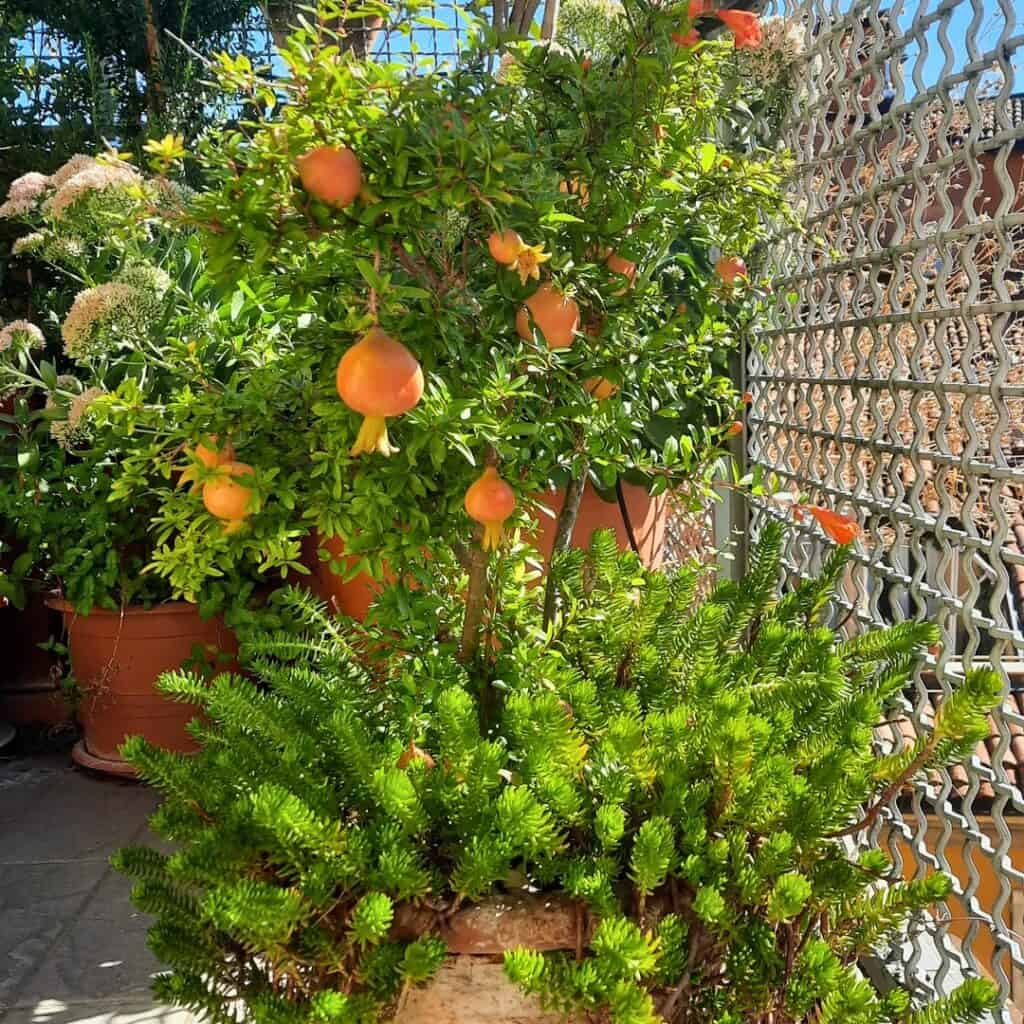
A Dwarf Pomegranate brings a splash of color and life to a small patio. The glossy green leaves and tiny orange-red flowers really stand out, even when space is tight.
It stays compact, so it fits nicely in a medium-sized pot. I’ve noticed this plant thrives in full sun—at least six hours of light a day keeps it happy and blooming.
I let the soil dry a bit between waterings to avoid root rot. One thing I really like is that it can produce small, decorative fruits.
They look striking against the green foliage, even if they’re too small to eat. The tree brings a tropical, cheerful vibe without taking up much room.
I use a terracotta or ceramic pot with drainage holes to keep the roots healthy. A balanced fertilizer every few weeks during the growing season helps keep the growth strong.
It’s low-maintenance, which is great for beginners. I just trim any dry branches in early spring to keep its shape.
With steady care, my Dwarf Pomegranate brightens the patio from early summer through fall, making the space feel more inviting and lively.
9) Camellia
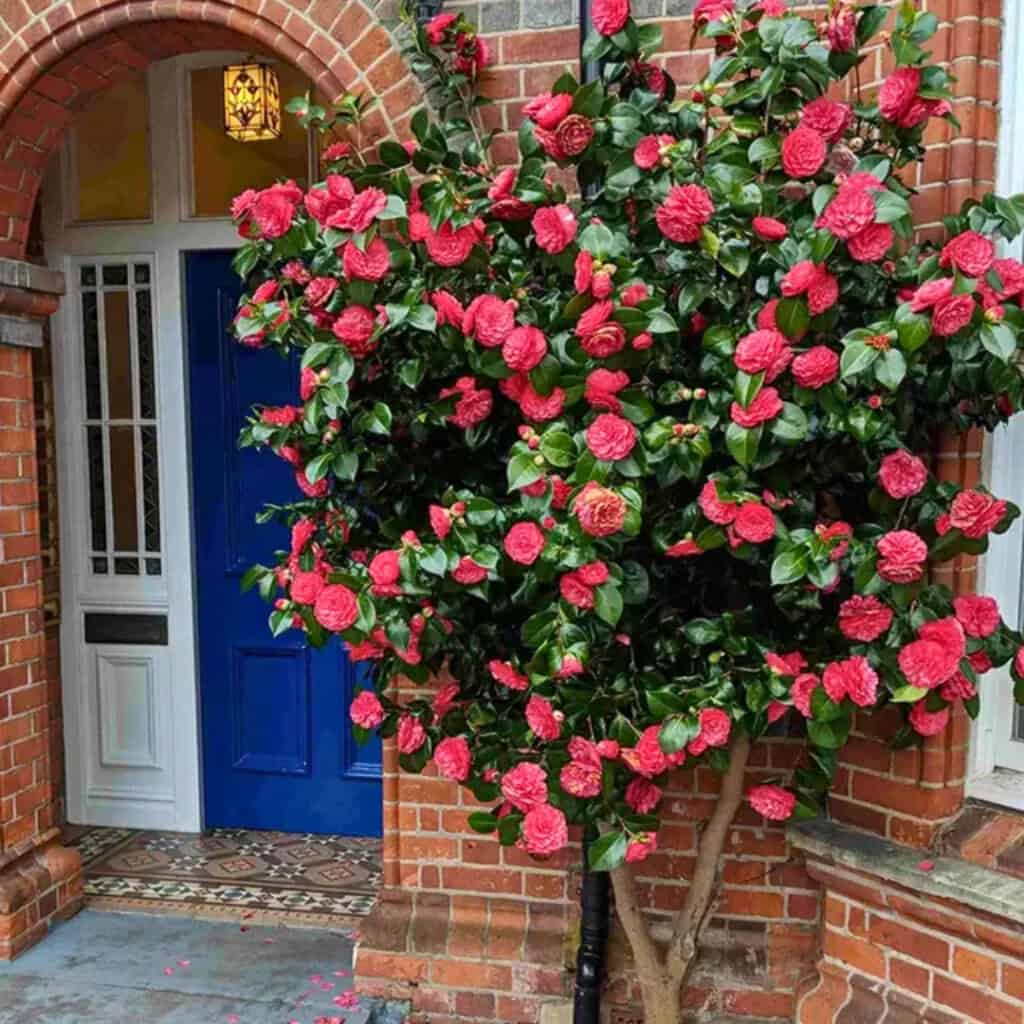
There’s something special about how a Camellia brightens up my patio, especially when most other plants are still taking a break for the season. Those glossy green leaves look good all year, and then—bam—the blossoms show up in late winter or early spring.
The flowers? They come in pink, white, or red, and honestly, they pop against that dark foliage. It’s a welcome sight after months of gray.
For potted Camellias, I always go with well-draining, acidic soil. The roots like moisture, but definitely not soggy feet.
I keep my Camellia where it gets bright, indirect light. Too much sun can burn the leaves, but if it’s too shady, the flowers just don’t show up as much.
Regular watering is key, especially on dry or windy days, but I let the top inch of soil dry out before watering again. A bit of mulch helps keep the moisture in and the roots cool.
Once it’s done blooming, I give it a light prune to keep things tidy and let air move through the plant. In spring, a little acid-loving fertilizer seems to work wonders for new growth.
Camellias grow slowly, which is perfect for small patios and balconies. Even in pots, they stick around for years if you treat them right.
When frost is coming, I move mine to a sheltered spot. They always seem to thank me with fresh blooms the next year.
10) Cherry Blossom Tree (Prunus serrulata)

A Cherry Blossom Tree just brings a gentle, elegant vibe to a small patio. Those soft pink or white flowers feel like spring, even if it’s just for a few weeks.
Even in a pot, the tree keeps a graceful shape that doesn’t take over the space. I use a large, sturdy pot with good drainage—these trees don’t like wet feet.
They need at least six hours of direct sun every day. I keep the soil moist, but not soggy, since too much water is a quick way to trouble.
A yearly prune keeps things tidy. I snip away weak or crowded branches for better air flow and a neat look.
In late winter or early spring, I use a balanced fertilizer to boost healthy growth. If frost is in the forecast, I move the pot to a sheltered spot, since young trees can be pretty sensitive.
With a little effort, you get a patio full of gentle color and charm. A potted Cherry Blossom Tree always turns into a conversation piece for visitors.
Those delicate flowers and shifting leaves keep things interesting all year. Honestly, it’s one of my favorite ways to bring a bit of calm, natural beauty to a small space.
11) Japanese Black Pine
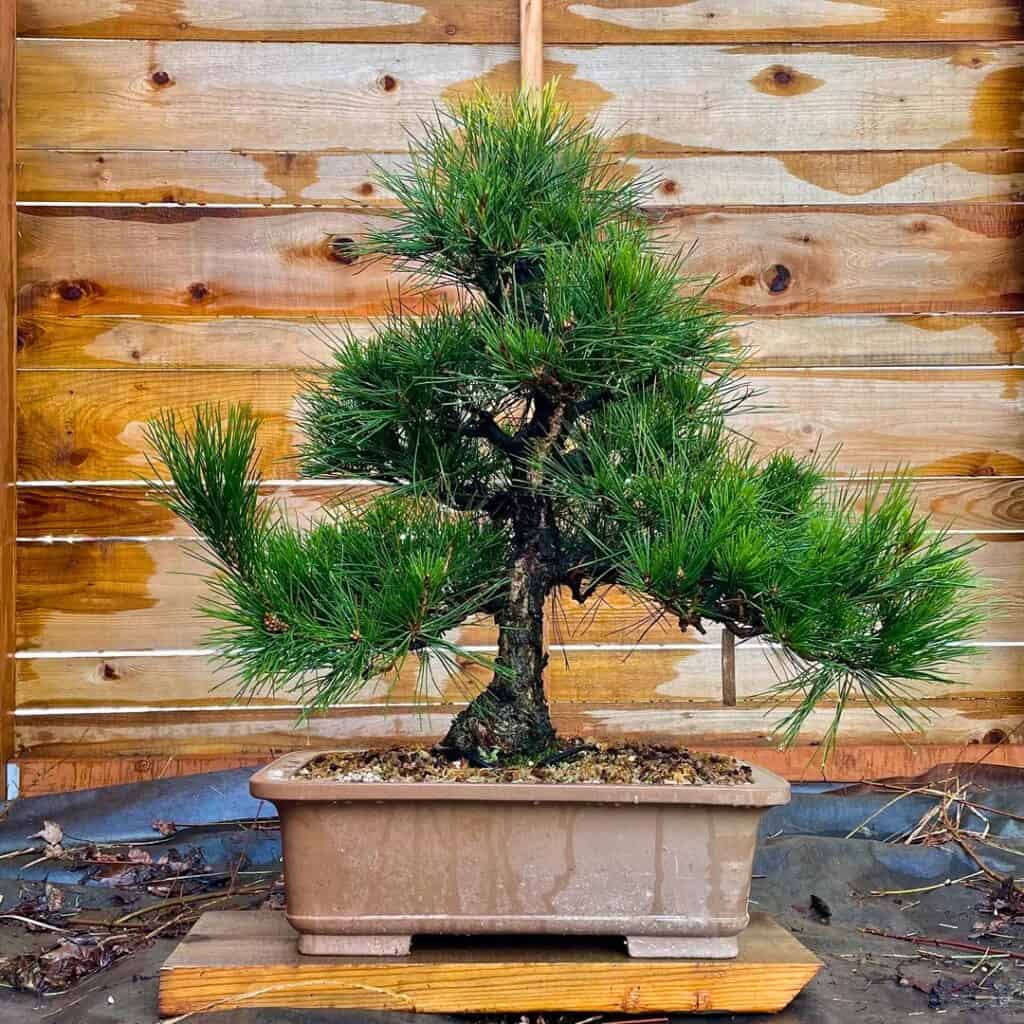
Japanese Black Pine just has this way of adding character to a patio. The rugged bark and dark green needles look so bold, especially against smooth planters or light walls.
Even in a container, it keeps a strong, sculptural shape that always catches the eye. It’s easy to manage in a pot, too.
Each spring, I trim new shoots to keep it compact and balanced. Regular pruning is the trick for controlling height and shape—great for tight outdoor spots.
I keep my potted pine in full sun. It actually tolerates wind and chilly weather better than most, so it’s not too fussy.
I avoid overwatering, though—good drainage is a must for healthy roots. This tree brings a calm, natural vibe that works with modern or traditional patios.
I like how its texture pairs with gravel, ceramic, or wood planters. It just gives my patio a peaceful, coastal feel, even if I’m nowhere near the ocean.
A bit of attention goes a long way. I use slow-release fertilizer in spring for steady growth. Every time I step outside, I appreciate the quiet structure it adds to my space.
Caring for Potted Trees on Small Patios
Keeping my potted trees healthy really comes down to the basics: good soil, enough water, and the right amount of sun. With decent care, problems are rare and the trees just seem to thrive.
Choosing the Right Potting Mix
I always go for a light, well-draining potting mix made for container trees. Heavy garden soil holds too much water and just suffocates the roots.
A mix with peat, pine bark, and perlite lets air move around the roots. It holds some moisture but doesn’t get soggy.
Adding compost or slow-release fertilizer helps keep growth steady. If I’m planting something like citrus or camellia, I look for a mix that’s more acidic.
Before planting, I fill the pot halfway, settle the tree, then gently pack soil around it. I leave about one inch of space at the top for watering—makes life easier and keeps soil from spilling out.
Watering and Drainage Tips
I water my potted trees based on the weather and season. Warm, dry days mean watering more often, while cooler months are much slower.
Overwatering can rot roots, so I always check that water can drain freely. Here’s a simple schedule I use:
| Season | Watering Frequency | Notes |
|---|---|---|
| Spring/Summer | Every 2–3 days | Check top inch of soil for dryness |
| Fall/Winter | Every 5–7 days | Reduce watering and avoid soggy soil |
If water runs straight through, I add a layer of mulch to hold moisture. Raising pots off the ground with bricks or risers helps prevent water from pooling underneath.
Healthy roots need air as much as water, so I keep that in mind.
Managing Sunlight and Shade
Most potted trees want at least 4–6 hours of sunlight daily, but not all of them like full sun.
I put sun-lovers like olive or lemon in the brightest spots. Shade-tolerant trees, like Japanese maples, get filtered light or partial shade.
If the sun is too harsh, I use umbrellas or light screens. Rotating pots every few weeks helps all sides get their fair share of sun.
Too little light leads to weak stems and pale leaves. On shaded patios, I use reflective surfaces or move trees closer to open spots. It’s all about finding that balance.
Decorating Ideas and Placement Tips
I like my patio to feel open and welcoming, not cluttered. Thinking about where each tree goes, picking containers that match, and adding a bit of lighting in the evening makes a big difference.
Maximizing Space With Strategic Arrangements
When space is tight, I plan before moving anything. Measuring the area and choosing trees that fit the patio’s scale helps a lot.
Smaller trees like Japanese maples or olive trees work well near corners or railings. I’m a fan of vertical arrangements to save floor space.
Putting taller pots at the back and shorter ones in front keeps everything visible. Mixing heights makes the space feel fuller, but not crowded.
I leave about 18–24 inches between pots so there’s room to walk. Lightweight containers make moving things around easy.
Honestly, a quick sketch before setting things up saves time and hassle.
Using Decorative Containers
The right container can really change the vibe of a patio. I like fiberglass, resin, or glazed ceramic pots—they handle the outdoors and each has its own perks.
Here’s how I usually compare them:
| Material | Look | Weight | Best Feature |
|---|---|---|---|
| Fiberglass | Modern | Light | Easy to move |
| Ceramic | Classic | Heavy | Rich color options |
| Resin | Simple | Light | Budget-friendly |
I pick colors to match my space. Neutral tones keep things calm, while bright colors add some personality.
Matching pots by color or texture makes everything look intentional. And I never skip the drainage holes—roots need to breathe!
Incorporating Lighting for Ambience
Soft lighting can totally transform a small patio at night. I like to aim lights at the foliage or walls to get gentle shadows and highlight the plants’ shapes.
String lights or solar-powered spotlights are super easy to use. Sometimes I’ll wrap fairy lights around trunks or weave them through branches for a cozy look.
For a more modern feel, I use low lanterns or LED cubes next to the pots. Warm white bulbs (2700–3000K) just look better with greenery.
If my patio faces a neighbor, I angle the lights down to avoid glare. Just a few lights can make the whole space feel relaxed and private.
Frequently Asked Questions
Honestly, it’s surprisingly easy to bring nature into small spaces with compact trees in pots. With the right care, they stay healthy, look great, and sometimes even grow fruit.
Choosing the right pots and a simple watering routine makes patio gardening way less stressful.
What are some ideal tree varieties for small patio spaces?
I like Dwarf Alberta Spruce, Japanese Maple, and Olive Trees for their size and structure. They do well in containers and add color all year.
Ficus Bonsai and Lavender Trees are also good picks—they stay small and look nice no matter the season.
How do I properly care for a potted tree on my patio?
I make sure the tree gets enough sun and that the pot drains well. Each spring, I refresh the soil and add slow-release fertilizer.
A little trimming now and then keeps it looking balanced.
Are there fruit-bearing trees that can thrive in pots on a small patio?
Definitely! Dwarf citrus trees like lemon or lime work well. Fig trees are another good option if they get enough sun.
Just stick with dwarf or compact varieties for the best results.
What size pots are recommended for keeping trees on small patios?
I usually go for pots that are 16 to 24 inches deep. That gives the roots room to grow and helps keep the soil moisture steady.
A heavier pot is good, too—it keeps the tree from tipping over if it gets windy.
How often should I water my potted patio tree?
I check the soil every few days and water when the top inch feels dry. In summer, trees in sunny spots often need more frequent watering.
Consistent moisture helps prevent leaf drop and keeps roots happy.
Can you suggest any low-maintenance trees suitable for patios with limited space?
Honestly, my favorites are Dwarf Alberta Spruce and Lavender Trees. They’re pretty chill—don’t ask for much pruning, and they seem to shrug off mild weather changes.
If you’ve got a spot with a bit of shade, a Japanese Maple could be a lovely choice. Just remember to water it every now and then.
Note: Some images in the articles are sourced from Reddit and Other Platforms For Reference Purpose.