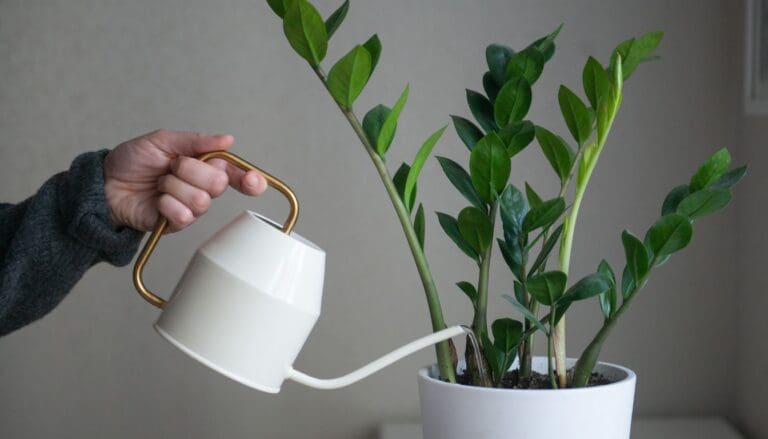
ZZ Plant Falling Over: Simple Causes and Easy Fixes
Your ZZ plant is supposed to be one of the toughest houseplants out there, so when it starts leaning or flopping over, it can catch you off guard.
The most common reasons for a ZZ plant falling over include overwatering, weak or leggy growth from low light, root issues, and top-heavy stems that need support.
The good news? Most of these issues are fixable once you figure out what’s going on.
I’ve dealt with droopy ZZ plants before, and honestly, it’s frustrating to watch those thick stems suddenly lose their strength. Sometimes it’s just one stalk acting up, and other times the whole plant seems ready to give up.
In this guide, I’ll walk you through why your ZZ plant might be falling over. I’ll also show you exactly how to get it standing tall again.
You’ll pick up some tips on preventing the problem from coming back, so your plant can stay healthy and upright for years to come.
Please note: Simplify Plants is reader-supported. As an Amazon Associate, I earn from qualifying purchases made by our readers with no extra cost added to you all! Some links in the post are affiliate links and I get a commission from purchases made through links in the post.
Why Is My ZZ Plant Falling Over?
ZZ plants lean or fall when their stems grow too tall without enough support.
Sometimes, waterlogged soil weakens the root system, or the plant hasn’t received enough light to develop sturdy growth.
Recognizing Symptoms of a Toppling ZZ Plant
I’ve noticed that falling ZZ plants usually show warning signs before they completely tip over. The stems start to bend at the base instead of standing upright.
You might spot one or two stalks leaning away from the center of the pot at weird angles. The stems themselves might feel softer or mushier than normal if you gently squeeze them near the soil line.
This is different from the firm, waxy texture healthy ZZ stems should have. Sometimes the entire plant leans to one side as if it’s reaching for something.
The pot might even feel top-heavy when you try to move it. Brown or yellow stems at the base are another red flag that something’s wrong with your plant’s stability.
Quick Tip: Gently wiggle the base of your ZZ plant—if it moves easily in the soil, the roots aren’t anchoring it properly.
How Normal ZZ Plant Growth Should Look
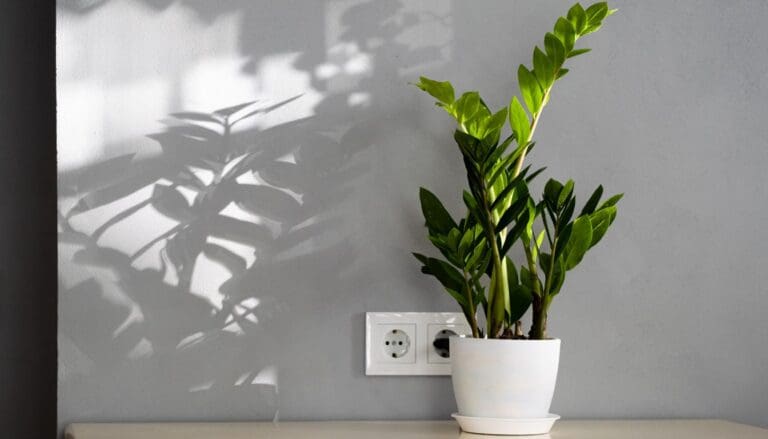
Healthy ZZ plants have thick, upright stems that grow straight from the soil. Each stem should feel firm and slightly waxy to the touch.
The leaves fan out evenly along the stem in a feather-like pattern. The plant naturally grows in a clumping habit with multiple stems emerging from underground rhizomes.
These stems should all stand independently without needing support from each other or stakes. A mature ZZ plant can reach 2-3 feet tall, and the stems should support themselves at this height.
New growth starts out lighter green and stands just as upright as older stems. The weight of the leaves shouldn’t cause any noticeable drooping or bending.
Common Misconceptions About Leaning Plants
Many people think ZZ plants naturally sprawl or drape like some other houseplants. That’s not really the case—ZZ plants are architectural and structural by nature.
If yours is leaning, something needs fixing. Some folks believe older ZZ plants just get floppy with age, but mature plants should actually be even sturdier than young ones because they’ve developed stronger rhizomes and root systems.
I’ve also heard people say that leaning means the plant is growing toward the light. While ZZ plants do grow toward their light source, they shouldn’t bend dramatically or fall over in the process.
Slight leaning is normal, but toppling isn’t. Another myth is that heavy leaves naturally weigh down the stems, but ZZ plant stems are designed to support their own leaf weight when healthy.
Most Common Causes of ZZ Plant Leaning
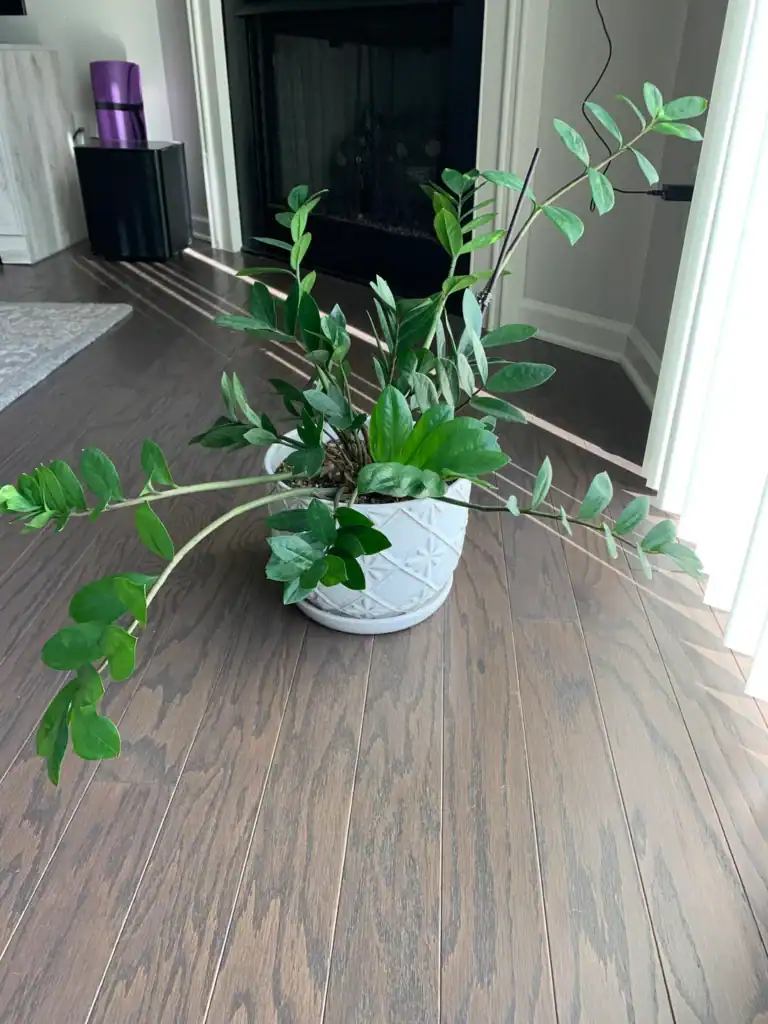
ZZ plants lean or fall over when their roots are damaged, when they don’t get enough water or light, or when they outgrow their pot. Most of these problems come from simple care mistakes that are easy to fix once you know what to look for.
Overwatering and Root Rot
Overwatering is the top reason I see ZZ plants tipping over. When soil stays wet for too long, the roots can’t breathe and start to rot.
Rotten roots turn mushy and brown, and they can’t hold the plant upright anymore. The stems might look fine at first, but the base gets soft and wobbly.
If I press gently near the soil line and it feels squishy, that’s a red flag. The plant literally loses its foundation when the roots die off.
ZZ plants store water in their thick rhizomes, so they don’t need frequent watering. I only water mine when the top 2-3 inches of soil are completely dry. That usually means waiting 2-3 weeks between waterings.
Quick Tip: Stick your finger deep into the soil before watering—if it feels even slightly damp, wait a few more days.
If root rot has started, I take the plant out of its pot and trim away any mushy roots with clean scissors. Then I repot it in fresh, dry soil and hold off on watering for at least a week.
Underwatering and Dehydration
When a ZZ plant doesn’t get enough water, the stems start drooping and leaning to the side. The leaves might wrinkle or curl inward, and the whole plant looks sad and deflated.
I can usually tell by lifting the pot—if it feels super light, the soil is bone dry. Dehydrated stems lose their firm, upright structure.
They become weak and can’t support their own weight anymore. The plant won’t necessarily die right away, but it definitely won’t stand up straight.
I’ve noticed that underwatered ZZ plants often lean toward their light source too. They’re trying to get energy while also dealing with water stress. It’s like they’re reaching out for help.
Quick Tip: Water thoroughly until it drains out the bottom holes, then let the soil dry out before the next watering.
Recovery is usually quick once I give the plant a good soak. Within a few days, the stems start perking back up.
Insufficient Light Exposure
ZZ plants tolerate low light, but they still need some brightness to stay strong and upright. When mine sits in a too-dark corner, it starts stretching toward any available light source.
This makes the stems long, thin, and weak. The plant grows lopsided because all the new growth leans one direction.
The stems on the dark side might even stop growing while the other side keeps reaching. This uneven weight distribution makes the whole plant tip over.
I’ve seen ZZ plants do this in rooms with only one small window or in spaces far from natural light. The stems get leggy and can’t support themselves properly.
They need at least medium indirect light to maintain their sturdy structure.
Quick Tip: Rotate your ZZ plant a quarter turn every week so all sides get equal light exposure.
A spot near an east or north-facing window works great for mine. If I only have artificial light, I make sure it’s on for at least 8-10 hours a day.
Pot Size and Lack of Support
A pot that’s too small can’t anchor a mature ZZ plant properly. When the rhizomes fill up all the space, they push against the sides and even lift the plant up.
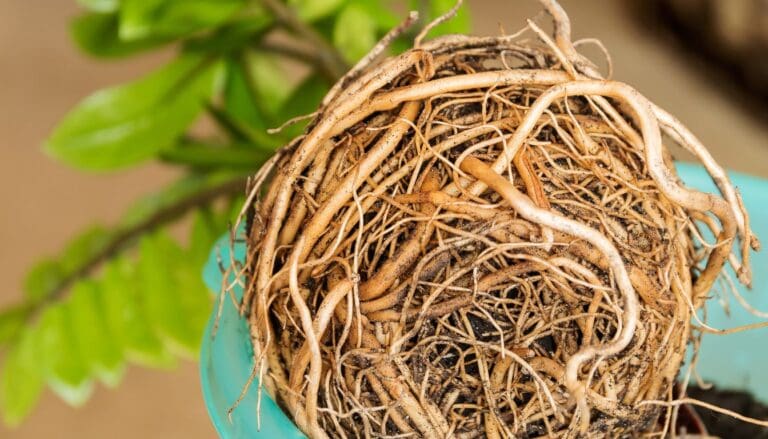
This makes it top-heavy and unstable. I check if my plant is rootbound by looking at the drainage holes. If thick rhizomes are poking out or circling around the edges, it’s time for a bigger pot.
The plant might also push itself up so it’s sitting higher than the soil line. On the flip side, a pot that’s way too big holds excess water that the roots can’t use. This leads back to the overwatering problem.
I aim for a pot that’s only 2 inches wider than the current one when repotting.
Quick Tip: Choose a heavy ceramic or terracotta pot instead of lightweight plastic to add stability.
The pot needs good drainage holes too. Without them, water pools at the bottom and the roots sit in moisture even when the top looks dry.
I always add a layer of rocks or perlite at the bottom if drainage seems slow.
Other Reasons for ZZ Plant Stems Falling Over
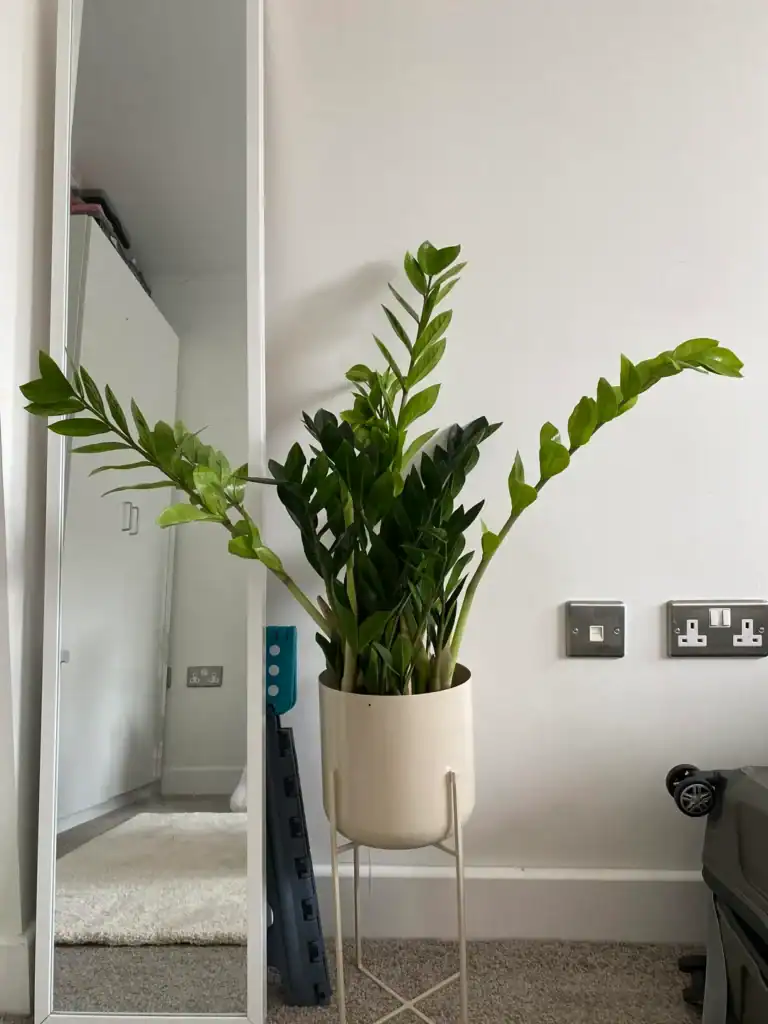
Sometimes your ZZ plant’s drooping stems have nothing to do with water or light. Heavy top growth, temperature swings, and accidental bumps can all cause those sturdy stalks to lean or topple.
Heavy or Unbalanced Foliage
When my ZZ plant produces lots of new growth on one side, the weight distribution gets wonky. The stems naturally lean toward the heavier side, and sometimes they just tip right over.
This happens a lot when plants sit in the same spot for months. They grow toward the light source, packing all their leaves on one side. The result? A lopsided plant that can’t support itself properly.
I fix this by rotating my plant a quarter turn every few weeks. This encourages even growth all around.
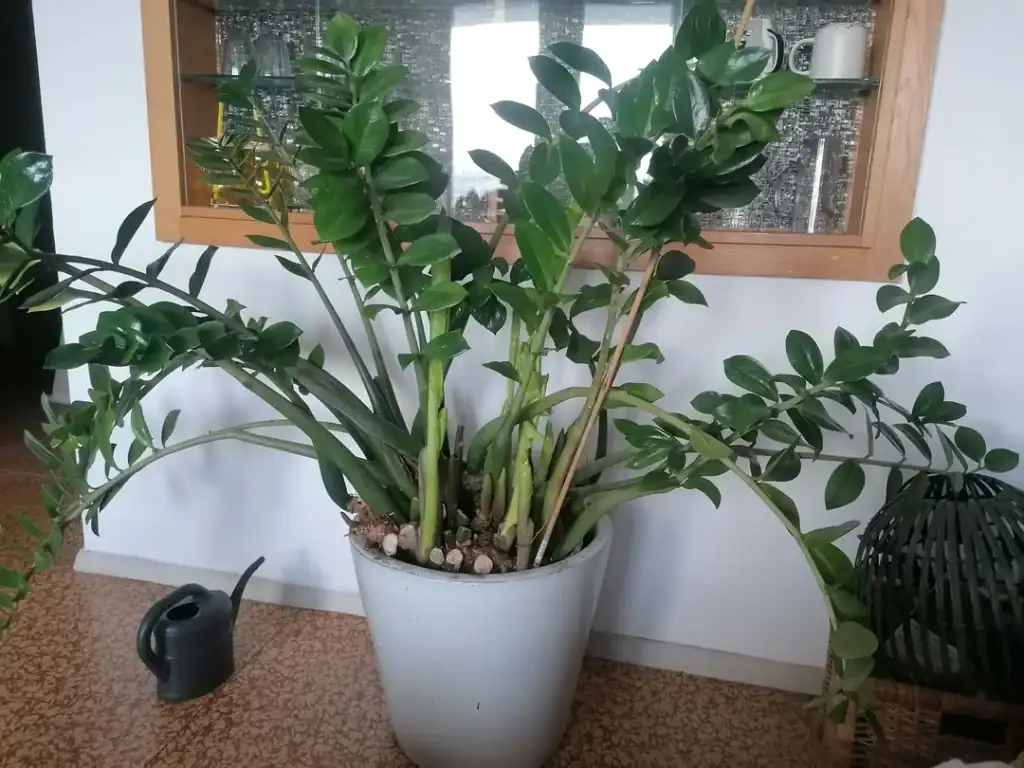
If the plant is already leaning badly, I stake the heavy stems with bamboo poles and soft plant ties.
Quick Tip: Rotate your ZZ plant every time you water it so growth stays balanced.
You can also prune back some of the heavier stems if things get out of hand. Just cut at the base of the stem where it meets the soil.
This redirects energy to the other stems and helps balance things out.
Temperature and Humidity Stress
ZZ plants hate sudden temperature changes. When I moved mine near a drafty window last winter, the stems got weak and started flopping over within a week.
Cold drafts from windows or AC vents stress the plant out. Hot air from heating vents does the same thing.
The stems lose their rigidity and can’t stay upright. I keep my ZZ plants away from any direct airflow. That means no spots right under ceiling fans, next to exterior doors, or near heating registers.
Room temperatures between 65-75°F work best.
Quick Tip: Feel the leaves—if they’re cold to the touch, move your plant away from that spot.
Low humidity usually doesn’t bother ZZ plants much since they’re pretty drought-tolerant. But if you pair dry air with temperature stress, the stems weaken faster. I’ve noticed this more in winter when my heater runs constantly.
Physical Damage or Recent Replanting
I’ve knocked over my ZZ plant more times than I’d like to admit. Even if I pick it right back up, the stems sometimes stay bent or droopy afterward.
Physical damage weakens the stem structure. A hard bump can crack the internal tissue even if you don’t see it on the outside.
Those damaged stems struggle to stay upright and often lean permanently. Recent replanting causes similar issues.
When I repot my ZZ, the roots need time to anchor into the new soil. Until they establish a good grip, the stems wobble and tip easily.
Quick Tip: Wait 3-4 weeks after repotting before expecting your plant to stand completely stable.
I always pack soil firmly around the base when replanting. Loose soil means loose stems.
If your recently repotted plant keeps falling, add more soil mix around the rhizomes and press it down gently but firmly.
How to Fix a Toppling ZZ Plant
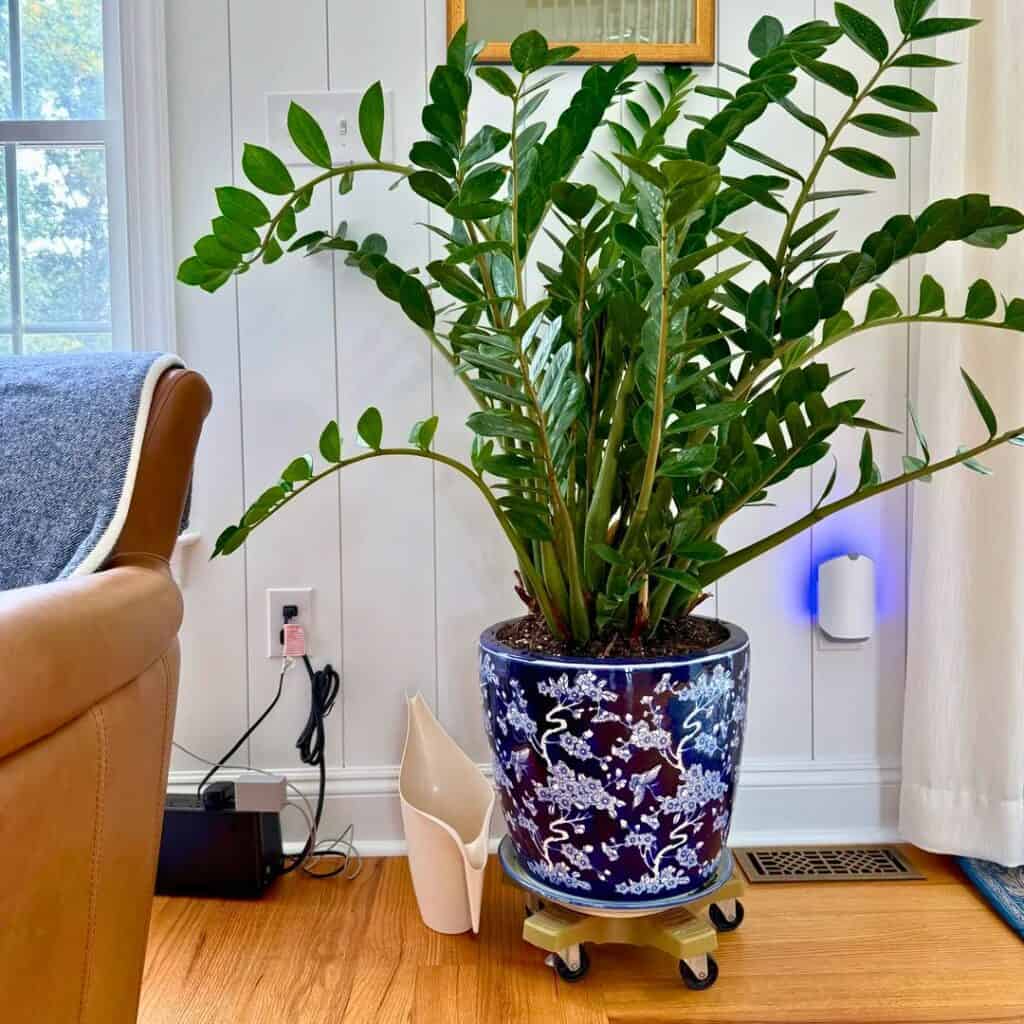
Most ZZ plants fall over because of watering issues, not enough light, or pot problems. I’ll walk you through how to fix each one so your plant stands tall again.
Adjusting Watering Habits
Overwatering is the main culprit behind a falling ZZ plant. When roots sit in soggy soil, they rot and can’t hold the plant upright anymore.
I always check the soil before watering by sticking my finger about 2 inches down. If it feels damp, I wait.
ZZ plants need water only when the soil is completely dry, which might mean watering just once every 2-3 weeks. If I suspect root rot, I take the plant out of its pot and look at the roots.
Healthy roots are firm and white or tan. Mushy, brown, or black roots need to be cut off with clean scissors.
After trimming bad roots, I repot the plant in fresh, dry soil. Then I don’t water for at least a week to let the cuts heal.
Quick tip: ZZ plants store water in their thick rhizomes, so they’d rather be too dry than too wet.
Improving Light Conditions
ZZ plants start to get leggy and weak if they’re not getting enough light. Their stems will stretch out toward whatever light they can find, and sometimes they get so thin they can’t even hold themselves up.
When I notice a plant struggling, I move it closer to a window with bright, indirect light. East-facing windows are usually my go-to, but a few feet back from a south or west window works too.
The move should be slow. If you yank a plant from a dark spot straight into sunlight, the leaves might burn.
I transition mine over a week or two, nudging it a little closer each day. That way, it has time to adjust.
More light really does help the plant grow thicker, stronger stems. I usually notice new growth looking healthier within a month or two.
Quick tip: If your ZZ plant leans toward the light, give it a quarter turn every time you water. It’s a simple fix, but it works.
Repotting and Choosing the Right Pot
If the pot’s too small or too lightweight, it’ll tip over easily. ZZ plants can get top-heavy, especially if the pot doesn’t match the plant’s size.
I like to pick pots that are about 1-2 inches wider than the root ball. It should feel heavy enough to balance out the plant—ceramic or terracotta pots are way better than flimsy plastic for bigger ZZs.
Drainage holes are a must. No matter how careful I am, if there aren’t holes, water will pool at the bottom and the roots will rot.
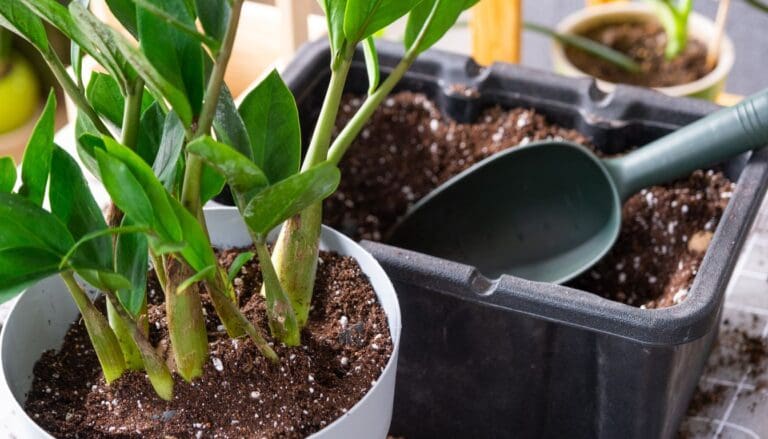
When I repot, I use a mix that drains well. My go-to is regular potting soil mixed with perlite or sand, about 2 parts soil to 1 part perlite or sand.
Quick tip: If you’re stuck with a decorative pot that doesn’t have drainage holes, add a layer of small rocks at the bottom, or just use it as a cachepot.
Supporting and Reviving Your ZZ Plant
A ZZ plant that’s falling over usually needs some support, a little pruning to take off extra weight, and soil that won’t suffocate the roots.
Staking and Physical Supports
If my ZZ plant starts leaning or toppling, I grab a bamboo stake or moss pole and gently push it into the soil near the center. I try not to jab through the rhizomes, obviously.
To attach the stems, I use soft plant ties or stretchy garden tape. Twist ties or string can dig in as the plant grows—never a good thing.
Quick Tip: I usually stick the stakes at the back of the pot so you don’t see them from the front. Just looks nicer.
If the plant has stems flopping in every direction, a ring support or even a tomato cage works. It holds everything up without having to tie each stem individually.
It’s worth checking the ties every few weeks. As the plant grows, those ties can get tight and start cutting in.
Trimming and Pruning Strategies
When stems get too heavy and start pulling the plant down, I cut the longest ones right back to the soil line. I always use clean scissors or pruning shears and snip where the stem meets the rhizome.
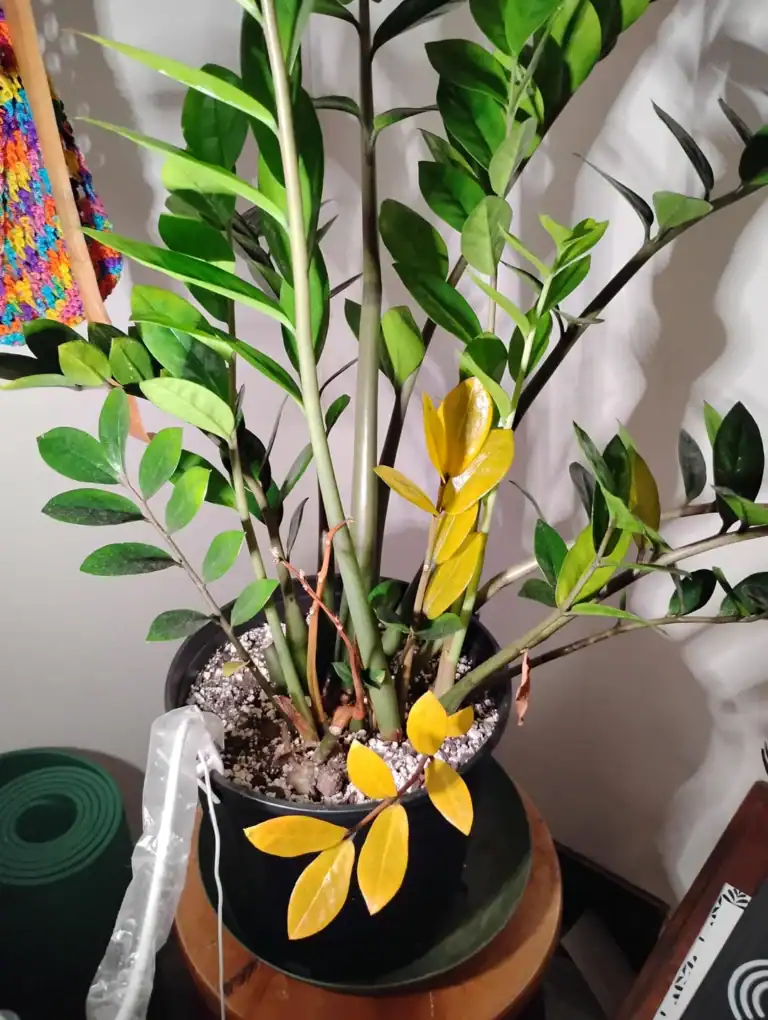
Yellow or damaged stems are the first to go. They just weigh things down and don’t do the plant any favors.
Quick Tip: Wear gloves when pruning. The sap can be irritating, and I learned that the hard way.
I never take off more than a third of the plant at once. Taking off too much can stress it out and slow recovery.
Once I’m done pruning, I let the cut ends dry out for a day before watering again. It’s a little thing, but it really helps prevent rot.
Using Well-Draining Soil
I always repot my ZZ in a fast-draining mix to avoid root rot and weak roots. Regular potting soil mixed with perlite or coarse sand (2:1 ratio) does the trick.
Soggy soil makes roots soft, and then they can’t hold up heavy stems. That’s when you get a plant tipping over because its roots just can’t anchor it.
Quick Tip: Toss in a handful of orchid bark for even better drainage and a few extra air pockets.
Drainage holes are non-negotiable. Without them, water just sits there and roots start to rot.
When I water, I always let the excess drain out completely. I never let my ZZ plant sit in a saucer full of water—just asking for trouble.
Preventing ZZ Plant Problems in the Future
A solid care routine and regular check-ins really help keep your ZZ plant upright. Catching issues early means you can fix them before things get out of hand.
Establishing a Consistent Care Routine
I water my ZZ plant only when the soil is bone dry, which, honestly, is usually every 2-3 weeks. Overwatering is the fastest way to ruin a ZZ, so I stick my finger about two inches into the soil before making any decisions.
Mine lives in bright, indirect light near an east or west window. ZZs can handle low light, but you’ll get stronger, more upright growth with better lighting.
Quick Tip: Rotate your plant a quarter turn every time you water so all sides get their fair share of light.
I use a potting mix for succulents or cacti—regular potting soil just holds too much water. Drainage holes at the bottom of the pot are a must.
During spring and summer, I feed my ZZ with diluted liquid fertilizer every couple of months. I skip fertilizer in fall and winter when it’s not really growing.
Monitoring for Early Signs of Trouble
I check my plant weekly for yellowing leaves—that usually means I’ve overwatered. Soft or mushy stems are another bad sign that the roots might be rotting.
If I see stems leaning to one side, it’s usually a light issue or just one side getting too heavy. New growth that’s pale or floppy isn’t a great sign, either.
Quick Tip: Run your hand along the stems every week or so to feel for soft spots before they get worse.
Brown leaf tips can mean low humidity or maybe something in the tap water. I use filtered water or just let tap water sit out overnight before watering.
Tips for Encouraging Upright Growth
I’ll stake wobbly stems with bamboo and soft ties until they toughen up. The extra support really helps them grow straight.
Leggy or damaged stems get pruned at the base with clean scissors. That way, the plant puts its energy into healthier growth.
Quick Tip: ZZs actually like being a little rootbound—they’re sturdier in snug pots, so don’t rush to repot.
I wipe the leaves down every month with a damp cloth. Clean leaves soak up more light, and in dry winter months, I bunch my plants together for a bit more humidity.
Frequently Asked Questions
ZZ plants usually fall over because of watering issues, bad pot size, lighting, or root problems. Most of these can be fixed by tweaking your care routine or giving the plant some support.
What could be causing my ZZ plant to lean or topple over?
The most common reason is an uneven root system or heavy growth on one side. If your ZZ has a bunch of tall stems all on one side, it’s going to tip, no surprise there.
Overwatering is another big culprit—it can rot the roots and rhizomes, and then there’s nothing left to anchor the plant. The stems just flop over.
Sometimes the plant is just stretching for light. If it’s been in the same spot for ages, it might have grown lopsided while reaching for the window.
Are there common watering mistakes that might affect my ZZ plant’s stability?
Honestly, overwatering is the biggest mistake. ZZs store water in their thick rhizomes, so they don’t need frequent watering like some other houseplants.
If the soil stays wet too long, roots and rhizomes get mushy and can’t hold the plant up. Sometimes the stems look okay at first, but the plant gets wobbly at the base.
Let the soil dry out completely between waterings. If you stick your finger two inches in and it’s still damp, just wait a few more days.
How can I tell if the pot size is affecting my ZZ plant’s posture?
If the pot’s too small, you’ll probably see roots poking out of the drainage holes or circling the top of the soil. The plant might tip because the roots can’t anchor it properly.
Too big of a pot isn’t great either—extra soil holds more water than the roots need, which can lead to rot.
The right pot should give your ZZ about an inch of space around the root ball. When I repot, I only go up one size.
Could lighting conditions be responsible for my ZZ plant falling over?
ZZ plants lean toward the light, which is just what plants do. If yours only gets light from one direction, it’ll grow crooked eventually.
Low light doesn’t make a ZZ fall over right away, but it does cause weak, leggy stems. Those thin stems just can’t stand up straight for long.
I rotate my ZZ a quarter turn every time I water. It’s a small thing, but it helps keep growth even.
What should I do to fix a ZZ plant that’s started to droop or fall?
First, see if the soil is soaking wet. If it is, pull the plant out and check the rhizomes. Cut away any mushy, brown bits with clean scissors and let the healthy parts dry out for a day before repotting in fresh, dry soil.
If your plant’s just top-heavy or leaning, bamboo stakes or a support hoop can help. Push the stake in near the edge of the pot and gently tie the stems with soft ties or even strips of fabric.
Quick Tip: Don’t tie the stems too tight—leave a bit of wiggle room so the plant can still move and grow.
If the pot is too small, move up to a slightly bigger one with drainage holes. Use a well-draining mix meant for succulents or cacti.
How often should I be repotting or providing support to my ZZ plant to prevent it from falling?
ZZ plants are pretty slow growers, so honestly, you only really need to repot them every two or three years. I usually just keep an eye out for roots poking out of the drainage holes or when the plant looks way too crowded in its pot.
If your ZZ starts shooting up and those stems get heavy, you might want to think about using a support stake. Every few months, I’ll take a quick look to see if any stems are starting to bend or lean in a weird way.
Most of the time, ZZ plants are fine on their own as long as they’re getting enough light and you’re not drowning them with water. Keeping them healthy is honestly the best way to make sure they stand tall and don’t flop over.
Note: Some images in the articles are sourced from Reddit and Other Platforms For Reference Purpose.