14 Stunning Hanging Ground Cover Plants
I’m always looking for ways to add a bit of charm to my space, and there’s just something about plants that trail and spill from baskets or pots.
Hanging ground cover plants are a simple way to liven up a balcony, porch, or even a forgotten garden corner.
They save space and make everything look soft and inviting—kind of fresh, too.
Here are fifteen stunning hanging ground cover plants that can turn plain spots into eye-catching displays.
Each one brings its own color, shape, and personality, so you’ve got plenty of options to match your vibe and your space.
Please note: Simplify Plants is reader-supported. As an Amazon Associate, I earn from qualifying purchases made by our readers with no extra cost added to you all! Some links in the post are affiliate links and I get a commission from purchases made through links in the post.
1) English Ivy

I can’t help but love how English Ivy brings instant charm wherever it hangs. Those long, trailing vines look great from baskets, pots, or even climbing a wall. The small, glossy leaves create a dense green carpet that always feels tidy and refreshing.
It grows well both indoors and outdoors, so you can put it pretty much anywhere. I usually keep mine near a bright window, but not in direct sun. English Ivy’s pretty adaptable, so it’s not a fussy plant.
When I water, I make sure the soil stays slightly moist but not soggy. Overwatering is a quick way to get root problems, so I check the soil before adding more water. A little trim now and then keeps it neat and encourages those vines to keep growing.
I like using English Ivy as a natural hanging ground cover over fences or walls. It fills in gaps in no time and gives dull areas a much-needed pop of green. If it gets too wild, I just snip back the extra vines—no big deal.
What really gets me is its classic look and easy upkeep. Whether it’s hanging inside or trailing down the garden edge, English Ivy brings a calm, fresh vibe that’s hard to beat.
2) Creeping Jenny
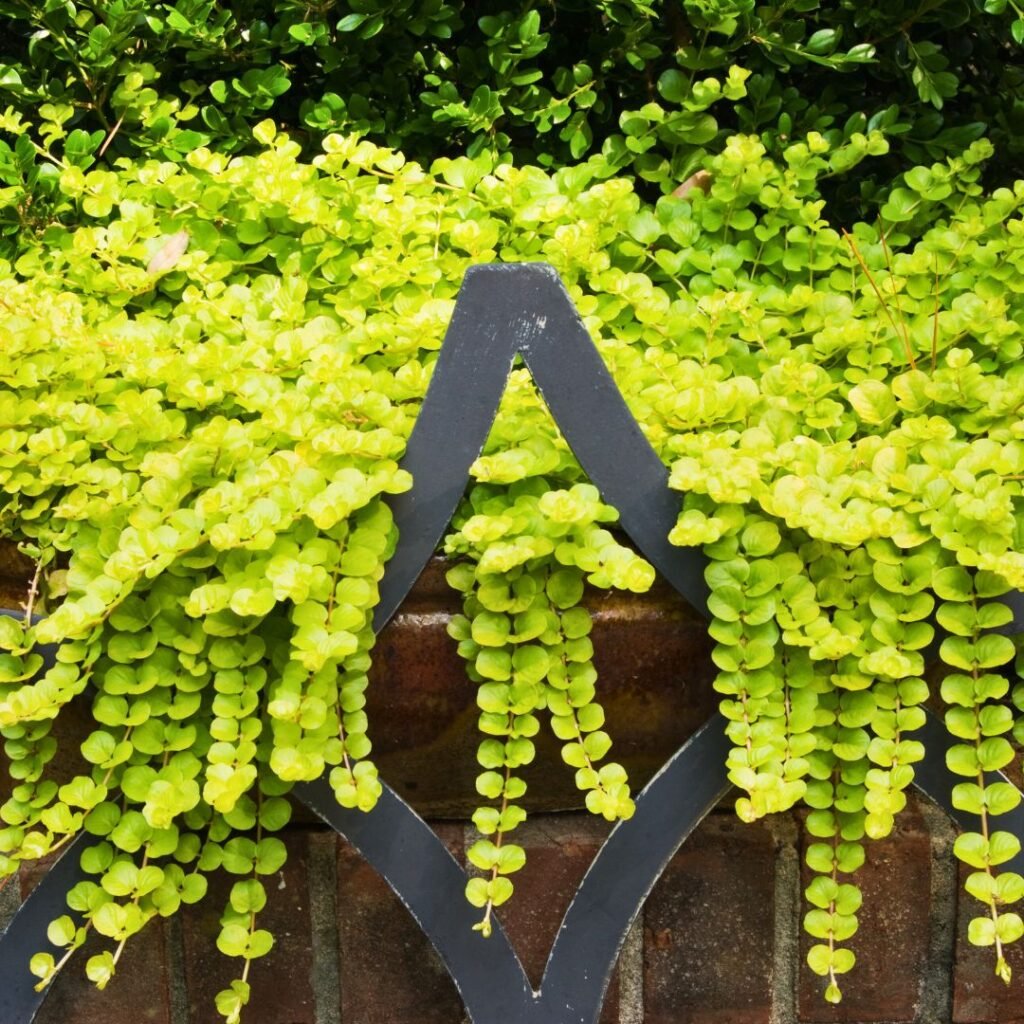
There’s something about Creeping Jenny—the way it pops with bright green or gold, it just lights up the place. Its small round leaves trail down in long, flowing stems, looking especially nice when sunlight hits those glossy leaves.
It grows best in moist soil and partial sun. I’ve noticed it stays vibrant in spots with morning light and afternoon shade. In full shade, it turns a deeper green, but give it more sun and it glows gold.
I love using Creeping Jenny as a living curtain in hanging planters. The stems can reach almost two feet, giving you that soft, draping look. It looks great next to purple flowers or dark foliage—just the right amount of contrast.
Maintenance? Super simple. I trim back any wild tendrils and water regularly to keep the soil from drying out. It spreads fast, so I keep an eye on it in the ground.
Creeping Jenny works indoors too. I’ve hung baskets near bright windows and it does fine, as long as it gets enough light and humidity. Its easy care is perfect if you want a lush, trailing plant without a lot of fuss.
3) Sweet Woodruff

There’s something gentle about Sweet Woodruff—it just quietly fills shady spots with a soft, green carpet. It grows fast and stays low, perfect for those tricky spaces under trees or shrubs. The scent is fresh, almost like spring, even when summer’s blazing.
You’ll spot small, star-shaped white flowers in late spring. They’re delicate but really stand out against the deep green leaves. The foliage keeps its brightness even as other plants start to fade.
Sweet Woodruff likes moist, well-drained soil and partial shade. I give it some water during dry spells, but once it’s settled in, it doesn’t need much from me. It spreads by runners, so over time you get a lush mat.
I’ll plant it in hanging baskets or along garden edges, letting it trail a bit over the sides. It pairs well with shade-loving plants like ferns or hostas.
One thing I can’t get enough of is its fragrance. When the leaves dry, they give off a sweet, clean scent. Sometimes I’ll tuck a few into sachets for the house. It’s a simple way to bring a bit of the garden indoors.
If you’re after an easy, gentle ground cover for shade, Sweet Woodruff is a quiet winner. It’s low-maintenance and just plain charming.
4) Ajuga Reptans

I’m a big fan of Ajuga Reptans (or bugleweed) for hanging displays. It’s so lively and honestly doesn’t ask for much. The low-growing, trailing stems spill over containers or walls, which is perfect for softening up any hard edges.
The leaves come in rich colors—deep green, bronze, even purple. In spring, you’ll get spikes of tiny blue or violet flowers that pop against the foliage.
I usually plant it in containers or hanging baskets, letting it trail gracefully. It grows quickly, so a little trim now and then keeps it from getting tangled. If you plant it in the ground, it spreads nicely under trees or shrubs.
Ajuga likes partial shade but can handle some sun if the soil doesn’t dry out. I keep the soil a bit damp, but not soggy—too much water and it can rot. It’s tough and easy to care for, which is great if you’re just starting out.
Mixing varieties like ‘Burgundy Glow’ or ‘Chocolate Chip’ gives you even more color and texture. These plants make a hanging garden look lush and interesting without taking up much space.
Ajuga Reptans just adds character wherever it goes. It’s simple, beautiful, and stays attractive year-round—definitely one of my go-tos.
5) Liriope Muscari

Liriope Muscari (or creeping lilyturf) is a reliable way to add life to tricky spots. The grass-like leaves and little purple flower spikes bring some brightness, especially in shade. I like popping it in places where other plants just won’t grow.
It makes a great low-maintenance ground cover. The clumps spread slowly and fill in empty areas. I’ll often plant it along borders or under trees to soften up the edges.
Liriope Muscari does well in sun or shade, so it’s flexible for different garden spots. I water it regularly at first, but once it’s settled, it handles short dry spells just fine.
The foliage stays green almost all year. In late summer, you’ll notice the violet flower spikes—a nice surprise. Even after the flowers are gone, the leaves keep things looking tidy.
It’s super durable and shrugs off most pests or diseases, which is a relief. I trim old leaves in early spring for a fresh start.
It even looks good in hanging planters or along raised beds, where the leaves can spill over for a soft, cascading effect. It’s not flashy, but it’s calming and blends in with just about any style.
If you want a plant that’s versatile, tough, and attractive, I’d always suggest Liriope Muscari. It’s an easy way to get year-round greenery and a subtle splash of color.
6) Dichondra Silver Falls

There’s just something magical about Dichondra Silver Falls—those soft, silvery leaves really change the vibe of a space. The vines spill over pots in a way that feels peaceful and almost a little dreamy. It’s one of those plants that can instantly brighten up a dull spot.
It likes full sun and prefers well-drained soil. I’ve found it doesn’t need much—just light watering once it’s settled. It’s pretty forgiving, even if you forget about it for a few days.
I use Dichondra Silver Falls in hanging pots, window boxes, or as ground cover around stepping stones. Its cascading habit adds texture and movement without taking over. The silvery color looks amazing alongside dark green or flowering plants.
To keep it looking good, I trim back the longer stems every so often. When it’s warm, it grows fast and those silver vines can get impressively long. Watching it trail down a planter or blow in the breeze is just…nice.
Since it’s drought-tolerant and heat-resistant, it’s perfect for sunny patios or balconies. Whether alone or mixed in with other plants, it always brings a soft, elegant touch.
7) Vinca Minor

Vinca Minor (also known as creeping myrtle or periwinkle) is a favorite for shady spots. Those small, glossy green leaves and delicate violet-blue flowers just bring a sense of calm. The blooms show up in spring and sometimes again in fall, adding color when other plants are winding down.
It spreads easily, making a dense mat of foliage that’s great for covering bare ground. I like it in hanging baskets or containers, where the greenery can spill over the sides. On slopes, its roots help reduce erosion, which is a nice bonus.
Vinca Minor prefers partial shade, but it’ll take some sun if the soil stays moist. When it’s young, I water it regularly, but once it’s established, it’s pretty low maintenance. It doesn’t ask for much—just a bit of compost or slow-release fertilizer in spring.
I appreciate that it stays evergreen, so there’s color year-round. It’s hardy in lots of climates, too. If it starts to take over, a quick trim keeps it in check.
For small gardens or hanging planters, Vinca Minor is a simple, reliable choice. Its trailing stems and soft flowers give a peaceful, classic look that fits just about anywhere.
8) Sedum Album

I’ve always loved how Sedum Album, also called White Stonecrop, just livens up hanging containers. The tiny, fleshy leaves spill gently over the sides, giving everything a soft, full look with almost no effort.
Summer brings small white flowers that brighten up the display. They’re not flashy, but they add a nice touch.
This plant really thrives with plenty of sunlight and well-drained soil. I’ve noticed it’s tough—handling heat, drought, and even poor soil better than a lot of ground covers.
If you want something easy, this is a solid pick. I like using Sedum Album in hanging baskets, rock gardens, and wall planters.
Its trailing stems cascade down and create this lovely, natural texture. It mixes in well with other succulents that like the same light and water.
Maintenance? Super simple. I water only when the soil feels dry, and I’ll trim any leggy bits to keep it tidy.
Over time, Sedum Album spreads out and fills gaps, forming a dense, low mat of greenery. When summer fades, I love how the leaves sometimes turn soft pink or red—it’s a subtle color boost for the cooler months.
Even in winter, it keeps most of its foliage, so my containers never look bare. If you want a low-maintenance ground cover that’s just as beautiful hanging as it is on the ground, I always suggest Sedum Album.
It’s easy, stays attractive, and honestly, it’s just rewarding to grow.
9) Mazus Reptans
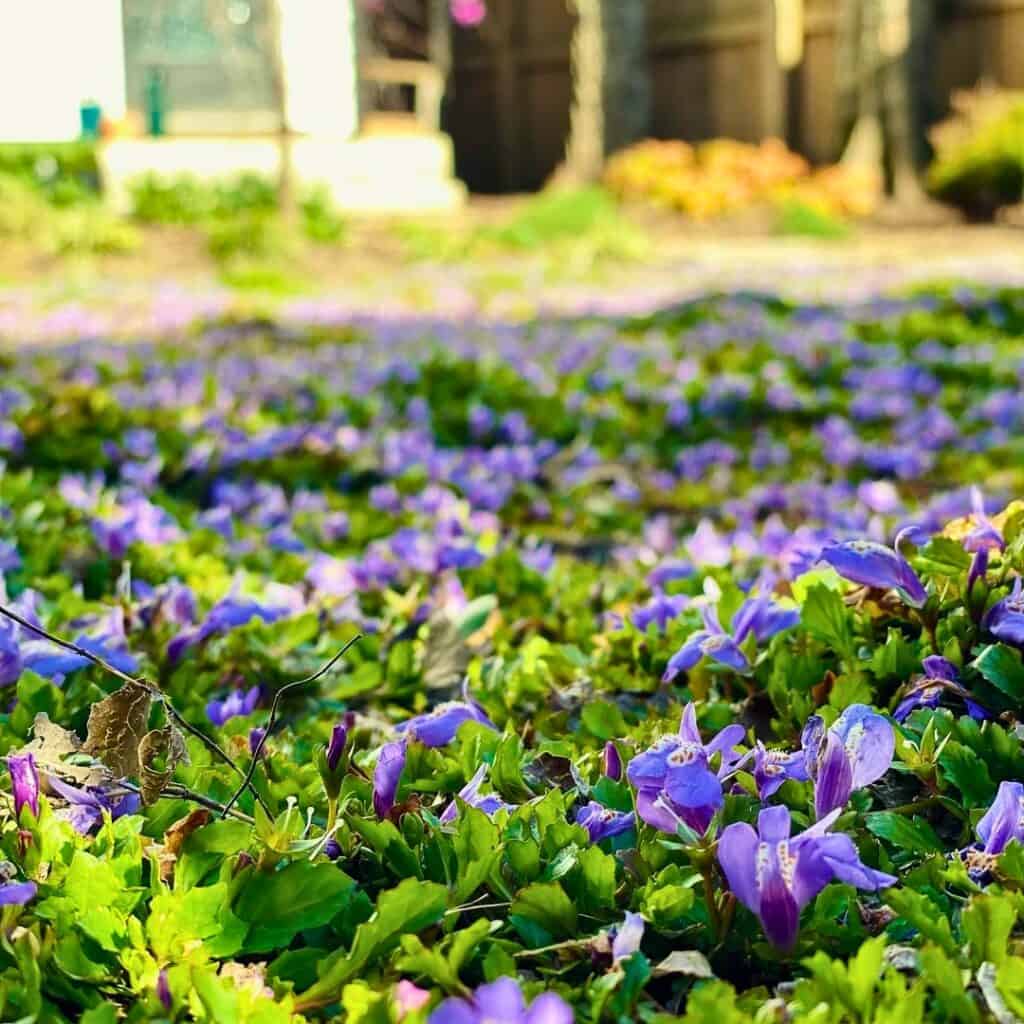
I can’t get enough of how Mazus reptans fills up little spaces with soft green leaves and gentle blooms. It’s a low-growing plant that works as a ground cover or in hanging containers—the way it spills over the edge is just so relaxed.
The flowers pop up in spring and early summer, bringing little spots of purple, blue, or white. It’s a cheerful sight.
This one likes moist, well-drained soil and prefers partial sun to light shade. I’ve seen it stay greener and fuller when it gets regular water.
It spreads quickly, but not in a way that takes over—just enough to fill gaps nicely. I like planting Mazus reptans near walkways or tucked under shrubs.
It softens harsh edges and, in a hanging basket, creates a lush, trailing effect that’s hard to beat. I’ll often pair it with ferns or ivy for a little extra texture.
One of my favorite things is how low-maintenance it is. A quick trim after it flowers keeps things neat, and pests rarely bother it—which, let’s be honest, is a relief.
If you want a versatile and tidy plant for small gardens or containers, Mazus reptans is a smart pick. It’s simple, pretty, and easy to care for—a go-to ground cover in my book.
10) Bugleweed

There’s something about Bugleweed that instantly brightens up shady spots in my garden. It hugs the ground, spreading fast and making a thick mat of pretty leaves.
Those leaves come in shades of green, purple, or bronze, and the mix gives my garden this rich, textured vibe. In spring, you get these blue or violet flower spikes that rise above the leaves.
They catch the light and attract bees—always a bonus. Even once the flowers fade, the leaves stick around, glossy and full, keeping the space lively.
I plant Bugleweed in places where grass just doesn’t want to grow—like under trees or along walkways. It likes partial shade and moist, well-drained soil.
You’ll want to give it a bit of space because it can spread and crowd out other plants if you let it. Maintenance is a breeze.
I trim the edges a few times a year, and if it gets too thick, I’ll pull out a few runners and move them elsewhere. It’s honestly one of the easiest ground covers I’ve used.
What I really enjoy is how well it works in hanging containers or raised beds. The stems spill over the edge, creating a soft, flowing look.
It pairs well with ferns or hostas, giving shaded corners a nice mix of color and texture.
11) Pachysandra Terminalis

Pachysandra terminalis, or Japanese spurge, is my go-to for shady spots. The smooth, glossy leaves form a fresh green carpet that stays vibrant even when other plants fade.
I find it perfect for under trees or along shaded walkways. It grows low, spreading with small stems that fill in bare soil quickly.
Usually, it stays around a foot tall, so it’s easy to manage and leaves little room for weeds. In spring, you’ll see tiny white flowers above the leaves.
They’re subtle, but they give the plant a neat, clean look. I’ve noticed Pachysandra prefers moist, well-drained soil and does best in partial or full shade.
Too much sun can scorch the leaves, so I keep it out of harsh afternoon rays. It handles cold well and stays evergreen through winter in many places.
When planting, I space pieces a few inches apart so they have room to spread. Once it’s established, it barely needs any care.
I just trim the edges now and then and remove any damaged leaves. For anyone wanting an easy, tidy ground cover for shade, I always recommend Pachysandra terminalis.
It’s low maintenance, reliable, and gives any shady spot a polished, natural look.
12) Thyme Lemon

Lemon Thyme is one of my favorite ways to add charm and fragrance to the garden. The small, rounded leaves release a fresh citrus scent when I brush past, and the trailing stems are perfect for hanging baskets or edges.
They spill gently over the sides, softening everything. This plant loves full sun and well-drained soil.
I’ve found it’s low-maintenance, which is great if you’re busy. Once it’s settled in, it barely needs water and keeps its vibrant green color even during dry spells.
It’s also a treat in the kitchen. The leaves have a soft lemon flavor that’s perfect with chicken, fish, or roasted veggies.
Harvesting is easy—just snip a few sprigs and you’ve got instant flavor. In summer, you’ll see tiny pink or purple flowers that attract bees and butterflies.
They look lovely cascading from a pot, adding texture and movement. Lemon Thyme is a hardy perennial, so it comes back every year with barely any work.
It spreads gently but doesn’t take over, and with a little trimming, it keeps a neat shape. For me, it’s the perfect blend of beauty, fragrance, and practicality.
It makes my garden smell amazing and look even better.
13) Creeping Phlox
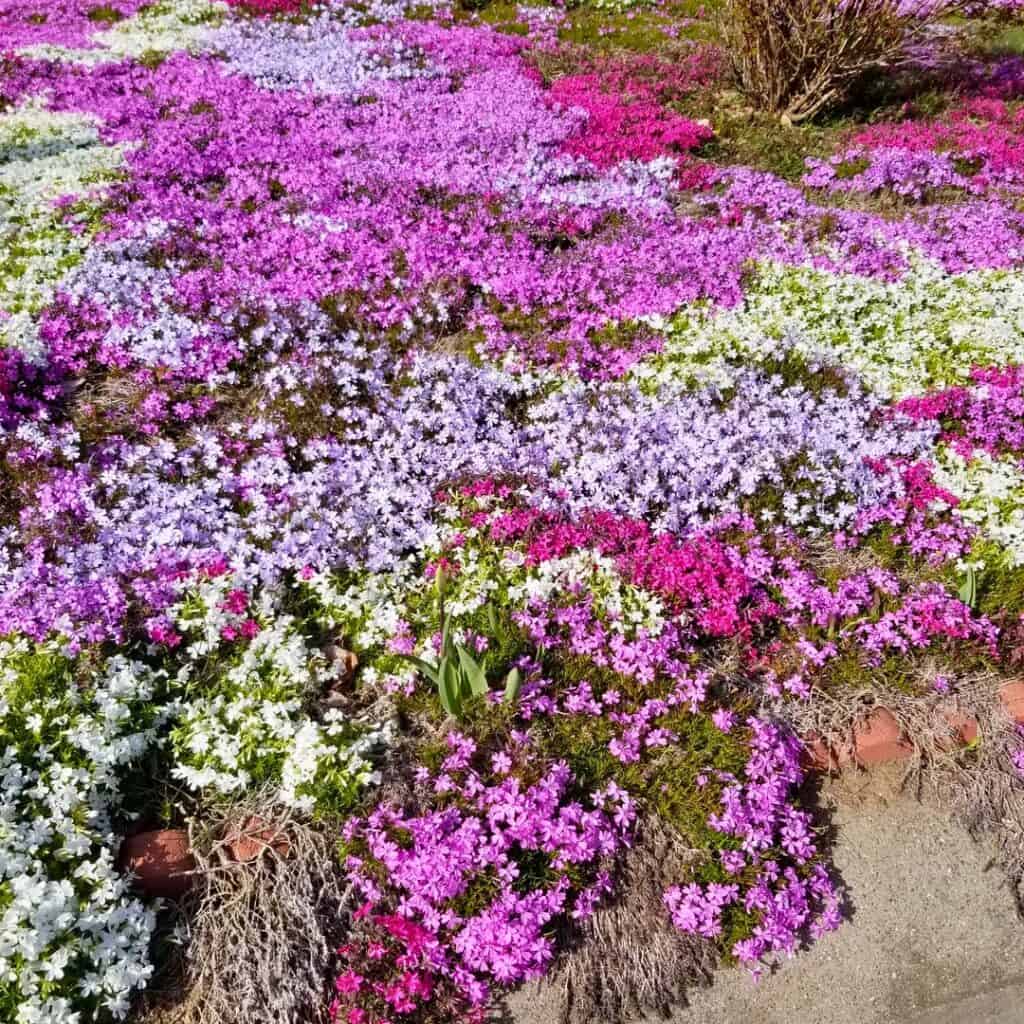
Creeping Phlox just lights up any space with its soft blanket of color. It spreads quickly and covers bare ground with a dense mat of green leaves.
Come spring, it bursts with small, star-shaped flowers in pink, purple, blue, or white. I find it ideal for rock gardens, slopes, and hanging planters.
The trailing stems spill over edges, adding both texture and color. Once it’s established, it doesn’t need much care—a big plus for busy folks.
Creeping Phlox grows best in full sun and likes well-drained soil. I water it regularly until the roots settle, then let the rain do most of the work.
A light pruning after flowering keeps it tidy and encourages new growth. What I enjoy most is how it attracts butterflies and bees but resists deer and pests.
It’s such an easy way to bring more life and movement into the yard. With steady sunlight and a bit of care, Creeping Phlox rewards you with a bright, living carpet every year.
14) Corsican Mint

Corsican mint is one of those plants that adds both color and scent to my garden. The tiny, round leaves form a soft green carpet that looks amazing spilling over pots or hanging baskets.
When I brush against it, I get this fresh, minty aroma that just screams summer. This plant stays low and compact, so it’s great for small spaces.
It spreads quickly but not in a way that takes over—just enough to fill gaps. I like tucking it between stepping stones or near larger hanging plants that offer a bit of shade.
I grow it in moist, well-drained soil and give it some protection from the hot afternoon sun. Too much heat or dryness can wilt the leaves, so I keep the soil just a little damp.
It does best in cooler spots with partial shade. When I want a softer look in my display, I’ll pair Corsican mint with white alyssum or trailing lobelia.
The mix of scents and textures keeps things interesting, and it even attracts a few bees for extra life. Corsican mint works perfectly in hanging containers where its small stems drape over the edges.
I love how it creates a natural, gentle flow and doesn’t need much trimming. With a little care, it stays vibrant and fragrant all season.
Key Benefits Of Hanging Ground Cover Plants
Hanging ground cover plants bring so much beauty and function to both outdoor and indoor spaces. They protect the soil, save time on care, and add visual interest with all those textures and colors.
Soil Erosion Prevention
When I use hanging ground covers in baskets, window boxes, or on sloped beds, their roots really anchor the soil. Those dense roots hold everything together and reduce runoff during heavy rain.
That means soil nutrients stay put, so nearby plants stay healthier too. The steady coverage also protects against wind erosion.
Bare soil dries out and crumbles, but a green layer cushions and stabilizes the surface. It helps keep things cleaner and more consistent all year.
Here’s a quick summary of how they help:
| Benefit | How It Works |
|---|---|
| Holds soil | Dense root systems interlock |
| Reduces runoff | Slows water movement |
| Retains nutrients | Prevents topsoil loss |
I find this especially useful for spots that wash out easily or for gardens built on a slope.
Low Maintenance Advantages
I really appreciate how low effort these plants are once they settle in. Most just need the basics—water when dry, a little pruning, and maybe some light feeding.
Because they spread naturally, I spend less time planting or weeding. Many hanging ground covers are drought-tolerant and handle different light levels.
I don’t have to worry much about pests either, since their thick foliage acts like a natural barrier. Some of my favorites that need little attention:
- Creeping Jenny – grows fast and adapts easily
- Sedum – stores water in its leaves
- English Ivy – thrives in shade and resists pests
Using these saves me time and keeps the garden looking neat.
Enhanced Visual Appeal
Honestly, what draws me in most is how creative and rich these plants make my spaces feel. Cascading stems and layered leaves add depth wherever I hang them—balconies, porches, patios, you name it.
Colorful leaves, little blooms, and soft textures bring in dimension that plain pots just can’t. Some trail down a few feet, creating a living curtain that feels peaceful and natural.
Mixing colors and shapes gives my setup a bit of personality. I like pairing trailing thyme with variegated ivy for some contrast and balance.
They refresh the space every season, but never feel over the top. The end result is lively, organized, and just a little bit unique—exactly what I want from my green spaces.
Tips For Planting And Caring For Hanging Ground Covers
I pay attention to placement, water, and upkeep to keep my hanging ground covers full and healthy. I focus on giving them the right light, steady moisture, and regular trimming to help them stay lush and colorful through every season.
Ideal Locations And Light Requirements
I usually pick spots that get bright, indirect sunlight for most hanging ground covers. Too much direct sun can scorch leaves, but if there’s not enough light, you might end up with leggy, thin growth instead.
South- or east-facing porches tend to work best for me. Indoors, I’ll set plants near a sunny window but out of those harsh midday rays.
Some plants, like Creeping Jenny, can handle a bit more light than English Ivy. I always check the plant tag before deciding where it’ll live.
When I hang baskets outdoors, I try to rotate them every week or so. That way, each side gets a fair shot at the sun and you don’t end up with lopsided growth.
If my plant starts stretching or the color fades, I take it as a sign it needs more light. On the other hand, if leaves go pale or crispy, it’s probably getting too much.
Finding that sweet spot can be tricky, but it really makes a difference for healthy, strong plants.
Watering And Feeding Guidelines
I check the top inch of soil with my finger—if it feels dry, it’s time to water. Hanging baskets dry out faster than beds, so in the summer, I might be watering every day, while cooler months call for less.
I stick to light, regular watering instead of dumping in a ton at once. It keeps the roots happy and helps with airflow, which plants seem to love.
A balanced liquid fertilizer goes in about once a month during the growing season—spring and summer, mostly.
Here’s a quick cheat sheet:
| Condition | Water Frequency | Fertilizer |
|---|---|---|
| Hot/Dry Weather | Daily or every 2 days | Monthly |
| Mild Weather | 2–3 times per week | Every 6 weeks |
I skip fertilizer in winter since most plants aren’t really growing then.
Pruning And Long-Term Care
I snip back long or wild stems to keep things tidy. Regular pruning encourages new growth and stops the plants from getting tangled or scruffy.
Deadheading faded flowers or removing brown leaves helps everything look fresh.
Every couple of months, I peek at the roots. If they’re circling the pot or poking out of the drainage holes, I know it’s time to repot into a slightly larger basket with new soil. It gives the plant more space and usually helps with drainage too.
I keep an eye out for pests like aphids or spider mites. If I spot any, I’ll wipe the leaves with soapy water or give them a gentle spray.
Keeping plants clean and well-fed really seems to help them resist pests.
Frequently Asked Questions
People ask me all the time about picking, planting, and caring for hanging ground cover plants. Here are some tips that cover plant choices, watering, maintenance, and keeping your plants happy year-round.
What are some low-maintenance hanging ground cover plants for shaded areas?
I’m a fan of English Ivy, Sweet Woodruff, and Ajuga Reptans for shady spots. They don’t need much fussing and still look lush even with less sunlight.
Creeping Jenny is another good one for partial shade. It’s bright green and stays neat without a lot of trimming.
How do I properly care for hanging ground cover plants in my garden?
I always make sure my hanging pots have good drainage so roots don’t get soggy. Every few weeks, I trim dead or overgrown stems to keep things looking balanced.
A light layer of compost once a month gives them a little boost.
Can you suggest some flowering varieties of hanging ground cover plants?
I love the little purple blooms from Ajuga Reptans in spring. Liriope Muscari puts out lavender spikes that look great trailing from a basket.
Sweet Woodruff brings tiny white flowers with a gentle scent, which is perfect for brightening up a shady corner.
What are the best ways to incorporate hanging ground cover plants into outdoor spaces?
I hang baskets along fences or railings for a layered effect. Sometimes I’ll use mounted pots on walls or posts to save space and add some greenery at eye level.
Mixing trailing plants like Creeping Jenny with upright ones adds a bit of contrast and depth to patios or balconies.
How often should I water my hanging ground cover plants for optimal growth?
I check the soil every few days—if the top inch feels dry, I water until it starts to drain out the bottom.
Hot or windy weather usually means more frequent watering, especially for plants out in the sun.
What are some common pests to watch out for with hanging ground cover plants?
I keep an eye out for aphids, spider mites, and whiteflies. They seem to love hiding on new shoots or hanging out under the leaves—annoying little things.
If I spot them, I’ll usually rinse the leaves gently with water, or sometimes I’ll grab a mild, natural spray. Acting fast really helps keep the plants looking healthy and green, though I’ll admit, it can feel like a never-ending battle some days.
Note: Some images in the articles are sourced from Reddit and Other Platforms For Reference Purpose.