9 Signs Your ZZ Plant Is Dying and How to Save It
ZZ plants have this reputation for being nearly indestructible, which makes it extra frustrating when yours starts looking sickly. I know the feeling—standing there, staring at limp stems or yellow leaves, wondering what you did to deserve this.
The upside? Most ZZ plant issues come with pretty obvious warning signs. If you catch them early, there’s still hope.
I put together this little guide to help you spot the nine most common signs your ZZ plant’s in trouble. I’ll share what each symptom means, what could be causing it, and how you might fix things.
Whether your ZZ is drowning, thirsty, bug-ridden, or just in a bad spot, let’s figure it out and (hopefully) get those leaves glossy again.
Please note: Simplify Plants is reader-supported. As an Amazon Associate, I earn from qualifying purchases made by our readers with no extra cost added to you all! Some links in the post are affiliate links and I get a commission from purchases made through links in the post.
Recognizing the 9 Telltale Signs Your ZZ Plant Is Dying
Whenever my ZZ plant is struggling, it doesn’t exactly hide it. Things like yellowing leaves, mushy rhizomes, or weird smells are basically its way of yelling for help.
If you notice these issues early, sometimes you can still turn things around.
Yellowing Leaves
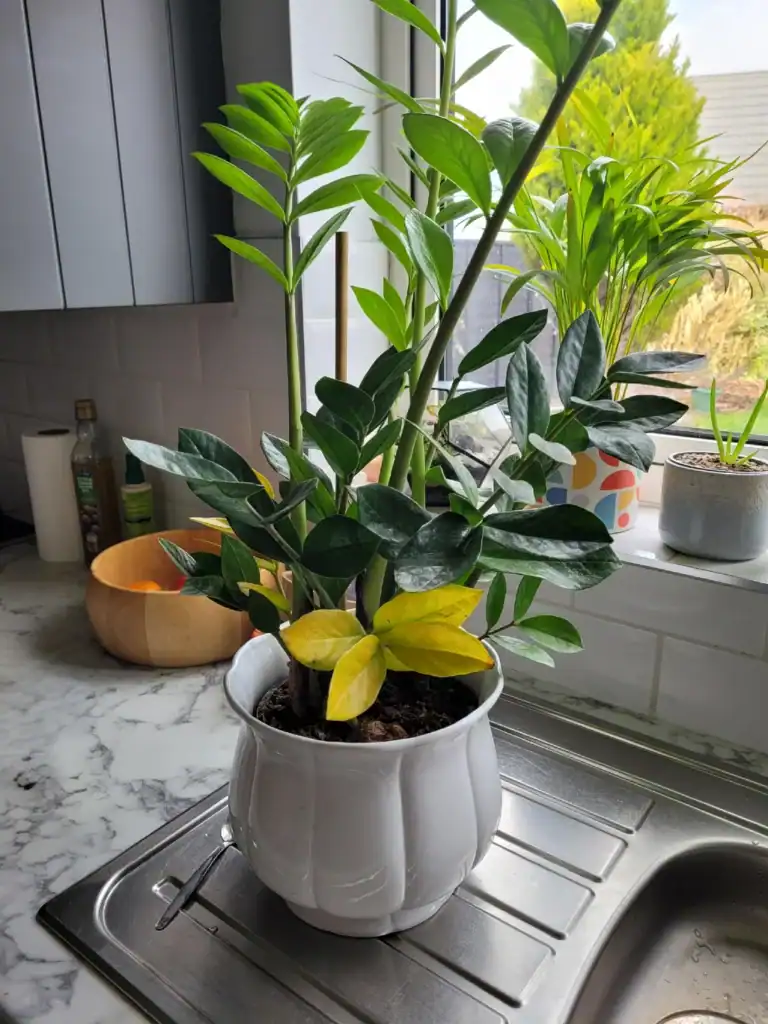
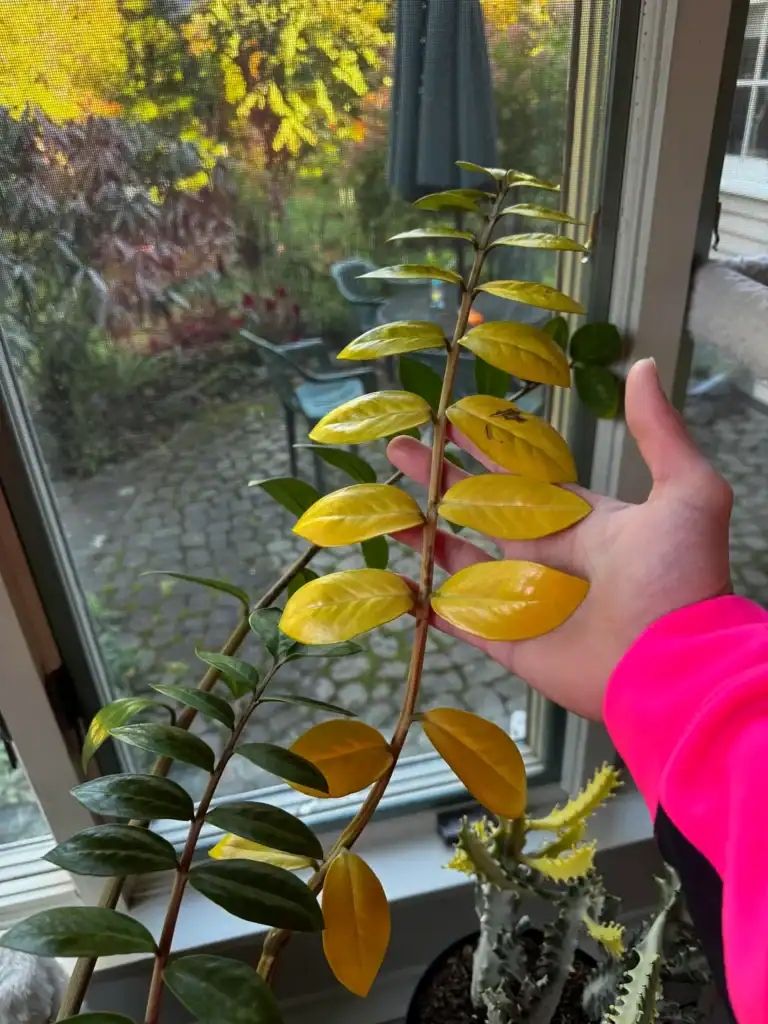
Yellow leaves on my ZZ plant are almost always a sign I’ve been a bit too generous with the watering can. These plants store water in those thick rhizomes, so honestly, they don’t need as much as you think.
If the soil stays soggy, roots start suffocating and rot sets in.
I pay attention to where the yellowing starts. A couple of older leaves at the base turning yellow? No big deal, that’s just aging. But if leaves all over the plant are going yellow at once, that’s when I worry.
Sometimes the leaves feel soft or even look a little see-through before they go full yellow. I always poke my finger about two inches into the soil to check if it’s actually dry before watering again.
Quick Tip: Let the soil dry out completely before you water—sometimes that means waiting 2-3 weeks, depending on your home’s conditions.
Wilting or Drooping Stems
Droopy stems can mean two totally opposite things: either the plant’s bone dry or it’s drowning. Weird, right?
When my ZZ plant is thirsty, the stems lose their firmness and flop over. But too much water causes root rot, and then the roots can’t move water up to the leaves, so the stems droop too.
I always check the soil first. If it’s dry, I water. If it’s soggy, root rot’s probably the problem.
Healthy stems should stand mostly upright, maybe leaning a bit toward the light. If several stems are suddenly drooping, I know it’s time to act.
Black or Brown Leaf Spots
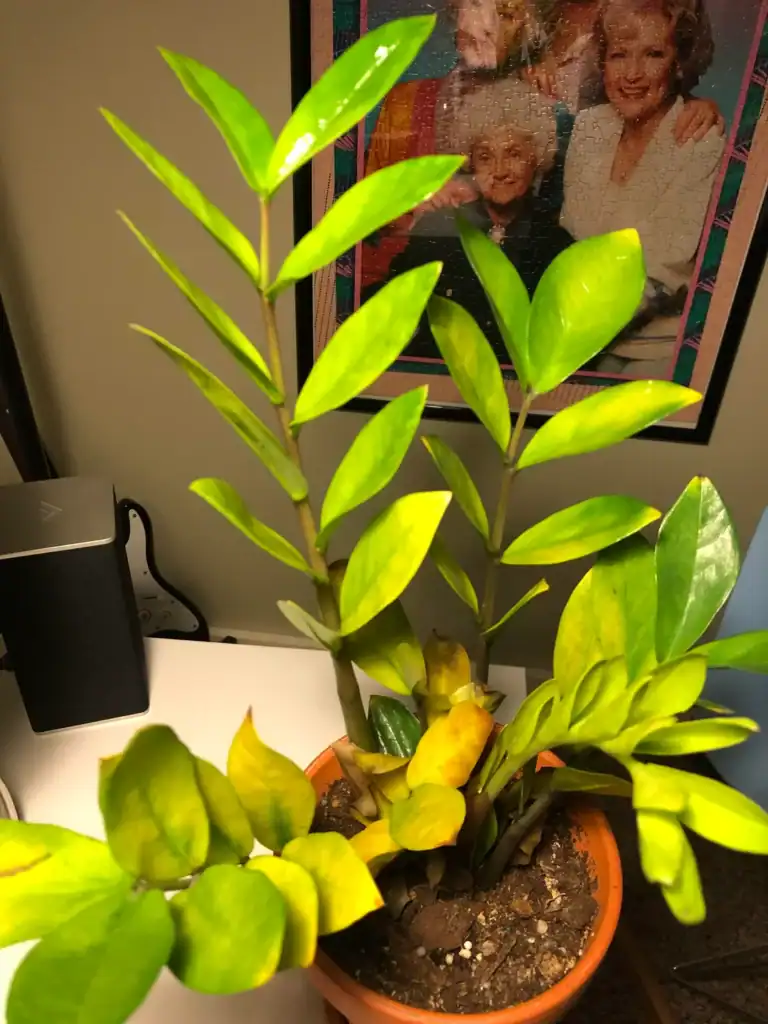
Dark spots on ZZ leaves usually mean some kind of infection—fungal or bacterial. This tends to happen if water sits on the leaves or if the air’s too humid and the plant’s not getting enough airflow.
Brown spots with yellow halos? That’s probably bacteria. Black, mushy spots are more likely fungus. Sometimes, crispy brown spots are just sunburn from too much direct sunlight.
I snip off any affected leaves ASAP to keep the problem from spreading. I also avoid misting the plant—ZZs don’t need the extra humidity. Good airflow goes a long way in keeping these issues at bay.
Quick Tip: Only water the soil, not the leaves, and try to keep your ZZ in a spot with gentle air movement.
Mushy or Soft Rhizomes
Those potato-looking rhizomes at the base of the plant are basically its lifeline. If they feel soft or mushy when you press them, root rot’s already doing damage.
I gently pull the plant out of its pot to check if I suspect this. Healthy rhizomes are firm and tan or light brown. If they’re dark, slimy, and smell bad, that’s rot.
If it’s not too far gone, I cut away the mushy parts with clean scissors and repot in dry, fresh soil. Honestly, if the whole rhizome’s mushy, it’s probably game over. Lesson learned: always use pots with drainage and well-draining soil.
Leaf Curling
When my ZZ’s leaves start curling inward, it’s usually a cry for water. The plant does this to reduce how much water it loses. I see it most when I’ve accidentally ignored watering for too long.
Big swings in temperature can also cause curling. If the plant’s near a cold window or a heater, the leaves might curl up from stress. I try to keep it somewhere with steady temps, away from drafts.
Sometimes new leaves are curled at first, but that’s normal—they’ll flatten out as they grow. But if older, flat leaves suddenly curl, that’s when I worry.
Quick Tip: Feel the leaves—if they’re thin and papery instead of thick and glossy, it’s time for a drink.
Leaf Drop
If my ZZ plant starts dropping leaves, I know it’s seriously stressed. Unlike some plants, ZZs usually keep their leaves for ages when they’re happy.
Leaves that yellow first and then drop? That’s probably overwatering. If they fall off while still green, the plant may have experienced a sudden shock, like a big change in temperature.
Sometimes, if the plant is root-bound, it can’t get enough water or nutrients and starts dropping leaves. I check for roots circling the pot or poking through the drainage holes.
Stunted Growth

ZZ plants are slow growers, but if mine doesn’t put out any new stems during spring or summer, something’s off. Even a slowpoke ZZ should manage a stem or two in the growing season.
Poor light is usually the culprit. They survive in low light but grow way better in medium to bright, indirect light. If it’s stuck in a dark corner, don’t expect much.
Lack of nutrients can also stall growth, though ZZs don’t need much fertilizer. I give mine a diluted feed every couple of months in the growing season. Old, compacted soil can also be a problem.
Plants with root rot just stop growing altogether, since damaged roots can’t support new leaves or stems.
Unusual Odors
If the soil around my ZZ plant starts to smell funky and musty, that’s never a good sign.
Common Causes Behind a Declining ZZ Plant
ZZ plants are tough, but they’re not invincible. When something’s off with their care, they’ll let you know.
The usual suspects? Watering mistakes, bad lighting, and the occasional pest.
Overwatering Issues
Overwatering is hands-down the fastest way to kill a ZZ plant. They store water in those thick rhizomes, so they just don’t need as much as some other houseplants.
If I water too often, the roots end up sitting in soggy soil, which leads to rot. First signs are yellow, mushy-feeling leaves and maybe some droopy stems.
Root rot can happen fast if the soil never dries out. I always poke my finger a couple inches into the soil before watering. If it feels damp, I wait.
Quick Tip: Let the soil dry out all the way before watering again—usually every 2-3 weeks works for me.
Brown or black roots are a clear sign of rot. Healthy roots are firm and pale, not mushy or dark.
Underwatering Problems

ZZ plants can handle drought better than too much water, but they still need an occasional drink. Severely underwatered plants get wrinkly, curled leaves that feel almost papery.
Stems might start to droop or lean over if they’re desperate for water. In really bad cases, tips and edges turn crispy brown.
Quick Tip: If the soil’s pulling away from the pot or feels bone dry several inches down, it’s time to water.
The good news? Underwatered ZZs usually bounce back pretty quickly after a good soak.
Insufficient Light
ZZ plants can survive in low light, but they really do better with some indirect sun. In dark corners, I’ve seen them get pale and stretched out as they search for light.
Growth gets leggy and weak, with new stems growing thin and spaced out instead of nice and compact.
Quick Tip: I keep mine near a window with bright, indirect light—east or north-facing windows work well.
Too much direct sun can scorch the leaves, leaving brown patches and faded color. I try to keep mine a few feet away from sunny windows.
Pests and Infections
ZZ plants don’t get a ton of pests, but they’re not immune. I check for spider mites (tiny webs, stippled leaves), mealybugs (little white cottony blobs), and scale (brown bumps on stems and leaves).
All of these can suck the sap and leave sticky residue or yellowing.
Quick Tip: Wipe the leaves with a damp cloth every month or so. It helps catch pests early and keeps the plant looking good.
Fungal infections usually show up if the plant’s been overwatered or the air’s too humid and still. Black or brown spots can spread fast. Bacterial soft rot is nasty—stems turn mushy and smell bad, and it can take down a plant quickly.
How to Assess the Health of Your ZZ Plant
I like to check the soil moisture and peek at the roots to get a sense of how my ZZ is doing. These two checks usually tell me most of what I need to know.
Checking Soil Moisture
I stick my finger about two inches into the soil. If it’s dry at that depth, it’s time to water. ZZ plants store water in those rhizomes, so they don’t need frequent watering.
If the soil feels wet or soggy, that’s a sign of overwatering. The soil should dry out almost completely between waterings, which in my house means every 2-3 weeks or so.
Sometimes I just lift the pot. If it feels light, the soil’s probably dry. Heavy means there’s still moisture.
Quick Tip: In winter, water even less—ZZs go semi-dormant and barely use any water.
Inspecting Roots and Rhizomes
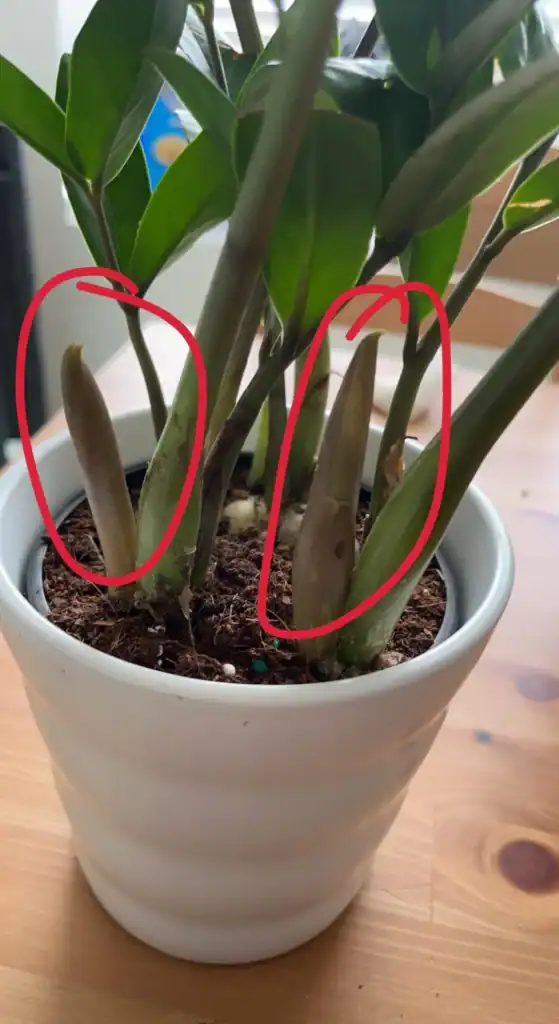
A couple times a year, I carefully take my ZZ out of its pot to check the roots and rhizomes. Healthy rhizomes look like little potatoes—firm and cream or light brown.
Roots should be white or tan and firm, not black, brown, or slimy. If it smells bad, that’s another big red flag.
I also look for roots circling the pot’s edge. If it’s packed in there so tight I can’t see soil, it’s time to repot. ZZs don’t mind being a bit crowded, but there’s a limit.
Quick Tip: Always use pots with drainage holes and a chunky, well-draining soil mix.
Effective Solutions to Revive a Dying ZZ Plant
Most of the time, ZZ plant problems come down to a few things: watering issues, bad drainage, or leaving damaged parts on the plant. Fixing these can often bring your plant back.
Fixing Watering Habits
Overwatering is the main killer of ZZ plants. I always check the soil before watering—if the top two inches are still damp, I wait.
ZZs can go weeks without water thanks to their rhizomes. I water mine every two or three weeks in the warmer months, and even less in winter.
When I do water, I give it a good soak so water runs out the drainage holes. Then I empty the saucer—roots hate sitting in water.
Quick Tip: Stick your finger in up to the second knuckle. If it’s dry, water. If not, wait.
If you’ve overwatered, stop watering and let the soil dry out completely. That can take a few weeks, so patience is key.
If you live somewhere humid or it’s been rainy, water even less. The plant just doesn’t use as much moisture when the air’s already damp.
Improving Drainage
Poor drainage traps water around the roots and causes rot. I always use a pot with drainage holes—honestly, I never make exceptions.
The right soil mix is a game changer. I mix regular potting soil with perlite or coarse sand, usually about two parts soil to one part perlite. Those air pockets help water escape fast.
If your ZZ plant is stuck in dense, compacted soil, it’s probably time to repot. I gently take the plant out, shake off the old soil, and move it into a better-draining mix.
Quick Tip: Toss a layer of small stones at the bottom of the pot to help with water flow, but don’t think that replaces drainage holes. It really doesn’t.
Make sure those drainage holes aren’t blocked by roots or old soil. Every now and then, I poke a chopstick through them just to keep things clear.
Pruning Damaged Parts
Taking off dead or dying parts lets the plant focus on healthy growth. I use sharp, clean scissors or pruning shears to snip yellow or brown leaves right at the base.
If a stem feels soft and mushy, I cut it off at soil level. That way, rot doesn’t spread to the healthy rhizomes underground.
Quick Tip: Wipe your scissors with rubbing alcohol between cuts—just to avoid spreading disease.
I’m not too worried about making the plant look perfect all at once. It’s usually better to remove damaged parts over time instead of stressing the plant with a big haircut.
After pruning, I wait a few days before watering. Letting the cuts dry out helps lower the risk of infection.
Long-Term Care Tips for a Thriving ZZ Plant
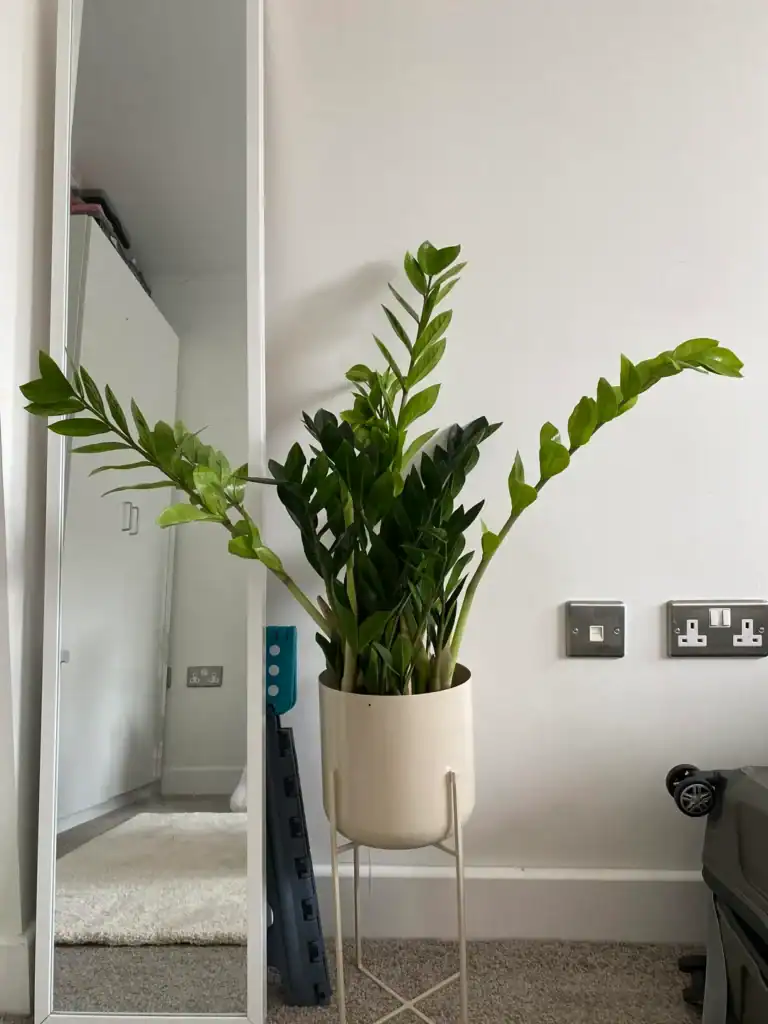
ZZ plants do best in bright, indirect light, with some fertilizer every few months during the growing season, and decent airflow. That’s about it for long-term happiness.
Best Light Conditions
I keep my ZZ plants near an east or north-facing window for bright, indirect light. They’ll survive in lower light, but growth slows and the stems get leggy. Direct sun? That just burns the leaves and leaves ugly brown patches.
If leaves start turning pale or yellow, it’s probably too much light. On the flip side, if they’re dark green but not growing, the plant might want more brightness. I rotate my ZZ every few weeks so each side gets its moment in the sun—well, sort of.
Quick Tip: Put your ZZ 3–5 feet from a window with a sheer curtain. It works wonders.
No good natural light? Artificial light is fine. I use a grow light for about 10–12 hours a day when my plant’s in a darker spot. The leaves stay a rich green and new shoots keep popping up.
Proper Fertilization
I feed my ZZ every three months in spring, summer, and early fall. A balanced liquid fertilizer, diluted to half strength, works best. Too much fertilizer just builds up salts and fries the roots.
ZZs store nutrients in their rhizomes, so they don’t need a lot of feeding. I skip fertilizer in winter—growth slows down anyway. If you see brown leaf tips and stunted growth, that’s usually a sign of overdoing it.
Quick Tip: Water before fertilizing so you don’t burn the roots with concentrated nutrients.
White crusty stuff on the soil means salt buildup from too much fertilizer. I flush the soil with water every few months to wash that out. Let water run through the drainage holes for a minute or two.
Preventing Common Diseases
Good airflow is honestly underrated. I keep my ZZs spaced apart and avoid cramming them in corners. Stagnant air just invites root rot and leaf spot.
I always check soil moisture before watering. Overwatering is the number one killer for ZZ plants. Make sure the top 2–3 inches of soil are completely dry before adding more water.
Quick Tip: Wipe leaves monthly with a damp cloth—removes dust and helps you catch pests like spider mites or mealybugs early.
Yellow leaves at the base usually mean root rot from too much water. I cut back on watering right away and check drainage. Adding more perlite to the mix can make a big difference.
When to Consider Repotting or Starting Fresh
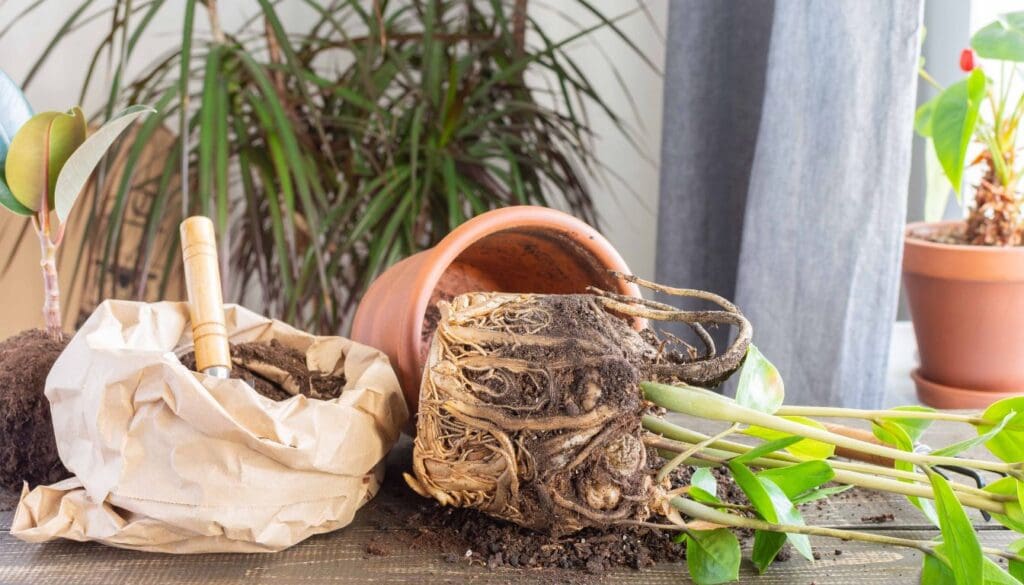
Fresh soil gives your ZZ plant a shot of nutrients, and a new pot helps with root crowding. Sometimes, starting fresh is just the best move for a plant that’s struggling.
Choosing the Right Soil
I always go for a well-draining potting mix. Regular potting soil holds too much water and brings on root rot.
A cactus or succulent mix is perfect, honestly. Or just mix potting soil with perlite or coarse sand—two parts soil, one part perlite is my go-to.
The soil should feel gritty and light. When you water, it should drain out quickly instead of sitting in a soggy lump.
Quick Tip: Toss a handful of perlite into any bag of potting soil to improve drainage right away.
I steer clear of heavy, moisture-retaining mixes with just peat moss. Those keep roots too wet, and that’s exactly what ZZ plants hate.
Recognizing When Repotting Is Necessary
Roots poking out of drainage holes? That’s a sure sign your ZZ needs a bigger pot. I check the bottom every few months.
If the soil dries out way faster than it used to, the roots might be taking up all the space. Sometimes water just runs straight through without soaking in.
I also repot when rhizomes start pushing against the pot edges or breaking through the surface. With healthy plants, that’s every couple of years or so.
Quick Tip: Repot in spring when the plant’s actively growing—it’ll recover better.
Sometimes, a dying ZZ just needs new soil, not a bigger pot. I swap out old, depleted soil even if I’m reusing the same container. Any dead or mushy roots get trimmed before replanting.
Frequently Asked Questions
ZZ Plants send out all sorts of warning signs when something’s off. Spotting these early can save your plant.
How can I tell if my ZZ Plant isn’t getting enough water?
The leaves start to look wrinkled and feel thinner than usual. Sometimes they curl inward or get brown, crispy edges that crumble when touched.
You might see the soil pulling away from the pot sides. The whole plant can droop, even though the stems usually stay fairly firm.
Quick Tip: Stick your finger about 2 inches into the soil—if it’s bone dry, your plant’s thirsty.
What are the common symptoms of overwatering in ZZ Plants?
Yellow leaves are usually the first thing I notice with too much water. The stems might feel soft and mushy, not firm.
Leaves can go brown or black, especially near the base. If the soil smells bad, that’s a sign the roots are rotting.
Water sometimes pools on the surface because it can’t drain. The plant might look wilted even though the soil is still wet.
Quick Tip: If the pot feels heavy and the soil’s soggy after a week, you’re watering way too much.
Why are my ZZ Plant’s leaves turning yellow or brown?
Yellow leaves usually mean too much water or not enough light. Brown leaves are more often from underwatering or low humidity.
Direct sun can scorch leaves and leave brown spots. Cold temps below 45°F will also turn leaves brown or black.
Sometimes older leaves just yellow and drop off as the plant grows. But if a bunch of leaves change color at once, something’s up.
Quick Tip: Check the soil moisture first, then look at where your plant sits—too much sun or cold drafts can cause color changes.
Can a ZZ Plant recover from root rot, and how can I help it heal?
Yeah, ZZ Plants can bounce back if you catch root rot early. I take the plant out, cut off all the black, mushy roots with clean scissors, and rinse the healthy roots.
Let them air dry for a few hours before replanting in fresh, dry soil. Use a pot with drainage holes and hold off on watering for at least two weeks.
Quick Tip: Only white or light tan roots are healthy—cut away anything brown, black, or slimy.
How do I identify if my ZZ Plant has a pest infestation?
Check for tiny bugs on the undersides of leaves or along the stems. Spider mites leave fine webbing between leaves and stems.
Small white cottony spots? That’s usually mealybugs. Sticky stuff on leaves means scale insects or aphids.
You might see yellow spots or stippling where pests have fed. Some leaves might curl or look a bit weird.
Quick Tip: Wipe leaves with a damp cloth every week or so—you’ll spot pests early and keep your plant looking sharp.
What steps should I take if the leaves of my ZZ Plant start drooping?
Start by checking the soil moisture—seriously, both too much and too little water can make those leaves sag. Sometimes just lifting the pot gives you a pretty good idea of how much water it’s holding.
If the soil feels dry, go ahead and water it thoroughly until you see water draining out the bottom. On the other hand, if the soil’s already damp, hold off and let it dry out before you even think about watering again.
Try moving your ZZ Plant away from chilly windows or right next to heating vents. Temperature swings can stress the plant and leave you wondering why the leaves look so sad, even if you’ve been careful with watering.
Quick Tip: ZZ Plants are kind of forgiving since they stash water in their rhizomes. They’re way more likely to recover from underwatering than from getting soggy, so if you’re unsure, it’s usually better to wait a bit before you water again.
Note: Some images in the articles are sourced from Reddit and Other Platforms For Reference Purpose.