11 Reasons Why Your Peace Lily Is Turning Yellow and How to Fix It
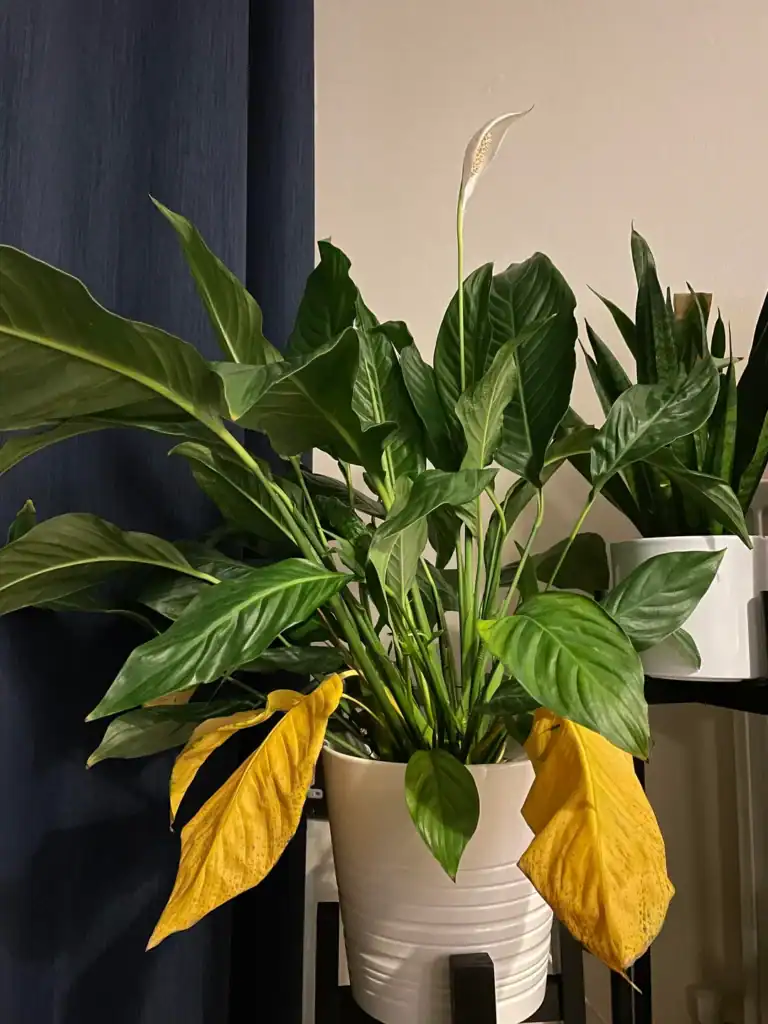
Peace lilies are pretty tough, but when those deep green leaves start going yellow, it’s usually a sign your plant’s not happy.
Yellow leaves almost always mean something in your care routine needs a tweak—maybe it’s water, maybe light, nutrients, or even the pot.
The good news? Most causes are easy to spot and fix once you know what to check for.
I’ve watched peace lilies recover from all sorts of yellowing issues, so I’m going to walk you through the eleven most common reasons this happens.
We’ll look at watering mistakes, pest problems, and how to figure out what’s really going on with your plant.
You really don’t need to be a plant expert to get your peace lily back on track. With a few simple changes, you can stop the yellowing and help your plant bounce back.
Please note: Simplify Plants is reader-supported. As an Amazon Associate, I earn from qualifying purchases made by our readers with no extra cost added to you all! Some links in the post are affiliate links and I get a commission from purchases made through links in the post.
Understanding Yellow Leaves on Peace Lilies
Yellow leaves on a peace lily are basically its way of saying, “Hey, something’s off!” The color change points to problems like watering, light, or nutrient deficiencies that need some attention.
What Yellow Leaves Indicate
Whenever I spot yellow leaves on my peace lily, I know it’s stressed out about something. The plant is either redirecting energy or just not happy with its environment.
Watering issues top the list. Too much water? Roots drown and can’t breathe. Too little? The plant dries out and can’t support its leaves.
Nutrient problems are another biggie, especially if you haven’t fed your plant in ages. Peace lilies need nitrogen and other minerals to keep leaves green.
Light matters too. Direct sun burns leaves, but too little light makes the plant weak. And, honestly, sometimes it’s just age—older leaves get yellow and die off as the plant grows.
Typical Leaf Color and Health
A healthy peace lily has those rich, deep green leaves that feel firm and a bit glossy. You shouldn’t see pale spots or weird streaks.
Leaves should stand up or arch gently, not flop or curl. When I touch a healthy leaf, it’s smooth and cool—no dry, crispy bits.
New leaves come in bright green and darken as they mature. It’s normal for brand new leaves to look lighter, but they should deepen in color pretty quickly. Older leaves at the bottom might yellow naturally after a year or so, and losing one or two isn’t a big deal.
How to Spot Early Signs of Stress
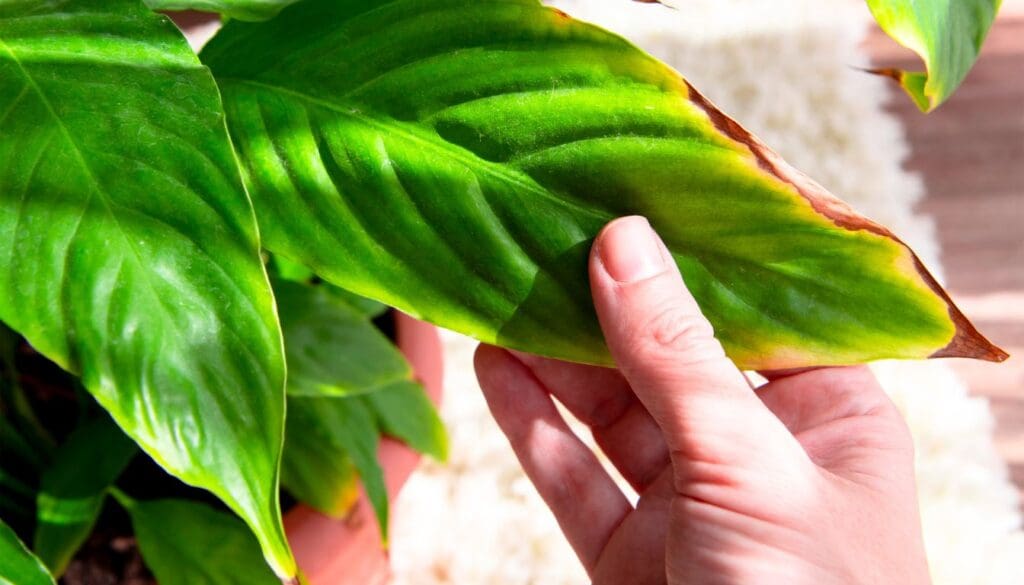
I try to check my peace lily weekly for little changes. Pale or lime-colored leaves, especially on new growth, are often the first warning sign.
Leaf tips turning brown or yellow before the rest of the leaf? That’s usually water quality or fertilizer burn. Crispy edges with green centers mean something’s off.
Droopy leaves that perk up after watering are fine, but if they stay limp even when the soil’s moist, that’s a red flag. Leaves that feel thin or papery instead of firm? The plant’s not getting enough water or nutrients.
Quick Tip: Touch the soil every few days and look at your plant from different angles. It’s the best way to catch color changes before they get worse.
Overwatering: The Most Common Cause
Too much water is honestly the main reason peace lilies turn yellow. Roots end up in soggy soil, can’t breathe, and start to rot.
Recognizing Symptoms of Overwatering
Yellow leaves are usually just the start. Overwatered peace lilies tend to yellow from the bottom up, and the leaves feel soft or limp.
The soil stays wet for days. If I poke my finger in and it’s damp a week later, that’s not good.
Brown tips plus yellow leaves? The roots are probably struggling. Sometimes, you’ll even see black or mushy stems near the soil line. That’s root rot setting in.
Quick tip: If your pot feels heavy days after watering, the soil’s too wet.
Wilting can be tricky—sometimes it looks like the plant needs water, but overwatered roots can’t absorb water, even when the soil is soaked.
Proper Watering Techniques
I only water my peace lily when the top inch of soil feels dry. For me, that’s usually every 7-10 days, but it really depends on your home.
Pour water slowly until it drains from the bottom. I always let the extra water drain out and empty the saucer after about 15 minutes. Peace lilies really hate sitting in water.
Room temp water is best. Cold water can shock the roots.
Quick tip: Use your finger to check soil moisture, not a calendar—every house is different.
In winter, I water less because the plant isn’t growing much and the soil dries out slower.
Preventing Waterlogged Soil
Always use a pot with drainage holes. I never risk planting peace lilies in pots without them—it’s just asking for trouble.
The right soil mix matters a lot. I use a light, well-draining mix with perlite or orchid bark. These help keep things airy so water doesn’t get trapped.
Pot size is important. Too big, and the soil holds more water than the roots can handle. I stick with a pot just 1-2 inches wider than the root ball.
Quick tip: If your soil stays wet for more than a week, it’s time to repot into a better-draining mix.
Sometimes I’ll add a layer of perlite at the bottom before the soil. It helps water move through faster and keeps roots from sitting in moisture.
Underwatering and Its Impact
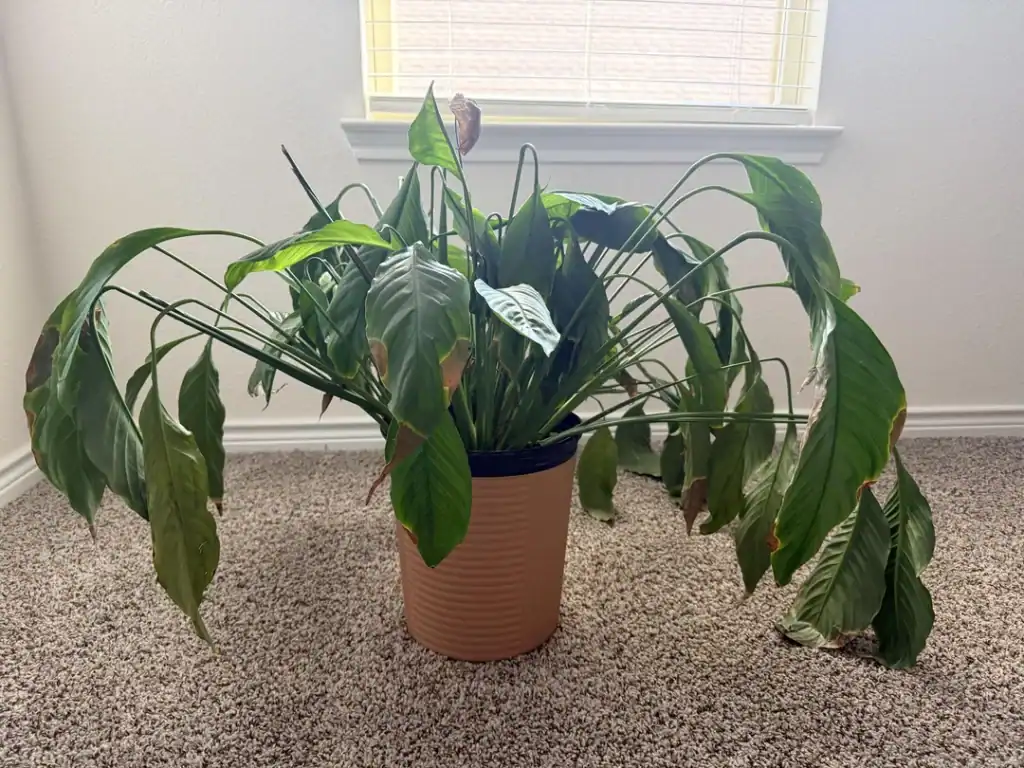
Not enough water, and your peace lily’s leaves start turning yellow and crispy. The trick is knowing when it’s actually thirsty and how best to water it.
How Underwatering Leads to Yellowing
Peace lilies are dramatic when they’re thirsty. If I forget to water, the leaves droop fast and start yellowing from the tips in.
Dry soil means roots can’t pull up nutrients, so the plant sacrifices older leaves first. Those yellow leaves feel dry and papery—not soft or mushy.
I check by sticking my finger an inch into the soil. If it’s bone dry, the plant’s been thirsty too long. Damaged leaves won’t turn green again, but watering right saves the rest.
Quick Tip: They’ll droop and pretty much beg for water before things get really bad, so keep an eye out.
Best Practices for Hydrating Peace Lilies
I water when the top inch of soil is dry but before the plant droops. Usually once a week in warm weather, every 10-14 days in winter.
When I water, I give it a good soak so water drains out the bottom. Always empty the saucer after about 15 minutes—don’t let roots sit in water. Room temp water is best; cold water can be a shock.
How much light your plant gets affects how fast it dries out. The one I keep in a bright spot drinks up faster than the one in a shady corner.
Quick Tip: If you travel, water thoroughly before you go and move your peace lily away from sunny windows to slow down drying.
Light Conditions and Leaf Yellowing
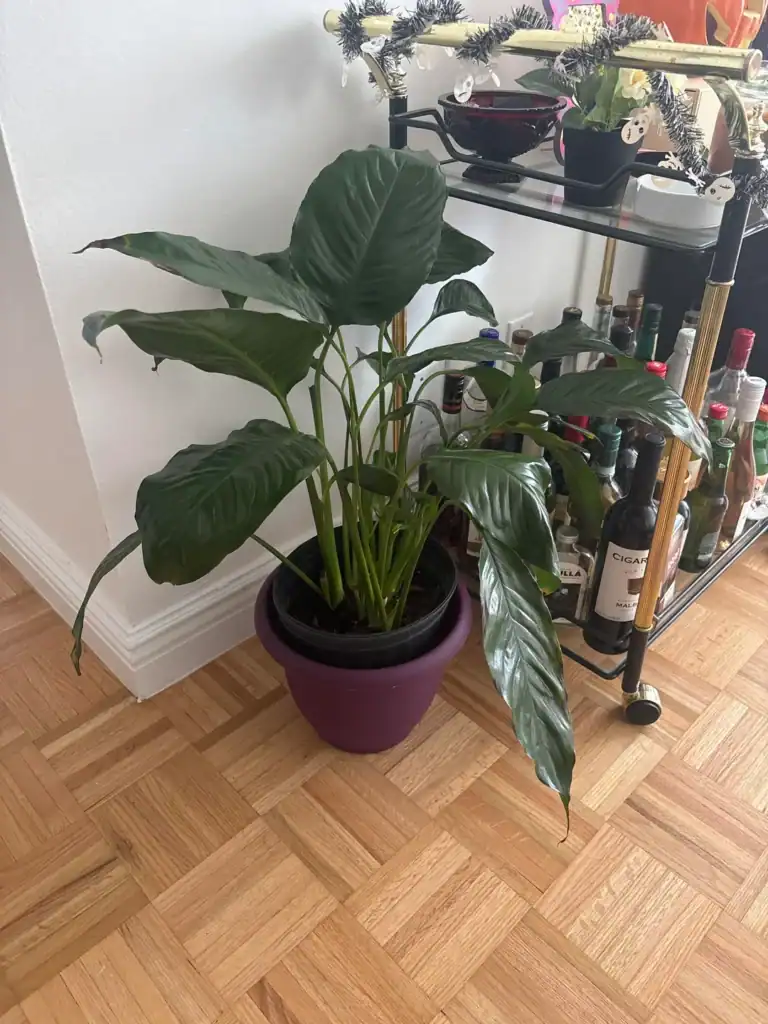
Peace lilies need just the right amount of light to keep their leaves green. Too much sun burns them, but too little and they start to fade.
Effects of Too Much Sunlight
Honestly, peace lilies really don’t like direct sunlight. I learned this the hard way—put mine on a sunny windowsill once, thinking it would love it. Within a week, the leaves turned pale yellow with brown, crispy edges.
They’re tropical plants, so in nature, they grow under the shade of bigger trees. Direct sun just breaks down the chlorophyll too fast. Yellow spots usually show up first on the side facing the window.
Quick Tip: If you see yellowing on one side, rotate your plant away from direct sun.
The damage looks like bleached or washed-out yellow patches, not the even yellowing you get from other problems. Once I moved mine to bright, filtered light, the new leaves came in dark green again.
Risks of Insufficient Light
I’ve also had a peace lily turn yellow when I stuck it in a dark bathroom. The leaves went dull, pale yellow-green, and new growth was tiny.
Without enough light, peace lilies can’t photosynthesize well. They start pulling nutrients from old leaves to feed new ones, which means yellowing from the bottom up.
I’ve found they do best about 5-8 feet from a bright window, or in a room with lots of ambient light. They can handle low light better than most houseplants, but “low light” doesn’t mean pitch dark. If you can’t read a book in that spot during the day, it’s probably too dark.
Quick Tip: Slow growth and weak stems are early signs your peace lily needs more light—even before the yellowing starts.
Soil Quality and Drainage Issues
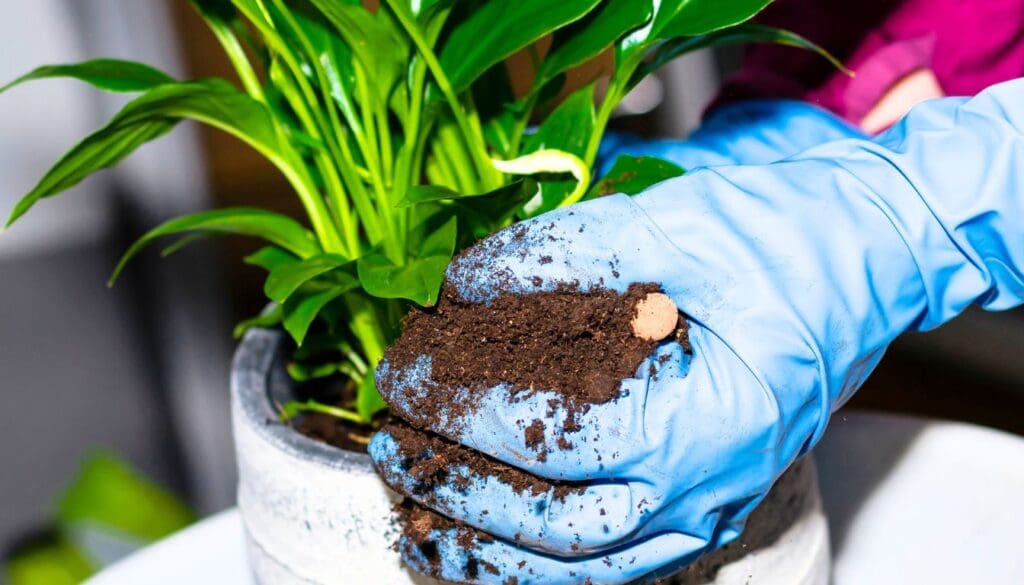
Bad soil that holds too much water can suffocate peace lily roots and turn the leaves yellow. Good drainage and the right potting mix are crucial.
Choosing the Right Potting Mix
I always go for a light, well-draining potting mix. Regular garden soil is just too heavy for pots—it traps water and chokes the roots.
A good mix includes peat moss or coir, perlite, and pine bark. These keep the soil airy. Perlite is especially helpful for preventing clumps.
You can grab a pre-mixed bag for tropical houseplants or aroids. I’ve had good luck with those. Or, make your own with equal parts peat moss, perlite, and quality potting soil.
Quick Tip: Squeeze a handful of moist mix—it should break apart easily, not stay packed together.
Improving Drainage for Healthier Roots
Drainage holes in your pot are a must. Without them, water just sits at the bottom and drowns roots. I’ve seen so many plants suffer in pots with no holes.
If you want extra insurance, put a layer of pebbles or broken pottery at the bottom. It gives water somewhere to go.
Check the holes aren’t blocked by roots or compacted soil. Sometimes roots get so dense they plug everything up. If water pools on top, your mix might be old and too dense.
Repot with fresh soil every year or so. Old mix breaks down and gets heavy.
Quick Tip: Water should run through the pot in a few seconds—not puddle on top or drain super slow.
Nutrient Deficiencies Causing Yellow Leaves

Peace lilies need certain nutrients to keep their leaves green. Without enough nitrogen, iron, or magnesium, you’ll see yellowing in different patterns.
Key Nutrients for Peace Lilies
Nitrogen is essential for green leaves. If there’s not enough, the older, lower leaves turn yellow first while new growth stays green.
Iron deficiency looks different—the newest leaves turn yellow but the veins stay green, so you get this striped effect. Hard water or high soil pH can cause this.
Magnesium keeps things running smoothly. Without it, you’ll see yellow edges and tips on older leaves, but the centers stay green. It’s a sneaky one, often starting out subtle.
Quick Tip: Feed with a balanced liquid fertilizer, diluted to half strength, every 4-6 weeks in spring and summer.
Identifying and Treating Deficiencies
Watch where the yellowing starts. Bottom leaves? Probably nitrogen. Top leaves with green veins? That’s iron.
I fix nitrogen issues with a balanced fertilizer at half strength. Don’t go overboard—peace lilies don’t need tons of food.
For iron, I use filtered or distilled water if my tap water is hard. Sometimes an iron supplement or acidic fertilizer helps.
Magnesium is easy—I dissolve a teaspoon of Epsom salt in a gallon of water and use it once a month. Usually, the yellow edges clear up in a few weeks.
If you’re unsure, a balanced houseplant fertilizer usually covers all the basics without risking overfeeding.
Root Problems and Pot Size Considerations

If your peace lily’s leaves are turning yellow, don’t forget to check what’s happening below the soil. Root rot and cramped pots can both cause yellowing—sometimes faster than you’d expect.
Root Rot Warning Signs
Whenever my peace lily starts looking sickly, I check the roots first. Root rot sneaks up when the roots sit in soggy soil for too long—they suffocate and eventually decay.
Honestly, the smell is usually the first clue. If you pull the plant out and catch a whiff of something musty or rotten, that’s never a good sign.
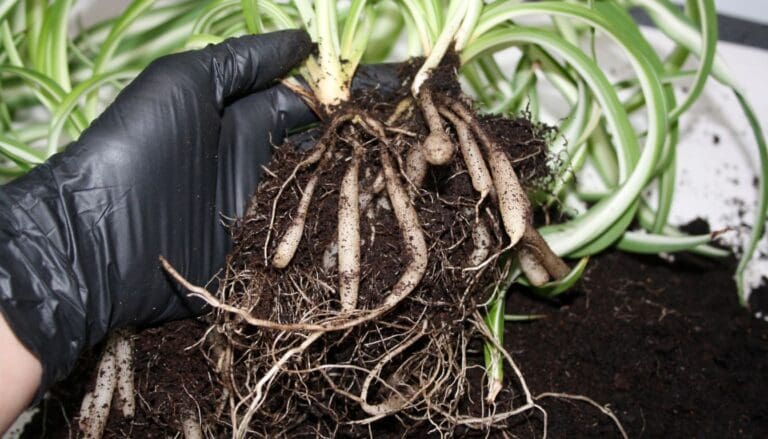
Healthy roots? They should look white or light tan, and feel pretty firm. Rotted roots, on the other hand, turn brown or black and get mushy—sometimes they even fall apart when you touch them.
If the soil stays wet for days after watering, that’s another red flag. Damaged roots just aren’t doing their job.
Quick Tip: Give your plant a gentle tug—if it pops out of the soil easily, you might be dealing with root rot.
When to Repot Your Peace Lily
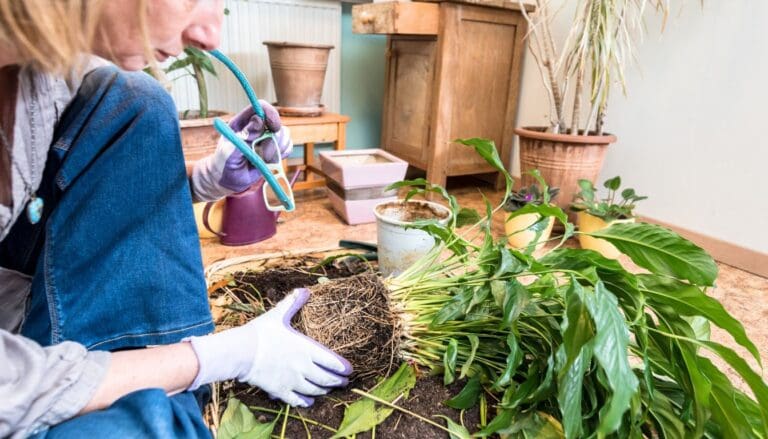
I usually repot my peace lilies every year or two, but if I notice warning signs, I’ll do it sooner. Roots poking out of the drainage holes? That’s my cue.
When roots get too cramped, they can’t absorb water and nutrients the way they should. This often shows up as yellow leaves.
If you lift the plant out and see roots circling the inside edge, it’s definitely time for a bigger pot. Just don’t go overboard—a pot that’s 1-2 inches wider is enough.
Too much extra soil can trap moisture and make things worse. And always, always use a pot with drainage holes—no exceptions.
Quick Tip: Repot in spring if you can. The plant bounces back faster when it’s actively growing.
Temperature and Humidity Stress
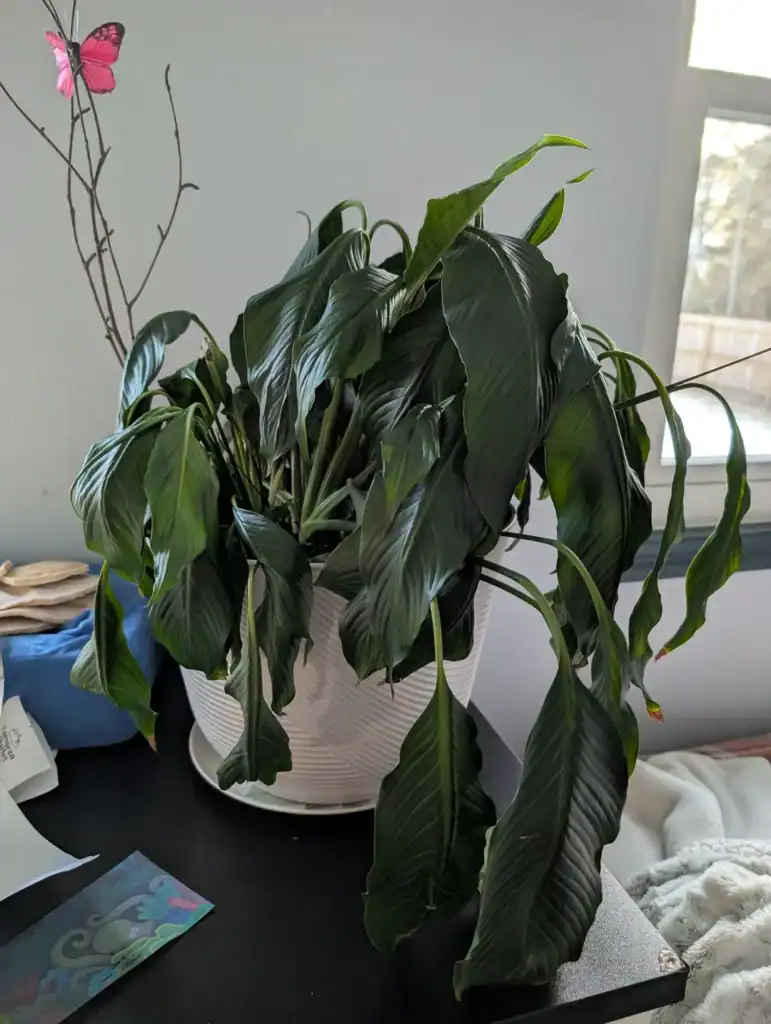
Peace lilies really don’t like it when the air is too cold, too hot, or super dry. They’re tropical, so they crave steady warmth and moisture.
Ideal Temperature Range
From my experience, peace lilies are happiest between 65°F and 80°F. Cold? They hate it.
If temps dip below 60°F, yellow leaves start popping up. The cold slows nutrient absorption, and the yellowing usually shows up at the leaf tips and edges first.
Hot spells above 90°F aren’t great either. The plant gets stressed and can’t keep up with water loss.
I keep my peace lily away from drafty windows in winter. Heating vents and AC units are also a no-go—those sudden swings just confuse the poor thing.
Quick Tip: Live somewhere chilly? Move your peace lily away from windows at night during the winter.
How Dry Air Affects Peace Lilies
Peace lilies come from rainforests, where humidity hovers around 50-60%. Most homes are way drier—especially in winter.
Dry air makes the leaves yellow and crisp up at the edges. The plant loses moisture faster than its roots can replace it.
I’ve noticed this happens most near heat sources or in rooms with a lot of air movement. Misting the leaves every few days with room-temperature water helps.
Honestly, I prefer using a humidifier or clustering my peace lily with other plants to create a little moisture bubble. Pebble trays work too—just keep the pot above the waterline.
Quick Tip: Brown, crispy leaf edges with yellowing? That’s your sign to boost the humidity.
Pest Infestations and Yellowing Leaves
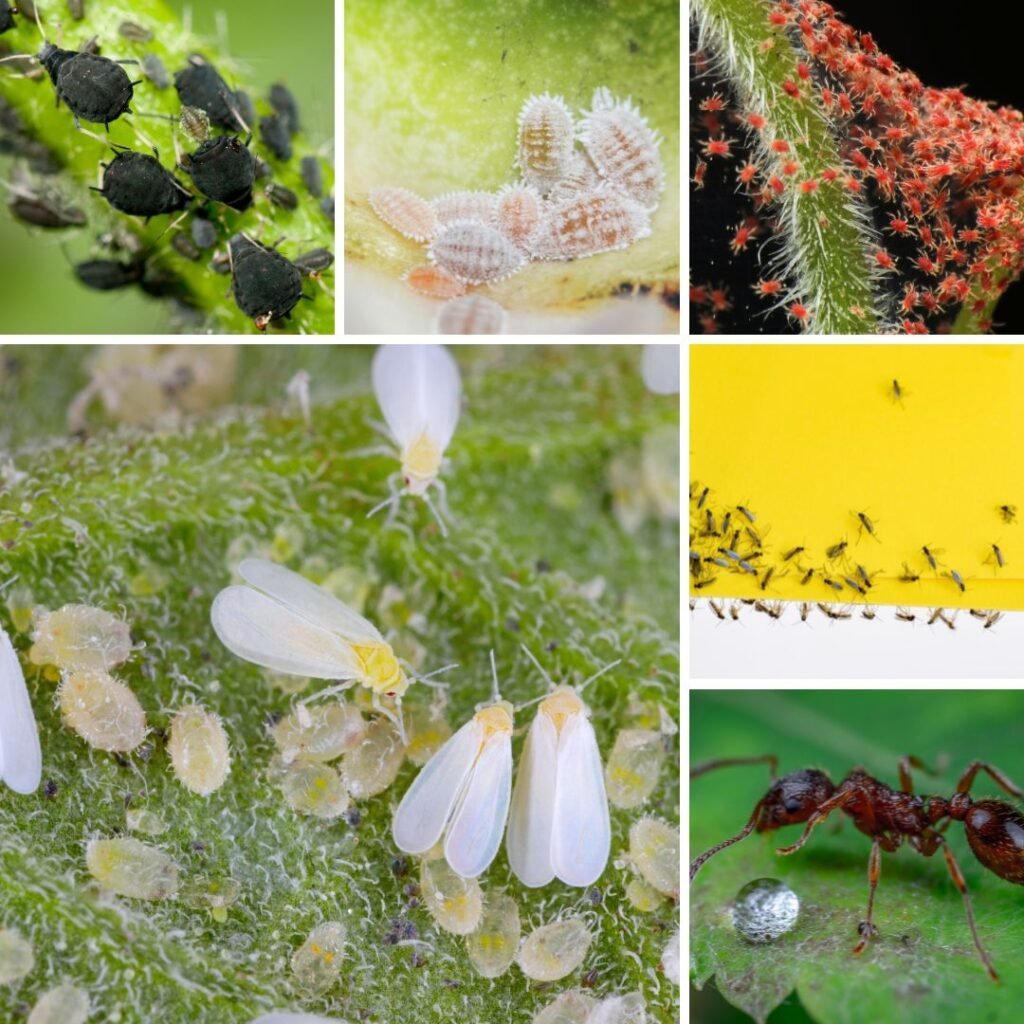
Tiny bugs can really mess up a peace lily, making leaves turn yellow and look miserable. Spider mites, mealybugs, and aphids are the main troublemakers.
Common Peace Lily Pests
Spider mites are tiny red or brown specks, and they leave fine webbing on the undersides of leaves. They suck out plant juices, causing yellow spots that spread.
Mealybugs look like little cotton balls tucked in leaf joints and along stems. They feed on sap and leave behind a sticky mess that can attract mold.
Aphids are soft-bodied and come in green, black, or brown. They love new growth, multiply fast, and cause leaves to yellow, curl, or get weirdly distorted.
Scale insects look like tiny brown bumps stuck to stems and leaves. They’re sneaky but do similar damage by sucking out plant fluids.
Detecting and Managing Infestations
I check my peace lily every week by flipping leaves and peeking at the stems. Webbing, sticky spots, or little moving dots are all bad signs.
Quick Tip: Wipe leaves with a damp cloth dipped in diluted dish soap (about a teaspoon per quart of water) to get rid of pests on contact.
For small infestations, I spray the plant with water to knock bugs off. I’ll repeat this every few days until they’re gone.
Neem oil is my go-to for stubborn bugs. Mix it as directed and spray all the leaf surfaces, even the undersides. I do this in the evening to avoid burning the leaves.
If a plant’s infested, I move it away from my other houseplants right away. Better safe than sorry.
Chemical Exposure and Toxins
Chemicals in tap water—like chlorine and fluoride—can build up in your peace lily’s soil. Harsh fertilizers and leaf sprays can also burn the foliage and cause yellowing.
Effects of Tap Water Chemicals
I always check my tap water before giving it to my peace lily. Chlorine and fluoride don’t just disappear; they sit in the soil and mess with the roots.
Quick Tip: Let tap water sit out in an open container for 24 hours before watering. That lets the chlorine evaporate.
Fluoride is trickier since it doesn’t evaporate. If your city adds it, you might see brown tips and yellow edges, especially on older leaves.
Switching to filtered, distilled, or rainwater can make a huge difference. I’ve seen peace lilies perk up in just a few weeks after making the switch.
Risks from Fertilizers and Sprays
Too much fertilizer burns peace lily roots and turns leaves yellow. These plants really don’t need a lot of feeding.
Salt from excess fertilizer can build up and look like a white crust on the soil. That messes with root function.
I dilute liquid fertilizer to half strength—sometimes even less. Once every 6-8 weeks in spring and summer is plenty, and I skip feeding in winter.
Quick Tip: Flush the soil with plain water every few months to wash away extra salts and chemicals.
Leaf shine sprays and insecticides can be rough on peace lily leaves. The natural waxy coating is pretty sensitive. I just use a damp cloth to clean leaves—no sprays needed.
Age-Related Yellowing
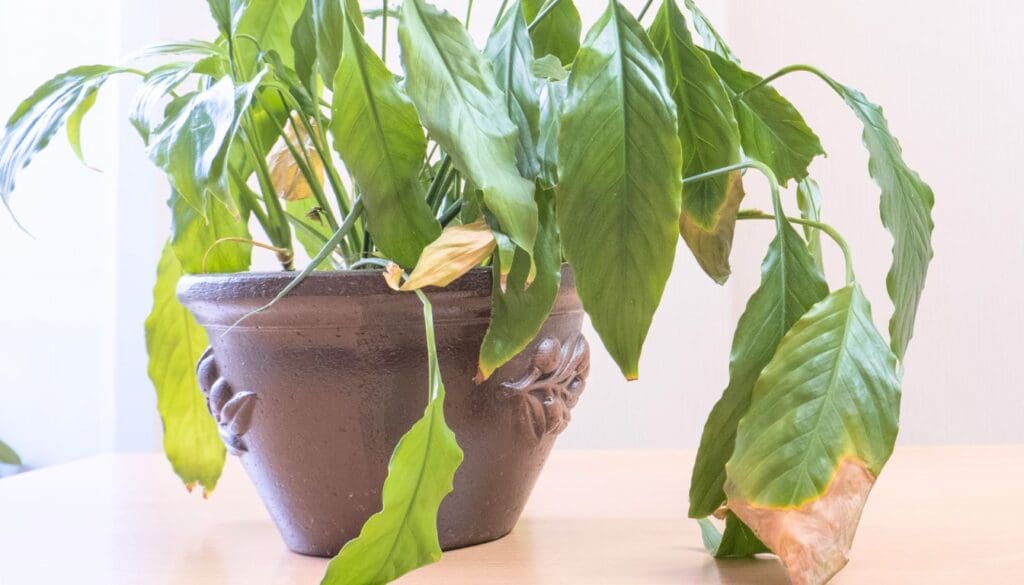
Peace lily leaves don’t stay green forever—older leaves naturally turn yellow and die off as the plant focuses on new growth. It’s normal, and nothing to stress about as long as the rest of the plant looks good.
Normal Aging Process of Leaves
I’ve noticed peace lily leaves usually last about a year before they start yellowing. The oldest leaves, often around the edges, go first while new ones pop up from the center.
The plant actually recycles nutrients from the old leaf before letting it go. On a healthy plant, you’ll only see one or two yellow leaves at a time.
If the yellow leaves are just at the bottom or outer edges and new growth is green, you’re fine.
Quick Tip: A healthy peace lily should grow new leaves at about the same pace it loses old ones.
When to Prune Yellow Leaves
I wait until a leaf is at least 75% yellow before snipping it. That way, the plant can reclaim as many nutrients as possible.
Use clean, sharp scissors or pruning shears and cut the yellow leaf at the base near the soil. Try not to nick any healthy stems.
Partially yellow leaves can stay if they still have some green—they’re still doing a bit of work for the plant. Once they’re all yellow or brown, they’re just in the way and could attract pests.
Quick Tip: Wipe your pruning tools with rubbing alcohol between cuts so you don’t spread any diseases.
Tips for Keeping Your Peace Lily Healthy

Before watering, I always poke my finger about an inch into the soil. If it feels dry, it’s time to water.
Peace lilies love bright, indirect light. I keep mine a few feet from a window, out of direct sun, which can scorch the leaves.
Quick Tip: If the leaves droop a bit, that’s usually your peace lily asking for water.
Room temperature is more important than you might think. I try to keep mine in spaces between 65-80°F. Cold drafts or AC vents aren’t great for them.
Humidity really helps. I mist the leaves once or twice a week, or set the pot on a tray of pebbles and water.
During spring and summer, I feed with a balanced liquid fertilizer every 6-8 weeks. In fall and winter, I pretty much stop feeding altogether.
Quick Tip: Wipe the leaves with a damp cloth every few weeks to keep dust off and help the plant breathe.
Watch for yellow or brown leaf tips. That’s often a sign the tap water has too many chemicals. I let my water sit out overnight, or just use filtered water.
Frequently Asked Questions
Yellow leaves on peace lilies usually mean watering issues, light problems, nutrient gaps, pests, or just natural aging.
What could be causing the leaves of my Peace Lily to yellow?
Lots of things can cause yellow leaves. Most often, it’s watering mistakes—either too much or too little.
Light matters, too. Too much sun scorches the leaves, but too little slows down growth and makes them pale.
Nutrient deficiencies, especially nitrogen or iron, show up as yellowing. And sometimes, it’s simply old age as the plant grows.
Could overwatering be the reason my Peace Lily has yellow leaves?
Absolutely. Overwatering is one of the most common reasons for yellow leaves.
When the roots sit in soggy soil, they can’t breathe, and root rot sets in. The leaves start turning yellow, usually from the bottom up.
Quick Tip: Stick your finger about an inch into the soil—if it feels wet, hold off on watering.
Drainage holes are a must. Standing water is bad news for peace lily roots.
Are there any specific nutrient deficiencies that lead to yellowing in Peace Lilies?
Nitrogen deficiency makes older leaves yellow first, starting at the tips. The plant moves nitrogen from old leaves to new ones when it’s running low.
Iron deficiency looks different—new leaves turn yellow, but the veins stay green, so you get a kind of striped look.
Magnesium shortage also causes yellowing between the veins, usually on older leaves. I feed my peace lily with a balanced liquid fertilizer every 6-8 weeks in the growing season to avoid these issues.
How does improper lighting affect the leaf color of a Peace Lily?
Too much direct sun bleaches peace lily leaves, turning them yellow or brown. I learned that the hard way after leaving mine on a sunny windowsill.
Not enough light is just as bad. In dark corners, the plant can’t make enough energy, so leaves turn pale and limp.
Peace lilies are happiest in bright, indirect light. I keep mine a few feet from a window with a sheer curtain, or just in a room with plenty of ambient light.
Is it normal for old leaves on a Peace Lily to turn yellow?
Yes, that’s totally normal. It’s just part of the plant’s natural life cycle.
As new leaves grow at the top, the oldest ones at the bottom yellow and drop off. I see one or two yellow leaves every few months.
Quick Tip: If only the oldest, lowest leaves are yellowing one at a time, your plant is probably just fine.
I just snip off the yellow leaves at the base with clean scissors. If you see lots of leaves yellowing at once or new growth turning yellow, that’s when you should worry.
Can pests or diseases be responsible for yellowing leaves on my Peace Lily?
Spider mites, aphids, and mealybugs tend to suck sap from peace lily leaves. That sort of damage often pops up as yellow spots, or sometimes just an overall yellowing.
Honestly, I try to check the undersides of the leaves pretty often—tiny bugs or a bit of webbing can be easy to miss. If I do spot anything, a quick rinse in the sink or a dose of insecticidal soap usually knocks out minor infestations.
Fungal diseases, usually from overwatering, can also be behind yellow leaves with those dreaded brown spots. Root rot is especially nasty—it starts below the soil line and creeps up before you know it.
If I manage to catch root rot before it gets too bad, sometimes I can save the plant by trimming away the mushy roots and repotting in fresh, dry soil.
Note: Some images in the articles are sourced from Reddit and Other Platforms For Reference Purpose.