9 Reasons Why Your Monstera Plant Has Brown Spots or Brown Tips
Monstera plants are famous for those big, gorgeous leaves, but brown spots and tips can still pop up—even when you think you’re doing everything right.
I’ve run into this myself, and honestly, it’s pretty frustrating trying to pinpoint the cause. Usually, though, there’s a clear reason hiding somewhere.
Brown spots and brown tips on Monstera plants usually stem from things like overwatering, low humidity, too much sun, fertilizer mistakes, pests, poor drainage, temperature swings, hard water, or neglecting pruning.
Once you figure out what’s setting your plant back, it’s a lot easier to get things back on track.
Let’s dig into the most common reasons your Monstera might be struggling. I’ll also share some ways to keep those leaves looking their best moving forward.
Please note: Simplify Plants is reader-supported. As an Amazon Associate, I earn from qualifying purchases made by our readers with no extra cost added to you all! Some links in the post are affiliate links and I get a commission from purchases made through links in the post.
1) Overwatering causing root rot
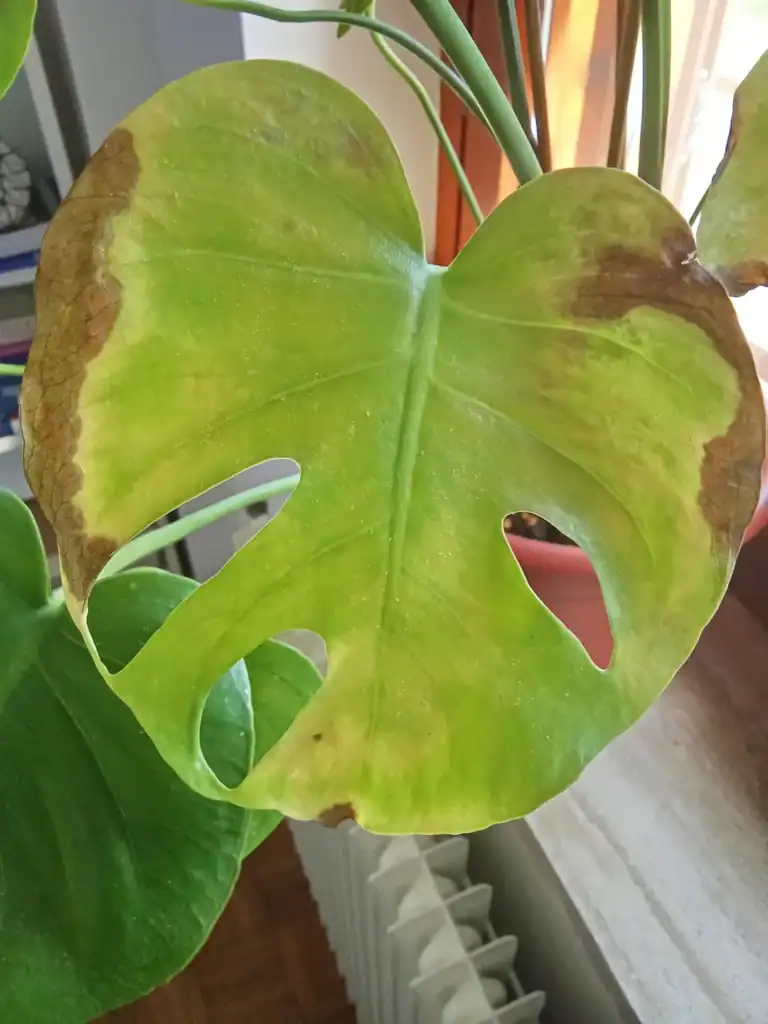
I’ve seen way too many Monsteras go downhill from too much water. If you’re watering too frequently or the soil stays wet, the roots suffocate and start to rot.
Root rot is a sneaky one. It’s all happening below the surface, but those brown spots up top are your plant waving a red flag. Healthy roots should be firm and white, not mushy and brown.
Whenever I’m unsure, I just poke my finger about two inches into the soil. If it’s still damp, I hold off for a few days. Monsteras like a little dryness between drinks.
Quick Tip: Always empty the drainage tray about 30 minutes after watering so your plant’s not sitting in a puddle.
If you catch root rot early, trim away the mushy roots and repot in fresh soil. The old brown spots won’t vanish, but new leaves should come in looking good.
2) Low humidity levels

Monsteras are from rainforests, so they’re used to air that’s way more humid than most homes. When I keep mine somewhere dry, those leaf tips and edges get brown and crispy fast. Indoor air, especially with heaters running in winter, is drier than you’d think.
I usually see the browning start at the tips first—those thin edges lose moisture the quickest. If your humidity drops under 40%, your Monstera’s probably going to show it.
Quick Tip: Put a small humidifier nearby or group your plants together to create a more humid spot.
Misting the leaves helps, but honestly, it’s just a quick fix. A humidity tray with water and pebbles works better—just make sure the pot isn’t sitting directly in water.
3) Direct sunlight scorch
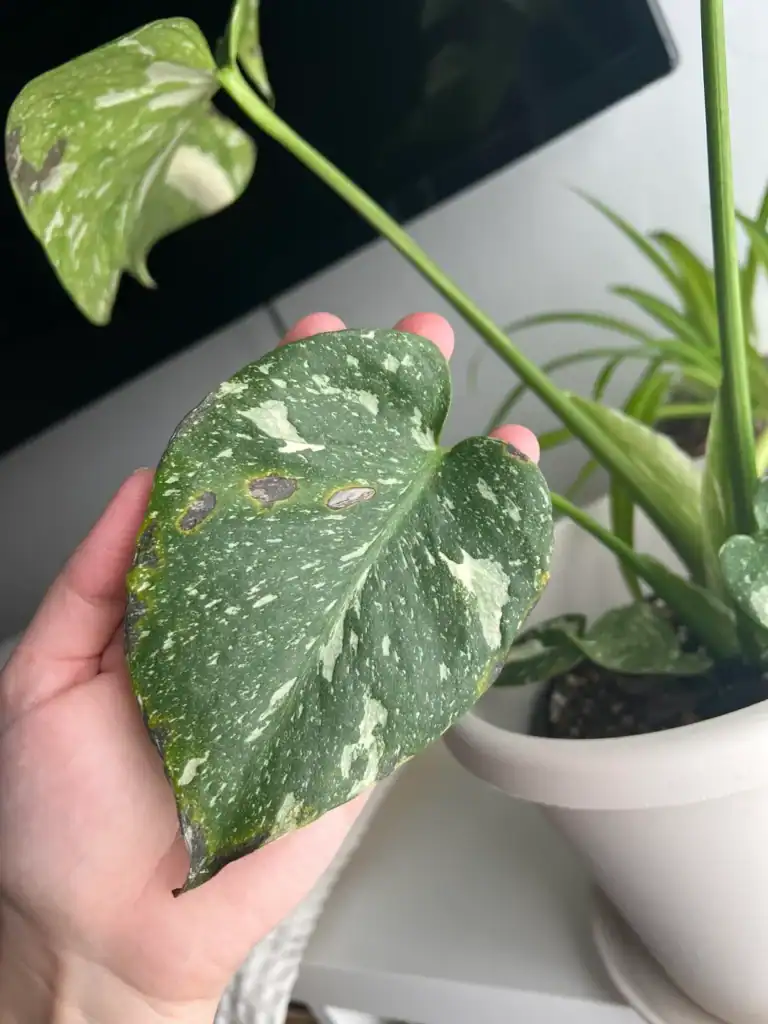
Monsteras don’t appreciate hours of direct sun. Their leaves can get sunburned—yes, really. You’ll see brown spots or crispy tips that feel dry if this happens.
In the wild, they’re shaded under taller trees. They want bright, indirect light, not the harsh rays blasting through a south-facing window at noon. If your plant’s baking in that kind of sun, that’s probably the culprit.
Quick Tip: Move your Monstera a few feet away from the window or hang up a sheer curtain.
Sun damage usually shows up as brown spots with a pale or yellowish ring. Those won’t heal, but once you fix the lighting, new leaves should look much better. I’ve had the best luck with east-facing windows—gentle morning sun, none of that afternoon scorch.
4) Fertilizer burn from excess feeding
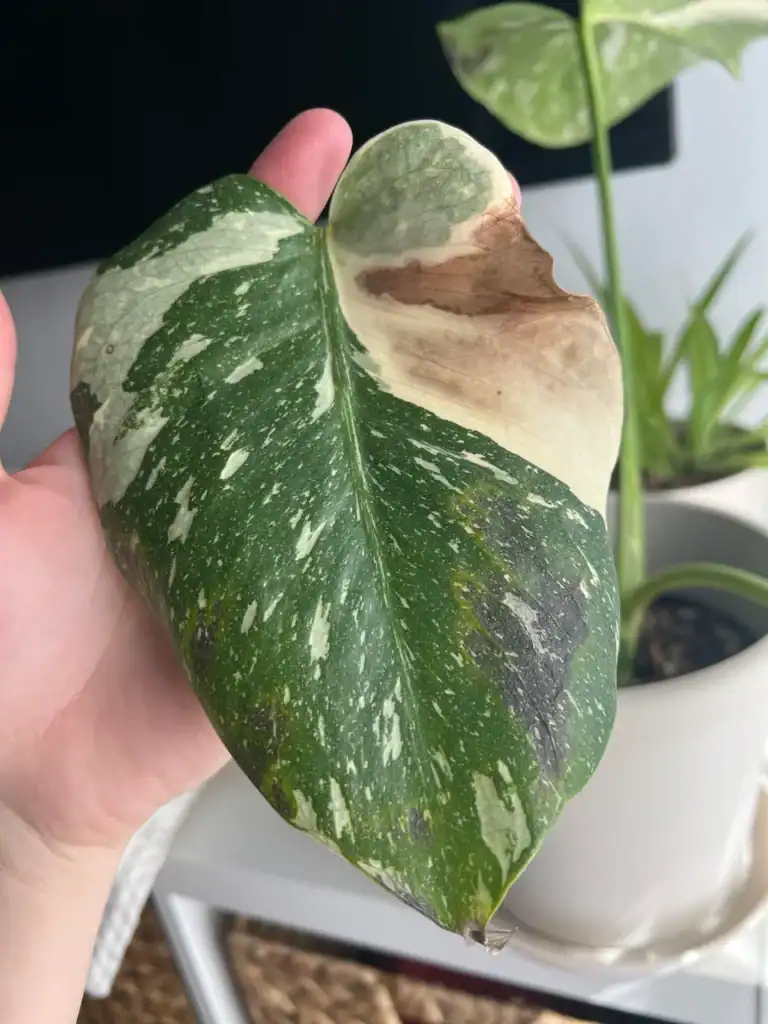
Too much fertilizer can fry your Monstera’s roots and leaves. I’ve made this mistake—extra salts build up and damage those sensitive root tips.
Brown spots or crispy edges show up, sometimes with yellowing before the browning. If you spot a white crust on the soil, that’s a big clue it’s fertilizer burn.
I stick to feeding during spring and summer, when the plant’s actually growing. A diluted liquid fertilizer once a month is more than enough. I skip it entirely in fall and winter.
If you’ve overfed, flush the soil with plenty of water—just let it run right through the pot to wash out those salts.
Quick Tip: Always dilute fertilizer to half strength. It’s safer for your plant and less stressful for you.
5) Pest infestation like spider mites
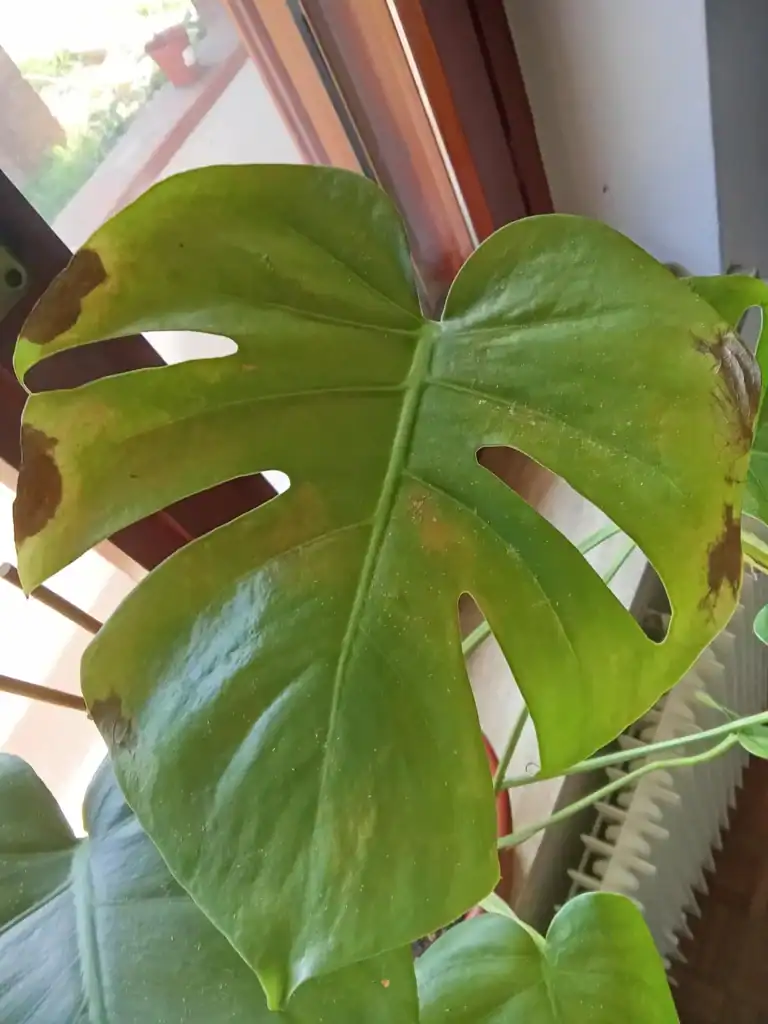
Spider mites love hiding under Monstera leaves. They suck out the plant’s juices, which leads to brown spots and crispy tips.
They’re tiny, so you might not spot them right away. Look for fine webbing between leaves or along the stems—that’s usually how I catch them.
Leaves can get a dusty or speckled look before turning brown. If you don’t act fast, the damage spreads quickly.
Quick Tip: Wipe leaves with a damp cloth once a week to catch mites early and keep things clean.
Check your Monstera often, especially in dry winter months when mites are at their worst. If you find them, spray the plant with water to knock them off, then use insecticidal soap or neem oil to treat the problem.
6) Poor soil drainage
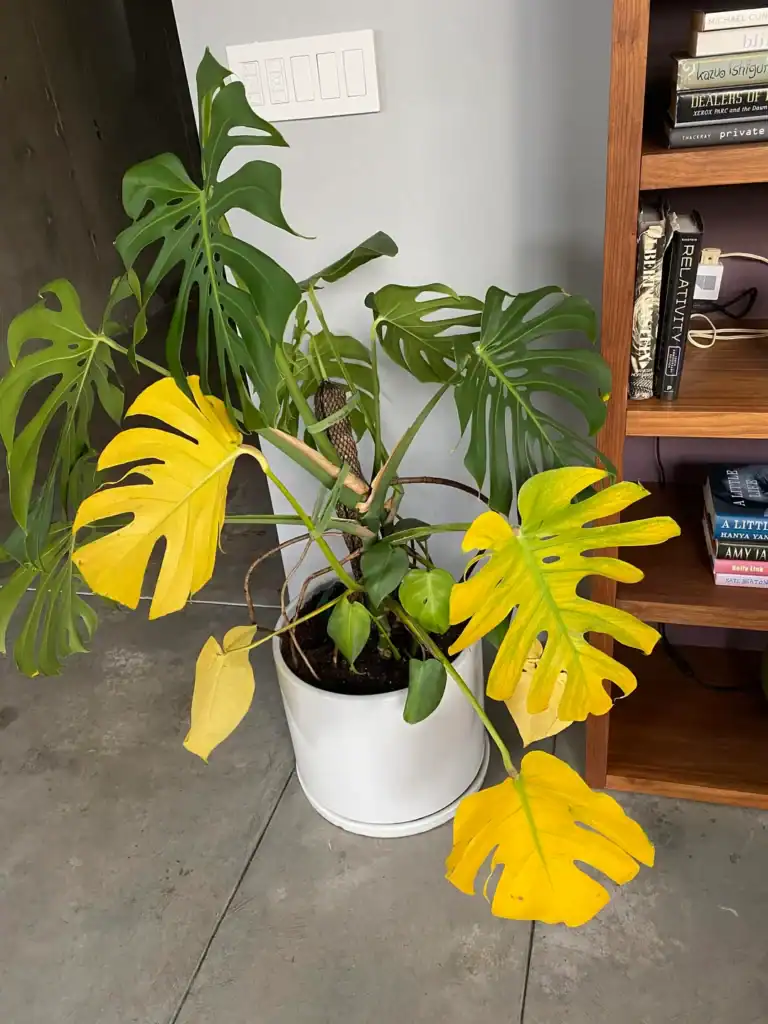
If water lingers in the soil, your Monstera’s roots can’t get enough air. That leads to brown spots because the roots start to rot and nutrients can’t move around properly.
I pay attention if the soil feels heavy and stays wet for days after watering. That’s a red flag the drainage isn’t cutting it. Monsteras like soil that drains well, but still holds a bit of moisture.
Regular potting soil can be too dense. I mix in perlite or orchid bark to help water move through. The goal is soil that feels light, not packed and sticky.
Quick Tip: If your finger goes two inches down and comes up wet after a week, it’s time to rethink your soil mix.
Don’t forget to check for drainage holes at the bottom of your pot. No holes means water just pools at the roots—never good.
7) Sudden temperature changes
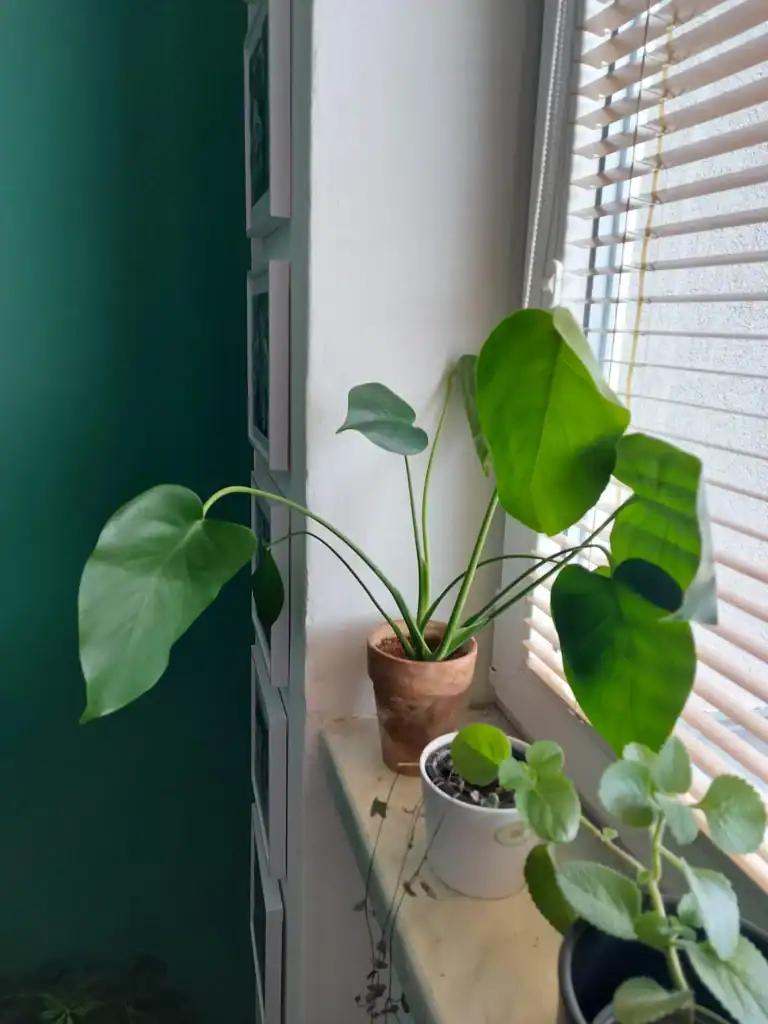
Monsteras really hate rapid temperature swings. I’ve seen brown spots and crispy tips pop up after cold drafts from ACs, blasts of heat from radiators, or just sitting too close to a chilly window.
They like things steady—ideally between 65-85°F. If temps drop below 50°F or jump around a lot, the leaves can’t handle it, and brown spots appear where the cells get damaged.
Quick Tip: Keep your Monstera away from drafty doors, air conditioners, and radiators.
I always check how the spot feels at different times of day. That warm window ledge can turn ice-cold at night. Sometimes just moving the plant a foot or two makes all the difference.
8) Using hard tap water
I learned this one the hard way. Hard tap water is loaded with minerals like calcium and magnesium, and those start to build up in the soil. Your Monstera can’t handle all that, and brown tips or spots show up.
Mineral buildup can also block other nutrients, even if you’re fertilizing properly. You might see a white crust on the soil or around the drainage holes—that’s a sure sign your water’s too hard.
Quick Tip: Let tap water sit out overnight, or switch to filtered or distilled water if you can.
After I switched to filtered water, my Monstera’s new leaves stopped getting brown edges. If you can’t switch, flush the soil every few months with distilled water to clear out excess minerals.
9) Infrequent pruning of damaged leaves

It’s tempting to leave those sad brown leaves, hoping they’ll recover. But honestly, once a leaf is damaged, it’s not coming back. It just drains energy from your Monstera that could go to new growth.
Skipping pruning turns those dying leaves into pest and fungus magnets. Plus, your plant wastes resources trying to keep them alive.
I use clean scissors to cut damaged leaves at the base of the stem. Wipe your tools with rubbing alcohol first to avoid spreading anything nasty.
Quick Tip: Every week or two, check your Monstera and snip off any leaves that are more than half brown or crispy.
Regular pruning keeps your plant looking sharp and helps it focus on new, healthy leaves. I swear my Monstera grows faster once I clear out the old stuff.
Understanding Monstera Brown Spots and Tips
Brown spots show up as patches on the leaves, while brown tips appear at the edges or points. It’s your plant’s way of telling you it’s stressed—maybe from water, the environment, or just care slip-ups.
Common Symptoms You Might Notice
I’ve seen brown spots show up as circles or odd shapes anywhere on a leaf. Sometimes they’re dry and crispy, sometimes soft and mushy—depends on the cause.
Brown tips usually start at the leaf’s edge and creep inward. They feel brittle and papery if you touch them.
Sometimes there’s yellowing around the brown areas—a halo effect that means the problem’s spreading. Some spots have a yellow ring, others just blend in with the green.
Quick Tip: Snap a photo every few days to see if things are getting worse or holding steady.
The texture tells you a lot. Squishy, dark brown spots usually mean something different than dry, tan spots that crumble easily.
How Brown Spots Differ From Brown Tips
Brown spots can pop up anywhere—middle of the leaf, along the veins, or near the edge. They’re often from fungus, bacteria, or sunburn.
Brown tips just hit the leaf’s points and edges. I see these a lot when my watering schedule is off or the air’s too dry.
Spots usually stay put unless you don’t fix the cause. Tips, though, can slowly creep further into the leaf if things don’t improve.
The pattern gives you clues. Random spots on different leaves might mean one thing, but if every leaf has brown tips, it’s probably an environmental issue.
What Your Monstera Is Telling You
Brown spots with yellow halos? That’s usually overwatering or root rot—the roots can’t get nutrients up top, so the leaves suffer.
Crispy brown tips almost always mean the air’s too dry or the soil’s dried out too much. Monsteras want moisture, just not soggy soil.
Sudden dark brown or black spots are often from cold damage or a big temperature drop. They really hate temps under 50°F.
Tan or bleached spots with brown edges? That’s sunburn. Even though Monsteras love bright light, direct afternoon sun is just too much.
Preventing Brown Spots and Tips on Monstera
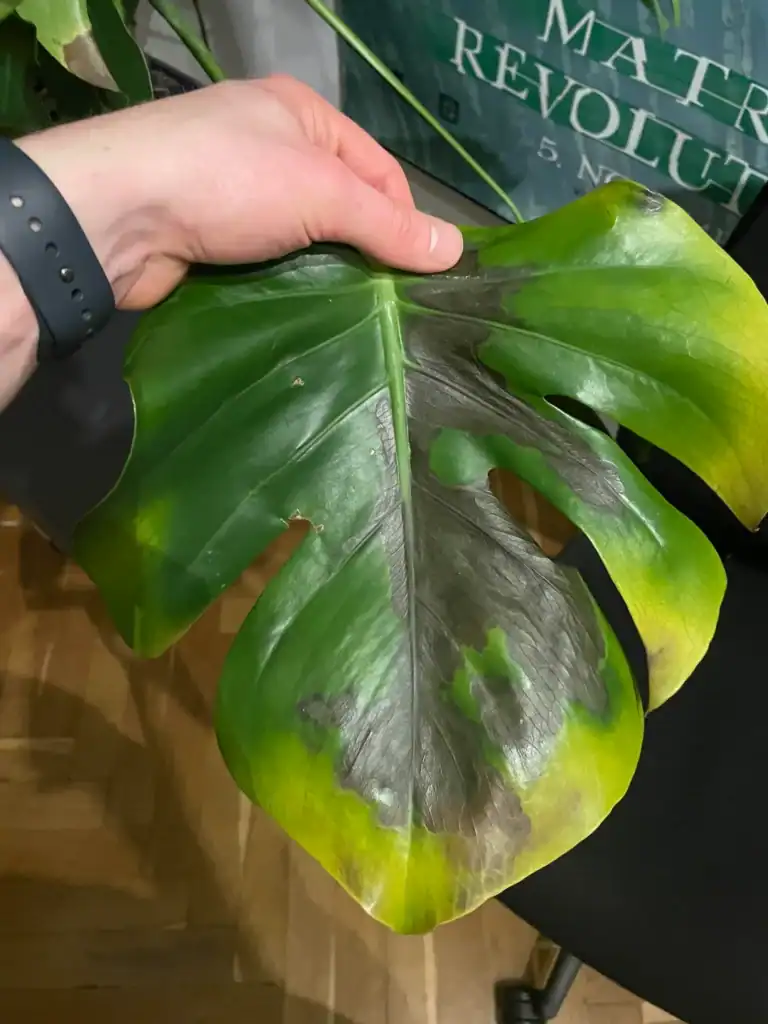
Keeping your Monstera happy is all about nailing the basics—water, light, and humidity. A few small tweaks to your routine can make a big difference and keep those brown spots at bay.
Best Watering Practices
I always check the soil before watering my Monstera. The top couple of inches should feel dry when you touch them.
If it’s still damp, I just wait another day or two. No rush—Monsteras don’t like wet feet.
When I water, I soak the soil until water runs out the drainage holes. That way, any salt buildup from fertilizer gets flushed out.
Then I let all the extra water drain away completely. Letting water sit in the saucer is just asking for root rot, honestly.
Quick Tip: I always use room temperature water instead of cold tap water. Cold water can shock the roots, and nobody wants that.
I don’t stick to a strict schedule. My Monstera seems to need more water in summer when it’s bursting with growth, and way less in winter when things slow down.
Soil type makes a difference, too. Chunky, well-draining mixes dry out faster than heavy, dense potting soil.
If I see the leaves drooping, I check the soil right away. Droopy leaves could mean too much or too little water, so I poke a finger in to figure out what’s up.
Adjusting Humidity and Light
Monsteras love bright, indirect light. I keep mine a few feet from an east or west window—plenty of light, but not blasting direct sun.
Direct afternoon sun? That’s a no-go. It can scorch the leaves and leave ugly brown spots.
If your place is a bit gloomy, grow lights are a lifesaver. I set mine about a foot or so above the plant—seems to do the trick.
Quick Tip: Give your Monstera a quarter-turn every week or two. It helps all the leaves get their fair share of light.
Humidity matters just as much as light. I shoot for around 60%, though my Monstera doesn’t complain at 50% either.
In dry winter months, I group my plants together to bump up the humidity a bit. A small humidifier nearby is handy, too.
I’ll mist my Monstera now and then, but honestly, that’s not a real fix for dry air. If you see brown tips, especially with constant heating or AC, your air is probably too dry.
Long-Term Care Recommendations
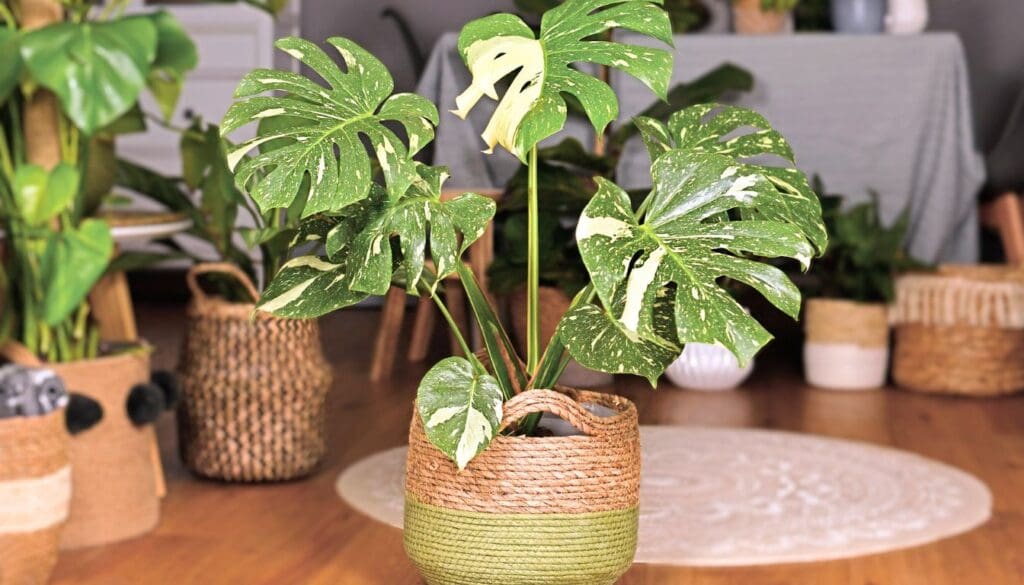
During spring and summer, I fertilize once a month with a balanced liquid fertilizer—always diluted to half strength. Too much fertilizer just burns the roots and gives you crispy brown edges.
Repotting every couple of years keeps things fresh and gives the roots space. I use a chunky mix with perlite, orchid bark, and peat moss for good drainage.
Quick Tip: If you spot roots poking out of the drainage holes, it’s time to repot.
I wipe down the leaves with a damp cloth every few weeks to keep dust at bay. Clean leaves soak up light better and are less likely to attract pests.
While I’m at it, I check the undersides for spider mites or scale. Never fun to find them, but it’s better to catch them early.
Pruning away damaged leaves helps the plant put its energy into healthy growth. I use clean scissors and cut close to the stem. Brown spots won’t heal, so I just remove those leaves to keep things looking good.
Frequently Asked Questions
Brown spots and tips on Monstera leaves are usually about watering issues, low humidity, too much sun, fertilizer, or sometimes pests. Here are the most common questions I see about these problems.
Why are the leaves on my Monstera developing brown spots?
Brown spots show up when something’s stressing your plant. Overwatering is usually the main culprit—it leads to root rot and those dark, mushy spots on the leaves.
Pests like spider mites can also cause small brown spots. I always check the undersides of leaves for tiny bugs or webbing just in case.
Sometimes, fungal infections pop up in wet conditions. If you see brown spots with a yellow ring, that’s usually a disease issue.
What causes brown tips on a Monstera’s leaves?
Brown tips almost always mean your Monstera isn’t getting enough humidity. These plants are used to tropical air, so dry indoor air dries out the leaf edges first.
Tap water with lots of minerals can also cause brown tips. The salts build up and burn the edges.
Too much fertilizer does the same thing—salt in the soil makes the tips crispy and brown.
Can overwatering lead to brown spots on a Monstera plant?
Yep, overwatering is one of the biggest reasons for brown spots. When roots are stuck in soggy soil, they can’t breathe and start to rot.
Root rot means the plant can’t take up water or nutrients right, so you’ll see brown or black spots on the leaves, usually starting low on the plant.
Quick Tip: Always stick your finger a couple of inches into the soil before watering. If it feels damp, just wait a few more days.
Spots from overwatering usually look soft and wet, not dry and crispy. You might even notice a musty smell coming from the soil—never a good sign.
How do low humidity levels affect Monstera leaves and cause browning?
Low humidity dries out the edges and tips of the leaves first. I notice this gets worse in winter when the heat runs all the time.
Monsteras like humidity around 60% or more. Most homes are way lower—30 to 40%—which isn’t enough for these guys.
You can bump humidity by grouping plants together or running a humidifier. Misting helps for a little while, but it’s not a real fix.
Quick Tip: Set a tray of water with pebbles under your pot to make a mini humid zone around your Monstera.
Do too much direct sunlight or heat cause brown patches on Monstera leaves?
Direct sunlight can definitely scorch Monstera leaves and leave brown, crispy patches. These plants are used to growing under the forest canopy, so they want bright, indirect light.
Sun damage usually shows up on the parts of the leaf closest to the window. They’ll look bleached or tan, then turn brown.
Heat stress from radiators or vents can also cause browning. Hot, dry air just sucks the moisture out of the leaves faster than the roots can keep up.
Should I trim off the brown parts of my Monstera leaves, and how can I prevent more browning?
I always trim off the brown parts—honestly, they’re not going to turn green again. Just grab some clean scissors and snip just inside the brown area, leaving a tiny border so you don’t nick the healthy stuff.
If you’re dealing with brown tips, trimming at a slight angle helps the cut blend in. Try not to cut too far into the healthy green; you don’t want to stress the plant more than necessary.
But what about stopping more browning from happening? First, it’s worth checking your watering habits, and maybe move your Monstera out of direct sun if it’s getting scorched.
A humidifier can make a difference, especially if your place gets dry in winter.
Quick Tip: Only water when the top two inches of soil feel dry. Oh, and drainage holes in your pot? Absolute must.
Cut back on fertilizer—once a month is plenty in the growing season, and honestly, you can skip it in winter. Bright, indirect light is the sweet spot, and keep your plant away from blasts of hot or cold air.
Note: Some images in the articles are sourced from Reddit and Other Platforms For Reference Purpose.