20 Colorful Deer-Resistant Perennials For Your Garden
I love growing plants that bring lasting color without constant worry. Finding flowers that bloom bright while keeping deer away? It’s a challenge, but not impossible if you pick the right ones.
You can build a beautiful mix of perennials that thrive in both sunny and shady spots without becoming dinner for wildlife. It’s honestly pretty satisfying when you see it all come together.
In this article, I’ll share vibrant plants that fill every corner of a garden—whether it gets full sun, part shade, or a bit of both. Pairing texture, color, and form can create a balanced space that stays lively all season, and it’s easier than it sounds.
Please note: Simplify Plants is reader-supported. As an Amazon Associate, I earn from qualifying purchases made by our readers with no extra cost added to you all! Some links in the post are affiliate links and I get a commission from purchases made through links in the post.
1) Lamb’s Ear (Stachys byzantina)

I’m a big fan of Lamb’s Ear for its soft, silvery leaves that feel like velvet. The color really pops in garden beds and gives a nice contrast with all the green.
It does best in full sun to partial shade and likes well-drained soil. Too much water? The leaves can rot, so I try not to overdo it.
Once it’s settled, it handles dry conditions without any drama. Deer tend to avoid Lamb’s Ear, which is a relief if you’ve had problems with nighttime grazers.
The fuzzy leaves just aren’t appealing to them, so it’s one less thing to stress about. In summer, Lamb’s Ear sends up tall flower spikes with small purple or pink blooms.
I’ll sometimes trim the flowers if I want to keep the focus on the leaves, but honestly, I usually leave a few for pollinators since the bees seem to love them. It works great as a border plant or ground cover.
It spreads easily but stays neat with a little trimming. Those soft silver tones really help tie together both sunny and shaded areas, making the garden feel more pulled-together.
2) Heuchera ‘Palace Purple’
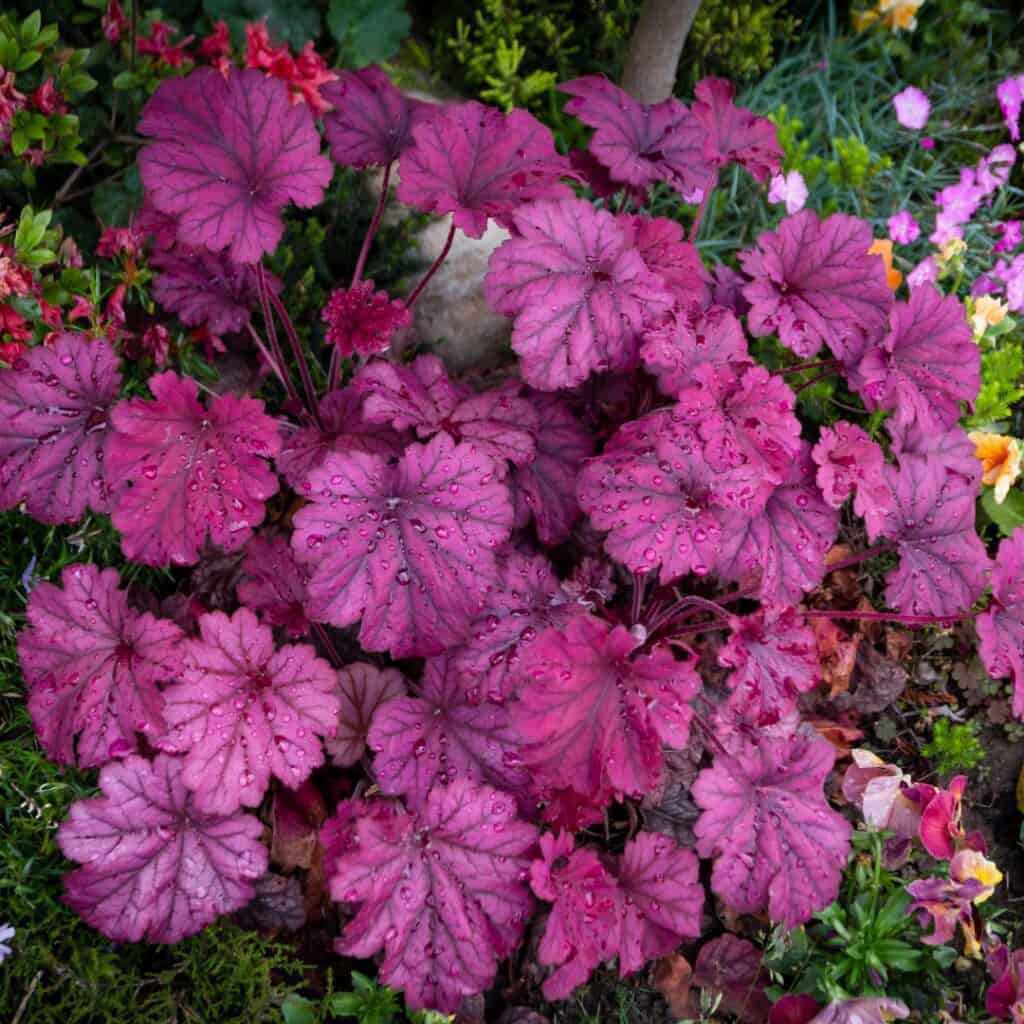
Heuchera ‘Palace Purple’ is a favorite for adding deep, rich color to my garden. Its dark, glossy leaves just stand out and bring contrast to flower beds.
The color shifts a bit through the seasons, so the garden never feels stale. This perennial grows best in partial shade to full sun, so you can tuck it almost anywhere.
I’ve seen it handle both bright spots and dimmer corners without losing its flair. The leaves stay low and tidy, forming a neat mound that looks good even when other plants are fading.
During late spring and summer, small white or pinkish flower spikes pop up above the leaves. They’re not showy, but they add a touch of texture.
Butterflies seem to like them, which is always a win. What I really appreciate is how deer usually avoid it.
No more chewed leaves in the morning! It also doesn’t ask for much—just well-drained soil and a bit of moisture.
In mixed borders, I love pairing it with ferns, hostas, or ornamental grasses. The dark leaves make lighter plants really pop, and the combo just looks right.
Whether in containers or along shady paths, this plant keeps its good looks through the seasons.
3) Bleeding Heart (Dicentra spectabilis)
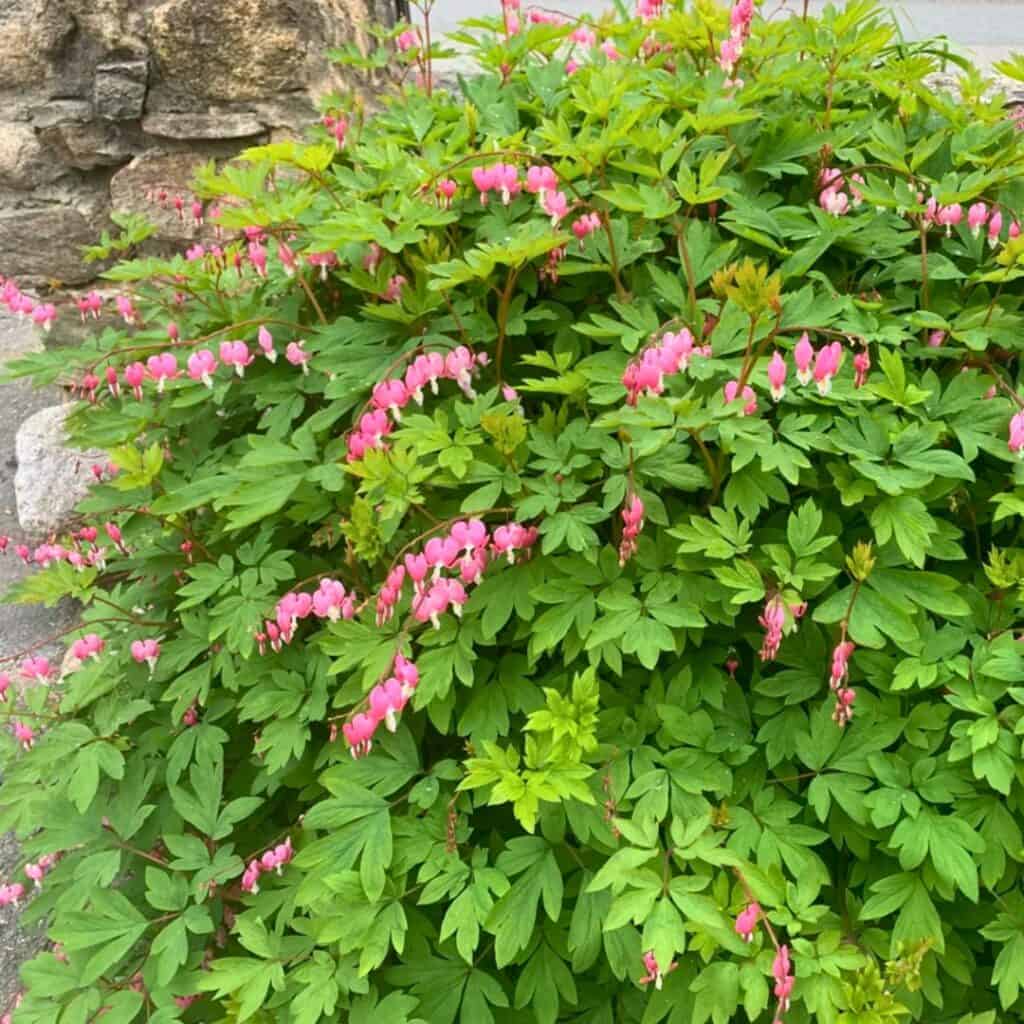
I always look forward to seeing Bleeding Heart in early spring. Those delicate, heart-shaped flowers dangle from arching stems and bring such a soft color to the shadier spots.
Their pink and white blossoms look so graceful against deep green foliage. I plant Bleeding Heart where it gets morning sun and afternoon shade.
Too much heat or direct sun can make the leaves fade faster than I’d like. I keep the soil moist but well-drained so the plant stays healthy.
This perennial pairs nicely with ferns, hostas, and astilbes, which makes for a gentle mix of textures. When the flowers finish, the plant fades and goes dormant, so I usually tuck in some late-season plants nearby to fill in the gap.
Bleeding Heart is deer-resistant, which is a relief. Deer just seem to ignore its soft stems and leaves, so the blooms stay untouched.
It’s a great pick for shade gardens where deer like to wander.
4) Astilbe ‘Fanal’
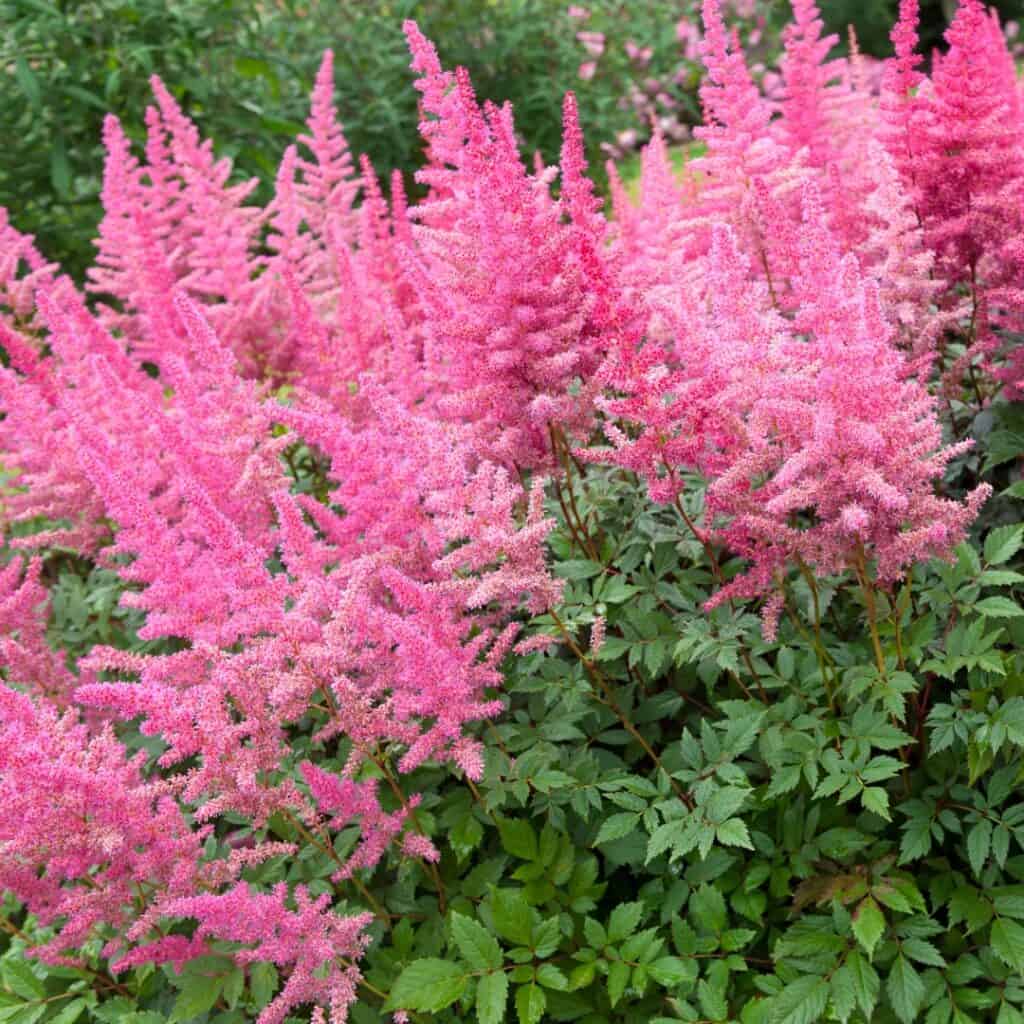
Astilbe ‘Fanal’ really livens up shady corners with its deep red flower plumes. It gives the garden a bold pop of color when so many shade plants are just green.
The finely cut leaves add a soft texture, and I love how they look with hostas and ferns. This perennial thrives in part shade to full shade, so it’s perfect for those tricky spots.
I keep the soil moist and rich with organic matter to keep it happy. When it feels at home, it can reach up to two feet tall and slowly spreads each year.
One of the best things? Deer leave it alone.
Its feathery flowers attract pollinators like bees, so even the quiet corners of my yard feel alive. I’ve noticed it blooms in early to mid-summer, right after the spring bulbs are done.
The red plumes fade into bronze, so there’s still some color even after the main show. The dried flower heads look pretty nice in fall if you just leave them.
I like mixing ‘Fanal’ with contrasting colors like white astilbes or blue hostas. It’s an easy way to brighten up shaded beds without a ton of effort.
5) Japanese Painted Fern (Athyrium niponicum)

The Japanese Painted Fern is one of my go-tos for adding soft color to shady parts of the garden. Its fronds show silver, green, and purple—a gentle contrast against darker plants.
Even in low light, these colors stay surprisingly bright. This fern does best in partial to full shade where the soil is moist but well-drained.
Too much sun can fade the fronds, so I avoid harsh spots. Once it’s settled in, it’s pretty much fuss-free.
Deer usually pass it by, which is great if you’re tired of losing plants to hungry visitors. I like planting it with hostas or heucheras—their colors just go together.
Over time, Japanese Painted Fern forms neat, rounded clumps about 12 to 18 inches tall and wide. I trim back old fronds in spring before the new ones show up, just to keep things tidy.
If you want to fill a shady border or brighten a woodland path, this fern is a solid choice. Its calm mix of colors gives a peaceful look without ever feeling boring.
6) Foxglove (Digitalis purpurea)

There’s something classic about Foxglove—it stands tall and bright, bringing cottage-garden vibes to any space. The bell-shaped blooms look like tiny lanterns lining sturdy stems.
It adds color to both sun and partial shade areas, which is handy if your garden gets a mix. This plant usually grows between 2 and 5 feet tall, depending on the light and soil.
I like tucking it into borders or between shrubs. The flowers come in soft shades of pink, purple, white, and yellow, and they’re a magnet for hummingbirds and bees.
Deer tend to leave it alone thanks to compounds that make it toxic to them. I don’t have to worry about chewed leaves or broken stems, but I do wash my hands after handling it since it’s also unsafe for people and pets if eaten.
Foxglove likes moist, well-drained soil and prefers cooler weather. I usually plant it in early spring so it can form rosettes before flowering the next year.
After it blooms, I let a few seed heads dry so it can self-seed naturally. Even though it’s often a biennial, it comes back if you let seedlings grow.
Mixing it with shade-loving perennials like ferns or hostas works well for a balanced look. Its height and color make it a great anchor for mixed beds.
Adding Foxglove is an easy way to bring a peaceful, classic touch to the garden. The blooms brighten up quiet corners and draw in pollinators, all while staying safe from deer.
7) Coral Bells ‘Berry Smoothie’
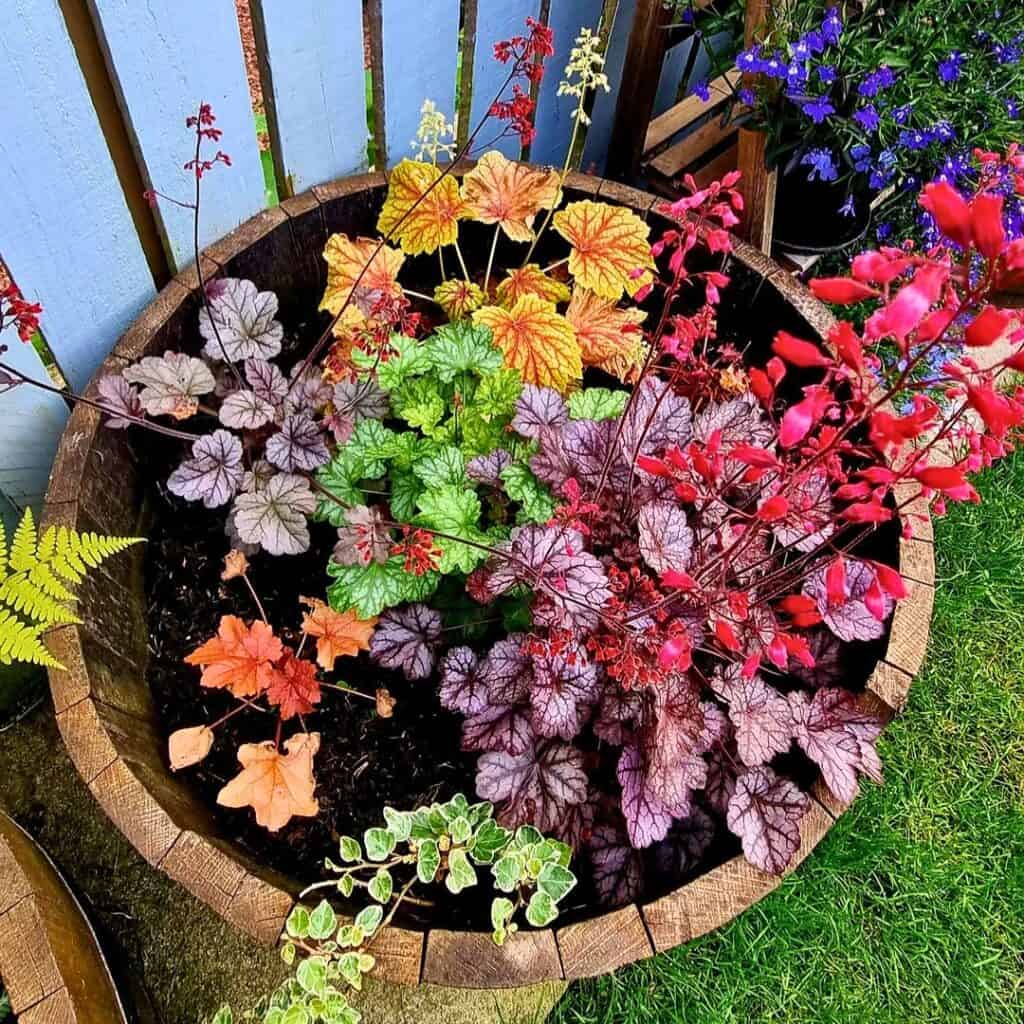
Coral Bells ‘Berry Smoothie’ is one of those plants that just makes me happy. Its rosy-pink leaves with a silver sheen stand out, even when nothing else is blooming.
The foliage keeps its color most of the year, so there’s always something interesting to look at. It grows best in partial shade, though I’ve seen it do fine in full sun if it gets enough water.
I pick a well-drained spot to keep the roots healthy. Once it’s settled, it’s pretty low maintenance, which is perfect for busy days.
The small white or pale pink flowers rise above the leaves in late spring or early summer. They sway in the breeze and add a gentle touch to the bed.
Even when the blooms fade, the leaves keep everything looking lively. Deer usually leave Coral Bells alone, which is a relief.
I’ve had way fewer nibbled leaves compared to other perennials. I often pair ‘Berry Smoothie’ with hostas, ferns, or astilbes for a good mix of colors and textures.
The pink foliage next to green plants just looks right. For best results, I remove old leaves in early spring and toss on a bit of compost or mulch.
That keeps the soil moist and fresh. With just a little care, my ‘Berry Smoothie’ plants come back strong every year.
8) Solomon’s Seal (Polygonatum odoratum)

Solomon’s Seal brings a gentle movement and quiet beauty to the garden. Its arching stems and dangling white flowers look delicate, but it’s tougher than it seems.
Once it’s planted, it returns year after year with barely any work from me. This perennial grows well in shade or partial sun, making it perfect for those tricky spots under trees or along shaded fences.
The soil should stay slightly moist and well-drained, with plenty of organic matter mixed in. Deer usually leave this plant alone, so I can mix it with lighter blooms or bright-leaved plants and not worry about damage.
Its graceful form adds texture and a calm rhythm to mixed borders. In spring, the small, bell-shaped flowers hang beneath the stems, and by fall, they’re replaced by blue-black berries for a little extra color.
The foliage turns a gentle yellow before dying back for winter. I trim old stems in late fall or early spring just to keep it tidy.
After that, Solomon’s Seal quietly spreads and fills empty garden spaces over time. It’s a low-maintenance, deer-resistant beauty that fits right into both sun and shade areas of my garden.
9) Jacob’s Ladder (Polemonium caeruleum)

I just love adding Jacob’s Ladder to my garden. It gives such a calm touch of color and texture—those delicate blue or purple flowers really pop against the ferny, laddered leaves.
It always seems to brighten up both sun and shade spots, but never takes over or steals the show from other plants. I’ve noticed that Jacob’s Ladder grows best in partial shade with soil that stays moist but drains well.
It handles morning sun just fine, though it’s happier with a little protection from harsh afternoon rays. That makes it a go-to for those tricky in-between garden areas where other flowers sometimes fizzle out.
One big reason I keep planting it? Deer usually ignore it. That’s a huge relief, honestly.
The flowers bring in bees and pollinators instead, so there’s this gentle movement and hum around the garden. In my yard, I like planting Jacob’s Ladder in little clusters for a more natural, relaxed look.
It gets about 1 to 2 feet tall, so it’s easy to layer with taller or shorter plants. After it blooms in late spring or early summer, I trim off the faded flowers to encourage fresh foliage.
The soft, airy leaves stay nice-looking even after the blooms are gone. I like pairing it with hostas or ferns—the textures just work.
It’s one of those plants that quietly fills empty spaces and still gets compliments from friends who visit.
10) Hellebore ‘Winter Jewels’
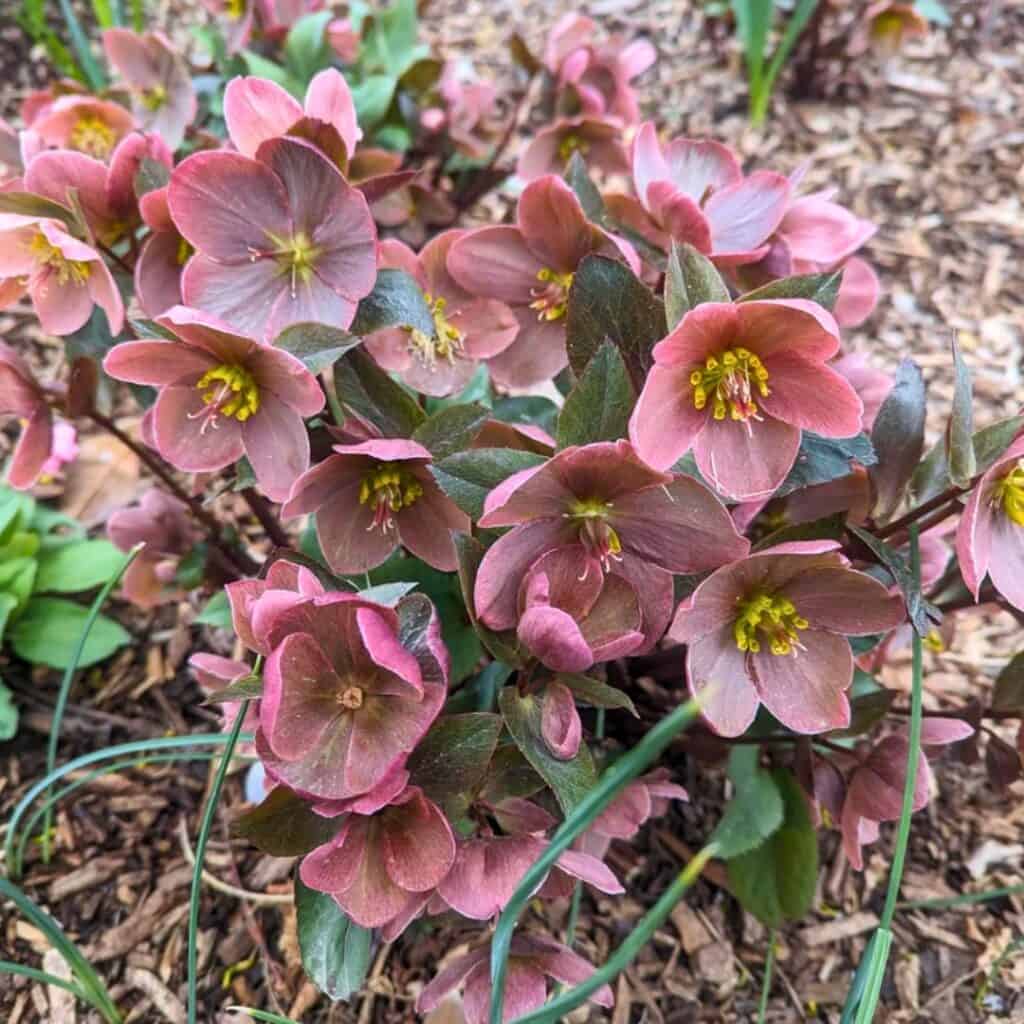
There’s something special about Hellebore ‘Winter Jewels’. It adds color when most of my garden is still asleep, which always lifts my mood.
These perennials bloom in late winter to early spring, just when I’m desperate for a reminder that warmer days are coming. The blooms last for weeks, so there’s steady color when hardly anything else is growing.
The flowers come in shades of pink, white, purple, and green, sometimes with spots or streaks. I like that every plant is a little different—no two blooms look exactly alike.
Even the glossy, dark green leaves stay good-looking most of the year. Deer rarely bother hellebores, which makes them a safe bet.
I plant them in groups under trees and shrubs where they get partial shade and moist, well-drained soil. Once they’re settled, I barely have to fuss over them.
They’re impressively cold-tolerant. I’ve seen them push through frost and even snow without a problem.
In warmer months, their dense foliage shades the soil and keeps weeds from taking over. Hellebore ‘Winter Jewels’ fits in perfectly with ferns, hostas, and early bulbs like snowdrops.
I love how their soft colors mix with the fresh greens of spring. They look elegant in beds or along shaded garden paths.
When I tidy up, I just remove old leaves in late winter to make space for the new growth. The flowers pop out soon after, and I get to enjoy their quiet beauty all over again.
11) Columbine (Aquilegia canadensis)
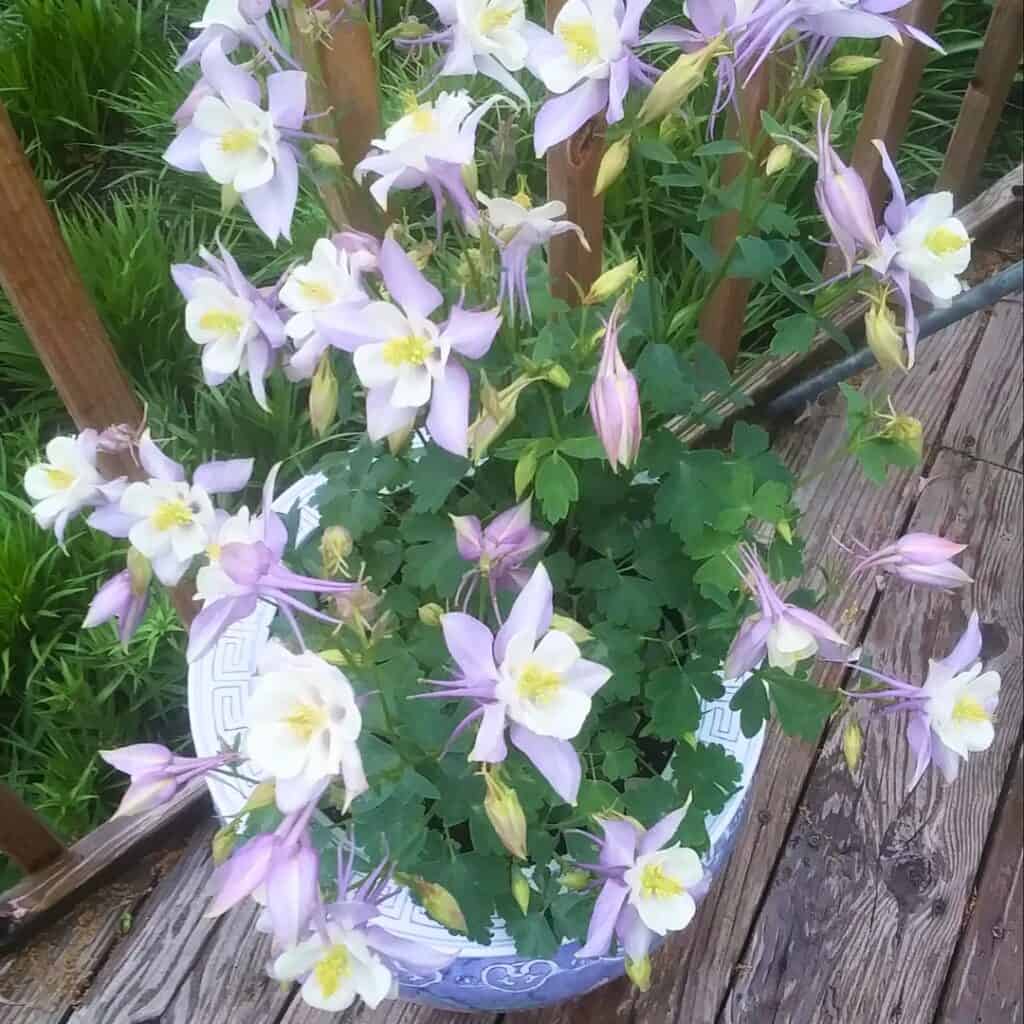
I’m a big fan of Columbine because it brings easy color and a graceful shape to my garden. The bell-shaped flowers come in reds, yellows, pinks, and blues—like little lanterns floating above the leaves.
This plant likes partial shade but doesn’t mind a bit of sun. I’ve noticed it really thrives where mornings are bright and afternoons cool off.
The soil doesn’t need to be perfect—just make sure it drains well. Deer usually leave Columbine alone, which is a relief if you’ve got wildlife wandering through.
I still check on mine, but they always seem to stay safe compared to other flowers. Hummingbirds and butterflies love them, so there’s always a bit of action around.
Columbine flowers in spring to early summer, giving the garden an early burst of color. After blooming, I let the seed heads dry so they can self-seed.
New plants pop up naturally each year, filling empty spots with hardly any work from me. The foliage has a soft, lacy look that stays green through much of the season.
Even when it’s not blooming, it adds a gentle contrast to other plants. I like pairing it with hostas and ferns in shaded corners for a relaxed vibe.
Since Columbine is a native perennial, it fits into lots of garden styles. I appreciate how it adapts to both sunny beds and woodland edges.
With only occasional watering during dry spells, it keeps coming back strong year after year.
12) Black-Eyed Susan Vine (Thunbergia alata)
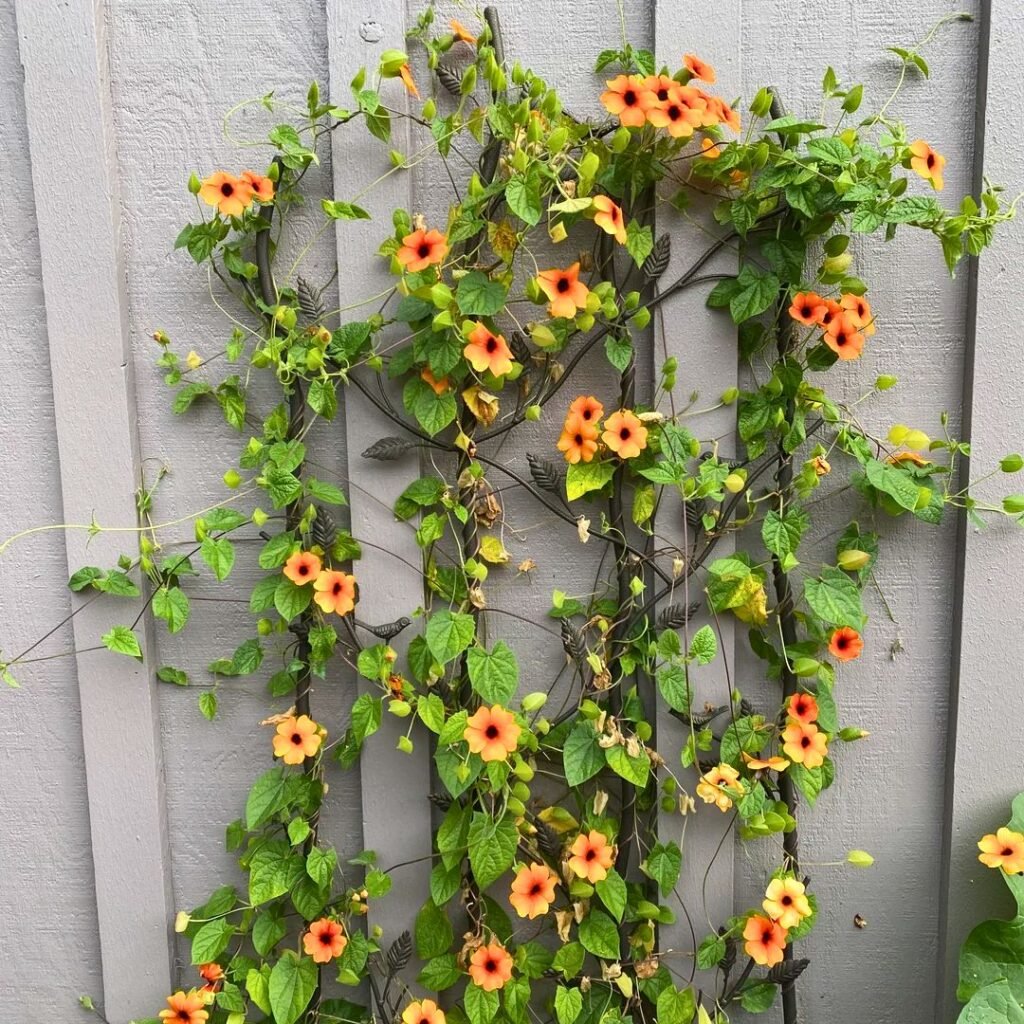
Adding Black-Eyed Susan Vine to my garden always feels like an instant upgrade. The golden-orange or yellow blooms with their dark centers are cheerful but not overwhelming.
It climbs up fences, trellises, or railings so easily, making a quick, natural decoration wherever I need it. This vine grows best in full sun to partial shade.
I’ve noticed it keeps blooming from summer right through early fall, as long as I give it regular water and well-drained soil. Deer usually avoid it, so it stays healthy even when wildlife wanders by.
I love how versatile and easy to train this vine is. I can guide it up a support or let it spill down from a hanging basket.
It’s great for brightening up small patios or balconies, especially when space is tight. Even though it’s technically a tender perennial, I treat it like an annual in cooler spots.
When frost threatens, I bring containers inside or just start new plants from seed in spring. With its fast growth and constant color, this vine has become a reliable favorite for me.
13) Geranium ‘Rozanne’
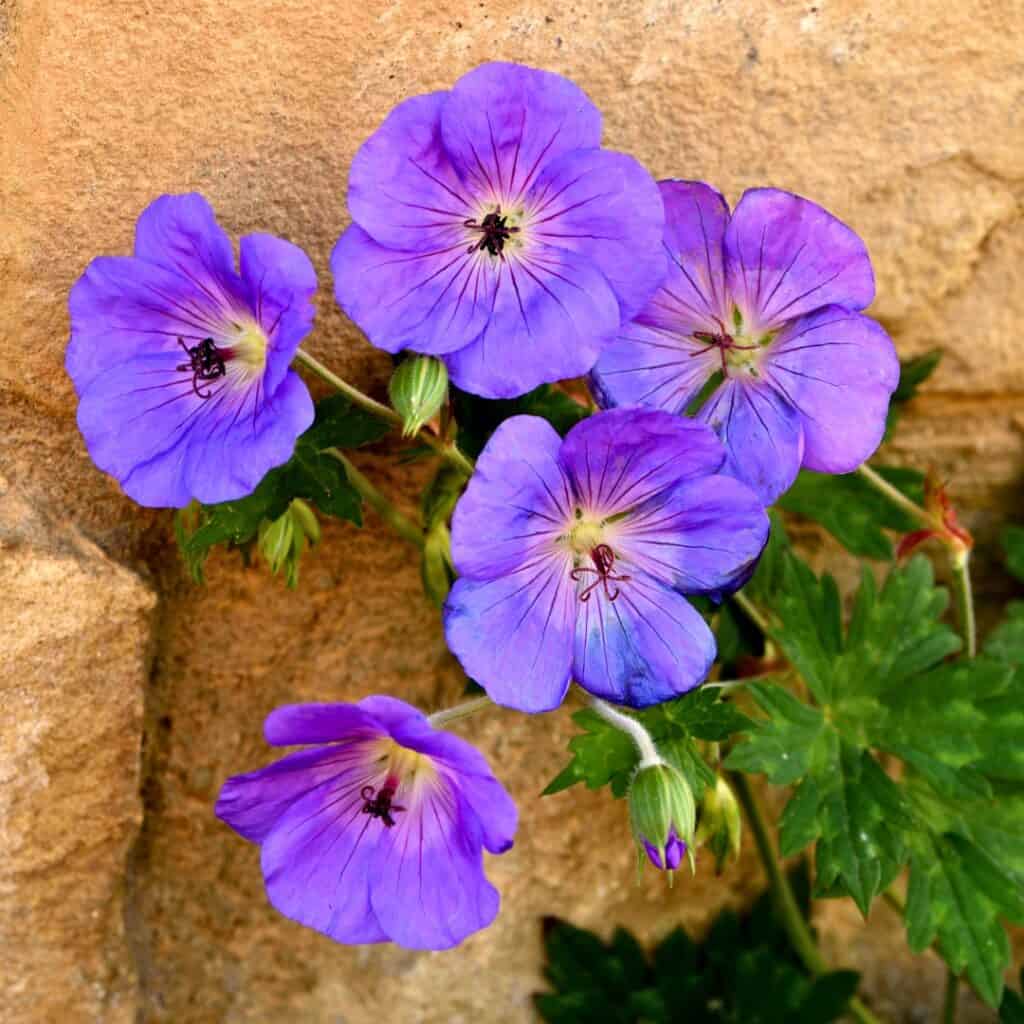
Geranium ‘Rozanne’ is one of my top picks for long bloom time and easy care. This hardy perennial keeps the color going from late spring all the way to frost.
The bright violet-blue flowers look fantastic against the green leaves and really mix well with other plants. I rarely see deer bother this one, which saves me a lot of headaches.
I can plant it near hostas or daylilies and not worry about it getting eaten. It handles both sun and partial shade, so I get to use it in lots of different spots.
With well-drained soil and regular watering, it grows fast and fills in gaps nicely. I often use it as a ground cover because it forms soft, spreading mounds that help keep weeds down.
It looks especially nice spilling over the edge of a walkway or raised bed. ‘Rozanne’ also attracts bees and butterflies, which is always a plus for pollinators in the yard.
Even after the flowers fade, the dense green leaves stay tidy and fresh. I’ll trim it lightly if it sprawls too much, and it always bounces back.
This plant is tough, colorful, and dependable—pretty much everything I want in a perennial. It gives steady color without much fuss, and I can count on it to show up year after year.
14) Sweet Woodruff (Galium odoratum)

I really enjoy how Sweet Woodruff brightens up shady spots with its delicate white blooms and soft green leaves. It spreads in neat mats, making a smooth ground cover under trees or along paths.
The little star-shaped flowers show up in late spring and bring a gentle, pleasant scent to the garden. This plant thrives in partial to full shade and likes cool, moist soil.
Once it’s established, I find it easy to care for—it handles dry shade better than most ground covers. Maintenance is pretty minimal, just a bit of trimming if it spreads too far.
Deer usually steer clear, so I don’t have to worry about damage. The leaves release a fresh, sweet smell when crushed or dried, which I sometimes use in sachets or potpourri.
It adds both beauty and fragrance to any garden corner. I often pair it with spring bulbs or hostas for a layered look.
The soft green carpet really highlights colorful blooms nearby. If you’re after a low-maintenance, deer-resistant perennial, Sweet Woodruff is a solid choice.
15) Virginia Bluebell (Mertensia virginica)

There’s just something magical about Virginia Bluebells in early spring. Their soft blue flowers look delicate, but they’re tougher than you’d think.
Each stem is covered in bell-shaped blooms that draw in bees and butterflies. I plant them in partly shaded spots—they like moist, well-drained soil and gentle sunlight.
Once they settle in, they spread out nicely but never get out of hand. When summer heat arrives, the leaves fade and go dormant, letting other plants take over.
I’ve found these perennials almost unbothered by deer and rabbits, which is a huge bonus. They fit beautifully under trees or along woodland paths.
I love pairing them with ferns and hostas for that classic woodland vibe. The best part about Virginia Bluebells is how they signal the start of the growing season.
Their blue and pink shades always make my garden feel fresh and calm. It’s one of those spring favorites I look forward to every year.
16) Toad Lily (Tricyrtis hirta)

Toad Lilies are such a fun surprise in my fall garden. Their small, orchid-like flowers show up just as summer plants start to fade.
The blooms have purple, pink, and white spots, adding a soft touch of color to shaded spots. This plant thrives in partial to full shade, so it’s perfect for areas under trees or along the north side of my house.
I’ve found that moist, well-drained soil really helps it along. Once it’s settled, it’s a low-maintenance perennial that barely needs attention.
Deer usually avoid Toad Lilies, which is a relief in gardens where deer are frequent visitors. I like to pair them with ferns and hostas for a lush, textured look.
The plants grow about 2 to 3 feet tall and bloom from late summer through fall. I trim back any dead stems in early spring to keep things tidy.
They multiply slowly, forming small clumps that are easy to divide or share with friends. When I walk through my shade garden in September, the Toad Lilies always catch my eye.
Their blooms are intricate but not flashy. They quietly add charm to shaded corners that might otherwise feel a bit dull.
17) Ajuga ‘Chocolate Chip’

I can’t get enough of Ajuga ‘Chocolate Chip’ for its small size and bold color. This ground cover spreads easily but stays neat, making it perfect for filling gaps around borders or walkways.
The tiny leaves have a deep bronze-purple color that pops against green grass or mulch. In spring, short spikes of blue-violet flowers rise above the foliage and draw in bees and butterflies.
Deer don’t seem interested, which is always a plus. The plants stay low, just a few inches tall, so I never have to worry about them crowding out taller perennials.
This variety grows well in both sun and partial shade. It handles morning light or dappled sun under trees, and it’s not picky about soil as long as it drains well.
I usually give it a drink during dry spells, but once it’s established, it’s pretty hands-off. I love planting it along stone paths—the tight mats keep weeds out and look tidy.
It also works well in containers or as edging for flower beds. The dense growth helps protect the soil and cuts down on erosion after rain.
If it spreads beyond where I want it, I just trim or divide it in spring. That’s all it takes to keep this low-maintenance perennial in shape.
For me, Ajuga ‘Chocolate Chip’ adds long-lasting color and texture with hardly any effort.
18) Bugleweed ‘Metallica’

I honestly love how Bugleweed ‘Metallica’ brings color and texture to my garden with almost zero hassle. Those shiny bronze-purple leaves really catch the light and look amazing next to green or silver plants.
This plant’s dense, low-growing habit makes it a great ground cover that keeps weeds in check. In spring, it sends up spikes of blue blooms that attract pollinators—but not deer, thankfully.
I’ve noticed deer usually leave it alone, which is a relief. It’s tough and adapts to both sun and partial shade, so I can put it in almost any corner of my yard.
It spreads gently but never seems to take over. If I spot a bare patch, I just divide a clump and move it over.
It looks especially nice along pathways or at the edge of a flower bed where it can really show off. To keep things tidy, I trim the flower spikes after they fade.
That way, the foliage stays neat and gets even thicker. Bugleweed ‘Metallica’ stays attractive for most of the year, so my garden doesn’t look dull even when other plants fade.
It’s reliable, colorful, and honestly just easy to deal with. That’s why it’s one of my favorite deer-resistant perennials for both sunny and shady spots.
19) Russian Sage (Perovskia atriplicifolia)
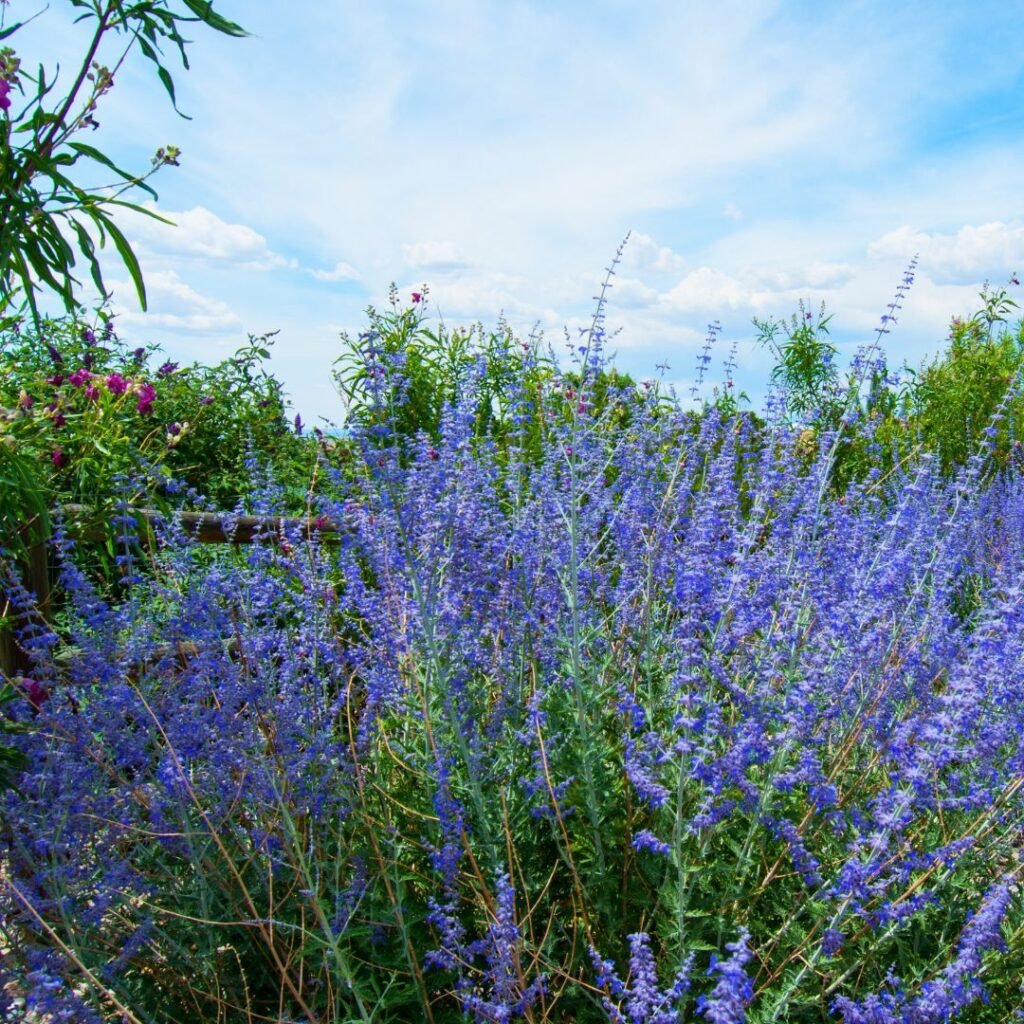
I have to say, Russian sage brings a soft wash of color and texture to my garden that’s hard to beat. Its tall silvery stems and lavender-blue flowers bloom right through the hottest months, even when other plants give up.
The plant stands out beautifully in sun-drenched borders and mixed perennial beds. Russian sage thrives in full sun and well-drained soil, and honestly doesn’t ask for much once it’s established.
I just make sure not to overwater—too much moisture can be a problem for the roots. The silvery foliage gives a light, airy feel and somehow makes small spaces seem bigger.
Bees and butterflies love the tiny blooms, but deer? They usually ignore it. That’s a big plus if you’re dealing with hungry wildlife.
I like pairing Russian sage with coneflowers or black-eyed Susans. The cool tones of the sage mix nicely with brighter colors.
In the evening, the flowers almost seem to glow and give the garden a soft, relaxed mood. Each year, I cut back the stems in early spring so it grows back strong and full.
It’s simple care for a plant that gives so much back. Russian sage adds lasting beauty without much work, and it’s easily one of my favorite perennials for both sun and shade gardens.
20) Spiderwort (Tradescantia virginiana)

I like Spiderwort because it adds a burst of color and texture to my garden with barely any effort. Its blue, purple, or pink flowers open in the morning and close by afternoon, so the bed looks refreshed every day.
I find it dependable since deer usually leave it alone. That means less replanting for me.
This plant grows well in both sun and partial shade, so I can tuck it in almost anywhere. It seems to thrive in moist but well-drained soil, and honestly, it doesn’t mind if I skip a watering here and there.
Its long, arching leaves give a soft, grassy look that blends nicely with other perennials. I often plant Spiderwort near hostas, daylilies, or ferns to mix up the textures and heights.
The blooms attract bees and butterflies, which is always a bonus. After flowering, I trim the stems back to push out fresh growth and sometimes get another round of blooms.
Spiderwort spreads slowly and doesn’t get out of hand, so it’s easy to control. Every few years, I divide the clumps to keep them healthy or share with friends.
It’s a low-maintenance, colorful choice that just fits right into all kinds of garden styles.
Planting And Caring For Colorful Deer-Resistant Perennials
I focus on healthy soil, consistent watering, and timely pruning to keep my perennials looking their best. These small steps really help the plants grow strong and handle stress from deer, weather, and pests.
Soil Preparation Tips
I usually start by testing my soil’s pH with a basic home kit. Most deer-resistant perennials prefer soil that’s slightly acidic to neutral, about pH 6.0–7.0.
I loosen up the top 8–12 inches of soil to help with drainage, since soggy roots can be a real problem. Then I work in compost or aged manure for extra nutrients and better structure.
If I’m dealing with clay, I add coarse sand or small gravel so water and air can move through. Sandy soil? Compost helps keep it from drying out too fast.
Here’s a quick soil improvement guide:
| Soil Type | Common Problem | Simple Fix |
|---|---|---|
| Clay | Poor drainage | Add coarse sand, compost |
| Sandy | Dries too fast | Add organic matter |
| Loamy | Low nutrients | Add compost seasonally |
After planting, I always mulch with 2–3 inches to hold moisture and keep weeds down.
Watering Guidelines
I water young perennials deeply but not too often, so the roots grow strong. Frequent, shallow watering isn’t great and can even attract deer looking for tender new growth.
Usually, I water once or twice a week, depending on the weather. Using drip irrigation or a soaker hose sends water right to the roots instead of the leaves.
That saves water and keeps the foliage dry, which helps prevent disease. In the heat, I check the soil with my fingers—if the top inch is dry, it’s time to water.
Mulch helps keep the soil just right, so I don’t need to water as much. Early morning is my favorite time to water since the soil soaks it up before the sun gets too strong.
Pruning and Deadheading Advice
I prune dead or weak stems early in the growing season to give new growth a head start. Keeping things tidy also helps with air flow, which cuts down on mildew and fungus.
Deadheading—snipping off spent flowers—encourages continuous blooms and stops plants from wasting energy on seeds. I use clean, sharp shears and cut just above a leaf node or healthy pair of leaves.
Some perennials, like coreopsis and salvia, do well with a little trimming through summer. Others just need a cleanup in fall after frost.
I always clear away debris so pests and disease don’t hang around over winter.
Design Ideas For Sun And Shade Gardens
I love mixing colors, textures, and plant heights to keep my garden interesting all year. By paying attention to sunlight patterns and soil types, I can match deer-resistant perennials to each spot and still keep things bright and lively.
Creating Vibrant Color Schemes
I pick flowers that give color from spring right through fall. For sunny spots, I use black-eyed Susans, coneflowers, and coreopsis for those warm, happy tones.
In shadier areas, I lean on heucheras, astilbes, and lungwort for deep purples and pinks. Grouping plants by complementary hues really makes the colors stand out.
For example:
| Light | Plants | Main Colors |
|---|---|---|
| Full Sun | Coreopsis, Salvia, Yarrow | Yellow, Blue, White |
| Partial Shade | Heuchera, Hosta, Astilbe | Purple, Green, Pink |
I like to repeat a few colors around the garden for a sense of rhythm. Too many random colors can look chaotic, but a steady pattern feels calm and pulled together.
Layering For Texture And Height
To make my garden look full and interesting, I layer plants by height. Tall ones like Russian sage or ornamental grasses go in the back, medium ones like daylilies in the middle, and low growers such as sedum up front.
Mixing leaf shapes adds texture, too. I combine spiky iris leaves with broad hosta foliage and airy ferns for a nice balance.
Small pathways or stone borders help break up the layers and guide your eye through the space. This setup gives each plant room to shine and makes the garden feel organized but not stiff.
Frequently Asked Questions
Planting deer-resistant perennials has made my gardening life so much easier—and more colorful. Some plants brighten up sunny spots, while others add charm to shady corners.
With the right mix, my garden stays full and lively without constant worry about deer munching everything.
What are some sun-loving perennials that deer won’t eat?
I grow Lamb’s Ear (Stachys byzantina) in sunny areas since deer usually ignore its fuzzy leaves. Its soft, silvery foliage really brightens up borders and paths.
I also like Heuchera ‘Palace Purple’ for its deep purple leaves that hold their color even in strong sun.
Can you recommend deer-resistant shade perennials for my garden?
For shade, I count on Bleeding Heart (Dicentra spectabilis) and Astilbe ‘Fanal’. They add soft texture and rich color while staying off the deer menu.
Japanese Painted Fern (Athyrium niponicum) also does great in low light and brings in silver and green tones.
How can I add color to my garden without attracting deer?
I mix up leaf colors and textures for interest. Heuchera and Astilbe bring bold reds and purples, while Lamb’s Ear adds contrast.
By choosing plants deer dislike, I get vibrant color without losing blooms to grazing.
Are there any low-maintenance perennials that resist deer grazing?
Absolutely—some types need almost no care once they’re settled in. I’ve found Lamb’s Ear and Japanese Painted Fern stay healthy with very little watering.
These plants handle tough conditions and keep deer away, almost like magic.
What flowering plants can I grow that will deter deer year-round?
Deer tend to avoid plants with strong scents or fuzzy leaves. I rely on Bleeding Heart for spring color and Astilbe for summer blooms.
Their lasting growth keeps my garden looking good all season.
What are the top choices for deer-resistant plants with vibrant blooms?
Honestly, I keep coming back to Heuchera ‘Palace Purple’ and Astilbe ‘Fanal’. The colors are just so bold, and they don’t seem to mind whether it’s sunny or shady.
Sometimes I’ll throw in a Bleeding Heart—the flowers are so bright, you can’t help but notice them. And I like to mix in Japanese Painted Fern for those softer color touches.
It’s a mix that feels lively but still holds up if you’ve got hungry deer wandering by.
Note: Some images in the articles are sourced from Reddit and Other Platforms For Reference Purpose.