9 Reasons Your Fiddle Leaf Fig Is Dropping Leaves
Fiddle leaf figs really are stunning, but wow, they can be dramatic when something’s off. Leaf drop is a super common headache, and honestly, it can happen for all sorts of reasons.
Here’s some good news: once you figure out what’s wrong, you can usually fix it and get your plant back on track. Your fiddle leaf fig might be struggling with watering, light, temperature swings, or maybe even tiny pests you haven’t noticed yet.
Let’s go through the main reasons fiddle leaf figs drop their leaves and what you can do about each one. I’ll also share a few ways to keep your plant healthy so you (hopefully) don’t run into these problems again.
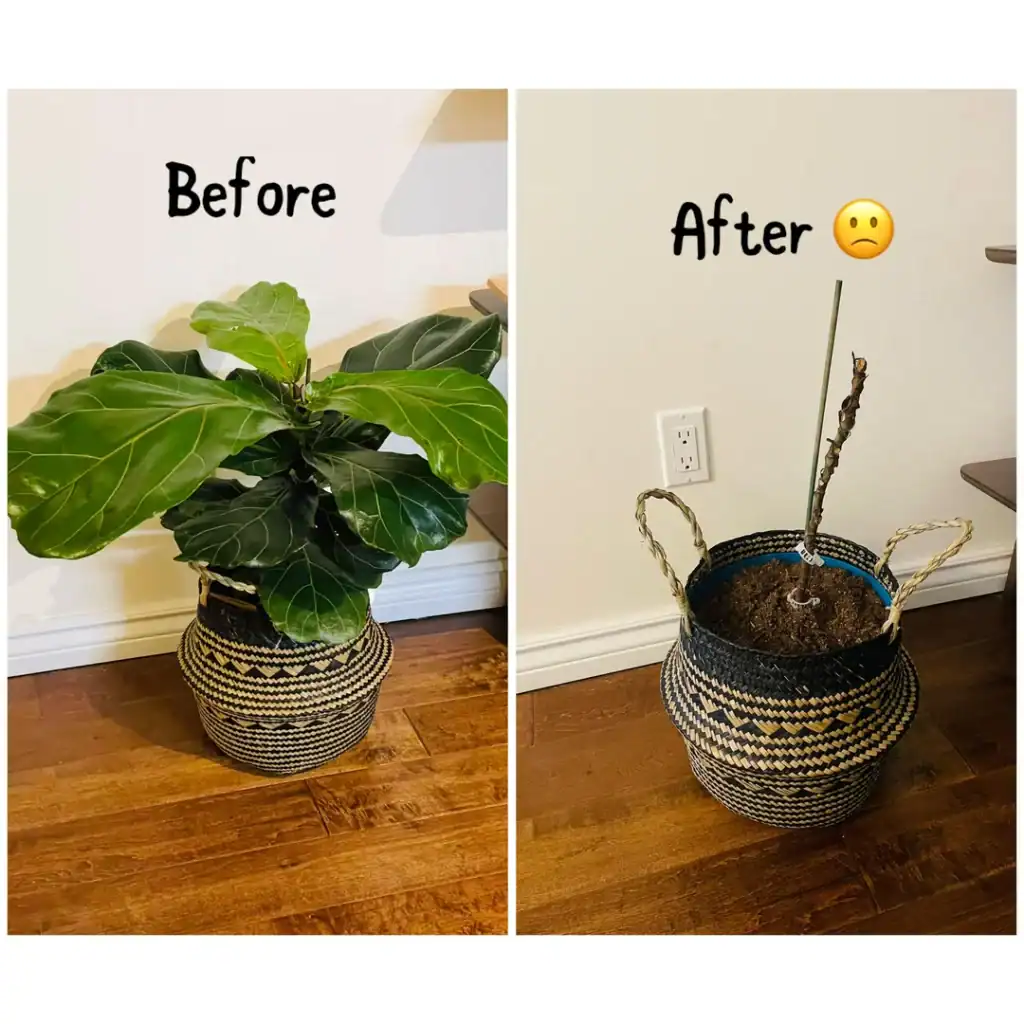
Please note: Simplify Plants is reader-supported. As an Amazon Associate, I earn from qualifying purchases made by our readers with no extra cost added to you all! Some links in the post are affiliate links and I get a commission from purchases made through links in the post.
1) Overwatering causing root rot
I’ve seen so many fiddle leaf figs lose leaves because their roots are drowning. If you water too much or too often, the soil just stays soggy and the roots can’t breathe.
They’ll start to rot—turning brown and mushy. Rotting roots can’t pull up water or nutrients anymore, so the tree gets stressed and starts dropping leaves to survive.
You might notice leaves turning yellow or brown before they fall. Quick Tip: Stick your finger two inches into the soil before watering—if it feels damp, wait a few more days.
Root rot spreads fast once it gets going. The trouble starts underground, so by the time leaves drop, the roots might already be in rough shape.
Make sure your pot has drainage holes at the bottom. Water should flow through and not just sit in a saucer. I only water my fig when the top few inches of soil feel bone dry.
2) Insufficient light exposure
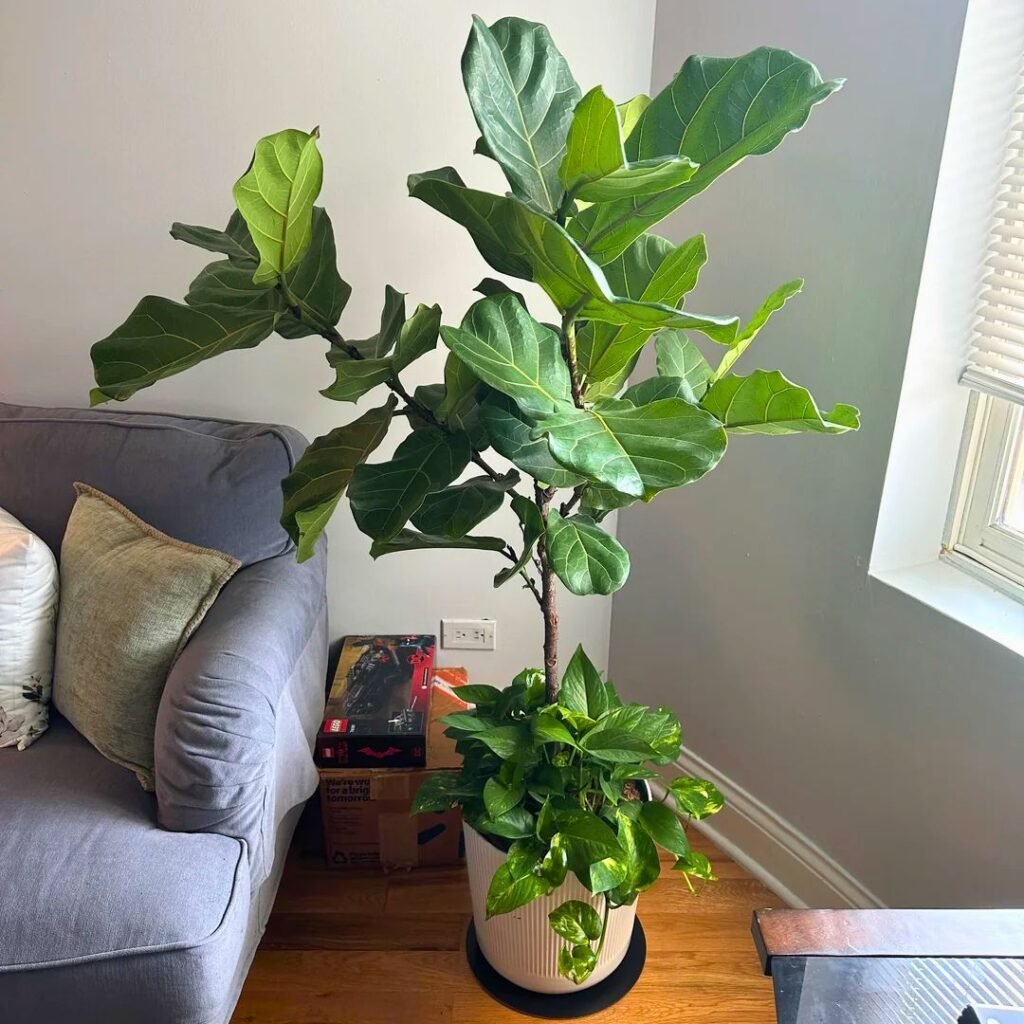
Fiddle leaf figs need lots of bright, indirect light to stay happy. If mine doesn’t get enough, it starts dropping leaves to save energy—usually the lower ones since they get the least sun.
They really do best near a window with filtered sunlight. If your plant is in a dark corner and losing leaves, that’s probably it.
Quick Tip: Put your fiddle leaf fig within three feet of a bright window, but keep it out of harsh afternoon sun that can scorch the leaves.
If you notice lower leaves turning yellow and falling off, your plant’s likely craving more brightness. Moving it closer to a light source can work wonders, sometimes in just a few weeks.
3) Sudden temperature changes
Fiddle leaf figs just hate temperature swings. I’ve seen them drop leaves like crazy if they’re near drafts from AC, heaters, or a cold window in winter.
They want steady temps—think 60-75°F. If the temperature bounces around, the plant gets stressed and starts shedding leaves to protect itself.
Watch out for spots near exterior doors or windows that let in cold air. I avoid putting mine near radiators or AC units that cycle on and off.
Quick tip: Feel the air around your plant at different times of day to spot problem areas.
Even moving your fig from a warm room to a cold one can trigger leaf drop. If you have to relocate it, try to pick a spot with similar temps. Seasonal changes matter too—switching from heat to AC, or opening windows on chilly nights, can be a shock for your plant.
4) Low humidity levels

Fiddle leaf figs come from tropical rainforests, where the air is always humid. When I bring one home, the dry indoor air—especially in winter—can really stress it out.
Low humidity makes the leaf edges turn brown and crispy before they drop. The plant loses moisture through its leaves faster than it can replace it, so you might see the leaves look a bit droopy or sad before they fall.
Quick Tip: Place a humidifier near your plant or group it with other plants to create a more humid zone.
You can mist the leaves a few times a week, but honestly, that only helps for a little while. Another trick is setting your pot on a tray filled with pebbles and water—just make sure the pot sits on the pebbles, not in the water itself.
5) Pests like spider mites
Spider mites are tiny, but they love to snack on fiddle leaf figs. You might not spot them at first, but they can cause big problems fast by sucking the sap from leaves and making them drop.
I always check the undersides of the leaves—that’s where spider mites hide. Look for tiny white or yellow spots, or even fine webbing between stems. Leaves might look dull or dusty too.
If you see these pests, wipe every leaf with a damp cloth right away. You can spray the plant with insecticidal soap or neem oil, but you’ll need to repeat the treatment a few times since the eggs can survive the first round.
Quick Tip: Mist your fiddle leaf fig regularly—spider mites hate humidity and thrive in dry conditions.
Keep your plant away from other houseplants until the mites are gone. They spread fast and you don’t want them moving in on your other plants.
6) Nutrient deficiencies
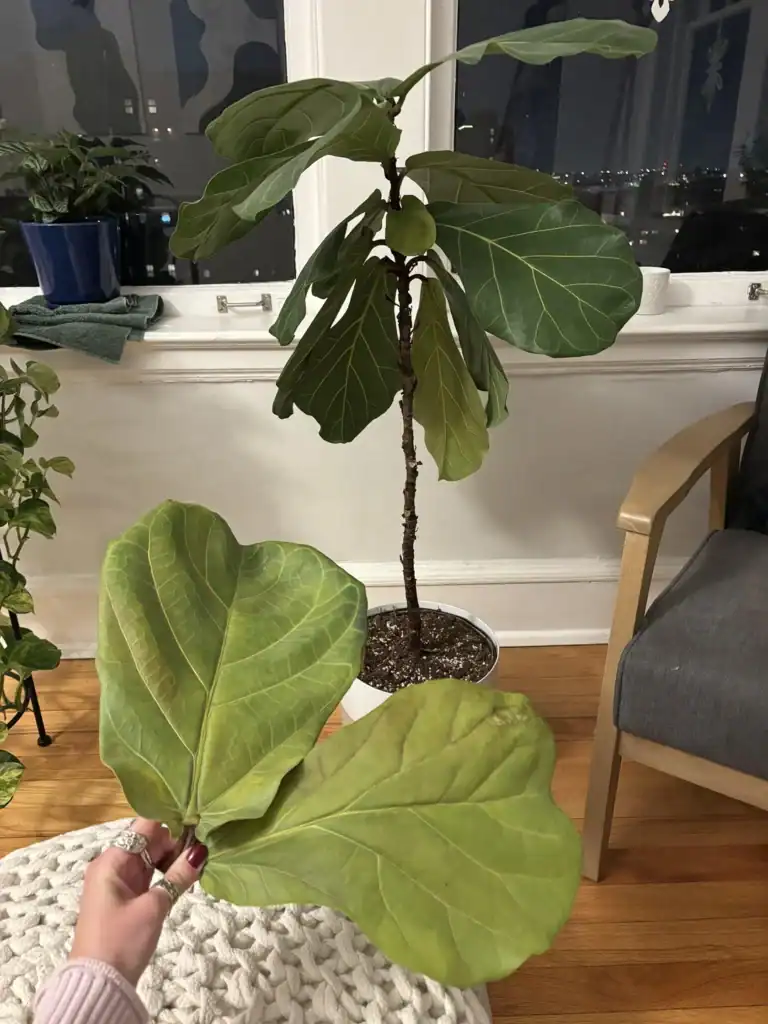
Fiddle leaf figs need regular feeding to stay healthy. Without enough nutrients, they’ll start dropping leaves as a warning sign.
The most common issue is nitrogen deficiency—older leaves turn yellow and fall off, and you might notice slower growth or smaller new leaves.
During spring and summer, these plants are hungry and need fertilizer about once a month. I use a balanced liquid fertilizer, diluted to half strength.
Quick Tip: Always water your plant before fertilizing so you don’t burn the roots.
If you haven’t fed your plant in ages, that could be why leaves are dropping. Start a regular feeding schedule and you should see improvement in a few weeks. Just don’t go overboard—too much fertilizer can cause brown tips and damage roots.
In fall and winter, cut back to feeding every other month or just stop. The plant slows down in cold months and doesn’t need as much food.
7) Improper soil drainage
Your fiddle leaf fig needs soil that drains water quickly. If water sits in the pot too long, roots can’t breathe and start to rot, leading to droopy, yellowing leaves that eventually fall off.
I always check that my potting mix feels light and airy—not heavy. A good mix should have perlite, pine bark, or coarse sand mixed in with the regular soil to create air pockets.
Quick Tip: Stick your finger two inches into the soil—if it feels soggy or stays wet for more than a week after watering, your drainage is probably bad.
Pot choice matters too. Make sure it has drainage holes at the bottom so water doesn’t get trapped. If you see water pooling on top of the soil, that’s a red flag your mix is too compact.
8) Drafts from windows or doors
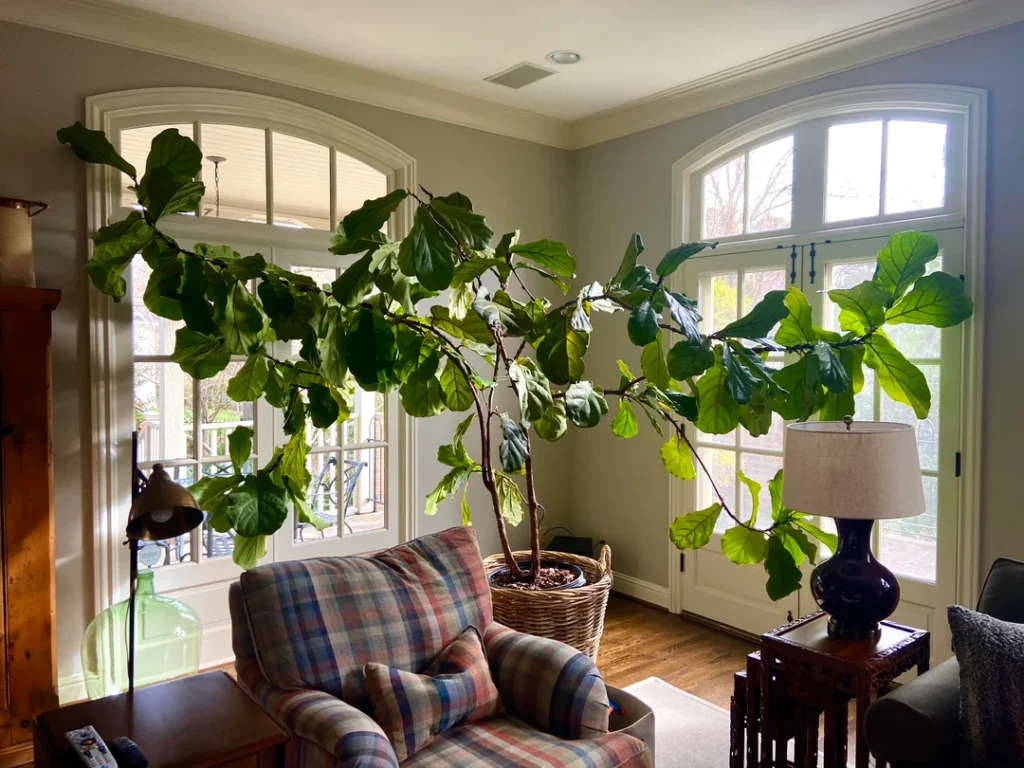
Cold air sneaking through windows and doors can stress your fiddle leaf fig fast. I’ve seen these plants drop leaves within days if they’re too close to a drafty spot—they really don’t like sudden temperature changes.
Even a small draft can be a problem if it hits your plant regularly. Check for cold air around windowsills, door frames, and air vents, especially in winter.
Quick Tip: Hold your hand near windows and doors on a cold day to feel for air leaks before putting your plant there.
Move your fiddle leaf fig at least three feet away from any drafty areas. If leaves are dropping on one side, that’s often the drafty side. Sealing up those gaps with weather stripping helps your plant—and your heating bill too.
9) Transplant shock
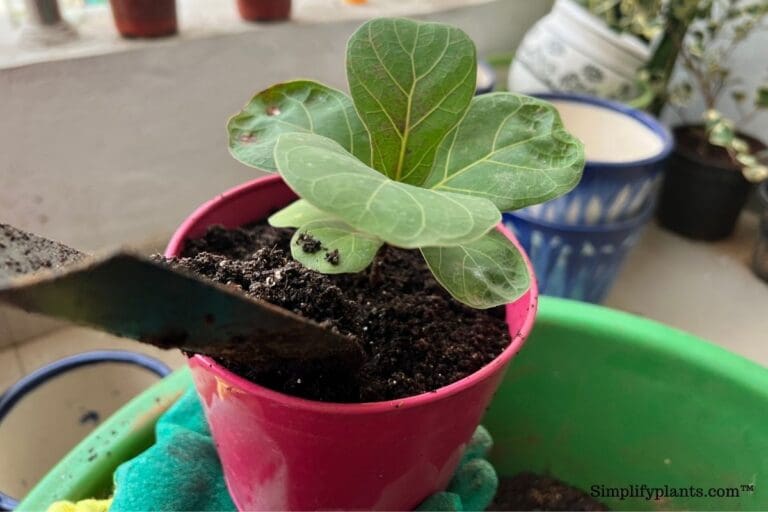
Moving your fiddle leaf fig to a new pot can stress it out. I’ve seen plants drop leaves for weeks after repotting, since their roots need time to adjust to the new soil and space.
If you just repotted and your fig is losing a few leaves, don’t panic. The roots got disturbed, and now the plant can’t take up water as well for a bit.
Quick Tip: Wait at least a year between repots to avoid stressing your plant too often.
Try to repot only when necessary—like when roots are circling the pot or poking through drainage holes. Spring is the best time since your fig is growing and can recover faster. Keep watering light after repotting; soggy soil makes things worse when roots are already struggling.
Give your plant a few weeks to settle in. The leaf drop should slow down once the roots get comfortable in their new home.
Understanding Fiddle Leaf Fig Leaf Drop
Not all leaf drop means your plant’s in trouble. Some shedding is totally normal, while other types are a red flag that something’s up.
Natural Leaf Shedding vs. Problematic Leaf Drop
My fiddle leaf fig naturally drops its oldest leaves every now and then. Bottom leaves are usually the first to go, and it happens slowly—maybe one or two leaves every few months.
These older leaves turn yellow gradually before falling off, and new growth keeps popping up at the top. Problematic leaf drop is a whole different story. Multiple leaves fall at once, sometimes from all over the plant, and they might turn brown, get spots, or drop while still green.
I’ve noticed this usually happens when something in the environment changes suddenly or if care slips a bit. If I see three or more leaves drop in a week, that’s my cue to take a closer look. Natural shedding is slow and predictable; problem shedding feels sudden and honestly, a bit alarming.
Quick Tip: A healthy fiddle leaf fig should grow new leaves faster than it loses old ones.
Signs to Watch For Before Leaf Loss
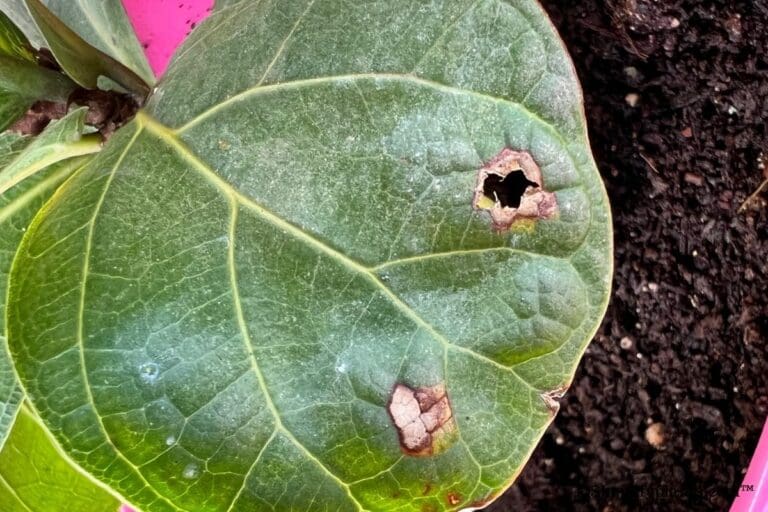
I always check for brown spots or edges on the leaves first. Those dark patches often show up a week or two before the leaf actually drops.
Yellowing leaves give me another clue. If yellow starts at the veins and moves outward, I check my watering. If it starts at the edges and moves in, I look at light or nutrients instead.
Drooping or curling leaves are another warning sign. Leaves might feel softer or start to bend down at the stem. I also watch for leaves that look dull instead of glossy—texture changes usually happen before they fall.
How to Promote Healthy Leaf Growth
Your fiddle leaf fig needs the right conditions and a steady care routine to grow strong, vibrant leaves. Getting the light, humidity, and feeding schedule right honestly makes all the difference.
Establishing the Ideal Environment
I always put my fiddle leaf fig near a bright window where it gets plenty of indirect light. These plants want about six hours of filtered sunlight a day to really thrive.
Direct sun will scorch the leaves, so I keep mine a few feet back from south-facing windows. East-facing windows are actually great—they give gentle morning light without the harsh afternoon rays.
Humidity matters more than most people think. I shoot for 40-60% humidity, which you can check with a cheap hygrometer. When the air gets too dry, especially in winter, I run a humidifier nearby or use a pebble tray with water.
Temperature should stay between 60-75°F. I keep my plant away from drafty doors, heating vents, and AC units that cause temperature swings.
Quick Tip: Rotate your plant a quarter turn every week so all sides get equal light and growth stays even.
Best Practices for Watering and Feeding
I water my fiddle leaf fig once the top couple inches of soil feel dry. In summer, that’s usually about once a week, but in winter, it can stretch to every 10-14 days.
When I do water, I make sure to soak the soil thoroughly until water runs out the bottom. Then I dump out the saucer—nobody wants soggy roots.
Honestly, overwatering is way more dangerous than letting things get a bit dry, so I try to be careful. If I’m unsure, I usually just wait another day or two.
During spring and summer, I give my plant a balanced liquid fertilizer every 2-4 weeks, but always diluted to half strength. Once fall hits, I slow down to monthly feedings or sometimes skip it entirely since growth pretty much stalls.
Salt from fertilizer can build up as a white crust on the soil, which looks kind of gross. Every few months, I flush the soil with plain water to keep that in check.
Quick Tip: Use water that’s at room temperature—cold water can shock the roots, and that’s never good.
Frequently Asked Questions
Fiddle leaf figs drop their leaves for all sorts of reasons: too much water, too little light, sudden temperature changes, dry air, or even pests like spider mites.
What could be causing my fiddle leaf fig to lose its leaves?
I’ve seen these plants drop leaves from watering issues, bad lighting, temperature swings, low humidity, and pests. Overwatering is probably the most common culprit—it leads to root rot, which makes leaves brown and fall.
Sometimes, it’s not just one thing. Maybe your plant’s stuck in a dark spot and also getting too much water. Double trouble.
Quick Tip: Start by checking the soil moisture and leaf color. It’ll help you figure out what’s going wrong.
How does improper watering affect my fiddle leaf fig’s leaf retention?
Overwatering is the classic mistake with these guys. Soggy soil suffocates the roots, so they rot and can’t send water or nutrients up to the leaves. That’s when you see browning and dropping.
Not watering enough can be an issue too, though it’s less common. If the soil gets bone dry, leaves might crisp up and fall off.
I just poke my finger about two inches down into the soil before watering. If it feels damp, I hold off a bit longer.
Quick Tip: Only water when the top two inches of soil are totally dry. No shortcuts here.
Can low humidity levels lead to leaf drop in fiddle leaf fig plants?
Low humidity dries out the leaves faster than the roots can keep up. You’ll notice the edges turning brown and crispy before they fall.
These plants are used to tropical humidity, but in my place, it drops to 30-40% in winter, which is just not enough for them.
Grouping plants together or running a small humidifier nearby has really helped. Misting? Not so much. It barely makes a difference.
Quick Tip: Try to keep humidity at 40-60%, especially during those dry winter months.
What role does light play in keeping my fiddle leaf fig healthy?
They need bright, indirect light if you want them to keep their leaves. Without enough light, they can’t photosynthesize well, and the lower leaves are the first to go.
I’ve moved plants out of dark corners after seeing leaf drop, and just getting them near a bright window usually helps a lot.
Direct sunlight can be a problem too—it’ll burn the leaves and cause brown spots. I keep mine a few feet away from the sunniest windows, just to be safe.
Quick Tip: East or west-facing windows seem to work best for that happy medium.
Could pests or diseases be responsible for my fiddle leaf fig shedding leaves?
Spider mites are sneaky. They suck the sap out of leaves, leaving yellow spots and webbing underneath—definitely something to watch for.
Root rot from too much moisture is another big one. If the roots turn black and mushy, water can’t get to the leaves, and they drop.
Scale insects show up as little brown bumps. They drain the plant’s energy until leaves start falling off.
Quick Tip: Give your plant a quick check every week for webbing, sticky gunk, or weird spots on leaves and stems.
How do I know if temperature changes are affecting my fiddle leaf fig?
Sudden temperature drops or cold drafts can really shock fiddle leaf figs, leading to rapid leaf loss. I found this out the hard way—my plant was sitting near an air conditioning vent and, to my dismay, dropped five leaves in just a week.
These plants honestly prefer stable temperatures, somewhere in the 60-75°F range. If things dip below 55°F, they’re not happy at all.
Shuffling your plant from a cozy spot to a chilly corner? That can make it drop leaves, too. Even a big swing between day and night temps seems to give them trouble.
Quick Tip: Try to keep your plant away from heating vents, air conditioners, or drafty windows and doors. It’s a little thing, but it makes a difference.
Note: Some images in the articles are sourced from Reddit and Other Platforms For Reference Purpose.