5 Indoor Palms That Survives Cold Weather
I really love filling my place with greenery, but let’s be honest—it gets tricky when cold air sneaks in during winter.
Some palms just can’t take the chill, and it’s always a bit disappointing to see them struggle.
That’s why I look for indoor palms that can stay healthy even when cold drafts move through the house.
Here, I’ll share a few palm varieties that don’t just survive but actually keep looking good in cooler conditions.
I’ve also got a handful of easy tips for keeping them strong so your home can stay fresh and green all year.
Please note: Simplify Plants is reader-supported. As an Amazon Associate, I earn from qualifying purchases made by our readers with no extra cost added to you all! Some links in the post are affiliate links and I get a commission from purchases made through links in the post.
1) Parlor Palm (Chamaedorea elegans)

I’m a fan of the Parlor Palm because it’s honestly one of the easiest indoor palms to care for. The soft, feathery fronds make any space feel more welcoming.
Even better, it seems to handle cooler air and light drafts without much fuss. I keep mine in indirect light—direct sun just scorches the leaves, so I always stick to gentle, filtered light.
This palm grows just fine in average room temperatures, even when things dip a bit in winter. I don’t stress too much about drafts from windows or doors, as long as it’s not actually freezing.
When watering, I wait until the top inch of soil dries out before I add more water. Overwatering is a real issue, so I only use pots with drainage holes.
I also appreciate how slowly the Parlor Palm grows. No need to repot all the time, and it stays a nice, manageable size for small spaces.
Plus, it helps purify the air, which is a nice bonus. With a little attention, this palm stays green and attractive all year.
2) Kentia Palm (Howea forsteriana)

The Kentia Palm is another favorite because it’s honestly one of the easiest palms to keep happy indoors. Those long, arching fronds really make any room feel more relaxed.
It grows well in low to medium light, so you don’t need a sunny window. I just keep mine near indirect light and it does fine.
The Kentia Palm also handles cooler drafts better than most other palms I’ve tried. Even when the temperature drops near windows or doors, mine stays looking fresh.
I only water when the top inch of soil feels dry. Too much water is a problem, so I try to stick to a careful routine.
Another plus: the Kentia Palm grows slowly, so no need to repot all the time. It just settles in and stays put for years.
It’s simple, reliable, and doesn’t mind a little chill. I can count on this palm through the seasons.
3) Lady Palm (Rhapis excelsa)

The Lady Palm is super easy to care for, honestly. Its fan-shaped leaves look great all year, even if the air is a bit cooler.
It’s one of those palms that actually handles cold drafts better than most tropical plants. I don’t worry much if the room cools off a bit in winter.
I keep mine in bright, indirect light, but it also does fine in lower light. That’s perfect for corners or spots away from windows.
It grows slowly, so I rarely have to repot. Plus, it stays neat and doesn’t take over the room, which is great for small spaces.
I water when the top inch of soil is dry. Overwatering can cause root problems, so I make sure my pot drains well.
It doesn’t seem to need much fertilizer either—a light feed every few months is plenty.
The upright leaves give my place a clean, natural touch without any drama.
4) Bamboo Palm (Chamaedorea seifrizii)
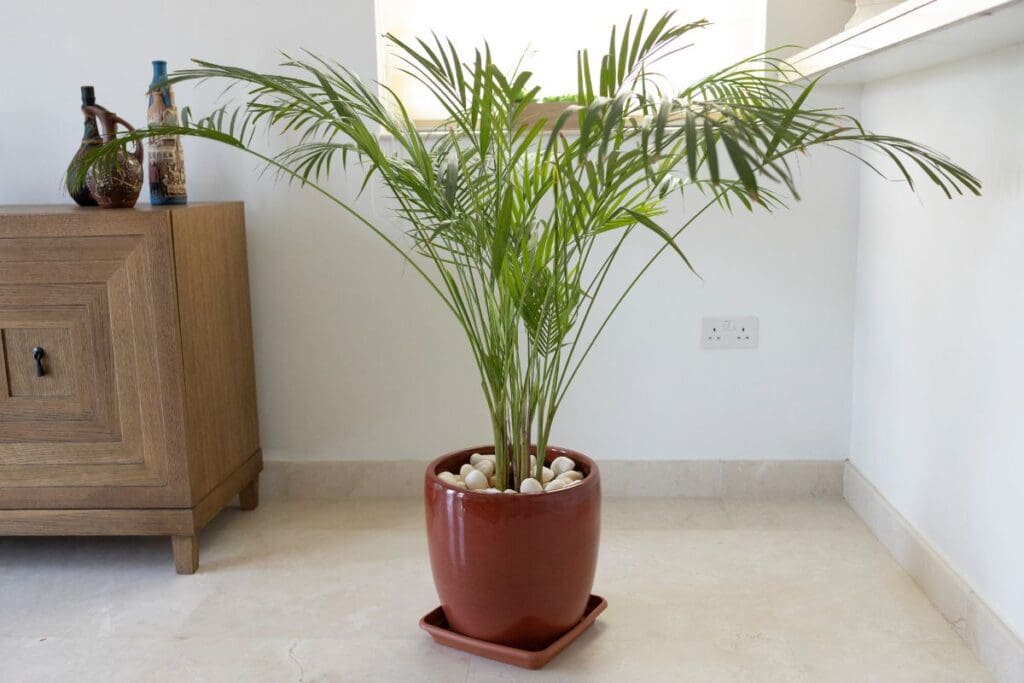
The Bamboo Palm brings a calm, tropical vibe without being a hassle to care for. The tall, slim stems look a bit like bamboo, which makes it stand out.
It does well in low to medium light, so you don’t need a sunny window. Just keep it out of direct sun—those leaves burn easily.
I’ve noticed it handles cool drafts better than most palms. Even when the air gets a little chilly by the window, it stays green.
It also helps keep the air fresh. I like that it can grow tall but doesn’t spread out too much, so it fits nicely in smaller rooms.
To keep it looking good, I water when the top inch of soil is dry, and I never let it sit in water.
Every so often, I wipe the leaves to get rid of dust. With just a bit of care, my Bamboo Palm stays strong and adds a nice natural touch.
5) Sago Palm (Cycas revoluta)

The Sago Palm isn’t a true palm, but it sure looks the part with those stiff green fronds. What’s great is it can handle cooler indoor conditions.
I keep mine in a bright spot with indirect light. It doesn’t need much water, so I let the soil dry out a bit before watering.
It grows slowly, which is honestly a relief—no constant repotting. It holds its shape well, too.
What stands out is how well it tolerates cool drafts. That makes it a solid pick for spots near windows or doors in colder months.
I’m careful not to overwater—soggy soil is a no-go. A well-draining potting mix works best.
The fronds stay green and firm even if the temperature drops a little. That’s why I trust this plant to look good year-round.
Just a heads-up: the Sago Palm is toxic if eaten, so I keep it away from pets and kids.
For me, it adds structure and a bit of the tropics without needing much attention. If you want a palm-like look indoors, it’s a reliable choice.
Understanding Cold Drafts and Indoor Palms
I’ve noticed that cold air inside can stress palms more than low light or dry soil. The way a palm reacts to sudden temperature shifts usually tells me if it can handle the spot I’ve picked.
How Cold Drafts Affect Palm Health
When cold air sneaks in through windows, doors, or vents, it drops the temperature quickly. Palms prefer steady warmth, so a sudden chill really saps their energy.
I’ve seen leaves turn weak and growth slow when a draft hits them over and over. Cold drafts also dry the air around the plant, so the soil loses moisture faster.
This can throw off watering routines. If I keep watering on autopilot, roots might end up too wet or too dry—either way, the plant gets stressed.
Different palms deal with this in their own ways. Tropical palms like Areca or Majesty palms usually struggle more, while tough ones like Parlor palms are less bothered.
Knowing which palm I have helps me pick a good spot for it indoors. If I move a plant just a few feet away from a drafty window, it really can make a difference.
Signs Your Palm Is Struggling With Temperature
First thing I look for is brown tips on the leaves. That’s usually a sign the palm’s losing moisture too fast from cold, dry air.
If it keeps happening, the brown spreads and entire fronds might start to yellow. Another clue is slowed or stunted growth—if a palm stops putting out new leaves, it’s probably stressed from the temperature.
I also keep an eye out for drooping fronds, especially if the roots are cold.
Sometimes the soil gives it away. If the top layer stays damp longer than usual, the roots might not be taking up water because they’re too cold. That’s a warning sign I never ignore.
By catching these signs early, I can move the plant before it gets too weak.
Caring for Indoor Palms in Cooler Environments
Keeping palms healthy in cooler rooms is all about paying attention to where I put them and tweaking my care a bit. Small changes with placement and watering can make a big difference when cold air or dry heat is in play.
Best Placement Tips for Drafty Rooms
I try not to put my palms right next to windows, doors, or vents where cold air blows straight on them. Even tough palms can struggle if the leaves get hit by sudden drafts.
Instead, I keep them a few feet away from drafty spots. My rule is at least 3–5 feet of space between the plant and any source of cold air.
I also prefer placing palms near interior walls since those stay warmer. If I really want one by a window, I use a thick curtain at night to block the cold.
Sometimes I put the plant on a stand or table so it’s not sitting on a cold floor—roots can get stressed that way, especially in winter.
Humidity and Watering Adjustments
Cool air usually means low humidity, which dries out palm leaves. I use a humidifier or set a tray of water with pebbles under the pot to help.
I always check the soil before watering by sticking my finger in about an inch. If it’s dry, I water slowly until it drains out the bottom.
I don’t water on a strict schedule—cooler rooms mean the soil dries out more slowly. Sometimes I’ll mist the leaves with room-temp water to help prevent brown tips and keep things looking fresh.
During winter, I ease up on fertilizer since growth slows down. Too much food when it’s cold can actually hurt the roots.
Frequently Asked Questions
I focus on palms that can handle cooler air, how to keep them away from drafts, and simple care tips. Spotting signs of stress early helps me keep my plants healthy all year.
What are some palm species that can tolerate lower temperatures indoors?
From my experience, Parlor Palm, Kentia Palm, and Lady Palm do well in cooler rooms. They bounce back from short temperature drops better than most tropical palms.
How do I protect my indoor palms from cold drafts?
I move my palms away from drafty windows and doors. Curtains or blinds at night help block out the cold, too.
Can you recommend any cold-hardy indoor palm varieties?
Absolutely. The Bamboo Palm and Sago Palm are both pretty adaptable indoors. As long as I keep them out of direct drafts, they don’t mind a little chill.
What are the best practices for caring for palms in cooler climates?
I try to keep the soil slightly moist, but not soggy—palms really don’t like wet feet.
Bright, indirect light is key, especially since winter sun just doesn’t pack the same punch.
How often should I water my indoor palm during the colder months?
Honestly, I water way less in winter. The soil just doesn’t dry out as fast.
Usually, I’ll wait until the top inch feels dry before reaching for the watering can.
What signs should I look for to ensure my palm isn’t suffering from the cold?
I usually keep an eye out for yellow or brown leaf tips. Sometimes the fronds start to droop, or growth just kind of stalls, which always makes me wonder if it’s getting too chilly in there.
If you spot any of these, your palm probably isn’t loving the cold air.
Note: Some images in the articles are sourced from Reddit and Other Platforms For Reference Purpose.