17 Best Plants For Pool Landscaping
I’ve always enjoyed creating outdoor spaces that feel relaxing—without a ton of upkeep.
Let’s be honest, when it comes to pools, the right plants really do make all the difference. You want beauty, shade, and color, but not a bunch of extra cleanup or constant trimming.
Picking low-mess plants that still pack a visual punch keeps your pool area looking sharp and stress-free.
So, here are some of my favorite plants for poolside landscaping. You’ll find options with bold textures, neat shapes, and rich color that can handle life near water.
It’s honestly not that hard to build a lush, inviting space that looks great year-round—and doesn’t eat up your weekends with chores.
Please note: Simplify Plants is reader-supported. As an Amazon Associate, I earn from qualifying purchases made by our readers with no extra cost added to you all! Some links in the post are affiliate links and I get a commission from purchases made through links in the post.
1) Blue Fescue Grass

I’m a big fan of Blue Fescue Grass around pools. It adds this soft, silvery-blue color that just pops next to water or bright stone. Plus, it stays compact, so the whole area keeps that tidy, modern vibe.
This grass is super low-maintenance. I usually just trim it once or twice a year—no big deal. It barely drops leaves, so there’s not much mess to worry about.
I’ve noticed Blue Fescue thrives in full sun and well-drained soil. Once it’s settled, it handles heat and drought surprisingly well, whether you’re in a dry or humid spot. I like grouping it along walkways or mixing it with succulents for a bit of contrast.
Since it forms tidy clumps, it works nicely along edges, corners, or borders. The cool tone is a good balance for warmer paving stones or concrete, and it pairs well with plants that have bold flowers or lush green leaves.
Blue Fescue brings a fresh, clean look to any pool area. I love that it keeps its blue hue all year and doesn’t mind a little splash from the pool. Honestly, it’s one of those plants that just quietly upgrades the whole space without asking for much.
2) Liriope Muscari (Lilyturf)

I keep coming back to Liriope Muscari—or Lilyturf—for pool areas. It always looks neat and stays right where you want it. Those grassy leaves and little purple flower spikes add a gentle bit of color, and you won’t be fishing debris out of the pool.
It grows well in sun or partial shade, so you’re not limited on where you can plant it. I don’t stress about it drying out, either; it handles heat and light changes like a champ. Works just as well in beds as it does in pots.
One thing I appreciate is how low-maintenance it is. A quick trim once a year keeps it looking sharp, and that’s about all it asks for.
This plant forms tidy clumps that help control soil erosion. That means less mulch or dirt getting washed into the pool after a big rain. It spreads slowly, so it won’t crowd out other plants.
Liriope Muscari looks great with stone borders, tropicals, or modern designs. The simple green texture adds a nice balance and makes the space feel calm and complete.
3) Agave Americana
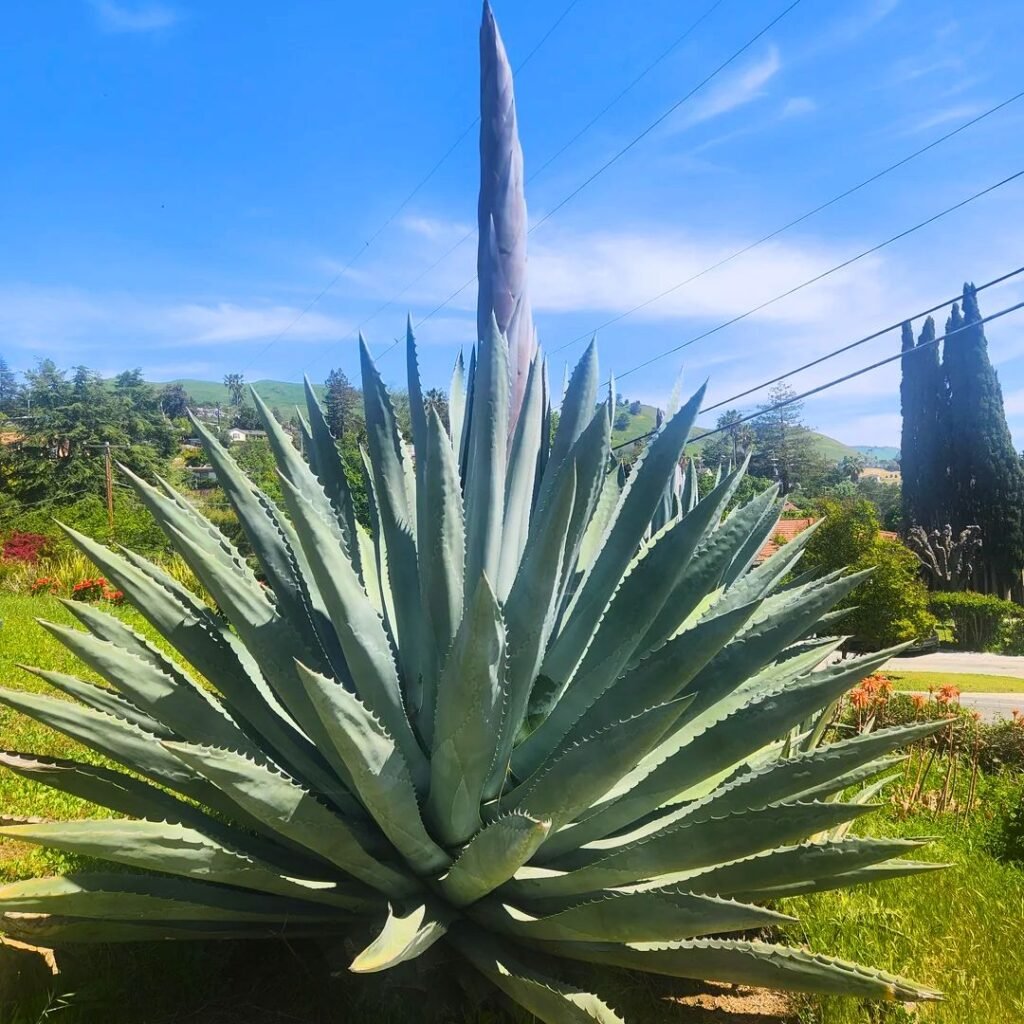
I can’t say enough about Agave Americana around pools. It’s bold, dramatic, and honestly, barely needs any care. Those big, spiky leaves make a statement, and it’s perfect for hot, dry spots.
This agave doesn’t drop leaves or flowers often, so the pool stays cleaner. It barely needs water—just a drink every few weeks in summer, and that’s it.
Agave Americana grows slowly, but as it matures, it turns into quite the focal point. I give it plenty of space since the leaves can really spread out. The gray-green color looks awesome against stone, concrete, or the blue of the pool.
Just a heads up, I don’t plant it too close to walkways—the leaf tips are sharp. It’s best as a background plant or near the corners of a deck. In big planters, it adds a modern, clean vibe that works with so many styles.
It’s one of those plants that lets you relax more and clean less. Low mess, low maintenance, and high impact—what’s not to love?
4) Dwarf Mondo Grass

Dwarf Mondo Grass is a go-to for me because it’s tidy and super easy to manage. It only grows a few inches tall, so it’s perfect for borders and those awkward, narrow spots. I never have to worry about it dropping leaves into the pool.
It grows in tight clumps, making a soft, deep green carpet. Works great between pavers or along walkways. Since it spreads slowly, you won’t be constantly trimming or dividing it.
It’s really low-maintenance. It tolerates both heat and shade, so I can plant it almost anywhere around the pool. Once established, it barely needs water.
In summer, you’ll see small lavender or white flowers tucked close to the leaves. They add a subtle touch of color—nothing too flashy. I think it gives the area a clean, balanced look.
If you want a polished landscape with minimal mess, Dwarf Mondo Grass is hard to beat. Its neat growth and deep green color keep the pool area looking fresh year-round.
5) Japanese Forest Grass

I have a soft spot for Japanese Forest Grass around pools. It’s got this soft, flowing look that feels almost calming. The arching blades and bright color make the space feel a bit more peaceful and natural.
It grows best in partial shade, so it’s perfect for spots that don’t get blasted by sun all day. I like pairing it with stone or darker foliage—those golden-green leaves really stand out. It’s also handy for filling gaps between bigger plants.
It’s a low-maintenance pick. No messy leaves or petals in the pool. Just a quick trim in early spring, and it’s set for the season.
Japanese Forest Grass stays compact, usually about 12 to 18 inches tall. That makes it great for edging paths or pool borders. It also does well in containers if you want the option to move things around.
If you’re after reliable color and texture from spring through fall, this grass is a smart choice. It gives the pool area a peaceful, natural vibe without much fuss.
6) Society Garlic (Tulbaghia)

I’ve grown to love Society Garlic around pools because it adds soft color and texture with basically no trouble. The slender green leaves look tidy year-round, and the lavender-pink flowers bring a cheerful pop in the warmer months.
It’s a neat plant—doesn’t drop leaves or flowers everywhere. I find it perfect for low-maintenance landscaping where I don’t want debris in the water. The clumps fit nicely along edges or tucked between stones.
Society Garlic loves full sun and can handle heat and drought once it’s settled in. At first, I water it regularly, but once the roots are established, I cut back. It even tolerates mild frost, so it’s reliable in lots of different climates.
The light garlic scent actually helps keep pests and mosquitoes away—not a bad bonus for poolside lounging. I like mixing it with hardy plants like agave or lantana for a balanced, colorful look that’s easy to care for.
When planting, I leave space between clumps for airflow. This keeps things clean and avoids overcrowding. A little trim now and then keeps it looking fresh.
For a bright, low-mess plant that still feels decorative, Society Garlic is a great choice. It brings just enough color and movement to make the pool area feel calm, clean, and inviting.
7) Lavender

I always enjoy planting lavender near a pool. It adds color, fragrance, and this chill energy that’s hard to beat. The purple flowers look fantastic against green plants and blue water, and brushing past it releases that fresh, relaxing scent.
Lavender is really low-maintenance. It thrives in full sun and dry soil, so I don’t have to worry about watering all the time. Once it’s established, it handles heat like a pro.
I also appreciate that lavender doesn’t drop a lot of leaves or petals. The area stays neat, and the sturdy stems hold up well even when it’s windy or hot.
It helps repel pests like mosquitoes and flies. I’ve definitely noticed fewer bugs around when it’s nearby, which makes hanging out by the pool a lot nicer.
Sometimes I mix different types—English, French, or Spanish lavender. Each grows a bit differently, but they all have that soft scent. I just make sure they get at least six hours of sunlight and good drainage.
Lavender looks amazing with stone borders or gravel beds. The purple blooms against natural surfaces just feels clean and modern. It’s a simple way to keep the pool area bright and welcoming.
8) Dwarf Oleander

Dwarf Oleander is great for bringing color and shape to pool areas without hogging space. It’s a compact version of the classic oleander shrub, perfect for edges or corners. The neat growth habit keeps everything looking tidy.
It stands out with bright flowers in pink, red, or white. Blooms last through the warm months, so you get steady color by the pool. I like mixing shades for a simple but eye-catching look.
Dwarf Oleander loves heat and sun, which makes it ideal for poolside spots. It tolerates dry conditions once it’s established, so you won’t be stuck watering it all the time.
Just a note: I always plant it away from the water. Oleander leaves and flowers are toxic if eaten, so I avoid spots where pets or little kids might play. As long as you keep that in mind, it’s a safe and practical choice for most backyards.
I prune it once or twice a year to keep the shape neat. It responds well, and new growth fills it out. The result is a dense, colorful border that looks great with the water’s reflection.
In groups, Dwarf Oleander can create a natural privacy screen. I like pairing it with textured plants like agave or ornamental grasses for variety. The mix keeps the design fresh and inviting.
9) Dwarf Pomegranate
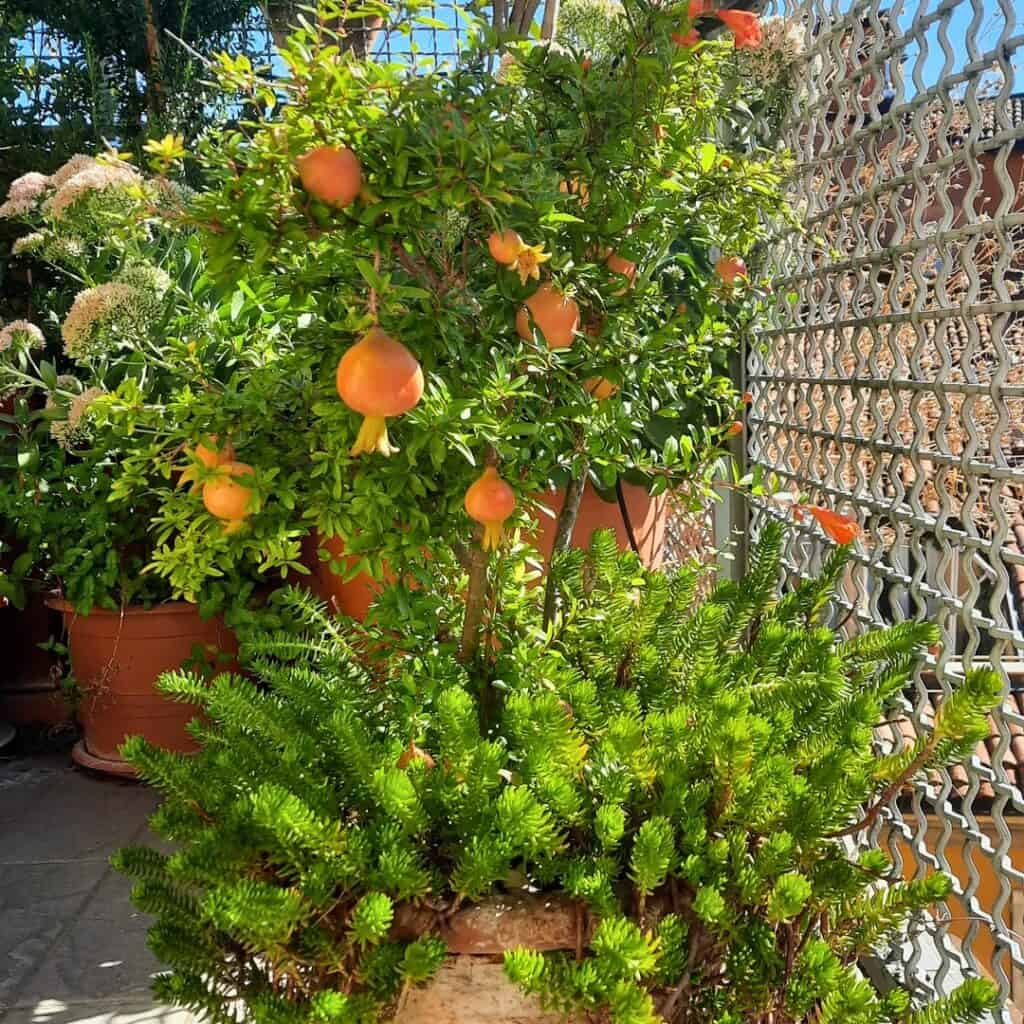
I just love how Dwarf Pomegranate brings a burst of color right up to the pool’s edge. Its small size is a lifesaver for tight spaces, and it won’t bully other plants out of the way.
The glossy green leaves stay neat, so there’s not a constant mess to sweep up. The vibrant orange-red flowers bloom all summer, making the pool area feel warm and inviting.
After the flowers, you get these cute little ornamental fruits. Honestly, they’re not for eating, but they look fantastic as decoration.
I’ve noticed it thrives in full sun and doesn’t ask for much water once it settles in. That means less fuss and less mess around the water.
It’s also surprisingly heat-tolerant—a win for hot, sunny backyards. Sometimes I’ll plant a row in containers along the pool deck.
The shrubs can be shaped easily for a clean, modern vibe. They also slide right into Mediterranean-style gardens without missing a beat.
What really seals the deal for me is how tough this plant is. It resists drought and shrugs off most pests, so I can kick back poolside instead of fussing over plants.
With enough sun and a little trimming, this shrub stays healthy and bright all year.
10) False Heather (Cuphea)

I like using False Heather near pools because it brings soft color without making a mess. The tiny purple or pink flowers add a gentle pop that looks great with stone, tile, or water.
Its fine texture fills in gaps between taller plants, which helps everything look finished. This plant stays neat and compact, so there’s barely any trimming or cleanup.
No worries about leaves in the pool or blocked drains. It can handle heat and humidity too, so it’s right at home in a sunny spot.
I plant it in well-draining soil and water regularly until it’s settled. After that, it’s pretty forgiving—even if I forget a day or two.
What I like most is how low-maintenance it is. False Heather keeps its shape, doesn’t attract pests, and doesn’t drop debris.
It’s just an easy, colorful pick that keeps pool areas tidy with hardly any effort.
11) Yucca Filamentosa

I’m a big fan of Yucca Filamentosa—or Adam’s Needle—for poolside planting. It’s tough, looks great, and handles full sun without complaint.
Once it’s settled in, it barely needs water. That’s a relief for those hot, dry summers.
The sharp, sword-like leaves stay green all year. I love the quirky, curly white threads along the edges—gives it a little personality, you know?
It adds texture and contrast next to smooth paving or softer plants. Plus, it’s really low-maintenance.
I almost never have to trim it, and it hardly ever drops leaves into the pool. That means more time to relax and less time cleaning.
In late spring or early summer, it sends up a tall flower spike loaded with creamy white blooms. The flowers tower above the leaves and look pretty striking.
They can get several feet tall, so you get instant height and drama. I always plant it in well-drained soil and keep it away from walkways.
The leaf tips are stiff and pointed—best to keep them at the back or near rocks. It pairs well with ornamental grasses or agave for a clean, bold look.
If you want structure without the mess, Yucca Filamentosa is hard to beat. It handles sun, heat, and poor soil like a champ, and the pool area just looks sharper with it around.
12) Mexican Feather Grass
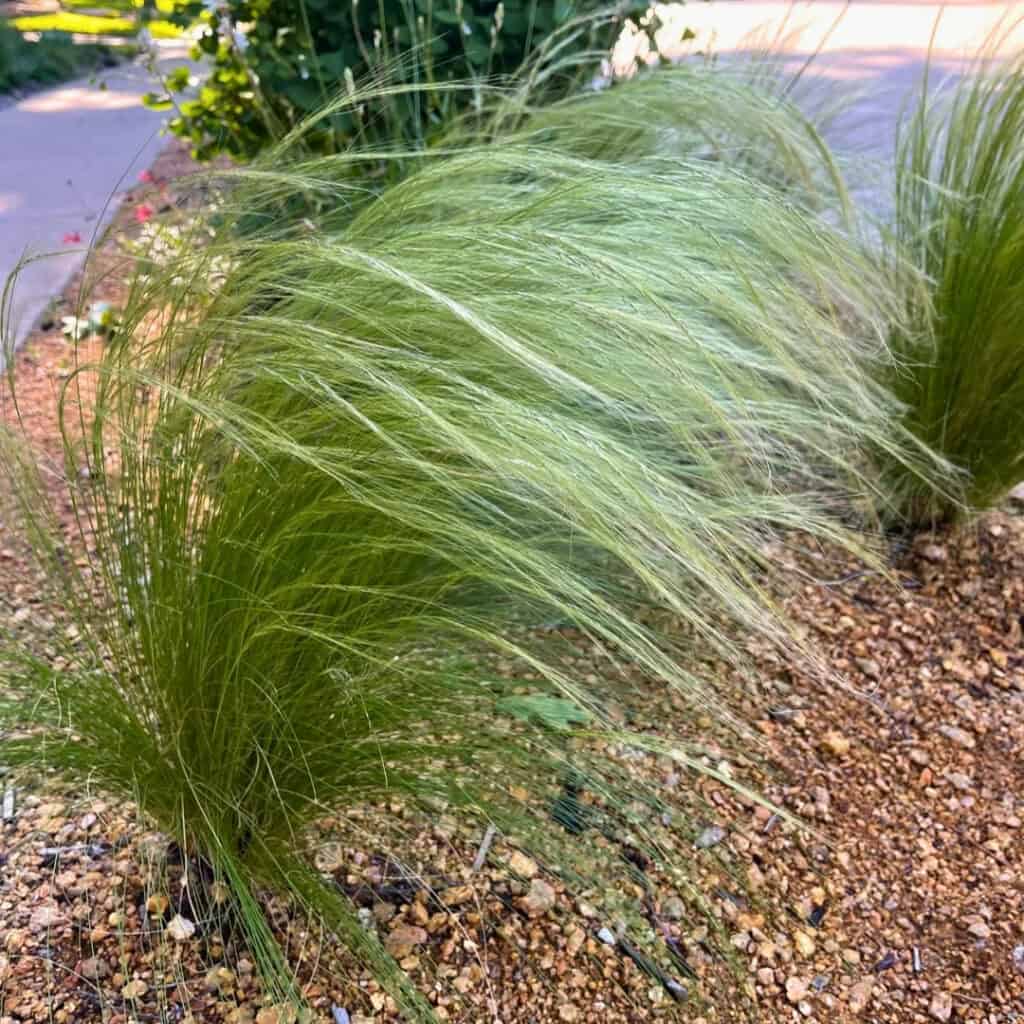
I’m always amazed by how Mexican Feather Grass brings soft movement to a poolside. The fine, silky blades sway in the breeze and make everything feel more relaxed.
The golden-green color blends seamlessly with stone, water, or tropical plants. It stays compact, usually about 1 to 2 feet tall and wide.
No wild spreading or mess—great for keeping borders neat. I also appreciate that it’s low-maintenance.
Once it’s established, it barely needs water and never needs mowing. It really thrives in full sun and well-draining soil.
Drought and heat don’t faze it, so I never stress during dry spells. A quick trim in late winter keeps it fresh before new growth.
When paired with succulents or stone paths, it adds an airy accent that softens hard edges. It works for modern or desert-style gardens, balancing bold shapes with its light touch.
Honestly, it’s just so easy and graceful—it’s one of my favorite low-mess poolside plants.
13) Sedum Autumn Joy
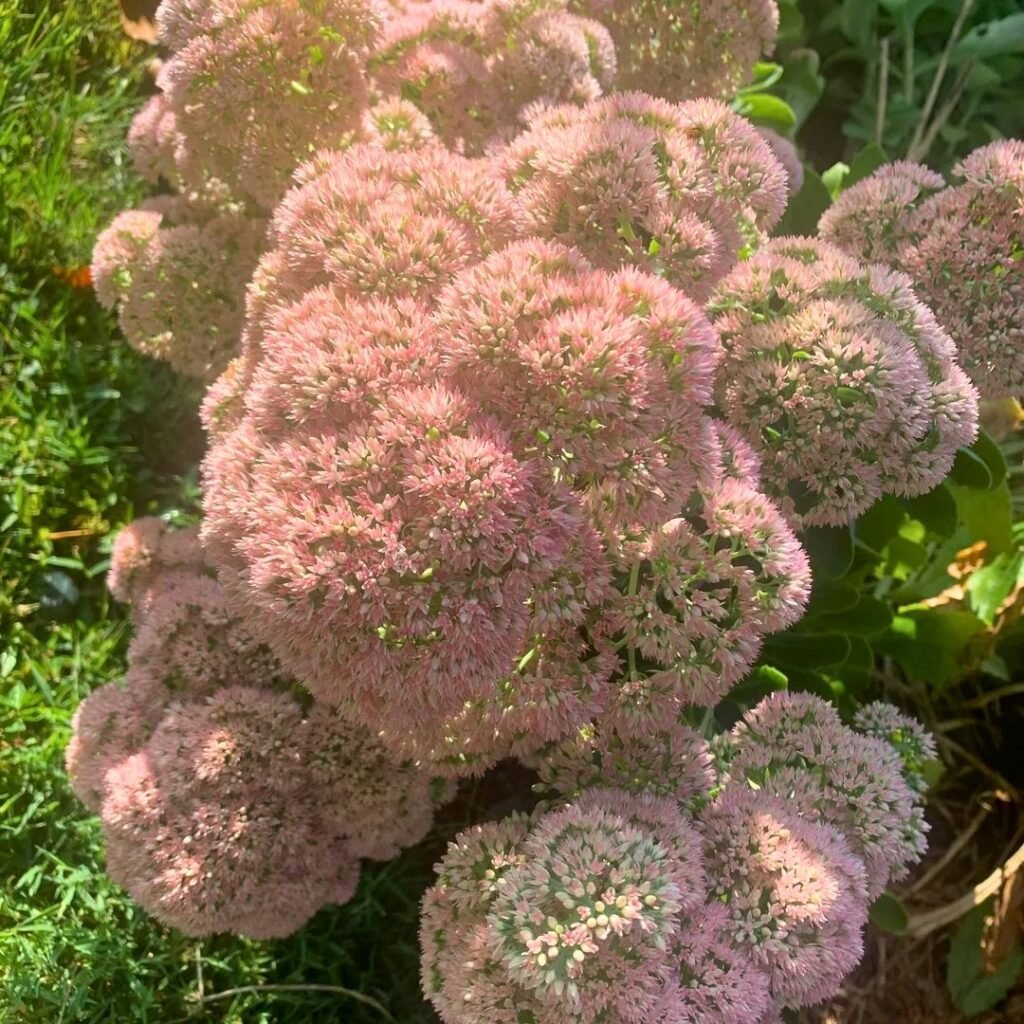
Sedum Autumn Joy is a staple near my pool. It looks good year-round, thanks to thick, tidy leaves that don’t drop much debris.
That means less cleaning and more lounging. In late summer, it bursts into clusters of rosy-pink flowers that slowly turn copper as the season goes on.
The color change keeps things interesting without extra effort. Even when the blooms fade, the dried flower heads stay neat through fall and winter.
Sedum loves full sun and dry soil, perfect for those heat-reflecting pool spots. Once it’s established, I barely ever water it.
It also does well in shallow or rocky areas where other plants might quit. I usually plant it along stone borders or in raised beds to show off its texture.
The succulent leaves pair nicely with ornamental grasses or lavender. That combo always gives a clean, polished look.
Pests and diseases rarely bother it, which keeps things simple. Each spring, I just trim away old stems for fresh growth.
This easy-care routine keeps the plant full and healthy year after year.
14) Boxwood Shrubs

I keep coming back to Boxwood shrubs for pool areas. They add neat, green structure and don’t make a mess.
Their dense, small leaves keep things looking sharp all year. When I want a clean border that won’t drop leaves into the pool, these are my go-to.
Boxwoods grow slowly, so trimming is rare. When I do shape them, they handle it beautifully.
I can make low hedges, rounded mounds, or even geometric shapes for a modern twist. That flexibility is a huge plus for small spaces.
They do best in well-drained soil and sun to partial shade. I water them regularly at first, then let them fend for themselves.
They stay green year-round in most places, keeping the pool area looking tidy. I also like mixing Boxwoods with flowering perennials or ornamental grasses.
Their steady color balances out bolder plants. Because they shed so little, I spend less time scooping leaves from the water.
Kept trimmed and healthy, Boxwood shrubs can last for years—definitely a low-maintenance and high-impact pick for any pool landscape.
15) Phormium (New Zealand Flax)

Phormium, or New Zealand Flax, is a favorite for adding strong structure around pools. The tall, upright leaves make any space look crisp and modern.
There are so many leaf colors—green, bronze, pink, even red. Mixing a few adds color without the fuss of high-maintenance flowers.
The leaves hold their shape all year, so the area always looks neat. Phormium thrives in full sun and well-drained soil.
Once it’s settled, it barely needs water. That’s a relief during hot summers when the pool gets the most use.
It’s also a low-mess plant. The leaves rarely fall, so the pool stays clean, and I’m not constantly fishing out debris.
When older leaves need trimming, I just snip them at the base. Because Phormium gets pretty tall, I usually plant it behind shorter plants or along fences for some height contrast.
The vertical shape adds depth but doesn’t block views or sunlight. If I want a softer look, I pick smaller varieties for containers or narrow beds.
They bring bold texture without taking up much space. I also appreciate that Phormium is salt-tolerant.
It handles pool splashes and even coastal air without missing a beat. With its tidy form and bold look, Phormium keeps the pool area stylish and easy to care for.
16) Spiky Yucca Rostrata

Yucca Rostrata instantly makes any poolside look modern and clean. Its tall trunk and spiky blue-gray leaves add structure without feeling too harsh.
When the sun hits, the leaves shimmer and brighten up the space. This plant stays neat and barely makes a mess.
I don’t worry about leaves in the water or clogged filters. Honestly, it’s kind of a “plant it and forget it” option.
Yucca Rostrata handles heat and drought like a pro. It’s perfect for sunny pool decks where other plants might wilt.
It likes well-drained soil and does well in dry, rocky spots. Just a quick soak now and then keeps it happy.
I like pairing it with soft-textured plants for balance. Around my pool, it looks great with smaller succulents and ornamental grasses.
The mix of shapes and colors gives a crisp, modern vibe. If you want a low-maintenance, bold plant that stays green all year, this yucca is a solid pick.
It doesn’t need pruning and keeps its shape through every season. For a tidy, eye-catching poolside, I’d absolutely recommend it.
17) Cordyline Australis

I’m a big fan of Cordyline Australis, or the Cabbage Tree, for a bold, tropical vibe around pools. The tall, slim trunk and spiky leaves really stand out and work well with modern or coastal styles.
This plant loves full sun and can handle dry conditions once it’s established. I find it super low-maintenance—barely any trimming or watering.
It drops leaves slowly, so pool areas stay tidy. I like planting Cordyline Australis in large pots or as a focal point in garden beds.
The upright form adds structure and height without crowding everything else. You can mix it with grasses or succulents for a clean, layered look.
There are several leaf colors—green, deep red, bronze—so I often mix them for more contrast. The color stays bright through the seasons, keeping things lively.
It even handles coastal winds and mild frost. I love how it keeps its shape and color, even during heat waves or chilly spells.
Cordyline Australis brings easy style to poolside spaces, and barely asks for anything in return.
Key Factors to Consider for Poolside Plantings
The best poolside plants can handle strong sunlight, resist chemical exposure, and thrive in well-drained soil. When I match the plant to the spot, the garden stays tidy and grows with almost no extra effort.
Sun Exposure and Shade Needs
First off, I always check how much sunlight my pool area actually gets. Most poolside spots are blasted with full sun, which can really stress shade-loving plants.
So, I stick with sun-tolerant species like agave, lavender, and ornamental grasses—these guys just keep going, even in the heat.
Shady spots, maybe under a tree or by a fence, call for shade-tolerant plants like ferns or hostas. I try to plan the layout so taller plants sit at the back, with shorter ones out front—otherwise, you end up with a weird patchwork of sunburned leaves.
Reflective surfaces like water or concrete? They can make things even hotter, so I keep that in mind. Mixing sun- and shade-lovers gives the space a more natural vibe and keeps things lower maintenance.
Impact of Pool Chemicals on Plants
Pools usually have chlorine or salt, and, let’s be real, splashing is pretty much guaranteed. I go for chemical-resistant plants like hibiscus, bougainvillea, or lantana—they don’t seem to mind a little treated water now and then.
I always leave a buffer—about 3 to 5 feet—between the pool and plant beds. That way, there’s less chance of water or soil getting where it shouldn’t.
Container plants or raised beds near the edge work great too. It’s just easier to control everything that way.
If I spot leaf burn or weird color changes, I’ll rinse foliage with fresh water. It sounds simple, but it really helps get rid of chemical residue.
Good spacing and airflow matter more than you’d think. Otherwise, things can get messy fast.
Soil Types and Drainage
Pool areas tend to have compacted soil, which is a pain for roots. I focus on well-draining soil to avoid rot and those slippery spots after rain.
Mixing in sand, compost, and fine gravel usually does the trick. Water moves through more evenly, and roots stay happier.
Here’s a quick guide:
| Soil Type | Best Fix | Why It Helps |
|---|---|---|
| Clay | Add sand or perlite | Improves drainage |
| Sandy | Mix compost | Holds needed moisture |
| Loam | Keep balanced | Supports most plants |
I slope the soil away from the pool so water flows outward—nobody wants puddles by the deck. For permanent beds, I add mulch to lock in moisture and keep weeds down.
It just looks tidier, honestly, and the pool area stays cleaner all year.
Design Tips for a Stunning Pool Landscape
When I’m working on a pool area, I want it to look good, function well, and be easy to care for. The best setups use plants for privacy, balance out tall and short shapes, and don’t need a ton of upkeep.
Creating Privacy With Greenery
I love using plants to create a natural screen around the pool. Tall shrubs and trees like bamboo, podocarpus, or Italian cypress give you privacy without turning the place into a cave.
Spacing them a few feet apart lets air move, so things don’t get stuffy.
Layering helps a lot. I’ll put tall hedges in the back, medium-height shrubs like plumbago or hydrangeas up front, and finish off with low groundcovers near the edge.
This setup softens the fence line and makes the space feel more private.
Evergreens are my go-to since they look good year-round. I steer clear of anything that drops too many leaves—nobody wants to fish debris out of the pool.
Tip: Mulch is your friend. It keeps weeds down and saves you time on watering.
Mixing Heights and Textures
Honestly, the most interesting pool gardens mix up shapes and textures. Pairing broad-leaf plants like philodendrons with narrow grasses or spiky succulents keeps things visually cool.
A layered design just feels more natural. I’ll put taller plants like palms or banana plants at the back or corners, fill the middle with low shrubs or flowers, and finish with trailing vines or groundcovers at the very edge.
Color balance matters, too. I usually stick to three main colors—green, silver, and maybe a light purple—so things don’t get too busy.
Smooth stones or pavers between beds help keep the area neat and make walking around less of a hassle.
Low-Maintenance Arrangements
I’d rather be swimming than trimming plants, so I choose stuff that’s easy to care for. Drought-tolerant species like agave, lantana, or rosemary are tough and don’t need much water.
Grouping plants with similar needs makes watering and feeding simpler. Drip irrigation is a lifesaver, and it keeps water out of the pool.
I use slow-release fertilizer a few times a year—definitely not every week.
I avoid plants that drop fruit, seeds, or big leaves. Hardscaping with stone borders or gravel beds keeps weeds down and adds a nice contrast.
The whole area stays calm, clean, and basically always ready for a swim.
Frequently Asked Questions
I focus on plants that stay neat, thrive by the pool, and look great without tons of work. It’s all about finding that sweet spot between style and easy care.
What are the best low-maintenance plants for poolside landscaping?
I’m a fan of Blue Fescue Grass and Liriope Muscari (Lilyturf). They keep their shape, don’t drop much, and handle heat like champs.
Dwarf Mondo Grass is another solid pick. It spreads slowly, barely needs trimming, and works great as a border.
How can I choose plants that will thrive near a swimming pool?
I look for plants that can handle moisture, reflected heat, and the occasional splash. Japanese Forest Grass is a favorite for shady spots—it’s surprisingly tough.
Choosing plants with non-invasive roots and low litter is key. Keeps the water clean and chores light.
Which plants provide a high-impact look for pool areas without causing too much debris?
Agave Americana is a showstopper—bold leaves, very little mess. It really pops next to smooth paving or pool tiles.
Blue Fescue along the edges softens things up and still stays tidy.
Can you suggest drought-resistant plants suitable for pool landscaping?
I’d go with Agave Americana and Dwarf Mondo Grass if you’re in a dry area. They look good even when you forget to water.
Grouping them with gravel or stone mulch keeps everything low-maintenance.
What types of shrubs or trees are ideal for creating privacy around my pool?
Liriope is perfect for a low border, and Japanese Forest Grass gives gentle coverage around seating.
For taller privacy, I stick with non-shedding evergreens—no clogged filters or messy decks to worry about.
Are there certain plants to avoid in poolside landscaping to prevent plumbing issues?
I usually steer clear of trees and shrubs with really aggressive roots, like willows or bamboo. Their roots tend to go hunting for water, and honestly, that can spell trouble for your plumbing lines.
Plants that drop a lot of leaves, flowers, or fruit can be a headache too. I’d much rather go with tidy, compact species—makes life so much easier when it comes to pool maintenance.
Note: Some images in the articles are sourced from Reddit and Other Platforms For Reference Purpose.